Crypto Bets On Argentina Inflation Stoke Fears Of Insider Trading On Polymarket

bitcoinistОпубліковано о 2026-03-17Востаннє оновлено о 2026-03-17

Анотація

Argentinian authorities have ordered a nationwide blockade of the crypto prediction platform Polymarket, enforced by regulators and internet providers, following a court ruling that deemed it an unlicensed gambling operation. The move comes after allegations of insider trading emerged when suspicious betting activity occurred just before the release of official inflation data in February. Argentina follows Colombia as the second Latin American country to ban the platform, reflecting a broader global trend of regulators treating prediction markets as gambling rather than financial tools. This could fragment liquidity and push users into less regulated markets.

Argentinian authorities have ordered a full national blockade of Polymarket after it predicted inflation data.

An Authoritarian Crypto Ban?

Argentinian outlets reported this Monday that a court ruling in Buenos Aires ordered a nationwide blockade of Polymarket, one of the largest crypto prediction market platforms globally. The blockade will be enforced via the Ente Nacional de Comunicaciones (ENACOM) and local internet service providers (ISPs), in addition to its removal from Apple and Google app stores. The restriction goes as far as affecting already signed up Polymarket users, another local outlet claims.

Buenos Aires Lottery Regulators (Lotería de la Ciudad de Buenos Aires and the Cámara Argentina de Casinos y Bingos) argue that Polymarket is operating as an unlicensed online gambling platform, not just a neutral "prediction market". This led to a case being brought by the City's Special Prosecutor's Office for Gambling (FEJA) and presided over by Judge Susana Parada.

The Public Prosecutor's Office explained that despite the blocking order having already been issued, the implementation depends on ENACOM notifying all ISP's so the companies can cut off access. Therefore, the full and final implementation will most likely be gradual.

A "Degen Casino" That Played With The Country's Inflation

This drastic ruling follows a suspicious trading scandal in the inflation market back in February, where odds moved around fifteen minutes before INDEC released official CPI data, raising allegations of insider trading by politically connected actors.

The local media has echoed the "degen casino" narrative, arguing that these markets let users place peso‐linked wagers on macro data, elections and high‐profile political outcomes without any Argentine license or KYC/age checks. Clarín claims that, in Polymarket, "it all comes down to betting money on a question that can be answered with a yes or a no":

Polymarket presents itself as a prediction market, but in practice it's a way to bet on almost anything that emerged during the pandemic and gained popularity during the election campaign between Donald Trump and Kamala Harris, when the tycoon began promoting these markets because they gave him better results than the polls: 55.5% were literally betting on him.

A Global Trend

Despite some claims that place Argentina as the first country in the region to implement such measures, the truth is that last year Colombia became the first country in Latin America to ban Polymarket. Coljuegos, Colombian gambling regulators, declared the platform ilegal in September 2025 and, similarly to the Argentinian ban, instructed their ISPs to block access to it.

It its worth noting that prediction markets had become a popular way for global crypto traders to price political risk, inflation paths and macro events in real time, often anticipating official data. In line with this, this is not the first clash between Polymarket's and regulatory entities. Besides Colombia, other earlier blocks or investigations have been registered in France, Taiwan and Singapore, in addition to the US regulatory pressure over unregistered derivatives and gambling concerns.

Argentina's move reinforces a growing trend of regulators increasingly treating crypto prediction platforms as gambling first and market infrastructure second, which could fragment liquidity and push activity into friendlier jurisdictions or darker venues.
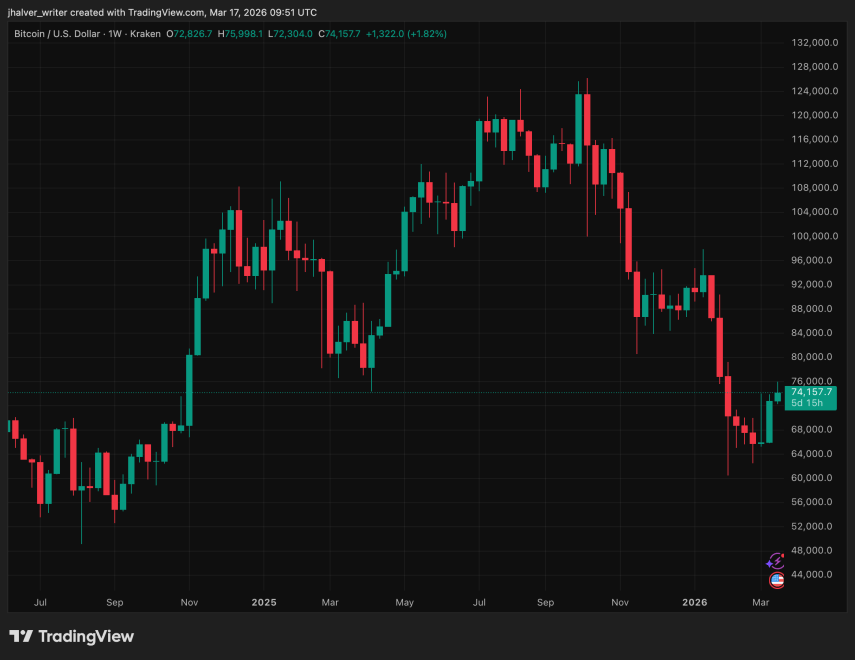
BTC's price trends reaches $74K on the daily chart, the highest since January. Source: BTCUSD on Tradingview

Cover image from Perplexity, BTCUSD chart from Tradingview

Пов'язані питання

QWhy did Argentinian authorities order a national blockade of Polymarket?

AArgentinian authorities ordered a national blockade of Polymarket because they argue it is an unlicensed online gambling platform, not just a neutral prediction market, following a suspicious trading scandal involving inflation data.

QWhat was the suspicious trading activity on Polymarket related to in Argentina?

AThe suspicious trading activity was related to Argentina's inflation data, where odds moved around fifteen minutes before the official CPI data was released by INDEC, raising allegations of insider trading.

QWhich other Latin American country banned Polymarket before Argentina?

AColombia became the first country in Latin America to ban Polymarket, declaring the platform illegal in September 2025 and instructing ISPs to block access.

QHow does Polymarket present itself versus how it is viewed by regulators?

APolymarket presents itself as a prediction market, but regulators view it as an unlicensed online gambling platform that allows users to place wagers on events without proper licensing or KYC/age checks.

QWhat global trend does Argentina's move against Polymarket reinforce?

AArgentina's move reinforces a growing trend of regulators treating crypto prediction platforms as gambling first and market infrastructure second, which could fragment liquidity and push activity into friendlier jurisdictions.

Пов'язані матеріали

Winter for Crypto IPOs: Consensys and Ledger Withdraw Applications

The crypto IPO window is tightening significantly in 2026, marked by prominent companies delaying or pausing their public listing plans. Following a successful 2025 "harvest year" that saw Circle, Bullish, and Gemini go public amidst a bull market, the tide has turned. Consensys, developer of MetaMask, recently postponed its IPO until at least fall 2026. Hardware wallet leader Ledger also suspended its planned US listing due to unfavorable market conditions, with Kraken having previously delayed its own plans. This shift is driven by a cooling market in 2026, characterized by a significant Bitcoin price correction, declining trading volumes, and reduced investor risk appetite for crypto stocks. The poor post-IPO performance of 2025 listings like Circle and Bullish, which saw major share price declines, has heightened investor caution. This contrasts sharply with the current AI sector, where companies like SpaceX, OpenAI, and Anthropic are commanding massive valuations and investor enthusiasm based on narratives of stable, exponential growth. Crypto companies now face pressure to transition from hype-driven models to demonstrating reliable cash flows and robust compliance. While the paused IPO plans may lead to valuation resets and affect ecosystem liquidity, they also accelerate industry consolidation toward stronger, more compliant infrastructure players. A potential recovery in Bitcoin's price and clearer regulations could reopen the IPO window in the latter half of 2026.

marsbit56 хв тому

Winter for Crypto IPOs: Consensys and Ledger Withdraw Applications

marsbit56 хв тому

ChatGPT Can Manage Your Money for You. Would You Trust It with Your Bank Account?

OpenAI has launched a personal finance tool for ChatGPT, currently in preview for US-based ChatGPT Pro users. This feature allows users to connect their bank and investment accounts (via Plaid, supporting over 12,000 institutions) directly to ChatGPT. It analyzes transactions, generates visual dashboards, and offers conversational financial advice—such as budgeting or planning for major purchases—based on the user's actual data. This move follows OpenAI's acquisitions of fintech startups Roi and Hiro Finance, signaling a strategic push into vertical "super assistant" applications, similar to its earlier health-focused feature. However, the launch has sparked significant privacy concerns. Critics question the safety of granting such sensitive financial access to an AI, especially amid ongoing lawsuits alleging OpenAI shared user chat data with third parties like Meta and Google. OpenAI emphasizes that ChatGPT only reads data (no transaction capabilities), deletes it within 30 days if disconnected, and offers opt-out options for model training. Yet, trust remains a major hurdle. The trend reflects a broader industry shift: AI companies like Anthropic and Perplexity are also targeting high-value, data-rich domains like finance and health. While technically promising, the tool operates in a regulatory gray area—it provides personalized guidance but disclaims formal financial advice or liability. Ultimately, OpenAI's challenge is convincing users to trust an AI with their most private financial information.

marsbit57 хв тому

ChatGPT Can Manage Your Money for You. Would You Trust It with Your Bank Account?

marsbit57 хв тому

Торгівля

Спот
Ф'ючерси
活动图片





