Crypto Barbarians: The Jupiter System Still Owes the Market an Answer

marsbitОпубліковано о 2026-03-11Востаннє оновлено о 2026-03-11

Анотація

The article "Encryption Barbarians: The Jupiter System Still Owes the Market an Answer" investigates the controversies surrounding the Jupiter ecosystem, particularly its affiliated projects Meteora and the founders Meow and Ben Chow, originally from the Mercurial Finance project backed by Alameda Research and FTX. After FTX's collapse, the team split into Jupiter (focused on liquidity aggregation) and Meteora (focused on dynamic market making), creating a vertically integrated ecosystem that controls everything from fiat on-ramps (via Moonshot acquisition) to trading and liquidity. This closed-loop system, while efficient, has been repeatedly accused of exploiting information asymmetry. Key controversies include: - Suspicious MET token airdrop distribution in October 2025, where a few wallets received disproportionately large allocations and showed patterns of coordinated dumping. - Suspected insider trading ahead of MET's listing on Upbit in November 2025. - The LIBRA token scandal in February 2025, where Meteora was accused of supporting a token that crashed after reaching a $4.6B market cap, causing $280M in losses. Ben Chow resigned and appointed law firm Fenwick & West (already under scrutiny for its work with FTX) for an independent investigation, which further damaged trust. While on-chain detective ZachXBT's recent report cleared Meteora in the Axiom Exchange insider trading case, the ecosystem remains under a cloud of suspicion over its centralized control, lack ...

Author: Chloe, ChainCatcher

On February 26, 2026, on-chain detective ZachXBT officially unveiled the truth behind the Axiom Exchange insider trading case: a senior business development employee had abused backend permissions for ten months, tracking KOLs' private wallets to front-run trades, illegally profiting over $400,000. This report not only concluded the case but also settled the high-stakes prediction market on Polymarket, which had held the entire market in suspense with a betting pool of $40 million.

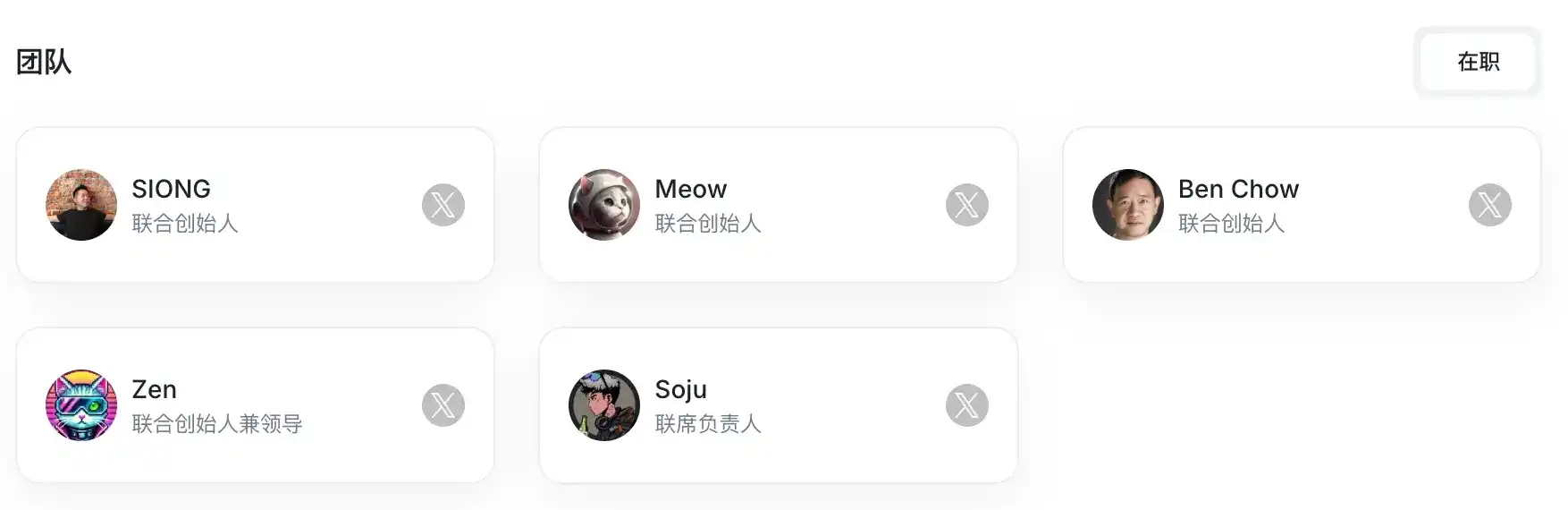
However, beyond the truth, ripples remain. Before the investigation's results were revealed, the market had unanimously pointed fingers at Meteora, whose implied probability once soared to 43%. This was not baseless speculation. According to crypto asset data platform RootData, Meteora is backed by a Singaporean-Malaysian founding team core of Meow and Ben Chow. They rose from the ashes of Mercurial Finance and built a full-stack matrix within the Solana ecosystem encompassing traffic entry points, trading aggregation, and liquidity infrastructure.
From past controversies like the LIBRA dispute, the MET airdrop scandal, to the Upbit listing rumors, Meteora's development history has always lingered in the gray area of "information asymmetry arbitrage." Although ZachXBT ultimately targeted Axiom, the various clouds of suspicion surrounding Meteora seem never to have been truly answered.

From Mercurial to the "Jupiter System," the Foundational Connection Remains

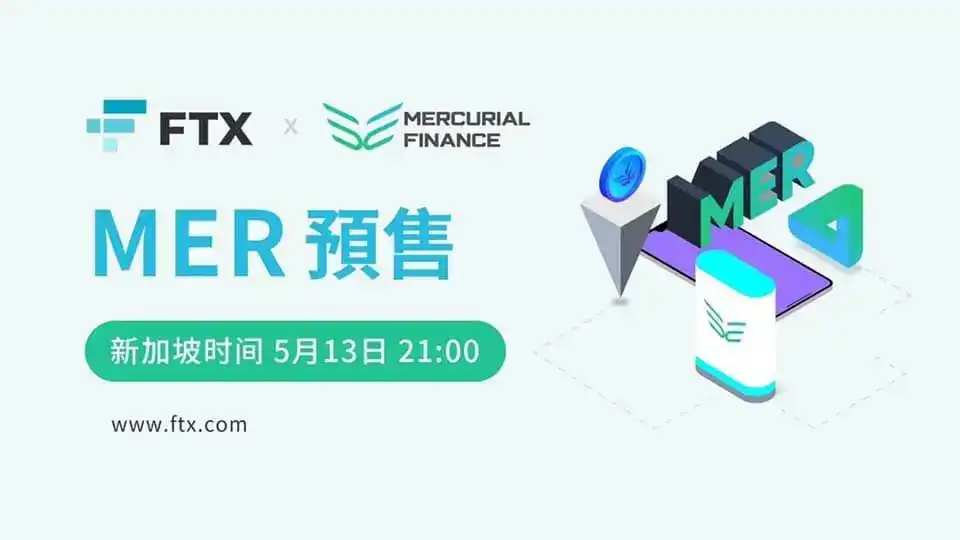
The starting point of everything traces back to 2021, when the pseudonymous Meow and Ben Chow founded Mercurial Finance on Solana, positioning it as a stablecoin asset management protocol aiming to be the Solana version of Curve. In that liquidity-surged bull market cycle, Mercurial not only received support from Alameda Research but also completed an IEO (Initial Exchange Offering) on the FTX platform with SBF's personal endorsement. Its TVL once accounted for 10% of the Solana ecosystem, a truly glorious time.
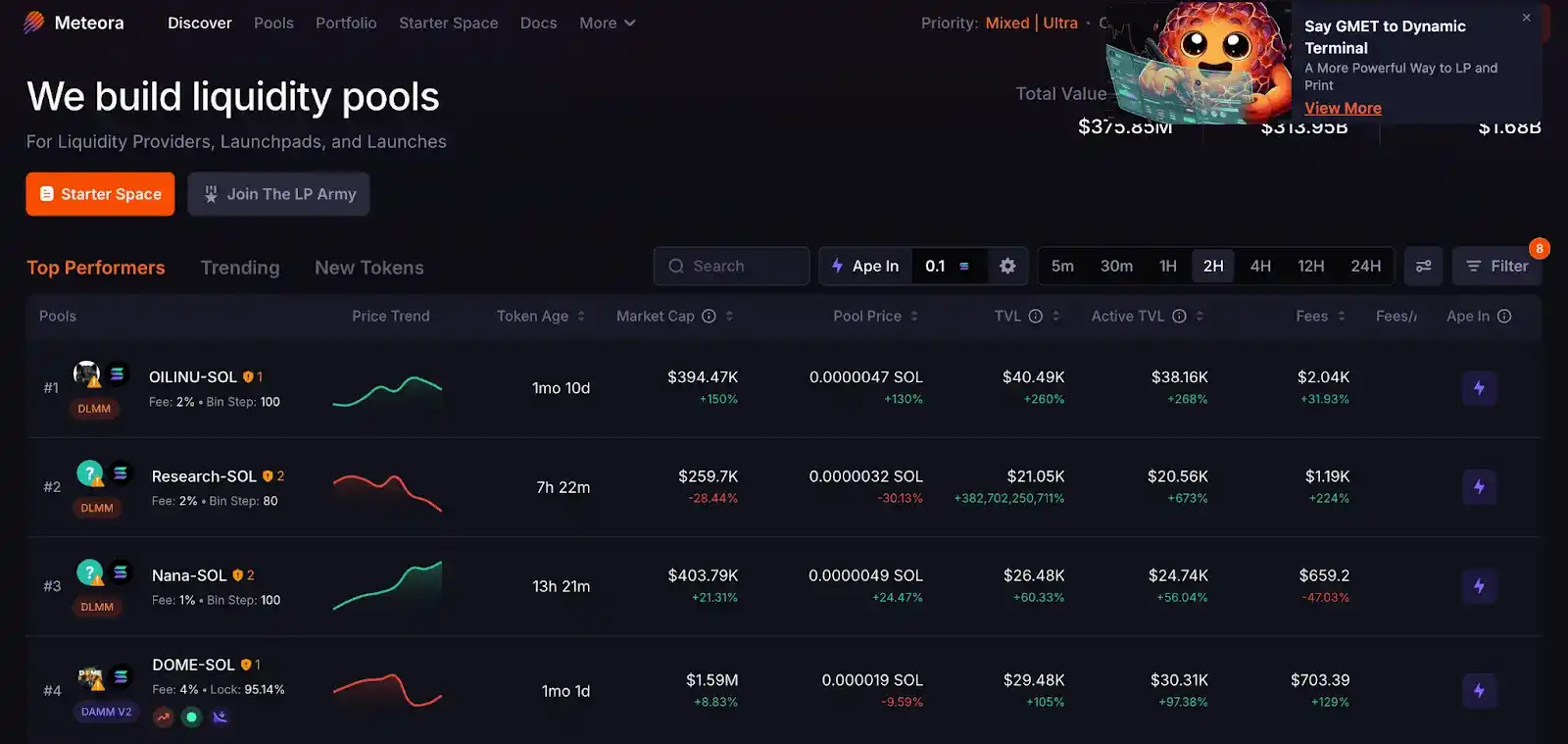
The collapse of the FTX empire in 2022 severely wounded Mercurial. However, the two founders did not choose to liquidate and leave but embarked on a rebuilding path called the "Phoenix Plan": splitting the business in two. Meow led Jupiter, aiming to solve Solana's liquidity fragmentation by defining optimal prices through routing algorithms; Ben Chow took the helm at Meteora, focusing on developing a highly capital-efficient Dynamic Liquidity Market Maker (DLMM) model. This split,表面上 (superficially) was about business focus, but in reality, it formed two independent brands with complementary flywheels, yet they were always connected in terms of shareholder structure and underlying logic.
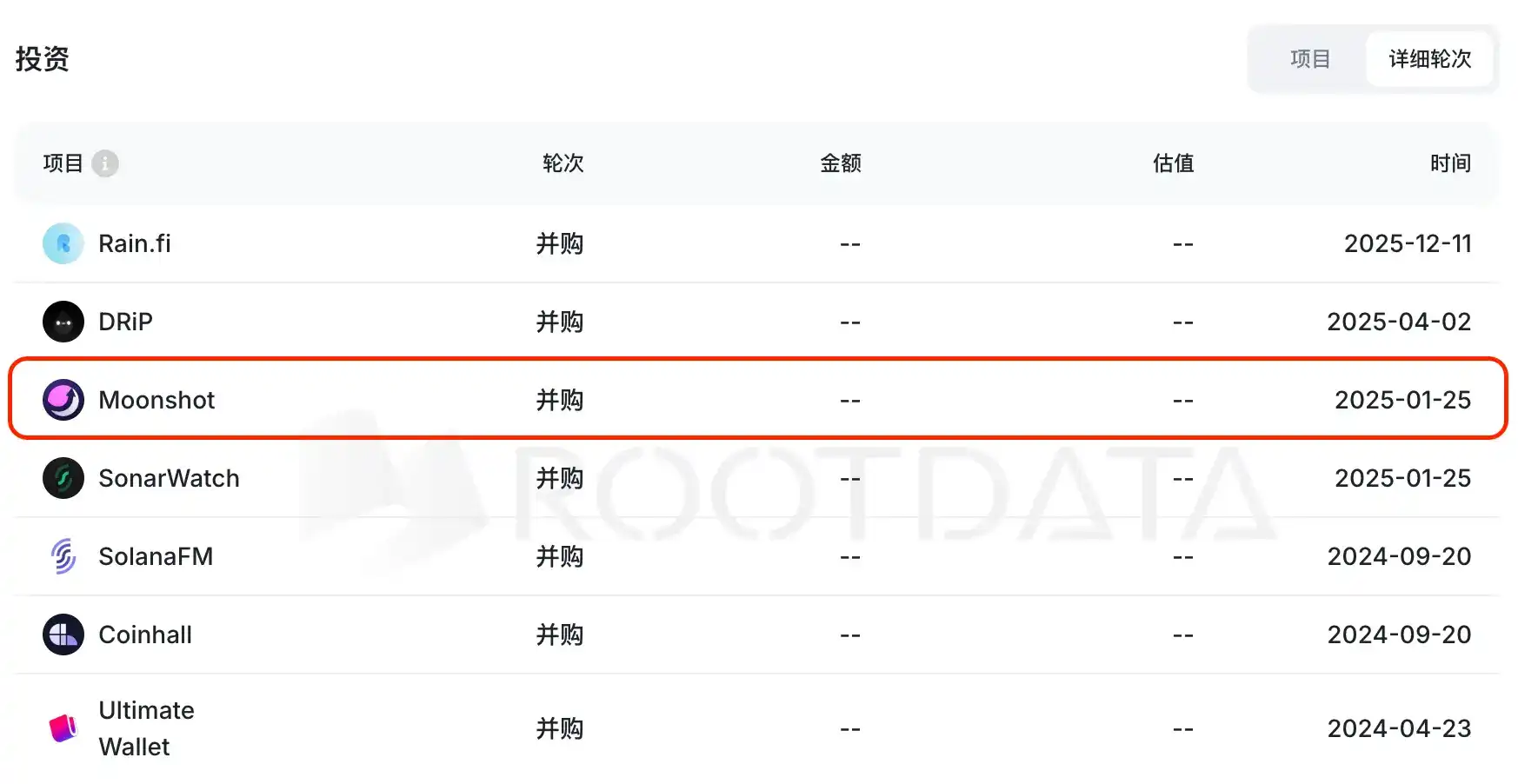
On the traffic front, Jupiter pursued an aggressive strategy. According to crypto asset data platform RootData, in January 2025, Jupiter acquired Moonshot, successfully creating the shortest path for retail users to directly purchase meme coins via Apple Pay or credit cards, flattening the consistently high barrier to entry in the crypto industry to a consumer-grade level.
This布局 (layout) was successfully monetized during the TRUMP token frenzy: when a massive flow of retail traffic poured in through Moonshot, these buy orders precisely hit the initial liquidity the TRUMP team had established on Meteora. This closed loop of "front-end capturing traffic, back-end executing trades" enabled Meteora to achieve a single-day trading volume of $7.6 billion, capturing 20% of the DEX trading share on the entire Solana chain.
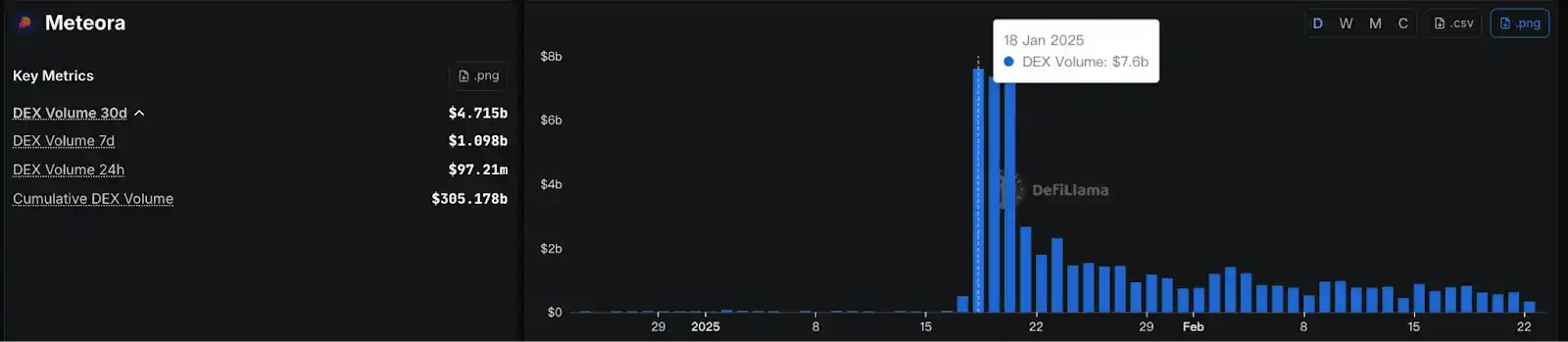
Simultaneously, Jupiter's flagship DEX aggregator evolved into a cornerstone of the Solana ecosystem. It is no longer limited to token swaps but has continuously iterated products, introducing perpetual contracts, lending markets, prediction markets, and more. Thus, Moonshot, Jupiter, and Meteora constructed a full closed-loop ecosystem spanning fiat on-ramps, front-end traffic, trading routing, multi-functional products, and automated market making, completing the transition from "project party" to "ecosystem controller."

Meteora's Airdrop Controversy and Upbit Listing Suspicions

Although vertical monopoly brought efficiency, the ensuing information asymmetry and suspicions of power abuse have always loomed over the Jupiter system. Among these, the airdrop distribution of Meteora (MET) and the Upbit listing风波 (incident) led outsiders to question whether this was truly "community first."

On October 23, 2025, Meteora had its TGE (Token Generation Event). At that time, 48% of the total token supply (i.e., 480 million tokens) was fully unlocked and entered circulation at once. The team claimed this was intentional to achieve "true price discovery," but the market's answer was brutally negative. MET plummeted from $0.90 to $0.51 within hours of opening, a single-day drop of over 55%.
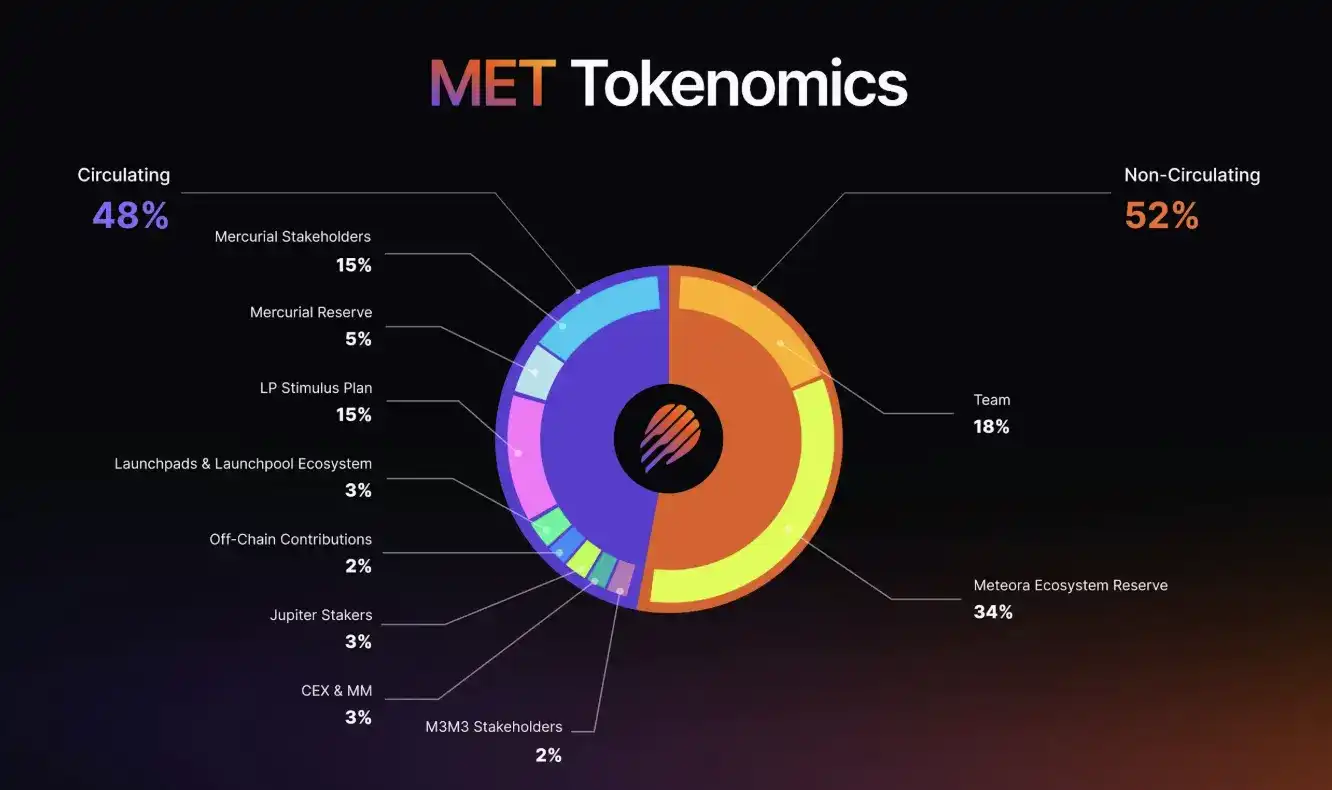
According to on-chain data from the initial TGE period, there were significant flaws in the fairness of the airdrop distribution. The top 4 claiming addresses took approximately 45.94 million tokens, accounting for 28.5% of the total claimed. The behavioral patterns of these addresses were anomalous:

  • Suspicious Address 1 (3vAau...ae): Claimed 12.15 million MET (worth $6.31 million at the time). This address had not only previously claimed the Mercurial (MER) airdrop but had also sold over 30 million JUP to exchanges in the past, employing the same dumping strategy now transferred to MET.

  • Associated Addresses 2 & 3: These two addresses exhibited extremely high synchronicity. Their JUP transfer amounts were repeatedly locked at the specific figure of 2,622,632.41, and their activity times were completely identical, likely belonging to a group controlled by the same entity.

  • Address 4: Claimed 10 million MET. Bizarrely, this address was created *after* the snapshot time and had never participated in any liquidity provision or staking activities. This "out-of-thin-air" claim completely defied the logic of the points mechanism.

If the airdrop distribution was a display of power corruption and abuse, then the information leak regarding the exchange listing touched the industry's gray area. On November 18, 2025, Meteora officially listed on Upbit, but well before the official announcement, insiders claimed to have known this information and profited from the leaked insider information. Although there is no direct evidence pointing to the Jupiter or Meteora core teams, combined with the MET airdrop controversy, it has already led the community to label them with distrust.

The LIBRA Scandal: Ben Chow's Resignation and the Responsibility Enigma

Rewinding to February 2025, the LIBRA token, endorsed by Argentine President Javier Milei, exploded onto the scene, its market cap soaring to $4.6 billion within hours before nearly crashing to zero, resulting in over $280 million in losses for tens of thousands of investors. The舆论炮火 (barrage of public criticism) quickly targeted the Meteora and Jupiter teams, with外界指控 (external accusations) that the team, knowing the token launch involved scientist front-running and wash trading, still provided a "Verified" label and liquidity support for LIBRA. Although the team insisted the verification was only to prevent fake tokens, not an endorsement, the public clearly didn't buy it.
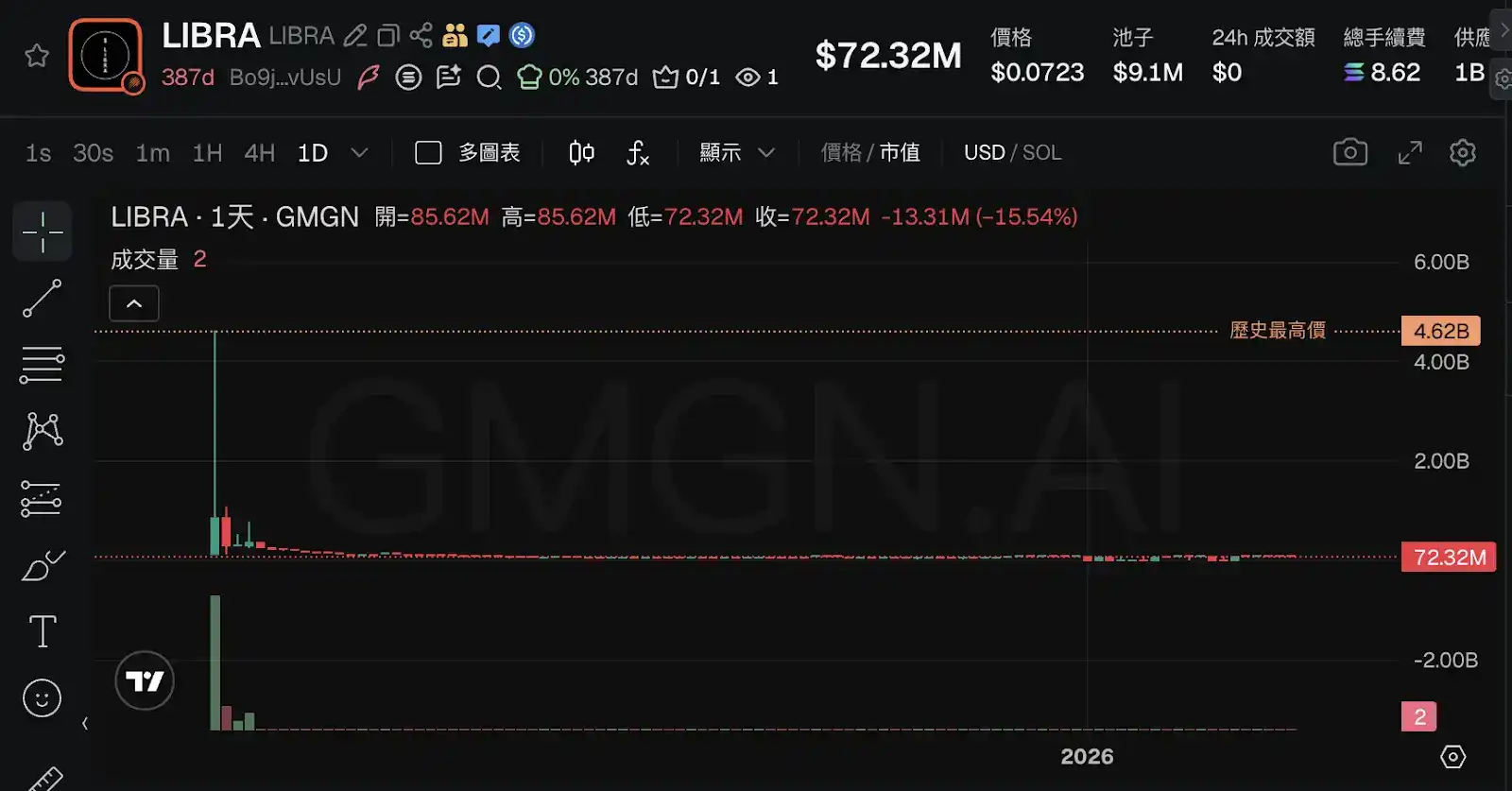
Under public pressure, Meteora's core leader Ben Chow announced his resignation and hired the law firm Fenwick & West to conduct an independent investigation. However, this move instead triggered a secondary crisis: Fenwick & West was itself deeply embroiled in class-action lawsuits stemming from the FTX collapse, with外界指控 (external accusations) that the firm had assisted SBF in blurring the financial boundaries between FTX and Alameda Research.

The community's reaction was almost uniformly sarcastic. Using a former FTX legal advisor, itself entangled in lawsuits, to "independently investigate" the ethical issues of a former FTX-affiliated project—this method of "using controversy to handle controversy" made outsiders even more suspicious about whether the Jupiter system was truly willing to move towards transparency. Although Meow eventually stated under public pressure that they would reassess the choice of legal counsel, there was no subsequent follow-up explanation.

The Double-Edged Sword Impact of Vertical Monopoly on the DeFi Ecosystem

For the average user, vertical monopoly means extreme efficiency. When you use Moonshot for on-ramping, find a route through Jupiter, and finally complete the trade in Meteora's pool, the entire pathway is optimized by the same team, reducing transaction failure rates and experience friction to a minimum. Furthermore, because the team controls both traffic and liquidity, they can quickly foster tokens with phenomenal potential like TRUMP, thereby maintaining Solana's popularity and on-chain activity.

However, for the entire ecosystem, this high degree of concentration is almost synonymous with high risk. When a single team simultaneously controls front-end traffic, trading routing weight, lending markets, and liquidity pools, once its core private keys face security issues, or core members are forced to halt operations due to legal disputes, liquidity could suffer a severe blow in a short period.

More noteworthy is the issue of "innovation monopoly." Jupiter controls most of the order flow routing on Solana. Emerging DEXs, if not integrated into Jupiter's ecosystem, almost lose the basic condition for acquiring traffic. This oligopolistic pattern at the routing level essentially constitutes an invisible market barrier—success is determined not by product superiority but by proximity to Jupiter. More worryingly, Jupiter itself participates in the liquidity business through Meteora, creating a clear conflict of interest between "directing traffic flow" and "being a beneficiary of that traffic."

Conclusion: The Shadow of the Jupiter System, and the Market's Unanswered Questions

ZachXBT ultimately exposed Axiom, but this does not mean Meteora, or the entire Jupiter system, is清白 (innocent). It may only mean that the scope of ZachXBT's investigation did not cover them this time, or that direct evidence was lacking.

The controversy surrounding Meteora has never been a black-and-white legal issue; it is a superposition of a series of gray areas: the utilization of information asymmetry, airdrop disputes, the choice of legal counsel, and even the repetitive excuse of 'we only provide infrastructure' after every high-profile token collapse.

This founding team from Singapore and Malaysia has indeed demonstrated its product execution capability to the market over the past three years, but they have also fully arbitraged every regulatory gray area with their business logic. Trust in the crypto industry has never been this easy. When the traffic entry points, trade execution, and liquidity of an ecosystem are controlled by the same community of interest, the cost is ultimately borne by retail investors.

The Polymarket bet is over, but regarding Jupiter and Meteora, the market still hasn't gotten its answers.


Пов'язані питання

QWhat was the outcome of the Axiom Exchange insider trading case as revealed by ZachXBT?

AZachXBT's report concluded that a senior business development employee at Axiom Exchange had abused backend privileges for ten months, tracking KOLs' private wallets to trade ahead of them, resulting in illegal profits exceeding $400,000.

QWhat is the core controversy surrounding Meteora's (MET) token generation event (TGE) and airdrop distribution?

ADuring its TGE, 48% of MET's total supply (480 million tokens) was fully unlocked and entered circulation at once, leading to a price crash of over 55% in hours. Chain analysis revealed significant unfairness in the airdrop, with the top 4 claiming addresses taking 28.5% of the claimed total, exhibiting suspicious behaviors like massive dumping and claiming tokens without prior participation.

QHow did the Jupiter ecosystem, comprising Moonshot, Jupiter, and Meteora, create a vertically integrated monopoly on Solana?

AThe ecosystem formed a closed loop: Moonshot captured retail flow via easy fiat on-ramps (like Apple Pay), Jupiter's aggregator routed trades and expanded into various DeFi functions, and Meteora provided the backend liquidity (e.g., DLMM pools). This control over the entire user journey—from entry to execution—created extreme efficiency but also significant centralization risk and potential for information asymmetry abuse.

QWhat was the LIBRA scandal involving Meteora, and how did the team respond?

AMeteora and Jupiter were accused of providing a 'verified' badge and liquidity support for the LIBRA token, which was accused of having scientist front-running and wash trading, leading to a $280 million investor loss. Under pressure, Meteora co-founder Ben Chow resigned and the team hired law firm Fenwick & West for an independent investigation. This backfired as the firm was itself embroiled in lawsuits related to the FTX collapse, further damaging credibility.

QWhat are the potential risks to the Solana DeFi ecosystem posed by the Jupiter system's vertical integration?

AThe risks include extreme centralization vulnerability (e.g., a single point of failure from a security breach or legal issue), the creation of an 'innovation monopoly' where new projects depend on Jupiter for routing and traffic, and inherent conflict of interest as Jupiter (via Meteora) is both the traffic director and a major liquidity beneficiary, potentially stifling fair competition.

Пов'язані матеріали

KOL's Perspective: Why Is SOL Set to Rise from This Point?

**Summary: Why SOL is Positioned for Growth at This Level** The article argues that SOL is poised for an upward move from its current price point, citing several key factors. Primarily, SOL has just broken out of a 4-month consolidation phase. This breakout signals a return of risk appetite to the broader crypto market, as SOL is seen as a key indicator of overall crypto health. The token's ownership has reportedly shifted from short-term traders and tourists to long-term accumulators, leading to low volume. Any meaningful increase in trading activity could thus trigger significant upward momentum. Fundamental strengths include strong institutional adoption, integration with DeFi and RWAs (Real-World Assets), and the potential benefits from the Clarity Act. Despite its high volatility—having dropped 70% from its all-time high but still up 12x from its bear market low—SOL is highlighted as one of the few tokens from the last cycle to reach new highs. It boasts a robust ecosystem of applications, users, and protocols. Future catalysts include the expected influx of AI developers following the Miami Accelerate conference, which focused on AI on Solana. Furthermore, Solana is positioned as the premier chain for memecoin activity, a trend expected to continue and drive network usage and fees. The article concludes that recent price action reflects a healthy transfer to long-term holders, setting the stage for growth.

marsbit45 хв тому

KOL's Perspective: Why Is SOL Set to Rise from This Point?

marsbit45 хв тому

Those Pre-Bitcoin PoW Protocols Have Recently Been Reimplemented

This article details a recent surge in replicating pre-Bitcoin Proof-of-Work (PoW) protocols, specifically focusing on Hal Finney's 2004 RPOW (Reusable Proofs of Work). Within five days in May 2026, multiple independent builders in the Bitcoin/cypherpunk community launched projects inspired by this early electronic cash proposal. The initiative began with Fred Krueger's `rpow2.com`, a centralized but auditable system that replaced RPOW's original IBM 4758 hardware with Ed25519 signatures. Initially a faithful replica, it later adopted Bitcoin-like features (21M supply cap, difficulty adjustment) and a controversial 5.24% founder allocation. This sparked rapid forks, including `rpow4.com` which incorporated full Bitcoin parameters, a prediction market (`rpowmarket.com`), and a DEX (`rpow2swap.com`). Concurrently, Mike In Space created a prototype of Wei Dai's 1998 b-money proposal (`b-money.replit.app`), pushing the historical exploration even further back. The article contrasts these centralized, server-dependent experiments with Bitcoin's core innovation of decentralized, trustless consensus. It also highlights a parallel development: the `HASH` project on Ethereum, which uses smart contract hooks to enable a purely fair-launch, browser-mineable PoW token with 0% allocations to team or VCs. The collective activity is framed as a meme-driven, educational exploration of cypherpunk history rather than a serious financial movement, with all projects heavily disclaiming any investment value.

marsbit50 хв тому

Those Pre-Bitcoin PoW Protocols Have Recently Been Reimplemented

marsbit50 хв тому

South Korean Exchanges 'Battle' Regulators, Challenging the Boundaries of Enforcement and Legislation

South Korea's cryptocurrency industry is engaged in a rare, direct confrontation with regulators. The Financial Intelligence Unit (FIU), the primary anti-money laundering (AML) watchdog, has recently imposed heavy penalties on major exchanges like Upbit and Bithumb for alleged violations involving unregistered overseas VASPs and AML procedures. However, exchanges are now actively challenging these actions in court and through industry associations. In a significant shift, the Seoul Administrative Court ruled in favor of Upbit's operator, Dunamu, overturning part of an FIU-ordered business suspension. The court found the FIU's penalty criteria and justification insufficiently clear. Similarly, the court suspended the enforcement of a six-month business suspension against Bithumb pending a final ruling, citing potential irreversible harm to the exchange. Beyond legal battles, the industry is contesting proposed legislative amendments. The Digital Asset eXchange Alliance (DAXA) strongly opposes a draft rule that would mandate Suspicious Transaction Reports (STRs) for all crypto transfers over 10 million KRW (~$6,800). DAXA argues this "poison pill" clause violates legal principles and would overwhelm the STR system, increasing reports from 63,000 to an estimated 5.45 million annually for major exchanges, thereby crippling effective AML monitoring. This conflict highlights a structural tension in South Korea's crypto governance: comprehensive digital asset laws are still developing, while regulators rely heavily on AML enforcement. The industry's move from passive compliance to active legal and legislative challenges signifies a new phase, pressing for clearer rules and more proportionate enforcement. While short-term disputes may intensify, this clash could ultimately lead to a more mature and sustainable regulatory framework for South Korea's vibrant crypto market.

marsbit1 год тому

South Korean Exchanges 'Battle' Regulators, Challenging the Boundaries of Enforcement and Legislation

marsbit1 год тому

After 50x Storage Surge, Justin Sun Always Looks to the Next Decade

Sun Yuchen, known for his controversial stunts like a $30 million lunch with Warren Buffett (canceled due to a kidney stone) and eating a $6.2 million duct-taped banana, is often overshadowed by a significant fact: his decade-long track record of spotting major investment trends. In 2016, he famously advised young people to invest in Bitcoin, Nvidia, Tesla, and Tencent instead of buying property. A hypothetical $20,000 investment in Nvidia and Tesla from that list would now be worth over 50 million RMB. His latest major call was on November 6, 2025, predicting a "50x storage opportunity" tied to the AI boom, which materialized with Sandisk's stock surging nearly 50-fold by 2026. Looking ahead, Sun now focuses on the next frontier: Physical AI. He identifies four key areas: 1. **Embodied AI/Robotics**: He sees this reaching its "iPhone moment," with companies like UBTech and Galaxy General leading in commercialization. 2. **Drones**: Viewed as the first commercially viable form of Physical AI, revolutionizing sectors from warfare (e.g., AeroVironment's Switchblade) to logistics. 3. **Spatial Computing**: Beyond VR, it's about AI understanding physical space, a foundational technology for robotics and autonomous systems, exemplified by Apple's Vision Pro. 4. **Space Exploration**: After a 2025 suborbital flight with Blue Origin, Sun advocates for space as the ultimate frontier, discussing blockchain's potential role in space asset management and data transactions. His investment philosophy involves betting on entire, inevitable trends rather than single companies. For robotics, he sees Tesla (the body/manufacturer) and Nvidia (the brain/AI platform) as complementary plays. In defense drones, he highlights companies making tanks obsolete (AeroVironment) and those augmenting fighter jets (Kratos). For space, he participated in Blue Origin's flight and anticipates SpaceX's potential IPO to redefine the sector's valuation. Sun Yuchen's vision frames the next two decades not as a revolution in information flow (like the internet), but in the fundamental operation of the physical world through AI-powered robots, autonomous systems, and spatial intelligence, ultimately extending human and AI activity into space. While many still focus on conventional assets, he continues to look toward the next technological horizon.

marsbit2 год тому

After 50x Storage Surge, Justin Sun Always Looks to the Next Decade

marsbit2 год тому

Торгівля

Спот
Ф'ючерси
活动图片




