Crypto And The 2026 Elections: By The Numbers And What Lies Ahead

bitcoinistОпубліковано о 2026-02-17Востаннє оновлено о 2026-02-17

Анотація

The cryptocurrency industry is preparing to significantly influence the 2026 midterm elections, building on its role in the 2024 cycle. The leading crypto-aligned super PAC, Fairshake, entered 2026 with over $193 million in cash. It is already targeting key races, such as supporting Republican Barry Moore for Senate in Alabama and opposing Democratic Representative Al Green in Texas. The industry's political spending, which reached nearly $180 million in the last cycle, aims to secure regulatory clarity. While it achieved a victory with the stablecoin-focused GENIUS Act, its top priority—the broader CLARITY Act for market structure—remains stalled in the Senate. Critics question the use of "unregulated money" in elections, but advocates argue the spending is necessary to push for responsible regulation and innovation.

After emerging as a major political player in the 2024 elections, the cryptocurrency industry is once again preparing to flex its financial muscle—this time ahead of the 2026 midterms.

Two years ago, crypto-focused super political action committees helped shape key races as President Donald Trump and Republican majorities in the House and Congress secured victories.

Now, with digital asset prices under pressure and Congress still debating the landmark CLARITY Act, the industry is ramping up spending in an effort to protect and expand its influence in Washington.

Fairshake Enters 2026 With $193M

According to reporting by The Hill, Fairshake—the leading super Political Action Committee (PAC) network aligned with the crypto sector—entered 2026 with more than $193 million in cash on hand, already identifying priority races for the current cycle.

It is reportedly supporting Republican Representative Barry Moore in Alabama’s Senate race and working to unseat Democratic Representative Al Green in the House.

Leonard Kostovetsky, an associate professor at Baruch College and a vocal skeptic of crypto, said the strategy resembles what the industry deployed two years ago. “It’s going to be similar to the previous cycle where they will kind of flex their muscles to show the political power of the crypto industry,” he said.

The industry’s political footprint expanded significantly during the 2024 election cycle, when crypto-aligned groups poured millions into competitive primaries and closely watched races. Federal filings show that Fairshake and its three affiliated organizations spent nearly $180 million during that cycle alone.

Beyond elections, the industry has secured at least one significant legislative victory. Lawmakers passed the GENIUS Act, which established a regulatory framework for dollar-backed stablecoins.

Yet the more comprehensive market structure legislation—widely viewed as the industry’s top priority—remains unfinished. The proposed bill would provide long-sought clarity for digital asset businesses. Although the House passed its version, the measure has stalled in the Senate.

Crypto Groups Push For Regulatory Clarity

As Congress debates this broader framework, crypto-affiliated political groups have wasted no time engaging in midterm contests. Defend American Jobs, one of Fairshake’s partner PACs, announced this week that it would spend $5 million to support Moore’s Senate campaign in Alabama.

Meanwhile, another affiliated PAC, Protect Progress, revealed plans to invest $1.5 million to oppose Green in the Democratic primary for Texas’s newly redrawn 18th Congressional District.

The group cited Green’s voting history on crypto-related measures, arguing that he has sought to “stop American innovation in its tracks.” Green voted against the GENIUS Act and the House’s CLARITY Act.

Ohio-based Democratic strategist Jeff Rusnak questioned whether crypto groups should be permitted to deploy what he described as essentially “unregulated money” in federal elections.

Yet, industry advocates counter that their political engagement is aimed at fostering responsible regulation rather than avoiding it. A source familiar with the Fairshake network argued that election spending has helped move policymakers toward creating clearer rules.

The 1-D chart shows the total crypto market cap drop toward $2.3 trillion on Monday. Source: TOTAL on TradingView.com

Featured image from OpenArt, chart from TradingView.com

Пов'язані питання

QWhat is the total amount of cash on hand that the Fairshake super PAC network entered 2026 with, according to the article?

AFairshake entered 2026 with more than $193 million in cash on hand.

QWhich two specific political candidates does the article mention as being targeted by crypto-aligned super PACs in the 2026 midterms?

AThe super PACs are supporting Republican Representative Barry Moore in Alabama’s Senate race and working to unseat Democratic Representative Al Green in the House.

QWhat was the name of the significant legislative victory for the crypto industry that established a regulatory framework for stablecoins?

AThe significant victory was the passage of the GENIUS Act, which established a regulatory framework for dollar-backed stablecoins.

QAccording to a Democratic strategist cited in the article, what is his concern about the money being deployed by crypto groups in elections?

AOhio-based Democratic strategist Jeff Rusnak questioned whether crypto groups should be permitted to deploy what he described as essentially 'unregulated money' in federal elections.

QWhat is the stated goal of the crypto industry's political engagement, as argued by its advocates in the article?

AIndustry advocates counter that their political engagement is aimed at fostering responsible regulation rather than avoiding it, with the goal of moving policymakers toward creating clearer rules.

Пов'язані матеріали

Has Hook Summer Really Arrived? sato, Lo0p, FLOOD Ignite the New Narrative of Uniswap v4

"Hook Summer" Arrives? Sato, Lo0p, FLOOD Ignite Uniswap v4 Narrative Amidst a slight market recovery, attention within the Ethereum ecosystem has shifted to Meme coins built on Uniswap v4's Hook protocol. Following ASTEROID, tokens like sato, sat1, Lo0p, and FLOOD have become market focal points, with market caps ranging from millions to tens of millions, bringing concentrated liquidity to a narrative-dry market. Uniswap v4 Hooks are "plugin smart contracts" that allow developers to inject custom logic at key points in a liquidity pool's lifecycle (initialization, adding/removing liquidity, swaps, etc.), making the AMM programmable. Recent representative projects include: * **sato**: Market cap peaked over $38M; uses a v4 curve mechanism for minting/burning, locking ETH as reserve. * **sat1**: Market cap briefly exceeded $10M, positioning as an "optimized sato," but later declined significantly. * **Lo0p**: Market cap neared $6.6M; a "lending AMM protocol" allowing users to borrow ETH against deposited LO0P tokens without immediate selling pressure. * **FLOOD**: Market cap approached $6M; channels trading reserves into Aave v3 to generate yield, which is retained in the pool. The emergence of these Hook-based tokens could drive long-term growth for the Uniswap ecosystem by attracting users and liquidity to v4 pools. Combined with Uniswap's activated fee switch (partially used to burn UNI), the long-term outlook for UNI appears positive. However, short-term UNI price appreciation is not directly guaranteed. Factors include the sustainability and lifecycle of these new tokens, their price volatility, overall market conditions, and regulatory pressures. Currently, Uniswap v4's TVL ($595M) lags behind v3 and v2, indicating Hook adoption still requires time to mature. In summary, the Hook ecosystem serves as "long-term nourishment" for UNI, but acts more as a "catalyst" than a direct "booster" in the short term. Note: These are early-stage experimental tokens and may carry unknown risks.

marsbit3 хв тому

Has Hook Summer Really Arrived? sato, Lo0p, FLOOD Ignite the New Narrative of Uniswap v4

marsbit3 хв тому

Has Hook Summer Truly Arrived? sato, Lo0p, FLOOD Ignite the New Uniswap v4 Narrative

With the broader market showing signs of recovery, a new wave of interest has emerged around Ethereum-based meme coins. Following ASTEROID, tokens like sato, sat1, Lo0p, and FLOOD, built upon the Uniswap v4 Hook protocol, are capturing market attention. Their market capitalizations range from millions to tens of millions of dollars, injecting much-needed focused liquidity into a market lacking narratives. This article explores whether this trend signifies an incoming "Hook Summer" and its potential impact on UNI's price. Hooks are essentially plug-in smart contracts for Uniswap v4 liquidity pools, allowing developers to inject custom logic at key points in a pool's lifecycle (like initialization, adding/removing liquidity, swaps). This transforms the AMM into programmable building blocks. Key highlighted projects include: * **sato**: Peaked over $38M market cap. It utilizes a v4 curve for minting/burning; buying locks ETH as reserve to mint new tokens, while selling redeems ETH from the reserve and burns tokens. * **sat1**: Market cap briefly exceeded $10M, promoted as an "optimized sato," but later declined significantly. * **Lo0p**: Reached nearly $6.6M. It's a lending AMM protocol where buying LO0P tokens locks them as collateral, allowing users to borrow ETH from the pool reserve at 40% LTV, aiming to improve capital efficiency for idle ETH in LPs. * **FLOOD**: Peaked near $6M. Its mechanism directs asset reserves from buys into Aave v3 to generate yield, with fees and interest retained in the pool to potentially influence the token's price long-term. In the long term, the development of the Hook ecosystem can attract users and liquidity to Uniswap v4, benefiting UNI's fundamentals—especially combined with the recent activation of the protocol fee switch, where a portion of fees is used to burn UNI. However, in the short term, these Hook-based tokens are unlikely to directly drive significant UNI price appreciation. Their impact is moderated by factors like token sustainability, price volatility, and broader market and regulatory conditions. Currently, Uniswap v4's TVL ($595M) still trails behind v2 and v3, indicating adoption and growth will take time. The article concludes that while the Hook ecosystem provides long-term "nourishment" for UNI, its short-term role is more of a "catalyst" than a "booster." Readers are cautioned that these are early-stage experimental tokens and may carry unknown risks.

Odaily星球日报15 хв тому

Has Hook Summer Truly Arrived? sato, Lo0p, FLOOD Ignite the New Uniswap v4 Narrative

Odaily星球日报15 хв тому

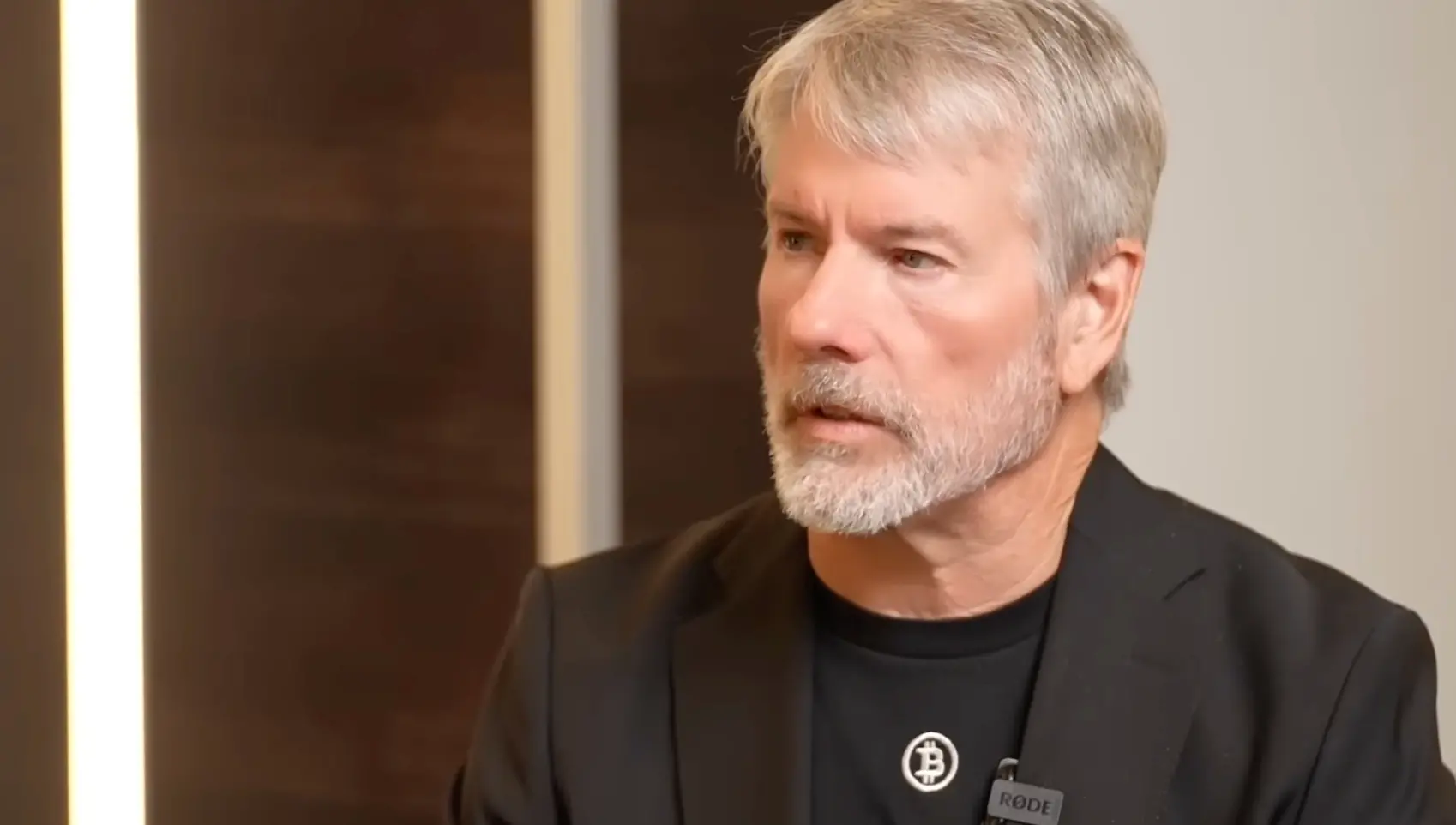
Interview with Michael Saylor: I Did Say I Would Sell Bitcoin, But Never a Net Sale

Interview with Michael Saylor: I Said We'd Sell Bitcoin, But Never Be a Net Seller In a recent podcast, MicroStrategy Executive Chairman Michael Saylor clarified the company's stance on potentially selling Bitcoin. Following MicroStrategy's earnings call statement about being prepared to sell BTC to fund dividends for its STRC (Strategic) credit product, Saylor emphasized the distinction between selling and being a "net seller." Saylor explained the core business model: MicroStrategy sells credit instruments like STRC and uses the proceeds to buy Bitcoin, which is viewed as "digital capital" expected to appreciate around 30-40% annually. A portion of these capital gains can then be used to pay the dividends on the credit products. He stressed that even if the company sells some Bitcoin for dividends, it simultaneously buys much more with new credit issuance. For example, after raising $3.2 billion from STRC sales in April, the dividend obligation was only $80-90 million, making the company a net buyer. The clarification aims to counter market narratives questioning the value of Bitcoin on MicroStrategy's balance sheet if it were never sold, and to dismiss claims of a "Ponzi scheme." Saylor reiterated his personal philosophy for investors: "Don't be a net seller of bitcoin" and ensure your Bitcoin holdings increase each year. Saylor also discussed Bitcoin's role as the foundation for "digital credit," noting that STRC has become the largest and most liquid preferred stock issue in the U.S., offering high risk-adjusted returns (Sharpe ratio). He highlighted Bitcoin's deep liquidity, stating that even large purchases by MicroStrategy do not move the market significantly, which is driven by macro factors, geopolitical tensions, and capital flows from ETFs and credit products. Finally, Saylor reflected on his early inspiration from sci-fi books, which motivated his path to MIT, and maintained his fundamental thesis on Bitcoin remains unchanged: it is superior digital capital enabling superior digital credit.

链捕手19 хв тому

Interview with Michael Saylor: I Did Say I Would Sell Bitcoin, But Never a Net Sale

链捕手19 хв тому

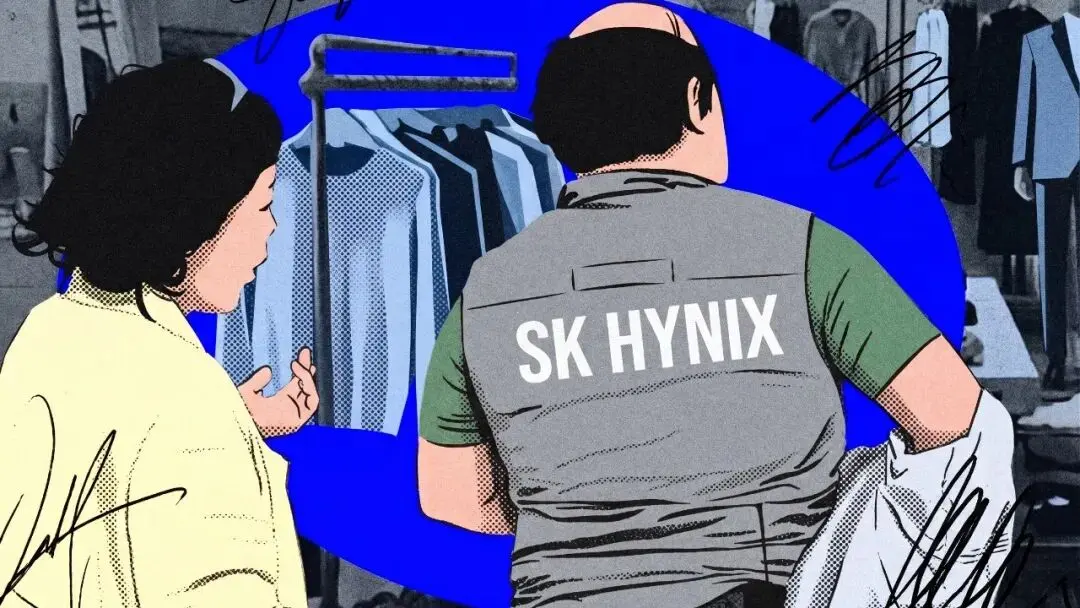
Beaten SK Hynix Employees in China: Year-end Bonus Less Than 5% of Korean Staff's

"SK Hynix Chinese Staff Hit Hard: Bonuses Less Than 5% of Korean Counterparts" Driven by the AI boom, South Korea's SK Hynix is experiencing record performance, with media reports predicting massive year-end bonuses for its employees, making them highly desirable in the matchmaking market. However, this prosperity starkly contrasts with the situation for the company's Chinese employees. According to reports, SK Hynix operates under a rule allocating 10% of operating profit for employee bonuses. While projections suggest Korean employees could receive bonuses reaching millions of RMB, a Chinese employee with over a decade of technical experience revealed the disparity: "If they get 3 million, Chinese staff get less than 5% of that." After adjustments based on KPI ratings, this employee's highest bonus was slightly over 100,000 RMB. Bonuses are paid annually in Korea but semi-annually in China. During the industry downturn in 2023-2024, Chinese employees received no bonus at all. The gap extends beyond bonuses. Recruitment posts for SK Hynix's Chinese factories (in Wuxi, Dalian, Chongqing) show engineer monthly salaries ranging from 10,000 to 35,000 RMB, with a 13th-month salary promised. Chinese employees also receive standard benefits like annual leave but lack stock incentives, which are reportedly unavailable to them. Furthermore, management positions in China are predominantly held by Korean personnel, though industry observers note a gradual increase in local middle managers over time. SK Hynix has confirmed the 10% bonus rule but cautioned that specific future bonus amounts remain unpredictable. The company forecasts strong demand for HBM and other high-value enterprise products for the next 2-3 years, driven by AI infrastructure investment. This focus on business-to-business markets may continue to constrain supply for consumer products, potentially prolonging price increases for components like memory.

链捕手33 хв тому

Beaten SK Hynix Employees in China: Year-end Bonus Less Than 5% of Korean Staff's

链捕手33 хв тому

Торгівля

Спот
Ф'ючерси
活动图片