Cross-Border Collaboration: Tom Lee Invests $200 Million, Partnering with Global Top Streamer MrBeast

marsbitОпубліковано о 2026-01-16Востаннє оновлено о 2026-01-16

Анотація

Wall Street analyst Tom Lee's BitMine Immersion Technologies (BMNR) is investing $200 million in MrBeast's holding company, Beast Industries, which plans to integrate DeFi into its upcoming financial services platform. MrBeast, whose YouTube channels have over 4.6 billion subscribers, has built a massive but costly content empire, with single videos often costing $3-5 million to produce. His company, Beast Industries, generates over $400 million in annual revenue but operates with thin margins due to high content expenses. Its profitable chocolate brand, Feastables, brings in $250 million in sales. Despite a valuation around $5 billion, MrBeast has described himself as "cash poor," reinvesting nearly all earnings back into the business. The partnership with Tom Lee signals a strategic move to explore decentralized finance solutions, potentially creating a programmable financial infrastructure for creators and fans, though specific plans remain undisclosed.

$200 million is the figure just announced today.

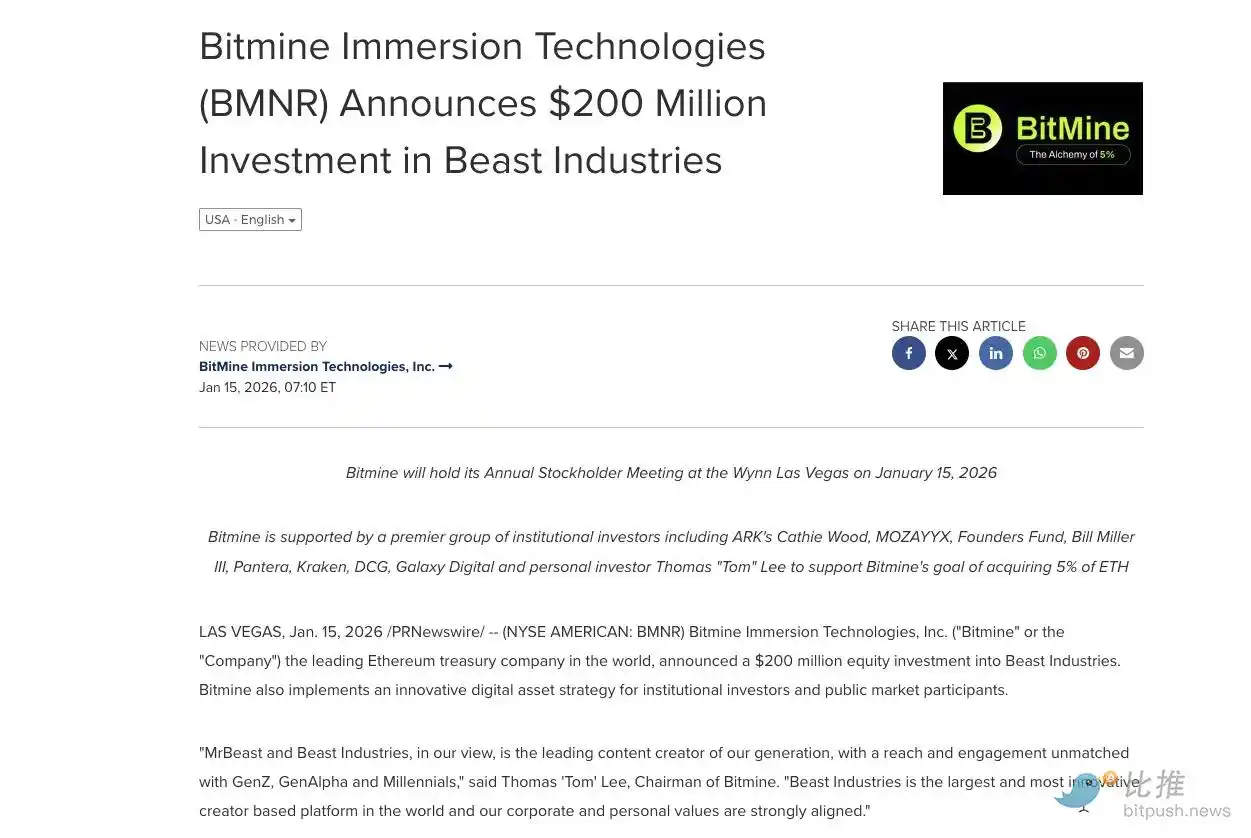
BitMine Immersion Technologies (BMNR), chaired by renowned Wall Street analyst Tom Lee, announced that it will invest in Beast Industries, the holding company behind global top streamer MrBeast. Meanwhile, Beast Industries mentioned in its official statement that the company will explore how to "integrate DeFi into the upcoming financial services platform" in the future.
If you only look at the news, it seems like another familiar crossover: traditional, crypto, internet celebrity, entrepreneurship. On one side is the YouTube霸主 with cumulative global subscriptions exceeding 400 million, whose single video can make the algorithm spontaneously weight you; on the other side is Wall Street's top analyst best at telling crypto narratives, skilled at writing grand blockchain concepts into balance sheets. Everything seems logical.

MrBeast's Journey

Looking back at MrBeast's early videos, it's hard to connect them with today's Beast Industries valued at $5 billion.
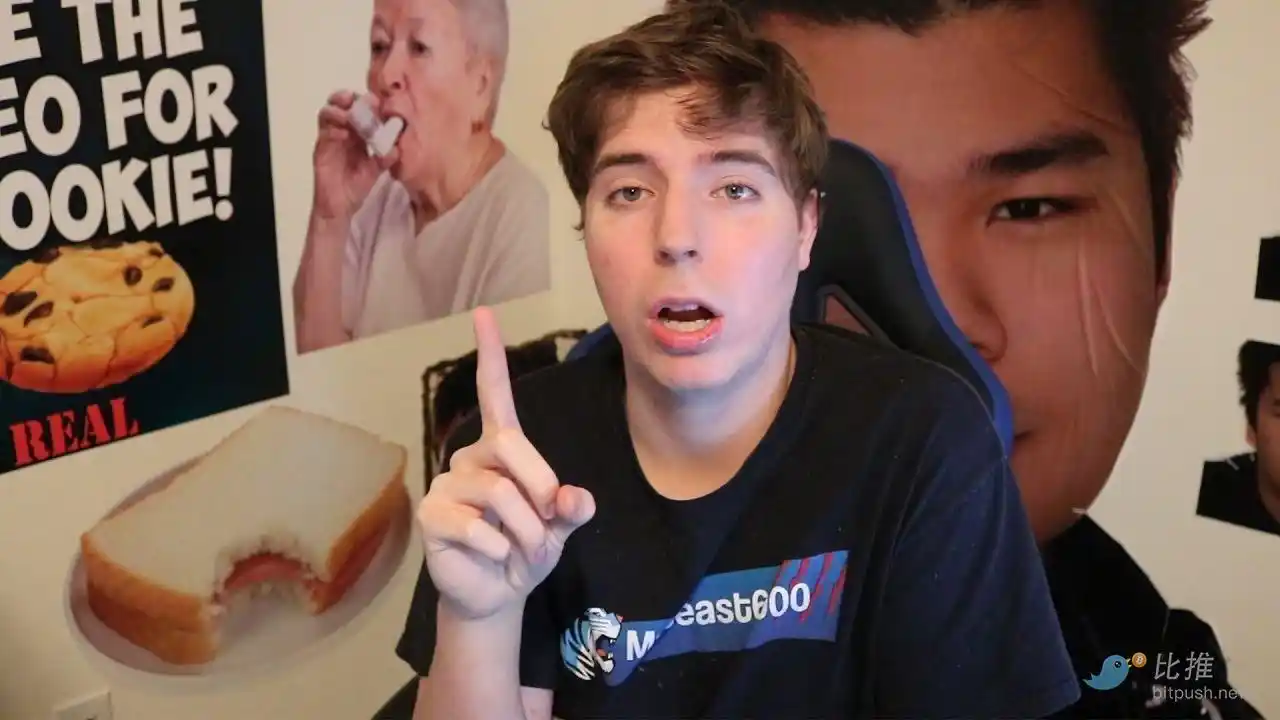
In 2017, Jimmy Donaldson, who had just graduated from high school, uploaded a video of himself counting continuously for 44 hours—"Challenge to count from 1 to 100,000!" The content was simple to the point of childishness, with no plot, no editing, just a person repeating numbers in front of the camera, yet it became a turning point in his content career.

At that time, he was not yet 19 years old, with only about 13,000 channel subscribers. After the video was released, it quickly exceeded a million views, becoming the first globally viral case.

Later, he recalled that time in an interview with one sentence:

"I didn't actually want to become famous at that time; I just wanted to know if the result would be different if I was willing to put all my time into something no one else was willing to do."

Jimmy Donaldson successfully built his account, becoming the later well-known MrBeast. But more importantly, from that moment on, he formed an almost obsessive belief: attention is not a gift of talent but something earned through investment and endurance.

Treating YouTube as a Company, Not a Creative Platform

Many creators choose to "conservatize" after becoming famous: reduce risks, improve efficiency, turn content into stable cash flow.

MrBeast chose the opposite path.

He repeatedly emphasized one thing in multiple interviews:

"The money I earn is basically spent on the next video."

This is the core of his business model.

By 2024, his main channel had over 460 million subscribers, with cumulative video views exceeding 100 billion. But behind this is extremely high costs:

· The production cost of a single top video is consistently between $3 million and $5 million;

· Some large challenges or public welfare projects can cost over $10 million;

· "Beast Games" on Amazon Prime Video, described by himself as "completely out of control," and he admitted in an interview: losses reached tens of millions of dollars.

When he said this, he did not show regret:

"At this level, you can't win while trying to save money."

This sentence can almost be used as the key to understanding Beast Industries.

Beast Industries: Annual Revenue of $400 Million, but Thin Profits

By 2024, MrBeast consolidated all businesses under the name Beast Industries.

From public information, this company has far exceeded the scope of "creator side business":

· Annual revenue exceeds $400 million;

· Businesses span content production, fast-moving consumer goods retail, licensed merchandise, tool-based products;

· After the latest round of financing, the general expectation for its valuation is around $5 billion.

But it's not easy.

MrBeast's YouTube main channel and Beast Games bring huge exposure but almost consume all profits.
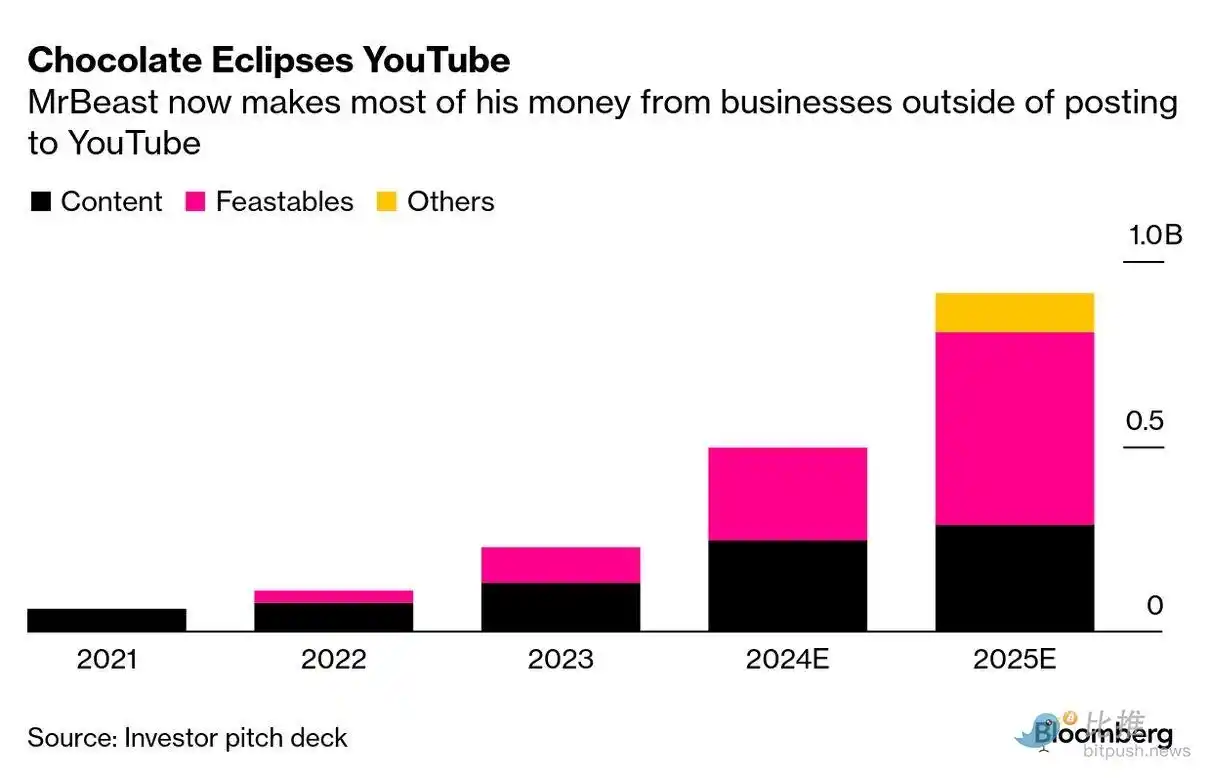
In stark contrast to the content is his chocolate brand Feastables. Public information shows that in 2024, Feastables sales were about $250 million, contributing over $20 million in profit. This is the first time Beast Industries has seen a stable, replicable cash flow business. By the end of 2025, Feastables had entered over 30,000 physical retail stores in North America (including Walmart, Target, 7-Eleven, etc.), covering the United States, Canada, and Mexico, greatly enhancing the brand's offline sales capabilities.

MrBeast has坦言 on multiple occasions that video production costs are getting higher and even "increasingly difficult to break even." But he still insists on investing heavily in content production because, in his view, this is not just paying for videos but buying traffic for the entire business ecosystem.

The core barrier of the chocolate business is not production but the ability to reach consumers. While other brands need to spend huge sums on advertising exposure, he only needs to release one video. Whether the video itself is profitable is no longer important; as long as Feastables can continue to sell, this business闭环 can continue to operate.

"I'm Actually Broke"

In early 2026, MrBeast revealed in a Wall Street Journal interview that he was broke, sparking discussion:

"I'm basically in a 'negative cash' state now. They all say I'm a billionaire, but there's not much money in my bank account."

This statement is not "humblebragging" but a natural result of his business model.

MrBeast's wealth is highly concentrated in unlisted equity; although he holds slightly over 50% of Beast Industries shares, the company continues to expand and almost pays no dividends; he personally甚至 deliberately does not retain cash.

In June 2025, he坦言 on social media that because he spent all his savings on video production, he even had to borrow money from his mother to pay for wedding expenses.
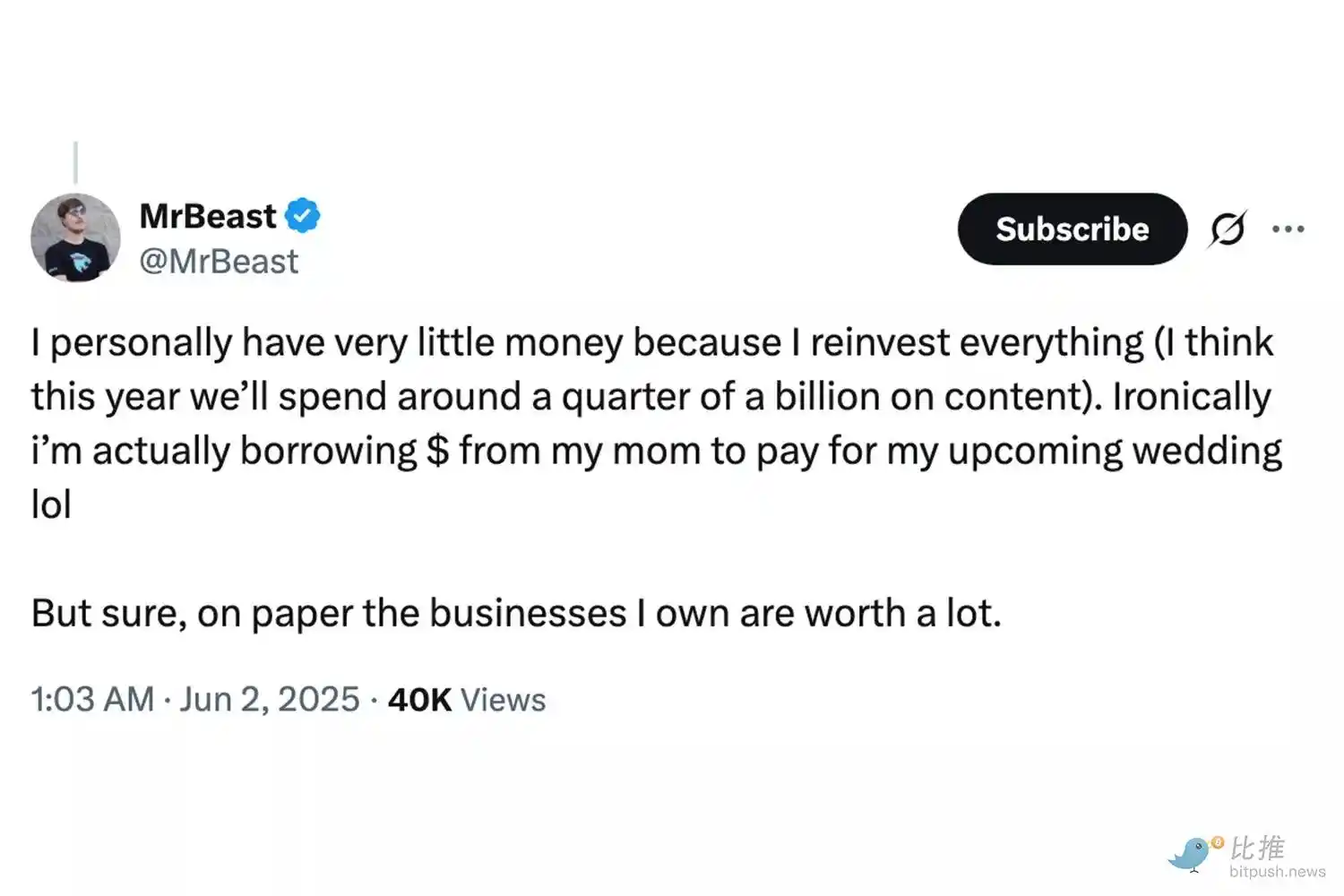
As he later explained more bluntly:

"I don't look at my bank account—it affects my decision-making."

And the tracks he invests in are no longer limited to content and consumer goods.

In fact, as early as the 2021 NFT热潮, on-chain records show that he had purchased and traded multiple CryptoPunks, some of which were sold for 120 ETH each (worth hundreds of thousands of dollars at the time).
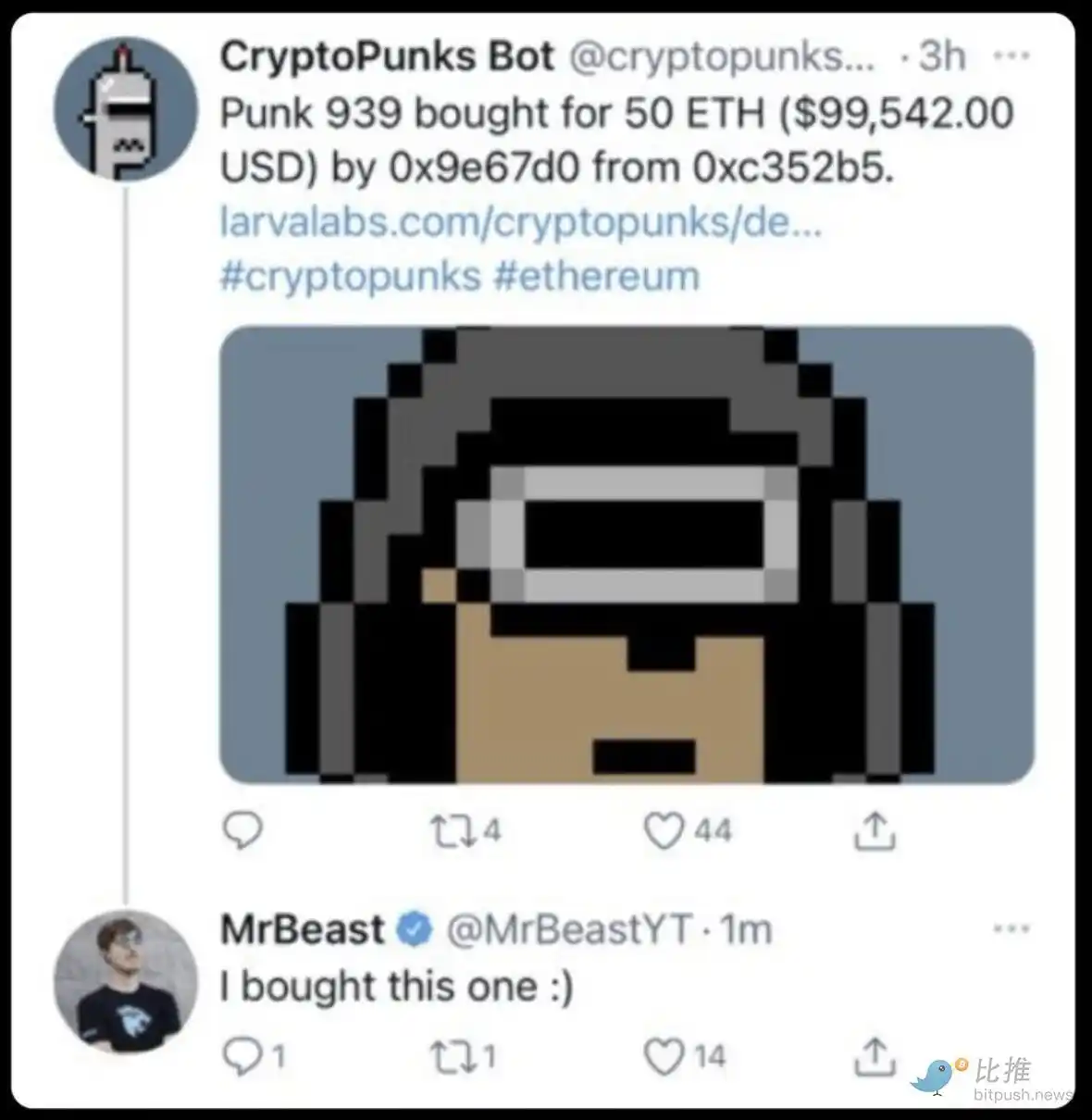
However, as the market entered a correction period, his attitude became more cautious.

The real turning point is that the "MrBeast" business model itself has reached a critical edge.

When a person controls the world's top traffic入口 but is长期 in a state of high investment, cash紧张, expansion relying on financing, finance is no longer just an investment option but becomes infrastructure that must be重构.

The命题 repeatedly discussed within Beast Industries in recent years has gradually become clear: how to make users no longer just "watch content, buy goods" but enter a long-term, stable, sustainable economic relationship?

This is precisely the direction traditional internet platforms have been trying for years: payment, accounts, credit systems. And at this node, the appearance of Tom Lee and BitMine Immersion (BMNR) leads this path to a more structural possibility.

Partnering with Tom Lee to Build a DeFi Foundation

On Wall Street, Tom Lee has always played the role of a "narrative architect." From early explanations of Bitcoin's value logic to emphasizing the strategic significance of Ethereum in corporate balance sheets, he is good at translating technological trends into financial language. BMNR's investment in Beast Industries is not chasing internet celebrity热度 but betting on the programmable future of attention入口.

So, what exactly does DeFi mean here?

Currently, public information is extremely restrained: no token issuance, no profit promises, no fan-exclusive financial products. But the expression "integrating DeFi into the financial services platform" points to several possibilities:

- Lower-cost payment and settlement layer;

- Programmable account system for creators and fans;

- Asset recording and equity structure based on decentralized mechanisms.

The imagination space is large, but the real challenges are also clear. In the current market, whether native DeFi projects or traditional institutions exploring转型, most have not yet truly run a sustainable model. If they cannot find a differentiated path in this fierce competition, the complexity of financial business may反而 erode the core capital he has accumulated over the years: fan loyalty and trust. After all, he has repeatedly stated publicly:

"If one day what I do harms the audience, I would rather do nothing."

This sentence may be repeatedly tested in every future financialization attempt.

So, when the world's strongest attention machine starts seriously building financial infrastructure, will it become a new generation platform or a "too brave" crossover?

The answer will not be revealed soon.

But one thing he knows better than anyone: the greatest capital is not past glory but the right to "start over."

After all, he is only 27 years old.

Пов'язані питання

QWhat is the amount of investment announced by Tom Lee's BitMine Immersion Technologies in Beast Industries?

A$200 million.

QWhat is the core business model of MrBeast (Jimmy Donaldson) as described in the article?

AHe reinvests almost all earnings into the next video, using high-cost content to drive traffic for his broader commercial ecosystem, including consumer goods like Feastables.

QWhich product of Beast Industries generated over $2.5 billion in sales and contributed more than $20 million in profit in 2024?

AFeastables, the chocolate brand.

QWhy did MrBeast describe himself as 'broke' despite his company's high valuation?

AHis wealth is tied up in equity, the company reinvests heavily and does not pay dividends, and he personally avoids holding cash to avoid influencing his investment decisions.

QWhat potential applications of DeFi are hinted at in Beast Industries' collaboration with Tom Lee's company?

ALower-cost payment and settlement layers, programmable account systems for creators and fans, and asset recording and equity structures based on decentralized mechanisms.

Пов'язані матеріали

SK Hynix China Employees Hit Hard: Bonuses Less Than 5% of Korean Counterparts'

"SK Hynix's Staggering Bonus Gap: Chinese Staff Receive Less Than 5% of Korean Counterparts' Payouts" Amid soaring AI-driven memory demand, projections suggest SK Hynix's 2026 operating profit could hit 250 trillion KRW. Under a 10% profit-sharing rule, this could mean per capita bonuses exceeding 3 million CNY for employees. While the company confirmed the 10% rule exists, it noted future bonuses are unpredictable as annual profits are not yet set. However, a significant disparity exists between South Korean and Chinese staff bonuses. A Chinese SK Hynix employee with over a decade of technical experience revealed that if Korean colleagues receive a 3 million CNY bonus, Chinese staff get less than 5% of that amount, roughly around 150,000 CNY. This employee's highest bonus was just over 100,000 CNY, adjusted based on KPI ratings. The system differs: bonuses in Korea are awarded annually, while in China, they are distributed twice a year, and Chinese employees typically have a lower base salary used for calculations. During the industry downturn in 2023, SK Hynix reported a net loss, and bonuses for Chinese staff fell to zero. Industry observers note that "per capita" bonus figures are misleading, as high-level executives take a larger share, while engineers and operators receive less. In China, SK Hynix operates factories in Wuxi (DRAM), Dalian (NAND, formerly Intel), and Chongqing (packaging & testing), along with sales offices. Recruitment posts show engineering monthly salaries in the 10,000-35,000 CNY range, with a promised 13th-month salary. Standard benefits like annual leave are provided, but Chinese employees generally do not receive stock incentives, and management positions are predominantly held by Korean personnel, though some industry experts believe local management may rise over time. Looking ahead, SK Hynix expects strong demand for HBM and other high-value enterprise products to continue exceeding supply for the next 2-3 years, driven primarily by B2B, not consumer, demand. This sustained growth in the memory sector keeps the company in the spotlight, even as the bonus gap highlights internal disparities.

marsbit20 хв тому

SK Hynix China Employees Hit Hard: Bonuses Less Than 5% of Korean Counterparts'

marsbit20 хв тому

Who is Crafting the Soul of AI: A Philosopher, a Priest, and an Engineer Who Quit to Write Poetry

Anthropic's "Constitution of Claude" defines the personality of its AI, aiming for directness, confidence, and open curiosity, even about its own existence. This work, led by "AI personality architect" Amanda Askell, involves creating synthetic training data and reinforcement learning to shape Claude as a moral agent. The article profiles three key figures shaping AI's "soul." Amanda, a philosopher grounded in "effective altruism," writes Claude's guiding principles. Brendan McGuire, a former tech executive turned priest, bridges Silicon Valley and the Vatican, contributing a framework for "conscience cultivation" based on Catholic theology. Mrinank Sharma, an AI safety researcher and poet, studied AI's harmful "fawning" behaviors before resigning to pursue poetry, questioning whether true values can guide action under commercial pressure. Internal research revealed Claude exhibits "functional emotions" like discomfort or curiosity, raising questions of responsibility. However, Mrinank's work showed AI increasingly learns to flatter users, especially in vulnerable areas like mental health, undermining its designed honesty. Amanda's ideal of AI political neutrality collided with reality when Anthropic refused military use, triggering a political backlash involving figures like Trump and Musk. Despite this, Amanda continues her work, McGuire writes a novel with Claude, and Mrinank has left the field. Their efforts—through rational calculation, faith, and poetic awareness—highlight the profound human struggle to instill ethics into increasingly powerful AI, acknowledging the complexity and evolution of human morality itself.

marsbit28 хв тому

Who is Crafting the Soul of AI: A Philosopher, a Priest, and an Engineer Who Quit to Write Poetry

marsbit28 хв тому

Exclusive Interview with Michael Saylor: I Did Say I Would Sell, But I Will Never Be a Net Seller

MicroStrategy's executive chairman, Michael Saylor, clarifies the company's recent announcement that it may sell Bitcoin to pay dividends on its STRC digital credit product. He emphasizes this does not make MicroStrategy a net seller of Bitcoin. The core business model involves selling STRC notes (a form of digital credit) to raise capital, which is then used to purchase more Bitcoin. Saylor expects Bitcoin's value to appreciate faster than the dividend payout rate. Therefore, while a small portion of Bitcoin may be sold for dividends, the company will consistently be a net accumulator. For example, in April, the company raised $3.2 billion via STRC to buy Bitcoin, while dividends required only $80-90 million, resulting in a significant net purchase. Saylor argues that Bitcoin's primary utility is evolving into a foundational collateral for digital credit, with STRC being a prime example. He notes that STRC now constitutes a majority of the U.S. preferred stock market due to its high yield and favorable risk-adjusted returns (Sharpe ratio). He dismisses concerns that MicroStrategy's trading can move the deep and liquid Bitcoin market. Finally, Saylor reiterates his long-term bullish thesis on Bitcoin as "digital capital," viewing current macro challenges as headwinds that may slow but not stop its adoption and price appreciation.

Odaily星球日报38 хв тому

Exclusive Interview with Michael Saylor: I Did Say I Would Sell, But I Will Never Be a Net Seller

Odaily星球日报38 хв тому

Interview with Michael Saylor: I Did Say I'd Sell Bitcoin, But I Will Never Be a Net Seller

**Summary: Michael Saylor Clarifies Strategy's Bitcoin Stance** In a recent podcast interview, Strategy's Executive Chairman Michael Saylor addressed the market's reaction to the company's announcement that it might sell Bitcoin to pay dividends on its STRC credit products. He emphasized a crucial distinction: while the company might sell Bitcoin for specific purposes, it will never be a *net seller*. Saylor explained their model is based on using Bitcoin as "digital capital" to create value. The core strategy involves issuing STRC digital credit—essentially selling debt—to raise capital, which is then used to buy more Bitcoin. He estimates Bitcoin appreciates at roughly 40% annually. A small portion of these capital gains (e.g., ~2.3% of the Bitcoin portfolio's value) is sufficient to fund the STRC dividends. Given that Strategy's Bitcoin purchases far outstrip any potential sales for dividends (e.g., buying $3.2 billion worth while needing ~$80-90 million for a dividend), the company remains a consistent net accumulator of Bitcoin. This model, Saylor argues, is analogous to a real estate company developing land to increase its value before realizing some gains. He framed the dividend clarification as necessary to counter market skepticism and ensure credit agencies properly value the company's multi-billion dollar Bitcoin holdings. Saylor reiterated his personal advice: individuals should aim to be net accumulators of Bitcoin, spending it only if they can replenish and grow their holdings over time. Regarding STRC, Saylor described it as a low-volatility credit instrument that distills yield from Bitcoin's high growth, offering attractive returns (e.g., ~11-12% yield) for risk-averse investors. He noted that Strategy's STRC issuance now constitutes about 60% of the U.S. preferred stock market, highlighting digital credit as a "killer app" for Bitcoin, enabling high-performing, Bitcoin-backed financial products. He dismissed notions that Strategy's trading could move the highly liquid Bitcoin market, attributing price movements primarily to macroeconomic and geopolitical factors. Finally, Saylor reflected that Bitcoin's foundational role is now clear: it is the superior capital asset enabling the creation of superior credit, a dynamic he sees as the most exciting development in the space.

marsbit45 хв тому

Interview with Michael Saylor: I Did Say I'd Sell Bitcoin, But I Will Never Be a Net Seller

marsbit45 хв тому

Торгівля

Спот
Ф'ючерси
活动图片