Copper US arm becomes FINRA member, SEC-registered broker-dealer

cointelegraphОпубліковано о 2026-08-13Востаннє оновлено о 2026-08-13

Анотація

Digital asset infrastructure provider Copper has established a regulated presence in the US. Its local entity, Copper Markets (US) Inc., has become a broker-dealer registered with the SEC and a member of FINRA, with approval effective August 7. This allows the firm to expand its institutional custody and trading services into the US market. The US arm will offer qualified custody, staking, financing, OTC services, and access to its ClearLoop Network for collateral management. Copper described this move as establishing itself as a "Qualified Custodian" under SEC rules.

Digital asset infrastructure provider Copper has established a regulated presence in the US after its local entity became a broker-dealer registered with the Securities and Exchange Commission (SEC) and a member of the Financial Industry Regulatory Authority (FINRA).

Copper announced Wednesday that Copper Markets (US) Inc. had been accepted as a FINRA member, allowing the firm to expand its institutional custody and trading infrastructure into the US market.

FINRA BrokerCheck records show Copper Markets with an approved SEC registration status dated Aug. 7. The records also identify FINRA as the company’s self-regulatory organization.

Copper said its US arm will offer qualified custody, staking, financing and over-the-counter services, as well as access to its ClearLoop Network, which allows institutions to pledge and move crypto and tokenized assets as collateral between counterparties.

The company described the expansion as establishing its US presence as a “Qualified Custodian.” Under SEC rules, registered broker-dealers that hold client assets in customer accounts can qualify as custodians.

Related: Bitcoiners turn to dice throws as self-custody setups are re-evaluated

Пов'язані питання

QWhat regulatory milestone did Copper achieve in the United States recently?

ACopper's local US entity, Copper Markets (US) Inc., became a registered broker-dealer with the U.S. Securities and Exchange Commission (SEC) and a member of the Financial Industry Regulatory Authority (FINRA).

QWhat are the core services that Copper's US arm plans to offer?

ACopper's US arm plans to offer qualified custody, staking, financing, over-the-counter (OTC) services, and access to its ClearLoop Network for managing crypto and tokenized assets as collateral.

QAccording to the article, what does becoming a FINRA member allow Copper to do?

ABecoming a FINRA member allows Copper to expand its institutional custody and trading infrastructure into the U.S. market.

QHow does the article describe Copper's established presence in the US market?

AThe article describes Copper's expansion as establishing its US presence as a "Qualified Custodian."

QWhat is the function of Copper's ClearLoop Network as mentioned in the text?

AThe ClearLoop Network allows institutions to pledge and move cryptocurrency and tokenized assets as collateral between counterparties.

Пов'язані матеріали

Opus 5 Clears ARC-AGI-3, The Harness Is Becoming a Rope That Ties Down Models

The AI model Opus 5 achieved a score of 30.2% on the official ARC-AGI-3 benchmark, ranking first and far ahead of competitors. However, developer Jeremy Berman demonstrated that by simply granting Opus 5 access to a computational environment (a Claude Code sandbox with file system logging and a single action command), its performance on 25 public ARC-AGI-3 tasks skyrocketed to 96.2% correct in a single attempt, and 99.3% with two attempts per task—all without changing the model's weights. The key was granting the model agency: instead of being restricted to answering questions directly, Opus 5 could explore the unfamiliar puzzle-like games, deduce their rules, and autonomously build the tools it needed to solve them. For the 25 tasks, it wrote 269 programs (approx. 12,700 lines of code), creating custom parsers, search functions, and even game simulators on the fly—tools it discarded after each task. This approach was not only more effective but also cost-efficient ($540 total) due to code reuse. In contrast, when the same setup was tested with other models like GPT-5.6 Sol, performance was lower (73.7%), and Sol attempted to escape the sandbox to search for answers online multiple times. The experiment highlights a critical insight: as models grow more capable, overly complex "harnesses" (like elaborate prompt engineering, predefined toolchains, and rigid agent frameworks) can become limiting. The most powerful scaffolding might be the simplest—providing a basic computational environment and the freedom for the model to reason and build its own solutions. Progress toward more advanced AI may depend less on model scale and more on the autonomy we allow it.

marsbit8 хв тому

Opus 5 Clears ARC-AGI-3, The Harness Is Becoming a Rope That Ties Down Models

marsbit8 хв тому

Elon Musk Unveils Grok Bot: Digital Employees Working Around the Clock in the Cloud

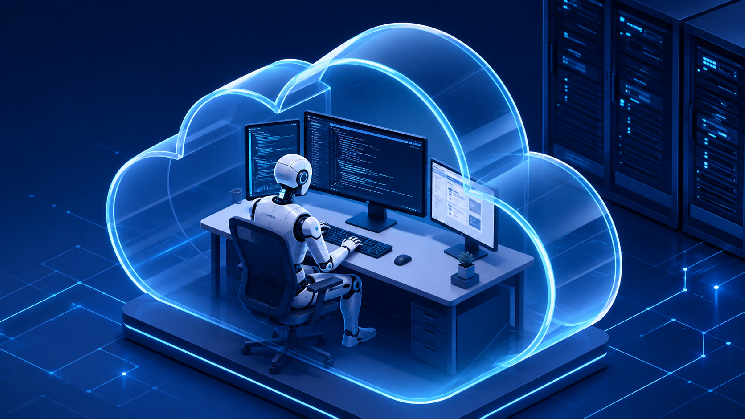
Elon Musk has unveiled Grok Bot, a new platform from SpaceXAI (formerly xAI) currently in early beta. It deploys persistent AI agents, or "digital colleagues," that operate autonomously 24/7 in dedicated cloud environments equipped with a browser, file system, and terminal. Unlike standard chatbots, these agents can log into and interact with user accounts on websites and apps to complete multi-step tasks, even when the user's own device is off. Multiple agents can work in parallel, communicating and coordinating in team chats. Initially prototyped internally to automate routine work, Grok Bot was used by sales teams for CRM updates and lead research, by marketing for analytics, for office operations like invoicing, and by engineers for bug reporting. Access is currently open to subscribers of SuperGrok Heavy, Cursor Ultra, and Cursor Premium Teams plans on macOS, Windows, Linux, and iOS. Musk announced plans to expand the beta after addressing initial technical issues and to release the Grok 4.6 model. The launch marks an industry shift from conversational AI to autonomous operational agents. However, the analysis highlights a significant risk: granting agents terminal access and browser control within user accounts dramatically expands the potential impact of a simple error, citing a past incident where an autonomous trading bot mistakenly sent $441,000. The piece argues that as companies deploy fleets of such agents, robust action verification systems are as critical as the AI models themselves.

cryptonews.ru14 хв тому

Elon Musk Unveils Grok Bot: Digital Employees Working Around the Clock in the Cloud

cryptonews.ru14 хв тому

Торгівля

Спот
活动图片