At Consensus Hong Kong 2026, the narrative focus of institutional investors is undergoing a structural shift. As regulatory frameworks mature, crypto assets are accelerating their integration into institutional portfolios, moving beyond exploratory allocations. However, this transition towards multi-asset allocation has highlighted a new theme: although portfolios are expanding across asset classes, cross-system friction is diluting capital efficiency.
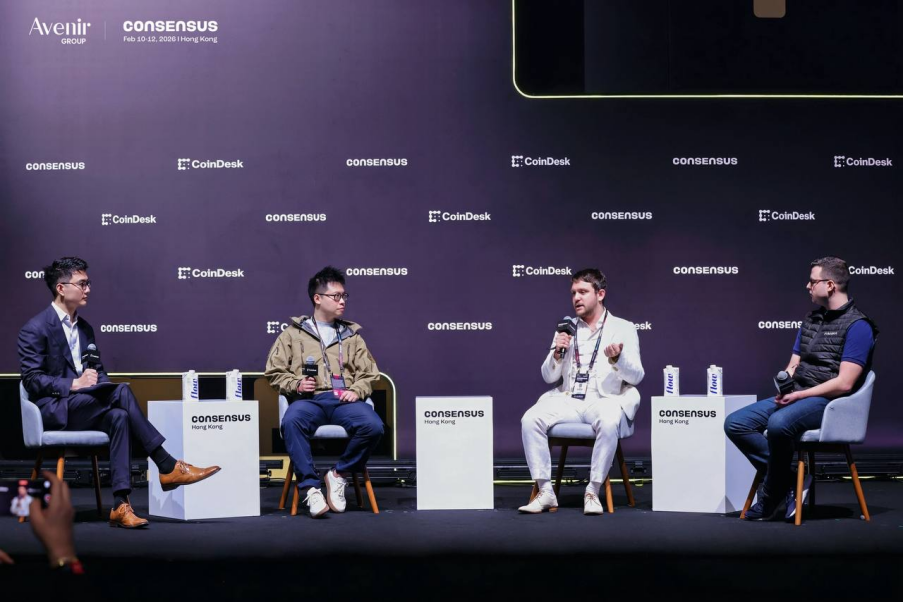
Avenir Group, an investment group dedicated to promoting the integration of traditional finance and digital assets, has observed that as the scale of institutional participation grows, the completeness of infrastructure is increasingly impacting institutional capital efficiency. As an official partner of Consensus Hong Kong 2026, Avenir Group initiated a roundtable discussion titled "Next-Generation Institutional Trading Infrastructure." Industry leaders from global leading tech brokerage Tiger Brokers, Swiss FINMA-regulated crypto bank AMINA Bank AG (“AMINA Bank”), and leading multi-asset institutional trading platform CoinRoutes systematically deconstructed the reasons behind constrained capital efficiency in a multi-asset environment and jointly explored potential evolutionary directions.
Industry Consensus: A Foundational Restructuring from "Asset-Oriented" to "Capital-Oriented"
During the discussion, a core consensus was reached: the industry must shift from an "Asset-Centric" infrastructure framework to a "Capital-Centric" framework.
In the past, an asset-centric model, optimized for single asset classes, could meet demands. However, in the complex era of multi-asset markets, this model may lead to a certain degree of capital efficiency drain. When institutions manage traditional and digital assets in parallel, the inherent differences between these assets—from price volatility to clearing and settlement cycles—result in hidden capital occupation and execution friction. These are no longer mere operational inconveniences but can become significant structural constraints affecting overall capital efficiency.
Roundtable guests shared deep insights from different parts of the value chain:
· Holistic Capital Efficiency Utilization: Felix Huang Shuojun, Global Partner at Tiger Brokers International, pointed out that traditional markets improve capital utilization through margin interoperability; however, the inclusion of digital assets disrupts this synergy. Existing systems are often designed around "asset isolation" rather than "overall capital efficiency," making it difficult for institutions to achieve cross-asset capital allocation within a unified framework.
· Efficient Execution and Liquidity Linkage: Ian Weisberger, CEO and Co-Founder of CoinRoutes, added that misaligned clearing rhythms leave substantial funds idle during trading gaps. What institutions urgently need is unified execution capability across markets and for multi-leg strategies, as well as flexible rotation of positions and risk across different asset classes.
· Compliance-First Infrastructure: Myles Harrison, Chief Product Officer at AMINA Bank, emphasized that compliance is not the opposite of efficiency but a prerequisite for the safe operation of the system. The pain point lies in the industry's lack of a natively multi-asset supportive infrastructure that also possesses high transparency and scalability, thereby unlocking capital potential within a global compliance framework.
Jacob Zhong, Managing Partner of Strategic Investment and Cooperation at Avenir Group, stated: "Synthesizing industry insights, the direction of infrastructure evolution has become relatively clear. As institutional participation in multi-asset environments deepens, the market increasingly requires an infrastructure capable of unified cross-asset capital allocation, synchronized trading execution and clearing rhythms, and embedding compliance capabilities natively into the system (rather than as an afterthought patch). In this direction, more integrated and regulation-adaptive infrastructure is gradually becoming a crucial support for enhancing capital efficiency and enabling cross-asset operations at scale."
Building the Ecosystem Together: Advancing Financial Infrastructure Evolution Through Collaborative Action
At the conclusion of the thematic discussion, Avenir Group, Tiger Brokers, AMINA Bank, and CoinRoutes formally signed a Memorandum of Understanding (MOU) to explore potential future cooperation.
The integration of traditional finance and digital assets is not merely a technical or product-level consolidation but a progressive, systematic compliance engineering project. As multi-asset allocation becomes the norm, the competitive focus among institutions is shifting—it no longer depends solely on market access capabilities but on the systemic ability to manage and flexibly allocate capital under a compliance framework.
Avenir Group looks forward to collaborating with a broader range of financial institutions and technology partners. By fostering dialogue and cooperation across the entire ecosystem, Avenir Group aims to join hands with industry partners to jointly promote a more synergistic and scalable infrastructure path, gradually turning the enhancement of capital efficiency from an industry consensus into verifiable practice.
About Avenir Group
Avenir Group is a pioneering investment group focused on driving the integration of traditional finance and digital assets, building the financial infrastructure of the future. The group adopts an integrated "Investment—Incubation—Operation" strategy, with a core investment portfolio focusing on digital asset management, trading and financial services platforms, payment finance (PayFi) infrastructure, and real-world asset (RWA) tokenization, providing the industry with institutional-grade products and services, and continuously promoting financial innovation and the development of emerging technologies. As the largest institutional holder of Bitcoin ETFs in Asia, Avenir Group expands its business globally, covering Hong Kong, Singapore, Tokyo, London, San Francisco, and more. Leveraging robust capital strength and professional operational capabilities, the group is committed to becoming a strategic hub connecting Eastern and Western capital, driving efficient global capital flow and collaboration. Learn more: https://avenirx.com






