Compliance Guide for Utility Token Issuance

marsbitОпубліковано о 2025-12-17Востаннє оновлено о 2025-12-17

Анотація

"Functional Token Issuance Compliance Guide" This guide outlines the legal framework for issuing utility tokens, emphasizing that regulatory risk depends not on the token's description, but on its economic reality. A token's classification as a security is determined by market behavior and investor expectations, not technical promises, as seen in cases like Telegram's TON. Projects fall into two main categories with different compliance paths: Infrastructure projects (e.g., Bitcoin, Celestia) often use fair launches for lower risk, while Application-layer projects (e.g., DeFi, GameFi) require careful legal structuring due to higher regulatory scrutiny. Key stages and actions are detailed: * **Testnet Phase:** Separate development (DevCo) and token/ecosystem (Foundation) entities. Use equity + token warrants for fundraising, not direct token sales, to avoid triggering securities laws prematurely. * **Mainnet Launch (TGE):** This is a high-risk phase. Ensure clear disclosure of token utility, allocation, lock-ups, and conduct KYC/AML. Avoid marketing that promises profit. Public airdrops and sales are closely watched. * **DAO Stage:** Achieve true decentralization by relinquishing team control to community governance (e.g., Uniswap DAO). This "verifiable exit" is crucial for reducing securities risk. The core compliance challenge is proactively demonstrating the token is *not* a security by emphasizing its functional use, avoiding profit promises, and progressively de...

Original Author: Shao Jiadian

Introduction

In recent years, "issuing tokens" has become the most sensitive term in the Web3 world. Some have become famous overnight because of it, while others have faced investigations, refunds, or account bans. The issue isn't with "issuing" itself, but with "how to issue." While some projects list on major exchanges, build communities, and establish DAOs, others are deemed illegal securities offerings. The difference lies in whether it's done within a legal framework.

In 2025, utility tokens are no longer a gray area. Regulators are scrutinizing every TGE, every SAFT, and every "airdrop" with a magnifying glass.

This article is for every Web3 project founder: On the journey from Testnet to DAO, the legal structure is the skeleton of your project. Before issuing tokens, learn to build that skeleton.

Note: This article is based on an international legal perspective and does not target or apply to the legal environment of mainland China.

Token "Identity" Isn't Determined by Your Whitepaper

Many teams claim, "Our token is just a utility token with no profit distribution, so it should be fine, right?"

But reality is different. In the eyes of regulators, a token's "identity" depends on market behavior, not how you describe it.

A classic case is Telegram's TON project.
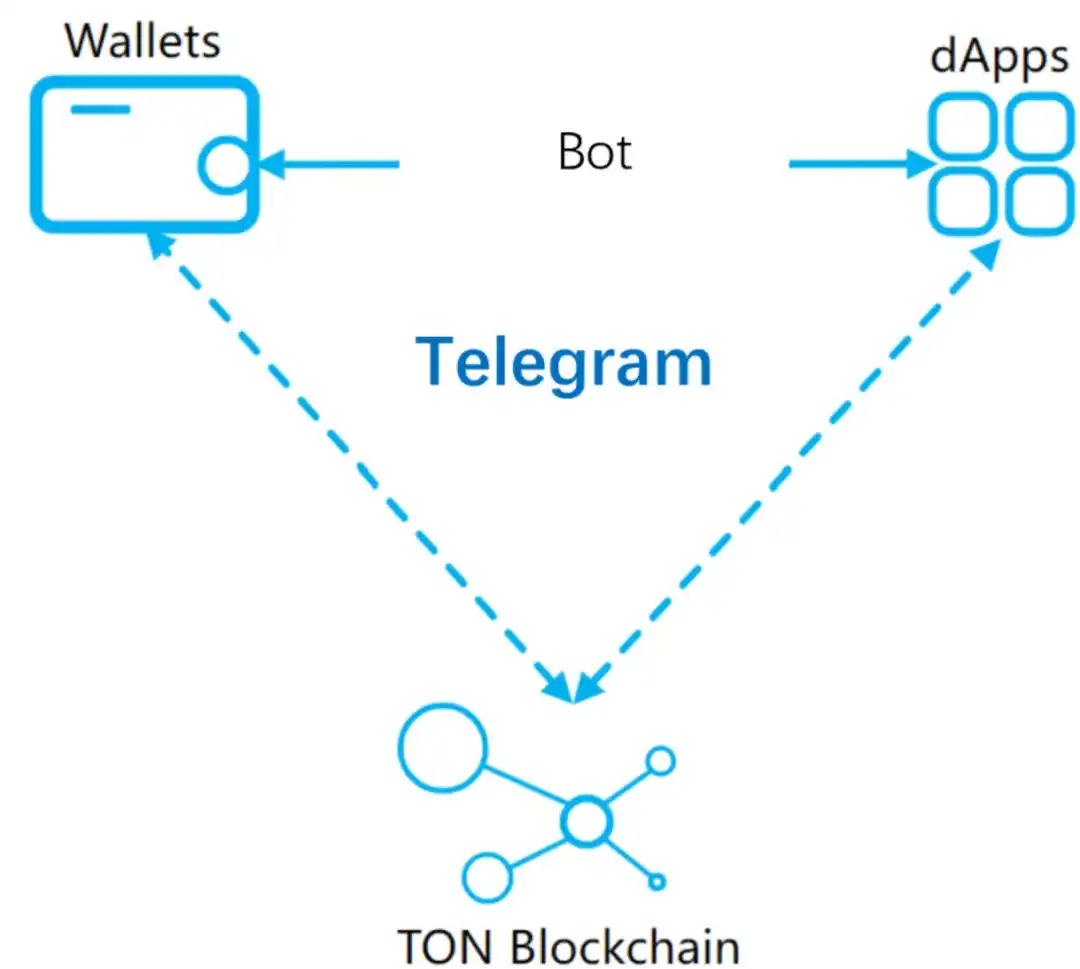
Telegram raised $1.7 billion from private investors, claiming the tokens were merely "fuel" for a future communication network;

However, the U.S. SEC deemed this financing an unregistered securities offering—because investors' intent was clearly "future appreciation," not "immediate use."

The result: Telegram refunded investors and paid fines, and the TON network was forced to operate independently from Telegram.

Lesson: Regulators focus on "investment expectations," not "technical vision." As long as you use investors' money to build an ecosystem, it carries securities attributes.

So, don't幻想 use the "utility" label to eliminate risks. Token nature evolves dynamically—early stages may constitute investment contracts, and only after mainnet launch can they become genuine usage credentials.

First, Identify Your Project Type

What determines your compliance path is not the token's name or total supply, but the project type.

  • Infrastructure (Infra):

Such as Layer1, Layer2, public chains, ZK, storage protocols.

Typically adopt "Fair Launch," with no pre-mining or SAFTs; tokens are generated by node consensus.

Examples include Bitcoin, Celestia, EigenLayer.

Advantages: Naturally decentralized, low regulatory risk; Disadvantages: Difficult to fundraise, long development cycles.

  • Application Layer Projects (App Layer):

Such as DeFi, GameFi, SocialFi.

The team pre-mints tokens (TGE) and manages the ecosystem treasury. Typical examples include Uniswap, Axie Infinity, Friend.tech.

Clear business models but high compliance risks: Sales, airdrops, and circulation all require regulatory disclosure and KYC handling.

Conclusion: Infrastructure survives on consensus; application projects rely on structure for survival. Without proper structure, all "Tokenomics" are empty talk.

Testnet Phase: Don't Rush to Issue Tokens; Build the "Legal Skeleton" First

Many teams start seeking investors, signing SAFTs, and pre-mining tokens during the Testnet phase.

But the most common mistake at this stage is:

Taking investors' money while still claiming "this is just a utility token."

The U.S. Filecoin is a cautionary tale. It raised about $200 million via SAFT before mainnet launch. Although it received an SEC exemption, delays in launch and temporary unusability led investors to question its "securities attributes," resulting in massive compliance costs to rectify.

The correct approach:

  • Separate two entities:
  • DevCo (Development Company) handles technical development and intellectual property;
  • Foundation / TokenCo manages ecosystem building and future governance.
  • Fundraising method: Use equity + Token Warrant structures instead of direct token sales.

Investors obtain rights to future tokens, not immediate token assets.

This method was first adopted by projects like Solana and Avalanche, allowing early investors to participate in ecosystem building without directly triggering securities sales.

Principle: The legal structure in the early stages is like the genesis block. One logical error, and compliance costs may multiply tenfold.

Mainnet Issuance (TGE): The Moment Most Likely to Attract Regulatory Attention

Once tokens can be traded and have a price, they enter regulatory radar—especially during public distributions like airdrops, LBPs (Liquidity Bootstrapping Pools), or Launchpad events.

  • Public Chain Projects:

Such as Celestia, Aptos, Sui, etc., typically generate tokens automatically via validator networks at TGE.

The team doesn't directly participate in sales; the distribution is decentralized, posing the lowest regulatory risk.

  • Application Layer Projects:

Such as Arbitrum and Optimism airdrops, or Blur and Friend.tech community distributions,

have drawn attention from regulators in some jurisdictions regarding whether "distribution and voting incentives constitute securities sales."

The safety line at TGE lies in disclosure and usability:

1. Clearly define token use cases and functionality;

2. Disclose token allocation ratios, lock-up periods, and vesting mechanisms;

3. Implement KYC/AML for investors and users;

4. Avoid "expected returns" promotions.

For example, during TGE, Arbitrum Foundation explicitly stated: its airdrop was solely for governance purposes, not representing investment or profit rights; and it gradually reduced foundation control in community governance—key to "de-securitizing" the token.
DAO Phase: Learn to "Let Go" and Truly Decentralize the Project

Many projects end after "issuing tokens," but the real challenge is—how to relinquish control and let tokens become public goods.

Take Uniswap DAO as an example:

  • Early development and governance were led by Uniswap Labs;
  • Later, Uniswap Foundation managed the treasury and funded ecosystem projects;
  • The community votes with UNI to decide protocol upgrades and parameter adjustments.

This structure makes it harder for regulators to identify a "centralized issuer" and boosts community trust.

In contrast, projects that fail to handle the DAO transition well, such as some GameFi or NFT ecosystems, where teams still control most tokens and voting rights, are seen as "pseudo-decentralized" and retain securities risks.

Decentralization isn't about "neglect," but "verifiable exit." A safe DAO architecture balances code, foundation, and community.

What Regulators Look For: Can You Prove "This Is Not a Security"?

Regulators aren't afraid of token issuance; they're concerned when you say "it's not a security" but act like it is.

In 2023, the SEC's lawsuits against Coinbase, Kraken, and Binance.US listed dozens of "utility tokens," asserting that during sales and marketing, they exhibited "investment contract" characteristics. This means that if a project promotes "expected returns" during token sales, even if the token has utility, it may be deemed a security.

Thus, compliance key is dynamic response:

  • Testnet → Focus on technology and development compliance;
  • TGE → Emphasize use cases and functional attributes;
  • DAO → Reduce team control, strengthen governance mechanisms.

Risks vary at each stage; every upgrade requires re-evaluating token positioning. Compliance isn't a stamp but continuous iteration.

Conclusion: Projects That Endure Cycles Rely on "Stability," Not "Speed"

Many projects fail not due to poor technology but flawed structure. While others talk about "gains," "airdrops," and "exchange listings," truly smart founders are already building legal frameworks, writing compliance logic, and planning DAO transitions.

Utility token issuance isn't about bypassing regulation but using law to prove you don't need it. When code takes over rules, law becomes your firewall.

Пов'язані питання

QWhat is the legal identity of a utility token determined by, according to the article?

AThe legal identity of a utility token is determined by market behavior and investment expectations, not by how the project describes it in its whitepaper. Regulators focus on whether the token sale constitutes an investment contract, based on the expectation of profit, rather than its technical vision or intended use.

QWhat are the two main types of projects mentioned, and how do their compliance paths differ?

AThe two main types are Infrastructure projects (e.g., Layer1, Layer2, public chains) and Application Layer projects (e.g., DeFi, GameFi). Infrastructure projects often use a 'Fair Launch' with no pre-mining or SAFTs, leading to lower regulatory risk but greater difficulty in fundraising. Application Layer projects typically pre-mint tokens, have clearer business models, but face higher compliance risks requiring careful handling of sales, airdrops, and regulatory disclosures.

QWhat is the recommended legal structure during the Testnet phase to avoid regulatory issues?

AThe recommended structure is to separate the project into two entities: a DevCo for technical development and IP, and a Foundation/TokenCo for ecosystem building and future governance. Funding should be raised using 'equity + Token Warrant' structures instead of direct token sales, granting investors rights to future tokens rather than immediate assets to avoid triggering securities regulations prematurely.

QWhat are key steps to enhance compliance during a Token Generation Event (TGE)?

AKey steps during TGE include: 1) Clearly defining the token's use cases and functionality, 2) Disclosing token allocation, lock-up periods, and release mechanisms, 3) Implementing KYC/AML procedures for investors and users, and 4) Avoiding promotional language that suggests an expectation of profit or investment return.

QHow does the article define the transition to a DAO for achieving true decentralization and reducing regulatory risk?

AThe transition to a DAO involves the project team gradually relinquishing control to the community. This is achieved by establishing a verifiable exit strategy where code, a foundation, and the community form a balanced governance structure. This reduces the perception of a centralised issuer and demonstrates that the token is a public good rather than a security, as seen in successful models like Uniswap DAO.

Пов'язані матеріали

New Fire Research Institute: Inflation May Become a Stubborn Problem, Can Cryptocurrencies Achieve Independent Performance in the Short Term?

New Fire Research Institute argues that despite the recent U.S. June CPI decline to 3.5% year-on-year—primarily driven by energy—core goods inflation remains persistent, with core PCE likely showing slight growth. Federal Reserve Chairman Wash has emphasized the Fed's independence and a "zero tolerance" stance on inflation, suggesting a continued hawkish posture that will pressure risk assets, especially if energy prices rise again. Concurrently, the semiconductor memory sector faces structural pressures, as seen in significant sell-offs for Micron and SK Hynix. High leverage in markets like South Korea is triggering deleveraging, amplifying volatility. Investors are also questioning the sustainability of AI-related capital expenditures. In contrast, the crypto market showed relative stability last week, with BTC and ETH gaining slightly. Positive developments include a shift to net inflows for U.S. Bitcoin spot ETFs, a narrowing Coinbase discount, and strong activity on the Robinhood Chain ecosystem. The potential advancement of the U.S. CLARITY Act provides a policy catalyst. Overall, the probability of an independent crypto bull run in the short term is low, given overarching macro pressures. However, fundamentals are improving with ETF inflows and robust on-chain activity, providing solid support. Technically, BTC and ETH show strong support at key moving averages. New Fire Research maintains that Bitcoin around $60,000 represents a high-value allocation zone, with limited downside risk near current levels. The true bull market catalyst awaits a confirmed market bottom combined with a macro policy shift and legislative progress.

marsbit24 хв тому

New Fire Research Institute: Inflation May Become a Stubborn Problem, Can Cryptocurrencies Achieve Independent Performance in the Short Term?

marsbit24 хв тому

Base Under Pressure

**Title: The Pressure Mounts for Base** Base, the Ethereum Layer 2 scaling solution backed by Coinbase, is facing significant pressure and public scrutiny from its leadership following the launch of Robinhood Chain. Base co-founder Jesse Pollak recently acknowledged strategic missteps, admitting that the chain's past focus on social and creator tokens (e.g., through Farcaster, Zora) failed to deliver sustainable adoption. He has refocused on core infrastructure, handing leadership of the Base App back to Coinbase's Cobie. While Base remains a top L2 contender alongside OP Mainnet and Arbitrum, and boasts the highest TVL (nearly $12B), its weaknesses are being highlighted by the new competitor. Key criticisms include its slow progress on decentralization. Base has faced issues with its single sequencer causing block production halts, and L2BEAT is reportedly considering downgrading its decentralization rating from Stage 1 to Stage 0. This contrasts sharply with the rapid initial success of Robinhood Chain, whose DEX quickly entered the top five by volume. The leadership styles of the parent companies are also being compared: Robinhood's CEO actively engages with new projects, while a recent incident where Coinbase's Brian Armstrong briefly changed his profile picture—sparking and then crashing a related meme token—drew community ire and mockery. Pollak stated Base is working with Coinbase on tokenized stocks backed 1:1 by real equity, differentiating it from Robinhood's derivatives model. However, the article argues that Base's most urgent task is to address its long-standing technical and trust issues. With more traditional finance players likely to emulate Robinhood's path, Base must use this competitive pressure to solidify its position as long-term financial infrastructure.

Foresight News41 хв тому

Base Under Pressure

Foresight News41 хв тому

White House Concession Removes Ethical Hurdle, Clarity Act Races Against Final Window Before Recess?

On July 21st, industry sources reported that the Trump administration has agreed to include an ethics provision in the "Clarity Act" (Digital Asset Market Clarity Act of 2025). This concession addresses the long-standing conflict-of-interest concerns regarding government officials and the crypto industry, potentially removing the final major obstacle to the bill's progress. Additionally, Patrick Witt, the executive director of the White House's Digital Asset Advisory Committee, confirmed he will remain in his role to help finalize the bill, alleviating previous concerns about his potential departure. The Clarity Act aims to establish a unified federal regulatory framework for the U.S. digital asset market. Its core objective is to resolve regulatory ambiguity by defining different types of digital assets (digital commodities, investment contract assets, and permitted payment stablecoins) and clarifying the respective oversight roles of the SEC and CFTC. This would end the long-running jurisdictional dispute between the two agencies and provide clearer compliance paths for the industry. With the ethics issue moving toward resolution, the most urgent challenge now is time. The U.S. Congress is set to begin its August recess in mid-August, leaving only a few working weeks to finalize the text and advance the bill through the Senate. Industry advocates, like the Blockchain Association's Kristin Smith, stress that this is a critical moment. If negotiations conclude successfully in the coming weeks, the Clarity Act could pass a key hurdle before the recess; otherwise, it may face significant delays. If enacted, the Clarity Act could mark a historic turning point in crypto regulation. By providing a clearer and more predictable legal framework, it aims to reduce uncertainty for businesses, developers, and traditional financial institutions looking to enter the digital asset space, potentially setting a global benchmark for market structure regulation.

Odaily星球日报46 хв тому

White House Concession Removes Ethical Hurdle, Clarity Act Races Against Final Window Before Recess?

Odaily星球日报46 хв тому

Торгівля

Спот
活动图片