Coinbase's Walled Garden

marsbitОпубліковано о 2025-12-23Востаннє оновлено о 2025-12-23

Анотація

Coinbase is strategically shifting from being a simple crypto on-ramp to building a comprehensive "everything exchange" to combat fee compression and cyclical trading volumes. This mirrors a common industry pattern where initial specialization gives way to integrated platforms that win through convenience, not perfection. The company is aggregating diverse assets—cryptocurrencies, stocks, perpetual futures, and prediction markets—into a single app. The thesis is that users, after a single KYC and bank link, prefer a unified platform over managing multiple specialized apps. This strategy aims to boost engagement; for instance, prediction markets keep users active during calm crypto periods. While the core business remains monetizing users through various fees and subscriptions, the real long-term differentiation is its control over the Base blockchain. This infrastructure could enable truly on-chain, 24/7 trading with instant settlement, something traditional brokers like Robinhood can't easily replicate. However, this move towards a centralized super-app conflicts with crypto purists who value decentralization. Coinbase's bet is that convenience and a seamless user experience will create a powerful ecosystem lock-in through low switching costs, not contracts. It aims to serve the mass market that prioritizes ease of use, even if it means sacrificing ideological purity. The challenge is to avoid becoming a bloated app while executing this Amazon-like strategy of bein...

Author: Thejaswini M A

Compiled by: Block unicorn

There is a pattern that repeats itself across industries, eras, and markets. It starts with explosive growth. Countless products spring up, each claiming to be better at something than any other. Specialized tools emerge, niche tools proliferate. Consumers are told that choice is freedom, customization is power, and the future belongs to those who break the old monopolies.

Then, quietly but inevitably, the pendulum begins to swing back.

It's not that the experts were wrong, nor is it that the overall system is necessarily better, but the cost of fragmentation accumulates silently. Each additional tool means another password to remember, another interface to learn, another point of failure in a system you are responsible for maintaining. Sovereignty begins to feel like a burden, freedom like overhead.

In the integration phase, the ultimate winners are not those who do everything perfectly, but those who do enough things well enough that the friction of leaving (and rebuilding the entire system elsewhere) becomes too great. They don't bind you with contracts or lock-in clauses; they capture you with convenience. A convenience born from countless tiny integrations and efficiencies that, on their own, might not be worth switching for, but together form a formidable moat.

We've seen this happen in e-commerce, cloud computing, and streaming. Now, we are witnessing it happen in finance.

Coinbase just made a bet on which side of the cycle we are about to enter.

Let me flashback first.

For most of its history, Coinbase was straightforward. It was the go-to platform for Americans to buy Bitcoin without feeling like they were doing anything shady. It had regulatory licenses, a clean interface, and customer service that, while often terrible, at least existed in theory. The company went public in 2021 with a valuation of $65 billion, with the core idea of being the on-ramp to cryptocurrency, and for a while, it worked.

But by 2025, the "crypto on-ramp" positioning began to look shaky. Spot trading fees were compressing. Retail trading volume was highly cyclical, surging in bull markets and plummeting in bear markets. Bitcoin whales increasingly preferred self-custody wallets. Regulators were still suing the company. And Robinhood, which started as a stock trading app and later ventured into crypto, saw its market cap suddenly soar to $105 billion, nearly double that of Coinbase. In 2021, over 90% of Coinbase's revenue came from trading. By Q2 2025, that proportion had fallen below 55%.
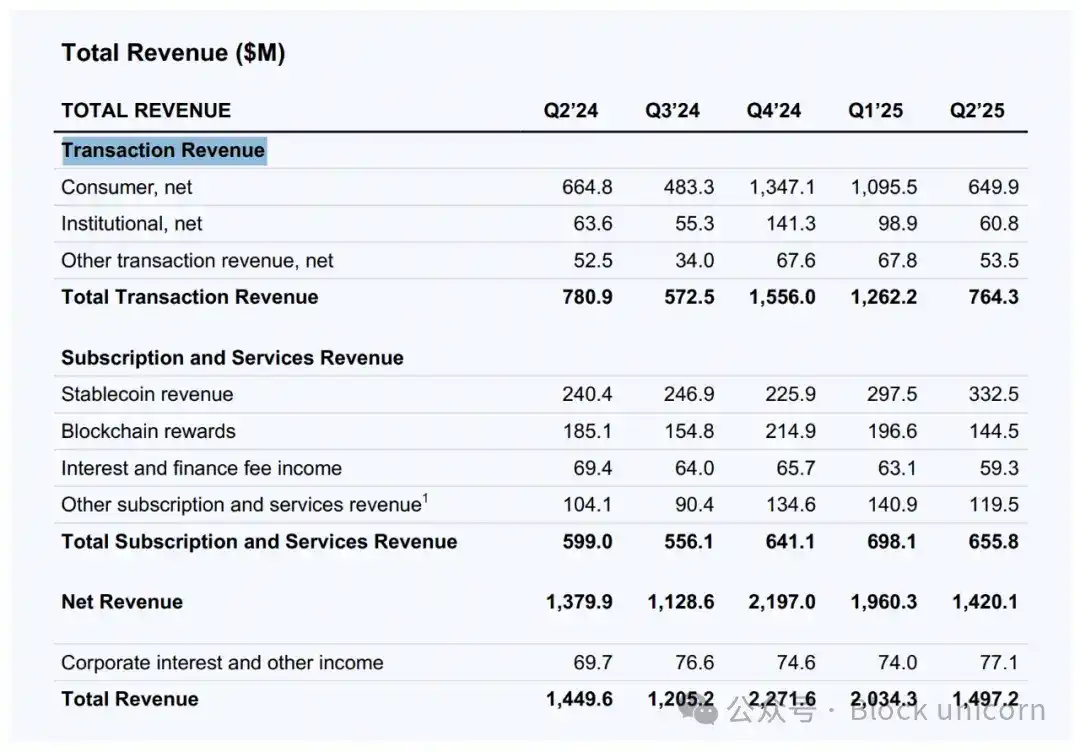
So, when the core product came under pressure, Coinbase did what you would do: it tried to become everything else.

They call it the "Exchange for Everything" theory, which posits that aggregation will beat specialization.

Stock trading means users can now react to Apple's earnings at midnight using USDC without leaving the app. Prediction markets mean they can check the price of "Will the Fed cut rates?" during lunch. Perpetual futures mean they can leverage a Tesla position 50x on a Sunday. Every new market is a reason to open the app, an opportunity to capture spreads, fees, or interest on idle stablecoin balances.

Is the strategy "Let's be Robinhood" or "Let's ensure users never need Robinhood"?

There has always been a view in fintech that users need specialized apps. One for investing, one for banking, one for payments, one for crypto trading. Coinbase is betting against that: they believe that once a user completes one KYC and links one bank account, they shouldn't have to do it nine more times elsewhere.

This is the "aggregation beats specialization" argument. In a world where the underlying assets are increasingly just tokens on a blockchain, it makes sense. If stocks are tokens, prediction market contracts are tokens, meme coins are tokens, why can't they all trade in the same venue?

The mechanism is: you deposit dollars (or USDC), trade all assets, and withdraw dollars (or USDC). No need to transfer funds between platforms. No minimum deposit requirements for multiple accounts. Just one pool of capital flowing between all asset classes.

The more Coinbase resembles a traditional broker, the more it must compete on traditional broker terms. Robinhood has 27 million funded accounts, while Coinbase has about 9 million monthly active users. So, Coinbase's differentiation can't just be "we offer stock trading now," it has to be the trading platform itself.

The offer is 24/7 liquidity for all trade types. No trading hours, no settlement delays, no waiting for your broker to approve your margin application while the trade moves against you.

Does this matter to most users? Probably not yet. Most people don't need to trade Apple stock at 3 a.m. on a Saturday. But some do. If you provide the platform where they can do it, you get their order flow. Once you get their order flow, you get their data. Once you get their data, you build better products. Once you have better products, you get more order flow.

It's a flywheel, provided the flywheel can start spinning.

The Prediction Market Gambit

Prediction markets are the most unusual part of this bundle, and perhaps the most important. They are not "trading" in the traditional sense, but structured bets on binary outcomes. For example: Will Trump win? Will the Fed hike rates? Will the Lakers make the playoffs?

These contracts disappear after settlement, so there is no long-term holder base. Liquidity is event-driven, meaning it is volatile and unpredictable. Yet, platforms like Kalshi and Polymarket saw their trading volume surge to over $7 billion in November.
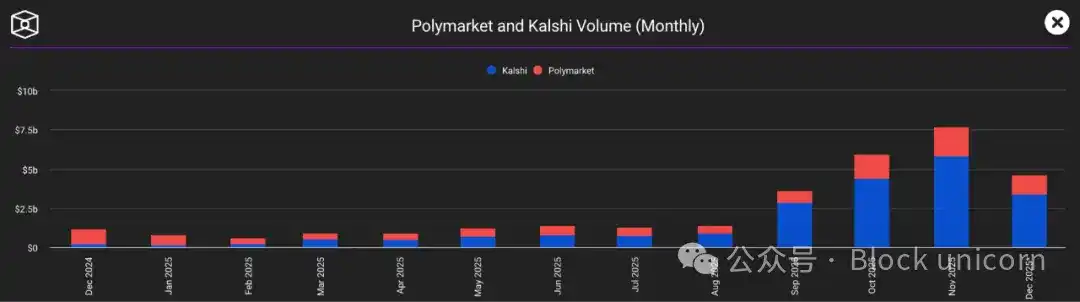
Why? Because prediction markets are a social tool. They allow people to express an opinion and put risk behind it. They give people a reason to check their phone during the fourth quarter of a game or on election night.

For Coinbase, prediction markets solve a specific problem: user engagement. When crypto prices are flat, users might get bored. When your stock portfolio is stagnant, stock trading can be dull. But there is always some event capturing attention. Integrating Kalshi gives users a reason to stay in the app even if Bitcoin isn't moving.

The bet is that users who come for election markets will stay for stock trading, and vice versa. The bet is that the broader the coverage, the higher the user retention.

The Business Model is Margin Stacking

Strip away the innovation narrative, and this is a company trying to make more money from the same user in more ways. Stock trading fees, DEX swap spreads, interest on stablecoin balances, crypto staking fees, Coinbase One subscription revenue, and infrastructure fees from developers using the Base blockchain.

I'm not criticizing. This is how exchanges work. The best exchange isn't the one with the lowest fees; it's the one users are reluctant to leave because leaving means rebuilding the whole system elsewhere.

Coinbase is building a walled garden, but the walls are not to lock users in; they are to provide convenience. You can still withdraw your crypto, you can still transfer your stocks to Fidelity. You probably won't, though, because why would you?

Coinbase's advantage is its on-chain tech, which can offer tokenized stocks, instant settlement, and programmable money. But for now, its stock trading looks very much like Robinhood's stock trading, just with longer hours. Its prediction markets look very much like Kalshi's, just embedded in a different app.

The real differentiation is the Base layer-2 blockchain that Coinbase built and controls. If stock trading truly happens on-chain, payments truly use stablecoins, and AI agents truly start trading autonomously using protocols like x402, then Coinbase has built something Robinhood can't easily replicate.

But that's the long game. In the short term, the competition is about who has the stickiest app. And adding more features doesn't automatically make an app stickier. It can also make the interface more cluttered, more complex, and more overwhelming for a new user who just wants to buy Bitcoin.

A segment of the crypto user base will be unhappy about this. They are the true believers. They wanted Coinbase to be the on-ramp to decentralized finance, not a centralized super-app with some DeFi features buried in a submenu.

Coinbase has clearly chosen scale over purity. It wants a billion users, not a million purists. It wants to be the default financial platform for the masses, not the preferred exchange for those running their own nodes.

This might be the right business decision. The mass market doesn't care about decentralization. They care about convenience, speed, and not losing money. If Coinbase can deliver on those, the philosophy behind it doesn't matter.

But it does create a peculiar tension. Coinbase is trying to be both the infrastructure for the on-chain world and the centralized exchange competing with Charles Schwab. It is trying to be both a champion of crypto and a company that makes crypto invisible. It is trying to be both rebellious and regulated.

Maybe it can be. Maybe the future is a regulated, on-chain exchange that feels as easy to use as Venmo. Or perhaps, trying to be everything to everyone makes you nothing to anyone.

This is the Amazon playbook. Amazon is not the best at anything. It's not the best bookstore, not the best grocer, not the best streaming service. But it is good enough at enough things that most people can't be bothered to go elsewhere.

However, many companies have tried to build an app for everything, and most have ended up with a bloated app for nothing.

If Coinbase can own the full loop from earning, trading, hedging, borrowing, to paying, then it might not matter if specific features are slightly inferior to specialized competitors. The switching costs and the hassle of managing multiple accounts will keep users in its ecosystem.

That's all about the Coinbase Exchange for Everything.

Recommended reading:

Why Isn't Asia's Largest Bitcoin Treasury Company, Metaplanet, Buying the Dip?

Multicoin Capital: The Era of Fintech 4.0 Has Arrived

a16z's Heavily Backed Web3 Unicorn Farcaster Forced to Pivot, Is Web3 Social a False Proposition?

Пов'язані питання

QWhat is the core argument of the 'everything exchange' theory that Coinbase is adopting?

AThe core argument is that aggregation will beat specialization. It posits that users, after completing KYC and linking a bank account once, prefer a single platform that does many things well enough, rather than using multiple specialized apps. The convenience and reduced friction of an integrated system create a powerful moat.

QHow do prediction markets, like the integration with Kalshi, specifically benefit Coinbase's strategy?

APrediction markets solve a user engagement problem. They provide a reason for users to stay within the Coinbase app even when cryptocurrency or stock prices are stagnant, as there is always some event to follow and bet on. This increased engagement can lead to more activity in other areas of the app, like stock trading.

QWhat is the fundamental contradiction in Coinbase's current business approach as described in the article?

ACoinbase is trying to be two things at once: the infrastructure for the on-chain, decentralized world and a centralized exchange competing with traditional brokers like Charles Schwab. It aims to be both a champion of crypto and a company that makes crypto invisible, embracing both a rebellious spirit and regulation.

QWhat is the primary role of Coinbase's Base blockchain in its long-term differentiation strategy?

AThe Base blockchain is the foundation for true long-term differentiation. If stock trading occurs on-chain, payments use stablecoins, and AI agents trade autonomously, Coinbase will have built a product that competitors like Robinhood cannot easily replicate, as it controls this core infrastructure.

QAccording to the article, why might a user choose to stay on Coinbase even if specific features are better on competing platforms?

AUsers might stay because the switching cost and the hassle of managing multiple accounts become a significant barrier. The convenience of having a single platform for earning, trading, hedging, borrowing, and paying creates a powerful ecosystem lock-in, even if individual features are slightly inferior to specialists.

Пов'язані матеріали

How Many Tokens Away Is Yang Zhilin from the 'Moon Chasing the Light'?

The article explores the intense competition between two leading Chinese AI companies, DeepSeek and Kimi (Moon Dark Side), and the mounting pressure on Yang Zhilin, the founder of Kimi. While DeepSeek re-emerged after 15 months of silence with its powerful V4 model—boasting 1.6 trillion parameters and low-cost, long-context capabilities—Kimi has been focusing on long-context processing and multi-agent systems with its K2.6 model. Yang faces a threefold challenge: technological rivalry, commercialization pressure, and investor expectations. Despite Kimi’s high valuation (reaching $18 billion), its revenue heavily relies on a single product with low paid conversion rates, while DeepSeek’s strategic silence and open-source influence have strengthened its market position and valuation prospects, now targeting over $20 billion. Both companies reflect broader trends in China’s AI ecosystem: Kimi aims for global influence through open-source contributions and agent-based advancements, while DeepSeek prioritizes foundational innovation and hardware independence, notably shifting to Huawei’s chips. Their competition is seen as vital for China’s AI progress, with the gap between top Chinese and U.S. models narrowing to just 2.7% on the Elo rating scale. Ultimately, the article argues that this rivalry, though anxiety-inducing for leaders like Zhilin, is essential for driving innovation and solidifying China’s role in the global AI landscape.

marsbit54 хв тому

How Many Tokens Away Is Yang Zhilin from the 'Moon Chasing the Light'?

marsbit54 хв тому

TechFlow Intelligence Bureau: ChatGPT Helps Amateur Mathematician Crack 60-Year-Old Problem, CFTC Sues New York Regulator Over Coinbase and Gemini

An amateur mathematician, with the assistance of ChatGPT, has solved a combinatorial mathematics puzzle originally proposed by Hungarian mathematician Paul Erdős in the 1960s. This marks another milestone in AI-aided mathematical research, demonstrating the evolving capabilities of large language models in formal reasoning. In other AI developments, OpenAI introduced a new privacy filter tool for enterprise API usage, automatically screening sensitive data. Meanwhile, the Qwen3.6-27B model achieved 100 tokens per second on a single RTX 5090 GPU using quantization, significantly lowering the cost barrier for local AI deployment. In crypto and Web3, the U.S. CFTC sued New York’s financial regulator, challenging its oversight of Coinbase and Gemini—a first-of-its-kind federal-state regulatory clash. Following a vulnerability, KelpDAO and major DeFi protocols established a recovery fund. Tether froze $344 million in assets linked to Iran’s central bank upon U.S. Treasury request, highlighting the centralized control risks in stablecoins. Separately, Litecoin underwent a 3-hour chain reorganization to undo a privacy-layer exploit. In the U.S., former President Trump invoked the Defense Production Act to address power grid bottlenecks affecting AI data centers and dismissed the entire National Science Board, raising concerns over research independence. A retail trader gained 250% on a $600k Intel options bet amid AI-related speculation. Xiaomi announced its first performance electric vehicle, targeting rivals like Tesla. Meanwhile, iPhone users reported devices automatically reinstalling a hidden app daily, suspected to be MDM-related. A Chinese securities report noted that A-share institutional crowding has reached its second-longest streak since 2007, signaling high valuations and potential style rotation. The day’s developments reflect a dual narrative: AI is enabling unprecedented individual breakthroughs, while centralized power structures—whether governmental or corporate—are becoming more assertive, underscoring that decentralization is as much a political-economic challenge as a technical one.

marsbit1 год тому

TechFlow Intelligence Bureau: ChatGPT Helps Amateur Mathematician Crack 60-Year-Old Problem, CFTC Sues New York Regulator Over Coinbase and Gemini

marsbit1 год тому

Торгівля

Спот
Ф'ючерси

Популярні статті

Що таке $S$

Розуміння SPERO: Комплексний огляд Вступ до SPERO Оскільки ландшафт інновацій продовжує еволюціонувати, виникнення технологій web3 та криптовалютних проектів відіграє ключову роль у формуванні цифрового майбутнього. Один з проектів, який привернув увагу в цій динамічній сфері, — це SPERO, позначений як SPERO,$$s$. Ця стаття має на меті зібрати та представити детальну інформацію про SPERO, щоб допомогти ентузіастам та інвесторам зрозуміти його основи, цілі та інновації в рамках web3 та крипто-сектору. Що таке SPERO,$$s$? SPERO,$$s$ — це унікальний проект у криптопросторі, який прагне використати принципи децентралізації та технології блокчейн для створення екосистеми, що сприяє залученню, корисності та фінансовій інклюзії. Проект розроблений для полегшення взаємодії між користувачами новими способами, надаючи їм інноваційні фінансові рішення та послуги. У своїй основі SPERO,$$s$ прагне надати можливості індивідам, забезпечуючи інструменти та платформи, які покращують користувацький досвід у криптовалютному просторі. Це включає в себе можливість більш гнучких методів транзакцій, сприяння ініціативам, що підтримуються спільнотою, та створення шляхів для фінансових можливостей через децентралізовані додатки (dApps). Основна концепція SPERO,$$s$ обертається навколо інклюзивності, прагнучи зменшити розриви в традиційній фінансовій системі, використовуючи переваги технології блокчейн. Хто є творцем SPERO,$$s$? Особистість творця SPERO,$$s$ залишається дещо невідомою, оскільки є обмежені публічно доступні ресурси, що надають детальну інформацію про його засновників. Ця відсутність прозорості може бути наслідком зобов'язання проекту до децентралізації — етики, яку багато проектів web3 поділяють, ставлячи колективні внески вище за індивідуальне визнання. Зосереджуючи обговорення навколо спільноти та її колективних цілей, SPERO,$$s$ втілює суть наділення без виділення конкретних осіб. Таким чином, розуміння етики та місії SPERO є більш важливим, ніж ідентифікація єдиного творця. Хто є інвесторами SPERO,$$s$? SPERO,$$s$ підтримується різноманітними інвесторами, починаючи від венчурних капіталістів до ангельських інвесторів, які прагнуть сприяти інноваціям у крипто-секторі. Зосередження цих інвесторів зазвичай узгоджується з місією SPERO — пріоритет надається проектам, які обіцяють технологічний прогрес у суспільстві, фінансову інклюзію та децентралізоване управління. Ці інвесторські фонди зазвичай зацікавлені в проектах, які не лише пропонують інноваційні продукти, але й позитивно впливають на спільноту блокчейн та її екосистеми. Підтримка з боку цих інвесторів підкріплює SPERO,$$s$ як значного конкурента в швидко змінюваній сфері крипто-проектів. Як працює SPERO,$$s$? SPERO,$$s$ використовує багатогранну структуру, яка відрізняє його від традиційних криптовалютних проектів. Ось деякі ключові особливості, які підкреслюють його унікальність та інноваційність: Децентралізоване управління: SPERO,$$s$ інтегрує моделі децентралізованого управління, надаючи користувачам можливість активно брати участь у процесах прийняття рішень щодо майбутнього проекту. Цей підхід сприяє відчуттю власності та відповідальності серед членів спільноти. Корисність токена: SPERO,$$s$ використовує свій власний криптовалютний токен, розроблений для виконання різних функцій в екосистемі. Ці токени дозволяють здійснювати транзакції, отримувати винагороди та полегшувати послуги, що пропонуються на платформі, підвищуючи загальну залученість та корисність. Шарова архітектура: Технічна архітектура SPERO,$$s$ підтримує модульність та масштабованість, що дозволяє безперешкодно інтегрувати додаткові функції та додатки в міру розвитку проекту. Ця адаптивність є надзвичайно важливою для збереження актуальності в постійно змінюваному крипто-ландшафті. Залучення спільноти: Проект підкреслює ініціативи, що підтримуються спільнотою, використовуючи механізми, які стимулюють співпрацю та зворотний зв'язок. Підтримуючи сильну спільноту, SPERO,$$s$ може краще задовольняти потреби користувачів та адаптуватися до ринкових тенденцій. Фокус на інклюзію: Пропонуючи низькі комісії за транзакції та зручні інтерфейси, SPERO,$$s$ прагне залучити різноманітну базу користувачів, включаючи осіб, які раніше не брали участі в крипто-просторі. Це зобов'язання до інклюзії узгоджується з його загальною місією наділення через доступність. Хронологія SPERO,$$s$ Розуміння історії проекту надає важливі уявлення про його розвиток та етапи. Нижче наведено пропоновану хронологію, що відображає значні події в еволюції SPERO,$$s$: Етап концептуалізації та ідеації: Початкові ідеї, що стали основою SPERO,$$s$, були сформовані, тісно пов'язані з принципами децентралізації та фокусом на спільноті в індустрії блокчейн. Запуск білого паперу проекту: Після концептуального етапу був випущений комплексний білий папір, що детально описує бачення, цілі та технологічну інфраструктуру SPERO,$$s$, щоб залучити інтерес та зворотний зв'язок від спільноти. Створення спільноти та ранні залучення: Активні зусилля були спрямовані на створення спільноти ранніх прихильників та потенційних інвесторів, що полегшило обговорення цілей проекту та отримання підтримки. Подія генерації токенів: SPERO,$$s$ провів подію генерації токенів (TGE) для розподілу своїх рідних токенів серед ранніх прихильників та встановлення початкової ліквідності в екосистемі. Запуск початкового dApp: Перший децентралізований додаток (dApp), пов'язаний з SPERO,$$s$, став доступним, дозволяючи користувачам взаємодіяти з основними функціями платформи. Постійний розвиток та партнерства: Безперервні оновлення та вдосконалення пропозицій проекту, включаючи стратегічні партнерства з іншими учасниками блокчейн-простору, сформували SPERO,$$s$ у конкурентоспроможного та еволюціонуючого гравця на крипто-ринку. Висновок SPERO,$$s$ є свідченням потенціалу web3 та криптовалют для революціонізації фінансових систем та наділення індивідів. Завдяки зобов'язанню до децентралізованого управління, залучення спільноти та інноваційно спроектованих функцій, він прокладає шлях до більш інклюзивного фінансового ландшафту. Як і з будь-якими інвестиціями в швидко змінюваному крипто-просторі, потенційним інвесторам та користувачам рекомендується ретельно досліджувати та обдумано взаємодіяти з поточними подіями в SPERO,$$s$. Проект демонструє інноваційний дух крипто-індустрії, запрошуючи до подальшого дослідження його численних можливостей. Хоча подорож SPERO,$$s$ ще триває, його основні принципи можуть справді вплинути на майбутнє того, як ми взаємодіємо з технологією, фінансами та один з одним у взаємопов'язаних цифрових екосистемах.

73 переглядів усьогоОпубліковано 2024.12.17Оновлено 2024.12.17

Що таке $S$

Що таке AGENT S

Агент S: Майбутнє автономної взаємодії в Web3 Вступ У постійно змінюваному ландшафті Web3 та криптовалюти інновації постійно переосмислюють, як люди взаємодіють з цифровими платформами. Один з таких новаторських проектів, Агент S, обіцяє революціонізувати взаємодію людини з комп'ютером через свою відкриту агентну структуру. Прокладаючи шлях для автономних взаємодій, Агент S прагне спростити складні завдання, пропонуючи трансформаційні застосування в штучному інтелекті (ШІ). Це детальне дослідження заглиблюється в складності проекту, його унікальні особливості та наслідки для сфери криптовалюти. Що таке Агент S? Агент S є революційною відкритою агентною структурою, спеціально розробленою для вирішення трьох основних викликів в автоматизації комп'ютерних завдань: Набуття специфічних знань у галузі: Структура інтелектуально навчається з різних зовнішніх джерел знань та внутрішнього досвіду. Цей подвійний підхід дозволяє їй створити багатий репозиторій специфічних знань у галузі, покращуючи її продуктивність у виконанні завдань. Планування на довгих горизонтах завдань: Агент S використовує планування з підкріпленням досвіду, стратегічний підхід, який полегшує ефективний розподіл та виконання складних завдань. Ця функція значно підвищує її здатність ефективно та результативно управляти кількома підзавданнями. Обробка динамічних, неоднорідних інтерфейсів: Проект представляє Інтерфейс Агент-Комп'ютер (ACI), інноваційне рішення, яке покращує взаємодію між агентами та користувачами. Використовуючи багатомодальні великі мовні моделі (MLLMs), Агент S може безперешкодно орієнтуватися та маніпулювати різноманітними графічними інтерфейсами користувача. Завдяки цим новаторським функціям Агент S надає надійну структуру, яка вирішує складнощі, пов'язані з автоматизацією людської взаємодії з машинами, прокладаючи шлях для численних застосувань у ШІ та за його межами. Хто є творцем Агент S? Хоча концепція Агент S є фундаментально новаторською, конкретна інформація про його творця залишається невідомою. Творець наразі невідомий, що підкреслює або початкову стадію проекту, або стратегічний вибір зберегти засновників у таємниці. Незважаючи на анонімність, акцент залишається на можливостях та потенціалі структури. Хто є інвесторами Агент S? Оскільки Агент S є відносно новим у криптографічній екосистемі, детальна інформація про його інвесторів та фінансових спонсорів не задокументована. Відсутність публічно доступних відомостей про інвестиційні фонди або організації, що підтримують проект, викликає питання щодо його фінансової структури та дорожньої карти розвитку. Розуміння підтримки є критично важливим для оцінки стійкості проекту та потенційного впливу на ринок. Як працює Агент S? В основі Агент S лежить передова технологія, яка дозволяє йому ефективно функціонувати в різних умовах. Його операційна модель побудована навколо кількох ключових функцій: Взаємодія з комп'ютером, подібна до людської: Структура пропонує розширене планування ШІ, прагнучи зробити взаємодії з комп'ютерами більш інтуїтивними. Імітуючи людську поведінку при виконанні завдань, вона обіцяє підвищити досвід користувачів. Наративна пам'ять: Використовується для використання високорівневого досвіду, Агент S використовує наративну пам'ять для відстеження історій завдань, тим самим покращуючи свої процеси прийняття рішень. Епізодична пам'ять: Ця функція надає користувачам покрокові інструкції, дозволяючи структурі пропонувати контекстуальну підтримку в міру виконання завдань. Підтримка OpenACI: Завдяки можливості працювати локально, Агент S дозволяє користувачам зберігати контроль над своїми взаємодіями та робочими процесами, узгоджуючи з децентралізованою етикою Web3. Легка інтеграція з зовнішніми API: Його універсальність і сумісність з різними платформами ШІ забезпечують те, що Агент S може безперешкодно вписатися в існуючі технологічні екосистеми, роблячи його привабливим вибором для розробників та організацій. Ці функціональні можливості колективно сприяють унікальному положенню Агент S у крипто-просторі, оскільки він автоматизує складні, багатоступеневі завдання з мінімальним втручанням людини. У міру розвитку проекту його потенційні застосування в Web3 можуть переосмислити, як відбуваються цифрові взаємодії. Хронологія Агент S Розробка та етапи Агент S можуть бути узагальнені в хронології, яка підкреслює його значні події: 27 вересня 2024 року: Концепція Агент S була представлена в комплексній науковій статті під назвою “Відкрита агентна структура, яка використовує комп'ютери як людина”, що демонструє основи проекту. 10 жовтня 2024 року: Наукова стаття була опублікована на arXiv, пропонуючи детальне дослідження структури та її оцінки продуктивності на основі бенчмарку OSWorld. 12 жовтня 2024 року: Було випущено відеопрезентацію, що надає візуальне уявлення про можливості та особливості Агент S, ще більше залучаючи потенційних користувачів та інвесторів. Ці маркери в хронології не лише ілюструють прогрес Агент S, але й вказують на його прихильність до прозорості та залучення громади. Ключові моменти про Агент S У міру розвитку структури Агент S кілька ключових характеристик виділяються, підкреслюючи її новаторський характер та потенціал: Інноваційна структура: Розроблена для забезпечення інтуїтивного використання комп'ютерів, подібного до людської взаємодії, Агент S пропонує новий підхід до автоматизації завдань. Автономна взаємодія: Здатність автономно взаємодіяти з комп'ютерами через GUI означає стрибок до більш інтелектуальних та ефективних обчислювальних рішень. Автоматизація складних завдань: Завдяки своїй надійній методології він може автоматизувати складні, багатоступеневі завдання, роблячи процеси швидшими та менш схильними до помилок. Безперервне вдосконалення: Механізми навчання дозволяють Агенту S покращуватися на основі минулого досвіду, постійно підвищуючи свою продуктивність та ефективність. Універсальність: Його адаптивність до різних операційних середовищ, таких як OSWorld та WindowsAgentArena, забезпечує його здатність служити широкому спектру застосувань. Оскільки Агент S займає своє місце в ландшафті Web3 та криптовалюти, його потенціал покращити можливості взаємодії та автоматизувати процеси означає значний прогрес у технологіях ШІ. Завдяки своїй інноваційній структурі Агент S є прикладом майбутнього цифрових взаємодій, обіцяючи більш безперешкодний та ефективний досвід для користувачів у різних галузях. Висновок Агент S представляє собою сміливий крок вперед у поєднанні ШІ та Web3, з можливістю переосмислити, як ми взаємодіємо з технологією. Хоча проект все ще на ранніх стадіях, можливості для його застосування є величезними та переконливими. Завдяки своїй комплексній структурі, що вирішує критичні виклики, Агент S прагне вивести автономні взаємодії на передній план цифрового досвіду. У міру того, як ми заглиблюємося в сфери криптовалюти та децентралізації, проекти, подібні до Агент S, безсумнівно, відіграватимуть ключову роль у формуванні майбутнього технологій та співпраці людини з комп'ютером.

539 переглядів усьогоОпубліковано 2025.01.14Оновлено 2025.01.14

Що таке AGENT S

Як купити S

Ласкаво просимо до HTX.com! Ми зробили покупку Sonic (S) простою та зручною. Дотримуйтесь нашої покрокової інструкції, щоб розпочати свою криптовалютну подорож.Крок 1: Створіть обліковий запис на HTXВикористовуйте свою електронну пошту або номер телефону, щоб зареєструвати обліковий запис на HTX безплатно. Пройдіть безпроблемну реєстрацію й отримайте доступ до всіх функцій.ЗареєструватисьКрок 2: Перейдіть до розділу Купити крипту і виберіть спосіб оплатиКредитна/дебетова картка: використовуйте вашу картку Visa або Mastercard, щоб миттєво купити Sonic (S).Баланс: використовуйте кошти з балансу вашого рахунку HTX для безперешкодної торгівлі.Треті особи: ми додали популярні способи оплати, такі як Google Pay та Apple Pay, щоб підвищити зручність.P2P: Торгуйте безпосередньо з іншими користувачами на HTX.Позабіржова торгівля (OTC): ми пропонуємо індивідуальні послуги та конкурентні обмінні курси для трейдерів.Крок 3: Зберігайте свої Sonic (S)Після придбання Sonic (S) збережіть його у своєму обліковому записі на HTX. Крім того, ви можете відправити його в інше місце за допомогою блокчейн-переказу або використовувати його для торгівлі іншими криптовалютами.Крок 4: Торгівля Sonic (S)Легко торгуйте Sonic (S) на спотовому ринку HTX. Просто увійдіть до свого облікового запису, виберіть торгову пару, укладайте угоди та спостерігайте за ними в режимі реального часу. Ми пропонуємо зручний досвід як для початківців, так і для досвідчених трейдерів.

1.3k переглядів усьогоОпубліковано 2025.01.15Оновлено 2025.03.21

Як купити S

Обговорення

Ласкаво просимо до спільноти HTX. Тут ви можете бути в курсі останніх подій розвитку платформи та отримати доступ до професійної ринкової інформації. Нижче представлені думки користувачів щодо ціни S (S).

活动图片