Coinbase vs. Wall Street: Who Decides the Next Step of the U.S. Financial System?

marsbitОпубліковано о 2026-01-30Востаннє оновлено о 2026-01-30

Анотація

Amidst the intensifying conflict between the crypto industry and traditional banking, Coinbase CEO Brian Armstrong is leading a high-stakes battle against Wall Street giants over the proposed Clarity Act. The core dispute centers around whether crypto platforms should be allowed to offer yield on stablecoin holdings—often around 3.5% annually—which banks argue functions similarly to interest-bearing deposits and threatens their deposit base. Armstrong contends that banks should either raise their own rates or enter the stablecoin market themselves, advocating for free-market competition. The clash escalated at Davos, where Armstrong faced direct confrontations with banking leaders like JPMorgan’s Jamie Dimon and Bank of America’s Brian Moynihan, who argued crypto firms offering bank-like services should face equivalent regulation. The legislative process has seen delays and intense lobbying, with banks warning of potential deposit outflows while Coinbase mobilizes significant political influence through super PACs and strategic advocacy. As the White House mediates discussions, the outcome of the Clarity Act could redefine the future of financial services, determining whether crypto platforms can operate as bank alternatives or be subjected to stricter banking regulations. Armstrong’s support is now seen as critical to any viable compromise.

Editor's Note: When the crypto industry truly touches the core areas of finance—bank deposits and payments—the conflict is no longer a battle of ideas but a battle of interests. This article uses Brian Armstrong's direct confrontation with Wall Street as a clue to reveal the essence of the game between banks and crypto platforms behind the "CLARITY Act." This is not only about whether stablecoin yields are legal but also about who will dominate the rule-making power for the next generation of the financial system.

Below is the original text:
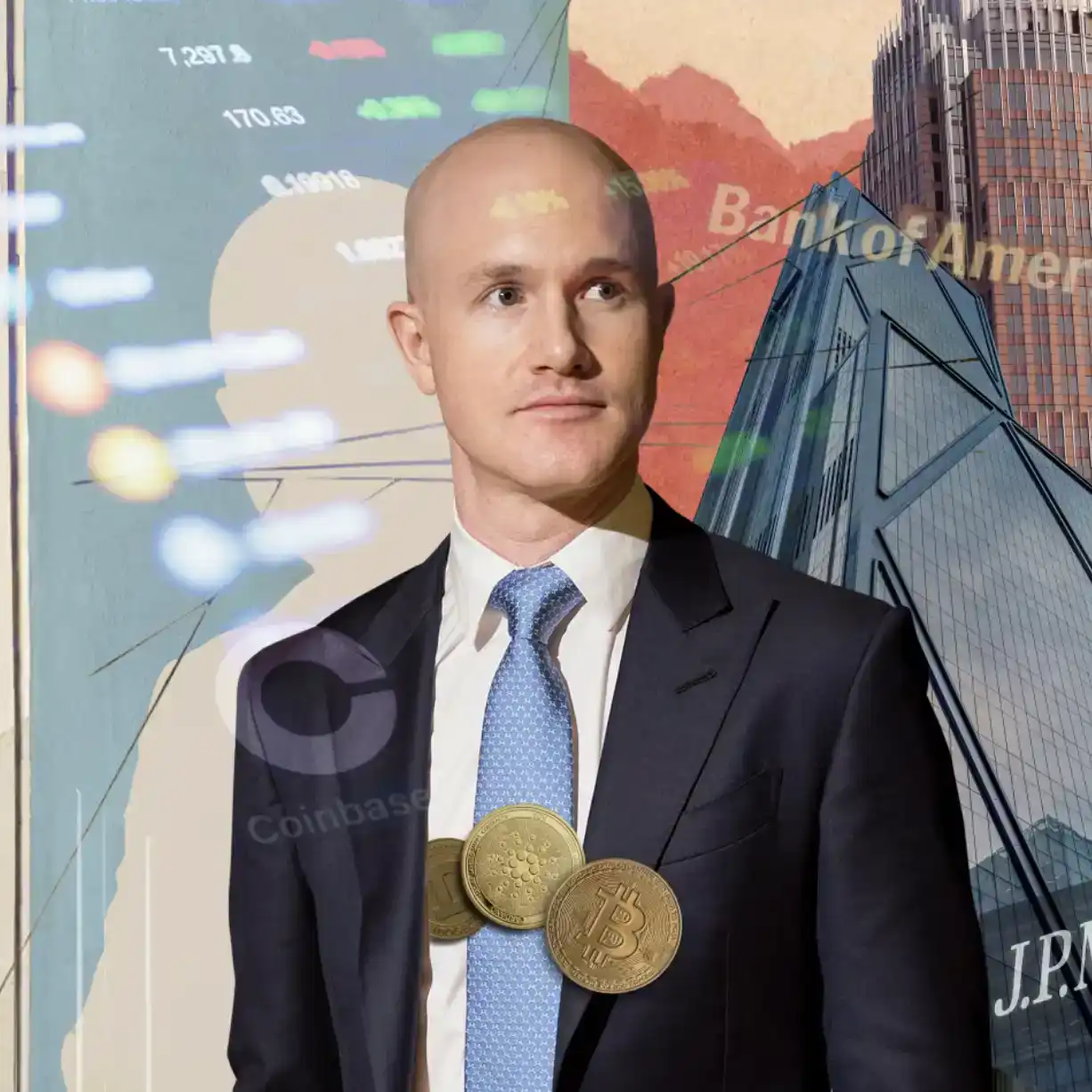
Last week, during the World Economic Forum in Davos, Switzerland, Brian Armstrong, the CEO of the largest cryptocurrency company in the U.S., was having coffee with former British Prime Minister Tony Blair when Jamie Dimon suddenly interrupted.

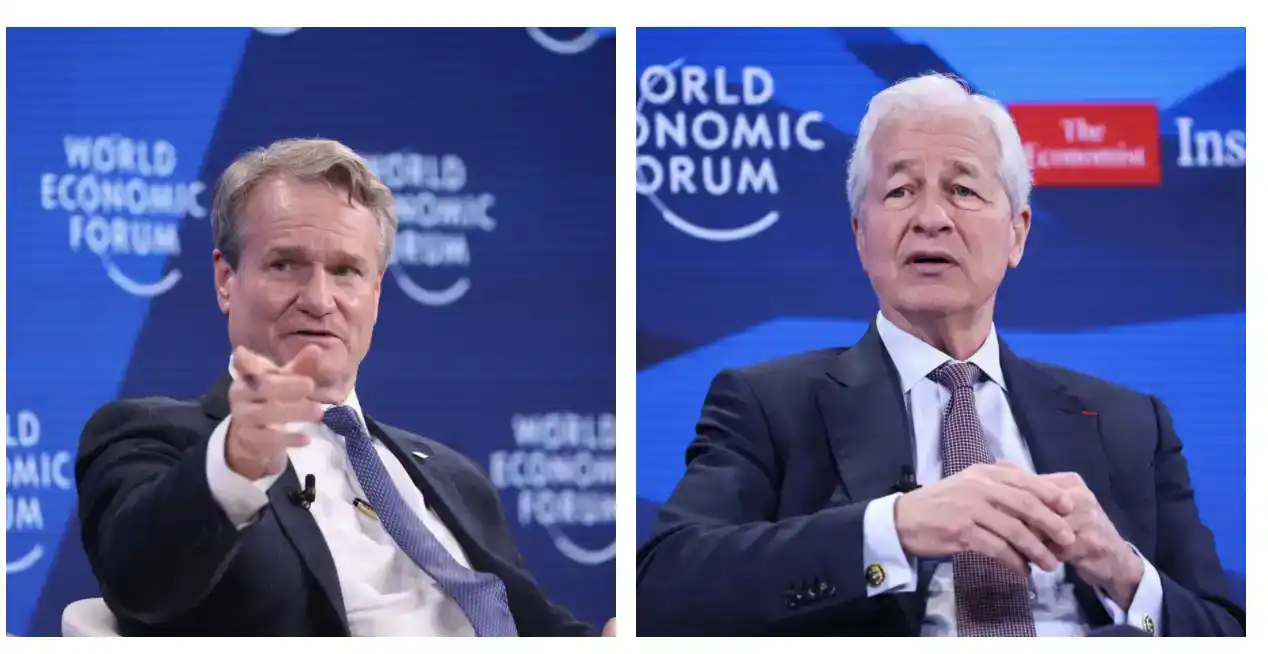
"You're talking nonsense," said Jamie Dimon, a long-time crypto skeptic who has called Bitcoin a "fraud," while pointing his index finger directly at Armstrong's face.

According to people familiar with the matter, Dimon's core message was simple: he wanted Armstrong to stop lying on television. Just the week before, Armstrong had accused banks of trying to undermine a piece of legislation aimed at establishing a new regulatory framework for digital assets in multiple business TV programs.

This direct confrontation was clearly inconsistent with the Davos annual meeting's purpose of "promoting cooperation among global leaders."

As the crypto industry rapidly enters the mainstream U.S. financial system, some heavyweight figures on Wall Street are beginning to realize that a threat is approaching. Although banks have accepted crypto assets to some extent—for example, by assisting clients in investing in Bitcoin or using digital assets to improve the efficiency of cross-border transfers—they have chosen to draw a line when crypto business touches their core territory: retail deposits.

Banks and Coinbase are in direct conflict over a key issue: whether crypto trading platforms should be allowed to offer "yield" to users. This so-called "reward" typically refers to regular payments of a certain percentage of return to stablecoin holders, such as an annualized 3.5%. Stablecoins are a type of digital asset pegged to real-world currencies like the U.S. dollar.
Banks argue that such returns paid to users are essentially no different from bank account interest. Since banks offer much lower yields—savings account rates are often below 0.1%—they worry that the result will be a massive transfer of funds into crypto assets. This outflow, banks say, will weaken the viability of community banks and affect lending to businesses.


Brian Armstrong and other crypto industry figures, however, believe that the free market should be allowed to work: banks can either compete with stablecoins by raising deposit rates or simply enter the stablecoin business themselves.

This legislation, called the "Clarity Act," could reshape the future of everyday financial services, including bank deposits and electronic payments.

According to people familiar with the matter, in the latest effort to seek compromise, the White House plans to convene a meeting on Monday with banking and crypto industry groups. David Sacks, the Trump administration's head of AI and crypto affairs, is expected to attend. Kara Calvert, head of U.S. policy at Coinbase, is also among the invitees.

The 43-year-old Armstrong co-founded Coinbase in 2012 and has played a significant role in pushing the crypto industry to gain legitimacy and mainstream acceptance. As the head of a company with a market capitalization of about $55 billion, Armstrong wields considerable influence in industry debates, especially in the game unfolding in Washington.
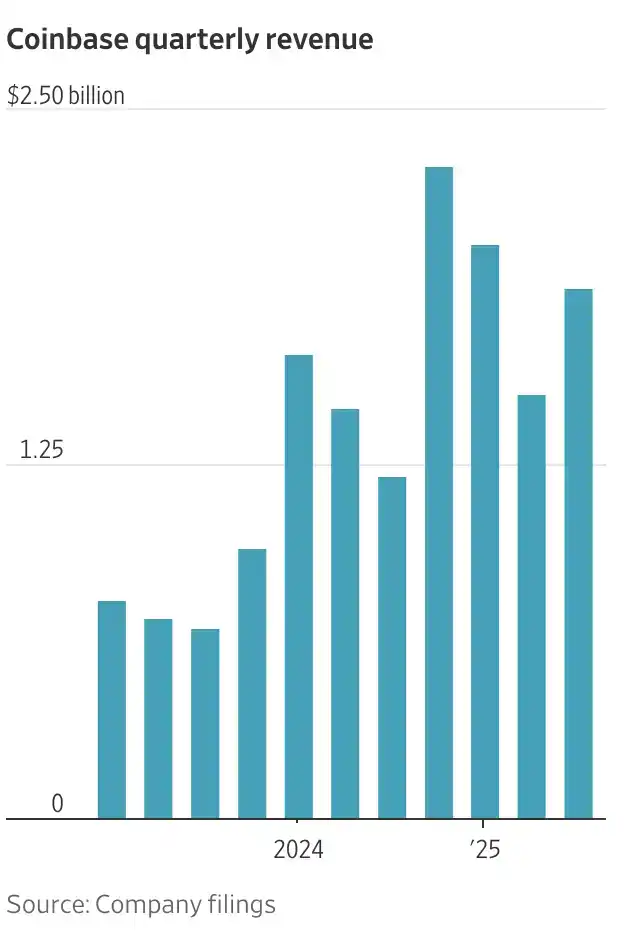

Just one day before a Senate committee was set to vote on a version of the bill—a version that could effectively prohibit companies like Coinbase from offering yields to customers, potentially costing billions of dollars—Armstrong posted on platform X: "We would rather have no bill than a bad bill."


Hours later, the vote was suddenly postponed, surprising the financial world.

Ron Hammond, head of policy and advocacy at digital asset trading firm Wintermute, said: "Now it's more like Coinbase vs. the banks, rather than the crypto industry vs. the banks."

Armstrong's counterattack did not stop with the X post on January 14. He later reiterated his views on television programs, telling Bloomberg in an interview that bank lobbyists "are trying to kill competitors" and accusing banks of "essentially lending out their customers' deposits without their permission."

According to people familiar with the matter, these remarks directly led to a series of uncomfortable direct confrontations with several bank CEOs in Davos.

"If you want to be a bank, then just go be a bank," Brian Moynihan said last week during a 30-minute meeting with Armstrong in the main venue at Davos. The meeting was superficially friendly but somewhat stiff.

Citigroup CEO Jane Fraser gave Armstrong less than a minute. (Coinbase is a client of both Citi and JPMorgan and has business partnerships with multiple banks.)

And that "one minute" was even more than the time given by Wells Fargo CEO Charlie Scharf. When Armstrong approached him, Scharf bluntly said the two had "nothing to talk about." This scene unfolded with Dimon, Scharf's former boss, not far away.

"Bank Alternative"

Armstrong attended Rice University in Houston, studying economics and computer science, and was an early adopter of digital currency and blockchain ideas. He read the Bitcoin whitepaper published in 2008 by the pseudonymous Satoshi Nakamoto; in 2011, while working at Airbnb, he was deeply troubled by difficulties in remitting money to South America.

These experiences paved the way for the birth of Coinbase. The company initially tried to solve a core problem plaguing crypto investors: the lack of a safe place to store digital assets. Later, when some users wanted not just to "custody" Bitcoin but to trade it, Coinbase顺势 developed into an exchange.

Coinbase quickly grew from a small apartment in San Francisco (the company's first office). By 2017, when the other co-founder left, Armstrong had become the undisputed leader of the company.

Former colleagues previously told The Wall Street Journal that Armstrong is introverted, sometimes struggles to communicate with employees, and is not very good at criticizing subordinates face-to-face. Some former employees felt his demeanor was reminiscent of the冷静、克制 "Vulcan" from Star Trek.
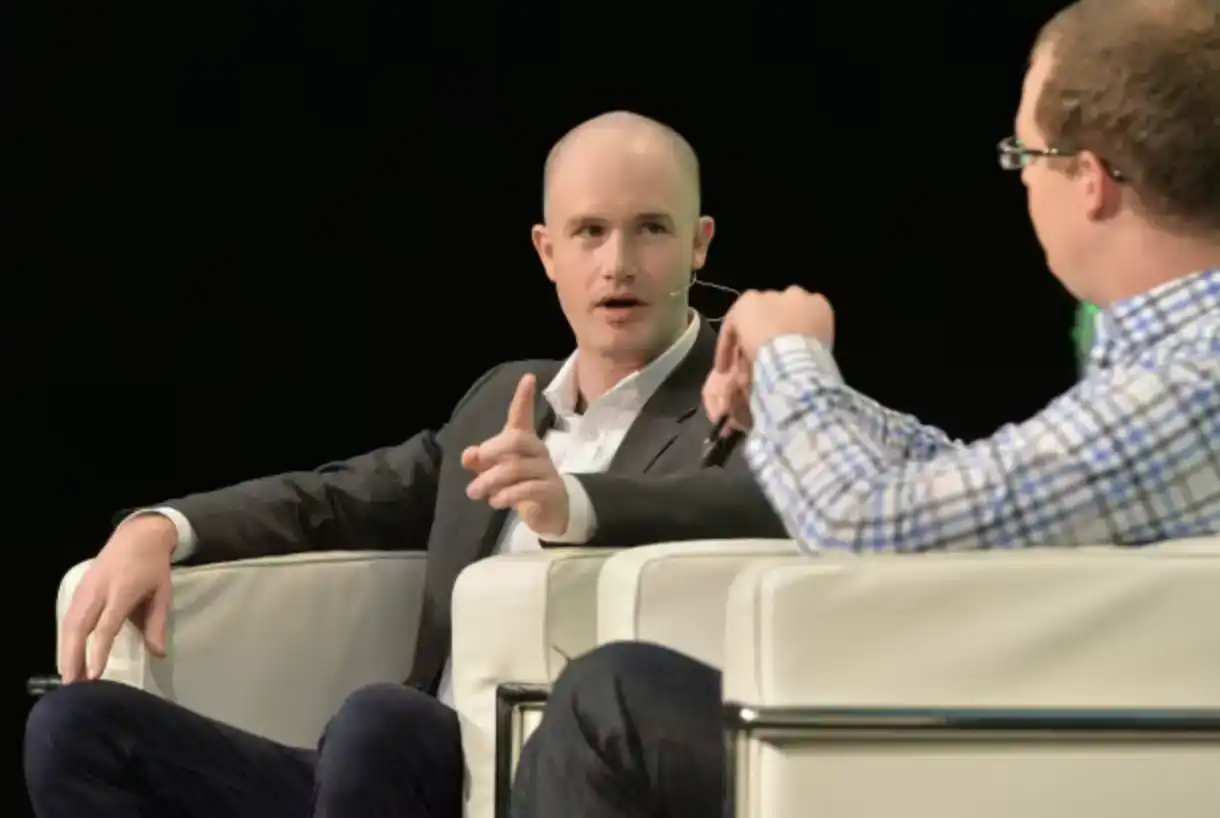
However, Armstrong has never been shy about his ambitions for Coinbase. He positioned Coinbase as the American company that would bring cryptocurrency into the mainstream. Today, Coinbase's business covers everything from electronic payments and stock trading to commodities and prediction markets.


"Fundamentally, we want to be an alternative to banks," he said last year on Fox Business. "We want to build a super app that provides all kinds of financial services."

As the business expanded, Armstrong invested tens of millions of dollars to build the largest lobbying machine in the industry. After surviving multiple booms and busts in the crypto market, Coinbase went public in April 2021, with its market capitalization once reaching a high of $100 billion, and Armstrong's personal stake briefly rising to about $13 billion.

After weathering the industry collapse in 2022 and regulatory crackdowns during the Biden administration in 2023, Armstrong began to fight back strongly and gradually found his voice. The founder who once preferred to wear headphones, write code in the office, and was somewhat reluctant to speak publicly has now become the most active spokesperson for the crypto industry in Washington—and the attitude of American politicians towards cryptocurrency is undergoing a dramatic shift.

Coinbase, through a network of super PACs, invested about $75 million in the 2024 election cycle, aiming to counter skeptical candidates and build grassroots organizations to gain public support for crypto-related bills. The super PAC group said on Wednesday that it now has funds totaling $193 million.

Trump's victory in 2024 opened a policy window that Armstrong has been chasing for a decade. He praised Trump for ushering in "the dawn of a new era for crypto" and attended a "Crypto Ball" with a performance by Snoop Dogg around Trump's inauguration. Nowadays, the executive takes off his signature T-shirt and black jacket at least every two months, puts on a suit, and visits politicians on Capitol Hill.

"In all things crypto-related in the U.S., Coinbase is at the forefront," said Anthony Scaramucci, founder of SkyBridge Capital and a long-time crypto investor.

Last summer, Trump signed the "Genius Act" into law, clearing the way for several companies to issue stablecoins. This law spurred rapid growth in stablecoin activity. The act prohibits issuers from paying interest directly to users but does not cover trading platforms or third parties like Coinbase. This "omission" is seen by banking groups as a regulatory loophole and is the trigger for the current conflict surrounding the "Clarity Act."

The Long Road to Legislation

The House passed its version of the "Clarity Act" last year, but advancement in the Senate is widely considered more difficult, partly due to serious disagreements over which rules crypto companies should follow. The Senate Agriculture Committee, responsible for overseeing条款 related to the Commodity Futures Trading Commission, advanced its own version on Thursday. Lawmakers will eventually need to pass a version through a full Senate vote and reconcile it with the House version.

According to people familiar with the matter, Brian Moynihan's core point to Armstrong was: if crypto companies like Coinbase want to offer deposit-like services, then, in the view of many banks, they should accept the same regulatory burden as banks. Regulatory agencies including the Federal Reserve and the Office of the Comptroller of the Currency review banks' risk profiles, regularly inspect their operations, and set strict capital requirements for loans and investments.

"The controversy surrounding the 'reward mechanism' is actually an exception in our overall partnership with banks," said Coinbase Chief Policy Officer Faryar Shirzad. "We maintain close cooperation with banks and have announced multiple partnerships."

Coinbase has a lucrative partnership with stablecoin issuer Circle, which allows it to earn a considerable revenue share from the mainstream stablecoin USDC. Through this unique arrangement, Coinbase is able to offer a 3.5% yield to some USDC holders, which is uncommon in the industry. The company says such incentives help attract users and provide consumers with more choices in an environment where savings account interest rates are extremely low.

"There's no reason to prohibit paying interest to consumers," Armstrong said in an interview with The Wall Street Journal last year.
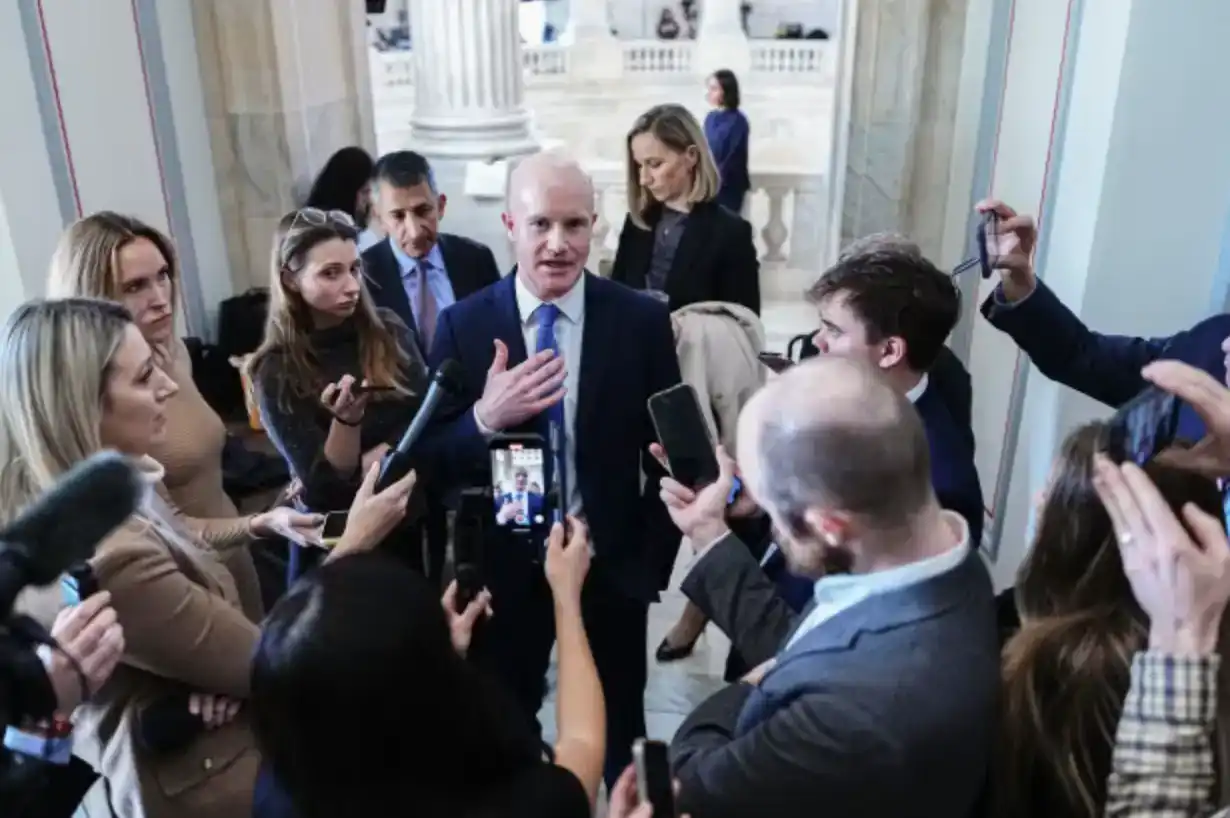
As the "Clarity Act" moved toward a congressional vote, banks began intense lobbying behind the scenes. According to a government estimate cited by banks, about $6.6 trillion in deposits could be "siphoned off" from the traditional financial system if related restrictions were lifted. This lobbying quickly had an effect: a series of条款 and potential amendments were added to the nearly 300-page draft bill, which Armstrong viewed as tantamount to a defeat for the crypto industry. He immediately withdrew his support, and Senate Banking Committee Chairman Tim Scott (R-S.C.) canceled the scheduled vote hours later.

According to people familiar with the matter, Armstrong has an idea for breaking the deadlock. He told Brian Moynihan that a new category of stablecoin issuers could be established: those that meet stricter regulatory standards would be allowed to pay yields to users. This way, banks could theoretically enter the competition under the same regulatory framework as Coinbase.


Other proposals advocate generally prohibiting yield payments but保留 a small number of exceptional use cases for institutions like Coinbase.

Whatever the final solution, legislation advancement will almost certainly require Armstrong's endorsement.

"The current situation is that everyone believes whether this legislation passes ultimately depends on whether Coinbase gives the nod," said Hilary Allen, a professor at American University's law school, an expert in securities law, and also a crypto skeptic. "This is a truly shocking reality."


Трендові криптовалюти

Пов'язані питання

QWhat is the core conflict between Coinbase and Wall Street banks as described in the article?

AThe core conflict is over whether crypto platforms like Coinbase should be allowed to offer 'staking rewards' or yield on stablecoin holdings, which banks argue is functionally equivalent to paying interest on deposits. Banks fear this will lead to massive outflows of consumer funds from the traditional banking system, while Coinbase argues for free market competition.

QWhat specific legislative act is at the center of the debate between the crypto industry and traditional banks?

AThe Clarity Act is the legislation at the center of the debate. It aims to establish a new regulatory framework for digital assets, and a key point of contention is whether it will allow crypto platforms to pay yield on stablecoins.

QHow did Brian Armstrong's public stance influence the legislative process for the Clarity Act?

AArmstrong publicly threatened that the crypto industry would prefer no bill over a bad bill. Hours after his statement on the X platform, a scheduled Senate committee vote on a version of the bill that would have effectively banned such yields was unexpectedly postponed.

QWhat is the banking industry's main argument against crypto platforms offering yield on stablecoins?

ABanks argue that paying yield on stablecoins is essentially the same as paying interest on bank deposits. They contend that because banks offer much lower rates (often below 0.1% for checking accounts), consumers will move their funds to crypto, which would weaken community banks and impact lending to businesses.

QWhat strategic shift has Brian Armstrong made in his role to advance Coinbase's interests in Washington?

AArmstrong has transformed from a more introverted, code-focused founder into the crypto industry's most active spokesperson in Washington. He has invested tens of millions in lobbying, and Coinbase's super PAC network has deployed significant funds to support pro-crypto candidates and build grassroots support for favorable legislation.

Пов'язані матеріали

The "Impossible Triad" Is Fundamentally a Pseudo-Problem

The article argues that blockchain's fundamental limitation is not the scalability trilemma (decentralization, scalability, security), which has been largely solved, but the lack of **privacy** and, until recently, clear **legitimacy**. Blockchain is described as a slow, expensive, globally shared computer whose core value is censorship resistance and verifiability. While ideal for native digital assets like money (e.g., stablecoins), its default transparency acts as a **tax**, exposing all transactions and enabling MEV extraction, which deters serious institutional capital. Simultaneously, its permissionless nature created regulatory ambiguity. The piece contends that **privacy** is the missing critical feature. It rejects the false choice between total transparency and complete anonymity. Modern cryptography (like zero-knowledge proofs) enables **compliant privacy**: users can prove facts (solvency, KYC status, compliance) without revealing the underlying sensitive data (specific holdings, identities). This preserves auditability for regulators and eliminates the leak of financial information. With recent regulatory progress (e.g., the GENIUS Act) addressing legitimacy, adding default, provably compliant privacy becomes a pure upgrade. It transforms blockchain from a costly, public ledger into a confidential settlement layer, finally bridging the gap to mainstream institutional and individual adoption of on-chain finance.

链捕手9 год тому

The "Impossible Triad" Is Fundamentally a Pseudo-Problem

链捕手9 год тому

Optical Chips: Collective Capacity Expansion

The global optical chip industry is experiencing a massive wave of expansion driven by surging AI data center demand. Major players across the US, Japan, Europe, and China are aggressively investing to ramp up production capacity. In the US, Coherent is expanding its 6-inch Indium Phosphide (InP) semiconductor fab in Texas, supported by CHIPS Act funding and a $2 billion strategic investment from NVIDIA. Lumentum is building a new factory for InP optical devices, and Nokia is scaling its advanced photonic chip packaging and testing capabilities. NVIDIA's investments aim to secure future supply of critical lasers and optical interconnect products for AI infrastructure. Japan's JX Advanced Metals, a leading InP substrate supplier, plans a multi-billion yen investment to increase its capacity 7-10 times, strengthening its grip on the crucial upstream materials market. In Europe, IQE and Tower Semiconductor settled a patent dispute and signed a multi-year InP epitaxial wafer supply agreement, highlighting that next-generation silicon photonics platforms will integrate high-performance InP components. STMicroelectronics and Sivers Semiconductors are also expanding silicon photonics production and partnerships. China is rapidly building out its domestic supply chain. Dongshan Precision's subsidiary, Source Photonics, announced a $12 billion project to expand optical chip and module production. Companies like Sanan Optoelectronics and Yunnan Germanium are scaling up InP chip manufacturing and substrate production, moving towards vertical integration from materials to modules. While debate continues around the exact future architecture—whether CPO (Co-Packaged Optics), NPO, or pluggables will dominate—analysts like Morgan Stanley argue the underlying driver is unchangeable: the explosive growth in bandwidth demand. This will inevitably increase the volume of optical engines, lasers, and related content per GPU, regardless of the final technical path. The competition for "more light" in the AI era has intensified into a global, full-chain capacity race.

marsbit11 год тому

Optical Chips: Collective Capacity Expansion

marsbit11 год тому

Stablecoins Finally Find Real Yield: An In-Depth Look at On-Chain Reinsurance Re | A Conversation with Re Founder Karan Saroya

Stablecoin Real Yield Found: A Deep Dive into On-Chain Reinsurance with Re's Karan Saroya As stablecoin supply exceeds $170 billion, the search for sustainable, non-speculative yield intensifies. Re, an on-chain reinsurance platform, provides an answer: connecting stablecoin capital to the trillion-dollar traditional reinsurance market. Re operates as a regulated reinsurer, accepting stablecoin deposits as collateral to back US insurance companies. These insurers pay premiums, generating yield that flows back to on-chain depositors. Currently supporting 35 insurers and underwriting $500 million, Re projects scaling to over $1 billion soon. Key insights from a Bankless podcast with founder Karan Saroya and investor Avichal of Electric Capital: 1. **Uncorrelated, Real-World Yield:** Re offers stablecoin holders access to reinsurance returns (targeting 12-14%+), an asset class entirely separate from crypto or equity markets. 2. **Operational Efficiency via Smart Contracts:** Re replaces traditional, labor-intensive capital fundraising with smart contracts, allowing a ~12-person team to compete with industry giants. 3. **Regulatory Leverage:** For every $1 of collateral, regulations allow backing $5-7 in written premiums. This leverage amplifies returns from the underlying risk-free rate. 4. **DeFi Integration:** Depositors receive receipt tokens, which can be used in protocols like Morpho for "looping," potentially pushing yields to 18-20%+. 5. **The "DeFi Mullet" Model:** A compliant front-end (regulated reinsurer) paired with a decentralized back-end (smart contracts, DeFi capital markets). 6. **RE Governance Token:** Modeled on Lloyd's of London, the token governs the central capital pool's allocation, counterparty acceptance, and parameters. 7. **Real Economic Impact:** Capital funds real-world productivity (factories, clinics, businesses) via insurance, moving beyond crypto's internal loops. The discussion highlights a pivotal moment: DeFi's supply-side infrastructure is now met by real demand for productive yield, potentially kickstarting a flywheel where vast on-chain stablecoin capital seeks these real-world returns.

链捕手13 год тому

Stablecoins Finally Find Real Yield: An In-Depth Look at On-Chain Reinsurance Re | A Conversation with Re Founder Karan Saroya

链捕手13 год тому

1996 or 1999? Walsh's First Test is 'How to View AI'

"1996 or 1999? Wall's First Big Test Is 'How to View AI'" Federal Reserve Chairman Wall's initial challenge is not whether to raise or cut rates, but a more fundamental judgment: what kind of boom is the current AI boom? This will determine the Fed's policy path and define his legacy. Economics is split between two opposing views, according to reporter Nick Timiraos. One sees imminent productivity gains that will increase supply and cool inflation, allowing the Fed to hold steady. The other argues that while productivity benefits are distant, demand shocks are here now, and waiting for data confirmation risks missing the intervention window, forcing sharper rate hikes later. Wall has signaled a leaning toward the first view, echoing 1996-era Alan Greenspan, who embraced strong, productivity-driven growth without fear of inflation. However, Wall faces a different macro environment than Greenspan did, with tariff pressures, expanding fiscal deficits, and diminishing globalization benefits, which could force more significant inflation pressures even if AI benefits materialize. Wall's logic, expressed before taking office, is that AI-driven productivity gains won't show in official data for years. If the Fed waits for confirmation, it might mistakenly tighten policy and choke off the very growth that could suppress inflation. This argues for using forward-looking narratives over lagging data. Chicago Fed President Austan Goolsbee presents a key counter-argument. He distinguishes between expected and unexpected productivity booms. A widely anticipated boom, like the current AI wave, can cause people to spend future wealth gains in advance, overheating the economy before productivity actually rises, thus requiring preemptive rate hikes. He cites rising costs for AI data centers as evidence of such overheating. Fed Governor Christopher Waller offers a rebuttal to Goolsbee, noting the "expected spending" mechanism only works if people can borrow against future income, which many households cannot do due to borrowing constraints. Wall also faces a paradox related to his desire to reduce the Fed's use of "forward guidance" (pre-announcing policy moves). This practice was established in 1999 when Greenspan began signaling hikes to avoid market shocks. If the economy follows a less optimistic path, Wall may be forced to choose between using the guidance he wants to abolish or risking market volatility by staying silent. The ultimate question defining Wall's first major test remains: Is this 1996 or 1999?

marsbit14 год тому

1996 or 1999? Walsh's First Test is 'How to View AI'

marsbit14 год тому

Торгівля

Спот
Ф'ючерси

Популярні статті

Як купити CORE

Ласкаво просимо до HTX.com! Ми зробили покупку CORE (CORE) простою та зручною. Дотримуйтесь нашої покрокової інструкції, щоб розпочати свою криптовалютну подорож.Крок 1: Створіть обліковий запис на HTXВикористовуйте свою електронну пошту або номер телефону, щоб зареєструвати обліковий запис на HTX безплатно. Пройдіть безпроблемну реєстрацію й отримайте доступ до всіх функцій.ЗареєструватисьКрок 2: Перейдіть до розділу Купити крипту і виберіть спосіб оплатиКредитна/дебетова картка: використовуйте вашу картку Visa або Mastercard, щоб миттєво купити CORE (CORE).Баланс: використовуйте кошти з балансу вашого рахунку HTX для безперешкодної торгівлі.Треті особи: ми додали популярні способи оплати, такі як Google Pay та Apple Pay, щоб підвищити зручність.P2P: Торгуйте безпосередньо з іншими користувачами на HTX.Позабіржова торгівля (OTC): ми пропонуємо індивідуальні послуги та конкурентні обмінні курси для трейдерів.Крок 3: Зберігайте свої CORE (CORE)Після придбання CORE (CORE) збережіть його у своєму обліковому записі на HTX. Крім того, ви можете відправити його в інше місце за допомогою блокчейн-переказу або використовувати його для торгівлі іншими криптовалютами.Крок 4: Торгівля CORE (CORE)Легко торгуйте CORE (CORE) на спотовому ринку HTX. Просто увійдіть до свого облікового запису, виберіть торгову пару, укладайте угоди та спостерігайте за ними в режимі реального часу. Ми пропонуємо зручний досвід як для початківців, так і для досвідчених трейдерів.

258 переглядів усьогоОпубліковано 2024.12.13Оновлено 2026.06.02

Як купити CORE

Обговорення

Ласкаво просимо до спільноти HTX. Тут ви можете бути в курсі останніх подій розвитку платформи та отримати доступ до професійної ринкової інформації. Нижче представлені думки користувачів щодо ціни CORE (CORE).

活动图片