Coinbase Institutional | 2026 Crypto Market Outlook: Deep Financial Integration, Innovating with Cautious Optimism

深潮Опубліковано о 2025-12-22Востаннє оновлено о 2025-12-22

Анотація

Coinbase Institutional's 2026 Crypto Market Outlook presents a cautiously optimistic view, drawing parallels to 1996’s steady growth rather than 1999’s exuberance. Key themes include clearer global regulation, deeper institutional adoption focusing on specialized digital asset management (DAT 2.0), and a shift toward sustainable, revenue-linked tokenomics. Technological advances like ZKPs and FHE will enhance privacy needs, while AI integration and application-specific chains drive innovation. Tokenization, particularly of equities, offers composability and higher capital efficiency. Emerging trends include crypto-native equity perpetuals, prediction markets, and stablecoin growth—potentially reaching $1.2T by 2028—fueled by cross-border payments and settlements. The industry is integrating deeply into mainstream finance, requiring excellence in execution, compliance, and user-centric design to broaden global access.

Author:Coinbase Institutional

Compiled by: Deep Tide TechFlow

Our annual crypto market outlook delves into the various factors that will shape the crypto economy over the coming year. From detailed perspectives on BTC (Bitcoin), ETH (Ethereum), and SOL (Solana), to comprehensive analyses of regulatory dynamics, market structure, and the latest developments in tokenization, we cover all critical areas. Additionally, we provide in-depth insights into the impact of Bitcoin's four-year cycle, the potential risks posed by quantum computing, and the profound implications of major platform upgrades such as Ethereum's Fusaka hard fork and Solana's Alpenglow.

Welcome to click the link to download the full report
Highlights include:

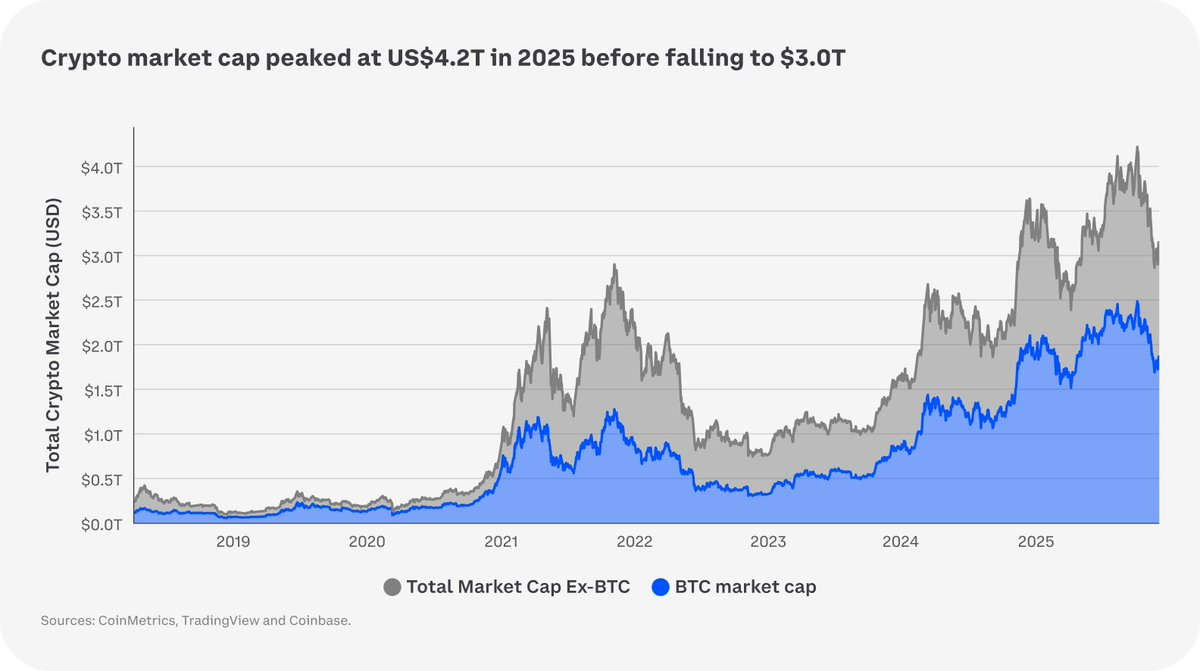
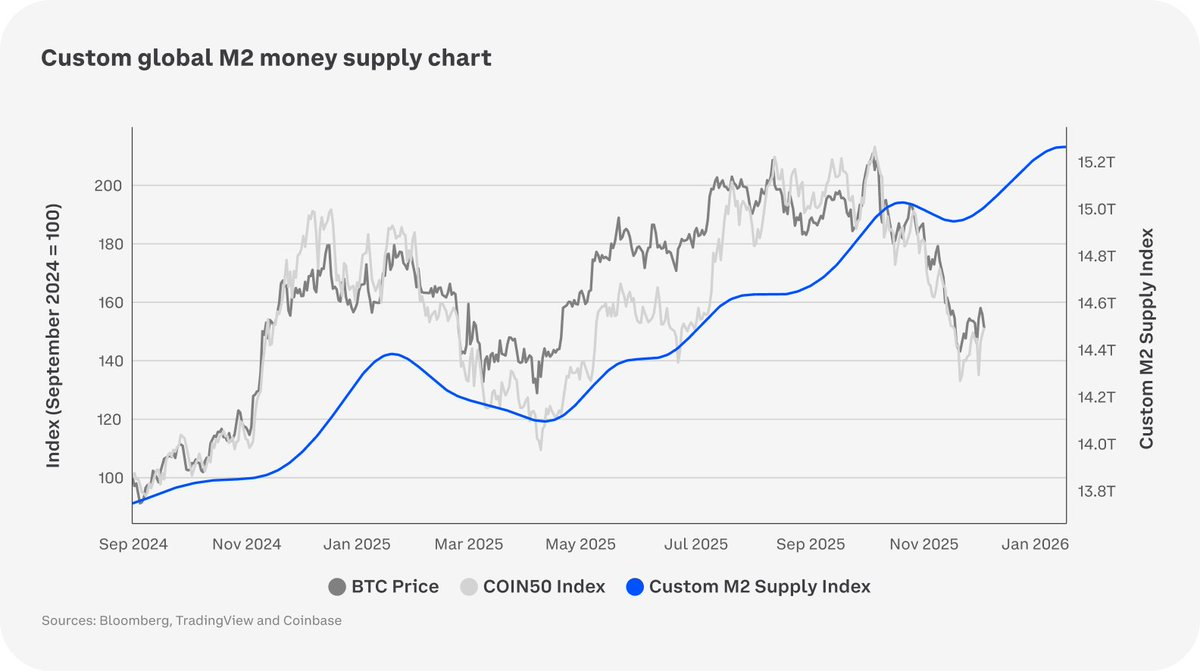
  • Cautious Optimism: We maintain a cautiously optimistic view on the resilience of the U.S. economy, believing that rising labor productivity can provide a buffer amid slowing overall economic data. Therefore, we view the crypto market in the first half of 2026 (1H26) as more akin to "1996" rather than "1999," although uncertainty remains high.
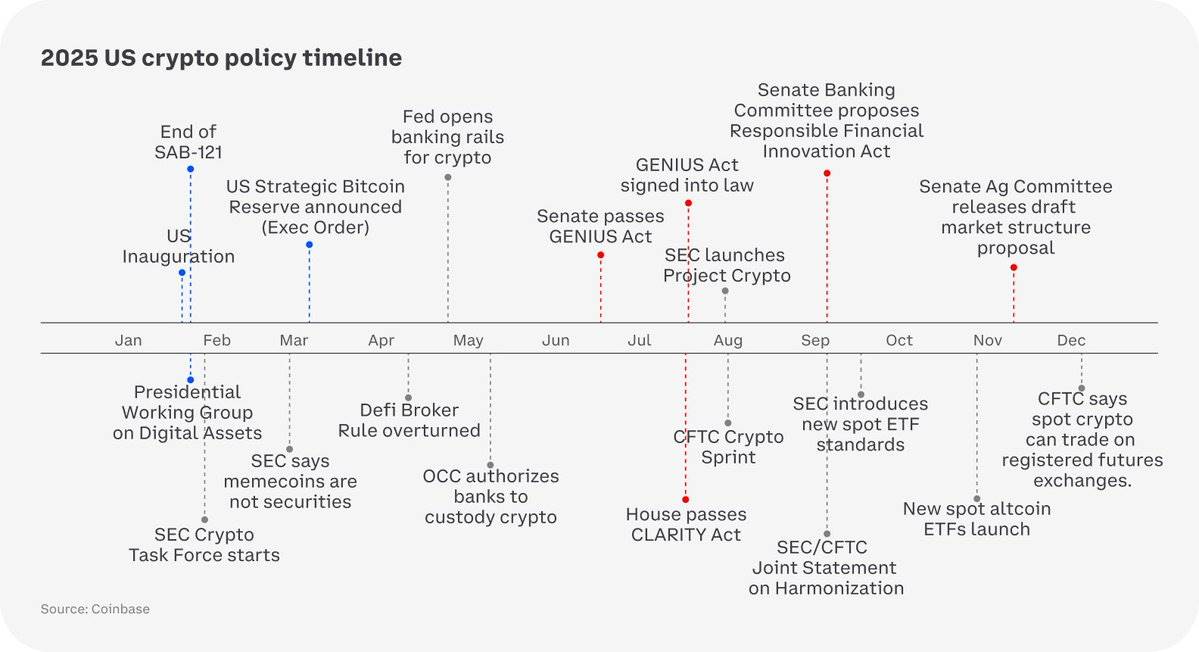
  • Regulatory Progress: We anticipate that clearer global regulatory frameworks in 2026 will change how institutions approach strategy, risk, and compliance.
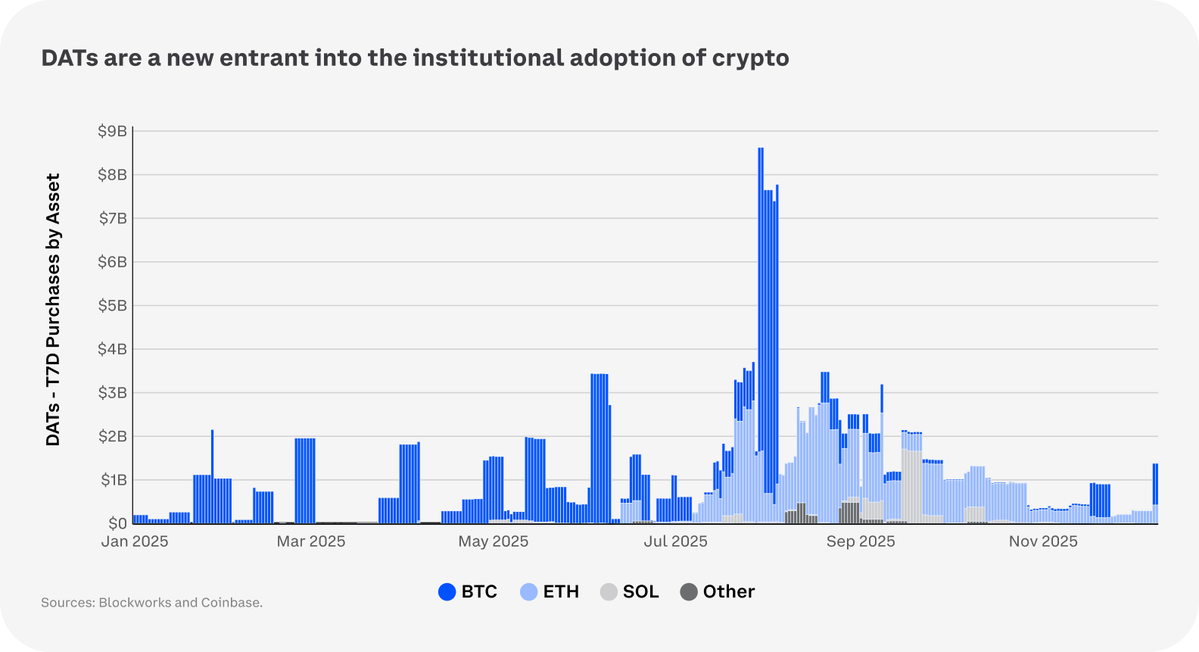
  • Institutional Adoption: We predict the emergence of a "DAT 2.0" model in 2026, which will move beyond simple asset accumulation to focus on the professional trading, storage, and procurement of sovereign block space, treating it as a critical resource for the digital economy.
  • Tokenomics 2.0: As protocols increasingly shift towards value capture, we observe an emerging transition from a purely narrative-driven, high-volatility model to a more sustainable one linked to revenue.

Technological Transformation

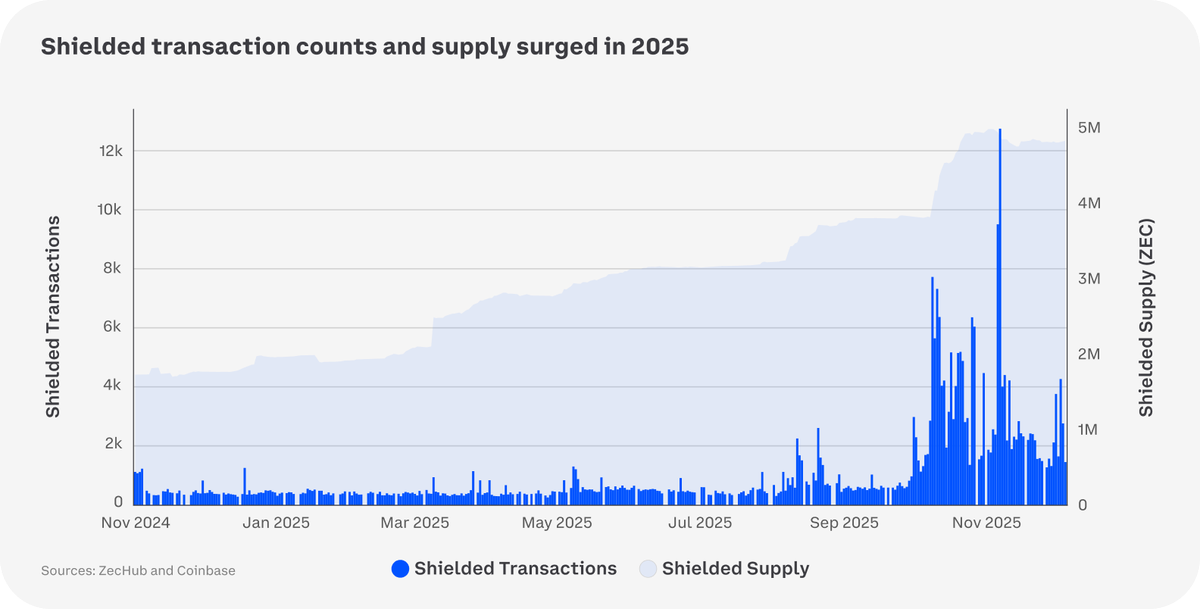
Privacy Demand: With increasing institutional adoption, we expect continued development in technologies like Zero-Knowledge Proofs (ZKPs) and Fully Homomorphic Encryption (FHE), alongside significant growth in the use of on-chain privacy tools.
AI × Crypto: Autonomous trading agent systems require open and programmable payment methods. Protocols like x402 can enable high-frequency microtransaction settlements and support intelligent agents that initiate, govern, and secure on-chain services.

Application-Specific Chains: Although the proliferation of dedicated blockchain networks is reshaping the competitive landscape of crypto infrastructure, we believe the ultimate direction will be a networked architecture with native interoperability and shared security, rather than an endless network of isolated systems.

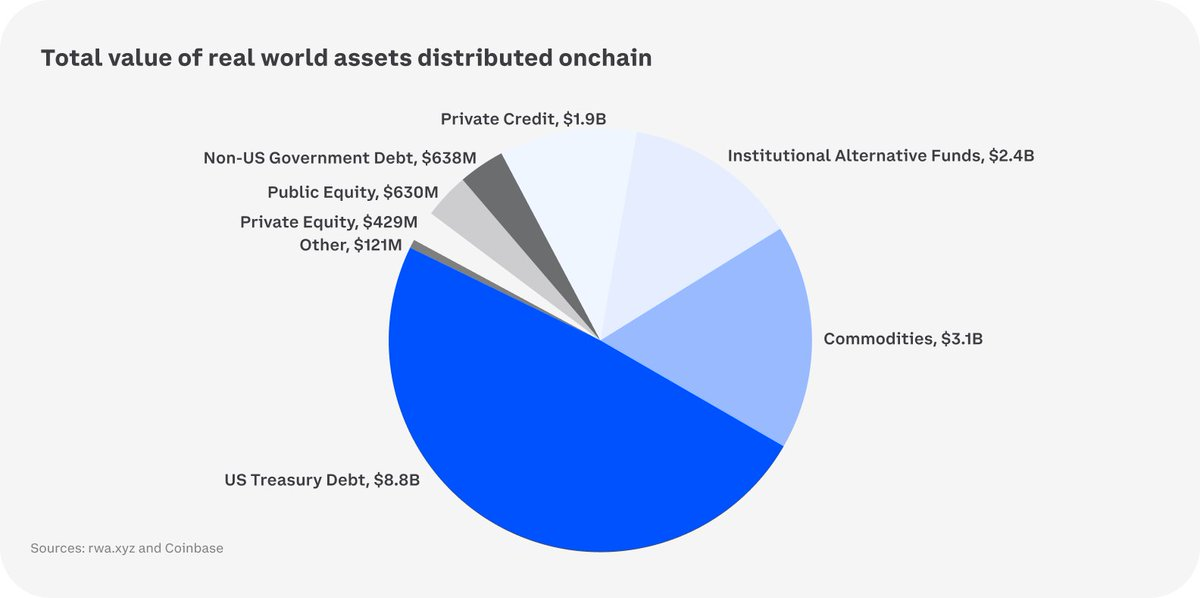
Tokenization: The advantages of atomic composability make the rapid growth prospects of tokenized stocks highly attractive. In many cases, the loan-to-value (LTV) ratios in this DeFi-style model are significantly higher than those in traditional margin frameworks.
The Next Big Trends

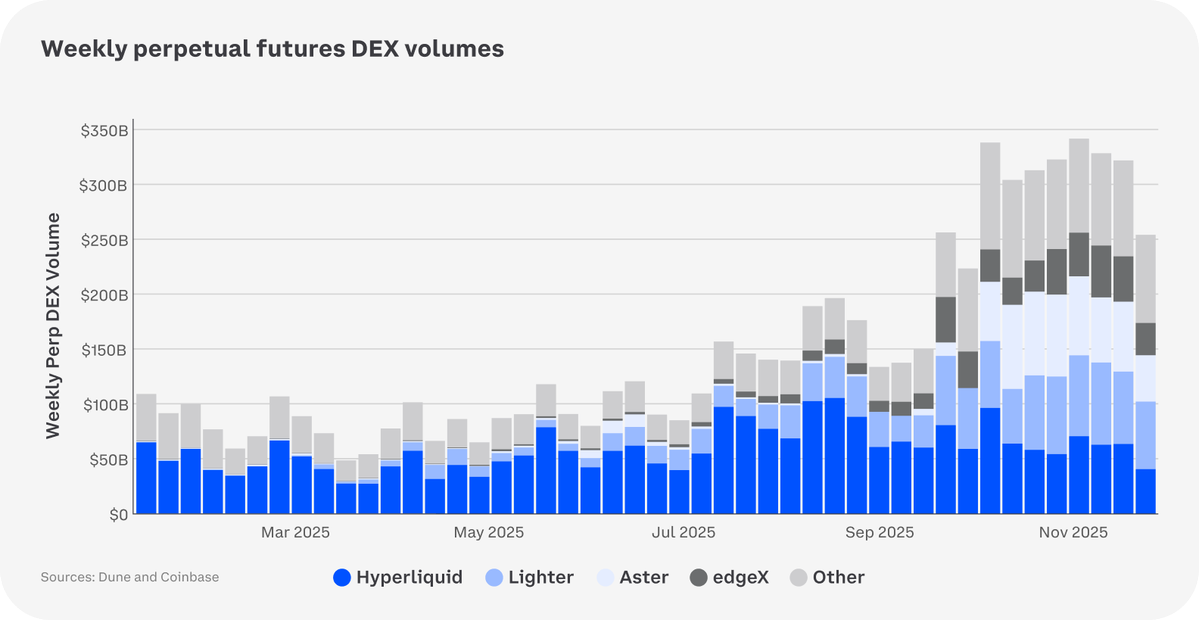
Composability of Crypto Derivatives: As the trend of global retail investors participating in U.S. stock markets continues to rise, we believe equity perpetual contracts (equity perps) could become the preferred choice for a new generation of retail traders, combining the convenience of 24/7 trading with capital efficiency.
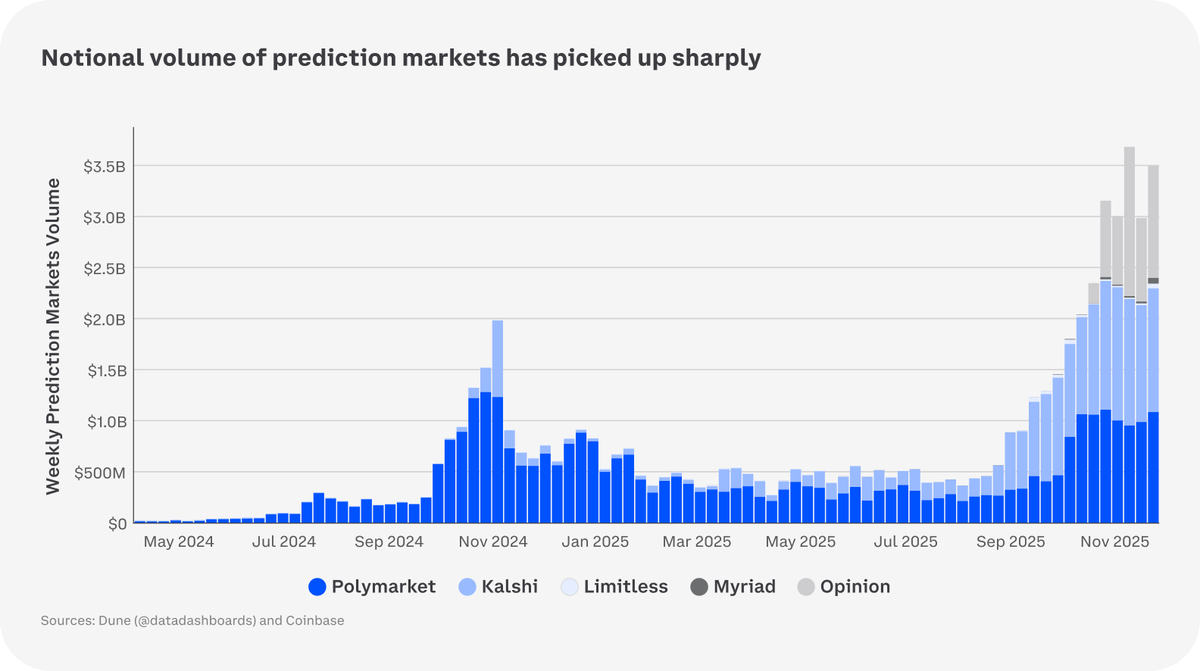
Prediction Markets: Trading volume in prediction markets is expected to grow further in 2026, potentially driven by changes in U.S. tax policy, which may attract more users to these derivatives-linked markets. We believe prediction market aggregators could become the dominant interface layer.
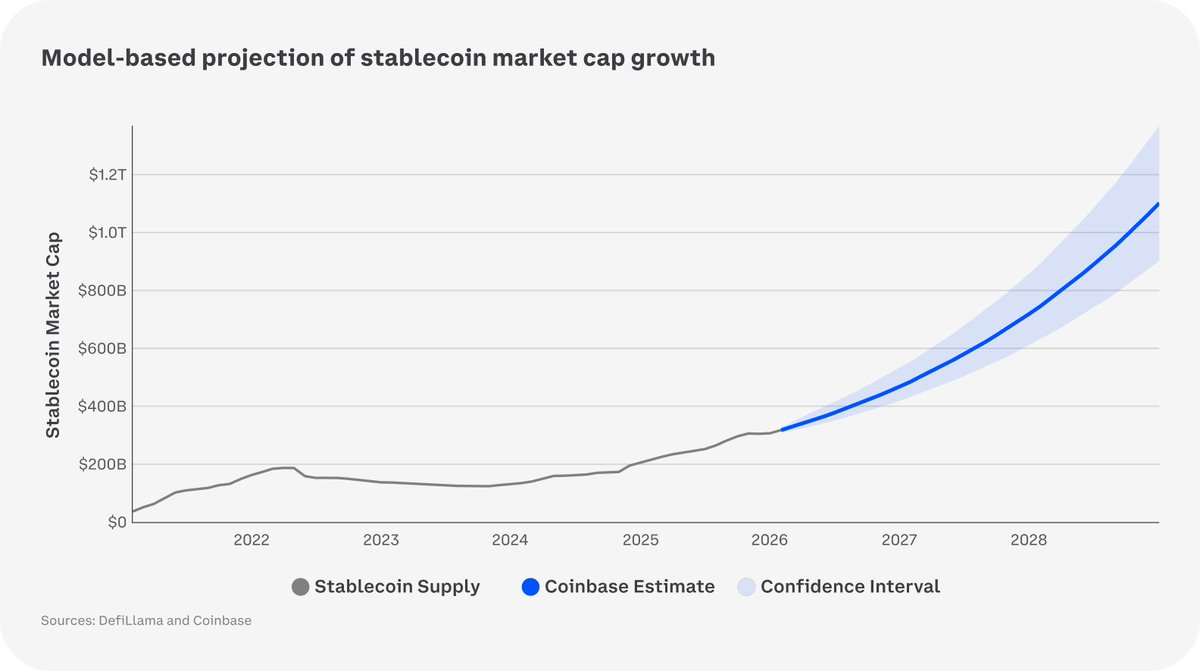
Stablecoins & Payments: Our stochastic models project that the total market capitalization of stablecoins could reach a target range of $1.2 trillion by the end of 2028. Growth is expected in emerging use cases such as cross-border transaction settlements, remittances, and payroll platforms.
We believe the crypto industry is at a critical juncture of deep integration with the core of finance. Seizing this opportunity requires excellence in execution across product quality, compliance, and user-centric design. By focusing on these areas, we can ensure that the next wave of innovation benefits everyone, everywhere, with seamless convenience.


Пов'язані питання

QWhat is the overall market outlook for crypto in 2026 according to Coinbase Institutional?

ACoinbase Institutional holds a 'cautiously optimistic' outlook for the crypto market in 2026. They believe the resilience of the U.S. economy and rising labor productivity will provide a buffer even as broader economic data softens. They liken the first half of 2026 (1H26) more to '1996' than '1999,' indicating expectations of steady growth rather than an irrational bubble, though uncertainty remains high.

QWhat key technological developments are expected to grow with increased crypto adoption?

AWith increased institutional adoption, technologies like Zero-Knowledge Proofs (ZKPs) and Fully Homomorphic Encryption (FHE) are expected to see continued development. There will also be significant growth in the use of on-chain privacy tools to meet the demand for confidentiality.

QWhat is 'DAT 2.0' and how will it change institutional involvement in 2026?

A'DAT 2.0' refers to a new mode of institutional adoption that moves beyond simple asset accumulation. It focuses on the professional trading, storage, and procurement of sovereign block space, treating it as a critical resource for the digital economy.

QHow does the report view the future of tokenization, particularly for assets like stocks?

AThe report states that the advantages of atomic composability make the rapid growth prospects for tokenized stocks highly attractive. In many cases, the loan-to-value (LTV) ratios for DeFi-style lending in this model are significantly higher than those in traditional margin frameworks.

QWhat is the projected growth for the stablecoin market according to the report's model?

AThe report's stochastic model projects that the total market capitalization of stablecoins could reach a target range of $1.2 trillion by the end of 2028. Growth is expected in emerging use cases like cross-border transaction settlements, remittances, and payroll platforms.

Пов'язані матеріали

OpenAI's Largest Internal Wealth Creation: 600 People Cash Out a Total of $6.6 Billion, 75 Take Home the Maximum $30 Million Each

A Wall Street Journal report reveals OpenAI's unprecedented pre-IPO wealth creation. In a single employee stock sale last October, over 600 current and former employees sold shares, collectively cashing out approximately $6.6 billion. Due to high investor demand, the company tripled the individual sale cap to $30 million, with about 75 employees selling the maximum amount. This event represents the largest such transaction in tech industry history for a private company. OpenAI's valuation was $500 billion for this tender offer. Employees with over two years of tenure were eligible, allowing many post-ChatGPT hires their first liquidity event. The company's stock has reportedly grown over 100-fold in seven years. Following a restructuring, employees collectively hold about 26% of OpenAI. The scale of executive wealth is also staggering. In court testimony related to Elon Musk's lawsuit, President and co-founder Greg Brockman confirmed his OpenAI stake is worth around $30 billion. Analysis indicates about 165 current and former employees hold a combined ~$164.9 billion in equity, averaging nearly $1 billion per person in paper wealth. OpenAI's per-employee stock-based compensation is estimated to be 34 times the average of major tech firms before their IPOs. OpenAI continues its rapid ascent, closing a $122 billion funding round at an $852 billion valuation in March. With monthly revenue hitting $2 billion, over 900 million weekly ChatGPT users, and plans for a potential trillion-dollar IPO in late 2026, this wealth-creation engine shows no signs of stopping.

链捕手16 хв тому

OpenAI's Largest Internal Wealth Creation: 600 People Cash Out a Total of $6.6 Billion, 75 Take Home the Maximum $30 Million Each

链捕手16 хв тому

Understanding CPO (Co-Packaged Optics) in One Article: Why Nvidia Is Willing to Spend $3.2 Billion on a Fiber?

NVIDIA and Corning announced a multi-year strategic partnership on May 6, 2026, with NVIDIA committing up to $3.2 billion to support Corning's U.S. expansion. This investment will triple Corning's manufacturing plants and significantly boost its optical fiber and communications production capacity. The core driver behind this massive investment is the fundamental shift from copper to optical interconnect technology within AI data centers. As GPU clusters scale, copper wires face critical limitations: severe signal attenuation over distance, high energy consumption for signal integrity, and excessive heat generation. Optical fiber, transmitting light instead of electrical signals, solves these issues with minimal loss, near-light speed, and lower power needs. The article outlines a three-stage evolution of data center interconnect: 1. **Traditional Copper Interconnects:** The mainstream solution of the 2010s, now being phased out due to scaling bottlenecks. 2. **Pluggable Optical Modules:** The current mainstream, where modules convert electrical signals to light externally. This process still introduces energy loss and latency. 3. **CPO (Co-Packaged Optics):** The next-generation technology where the optical engine is integrated directly with the GPU chip package. This drastically reduces the electrical signal travel distance to mere millimeters, slashing power consumption and latency while boosting data density. NVIDIA CEO Jensen Huang has identified CPO as an essential core technology for AI infrastructure. NVIDIA's investment signifies a strategic shift from being a buyer to actively controlling its supply chain for critical components. With demand for specialized optical fiber far outstripping supply—evidenced by soaring prices—securing long-term manufacturing capacity has become a competitive necessity. While Corning's expansion may pressure some suppliers, a projected global fiber supply gap of 5-15% over the next few years creates a significant opportunity window, particularly for Chinese manufacturers competitive in optical preforms, chips, and modules. Ultimately, NVIDIA's move is not about chasing a trend but an engineering imperative. The transition to light-based interconnects like CPO is driven by the physical limits of copper, marking a definitive step in the ongoing AI computing revolution.

marsbit41 хв тому

Understanding CPO (Co-Packaged Optics) in One Article: Why Nvidia Is Willing to Spend $3.2 Billion on a Fiber?

marsbit41 хв тому

KOL's Perspective: Why Is SOL Set to Rise from This Point?

**Summary: Why SOL is Positioned for Growth at This Level** The article argues that SOL is poised for an upward move from its current price point, citing several key factors. Primarily, SOL has just broken out of a 4-month consolidation phase. This breakout signals a return of risk appetite to the broader crypto market, as SOL is seen as a key indicator of overall crypto health. The token's ownership has reportedly shifted from short-term traders and tourists to long-term accumulators, leading to low volume. Any meaningful increase in trading activity could thus trigger significant upward momentum. Fundamental strengths include strong institutional adoption, integration with DeFi and RWAs (Real-World Assets), and the potential benefits from the Clarity Act. Despite its high volatility—having dropped 70% from its all-time high but still up 12x from its bear market low—SOL is highlighted as one of the few tokens from the last cycle to reach new highs. It boasts a robust ecosystem of applications, users, and protocols. Future catalysts include the expected influx of AI developers following the Miami Accelerate conference, which focused on AI on Solana. Furthermore, Solana is positioned as the premier chain for memecoin activity, a trend expected to continue and drive network usage and fees. The article concludes that recent price action reflects a healthy transfer to long-term holders, setting the stage for growth.

marsbit1 год тому

KOL's Perspective: Why Is SOL Set to Rise from This Point?

marsbit1 год тому

Торгівля

Спот
Ф'ючерси
活动图片




