CLARITY Act Under Fire As Hayes Presses Trump To Shut It Down

bitcoinistОпубліковано о 2026-05-22Востаннє оновлено о 2026-05-22

Анотація

BitMEX co-founder Arthur Hayes criticizes Coinbase CEO Brian Armstrong and the proposed CLARITY Act in a recent interview. Hayes argues that large crypto companies like Coinbase prioritize shareholder interests over the broader crypto community and retail investors. He urges former President Donald Trump to veto the CLARITY Act if it passes, contending that excessive regulation and integration with traditional finance undermine Bitcoin's original decentralized purpose. Hayes believes institutional interest is driven by inflation hedging, not ideological support for crypto. The debate highlights a deep industry divide between those seeking regulatory clarity for mainstream adoption and those warning it threatens crypto's core values.

Brian Armstrong’s role in the crypto regulation push became a flashpoint when BitMEX co-founder Arthur Hayes called out the Coinbase CEO by name during a recent interview.

Hayes said Armstrong is acting in the best interest of his shareholders — not the wider crypto community.

Hayes made the remarks on The Wolf Of All Streets, where he spoke at length about the proposed CLARITY Act and what he sees as a growing disconnect between large crypto companies and everyday users.

He questioned whether big corporate players truly look out for retail investors or open-source developers, suggesting their priorities lie elsewhere.

Hayes drew a sharp line between institutional interest in crypto and what he believes Bitcoin was built for. Banks, he said, are moving into the space because their clients want protection against inflation and the erosion of fiat currency — not because they believe in what crypto stands for.

Bitcoin’s track record during periods of heavy money printing is what draws institutional money in, according to Hayes, but that interest comes with strings attached.

When Regulation Becomes The Problem

Hayes wants US President Donald Trump to veto the CLARITY Act if it reaches his desk. His argument is straightforward: regulation was never the thing keeping crypto alive, and it should not be treated as a lifeline now.

Turning Bitcoin into a product managed by traditional financial institutions — wrapped in derivatives and held on bank balance sheets — strips it of the very thing that makes it different, Hayes said.

He challenged the idea that crypto needs a seat at the traditional finance table. If the end result is just another financial instrument sitting inside the existing system, Hayes argued, then nothing has really changed. The crypto industry already has that in other forms.

BTCUSD now trading at $77,181. Chart: TradingView

A Divided Industry

The debate over the CLARITY Act reflects a split that has been building inside the crypto world for some time. Those in favor of the legislation believe clear rules would bring credibility and attract more institutional money into digital assets.

Hayes sits firmly on the other side, warning that too much integration with mainstream finance could hollow out what makes decentralized systems worth building in the first place.

No veto has been issued. The CLARITY Act continues to move through the legislative process, and the industry remains divided on which path leads to a stronger future for crypto.

Featured image from Pexels, chart from TradingView

Пов'язані питання

QWho is Arthur Hayes calling out in the article and what is his main criticism?

AArthur Hayes is calling out Coinbase CEO Brian Armstrong. His main criticism is that Armstrong and large crypto companies like Coinbase are acting in the best interest of their shareholders rather than in the interest of the wider crypto community and everyday users.

QWhat specific action does Arthur Hayes hope President Trump will take regarding the CLARITY Act, and why?

AArthur Hayes hopes President Donald Trump will veto the CLARITY Act if it reaches his desk. He argues that regulation was never what kept crypto alive and should not be treated as a lifeline now. He believes the Act would integrate crypto too deeply into the traditional financial system, stripping it of its decentralized, disruptive essence.

QAccording to Hayes, why are traditional banks and institutions moving into the crypto space?

AAccording to Hayes, banks and institutions are moving into the crypto space because their clients want protection against inflation and the erosion of fiat currency, particularly due to Bitcoin's track record during periods of heavy money printing. He states they are not moving in because they believe in the core principles of crypto.

QWhat is the core debate within the crypto industry regarding the CLARITY Act, as described in the article?

AThe core debate is a split between those who believe the CLARITY Act would bring clear rules, credibility, and attract more institutional investment, and those like Arthur Hayes who warn that too much integration with mainstream finance could hollow out the decentralized, fundamental value of crypto systems.

QWhat does Arthur Hayes believe would be the consequence of turning Bitcoin into a product managed by traditional financial institutions?

AArthur Hayes believes that turning Bitcoin into a product managed by traditional financial institutions—wrapped in derivatives and held on bank balance sheets—would strip it of the very qualities that make it different and revolutionary, ultimately resulting in no real change to the existing financial system.

Пов'язані матеріали

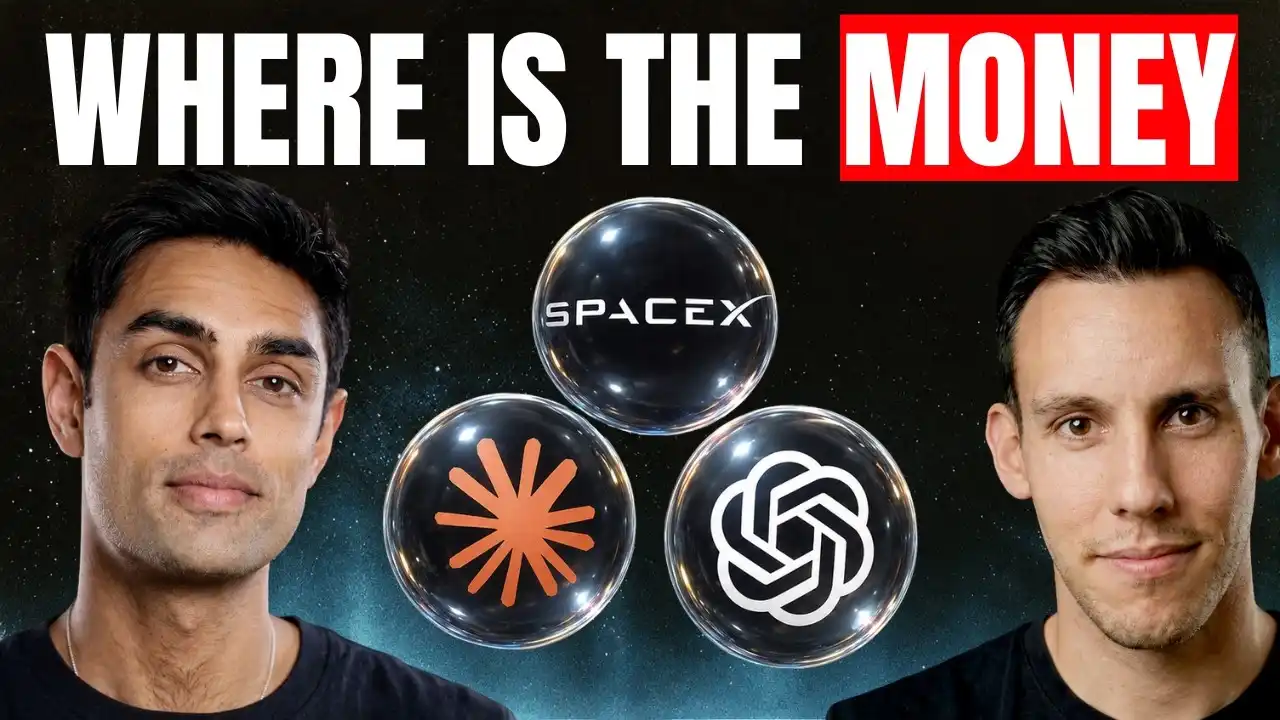
SpaceX, OpenAI, Anthropic: The Three AI Giants Racing for IPO, Which One Is Worth Betting On?

SpaceX, OpenAI, and Anthropic are poised for historic IPOs within weeks, potentially raising a combined $180 billion—a sum exceeding the entire internet bubble's fundraising. The hosts of the Limitless Podcast argue this isn't just individual company financing but an unprecedented capital concentration for AI infrastructure, driven by an insatiable need for compute, data centers, power, and chips. SpaceX's IPO is notable for reportedly changing market index rules to allow faster inclusion, potentially funneling trillions in passive retirement funds into its stock, despite its unproven space-based data center business model. In contrast, Anthropic demonstrates explosive growth, with ARR reportedly hitting $45 billion and approaching profitability, fueled by strong enterprise adoption of products like Claude Code. Google's separate $80 billion raise highlights the immense capital pressure, even for giants. The discussion acknowledges bubble risks but leans optimistic. The hosts contend the massive spending is building essential physical infrastructure for the next technological era. A key bottleneck isn't capital but the real-world limits of chip manufacturing and construction speed. As long as demand for AI compute outstrips supply, this investment cycle represents a foundational build-out rather than a purely financial bubble. All three companies are seen as foundational bets on the future, with Anthropic often cited as the most immediately compelling due to its proven revenue trajectory.

marsbit2 год тому

SpaceX, OpenAI, Anthropic: The Three AI Giants Racing for IPO, Which One Is Worth Betting On?

marsbit2 год тому

From 'Old Guys' to 'New Favorites': How AI Is Revaluing Old Infrastructure from Dell to Nokia?

From "Vintage Tech" to "New AI Darlings": How AI Revalues Old Infrastructure One year ago, tech giants like Dell, Nokia, Cisco, and Western Data were seen as slow-growth, low-valuation stories, far from the AI spotlight dominated by players like Nvidia. Now, these legacy tech stocks are gaining market attention, sparking debate on whether this is genuine industry revaluation or a temporary narrative. As AI moves from model parameters to real-world data centers, the market is recognizing companies with proven delivery and infrastructure capabilities. This shift marks a change in the AI investment thesis: from pure model and GPU focus to the complex systems engineering required for deployment. Companies like Dell, HPE, and Corning are being revalued not for being "sexy" AI innovators, but for their decades of accumulated expertise in supply chains, enterprise delivery, and infrastructure—assets that have become critical in the AI buildout phase. The revaluation is unfolding across three key infrastructure lines: 1. **Servers & System Integration:** Dell and HPE are emerging as crucial system integrators or "general contractors" for AI data centers, translating GPU orders into complete, deployable server racks integrated with power, cooling, and networking. 2. **Networking & Connectivity:** AI's scale demands robust high-speed connections. Corning (fiber optics), Nokia (AI-RAN, 6G), and Cisco (data center switches) are gaining importance for enabling efficient data transfer within and between AI clusters. 3. **Storage:** Beyond high-speed memory (HBM/DRAM), the AI data explosion is driving demand for high-capacity hard drives (HDDs) from companies like Western Digital and Seagate to handle training data, logs, and cold storage cost-effectively. For this revaluation to be substantive and not just a narrative, three criteria are key: 1) Concrete AI-related order and revenue growth (e.g., Dell's AI server sales), 2) Upward revisions to company financial guidance, and 3) Sustainable improvements in profit quality, not just top-line revenue spikes. In essence, AI's transition to a real construction phase is re-pricing "old assets" against "new demand." The opportunity, however, is selective. Only those legacy firms that are demonstrably integrated into the capital expenditure chains of data center and enterprise AI deployment are likely to experience a true "logic re-rating" rather than just a temporary valuation bounce.

marsbit2 год тому

From 'Old Guys' to 'New Favorites': How AI Is Revaluing Old Infrastructure from Dell to Nokia?

marsbit2 год тому

Торгівля

Спот
Ф'ючерси

Популярні статті

Як купити PUSH

Ласкаво просимо до HTX.com! Ми зробили покупку Push Protocol (PUSH) простою та зручною. Дотримуйтесь нашої покрокової інструкції, щоб розпочати свою криптовалютну подорож.Крок 1: Створіть обліковий запис на HTXВикористовуйте свою електронну пошту або номер телефону, щоб зареєструвати обліковий запис на HTX безплатно. Пройдіть безпроблемну реєстрацію й отримайте доступ до всіх функцій.ЗареєструватисьКрок 2: Перейдіть до розділу Купити крипту і виберіть спосіб оплатиКредитна/дебетова картка: використовуйте вашу картку Visa або Mastercard, щоб миттєво купити Push Protocol (PUSH).Баланс: використовуйте кошти з балансу вашого рахунку HTX для безперешкодної торгівлі.Треті особи: ми додали популярні способи оплати, такі як Google Pay та Apple Pay, щоб підвищити зручність.P2P: Торгуйте безпосередньо з іншими користувачами на HTX.Позабіржова торгівля (OTC): ми пропонуємо індивідуальні послуги та конкурентні обмінні курси для трейдерів.Крок 3: Зберігайте свої Push Protocol (PUSH)Після придбання Push Protocol (PUSH) збережіть його у своєму обліковому записі на HTX. Крім того, ви можете відправити його в інше місце за допомогою блокчейн-переказу або використовувати його для торгівлі іншими криптовалютами.Крок 4: Торгівля Push Protocol (PUSH)Легко торгуйте Push Protocol (PUSH) на спотовому ринку HTX. Просто увійдіть до свого облікового запису, виберіть торгову пару, укладайте угоди та спостерігайте за ними в режимі реального часу. Ми пропонуємо зручний досвід як для початківців, так і для досвідчених трейдерів.

572 переглядів усьогоОпубліковано 2024.12.13Оновлено 2026.06.02

Як купити PUSH

Обговорення

Ласкаво просимо до спільноти HTX. Тут ви можете бути в курсі останніх подій розвитку платформи та отримати доступ до професійної ринкової інформації. Нижче представлені думки користувачів щодо ціни PUSH (PUSH).

活动图片