Chen Maobo and Others Revealed as First Batch of Guests for the 2026 Hong Kong Web3 Carnival!

比推Опубліковано о 2025-12-19Востаннє оновлено о 2025-12-19

Анотація

The 2026 Hong Kong Web3 Carnival, co-organized by Wanxiang Blockchain Lab and HashKey Group, will take place from April 20 to 23, 2026, at the Hong Kong Convention and Exhibition Centre. This annual event aims to bridge traditional and innovative sectors while connecting Eastern and Western global perspectives. Confirmed speakers include prominent figures such as Paul Chan Mo-po, Financial Secretary of the Hong Kong SAR; Xiao Feng, Chairman of Wanxiang Blockchain and HashKey Group; and other industry leaders from Solana Foundation, MatrixPort, and Animoca Brands, among others. The event is supported by strategic partners like the Hong Kong Trade Development Council and sponsors including OKX Web3 and Qtum. The carnival has attracted significant cross-industry interest, with over 500 executives from traditional finance and实体 industries registered by December 2025, highlighting its role in fostering dialogue between Web3 innovation and established sectors. Since its inception in 2023, the Hong Kong Web3 Carnival has grown into one of the world's most influential crypto summits, with past editions drawing over 100,000 attendees, 350 projects, and 1,200 speakers. The 2026 edition will continue to leverage Hong Kong’s unique position to deepen global integration of technology, business models, and regulatory practices, while providing a platform for local developers and projects to gain international exposure.

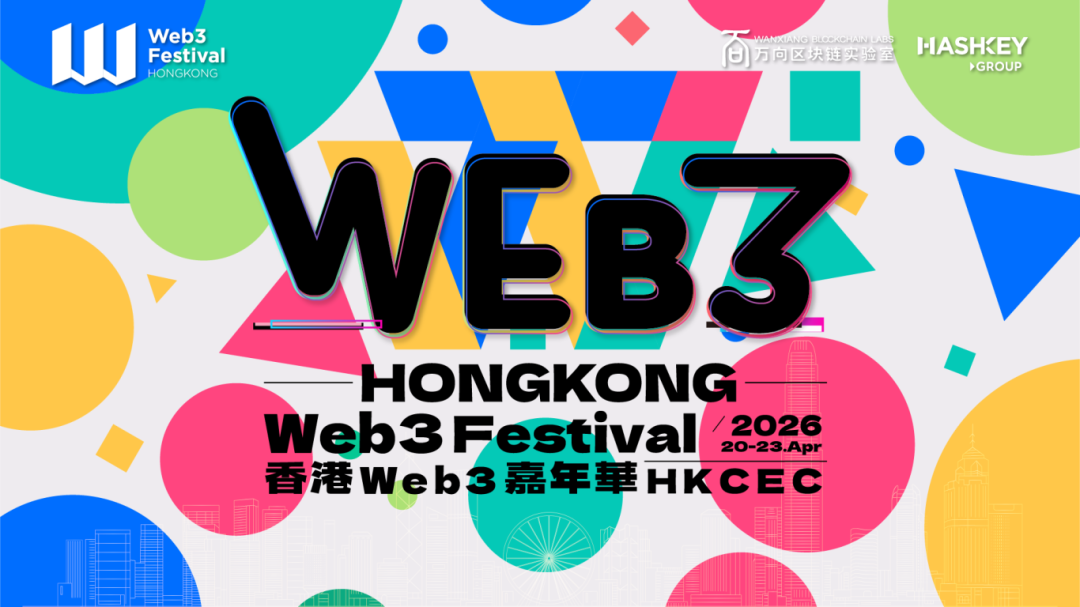
From April 20 to 23, 2026, the 2026 Hong Kong Web3 Carnival, jointly organized by Wanxiang Blockchain Lab and HashKey Group, will once again take place at the Hong Kong Convention and Exhibition Centre.

As an annual industry event held in Hong Kong for four consecutive years, this year's Carnival will continue to unleash its "home advantage," bridging tradition and innovation, connecting the East and the West, and fostering the convergence of global wisdom.


Gathering of Authorities: The 2026 Grand Event Begins Anew

Esteemed speakers and global ecosystem partners have gathered to form a solid foundation and diverse landscape for this year's event.

Currently, Paul Chan Mo-po, Financial Secretary of the Hong Kong Special Administrative Region; Xiao Feng, Chairman of Wanxiang Blockchain and CEO of Hashkey Group; Duncan Chiu, Legislative Council Member (Technology and Innovation) of the Hong Kong Special Administrative Region; Lily Liu, President of Solana Foundation; Cynthia Wu, Co-founder and Chief Business Officer of MatrixPort; Yat Siu, Co-founder and Chairman of Animoca Brands; and Professor Lee Kwok On, Dean of the Global FinTech Institute and Professor at Singapore University of Social Sciences (listed in no particular order), among other global thought leaders, have confirmed their attendance to share cutting-edge insights and perspectives. More distinguished guests will be announced soon. Stay tuned.

Simultaneously, this year's Carnival is honored to collaborate with strategic partner the Hong Kong Trade Development Council and has received strong support from title sponsor OKX Web3, platinum sponsor Qtum, exclusive dinner sponsor Sui Foundation, first-tier booth sponsors bitbaby, HappyMeta, and SlowMist, second-tier booth sponsors Ellipal, Fufuture, and Passey, and third-tier booth sponsor RWA.LTD (sponsors of the same tier listed in alphabetical order), among other global ecosystem partners. Together, they will co-create a global industry event deeply integrating ideas, resources, and opportunities.


Breaking Boundaries: Bridging Tradition and Innovation

The appeal of this year's Carnival extends beyond the native Web3 domain, with a stronger "boundary-breaking" momentum already evident.

Leveraging the extensive resource channels and brand-building efforts of Wanxiang Blockchain Lab and HashKey over the years, as of December 2025, the 2026 Hong Kong Web3 Carnival has attracted over 500 executives from traditional finance and实体产业 (实体产业) who have registered to participate. These attendees are high-net-worth individuals and core decision-makers from enterprises with a strong interest in the Web3领域 (Web3领域).

Genuine collaboration begins with high-quality encounters. This is one of the core values of this year's Carnival: to build a dialogue bridge between cutting-edge digital innovation and vast traditional industry resources, making subsequent integration truly possible.


Connecting East and West: Building a Global Ecosystem

Since its inaugural event in 2023, the Hong Kong Web3 Carnival has rapidly grown into one of the world's most influential crypto summits, providing a high-standard, high-quality, and in-depth platform for global East-West exchange.

Over the past three events, the Carnival has attracted over 100,000 on-site participants, featured more than 350 cutting-edge projects, invited over 1,200 speakers to share their insights, and spawned over 400 side events, successfully creating a vibrant ecosystem centered around the main event and radiating throughout the city.

As partners have noted, this platform is both "the most locally distinctive industry summit, uniquely capable of reaching millions of local high-level developers, entrepreneurs, and newcomers," and始终致力于 (始终致力于) "connecting the world's most forward-looking technological forces," continuously "promoting the industry to find a balance between security, compliance, and innovation."

As a hub connecting Eastern and Western Web3 ecosystems, the 2026 Hong Kong Web3 Carnival will continue to leverage Hong Kong's unique advantage of "背靠内地、面向全球" (backed by the mainland and facing the globe), building an efficient channel between the Asian market and global resources. This year's event will be dedicated to promoting the deep integration of global cutting-edge technologies, business models, and compliance practices with the Asian market. Simultaneously, it will help local outstanding developers, entrepreneurial teams, and innovative projects step onto the international stage, achieving comprehensive connectivity and value linkage from technology and resources to markets.

In April 2026, let us gather once again in Hong Kong—not only to witness the future but to participate in it and define it!

Click "Read More" at the end of the article to purchase tickets and attend!

Original link:https://www.bitpush.news/articles/7596949

Пов'язані питання

QWhen and where will the 2026 Hong Kong Web3 Festival take place?

AThe 2026 Hong Kong Web3 Festival will take place from April 20 to 23, 2026, at the Hong Kong Convention and Exhibition Centre.

QWho are some of the key confirmed speakers for the 2026 Hong Kong Web3 Festival?

AConfirmed speakers include Paul Chan Mo-po, Financial Secretary of the HKSAR; Xiao Feng, Chairman of Wanxiang Blockchain and HashKey Group; Duncan Chiu, Legislative Council Member (Technology & Innovation); Lily Liu, President of Solana Foundation; Cynthia Wu, Co-founder & CCO of MatrixPort; Yat Siu, Co-founder & Executive Chairman of Animoca Brands; and Professor David Lee of the Global FinTech Institute and Singapore University of Social Sciences.

QWhat is a key 'crossover' appeal of the 2026 Hong Kong Web3 Festival mentioned in the article?

AA key 'crossover' appeal is its strong attraction beyond the native Web3 field, having drawn over 500 executives from traditional finance and实体产业 (physical industries) by December 2025, who are high-net-worth individuals and core corporate decision-makers interested in Web3.

QWhat role does the article state the Hong Kong Web3 Festival plays in the global ecosystem?

AThe article states the festival acts as a hub connecting Eastern and Western Web3 ecosystems, providing a high-level platform for global exchange and leveraging Hong Kong's unique advantage of 'backing the mainland and facing the world' to build an efficient channel between Asian markets and global resources.

QWhich organizations are mentioned as the strategic partner and the title sponsor for the 2026 event?

AThe Hong Kong Trade Development Council is the strategic partner, and OKX Web3 is the title sponsor for the 2026 Hong Kong Web3 Festival.

Пов'язані матеріали

Gensyn AI: Don't Let AI Repeat the Mistakes of the Internet

In recent months, the rapid growth of the AI industry has attracted significant talent from the crypto sector. A persistent question among researchers intersecting both fields is whether blockchain can become a foundational part of AI infrastructure. While many previous AI and Crypto projects focused on application layers (like AI Agents, on-chain reasoning, data markets, and compute rentals), few achieved viable commercial models. Gensyn differentiates itself by targeting the most critical and expensive layer of AI: model training. Gensyn aims to organize globally distributed GPU resources into an open AI training network. Developers can submit training tasks, nodes provide computational power, and the network verifies results while distributing incentives. The core issue addressed is not decentralization for its own sake, but the increasing centralization of compute power among tech giants. In the era of large models, access to GPUs (like the H100) has become a decisive bottleneck, dictating the pace of AI development. Major AI companies are heavily dependent on large cloud providers for compute resources. Gensyn's approach is significant for several reasons: 1) It operates at the core infrastructure layer (model training), the most resource-intensive and technically demanding part of the AI value chain. 2) It proposes a more open, collaborative model for compute, potentially increasing resource utilization by dynamically pooling idle GPUs, similar to early cloud computing logic. 3) Its technical moat lies in solving complex challenges like verifying training results, ensuring node honesty, and maintaining reliability in a distributed environment—making it more of a deep-tech infrastructure company. 4) It targets a validated, high-growth market with genuine demand, rather than pursuing blockchain integration without purpose. Ultimately, the boundaries between Crypto and AI are blurring. AI requires global resource coordination, incentive mechanisms, and collaborative systems—areas where crypto-native solutions excel. Gensyn represents a step toward making advanced training capabilities more accessible and collaborative, moving beyond a niche controlled by a few giants. If successful, it could evolve into a fundamental piece of AI infrastructure, where the most enduring value in the AI era is often created.

marsbit13 год тому

Gensyn AI: Don't Let AI Repeat the Mistakes of the Internet

marsbit13 год тому

Why is China's AI Developing So Fast? The Answer Lies Inside the Labs

A US researcher's visit to China's top AI labs reveals distinct cultural and organizational factors driving China's rapid AI development. While talent, data, and compute are similar to the West, Chinese labs excel through a pragmatic, execution-focused culture: less emphasis on individual stardom and conceptual debate, and more on teamwork, engineering optimization, and mastering the full tech stack. A key advantage is the integration of young students and researchers who approach model-building with fresh perspectives and low ego, prioritizing collective progress over personal credit. This contrasts with the US culture of self-promotion and "star scientist" narratives. Chinese labs also exhibit a strong "build, don't buy" mentality, preferring to develop core capabilities—like data pipelines and environments—in-house rather than relying on external services. The ecosystem feels more collaborative than tribal, with mutual respect among labs. While government support exists, its scale is unclear, and technical decisions appear driven by labs, not state mandates. Chinese companies across sectors, from platforms to consumer tech, are building their own foundational models to control their tech destiny, reflecting a broader cultural drive for technological sovereignty. Demand for AI is emerging, with spending patterns potentially mirroring cloud infrastructure more than traditional SaaS. Despite challenges like a less mature data industry and GPU shortages, Chinese labs are propelled by vast talent, rapid iteration, and deep integration with the open-source community. The competition is evolving beyond a pure model race into a contest of organizational execution, developer ecosystems, and industrial pragmatism.

marsbit14 год тому

Why is China's AI Developing So Fast? The Answer Lies Inside the Labs

marsbit14 год тому

3 Years, 5 Times: The Rebirth of a Century-Old Glass Factory

Corning, a 175-year-old glass company, is experiencing a dramatic revival as a key player in AI infrastructure, driven by surging demand for high-performance optical fiber in data centers. AI data centers require vastly more fiber than traditional ones—5 to 10 times as much per rack—to handle high-speed data transmission between GPUs. This structural demand shift, coupled with supply constraints from the lengthy expansion cycle for fiber preforms, has created a significant supply-demand gap. Nvidia has invested in Corning, along with Lumentum and Coherent, in a $4.5 billion total commitment to secure the optical supply chain for AI. Corning's competitive edge lies in its expertise in producing ultra-low-loss, high-density, and bend-resistant specialty fiber, which is critical for 800G+ and future 1.6T data rates. Its deep involvement in co-packaged optics (CPO) with partners like Nvidia further solidifies its position. While not the largest fiber manufacturer globally, Corning's revenue from enterprise/data center clients now exceeds 40% of its optical communications sales, and it has secured multi-year supply agreements with major hyperscalers including Meta and Nvidia. Financially, Corning's optical communications revenue has surged, doubling from $1.3 billion in 2023 to over $3 billion in 2025. Its stock price has risen nearly 6-fold since late 2023. Key future catalysts include the rollout of Nvidia's CPO products and the scale of undisclosed customer agreements. However, risks include high current valuations and potential disruption from next-generation technologies like hollow-core fiber. The company's long-term bet on light over electricity, maintained even through the telecom bubble crash, is now being validated by the AI boom.

marsbit15 год тому

3 Years, 5 Times: The Rebirth of a Century-Old Glass Factory

marsbit15 год тому

Торгівля

Спот
Ф'ючерси
活动图片





