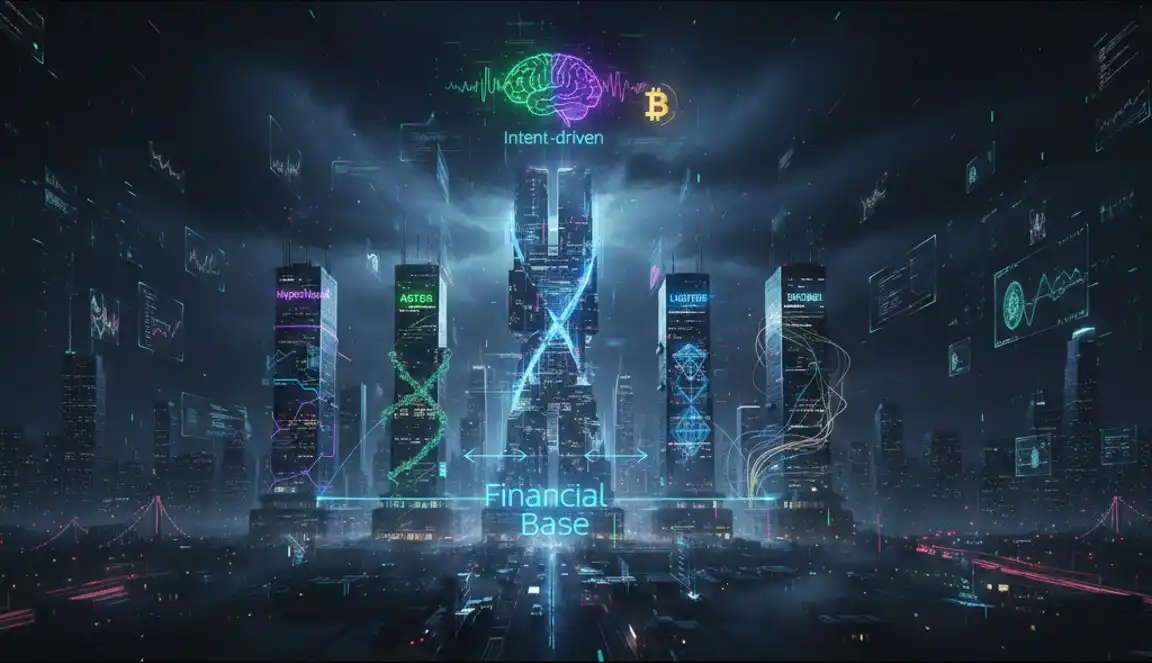
Blockchain Privacy Shouldn’t Automatically Raise Red Flags—SEC Chair

bitcoinistОпубліковано о 2025-12-16Востаннє оновлено о 2025-12-16

Анотація

Crypto executives urged the SEC to reconsider its regulatory stance on blockchain privacy, arguing that not all privacy tool users are criminals. During the agency’s sixth crypto roundtable this year, industry representatives and regulators debated the balance between privacy, identity verification, and stablecoin adoption. SEC Chair Paul Atkins warned that mishandling privacy could turn crypto into a pervasive surveillance tool. Katherine Kirkpatrick Bos of StarkWare advocated for a presumption of legitimate use unless proven otherwise. The discussion also covered AML and KYC rules, with suggestions that cryptographic tools could verify identity without exposing personal data. Participants emphasized that privacy features could drive stablecoin adoption and legitimate business use, though no immediate policy changes resulted from the meeting. Tensions between regulatory oversight and technological innovation remain unresolved.

Crypto executives pushed the US Securities and Exchange Commission on Monday to reconsider its approach to blockchain privacy, arguing that not all users of these tools are criminals.

The meeting, the SEC’s sixth crypto-focused roundtable this year, drew sharp exchanges between regulators and industry representatives over how privacy, identity verification, and stablecoin adoption intersect.

SEC Chair Paul Atkins opened the session with a warning: mishandling privacy could turn crypto into “the most powerful financial surveillance architecture ever invented.”

He cautioned that treating every wallet like a broker or every protocol as an exchange could create a system where every transaction is monitored.

Presumption Of Good Intent For Blockchain Privacy Users

Katherine Kirkpatrick Bos, general counsel at StarkWare, told reporters that regulators should not assume users of privacy tools are primarily engaged in wrongdoing. “Why must someone prove they are compliant upfront?” she asked.

“Instead, shouldn’t the starting point be that they are using it for legitimate purposes until proven otherwise?” She added that criminal use exists, but a balance is needed to avoid unfair suspicion.

On Blockchain, AML And KYC Rules

The discussion also examined anti-money laundering (AML) and Know Your Customer (KYC) rules. Kirkpatrick Bos criticized current practices, noting that photo IDs can be faked in seconds.

She suggested cryptography-based tools could verify identity without exposing unnecessary personal information, such as home addresses, while still preventing fraud. Projects like Sam Altman’s World are already testing cryptographic keys that prove users are human without revealing private data.

BTCUSD trading at $86,354 on the 24-hour chart: TradingView

Wayne Chang, CEO of SpruceID, said privacy is a growing demand among users of stablecoins. Reports indicate millions of dollars in stablecoins could move on-chain if privacy features are available.

Some percentage of users will want to keep transactions private, Chang said. Privacy can drive adoption of stablecoins that haven’t fully migrated to on-chain systems, he said.

Atkins noted that blockchain and privacy tools have legitimate uses, including helping firms execute trades without tipping off competitors. Balancing public safety with privacy is critical, the SEC chief said.

SEC Commissioner Hester Peirce addresses the meeting on Monday. Source: SEC

SEC Commissioner Hester Peirce, who leads the agency’s crypto task force, opened the roundtable alongside Atkins and Commissioner Mark Uyeda, discussing ways regulators might protect investors while respecting privacy as blockchain financial activity grows.

Blockchain: Ongoing Tensions On The Spotlight

Industry insiders said the roundtable did not result in immediate policy changes but highlighted ongoing tensions.

Regulators are weighing the benefits of privacy against risks of misuse, while market participants push for protections that could influence adoption and growth.

Based on reports, these conversations are likely to continue as technology evolves and crypto use becomes more mainstream.

Featured image from Yellow, chart from TradingView
Пов'язані матеріали

How Many Tokens Away Is Yang Zhilin from the 'Moon Chasing the Light'?

The article explores the intense competition between two leading Chinese AI companies, DeepSeek and Kimi (Moon Dark Side), and the mounting pressure on Yang Zhilin, the founder of Kimi. While DeepSeek re-emerged after 15 months of silence with its powerful V4 model—boasting 1.6 trillion parameters and low-cost, long-context capabilities—Kimi has been focusing on long-context processing and multi-agent systems with its K2.6 model. Yang faces a threefold challenge: technological rivalry, commercialization pressure, and investor expectations. Despite Kimi’s high valuation (reaching $18 billion), its revenue heavily relies on a single product with low paid conversion rates, while DeepSeek’s strategic silence and open-source influence have strengthened its market position and valuation prospects, now targeting over $20 billion. Both companies reflect broader trends in China’s AI ecosystem: Kimi aims for global influence through open-source contributions and agent-based advancements, while DeepSeek prioritizes foundational innovation and hardware independence, notably shifting to Huawei’s chips. Their competition is seen as vital for China’s AI progress, with the gap between top Chinese and U.S. models narrowing to just 2.7% on the Elo rating scale. Ultimately, the article argues that this rivalry, though anxiety-inducing for leaders like Zhilin, is essential for driving innovation and solidifying China’s role in the global AI landscape.

marsbit2 год тому

How Many Tokens Away Is Yang Zhilin from the 'Moon Chasing the Light'?

marsbit2 год тому

TechFlow Intelligence Bureau: ChatGPT Helps Amateur Mathematician Crack 60-Year-Old Problem, CFTC Sues New York Regulator Over Coinbase and Gemini

An amateur mathematician, with the assistance of ChatGPT, has solved a combinatorial mathematics puzzle originally proposed by Hungarian mathematician Paul Erdős in the 1960s. This marks another milestone in AI-aided mathematical research, demonstrating the evolving capabilities of large language models in formal reasoning. In other AI developments, OpenAI introduced a new privacy filter tool for enterprise API usage, automatically screening sensitive data. Meanwhile, the Qwen3.6-27B model achieved 100 tokens per second on a single RTX 5090 GPU using quantization, significantly lowering the cost barrier for local AI deployment. In crypto and Web3, the U.S. CFTC sued New York’s financial regulator, challenging its oversight of Coinbase and Gemini—a first-of-its-kind federal-state regulatory clash. Following a vulnerability, KelpDAO and major DeFi protocols established a recovery fund. Tether froze $344 million in assets linked to Iran’s central bank upon U.S. Treasury request, highlighting the centralized control risks in stablecoins. Separately, Litecoin underwent a 3-hour chain reorganization to undo a privacy-layer exploit. In the U.S., former President Trump invoked the Defense Production Act to address power grid bottlenecks affecting AI data centers and dismissed the entire National Science Board, raising concerns over research independence. A retail trader gained 250% on a $600k Intel options bet amid AI-related speculation. Xiaomi announced its first performance electric vehicle, targeting rivals like Tesla. Meanwhile, iPhone users reported devices automatically reinstalling a hidden app daily, suspected to be MDM-related. A Chinese securities report noted that A-share institutional crowding has reached its second-longest streak since 2007, signaling high valuations and potential style rotation. The day’s developments reflect a dual narrative: AI is enabling unprecedented individual breakthroughs, while centralized power structures—whether governmental or corporate—are becoming more assertive, underscoring that decentralization is as much a political-economic challenge as a technical one.

marsbit3 год тому

TechFlow Intelligence Bureau: ChatGPT Helps Amateur Mathematician Crack 60-Year-Old Problem, CFTC Sues New York Regulator Over Coinbase and Gemini

marsbit3 год тому

Торгівля

Спот
Ф'ючерси

Популярні статті

Як купити T

Ласкаво просимо до HTX.com! Ми зробили покупку Threshold Network Token (T) простою та зручною. Дотримуйтесь нашої покрокової інструкції, щоб розпочати свою криптовалютну подорож.Крок 1: Створіть обліковий запис на HTXВикористовуйте свою електронну пошту або номер телефону, щоб зареєструвати обліковий запис на HTX безплатно. Пройдіть безпроблемну реєстрацію й отримайте доступ до всіх функцій.ЗареєструватисьКрок 2: Перейдіть до розділу Купити крипту і виберіть спосіб оплатиКредитна/дебетова картка: використовуйте вашу картку Visa або Mastercard, щоб миттєво купити Threshold Network Token (T).Баланс: використовуйте кошти з балансу вашого рахунку HTX для безперешкодної торгівлі.Треті особи: ми додали популярні способи оплати, такі як Google Pay та Apple Pay, щоб підвищити зручність.P2P: Торгуйте безпосередньо з іншими користувачами на HTX.Позабіржова торгівля (OTC): ми пропонуємо індивідуальні послуги та конкурентні обмінні курси для трейдерів.Крок 3: Зберігайте свої Threshold Network Token (T)Після придбання Threshold Network Token (T) збережіть його у своєму обліковому записі на HTX. Крім того, ви можете відправити його в інше місце за допомогою блокчейн-переказу або використовувати його для торгівлі іншими криптовалютами.Крок 4: Торгівля Threshold Network Token (T)Легко торгуйте Threshold Network Token (T) на спотовому ринку HTX. Просто увійдіть до свого облікового запису, виберіть торгову пару, укладайте угоди та спостерігайте за ними в режимі реального часу. Ми пропонуємо зручний досвід як для початківців, так і для досвідчених трейдерів.

379 переглядів усьогоОпубліковано 2024.12.10Оновлено 2025.03.21

Як купити T

Обговорення

Ласкаво просимо до спільноти HTX. Тут ви можете бути в курсі останніх подій розвитку платформи та отримати доступ до професійної ринкової інформації. Нижче представлені думки користувачів щодо ціни T (T).

活动图片