Bitcoin's 'Strict Headmaster' Arrives? If He Takes the Helm at the Fed, the Crypto Party Could End Abruptly

Odaily星球日报Опубліковано о 2025-12-22Востаннє оновлено о 2025-12-22

Анотація

The article discusses the potential implications of Kevin Warsh, a former Federal Reserve governor and Wall Street insider, becoming the next Fed Chair. Unlike other candidates like Kevin Hassett, who is seen as favoring lower interest rates and easier monetary policy, Warsh represents a more disciplined approach. Having worked at Morgan Stanley and experienced the 2008 financial crisis firsthand, Warsh is highly sensitive to systemic risks and liquidity issues. Warsh’s policy stance combines aggressive quantitative tightening (QT) with moderate interest rate cuts. He aims to control inflation by reducing the money supply and restoring the dollar’s credibility, while also easing corporate financing costs. This approach could challenge risk assets like cryptocurrencies, which have thrived in an era of abundant liquidity. If appointed, Warsh could bring stricter regulation to crypto, particularly stablecoins, potentially requiring full cash or short-term debt reserves. He opposes a retail central bank digital currency (CBDC) on privacy grounds but supports a wholesale CBDC for interbank settlements. While his policies may pressure crypto in the short term, they could also foster more institutional adoption and real-world asset (RWA) integration in the long run. However, the article notes that political pressures—especially from a Trump administration seeking lower rates and economic growth—could ultimately influence Warsh’s decisions, regardless of his personal beliefs.

Original | Odaily Planet Daily (@OdailyChina)

Author | Ethan(@ethanzhang_web3)
As the year draws to a close, the question of who will wield the scepter of the Federal Reserve Chair—the "master valve" of global liquidity—has become the most watched year-end suspense.

Months ago, when the benchmark rate ended its long pause and saw its first cut, the market was once convinced that Christopher Waller was the chosen one (Recommended reading: ‘The Academic Outsider: Small-Town Professor Waller Becomes Hottest Candidate for Fed Chair’). The winds shifted in October, with Kevin Hassett surging ahead, his odds once approaching 85%. He is seen as a "mouthpiece for the White House"; if he takes office, policy might completely follow Trump's will, even jokingly called a "human printing press."

However, today, we will not discuss the frontrunner with the highest probability, but focus on the wildcard "second in line"—Kevin Warsh.

If Hassett represents the market's "greed expectation" (lower rates, more liquidity), then Warsh represents the market's "fear and awe" (harder money, stricter rules). Why is the market re-examining this outsider once hailed as the "Wall Street Golden Boy"? If he truly takes the helm of the Fed, what fundamental changes could occur in the underlying logic of the crypto market? (Odaily Note: The core views of this article are extrapolated based on Warsh's recent speeches and interviews.)

Warsh's Evolution: From Wall Street Golden Boy to Fed Outsider

Kevin Warsh does not hold a Ph.D. in macroeconomics, and his career did not start in an ivory tower but in Morgan Stanley's M&A department. This experience gave him a mindset completely different from that of Bernanke or Yellen: in the eyes of academics, a crisis is just a data anomaly in a model; but in Warsh's eyes, a crisis is the second a counterparty defaults, the life-or-death moment when liquidity instantly vanishes from "available" to "unavailable."

In 2006, when the 35-year-old Warsh was appointed as a Federal Reserve Governor, many questioned his lack of seniority. But history is humorous; it was precisely this "Wall Street insider" practical experience that made him an indispensable player in the subsequent financial storm. During the darkest moments of 2008, Warsh's role had already surpassed that of a regulator; he became the sole "translator" between the Fed and Wall Street.
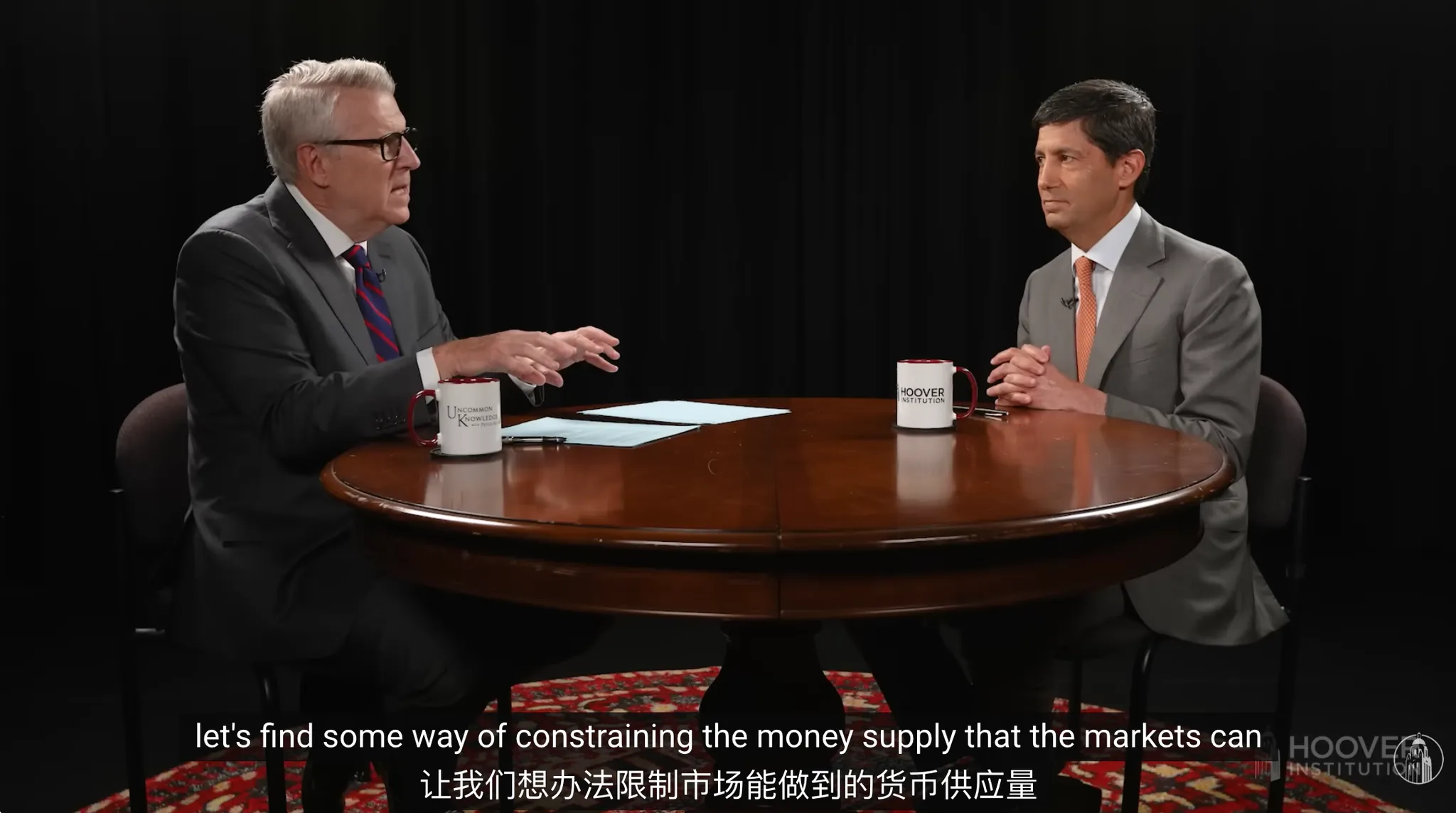
Excerpt from Warsh's interview at Stanford's Hoover Institution

On one hand, he had to translate Bear Stearns' toxic assets, which went to zero overnight, into language that academic officials could understand; on the other hand, he had to translate the Fed's obscure rescue intentions to the panicked market. He was involved in the frantic weekend negotiations before Lehman's collapse. This close-quarters combat gave him a physiological sensitivity to "liquidity." He saw through the essence of quantitative easing (QE): the central bank must indeed act as the "lender of last resort" during a crisis, but this is essentially a transaction that mortgages future credit to buy survival time in the present. He even pointedly noted that the long-term输血 (blood transfusion) after the crisis was actually "reverse Robin Hood," artificially inflating asset prices to rob the poor to feed the rich, which not only distorted market signals but also planted the seeds for a bigger crisis.

It was this keen sense of the system's fragility that became his core bargaining chip when Trump was selecting candidates for the new Fed Chair. On Trump's list, Warsh and another frontrunner, Kevin Hassett, formed a stark contrast, a contest dubbed the "Battle of the Kevins" by the media.
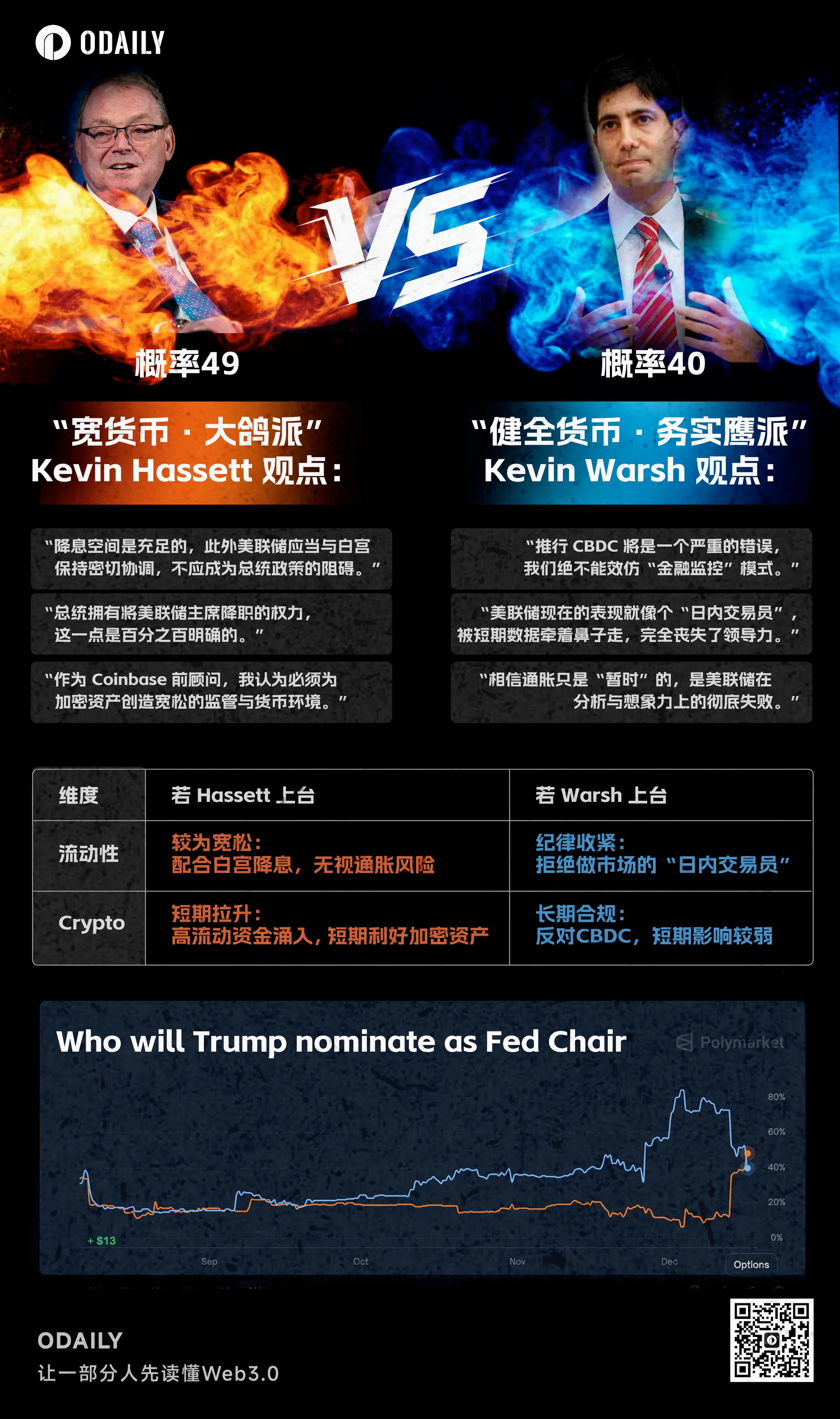
Fed Chair Candidates: Hassett VS Warsh, Source: Odaily Original

Hassett is a typical "growth-first" advocate. His logic is simple and direct: as long as the economy is growing, low rates are justified. The market generally believes that if Hassett takes office, he would likely cater to Trump's desire for low rates, even initiating rate cuts before inflation is fully under control. This also explains why long-term bond yields surged whenever Hassett's odds increased—the market feared runaway inflation.

In contrast, Warsh's logic is far more complex; it's difficult to simply label him as "hawkish" or "dovish." Although he also advocates for rate cuts, his reasoning is completely different. Warsh believes the current inflationary pressure isn't because people are buying too much, but due to supply constraints and the massive monetary oversupply of the past decade. The Fed's bloated balance sheet is actually "crowding out" private credit and distorting capital allocation.

Therefore, the prescription Warsh offers is an extremely experimental combination: aggressive quantitative tightening (QT) coupled with moderate rate cuts. His intention is clear: control inflation expectations by reducing the money supply, restoring the credibility of the dollar's purchasing power—essentially, draining some water out of the pool; while simultaneously loosening corporate financing costs by lowering nominal rates. This is a hardcore attempt to get the economy moving again without turning on the liquidity taps.

The Butterfly Effect on the Crypto Market: Liquidity, Regulation, and Hawkish Core

If Powell is like a "gentle stepfather" to the crypto market, treading carefully so as not to wake the children, then Warsh is more like a "strict headmaster of a boarding school" holding a ruler. The storm stirred by this butterfly's wings might be more violent than we anticipate.

This "strictness" is first reflected in his obsession with liquidity cleanliness. The crypto market, especially Bitcoin, has been, to some extent, a derivative of global dollar abundance over the past decade. Warsh's policy core is a "strategic reset," a return to the sound money principles of the Volcker era. His aforementioned "aggressive balance sheet reduction" is both short-term bad news and a long-term litmus test for Bitcoin.

Warsh has clearly stated: "If you want to lower interest rates, you must first stop the printing press." For risk assets accustomed to the "Fed put," this means the disappearance of the safety net. If he takes office and firmly implements his "strategic reset," guiding monetary policy back to more robust principles, a global liquidity tightening will be the first domino to fall. As a "frontier risk asset" highly sensitive to liquidity, the cryptocurrency market will undoubtedly face valuation reassessment pressure in the short term.
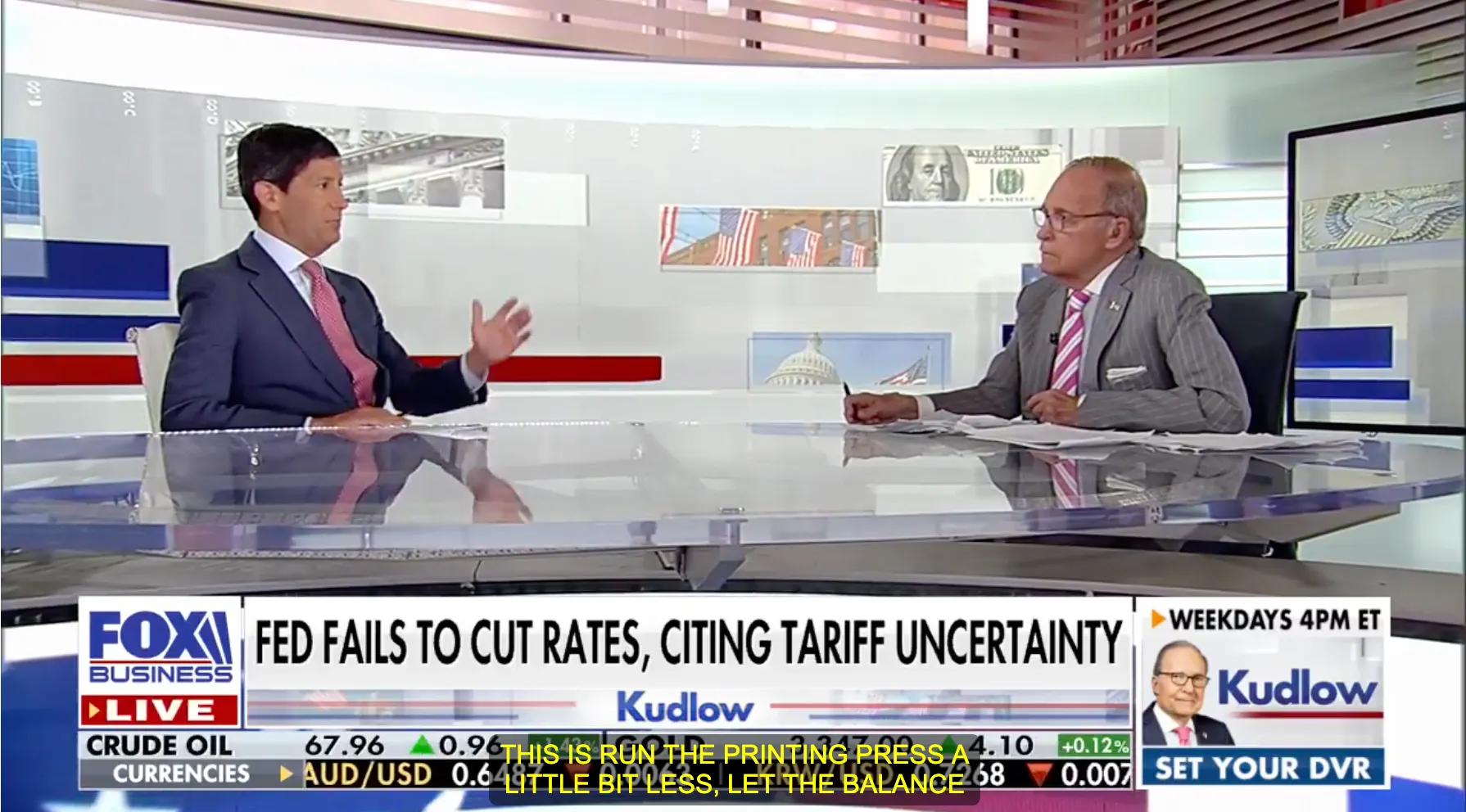
Kevin Warsh discusses Fed Chair Jerome Powell's利率 strategy on "Kudlow," source Fox Business

More importantly, if he actually achieves "inflation-free growth" through supply-side reforms, keeping real yields positive for the long term, then holding fiat currency and government bonds will become profitable. This is starkly different from the negative interest rate era of 2020, where "everything rallied, only cash was trash." Bitcoin's appeal as a "zero-yield asset" could be severely tested.

But there are two sides to every coin. Warsh is someone who is extremely superstitious about "market discipline"; he would never rush to rescue the market after a mere 10% stock market drop like Powell did. This "no bottom" market environment might反而 give Bitcoin a chance to prove its worth: when the traditional financial system develops credit cracks due to deleveraging (like the Silicon Valley Bank crisis), can Bitcoin break free from the gravitational pull of US stocks and truly become a Noah's Ark for safe-haven funds? This is the ultimate test Warsh poses to the crypto market.

Hidden behind this test is Warsh's unique definition of cryptocurrency. He left a famous quote in The Wall Street Journal: "Cryptocurrency is a misnomer. It is not mysterious. It is not money. It is software."
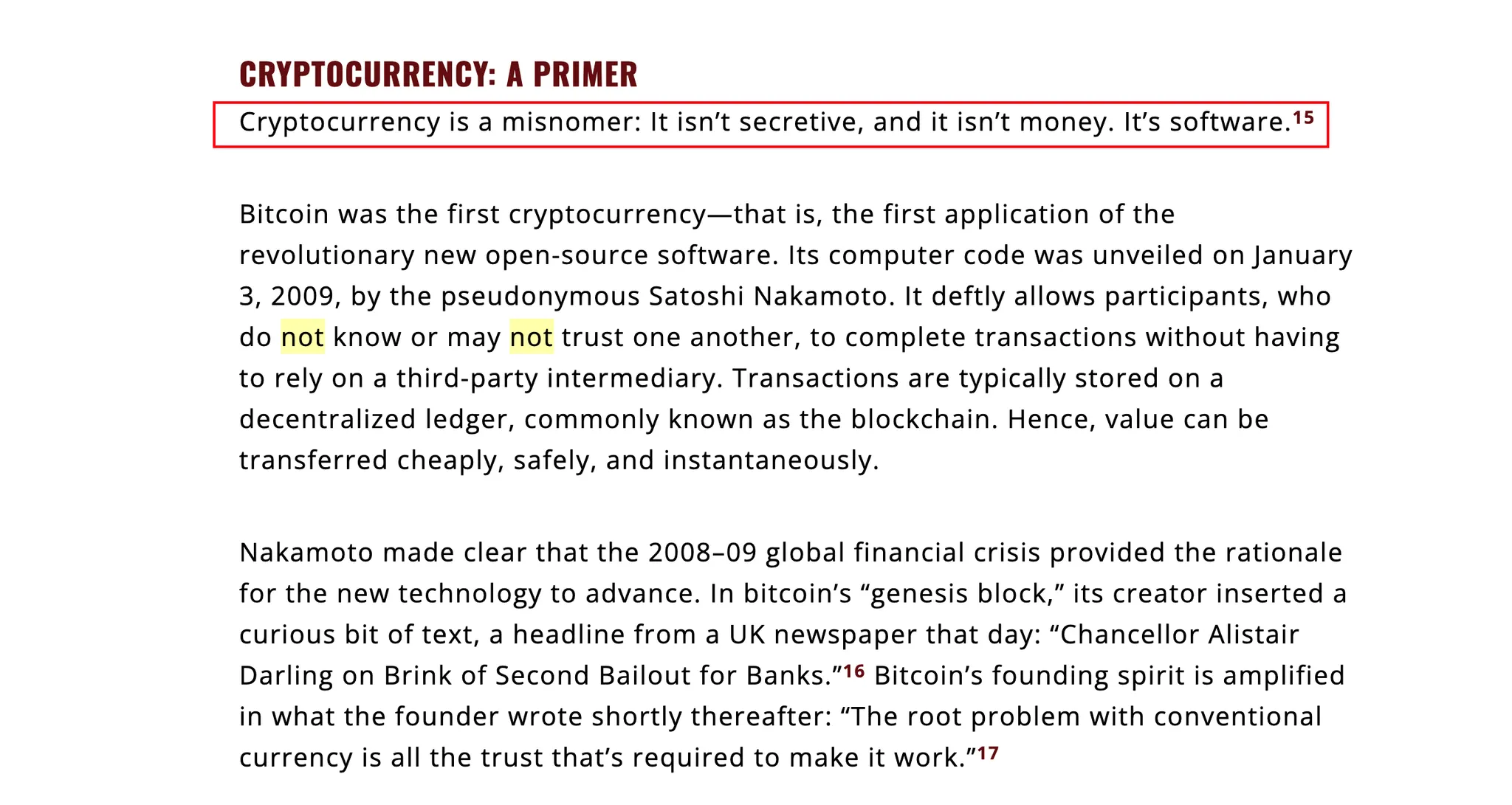
Excerpt from Kevin Warsh's column ‘Money Matters: The Dollar, Cryptocurrency, and the National Interest’

This sounds harsh, but if you look at his resume, you'll find he is not a blind opponent but an insider who understands the technical mechanisms deeply. He is not only an advisor to the crypto index fund Bitwise but also an early angel investor in the algorithmic stablecoin project Basis. Basis attempted to mimic central bank open market operations with algorithms. Although the project ultimately died due to regulation, this experience made Warsh understand better than any bureaucrat how code generates "money."

Precisely because he understands, he is more severe. Warsh is a typical "institutionalist." He recognizes crypto assets as investment vehicles like commodities or tech stocks, but he has very low tolerance for "private coinage" that challenges dollar sovereignty.

This binary attitude will directly determine the fate of stablecoins. Warsh is highly likely to push for bringing stablecoin issuers under a "narrow bank" regulatory framework: requiring 100% cash or short-term debt reserves, prohibiting fractional reserve lending like banks. This is a double-edged sword for Tether or Circle. They would gain a legitimate status similar to banks, with extremely deep moats; but they would also lose the flexibility of "shadow banking," and their profit model would be彻底 locked into government bond interest. As for those small and medium-sized stablecoins trying to engage in "credit creation," they would likely be eliminated under such high pressure. (Recommended reading: ‘Farewell to the ‘Correspondent Bank’ Era? Five Crypto Institutions Get the Key to the Fed's Payment System’)

The same logic extends to CBDCs. Unlike many Republicans who oppose them outright, Warsh offers a more refined "American solution." He firmly opposes a "retail CBDC" issued directly by the Fed to individuals, seeing it as an invasion of privacy and an overreach of power—a view surprisingly aligned with the crypto community's values. But he is a proponent of "wholesale CBDCs," advocating for the use of blockchain technology to reform the interbank clearing system to address geopolitical challenges.

Under this architecture, the future might see a奇妙 fusion: the underlying settlement layer controlled by the Fed's wholesale chain, while the upper application layer is left to regulated public chains and Web3 institutions. For DeFi, that would be the end of the "Wild West" era, but perhaps also the true beginning of spring for RWA. After all, in Warsh's logic, as long as you don't try to replace the dollar, technological efficiency gains will always be welcome.

Conclusion

Kevin Warsh is not just an alternative on Trump's list; he is the embodiment of the old Wall Street order trying to redeem itself in the digital age. Perhaps under his leadership, RWA and DeFi, built on real utility and institutional compliance, might just be entering their true golden age.

However, just as the market overinterprets Warsh's resume, BitMEX founder Arthur Hayes poured a bucket of very sobering cold water. In Hayes' view, we might all be making a directional error. The key is not what that person "believes in" before becoming Chair, but whether he understands, after taking that seat, who he actually "works for."

Looking back at the Fed's century-long history, the博弈 (game) between the President and the Chair has never stopped. Back then, President Lyndon B. Johnson reportedly even physically intimidated then-Chair William McChesney Martin on a Texas ranch to force a rate cut. Compared to that, Trump's Twitter attacks are child's play. Hayes' logic is cruel but真实 (real): The US President will ultimately always get the monetary policy he wants. And what Trump wants is always lower rates, a hotter market, and more abundant money supply. No matter who sits in that chair, they will eventually have to use the tools to get the job done.

This is the ultimate suspense facing the crypto market:

Warsh is indeed someone who wants to put his hand on the printing press's switch and try to turn it off. But when political gravity strikes, when the growth demand of "Make America Great Again" collides with his "hard money" ideals, will he tame inflation, or will the power game tame him?

In this博弈 (game), Warsh might be a respectable "hawkish" opponent. But in the eyes of seasoned traders like Hayes, who becomes Chair doesn't really matter, because no matter how曲折 (tortuous) the process, as long as the political machine is still running, the liquidity valve will ultimately be turned back on.

Recommended Reading:

‘Inflation Is a Choice: Kevin Warsh on Fixing the Fed | Extraordinary Insights’

‘Farewell to the ‘Correspondent Bank’ Era? Five Crypto Institutions Get the Key to the Fed's Payment System’)

‘Money Matters: The Dollar, Cryptocurrency, and the National Interest’

Пов'язані питання

QWho is Kevin Warsh and why is he considered a potential 'strict headmaster' for the cryptocurrency market if he becomes Fed Chair?

AKevin Warsh is a former Federal Reserve Governor and Wall Street insider known for his hardline monetary views. He is seen as a 'strict headmaster' because his proposed policy mix of aggressive quantitative tightening (QT) and moderate rate cuts aims to restore monetary discipline, which could sharply reduce the liquidity that has fueled crypto market rallies.

QHow does Kevin Warsh's proposed monetary policy differ from that of another top candidate, Kevin Hassett?

AKevin Hassett represents a 'growth-first' approach, likely favoring lower rates to stimulate the economy, even if inflation isn't fully controlled. In contrast, Kevin Warsh advocates for aggressive balance sheet reduction (QT) combined with moderate rate cuts to control inflation by tightening money supply while easing corporate borrowing costs, prioritizing monetary stability over stimulus.

QWhat impact could Kevin Warsh's potential leadership have on stablecoins and their regulatory framework?

AWarsh would likely push to regulate stablecoin issuers as 'narrow banks,' requiring 100% cash or short-term debt reserves and banning fractional reserve lending. This would grant them legitimacy but eliminate flexibility, locking their profitability to treasury yields and potentially forcing out stablecoins attempting 'credit creation.'

QHow does Kevin Warsh view central bank digital currencies (CBDCs), and what distinction does he make in their implementation?

AWarsh opposes a retail CBDC issued directly by the Fed to individuals, seeing it as a privacy violation and overreach of power. However, he supports a wholesale CBDC for interbank settlement systems, aiming to use blockchain technology to improve efficiency in financial infrastructure without challenging dollar sovereignty.

QAccording to the article, why might the choice of Fed Chair ultimately matter less than political pressures, as highlighted by BitMEX founder Arthur Hayes?

AHayes argues that historical precedent shows U.S. Presidents ultimately get the monetary policy they demand, regardless of the Fed Chair's personal beliefs. If Trump prioritizes lower rates, economic growth, and ample liquidity, political pressure would likely force any Chair, including a hardliner like Warsh, to accommodate those demands, thus sustaining liquidity flows.

Пов'язані матеріали

Торгівля

Спот
Ф'ючерси

Популярні статті

Що таке $S$

Розуміння SPERO: Комплексний огляд Вступ до SPERO Оскільки ландшафт інновацій продовжує еволюціонувати, виникнення технологій web3 та криптовалютних проектів відіграє ключову роль у формуванні цифрового майбутнього. Один з проектів, який привернув увагу в цій динамічній сфері, — це SPERO, позначений як SPERO,$$s$. Ця стаття має на меті зібрати та представити детальну інформацію про SPERO, щоб допомогти ентузіастам та інвесторам зрозуміти його основи, цілі та інновації в рамках web3 та крипто-сектору. Що таке SPERO,$$s$? SPERO,$$s$ — це унікальний проект у криптопросторі, який прагне використати принципи децентралізації та технології блокчейн для створення екосистеми, що сприяє залученню, корисності та фінансовій інклюзії. Проект розроблений для полегшення взаємодії між користувачами новими способами, надаючи їм інноваційні фінансові рішення та послуги. У своїй основі SPERO,$$s$ прагне надати можливості індивідам, забезпечуючи інструменти та платформи, які покращують користувацький досвід у криптовалютному просторі. Це включає в себе можливість більш гнучких методів транзакцій, сприяння ініціативам, що підтримуються спільнотою, та створення шляхів для фінансових можливостей через децентралізовані додатки (dApps). Основна концепція SPERO,$$s$ обертається навколо інклюзивності, прагнучи зменшити розриви в традиційній фінансовій системі, використовуючи переваги технології блокчейн. Хто є творцем SPERO,$$s$? Особистість творця SPERO,$$s$ залишається дещо невідомою, оскільки є обмежені публічно доступні ресурси, що надають детальну інформацію про його засновників. Ця відсутність прозорості може бути наслідком зобов'язання проекту до децентралізації — етики, яку багато проектів web3 поділяють, ставлячи колективні внески вище за індивідуальне визнання. Зосереджуючи обговорення навколо спільноти та її колективних цілей, SPERO,$$s$ втілює суть наділення без виділення конкретних осіб. Таким чином, розуміння етики та місії SPERO є більш важливим, ніж ідентифікація єдиного творця. Хто є інвесторами SPERO,$$s$? SPERO,$$s$ підтримується різноманітними інвесторами, починаючи від венчурних капіталістів до ангельських інвесторів, які прагнуть сприяти інноваціям у крипто-секторі. Зосередження цих інвесторів зазвичай узгоджується з місією SPERO — пріоритет надається проектам, які обіцяють технологічний прогрес у суспільстві, фінансову інклюзію та децентралізоване управління. Ці інвесторські фонди зазвичай зацікавлені в проектах, які не лише пропонують інноваційні продукти, але й позитивно впливають на спільноту блокчейн та її екосистеми. Підтримка з боку цих інвесторів підкріплює SPERO,$$s$ як значного конкурента в швидко змінюваній сфері крипто-проектів. Як працює SPERO,$$s$? SPERO,$$s$ використовує багатогранну структуру, яка відрізняє його від традиційних криптовалютних проектів. Ось деякі ключові особливості, які підкреслюють його унікальність та інноваційність: Децентралізоване управління: SPERO,$$s$ інтегрує моделі децентралізованого управління, надаючи користувачам можливість активно брати участь у процесах прийняття рішень щодо майбутнього проекту. Цей підхід сприяє відчуттю власності та відповідальності серед членів спільноти. Корисність токена: SPERO,$$s$ використовує свій власний криптовалютний токен, розроблений для виконання різних функцій в екосистемі. Ці токени дозволяють здійснювати транзакції, отримувати винагороди та полегшувати послуги, що пропонуються на платформі, підвищуючи загальну залученість та корисність. Шарова архітектура: Технічна архітектура SPERO,$$s$ підтримує модульність та масштабованість, що дозволяє безперешкодно інтегрувати додаткові функції та додатки в міру розвитку проекту. Ця адаптивність є надзвичайно важливою для збереження актуальності в постійно змінюваному крипто-ландшафті. Залучення спільноти: Проект підкреслює ініціативи, що підтримуються спільнотою, використовуючи механізми, які стимулюють співпрацю та зворотний зв'язок. Підтримуючи сильну спільноту, SPERO,$$s$ може краще задовольняти потреби користувачів та адаптуватися до ринкових тенденцій. Фокус на інклюзію: Пропонуючи низькі комісії за транзакції та зручні інтерфейси, SPERO,$$s$ прагне залучити різноманітну базу користувачів, включаючи осіб, які раніше не брали участі в крипто-просторі. Це зобов'язання до інклюзії узгоджується з його загальною місією наділення через доступність. Хронологія SPERO,$$s$ Розуміння історії проекту надає важливі уявлення про його розвиток та етапи. Нижче наведено пропоновану хронологію, що відображає значні події в еволюції SPERO,$$s$: Етап концептуалізації та ідеації: Початкові ідеї, що стали основою SPERO,$$s$, були сформовані, тісно пов'язані з принципами децентралізації та фокусом на спільноті в індустрії блокчейн. Запуск білого паперу проекту: Після концептуального етапу був випущений комплексний білий папір, що детально описує бачення, цілі та технологічну інфраструктуру SPERO,$$s$, щоб залучити інтерес та зворотний зв'язок від спільноти. Створення спільноти та ранні залучення: Активні зусилля були спрямовані на створення спільноти ранніх прихильників та потенційних інвесторів, що полегшило обговорення цілей проекту та отримання підтримки. Подія генерації токенів: SPERO,$$s$ провів подію генерації токенів (TGE) для розподілу своїх рідних токенів серед ранніх прихильників та встановлення початкової ліквідності в екосистемі. Запуск початкового dApp: Перший децентралізований додаток (dApp), пов'язаний з SPERO,$$s$, став доступним, дозволяючи користувачам взаємодіяти з основними функціями платформи. Постійний розвиток та партнерства: Безперервні оновлення та вдосконалення пропозицій проекту, включаючи стратегічні партнерства з іншими учасниками блокчейн-простору, сформували SPERO,$$s$ у конкурентоспроможного та еволюціонуючого гравця на крипто-ринку. Висновок SPERO,$$s$ є свідченням потенціалу web3 та криптовалют для революціонізації фінансових систем та наділення індивідів. Завдяки зобов'язанню до децентралізованого управління, залучення спільноти та інноваційно спроектованих функцій, він прокладає шлях до більш інклюзивного фінансового ландшафту. Як і з будь-якими інвестиціями в швидко змінюваному крипто-просторі, потенційним інвесторам та користувачам рекомендується ретельно досліджувати та обдумано взаємодіяти з поточними подіями в SPERO,$$s$. Проект демонструє інноваційний дух крипто-індустрії, запрошуючи до подальшого дослідження його численних можливостей. Хоча подорож SPERO,$$s$ ще триває, його основні принципи можуть справді вплинути на майбутнє того, як ми взаємодіємо з технологією, фінансами та один з одним у взаємопов'язаних цифрових екосистемах.

73 переглядів усьогоОпубліковано 2024.12.17Оновлено 2024.12.17

Що таке $S$

Що таке AGENT S

Агент S: Майбутнє автономної взаємодії в Web3 Вступ У постійно змінюваному ландшафті Web3 та криптовалюти інновації постійно переосмислюють, як люди взаємодіють з цифровими платформами. Один з таких новаторських проектів, Агент S, обіцяє революціонізувати взаємодію людини з комп'ютером через свою відкриту агентну структуру. Прокладаючи шлях для автономних взаємодій, Агент S прагне спростити складні завдання, пропонуючи трансформаційні застосування в штучному інтелекті (ШІ). Це детальне дослідження заглиблюється в складності проекту, його унікальні особливості та наслідки для сфери криптовалюти. Що таке Агент S? Агент S є революційною відкритою агентною структурою, спеціально розробленою для вирішення трьох основних викликів в автоматизації комп'ютерних завдань: Набуття специфічних знань у галузі: Структура інтелектуально навчається з різних зовнішніх джерел знань та внутрішнього досвіду. Цей подвійний підхід дозволяє їй створити багатий репозиторій специфічних знань у галузі, покращуючи її продуктивність у виконанні завдань. Планування на довгих горизонтах завдань: Агент S використовує планування з підкріпленням досвіду, стратегічний підхід, який полегшує ефективний розподіл та виконання складних завдань. Ця функція значно підвищує її здатність ефективно та результативно управляти кількома підзавданнями. Обробка динамічних, неоднорідних інтерфейсів: Проект представляє Інтерфейс Агент-Комп'ютер (ACI), інноваційне рішення, яке покращує взаємодію між агентами та користувачами. Використовуючи багатомодальні великі мовні моделі (MLLMs), Агент S може безперешкодно орієнтуватися та маніпулювати різноманітними графічними інтерфейсами користувача. Завдяки цим новаторським функціям Агент S надає надійну структуру, яка вирішує складнощі, пов'язані з автоматизацією людської взаємодії з машинами, прокладаючи шлях для численних застосувань у ШІ та за його межами. Хто є творцем Агент S? Хоча концепція Агент S є фундаментально новаторською, конкретна інформація про його творця залишається невідомою. Творець наразі невідомий, що підкреслює або початкову стадію проекту, або стратегічний вибір зберегти засновників у таємниці. Незважаючи на анонімність, акцент залишається на можливостях та потенціалі структури. Хто є інвесторами Агент S? Оскільки Агент S є відносно новим у криптографічній екосистемі, детальна інформація про його інвесторів та фінансових спонсорів не задокументована. Відсутність публічно доступних відомостей про інвестиційні фонди або організації, що підтримують проект, викликає питання щодо його фінансової структури та дорожньої карти розвитку. Розуміння підтримки є критично важливим для оцінки стійкості проекту та потенційного впливу на ринок. Як працює Агент S? В основі Агент S лежить передова технологія, яка дозволяє йому ефективно функціонувати в різних умовах. Його операційна модель побудована навколо кількох ключових функцій: Взаємодія з комп'ютером, подібна до людської: Структура пропонує розширене планування ШІ, прагнучи зробити взаємодії з комп'ютерами більш інтуїтивними. Імітуючи людську поведінку при виконанні завдань, вона обіцяє підвищити досвід користувачів. Наративна пам'ять: Використовується для використання високорівневого досвіду, Агент S використовує наративну пам'ять для відстеження історій завдань, тим самим покращуючи свої процеси прийняття рішень. Епізодична пам'ять: Ця функція надає користувачам покрокові інструкції, дозволяючи структурі пропонувати контекстуальну підтримку в міру виконання завдань. Підтримка OpenACI: Завдяки можливості працювати локально, Агент S дозволяє користувачам зберігати контроль над своїми взаємодіями та робочими процесами, узгоджуючи з децентралізованою етикою Web3. Легка інтеграція з зовнішніми API: Його універсальність і сумісність з різними платформами ШІ забезпечують те, що Агент S може безперешкодно вписатися в існуючі технологічні екосистеми, роблячи його привабливим вибором для розробників та організацій. Ці функціональні можливості колективно сприяють унікальному положенню Агент S у крипто-просторі, оскільки він автоматизує складні, багатоступеневі завдання з мінімальним втручанням людини. У міру розвитку проекту його потенційні застосування в Web3 можуть переосмислити, як відбуваються цифрові взаємодії. Хронологія Агент S Розробка та етапи Агент S можуть бути узагальнені в хронології, яка підкреслює його значні події: 27 вересня 2024 року: Концепція Агент S була представлена в комплексній науковій статті під назвою “Відкрита агентна структура, яка використовує комп'ютери як людина”, що демонструє основи проекту. 10 жовтня 2024 року: Наукова стаття була опублікована на arXiv, пропонуючи детальне дослідження структури та її оцінки продуктивності на основі бенчмарку OSWorld. 12 жовтня 2024 року: Було випущено відеопрезентацію, що надає візуальне уявлення про можливості та особливості Агент S, ще більше залучаючи потенційних користувачів та інвесторів. Ці маркери в хронології не лише ілюструють прогрес Агент S, але й вказують на його прихильність до прозорості та залучення громади. Ключові моменти про Агент S У міру розвитку структури Агент S кілька ключових характеристик виділяються, підкреслюючи її новаторський характер та потенціал: Інноваційна структура: Розроблена для забезпечення інтуїтивного використання комп'ютерів, подібного до людської взаємодії, Агент S пропонує новий підхід до автоматизації завдань. Автономна взаємодія: Здатність автономно взаємодіяти з комп'ютерами через GUI означає стрибок до більш інтелектуальних та ефективних обчислювальних рішень. Автоматизація складних завдань: Завдяки своїй надійній методології він може автоматизувати складні, багатоступеневі завдання, роблячи процеси швидшими та менш схильними до помилок. Безперервне вдосконалення: Механізми навчання дозволяють Агенту S покращуватися на основі минулого досвіду, постійно підвищуючи свою продуктивність та ефективність. Універсальність: Його адаптивність до різних операційних середовищ, таких як OSWorld та WindowsAgentArena, забезпечує його здатність служити широкому спектру застосувань. Оскільки Агент S займає своє місце в ландшафті Web3 та криптовалюти, його потенціал покращити можливості взаємодії та автоматизувати процеси означає значний прогрес у технологіях ШІ. Завдяки своїй інноваційній структурі Агент S є прикладом майбутнього цифрових взаємодій, обіцяючи більш безперешкодний та ефективний досвід для користувачів у різних галузях. Висновок Агент S представляє собою сміливий крок вперед у поєднанні ШІ та Web3, з можливістю переосмислити, як ми взаємодіємо з технологією. Хоча проект все ще на ранніх стадіях, можливості для його застосування є величезними та переконливими. Завдяки своїй комплексній структурі, що вирішує критичні виклики, Агент S прагне вивести автономні взаємодії на передній план цифрового досвіду. У міру того, як ми заглиблюємося в сфери криптовалюти та децентралізації, проекти, подібні до Агент S, безсумнівно, відіграватимуть ключову роль у формуванні майбутнього технологій та співпраці людини з комп'ютером.

549 переглядів усьогоОпубліковано 2025.01.14Оновлено 2025.01.14

Що таке AGENT S

Як купити S

Ласкаво просимо до HTX.com! Ми зробили покупку Sonic (S) простою та зручною. Дотримуйтесь нашої покрокової інструкції, щоб розпочати свою криптовалютну подорож.Крок 1: Створіть обліковий запис на HTXВикористовуйте свою електронну пошту або номер телефону, щоб зареєструвати обліковий запис на HTX безплатно. Пройдіть безпроблемну реєстрацію й отримайте доступ до всіх функцій.ЗареєструватисьКрок 2: Перейдіть до розділу Купити крипту і виберіть спосіб оплатиКредитна/дебетова картка: використовуйте вашу картку Visa або Mastercard, щоб миттєво купити Sonic (S).Баланс: використовуйте кошти з балансу вашого рахунку HTX для безперешкодної торгівлі.Треті особи: ми додали популярні способи оплати, такі як Google Pay та Apple Pay, щоб підвищити зручність.P2P: Торгуйте безпосередньо з іншими користувачами на HTX.Позабіржова торгівля (OTC): ми пропонуємо індивідуальні послуги та конкурентні обмінні курси для трейдерів.Крок 3: Зберігайте свої Sonic (S)Після придбання Sonic (S) збережіть його у своєму обліковому записі на HTX. Крім того, ви можете відправити його в інше місце за допомогою блокчейн-переказу або використовувати його для торгівлі іншими криптовалютами.Крок 4: Торгівля Sonic (S)Легко торгуйте Sonic (S) на спотовому ринку HTX. Просто увійдіть до свого облікового запису, виберіть торгову пару, укладайте угоди та спостерігайте за ними в режимі реального часу. Ми пропонуємо зручний досвід як для початківців, так і для досвідчених трейдерів.

1.3k переглядів усьогоОпубліковано 2025.01.15Оновлено 2025.03.21

Як купити S

Обговорення

Ласкаво просимо до спільноти HTX. Тут ви можете бути в курсі останніх подій розвитку платформи та отримати доступ до професійної ринкової інформації. Нижче представлені думки користувачів щодо ціни S (S).

活动图片