Bitcoin Surpasses $80,000 for the First Time Since May Amid Accelerating Cryptocurrency Market Recovery

cryptonews.ruОпубліковано о 2026-08-25Востаннє оновлено о 2026-08-25

Анотація

Bitcoin surpassed $80,000 for the first time since May 15th, continuing a recovery that accelerated last week across cryptocurrency markets. The largest cryptocurrency is now up approximately 38% from its late June/early July lows below $58,000. This latest rally coincided with renewed demand from traditional investors. Last week, U.S. spot bitcoin ETFs attracted around $1.9 billion, marking their largest weekly inflow since October 2025. The broader crypto market recovery gained pace as declining Treasury yields provided some relief after months of tight financial conditions. The U.S. Treasury has doubled planned buybacks of long-term bonds until early November, funded by short-term debt issuance. A final push past $80,000 on Monday followed suggestions the Treasury could use its nearly $1 trillion General Account to fund bond-buying programs. Market focus now turns to macroeconomic outlooks, with key events this week including the release of the Federal Reserve's preferred inflation gauge, the PCE index. Analysts state that a higher-than-expected reading could support Treasury yields and the dollar, while lower inflation might dampen expectations for further monetary policy tightening.

Bitcoin surpassed the $80,000 mark for the first time since May 15th, continuing a recovery that has gained momentum over the past week in cryptocurrency markets.

To date, the largest cryptocurrency has risen by approximately 38% compared to the lows of late June and early July, when it briefly fell below $58,000.

The latest phase of growth has also been accompanied by renewed demand from traditional investors. Last week, US-listed spot Bitcoin exchange-traded funds (ETFs) attracted approximately $1.9 billion, marking the largest weekly inflow since October 2025.

The broader cryptocurrency market recovery accelerated last week as a decline in Treasury yields provided some relief after months of tight financial conditions. The US Treasury doubled its planned long-term government bond buybacks through early November, funding these purchases through the issuance of short-term debt.

On Monday, the final push to the $80,000 level occurred after the Treasury Department suggested it might use its nearly $1 trillion in the Treasury General Account (essentially the US government's checking account) to fund bond buyback programs.

Attention is now focused on macroeconomic prospects, with several events scheduled for this week, including the release of the Federal Reserve's preferred inflation gauge—the Personal Consumption Expenditures (PCE) price index.

"The core PCE reading will be closely watched to understand if price pressures continue to ease," said Tadeu Dos Santos, Regional Director at currency broker Infinox. "A higher-than-expected reading could support Treasury yields and the dollar, while lower inflation could dampen expectations for further monetary policy tightening."

end-content

Пов'язані питання

QWhat is the new significant price level that Bitcoin has reached for the first time since mid-May?

ABitcoin has reached the price level of $80,000 for the first time since May 15th.

QWhat was the scale of inflows into U.S. spot Bitcoin ETFs last week, and why is it notable?

AU.S. spot Bitcoin exchange-traded funds attracted about $1.9 billion last week, marking the largest weekly inflow since October 2025.

QWhat key factor is mentioned as accelerating the broader cryptocurrency market recovery last week?

AThe broader cryptocurrency market recovery accelerated last week as falling Treasury yields provided some relief after months of tight financial conditions.

QWhat action did the U.S. Treasury take regarding long-term bonds, and how is it being financed?

AThe U.S. Treasury doubled its planned buybacks of long-term government bonds into early November, financing these purchases by issuing short-term debt.

QWhich upcoming economic data release is highlighted as a key focus for the market this week?

AThe market's focus is on the release of the Federal Reserve's preferred inflation gauge, the Personal Consumption Expenditures (PCE) index, this week.

Пов'язані матеріали

Jackson Hole Becomes a Critical Battle for U.S. Treasuries, BofA Warns: If Warsh Doesn't Signal Rate Hikes, 30-Year Yield May Surge to 5.5%

The Jackson Hole Economic Policy Symposium is shaping up as a crucial battle for the US Treasury market, with the spotlight on Federal Reserve Chair Warsh's upcoming speech. Markets view this as the most critical near-term risk event for bond yields and the US dollar. A key concern is whether Warsh will provide clear signals on the Fed's willingness to resume interest rate hikes should inflation fail to improve. American Bank warns that if he avoids offering such forward guidance, the 30-year Treasury yield could surge toward or above 5.5%, putting further downward pressure on the dollar. This heightened sensitivity stems from fragile market conditions, including the Treasury's recent increased long-end bond buybacks and a string of weaker economic data. Analysts note that Warsh has historically been resistant to providing specific policy guidance, but sustained bond market pressure may force a shift in communication strategy. The market anticipates a framework outlining potential policy responses based on incoming inflation data. Barclays economists assign over a 50% probability to Warsh delivering a hawkish message. Historically, Jackson Hole speeches have had limited lasting market impact, but analysts suggest this year could be an exception due to the unique confluence of pressures, making Warsh's credibility and clarity paramount for stabilizing expectations.

marsbit9 хв тому

Jackson Hole Becomes a Critical Battle for U.S. Treasuries, BofA Warns: If Warsh Doesn't Signal Rate Hikes, 30-Year Yield May Surge to 5.5%

marsbit9 хв тому

“Economic Outcast”: US Treasury Takes Aim at Iran's Cryptocurrency, Technology, and Gold

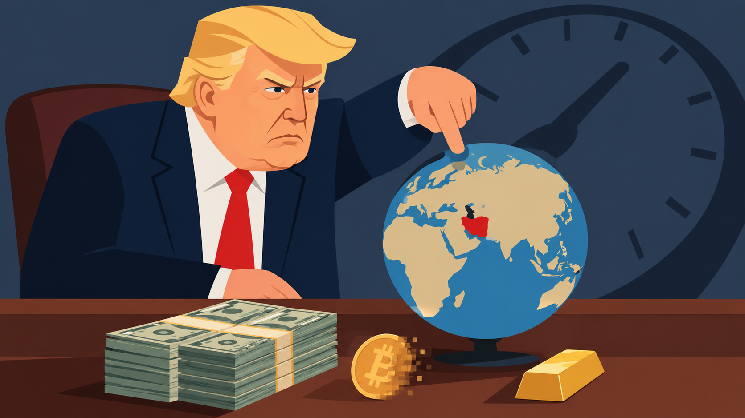
On August 24, 2026, the U.S. Treasury Department, under Secretary Scott Bessent, launched "Operation Economic Outcast," a major campaign targeting the financial networks of the Islamic Republic of Iran and its affiliates. The primary goal is to cut off revenue streams supporting the Iranian regime, with a specific focus on denying funding to the Islamic Revolutionary Guard Corps (IRGC). The Office of Foreign Assets Control (OFAC) activated authorities to sanction any entities, regardless of location, operating in or servicing five key Iranian economic sectors: digital assets (cryptocurrency), technology, gold, aviation, and shipping. OFAC noted Iran's increasing use of cryptocurrency to evade sanctions, including for operations linked to the IRGC and government officials. Initial measures targeted nearly 60 organizations, individuals, and vessels across multiple jurisdictions involved in procuring nuclear/missile technology, conducting cyber operations, and facilitating illicit oil sales. The U.S. State Department joined the campaign, announcing additional sanctions against Iranian military officials, intelligence entities targeting U.S. forces, and networks moving Iranian oil. Treasury warned foreign partners that they have a specific deadline to halt identified Iran-related activities, or face unilateral U.S. action. Entities facilitating sanctions evasion risk being cut off from the U.S. financial system and the dollar economy. The operation consolidates sanctions against Iran's crypto, tech, and commodity financing into a unified campaign with clear deadlines. It expands OFAC's reach to crypto brokers and payment networks handling Iranian oil. Analysis suggests crypto tools are already embedded in Iran's trade practices, as seen with capital flight from the Nobitex exchange and discussions of Bitcoin payments for Strait of Hormuz transit, indicating new OFAC powers target existing, not hypothetical, evasion channels.

cryptonews.ru24 хв тому

“Economic Outcast”: US Treasury Takes Aim at Iran's Cryptocurrency, Technology, and Gold

cryptonews.ru24 хв тому

Upbit Accelerates Token Listings: Total Trading Volume Halved, New Tokens Support Nearly 30% Share

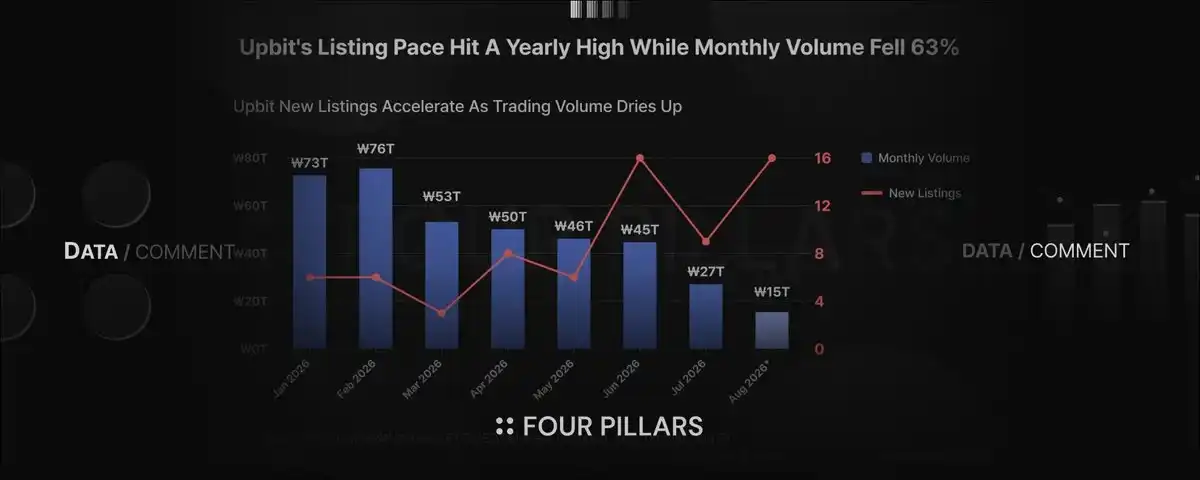
In the second half of 2026, Upbit significantly accelerated its pace of listing new cryptocurrencies, even as the overall Korean won-denominated trading market cooled rapidly. Monthly trading volume on Upbit plunged 63%, from KRW 72.7 trillion in January to KRW 27.1 trillion in July, with Bitcoin prices also falling. Contrary to the conventional logic of listing more during bull markets, Upbit intensified new listings during this downturn. New listings have become a crucial lever for Upbit to sustain trading activity in a bear market. By August, 61 new tokens listed in 2026 were collectively contributing nearly 30% of Upbit's total won trading volume, up from just 5% in January. This means roughly a quarter of the platform's fee revenue now comes from these newly listed assets. Standout performers like CHIP, RE, SLX, and CAP achieved significant individual market share shortly after listing, while new stablecoin listings contributed negligible volume. This strategy highlights a shift: the "Upbit listing premium," once a sought-after event to attract new capital, is increasingly used as a defensive tool to stabilize fee income amid shrinking overall volume. While the premium effect persists, indicating remaining genuine demand, its frequent use risks diluting the long-term strategic value and scarcity of Korean won liquidity access. Upbit's approach reflects a broader challenge for Asian centralized exchanges: relying on short-term listing tools to maintain operations during macro weakness, potentially at the cost of eroding long-term competitive foundations.

marsbit44 хв тому

Upbit Accelerates Token Listings: Total Trading Volume Halved, New Tokens Support Nearly 30% Share

marsbit44 хв тому

Торгівля

Спот
活动图片