Bitcoin price dips as shutdown odds hit 67% – Is a local top ahead?

ambcryptoОпубліковано о 2026-02-11Востаннє оновлено о 2026-02-11

Анотація

Bitcoin's price has dipped below $70k amid growing fears of a potential U.S. government shutdown, with traders pricing in a 67% chance of a shutdown beginning February 14th. Despite a 30%+ drop from its mid-January peak of $97k, new capital inflows have turned negative, indicating weak investor appetite. Stablecoin metrics, particularly USDT's declining market cap, suggest tightening liquidity and reduced risk sentiment. This mirrors previous shutdown cycles where liquidity drained and crypto assets fell significantly. Macro fears, including Fed policy uncertainty and geopolitical tensions, are outweighing dip-buying interest. Current conditions point to a potential local top rather than a durable support zone, with Bitcoin remaining vulnerable to further downside until liquidity stabilizes and confidence returns.

During periods of volatility, investors position around “liquidity” as a way to gauge the aggregate flow of capital across risk assets. Elevated liquidity signals strong participation and a higher risk appetite in the market.

Naturally, keeping a close watch on stablecoin flows is key over the coming weeks, as the odds of a government shutdown have moved above 67%, with traders pricing in a potential shutdown beginning on the 14th of February.

Technically, the timing couldn’t be worse. After a 1.88% intraday drop, Bitcoin [BTC] has slipped below $70k, failing to hold the level as support, while CryptoQuant data shows new capital inflows turning negative.

Taken together, “despite” BTC’s 30%+ drop from its mid-January $97k peak, fresh capital still isn’t stepping in. In other terms, new investors still aren’t seeing a compelling risk–reward in Bitcoin at current levels.

Notably, this hesitation also aligns with how the market reacted during the previous shutdown cycle, when over $200 billion in liquidity was drained, BTC and ETH fell 20–25%, and altcoins were hit significantly harder.

During periods of extreme fear and uncertainty, capital often shifts into stablecoins, which are viewed as safer assets. This move is typically interpreted by the broader market as a positive signal for Bitcoin’s recovery once confidence returns.

Yet USDT metrics have turned bearish amid growing shutdown fears. Naturally, the question arises: Is this a coincidence, or is capital deliberately moving out, bringing the Bitcoin “market-top” narrative back into focus?

USDT flows hint at tightening liquidity around Bitcoin

Tightening liquidity is a direct reflection of fading risk appetite.

Notably, given where the market currently stands, this caution starts to make sense, from FUD around the new Fed nominee, stablecoin bill chaos, to China trimming U.S. Treasuries and ongoing tariff uncertainty.

Against this already FUD-heavy backdrop, recent shutdown fears are only adding pressure on Bitcoin investors. In this context, USDT’s market cap turning negative points to liquidity, leaving the system rather than positioning for an immediate risk-on move.

Put simply, macro “fear” is outweighing dip-buying “greed,” suggesting investors still don’t view the current structure as a market bottom. The absence of fresh inflows reinforces the idea that confidence remains fragile.

On the contrary, tightening liquidity around Bitcoin alongside rising shutdown fears resembles the kind of setup that forms local or cyclical tops, where buying pressure is not strong enough to absorb the FUD.

In short, until liquidity stabilizes and capital meaningfully returns, BTC faces downside risk rather than a clean reversal. In that context, the $70k level reinforces the idea of a local top rather than a durable support zone.


Final Thoughts

  • Despite Bitcoin’s 30%+ drop, weak USDT flows and negative inflows signal fading risk appetite rather than fresh capital stepping in.
  • Macro fear, shutdown uncertainty, and fragile confidence keep Bitcoin exposed to further downside instead of a clean bullish reversal.


Трендові криптовалюти

Пов'язані питання

QAccording to the article, why are stablecoin flows particularly important to watch in the coming weeks?

ABecause the odds of a U.S. government shutdown have moved above 67%, and monitoring stablecoin flows is a key way to gauge the aggregate flow of capital and risk appetite during such periods of volatility.

QWhat does the negative turn in USDT's market cap and new capital inflows indicate about investor sentiment?

AIt indicates that liquidity is tightening and that macro 'fear' is outweighing dip-buying 'greed,' suggesting a fading risk appetite and that investors do not view the current price level as a market bottom.

QHow did the market react during the previous government shutdown cycle mentioned in the article?

ADuring the previous shutdown cycle, over $200 billion in liquidity was drained from the market, leading to BTC and ETH falling 20–25%, with altcoins experiencing even more significant losses.

QWhat is the significance of Bitcoin failing to hold the $70k level as support?

AThe article suggests that the failure to hold $70k as support reinforces the idea of a local top forming rather than it being a durable support zone, indicating continued downside risk.

QWhat broader macroeconomic factors, besides the shutdown, are contributing to investor caution according to the article?

AThe factors include FUD around the new Fed nominee, chaos surrounding a stablecoin bill, China trimming its U.S. Treasuries holdings, and ongoing tariff uncertainty.

Пов'язані матеріали

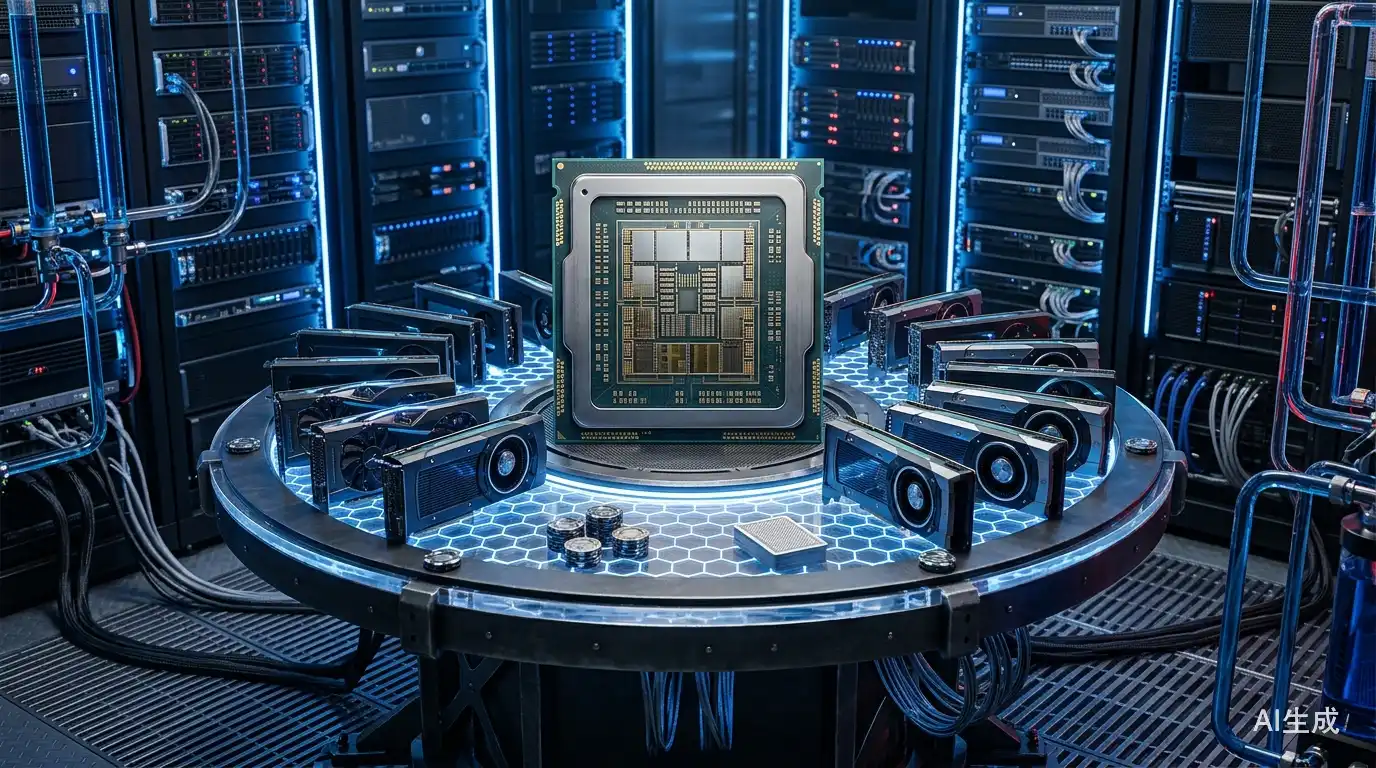
CPU Makes a Comeback to the Table, A $170 Billion "Power Seizure" Drama Begins

A new era is dawning for the server CPU (Central Processing Unit), driven by the shift from AI model training to large-scale reasoning and the rise of Agentic AI. This article explores how the CPU is reclaiming a central role in the AI data center. For years, the focus has been on the GPU (Graphics Processing Unit) for AI training. However, as AI moves to the inference and Agent phase—where tasks involve complex, multi-step reasoning, tool calls, and data management—the workload balance is flipping. Studies show CPUs now handle over 70% of the workload in Agentic AI, up from 10-30% in training. This is because Agent tasks generate massive intermediate data (KV Cache) that exceeds GPU memory, forcing it to be offloaded to the CPU's larger, more scalable memory pools. This increased importance is translating into market changes. Major players are taking note: NVIDIA launched its first standalone CPU line, Vera, based on ARM architecture and optimized for Agent performance. AMD doubled its server CPU market forecast to over $1200 billion by 2030. Analyst reports project the total server CPU market could reach $1700 billion by 2030, with AI-driven demand being a primary driver. Furthermore, the classic ratio of CPUs to GPUs in AI servers is rapidly changing, converging from 1:8 toward 1:1 for Agent deployments. This surge in demand has led to a rare industry-wide price increase of 10-15% for server CPUs from Intel and AMD, breaking a decade-long trend of "more performance for the same price." Demand is bifurcating into high-core-count CPUs for in-rack GPU support and moderate-core CPUs for standalone Agent task orchestration. In China, this global trend presents an opportunity for domestic CPU manufacturers like Hygon (海光信息) and Huawei Kunpeng, who are bolstered by both growing AI infrastructure needs and national policies promoting technological self-reliance ("xin chuang"). The maturity of their software ecosystems is also accelerating, evidenced by faster adaptation to new AI models. In conclusion, the narrative is shifting from a GPU-centric view to one where CPU-GPU synergy is critical. The CPU is no longer a peripheral component but a performance-defining bottleneck and a key growth driver in the AI hardware stack, opening a massive new market estimated in the hundreds of billions of dollars.

marsbit11 год тому

CPU Makes a Comeback to the Table, A $170 Billion "Power Seizure" Drama Begins

marsbit11 год тому

TechFlow Intelligence: AMD AI Director Publicly Criticizes Claude Code for "Becoming Dumber and Lazier", Trump Claims Full Ceasefire in Hormuz But Strait Still Has 80 Unexploded Mines

TechFlow Intelligence Report: This daily digest covers key developments in AI, crypto, hardware, and geopolitics. In AI, SK Telecom faces US export control scrutiny over its partnership with Anthropic, while a Gemini user reports being misled in a scam scenario, sparking safety debates. China's Z.AI launches the GLM-5.2 model, rivaling Claude Opus without NVIDIA chips. In crypto, Bithumb lists ReProtocol, and Upbit delists KernelDAO. On the hardware front, MIT researchers build a custom OS to study chips, ASML denies US claims its advanced lithography machines are in China, and Amazon considers selling its in-house AI chips. Apple's future A21 Pro chip may use TSMC's latest N2P process. Major tech issues include 10,000 GitHub repositories distributing malware and Apple patching a critical eavesdropping flaw in Beats earbuds. US stocks rise, led by semiconductors, with Intel surging 10.6%, while SpaceX falls 3.5%. Geopolitically, despite a US-Iran deal, the Strait of Hormuz remains risky with ~80 uncleared mines, stalling 80M barrels of oil on standby tankers. Iran postpones Switzerland talks, and Trump calls the agreement an "unconditional surrender." The report highlights a contrast: temporary geopolitical calm versus the ongoing, fundamental restructuring of tech supply chains and chip independence.

marsbit11 год тому

TechFlow Intelligence: AMD AI Director Publicly Criticizes Claude Code for "Becoming Dumber and Lazier", Trump Claims Full Ceasefire in Hormuz But Strait Still Has 80 Unexploded Mines

marsbit11 год тому

Торгівля

Спот
Ф'ючерси

Популярні статті

Як купити TOP

Ласкаво просимо до HTX.com! Ми зробили покупку TOP AI Network (TOP) простою та зручною. Дотримуйтесь нашої покрокової інструкції, щоб розпочати свою криптовалютну подорож.Крок 1: Створіть обліковий запис на HTXВикористовуйте свою електронну пошту або номер телефону, щоб зареєструвати обліковий запис на HTX безплатно. Пройдіть безпроблемну реєстрацію й отримайте доступ до всіх функцій.ЗареєструватисьКрок 2: Перейдіть до розділу Купити крипту і виберіть спосіб оплатиКредитна/дебетова картка: використовуйте вашу картку Visa або Mastercard, щоб миттєво купити TOP AI Network (TOP).Баланс: використовуйте кошти з балансу вашого рахунку HTX для безперешкодної торгівлі.Треті особи: ми додали популярні способи оплати, такі як Google Pay та Apple Pay, щоб підвищити зручність.P2P: Торгуйте безпосередньо з іншими користувачами на HTX.Позабіржова торгівля (OTC): ми пропонуємо індивідуальні послуги та конкурентні обмінні курси для трейдерів.Крок 3: Зберігайте свої TOP AI Network (TOP)Після придбання TOP AI Network (TOP) збережіть його у своєму обліковому записі на HTX. Крім того, ви можете відправити його в інше місце за допомогою блокчейн-переказу або використовувати його для торгівлі іншими криптовалютами.Крок 4: Торгівля TOP AI Network (TOP)Легко торгуйте TOP AI Network (TOP) на спотовому ринку HTX. Просто увійдіть до свого облікового запису, виберіть торгову пару, укладайте угоди та спостерігайте за ними в режимі реального часу. Ми пропонуємо зручний досвід як для початківців, так і для досвідчених трейдерів.

491 переглядів усьогоОпубліковано 2024.12.10Оновлено 2026.06.02

Як купити TOP

Обговорення

Ласкаво просимо до спільноти HTX. Тут ви можете бути в курсі останніх подій розвитку платформи та отримати доступ до професійної ринкової інформації. Нижче представлені думки користувачів щодо ціни TOP (TOP).

活动图片