Shares in Twenty One Capital (XXI), the newest crypto treasury company in the US, slid 20% on its trading debut after merging with the blank-check company Cantor Equity Partners.
Twenty One Capital opened trading on Tuesday at $10.74, below the closing price of $14.27 on Monday for Cantor’s special purpose acquisition company that it merged with.
The new Bitcoin (BTC)-focused company’s stock closed trading on Wednesday at $11.42, down 19.97% over 24 hours.
However, it later saw a slight 2.2% lift after-hours to $11.67, giving it a market capitalization of around $4 billion based on its outstanding shares.
Twenty One was among the most anticipated crypto public debuts this year, with the company backed by major stablecoin issuer Tether, crypto exchange Bitfinex Japan’s SoftBank Group. Jack Mallers, the founder and CEO of the Bitcoin platform Strike, was also named Twenty One’s CEO.
The company holds over 43,500 Bitcoin worth over $4 billion, boasting the third-largest holdings among public companies behind Bitcoin miner MARA Holdings, according to BitcoinTreasuries.NET.
Twenty One has no public plan, but it’s “not a treasury”
Twenty One has not publicly said what exactly its operating business will be or when it plans to launch one, but Mallers told CNBC that it’s “not a treasury company.”
“We don’t want the market to think of us and price us as just a treasury asset,” he added. “We do have a lot of Bitcoin, but we’re also building a business.”
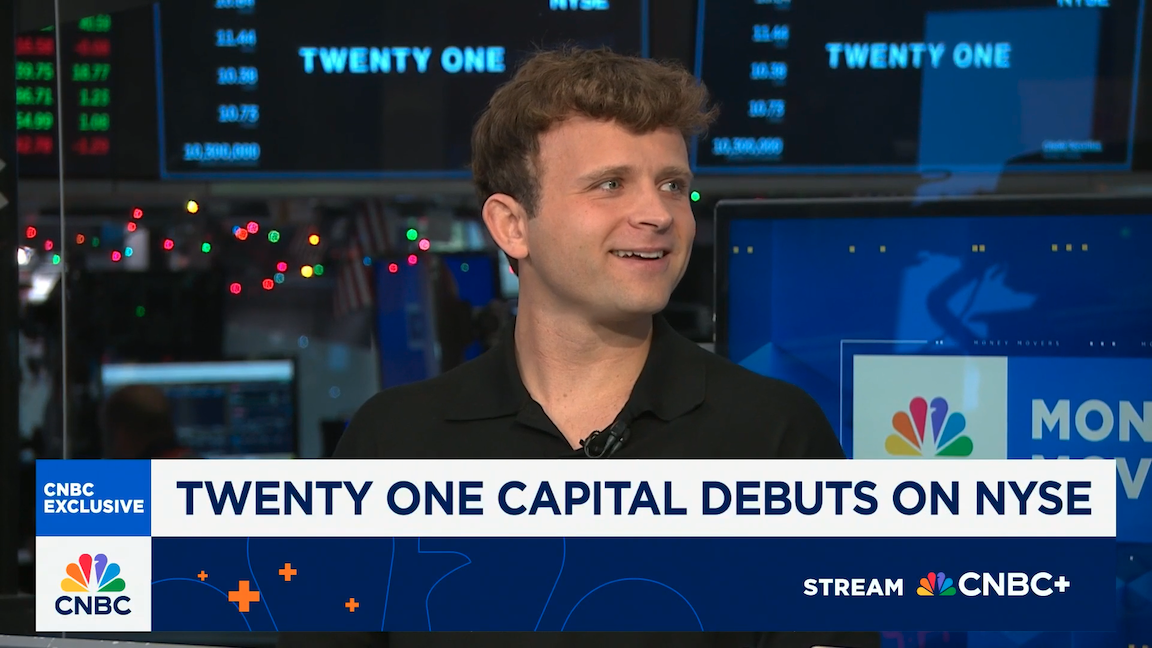
“We’re building an operating company, we’re bringing a lot of Bitcoin products to market with the intent to have cash flow,” Mallers said, adding he sees “many opportunities in brokerage, exchange, credit and lending.”
Mallers deflected when pressed on what exactly Twenty One is planning, saying, “These things, we’ll come out with them sooner rather than later.”
Related: Vivek Ramaswamy's Strive to raise $500M to buy Bitcoin
The US has seen a deluge of so-called crypto treasury companies come to market this year, copying a model popularized by Strategy, where they buy and hold crypto and raise money to continue purchases.
Such crypto holding companies saw investor interest earlier this year as Bitcoin climbed to a high in October, but a decline in the crypto market since has dragged down shares in companies exposed to the sector.
Mallers is seemingly hoping his and Tether’s track record, and his conviction in Bitcoin, will buoy Twenty One in the meantime.
“We see Bitcoin as the forest through the trees,” he told CNBC. “It is the opportunity, and no one is seemingly focused on it. The story of this equity is to focus solely on Bitcoin and deliver value to shareholders primarily through Bitcoin.”
Magazine: Mysterious Mr Nakamoto author — Finding Satoshi would hurt Bitcoin