Bitcoin ETF Two Years On: The Financialization Journey from Breakthrough to Convergence

marsbitОпубліковано о 2026-01-12Востаннє оновлено о 2026-01-12

Анотація

Two years after the launch of Bitcoin spot ETFs, the financialization of Bitcoin has accelerated significantly, with total assets under management (AUM) reaching $124.85 billion. The top five ETFs—IBIT, GBTC, FBTC, ARKB, and BITB—account for 96.6% of the market, highlighting strong institutional dominance. Trading volume surpassed $2 trillion, with the second trillion taking only 8 months compared to 16 months for the first. Bitcoin ETFs have significantly outperformed Ethereum ETFs in net inflows, reinforcing Bitcoin’s leading position in the crypto ETF market. The approval of Bitcoin spot ETFs in January 2024 marked a milestone after over a decade of regulatory scrutiny, reflecting maturation in market infrastructure, custody, and investor protection frameworks. Unlike the first gold ETF, which took years to gain traction, Bitcoin ETFs achieved rapid adoption, accelerating liquidity and institutional participation. ETFs have simplified Bitcoin investment, enabling regulated, accessible exposure without direct asset management. Major institutions like BlackRock and Fidelity have facilitated broader acceptance, integrating Bitcoin into mainstream portfolios and retirement plans. However, financialization introduces challenges, including Bitcoin’s inherent volatility and ETF management fees. Beyond price speculation, alternative participation methods like cloud mining offer cost-stable Bitcoin acquisition and support network infrastructure. In summary, Bitcoin ETFs have fa...

In January 2024, the spot Bitcoin ETF was officially approved.

For the crypto industry, this was a milestone moment that had been awaited for over a decade, and the news quickly captured the focus of global financial markets.

Two years have passed in the blink of an eye, and the spot Bitcoin ETF is no longer a novel topic. A set of solid data is quietly reshaping the market's understanding of the boundaries of this asset class.

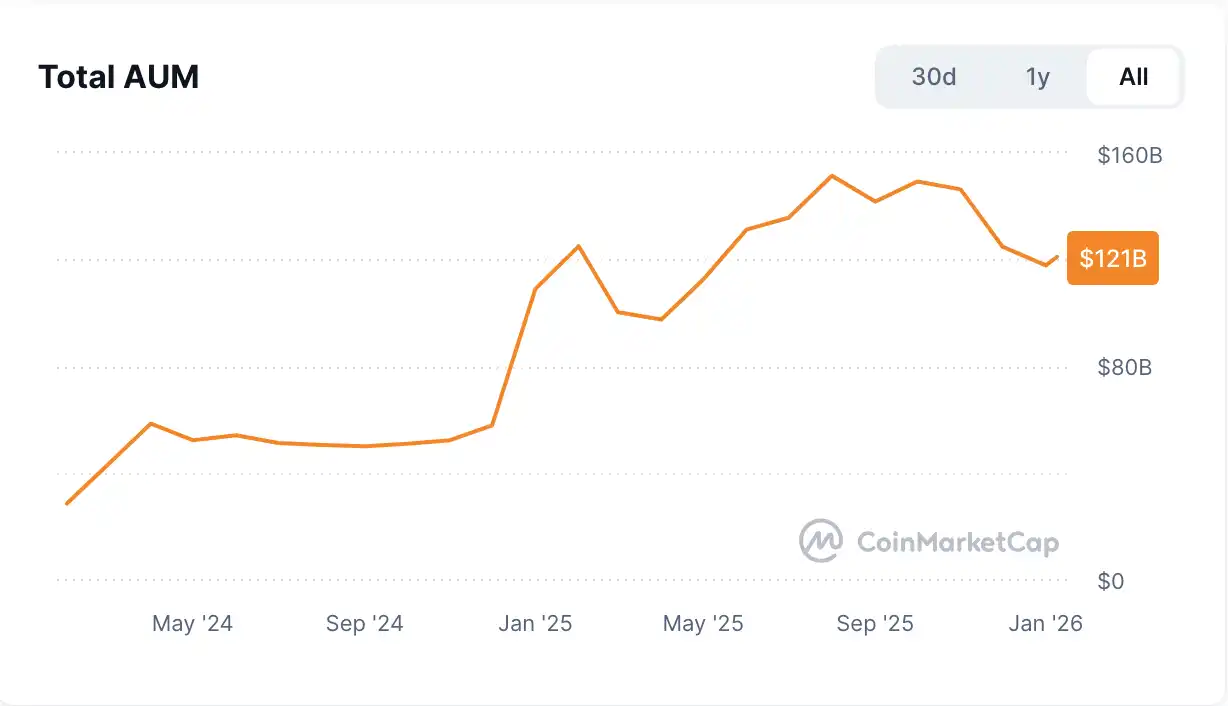
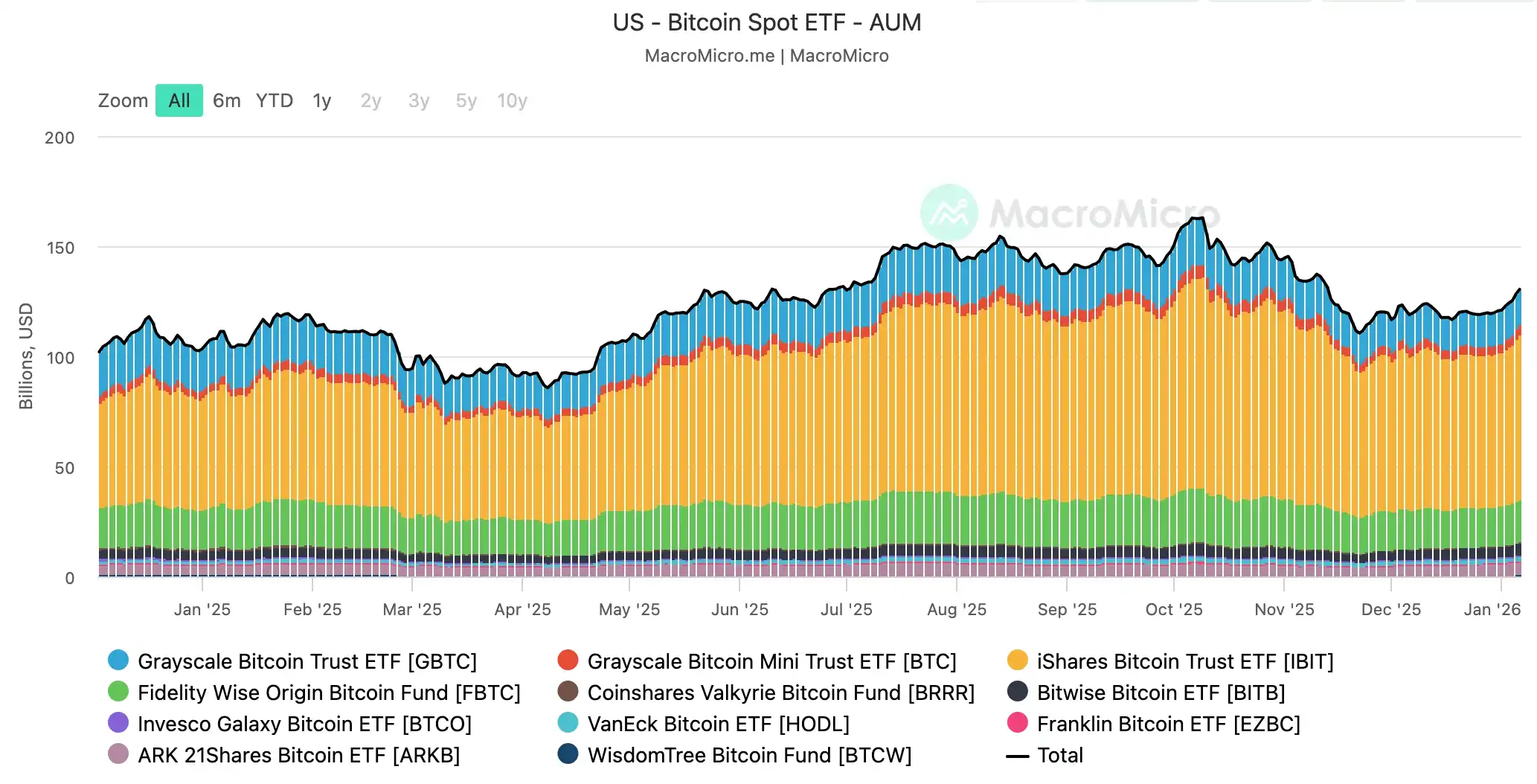
As of now, the total assets under management (AUM) of Bitcoin ETFs have climbed to $124.5 billion. The concentration is extremely significant: five products—IBIT ($74.11 billion), GBTC ($16.4 billion), FBTC ($18.89 billion), ARKB ($5.81 billion), and BITB ($5.35 billion)—collectively manage $120.56 billion in assets, accounting for 96.6% of the total market, clearly outlining an institutionally-dominated market structure.

The trading activity has also exceeded expectations. According to data from The Block, the cumulative trading volume of U.S. spot cryptocurrency ETFs officially surpassed $2 trillion on January 2nd. Looking back at this progression: it took a full 16 months to first reach $1 trillion on May 6th, 2025; but it took only 8 months to go from $1 trillion to $2 trillion, with the growth rate doubling. Among them, BlackRock's IBIT remains firmly in the top spot, accounting for a whopping 70% of the trading volume.

The divergence in fund flows is also very clear. In 2025, U.S. spot Bitcoin ETFs accounted for the majority of the net inflows in the cryptocurrency ETF market, performing far better than Ethereum ETFs, further solidifying Bitcoin's dominant position in the crypto ETF space.

If the approval of the Bitcoin ETF symbolized Bitcoin officially knocking on the door of the mainstream financial system; then these figures today prove that it has become a structurally significant allocation asset in institutional investment portfolios. Behind these numbers is not just a leap in scale, but also institutional-level recognition: Bitcoin is integrating into the常规 operational framework of the global financial system at an unprecedented speed.
History of the Bitcoin ETF: A Breakthrough That Was No Accident

The launch of the spot Bitcoin ETF was not a sudden act of regulatory goodwill, but the result of a long-term game.

Before 2024, the core concerns of regulators regarding Bitcoin ETF applications and rejections always focused on three points: whether the underlying market was mature and could effectively prevent manipulation; whether the asset custody, clearing, and audit mechanisms were reliable; and whether the investor protection system was complete. These issues were not about judging Bitcoin's intrinsic value, but were institutional thresholds that any asset must cross to be incorporated into the formal financial product system.

Tracing the timeline, the demand for a Bitcoin ETF can be traced back to 2013. At that time, Bitcoin's price began to enter the public eye, and some investors and brokers found it difficult for ordinary investors to access this emerging asset within a compliant framework, leading to the earliest conceptions of a Bitcoin ETF. However, for many years thereafter, the U.S. Securities and Exchange Commission (SEC) consistently rejected related proposals, citing reasons revolving around the three core issues of market manipulation risk, custody security, and information transparency.

It wasn't until October 2021 that the SEC first relented, approving the ProShares Bitcoin Strategy ETF (BITO). But this product was based on futures contracts, not a true spot ETF, and was more like a regulatory test.

The real turning point occurred on January 10, 2024. The SEC approved 10 spot Bitcoin ETFs at once, including those from BlackRock, Fidelity, Grayscale, Ark Invest, and Invesco. This decision marked the official entry of U.S. crypto asset investment into the spot ETF era and became the most important institutional link between the traditional financial system and crypto assets.

The arrival of this moment was no accident. By 2024, the infrastructure around Bitcoin, including trading systems, custody mechanisms, compliance frameworks, and information disclosure standards, had developed to a stage acceptable to regulators. The emergence of the ETF was essentially the financial system's recognition and response to this market maturity.

From a longer-cycle perspective, this is by no means the end point of Bitcoin's financialization, but a clearly visible, officially confirmed阶段性 node in its financialization process.

Beyond Gold: Bitcoin ETF Presses the "Fast-Forward" Button

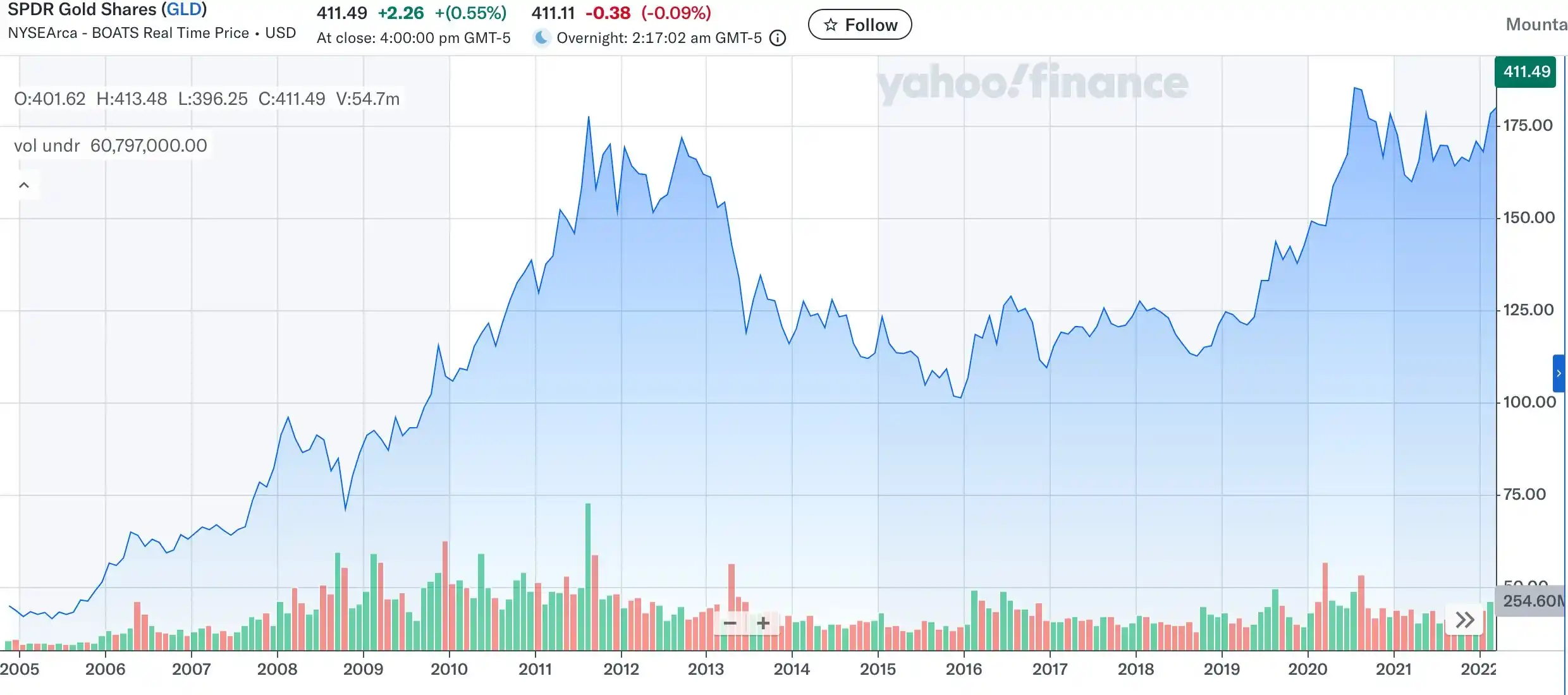
In 2004, the SPDR Gold Trust ETF (GLD) was approved, becoming the first spot gold ETF in history. At that time, the global market capitalization of gold was approximately $1 to $2 trillion. Subsequently, driven by ETFs and related financial instruments, gold's financialization process began to accelerate. By 2025, the global AUM of gold ETFs had climbed to $559 billion, and the average daily trading volume of the gold market reached about $361 billion, both hitting record highs.

With this history as a backdrop, when the spot Bitcoin ETF was approved in 2024, many market participants naturally compared the two. Everyone had a similar question in mind: could the ETF once again play the role of a "catalyst," injecting unprecedented liquidity and vitality into the Bitcoin market?

Now, two years later, the Bitcoin ETF has given a clear answer.

According to data from Chainalysis, the pace of fund flows into Bitcoin ETFs has already surpassed the early-stage inflow speed of the first *net* gold ETF (inflation-adjusted) launched in 2005.

After the launch of the spot gold ETF, not only did its own scale rise rapidly, but it also spurred activity across the entire gold ecosystem: the trading volumes of spot, futures, options, and even various derivative markets achieved quantum growth in the following years.

This history provides a vivid reference for understanding the potential impact of the Bitcoin ETF. It confirms that ETFs, as a financial medium, inherently possess a kind of "leverage effect," capable of rapidly increasing an asset's liquidity and attracting broader market participation.

Therefore, the Bitcoin ETF is not simply retreading gold's old path. It has demonstrated a faster market acceptance rate in a shorter time and received a more enthusiastic response from capital.
The Significance of ETFs: Accelerators of the Financialization Process

Looking at the development over two years, spot Bitcoin ETFs have promoted Bitcoin's financialization process on multiple levels.

First, the method of participation has been institutionalized.

Spot Bitcoin ETFs provide investors with a regulated, standardized participation path, significantly reducing technical and operational barriers. Investors can participate in its price fluctuations without directly holding, storing, or managing Bitcoin, making Bitcoin investment more aligned with the usage habits of mainstream financial markets.

Second, the investment process has been greatly simplified.

Investors can buy and sell Bitcoin ETF shares like stocks or other ETFs, using market or limit orders, improving both convenience and security, thereby making it easier for Bitcoin to be incorporated into常规 investment portfolio systems.

Third, mainstream acceptance of Bitcoin as an asset class continues to increase.

Spot Bitcoin ETFs have significantly enhanced market recognition of Bitcoin as an independent asset class, gradually moving it from within the crypto market into the mainstream asset allocation and wealth management discussion framework, and beginning to appear in some long-term investment and retirement planning scenarios.

Fourth, institutional capital and global market participation have been systematically opened up.

The participation of global top asset management institutions like BlackRock and Fidelity has turned Bitcoin ETFs from symbolic compliant products into important entry points for institutional funds into the crypto market. Meanwhile, the successive advancement of spot Bitcoin ETFs in markets like the U.S. and Hong Kong also indicates that this financialization process is showing a trend of global diffusion.

Structural Challenges and Diversified Participation Paths Under Accelerated Financialization

The rapid development of Bitcoin ETFs has significantly accelerated Bitcoin's financialization process, but it has also simultaneously amplified some long-standing structural challenges.

First, from a market perspective, spot Bitcoin ETFs are still directly exposed to Bitcoin's inherent high volatility, and rapid price changes can lead to short-term valuation fluctuations;同时, the management fees and operational costs of ETFs will also affect the investment return structure in the long run.

More importantly, the high degree of financialization represented by ETFs is itself a double-edged sword. On one hand, it significantly amplifies Bitcoin's market liquidity and participation scale; on the other hand, it can easily cause the market to focus more on price performance at the financial product level, thereby overlooking the fact that the Bitcoin network itself still requires continuous investment in computing power and infrastructure construction to maintain its long-term security and stability.

From an investor's perspective, ways to participate in Bitcoin are not limited to price-level trading and holding. Besides obtaining price returns through spot, spot ETFs, or trading strategies, cloud mining offers another approach: participating in Bitcoin through a path of locking in costs and stabilizing output.

Through cloud mining, investors can lock in hashrate and costs in advance, obtaining relatively stable Bitcoin output over a certain period. This model essentially equates to locking in the cost of acquiring Bitcoin for a future period, allowing investors to establish a more controllable cost structure and return expectations in a highly volatile market, and also providing another potential path to outperform the spot price over a cycle.

同时, this method also allows individual capital to continue participating in the Bitcoin network's hashrate system, rather than staying only at the level of financial price speculation. Cloud mining is both a way to acquire Bitcoin and a form of continuous support for the network infrastructure. Against the backdrop of deepening financialization, it preserves a richer, more diverse participation structure for the market.

As Bitcoin continues to integrate into the global financial system, different levels and forms of participation will together form an important foundation for its long-term operation and development.

Conclusion

Two years is enough for a new financial product to undergo a complete market test. This journey of the spot Bitcoin ETF clearly tells us: the speed at which Bitcoin is entering the mainstream financial track is much faster than most people initially imagined.

But this is clearly not the终点. The ETF is more like a lit beacon, making Bitcoin's financialization path clear from模糊, and预示着 that more institutionalized forms will appear ahead.

In the future, Bitcoin will continue to evolve between financial markets, technological systems, and infrastructure. Different forms of participation will共同塑造 its long-term position in the global financial system.

Two years is just the prologue. This journey is still extending, and the new pages truly worth writing may have just been turned.


Пов'язані матеріали

Fu Peng's First Public Speech in 2026: What Exactly Are Crypto Assets? Why Did I Join the Crypto Asset Industry?

Fu Peng, a renowned macroeconomist and now Chief Economist at New火 Group, delivered his first public speech of 2026 at the Hong Kong Web3 Festival. He explained his perspective on crypto assets and why he joined the industry, framing it within the context of macroeconomic trends and financial evolution. Fu emphasized that crypto assets are transitioning from an early, belief-driven phase to a mature, institutionally integrated asset class. He drew parallels to the 1970s-80s, when technological advances (like computing) revolutionized traditional finance, leading to the rise of FICC (Fixed Income, Currencies, and Commodities). Similarly, current advancements in AI, data, and blockchain are reshaping finance, with crypto assets becoming part of a new "FICC + C" (C for Crypto) framework. He noted that institutional capital, including traditional hedge funds, avoided early crypto due to its speculative nature but are now engaging as regulatory clarity emerges (e.g., stablecoin laws, CFTC classifying crypto as a commodity). Fu predicted that 2025-2026 marks a turning point where crypto becomes a standardized, financially viable asset for diversified portfolios, akin to commodities or derivatives in traditional finance. Fu defined Bitcoin not as "digital gold" in a simplistic sense but as a value-preserving, financially tradable asset. He highlighted that crypto's future lies in regulated, institutional adoption, moving away from retail-dominated trading. His entry into crypto signals this maturation, where traditional finance integrates crypto into mainstream asset management.

marsbit6 хв тому

Fu Peng's First Public Speech in 2026: What Exactly Are Crypto Assets? Why Did I Join the Crypto Asset Industry?

marsbit6 хв тому

Justin Sun Sues Trump Family: What $75 Million Bought Was Only a Blacklist

Justin Sun, founder of Tron, has filed a lawsuit in federal court against World Liberty Financial (WLF), alleging he was made the "primary target of a fraudulent scheme" after investing $75 million. Sun claims the investment secured him an advisor title and WLFI tokens, which were later frozen by WLF, causing "hundreds of millions in losses." The dispute began in late 2024 when Sun's investment helped revive WLF's struggling token sale, which ultimately raised $550 million. Shortly after, the SEC dropped its lawsuit against Sun following Donald Trump's inauguration. However, relations soured when Sun refused WLF's demands for additional funding. In August 2025, WLF added a "blacklist" function to its smart contract, allowing it to unilaterally freeze tokens. Sun's holdings, worth approximately $107 million, were frozen, and he was threatened with token destruction. The lawsuit highlights WLF's structure, which directs 75% of token sale profits to the Trump family, who had earned $1 billion by December 2025. WLF's CEO is Zach Witkoff, son of U.S. Middle East envoy Steve Witkoff. The project faces scrutiny for opaque operations, including a controversial loan arrangement on the Dolomite platform, co-founded by a WLF advisor. Despite Sun's history with the SEC, the case underscores centralization risks within DeFi, as WLF controls governance and holds powers to freeze assets arbitrarily. Sun's tokens remain frozen as legal proceedings begin.

marsbit14 хв тому

Justin Sun Sues Trump Family: What $75 Million Bought Was Only a Blacklist

marsbit14 хв тому

$500 to Buy OpenAI Stock: Silicon Valley's Most Respectable Liquidity Invitation

Silicon Valley's largest venture capital platform, AngelList, has launched a new fund called USVC, allowing U.S. retail investors to buy into high-profile AI companies like OpenAI, Anthropic, and xAI with a minimum investment of $500—no accredited investor status required. Promoted by AngelList co-founder Naval Ravikant, the fund is framed as an opportunity for ordinary people to access high-growth private tech investments traditionally reserved for VCs. However, critics argue it functions more like an exit vehicle for early insiders. USVC acquires shares not through primary rounds but largely via secondary transactions—purchasing stakes from early investors, VC funds, and employees looking to cash out at peak valuations. With companies like xAI heavily weighted in the portfolio, the fund effectively channels retail money into providing liquidity for insiders who entered at much lower valuations. The fund’s structure raises concerns: shares are illiquid, with no secondary market, and buybacks are limited and discretionary. The actual annual fee reaches 3.61%, far above the advertised 1% management fee. This model parallels the "low float, high fully diluted valuation" strategy seen in crypto, where early investors profit by selling to latecomers at inflated prices. The timing—alongside similar moves by platforms like Robinhood—suggests that Silicon Valley’s sudden interest in retail inclusion may be less about democratizing access and more about securing exits for insiders.

marsbit45 хв тому

$500 to Buy OpenAI Stock: Silicon Valley's Most Respectable Liquidity Invitation

marsbit45 хв тому

Торгівля

Спот
Ф'ючерси

Популярні статті

Що таке BITCOIN

Розуміння HarryPotterObamaSonic10Inu (ERC-20) та його позиції у крипто-просторі Останніми роками ринок криптовалют спостерігав за зростанням популярності мем-коінів, які привертають інтерес не тільки трейдерів, але й тих, хто шукає спілкування та розважальну цінність. Серед цих унікальних токенів є HarryPotterObamaSonic10Inu (ERC-20), інтригуючий проект, що поєднує культурні посилання з тканинами криптовалюти. Ця стаття досліджує ключові аспекти HarryPotterObamaSonic10Inu, вивчаючи його механізми, спільноту та його взаємодію з ширшим крипто-ландшафтом. Що таке HarryPotterObamaSonic10Inu (ERC-20)? Як випливає з його назви, HarryPotterObamaSonic10Inu є мем-коіном, побудованим на блокчейні Ethereum, класифікованим за стандартом ERC-20. На відміну від традиційних криптовалют, які можуть підкреслювати практичну корисність або інвестиційний потенціал, цей токен процвітає завдяки розважальній цінності та силі своєї спільноти. Проект спрямований на створення середовища, де зацікавлені користувачі можуть об'єднуватися, ділитися ідеями та брати участь у заходах, натхненних різноманітними культурними явищами. Однією з примітних особливостей HarryPotterObamaSonic10Inu є нульовий податок на транзакції. Цей привабливий елемент має на меті заохочувати торгівлю та участь у спільноті, позбавлену додаткових витрат, які можуть відлякувати дрібних трейдерів. Загальна пропозиція монет становить один мільярд токенів, що позначає намір підтримувати суттєву циркуляцію в межах спільноти. Творець HarryPotterObamaSonic10Inu (ERC-20) Походження HarryPotterObamaSonic10Inu дещо окутане таємницею; деталі про творця залишаються невідомими. Розвиток цього токена позбавлений впізнаваної команди або чіткої стратегії, що не є рідкістю в секторі мем-коінів. Натомість проект виник органічно, а його розвиток значною мірою залежить від ентузіазму та участі його спільноти. Інвестори HarryPotterObamaSonic10Inu (ERC-20) Щодо зовнішніх інвестицій та підтримки, HarryPotterObamaSonic10Inu також залишається невизначеним. Токен не зазначає жодних відомих інвестиційних фондів або значної організаційної підтримки. Натомість життєва сила проекту полягає в його базовій спільноті, яка інформує про його зростання та стійкість через колективні дії та залученість у крипто-просторі. Як працює HarryPotterObamaSonic10Inu (ERC-20)? Як мем-коін, HarryPotterObamaSonic10Inu функціонує передусім поза традиційними рамками, що часто регулюють вартість активів. Є кілька відмінних аспектів, що визначають, як працює проект: Транзакції без податку: Завдяки відсутності податкових зборів на транзакції, користувачі можуть вільно купувати та продавати токен, не турбуючись про приховані витрати. Залучення спільноти: Проект процвітає завдяки взаємодії спільноти, використовуючи соціальні медіа для створення шуму та сприяння залученню. Обговорення, обмін контентом та залученість є ключовими елементами, що допомагають розширити його охоплення та зміцнити лояльність серед прихильників. Відсутність практичної корисності: Слід зазначити, що HarryPotterObamaSonic10Inu не пропонує конкретної корисності в рамках фінансової екосистеми. Натомість він класифікується як токен, що призначений в основному для розваги та спільнотних активностей. Культурне посилання: Токен кмітливо вплітає елементи популярної культури, щоб привернути інтерес, зв'язуючи з ентузіастами мемів та крипто-стежками. HarryPotterObamaSonic10Inu ілюструє, як мем-коіни функціонують інакше, ніж традиційні криптовалютні проекти, увійшовши на ринок як інноваційні соціальні конструкти, а не утилітарні активи. Хронологія HarryPotterObamaSonic10Inu (ERC-20) Історія HarryPotterObamaSonic10Inu відзначена кількома значними етапами: Створення: Токен виник з вірусного мему, захопивши уяву багатьох крипто-ентузіастів. Конкретні дати створення недоступні, що підкреслює його органічний розвиток. Лістинг на біржах: HarryPotterObamaSonic10Inu з'явився на різних біржах, дозволяючи зручніший доступ і торгівлю спільноти. Ініціативи залучення спільноти: Ведення діяльності, спрямованої на покращення взаємодії спільноти, включаючи конкурси, кампанії в соціальних мережах та створення контенту від фанатів та прихильників. Плани на майбутнє: Дорожня карта проекту включає запуск колекції NFT, мерчандайзинг та електронну комерцію, пов'язану з його культурними темами, що далі залучає спільноту та намагається додати більше вимірів до його екосистеми. Ключові моменти про HarryPotterObamaSonic10Inu (ERC-20) Спільнотний підхід: Проект надає пріоритет колективному внеску та креативності, забезпечуючи, щоб участь користувачів була в центрі його розвитку. Класифікація як мем-коін: Це є його епігенез розважальної криптовалюти, що відрізняється від традиційних інвестиційних інструментів. Жодного прямого відношення до Bitcoin: Незважаючи на схожість у назві, HarryPotterObamaSonic10Inu є відмінним і не має жодного зв’язку з Bitcoin або іншими усталеними криптовалютами. Зосередженість на співпраці: HarryPotterObamaSonic10Inu створено для того, щоб надати простір для співпраці та обміну історіями серед його власників, забезпечуючи шлях для творчості та спільного зв'язку. Перспективи на майбутнє: Амбіція розширитися за межі початкової концепції в NFT та мерчандайз відкриває шлях для проекту потенційно потрапити в більш мейнстрімні сфери цифрової культури. Оскільки мем-коіни продовжують захоплювати уяву спільноти криптовалют, HarryPotterObamaSonic10Inu (ERC-20) вирізняється своїми культурними зв'язками та орієнтованим на спільноту підходом. Хоча він може не відповідати типовій моделі утилітарного токена, його суть полягає в радощах і товариськості, що підтримуються серед його прихильників, підкреслюючи еволюційну природу криптовалют в усе більш цифрову епоху. Оскільки проект продовжує розвиватися, важливо спостерігати за тим, як динаміка спільноти вплине на його траєкторію в постійно змінюваному ландшафті технології блокчейн.

1.7k переглядів усьогоОпубліковано 2024.04.01Оновлено 2024.12.03

Що таке BITCOIN

Як купити BTC

Ласкаво просимо до HTX.com! Ми зробили покупку Bitcoin (BTC) простою та зручною. Дотримуйтесь нашої покрокової інструкції, щоб розпочати свою криптовалютну подорож.Крок 1: Створіть обліковий запис на HTXВикористовуйте свою електронну пошту або номер телефону, щоб зареєструвати обліковий запис на HTX безплатно. Пройдіть безпроблемну реєстрацію й отримайте доступ до всіх функцій.ЗареєструватисьКрок 2: Перейдіть до розділу Купити крипту і виберіть спосіб оплатиКредитна/дебетова картка: використовуйте вашу картку Visa або Mastercard, щоб миттєво купити Bitcoin (BTC).Баланс: використовуйте кошти з балансу вашого рахунку HTX для безперешкодної торгівлі.Треті особи: ми додали популярні способи оплати, такі як Google Pay та Apple Pay, щоб підвищити зручність.P2P: Торгуйте безпосередньо з іншими користувачами на HTX.Позабіржова торгівля (OTC): ми пропонуємо індивідуальні послуги та конкурентні обмінні курси для трейдерів.Крок 3: Зберігайте свої Bitcoin (BTC)Після придбання Bitcoin (BTC) збережіть його у своєму обліковому записі на HTX. Крім того, ви можете відправити його в інше місце за допомогою блокчейн-переказу або використовувати його для торгівлі іншими криптовалютами.Крок 4: Торгівля Bitcoin (BTC)Легко торгуйте Bitcoin (BTC) на спотовому ринку HTX. Просто увійдіть до свого облікового запису, виберіть торгову пару, укладайте угоди та спостерігайте за ними в режимі реального часу. Ми пропонуємо зручний досвід як для початківців, так і для досвідчених трейдерів.

4.3k переглядів усьогоОпубліковано 2024.12.12Оновлено 2025.03.21

Як купити BTC

Що таке $BITCOIN

ЦИФРОВЕ ЗОЛОТО ($BITCOIN): Комплексний аналіз Вступ до ЦИФРОВОГО ЗОЛОТА ($BITCOIN) ЦИФРОВЕ ЗОЛОТО ($BITCOIN) — це проект на основі блокчейну, що працює в мережі Solana, який має на меті поєднати характеристики традиційних дорогоцінних металів з інноваціями децентралізованих технологій. Хоча він має таку ж назву, як і Bitcoin, який часто називають “цифровим золотом” через його сприйняття як засобу збереження вартості, ЦИФРОВЕ ЗОЛОТО є окремим токеном, розробленим для створення унікальної екосистеми в ландшафті Web3. Його мета — позиціонувати себе як життєздатний альтернативний цифровий актив, хоча деталі щодо його застосувань і функціональностей все ще розробляються. Що таке ЦИФРОВЕ ЗОЛОТО ($BITCOIN)? ЦИФРОВЕ ЗОЛОТО ($BITCOIN) — це токен криптовалюти, спеціально розроблений для використання в блокчейні Solana. На відміну від Bitcoin, який виконує широко визнану роль зберігання вартості, цей токен, здається, зосереджується на більш широких застосуваннях і характеристиках. Помітні аспекти включають: Інфраструктура блокчейну: Токен побудований на блокчейні Solana, відомому своєю здатністю обробляти швидкі та низьковартісні транзакції. Динаміка постачання: ЦИФРОВЕ ЗОЛОТО має максимальне постачання, обмежене 100 квадрильйонами токенів (100P $BITCOIN), хоча деталі щодо його обігового постачання наразі не розголошуються. Утиліта: Хоча точні функціональності не викладені, є вказівки на те, що токен може бути використаний для різних застосувань, потенційно пов'язаних з децентралізованими додатками (dApps) або стратегіями токенізації активів. Хто є творцем ЦИФРОВОГО ЗОЛОТА ($BITCOIN)? На даний момент особа творців і команди розробників, що стоять за ЦИФРОВИМ ЗОЛОТОМ ($BITCOIN), залишається невідомою. Ця ситуація є типовою для багатьох інноваційних проектів у сфері блокчейну, особливо тих, що пов'язані з децентралізованими фінансами та феноменом мем-коінів. Хоча така анонімність може сприяти культурі, орієнтованій на спільноту, вона посилює занепокоєння щодо управління та підзвітності. Хто є інвесторами ЦИФРОВОГО ЗОЛОТА ($BITCOIN)? Доступна інформація вказує на те, що ЦИФРОВЕ ЗОЛОТО ($BITCOIN) не має жодних відомих інституційних спонсорів або помітних венчурних капіталовкладень. Проект, здається, працює за моделлю “рівний до рівного”, зосереджуючись на підтримці та прийнятті спільноти, а не на традиційних шляхах фінансування. Його активність і ліквідність переважно розташовані на децентралізованих біржах (DEX), таких як PumpSwap, а не на встановлених централізованих торгових платформах, що ще більше підкреслює його підхід знизу вгору. Як працює ЦИФРОВЕ ЗОЛОТО ($BITCOIN) Операційні механізми ЦИФРОВОГО ЗОЛОТА ($BITCOIN) можна детальніше розглянути на основі його дизайну блокчейну та характеристик мережі: Механізм консенсусу: Використовуючи унікальний proof-of-history (PoH) Solana в поєднанні з моделлю proof-of-stake (PoS), проект забезпечує ефективну валідацію транзакцій, що сприяє високій продуктивності мережі. Токеноміка: Хоча конкретні дефляційні механізми не були детально описані, велике максимальне постачання токенів вказує на те, що воно може задовольняти мікротранзакції або нішеві випадки використання, які ще потрібно визначити. Інтероперабельність: Існує потенціал для інтеграції з більш широкою екосистемою Solana, включаючи різні платформи децентралізованих фінансів (DeFi). Однак деталі щодо конкретних інтеграцій залишаються невизначеними. Хронологія ключових подій Ось хронологія, яка підкреслює значні віхи, пов'язані з ЦИФРОВИМ ЗОЛОТОМ ($BITCOIN): 2023: Початкове розгортання токена відбувається на блокчейні Solana, позначене його адресою контракту. 2024: ЦИФРОВЕ ЗОЛОТО набуває видимості, оскільки стає доступним для торгівлі на децентралізованих біржах, таких як PumpSwap, що дозволяє користувачам торгувати ним проти SOL. 2025: Проект спостерігає спорадичну торгову активність і потенційний інтерес до ініціатив, очолюваних спільнотою, хоча на даний момент не зафіксовано жодних значних партнерств або технічних досягнень. Критичний аналіз Сильні сторони Масштабованість: Основна інфраструктура Solana підтримує високі обсяги транзакцій, що може підвищити утиліту $BITCOIN у різних сценаріях транзакцій. Доступність: Потенційно низька торгова ціна за токен може привабити роздрібних інвесторів, сприяючи більш широкій участі завдяки можливостям дробового володіння. Ризики Відсутність прозорості: Відсутність публічно відомих спонсорів, розробників або процесу аудиту може викликати скептицизм щодо стійкості та надійності проекту. Волатильність ринку: Торгова активність сильно залежить від спекулятивної поведінки, що може призвести до значної волатильності цін і невизначеності для інвесторів. Висновок ЦИФРОВЕ ЗОЛОТО ($BITCOIN) постає як цікавій, але неоднозначний проект у швидко розвиваючійся екосистемі Solana. Хоча він намагається використати наратив “цифрового золота”, його відхід від встановленої ролі Bitcoin як засобу збереження вартості підкреслює необхідність чіткішого розмежування його передбачуваної утиліти та структури управління. Майбутнє прийняття та адаптація, ймовірно, залежатиме від вирішення поточної непрозорості та більш чіткого визначення його операційних та економічних стратегій. Примітка: Цей звіт охоплює синтезовану інформацію, доступну станом на жовтень 2023 року, і можуть відбутися події, що виходять за межі дослідницького періоду.

75 переглядів усьогоОпубліковано 2025.05.13Оновлено 2025.05.13

Що таке $BITCOIN

Обговорення

Ласкаво просимо до спільноти HTX. Тут ви можете бути в курсі останніх подій розвитку платформи та отримати доступ до професійної ринкової інформації. Нижче представлені думки користувачів щодо ціни BTC (BTC).

活动图片