Bitcoin dips to $78.4K as Fed’s Warsh downplays softer inflation prints

cointelegraphОпубліковано о 2026-08-28Востаннє оновлено о 2026-08-28

Анотація

Bitcoin experienced volatility following Fed Chair Kevin Warsh's comments at the Jackson Hole Symposium, dipping to around $78.4K. Warsh downplayed recent softer inflation prints in CPI and PCE data, stating underlying trends had not "meaningfully improved" and committing to the 2% inflation target. He also announced the Fed would avoid forward guidance in the future. While U.S. stocks avoided losses, Bitcoin continued to trade around $80,000 ahead of the monthly close. Analysis noted that sustaining a break above $83,000 would require support from derivatives markets, with controlled funding rates and gradual open interest growth being key to avoid excessive leverage-driven moves. Despite recent resistance, Bitcoin was on track for its best August performance since 2017.

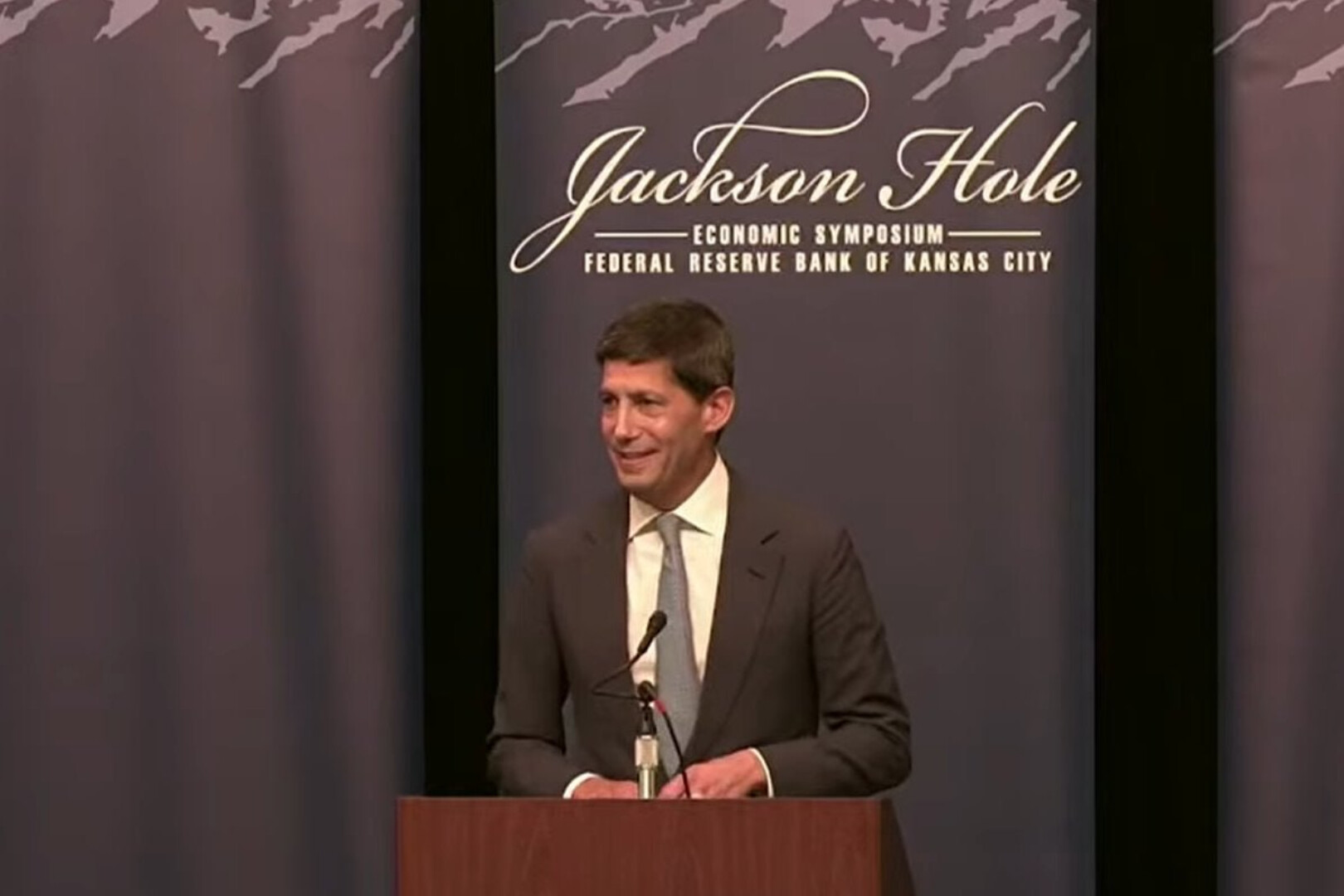
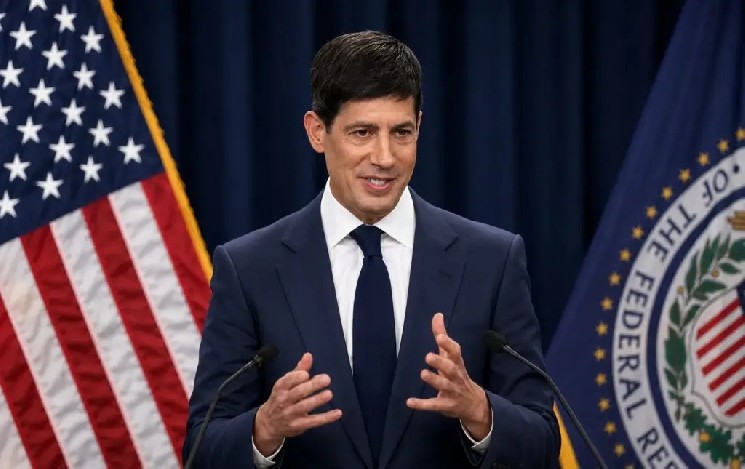
Bitcoin (BTC) saw volatility after Friday’s Wall Street open as markets reacted to US Federal Reserve chair Kevin Warsh’s comments on future monetary policy.

Key points:

  • Bitcoin initially fell during Fed chair Kevin Warsh’s Jackson Hole keynote speech before circling $79,500.
  • Warsh said he sees no trend change in inflation despite recent lower PCE and CPI prints.
  • BTC price action sustaining above $83,000 hinges on Bitcoin derivatives traders, analysis says.

Warsh: Inflation trends have not “meaningfully improved”

Data from TradingView showed BTC/USD dipping to $78,442 on Bitstamp in volatile trading conditions, down around 1% at the time of writing.
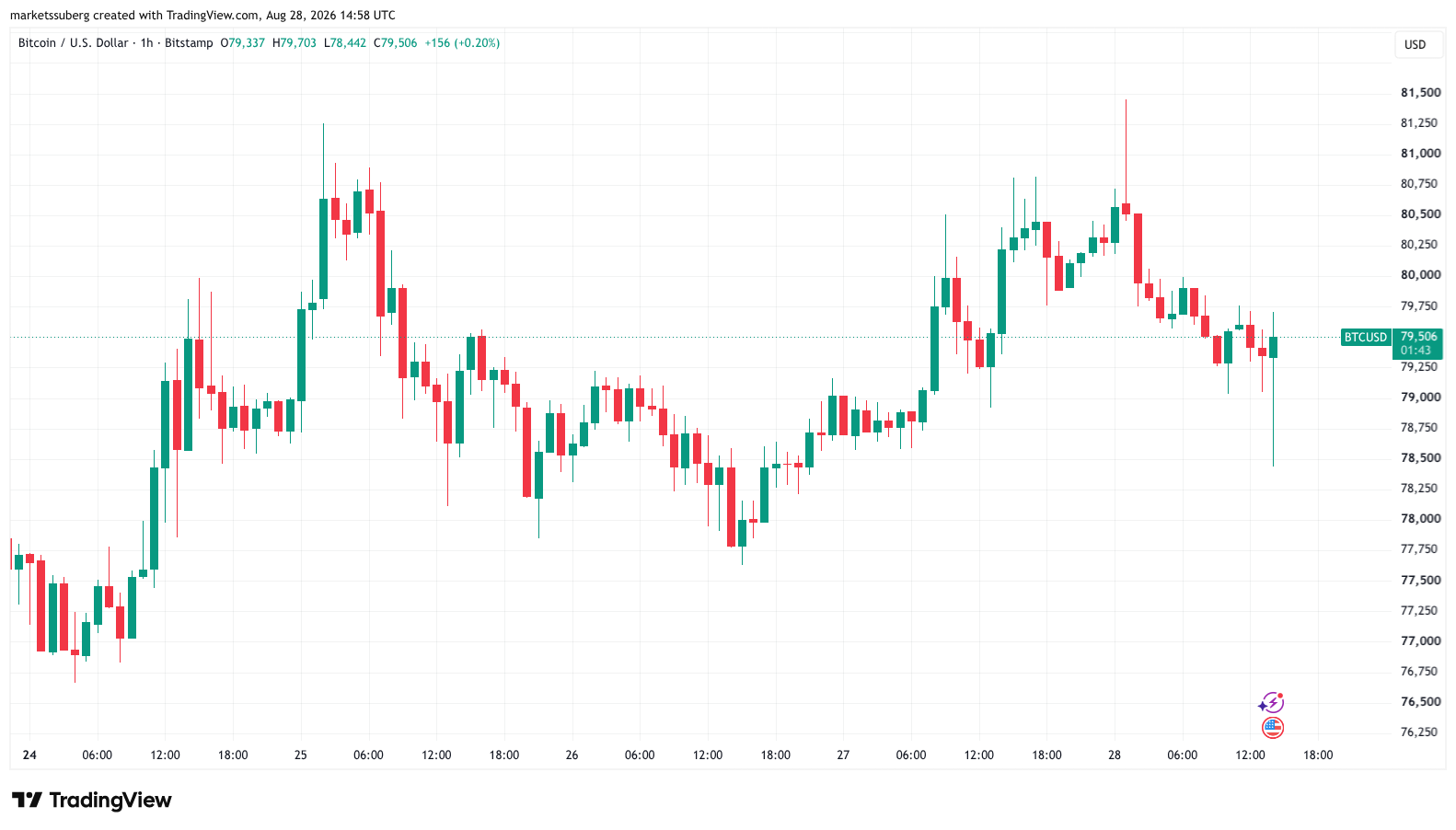
BTC/USD one-hour chart. Source: Cointelegraph/TradingView

In his first keynote speech at the annual Jackson Hole Symposium, Warsh delivered a cautionary tone on inflation, committing to the Fed’s 2% target. The Fed chair doubled down on an earlier pledge to reduce the scope of hints over future policy that the Fed offers to markets, avoiding forward guidance altogether and stating that it would not make a reappearance in the future.

“Forward guidance as a regular practice was adopted by my colleagues and me during the Global Financial Crisis. It was essential at the time, and we introduced it with much fanfare. But, as with other legacies of crises past, I believe that the practice has overstayed its welcome,” he stated.

Warsh further dismissed recent lower-than-expected inflation prints in the Consumer Price Index (CPI) and Personal Consumption Expenditures (PCE) index as a sign of a downtrend being in progress.

“Each of these broad inflation measures have fallen significantly from their highs of a few years ago, but progress through the past couple of years has been more modest, and while this summer’s PCE and CPI readings were better than expected, they do not tell me that underlying trends have meaningfully improved,” he continued.

US stocks avoided losses on the back of Warsh’s words, which also included a complimentary view of business performance and AI sector growth. Both the S&P 500 and the tech-heavy Nasdaq Composite Index were up around 0.5% at the time of writing.


Analysis stresses derivatives’ role in further BTC price gains

BTC price action thus continued to gyrate around the $80,000 mark, acting in a narrow intraday range ahead of the August monthly close.

Previously, Cointelegraph reported on expectations for the monthly close, with analysis demanding that BTC/USD break above a downward-sloping trend line and defend the 50-week exponential moving average near $77,250 to sustain the uptrend.
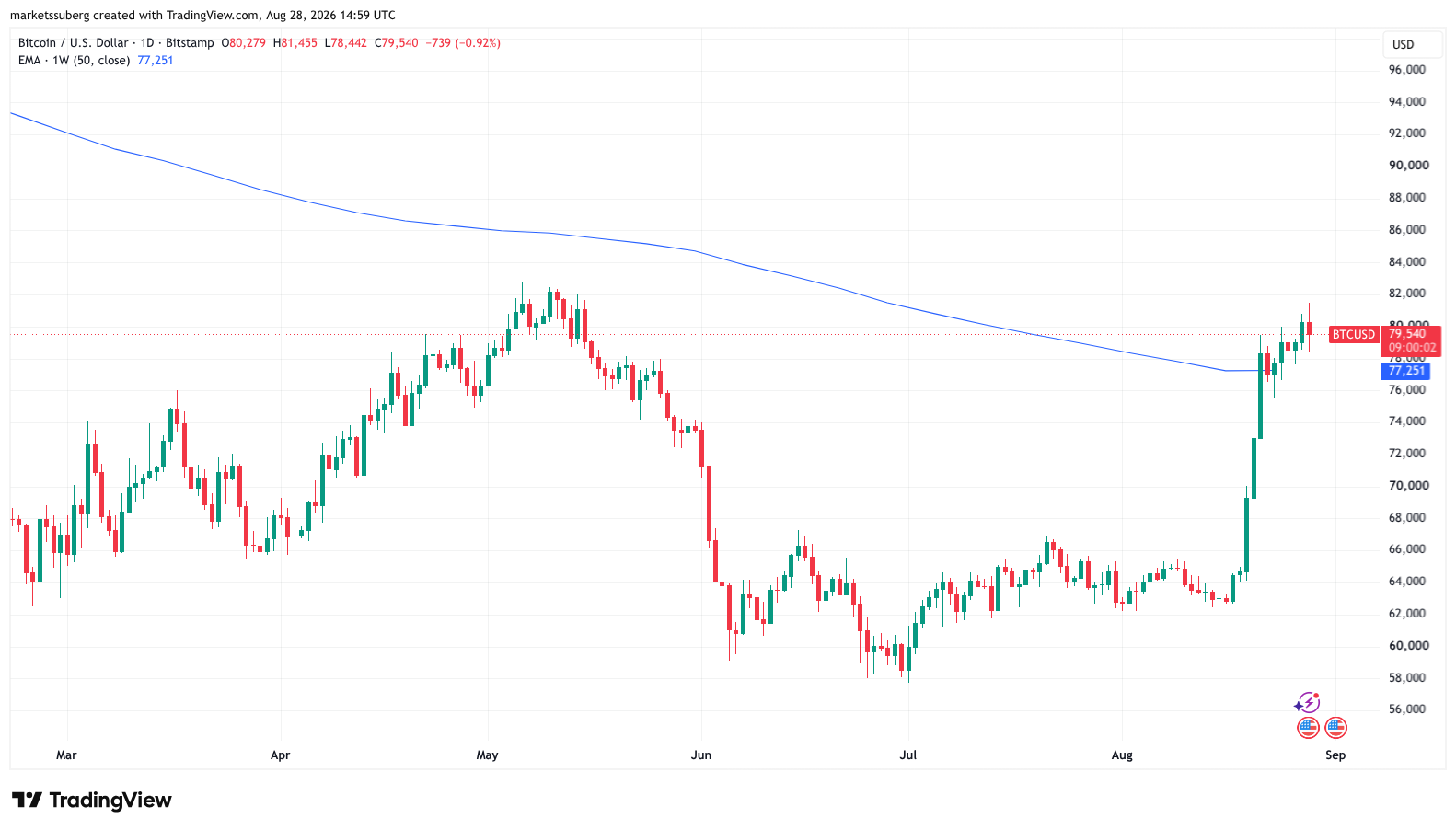
BTC/USD one-day chart with 50-month EMA. Source: Cointelegraph/TradingView

Related: Bitcoin bear market ‘over’ as price metric copies 2023 recovery: CryptoQuant CEO

Onchain data additionally revealed a thick patch of resistance between the current spot price and $86,000, slowing upside momentum.

Commenting in its latest analysis, trading company QCP Capital argued that even if price were to break higher, derivatives markets would need to provide the necessary support by keeping both funding rates and open interest growth in check.

“If price continues higher while funding remains contained and open interest rebuilds gradually, that would indicate a different market structure from one where leverage accelerates rapidly alongside price,” QCP Capital wrote, adding:

“The key distinction is therefore not simply whether BTC trades above or below $83.3k, but whether subsequent price action continues to be supported by spot participation or becomes increasingly driven by leveraged positioning.”

At the time of writing, BTC/USD was up 26.35% month-to-date, per data from CoinGlass, marking its best August performance since 2017.
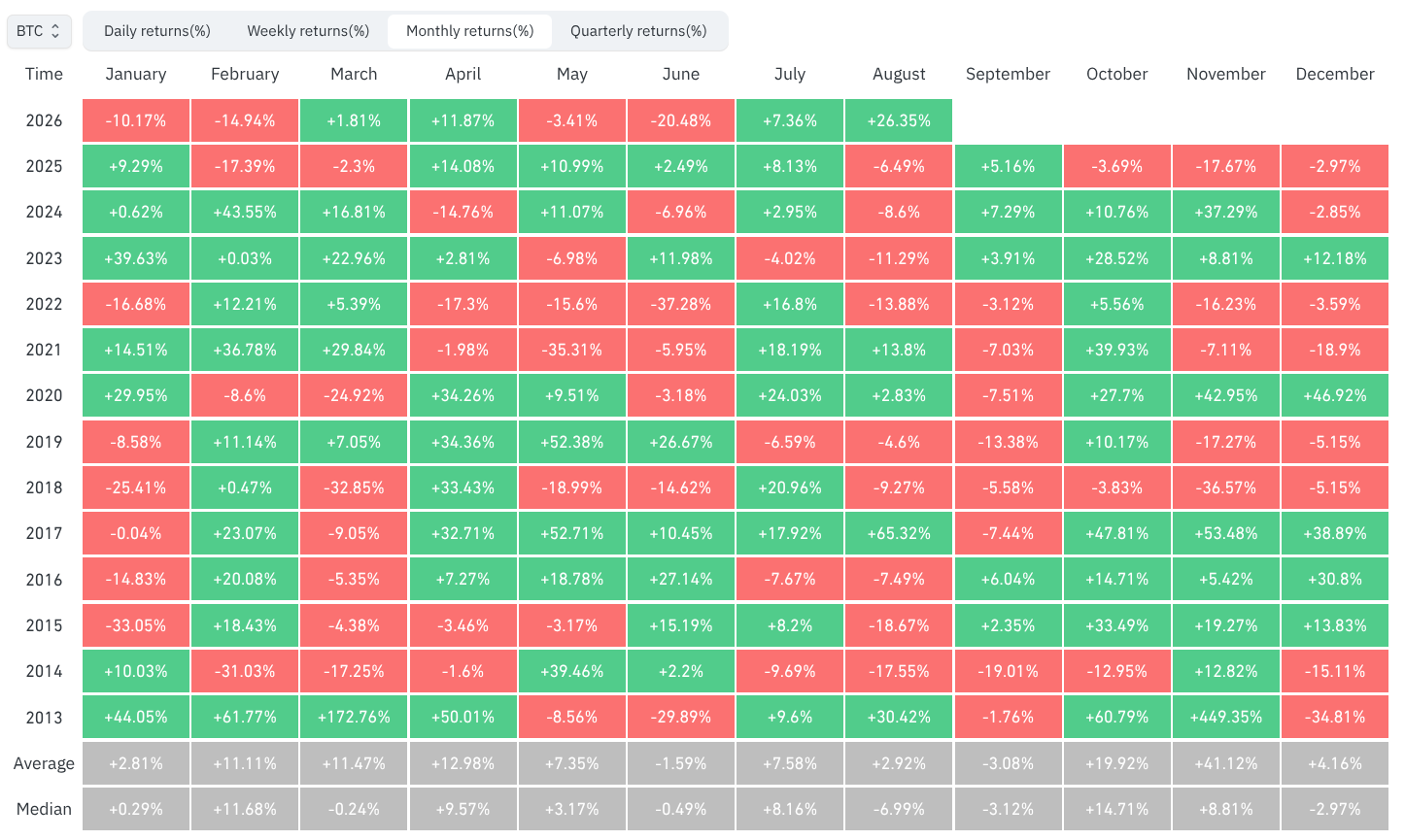
BTC/USD monthly returns (screenshot). Source: CoinGlass

Пов'язані питання

QWhat was Bitcoin's approximate price drop mentioned in the article, and what was cited as a key reason for the volatility?

ABitcoin dipped to around $78,442. The volatility was attributed to the market's reaction to Federal Reserve chair Kevin Warsh's Jackson Hole speech, where he downplayed recent softer inflation prints and maintained a cautious stance on monetary policy.

QWhat key point did Fed Chair Kevin Warsh make regarding recent inflation data from the CPI and PCE indexes?

AWarsh stated that while the recent CPI and PCE readings were better than expected, they do not indicate that the underlying inflation trends have "meaningfully improved." He dismissed them as a sign of a definitive downtrend.

QAccording to the analysis in the article, what is crucial for Bitcoin to sustain price gains above $83,000?

AThe analysis from QCP Capital argues that for Bitcoin to sustain gains above $83,000, the support must come from derivatives markets keeping funding rates contained and open interest growth gradual, indicating spot-driven participation rather than excessive leverage.

QWhat two technical levels were highlighted as important for Bitcoin to defend to sustain its uptrend?

AThe analysis noted that Bitcoin needs to break above a downward-sloping trend line and defend the 50-week exponential moving average, which was located near $77,250, to sustain the uptrend.

QHow did U.S. stock markets perform following Kevin Warsh's speech, and what was notable about Bitcoin's monthly performance for August?

AFollowing Warsh's speech, U.S. stocks avoided losses, with the S&P 500 and Nasdaq Composite Index both up around 0.5%. Bitcoin was up 26.35% month-to-date, marking its best August performance since 2017.

Пов'язані матеріали

Solana's Historic First Governance Vote Concludes: Why Did SGP-003 Spark Massive Controversy?

Solana has completed its first-ever formal on-chain governance vote, marking a shift towards decentralized decision-making. Three proposals, SGP-0001, SGP-0002, and SGP-0003, were voted on. SGP-0001, establishing the foundational governance framework, and SGP-0002, accelerating the reduction of SOL's inflation rate, both passed. However, the most contentious proposal, SGP-0003, failed to reach the required supermajority. SGP-0003 proposed a significant change to Solana's fee structure, introducing a variable "Resource Fee" based on computational unit (CU) consumption, which would be entirely burned. Supporters, including some core developers, argued it would create fairer resource pricing and increase SOL's deflationary pressure. Opponents, led by major DeFi applications like Jupiter and Drift, criticized it as an effective tax on complex applications, warning it would unpredictably increase operational costs and undermine business models built on Solana's low fees. The vote outcome highlights a critical tension within Solana's growing ecosystem: balancing the interests of SOL holders (through deflationary mechanisms), validators (through rewards), and application developers (through cost predictability). As Solana evolves from a high-performance blockchain to one hosting substantial economic activity, governance is becoming central to its future development and competitiveness.

marsbit56 хв тому

Solana's Historic First Governance Vote Concludes: Why Did SGP-003 Spark Massive Controversy?

marsbit56 хв тому

Wash's Jackson Hole Debut: Bidding Farewell to 'Forward Guidance', Reshaping Fed Discipline Amidst the Squeeze Between AI and Inflation

In his first Jackson Hole speech, new Fed Chair Kevin Warsh signaled a significant shift in monetary policy communication. He declared that "forward guidance," a tool heavily used since the financial crisis, has outlived its usefulness in normal times and should be retired. He cautioned that over-reliance on it can distort market signals and constrain the Fed's flexibility. Instead, Warsh emphasized a return to data-dependence and decision-making discipline. Warsh outlined seven key principles to guide policy: anchoring the 2% inflation target, pursuing the employment mandate, using short-term rates as the primary tool, acknowledging the importance of money, and maintaining purposeful, restrained communication. He stressed that policy should focus on trends, not single data points. On the current economic outlook, Warsh noted that the labor market is consistent with full employment but inflation remains "far above" the Fed's target. He highlighted that over half of the PCE basket's components are still rising above 3% annually. While acknowledging AI's transformative potential for productivity and capital allocation, he admitted its full economic impact remains uncertain and is not a factor in current policy decisions. His core message was a commitment to policy discipline rather than pre-set decisions. Warsh stated the Fed's primary focus must be on restoring price stability, vowing, "We still have work to do," until there is clear evidence inflation is moving decisively toward 2%. He concluded by framing effective monetary policy as crucial for economic prosperity and U.S. global leadership.

Odaily星球日报1 год тому

Wash's Jackson Hole Debut: Bidding Farewell to 'Forward Guidance', Reshaping Fed Discipline Amidst the Squeeze Between AI and Inflation

Odaily星球日报1 год тому

Торгівля

Спот
活动图片