Binance Alpha Cools Down: User Count Drops 60%, Is No One Claiming 'Eggs' Anymore?

marsbitОпубліковано о 2026-01-28Востаннє оновлено о 2026-01-28

Анотація

Binance Alpha, once hailed as a lucrative platform for earning token airdrops, has seen a significant decline in user engagement and profitability. According to data from Alpha123, the number of users dropped by over 60%, from nearly 500,000 in November 2025 to around 200,000 by January 2026. Monthly earnings per account have also fallen sharply, with the theoretical maximum for January estimated at approximately $715.7—far below the $2,000 monthly profits seen in mid-2025. The platform’s become more challenging due to rising积分门槛 (score thresholds), which recently reached as high as 257 points. In some cases, users cannot meet the threshold through daily activities alone. For example, earning 15 points requires approximately $32,700 in trading volume, which—for retail traders—could mean around 100 trades per day. This results in high transaction costs, including fees and potential slippage, especially when trading volatile tokens. While some early participants earned significant returns from a few high-value airdrops, such opportunities are now rare. Most airdrops now yield below $50, and increased competition—including automated trading by studios—has made it harder for ordinary users to profit. Many are now questioning whether the effort and risk remain worthwhile, especially as platform incentives appear to be shifting away from high-frequency rewards toward more measured engagement.

"Every generation has its eggs to claim, and perhaps for our generation, it's Binance Alpha," said He Yi, Co-CEO of Binance, in late December 2025.

However, over time, according to data statistics from the Alpha123 platform, the number of Binance Alpha users has dropped from nearly 500,000 in November 2025 to about 200,000 today, a decline of over 60%.

At the same time, overall returns have significantly decreased. The "farming" sector, which once generated monthly earnings of over $2,000 per account in mid-2025, is no longer as prosperous.

According to Alpha123 platform statistics, the current daily active users of Binance Alpha are approximately 203,000. As of January 28, a total of 18 airdrops were distributed this month, with claimable shares ranging from 13,000 to 72,000. The average number of claimable shares is about 33,000, accounting for roughly 16.2% of the average daily active users.
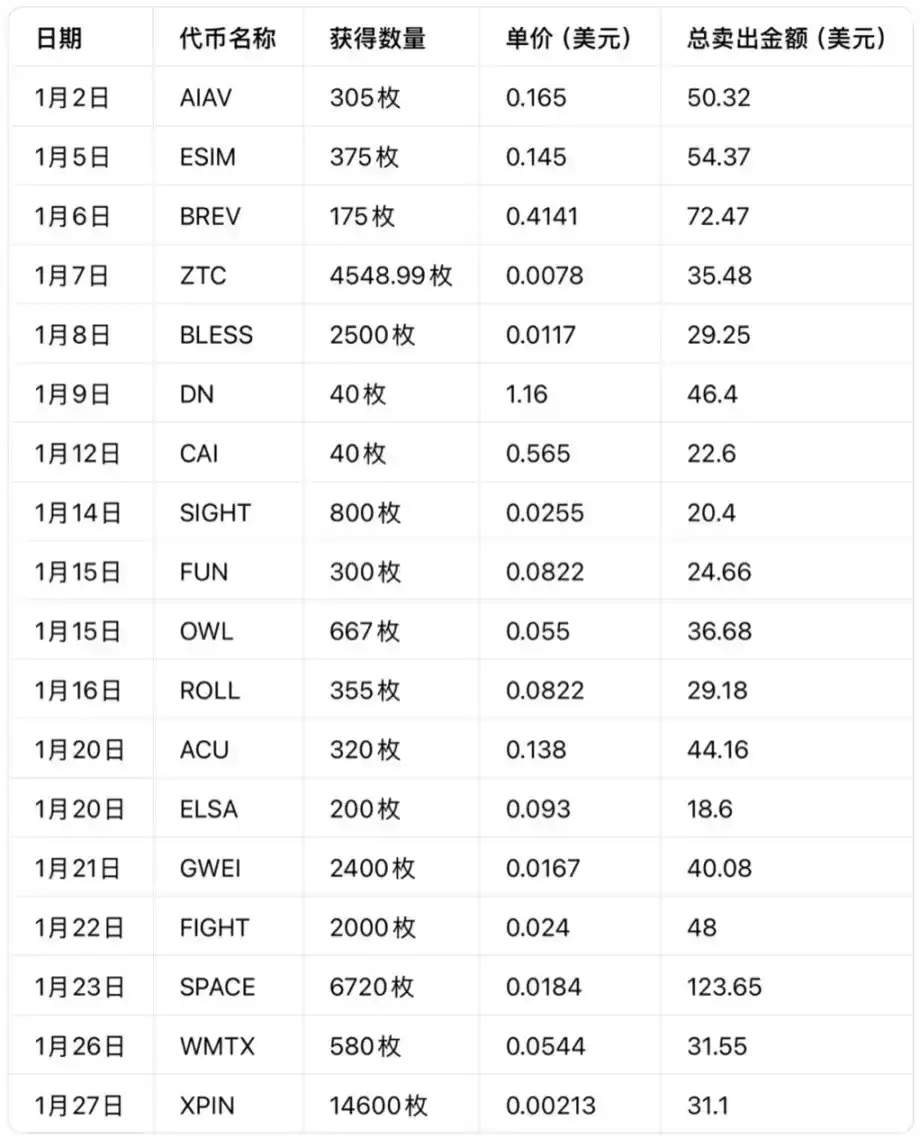
As of January 28, only one of the 18 Alpha rounds this month had a single-round return exceeding $100, which was SPACE at $123.65 (calculated based on the latest opening price 10 minutes after trading began). Meanwhile, 14 rounds had returns below $50, with the lowest round, ELSA, yielding only $18.60.

This month, the minimum Alpha points threshold was 230, while the highest reached 257 points. On January 26, the claim threshold for the Alpha token WMTX was as high as 241 points, but the single-round return was only $31.55. If a user earns 16 points per day, since Alpha points reset every 15 days, theoretically, 240 points can be accumulated in 15 days. Once the threshold exceeds 240 points, it becomes impossible to meet the requirement within a single cycle. For example, the 241 points required for WMTX mean that relying solely on stable daily point accumulation cannot meet the threshold within one cycle.
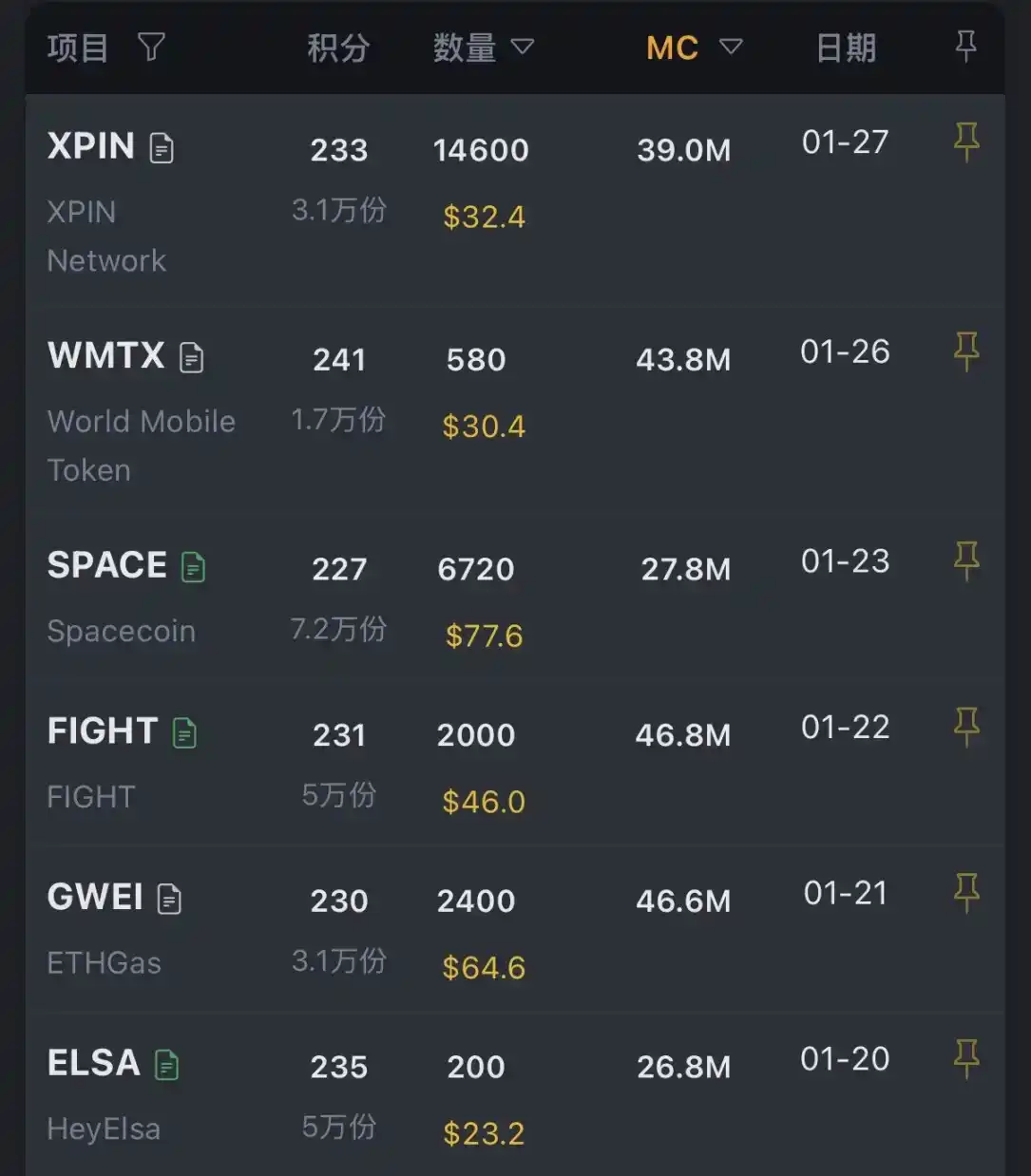
Compared to the period in mid-2025 when single-account monthly income approached $2,000, the theoretical cumulative return for the first 18 rounds this January is approximately $715.70. This figure is based on the premise that "the points threshold is met for every round, and the maximum number of rounds is successfully claimed." However, if a user earns 16 points per day, the maximum number of rounds that can actually be claimed is 5, with returns of about $261.43.

Taking SPACE, which had a return of over $100 in a previous round, as an example, the claim threshold was 227 points, and each claim required 15 points. If a user automatically earns 1 point per day through account balance, the remaining points must be obtained through trading. According to the current relationship between points and trading volume, earning 15 points requires completing approximately $32,700 in trading volume. For mainstream participants with a single trade size of about $330, this equates to completing 100 trades per day.
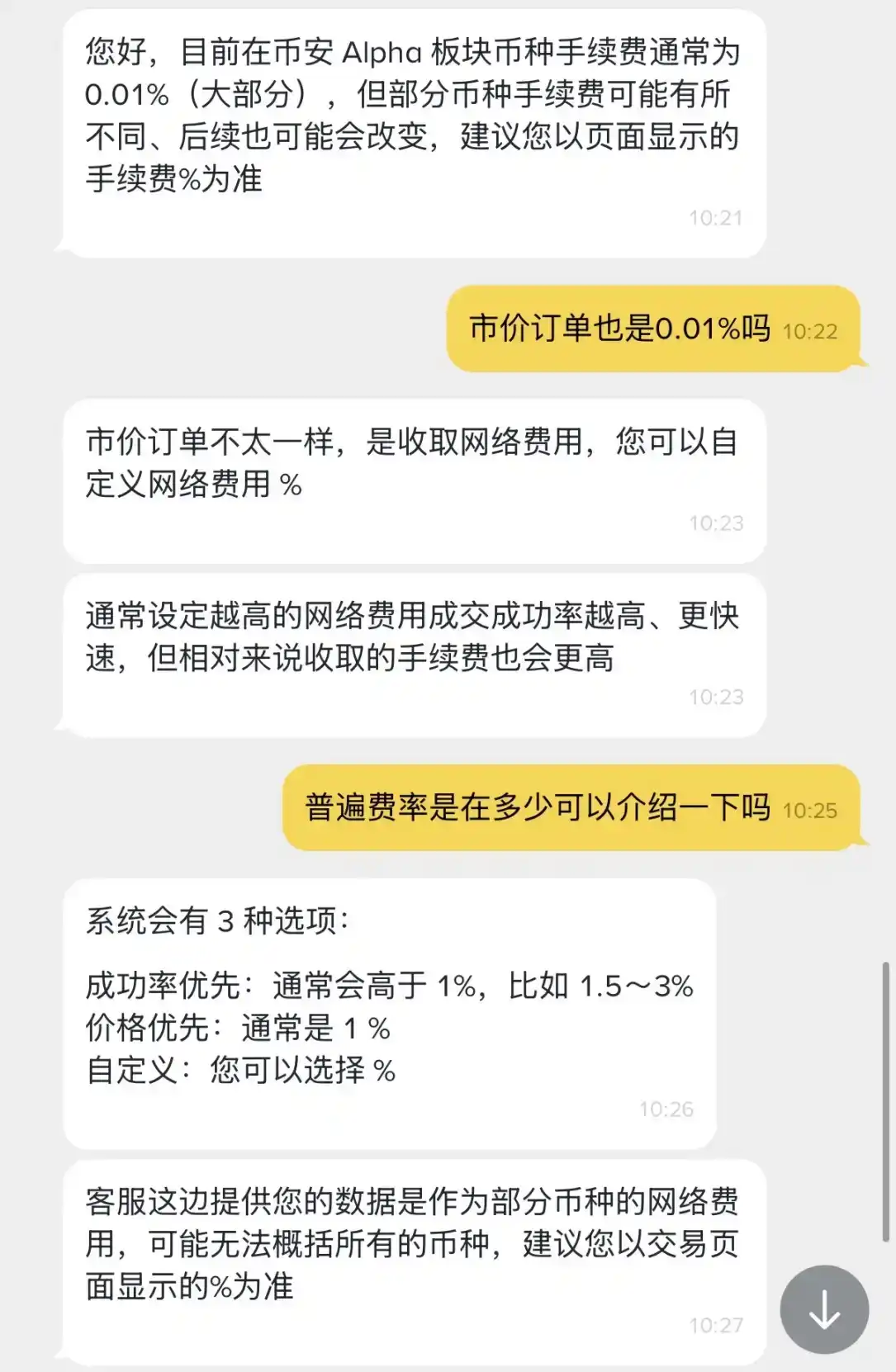
According to the author's investigation, the current limit order fee for the Binance Alpha sector is 0.01%, while the market order fee is typically 1%. If market orders are used to achieve $32,700 in trading volume, at least $327 in fees must be paid daily, excluding price slippage. If trading Alpha sector tokens in the Binance wallet, each transaction incurs a 0.01% service fee and a 0.01% trading fee, with a network fee of about $0.10 per transaction. For a daily trading volume of $32,700, approximately $17 in fees must be paid. If points are accumulated continuously for 15 days to reach 240 points, the minimum cost is $255. Additionally, claiming one Alpha round requires consuming 15 points, which equates to a cost of $17.

To reduce the pressure of the number of trades, the platform occasionally launches multiplier point events, which lower the "number of trades threshold" to some extent but simultaneously amplify price risks. Under a 4x points mechanism, theoretically, only about 25 trades of $330 each are needed daily to earn 15 points. However, such tokens typically experience more剧烈 volatility and have limited liquidity depth, meaning price slippage and short-term fluctuations can quickly erode potential returns.
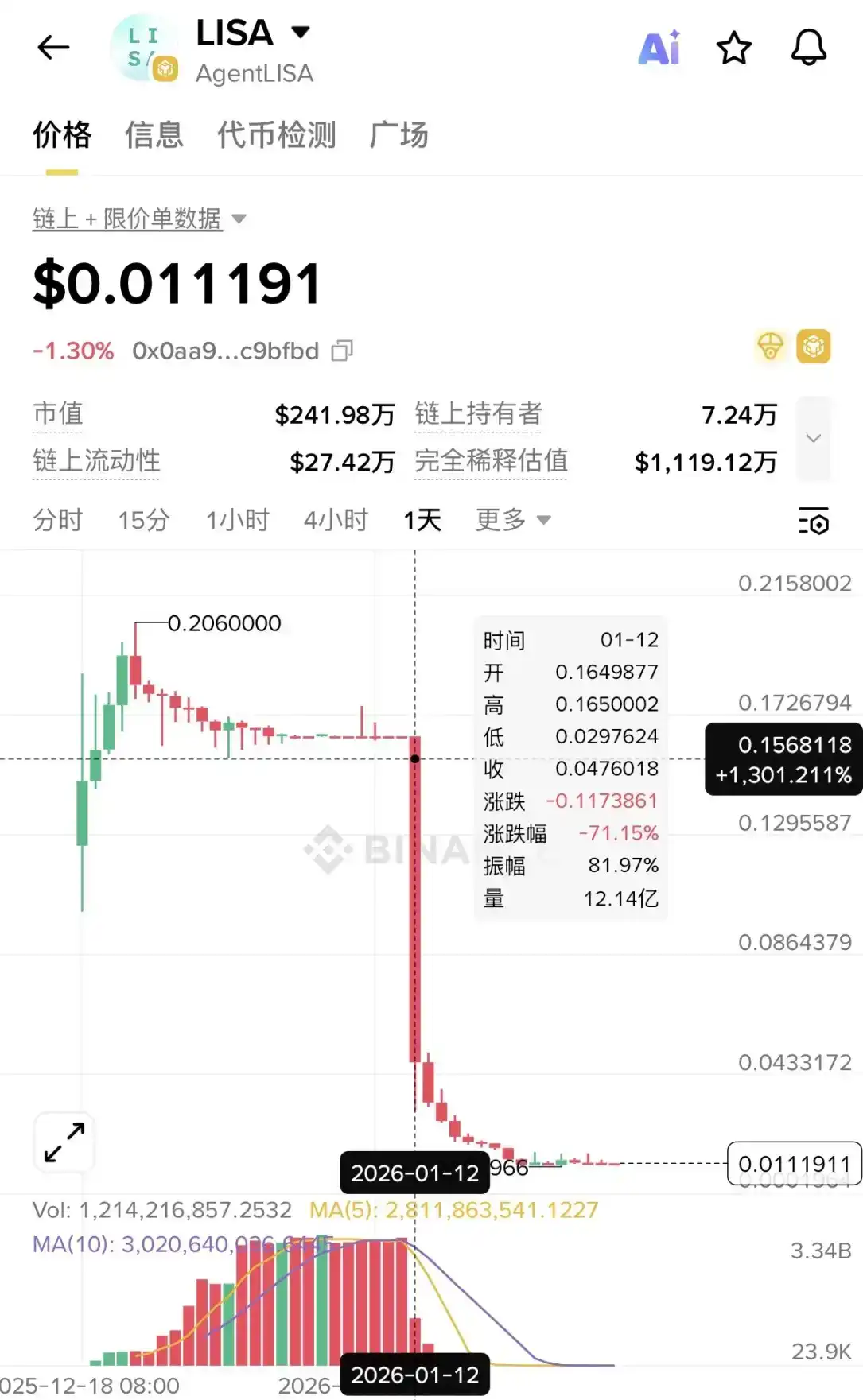
The case of LISA on January 12 became a typical example. The token attracted a large amount of刷量资金 due to its 4x Alpha points incentive, but it experienced concentrated selling within a short period, with a maximum drop of over 80% within 24 hours. The sharp price decline caused some users to incur trading losses far exceeding the airdrop value while earning points.

For users who continue to participate in Alpha, the most direct question is often not "can I still make money" but "is it worth continuing to farm."

Some early participants achieved returns far above the average on certain projects. For example, the 59.82 RIVER tokens obtained on September 19, 2025, if held until now, would be worth about $3,200 at current prices. The 644 MYX tokens obtained on May 6, 2025, are worth about $3,870 at current prices, and if sold at the historical high, the returns would exceed $11,000.

However, such "rare diamond-level big catches" are not consistently replicable. In the current environment of shrinking single-round returns, rising thresholds, and increased volatility, most rounds are closer to small,分散, and uncertain returns. Users are more likely to focus on the overall input-output ratio rather than个别极端收益案例.

The Alpha model本质上 involves exchanging real trading behavior for early token distribution opportunities from projects. Its sustainability relies on the continuous emergence of projects with market performance. When the market enters a stage of存量博弈, the number of high-quality projects is limited, while the number of participants continues to grow, naturally diluting the expected returns for individual users.

At the same time, the core purpose of Alpha in its early stages was to attract traffic for new projects, activate on-chain interactions, and increase user engagement with the Binance wallet ecosystem. During the early high-incentive phase, this goal was clearly achieved, and Alpha一度 became a significant source of user activity and trading volume.
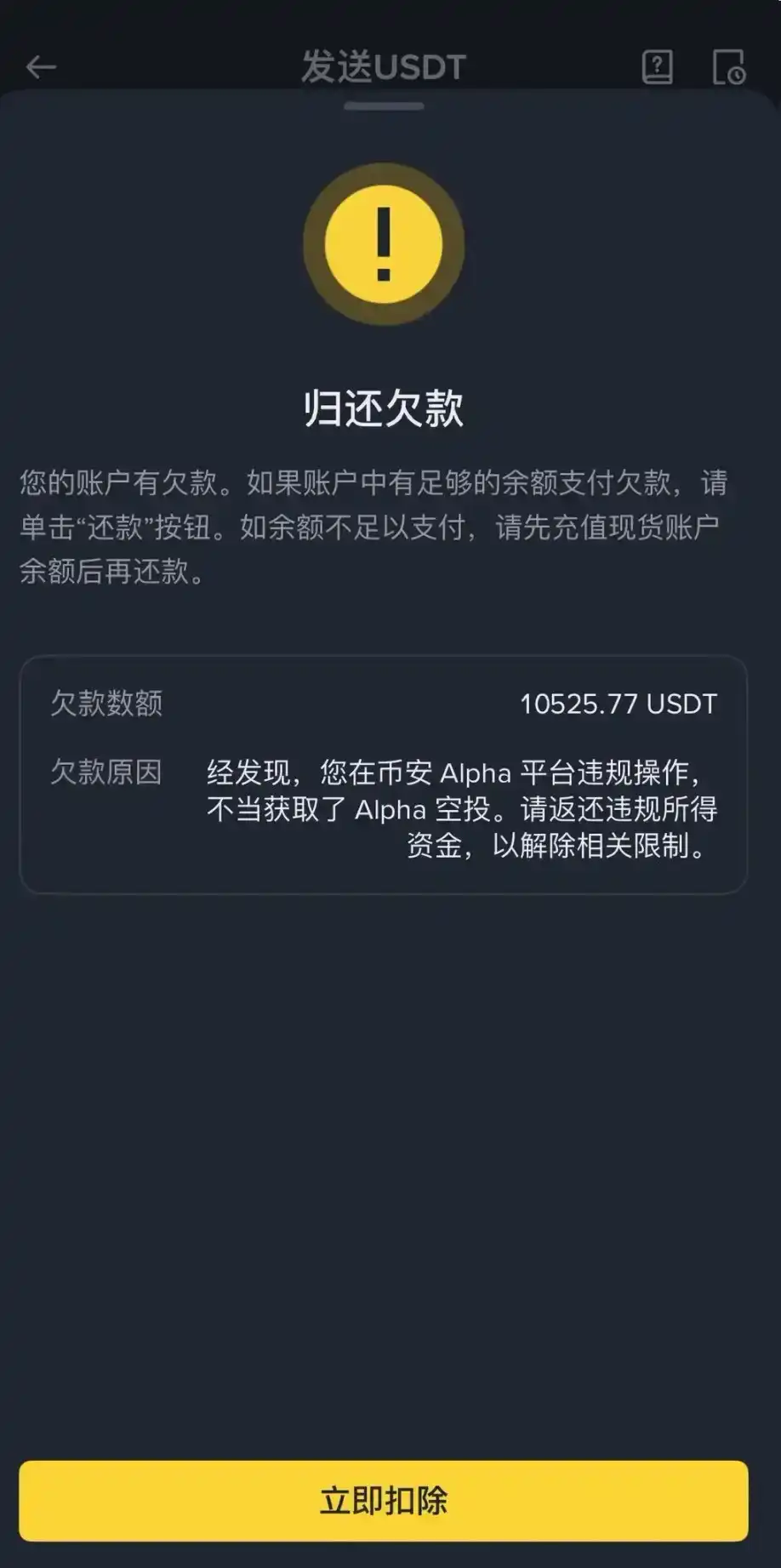
However, as刷量行为, batch operations by studios, and high-frequency gaming intensified, the incentives gradually became套利化. In November 2025, Binance imposed restrictions on some accounts identified as batch-operated by studios and required the return of related earnings. This move showed the platform's effort to压缩异常行为空间, but the community generally believes that automated tools have advantages in efficiency and cost control, putting manual普通用户 at a growing disadvantage in the points competition. Some participants反馈 that in the current environment of high points thresholds and market volatility, continued participation not only yields unstable returns but may also result in net losses due to price fluctuations of the刷量代币, leading them to reduce frequency or even withdraw.

For ordinary users, Alpha is no longer a channel where stable returns can be obtained simply through frequency. Instead, it has become more of a strategic choice requiring careful calculation of costs and risks.


Пов'язані питання

QWhat is the main reason for the decline in Binance Alpha's user base according to the article?

AThe decline is attributed to decreased overall returns, higher participation thresholds, increased volatility, and the platform's crackdown on batch operations by studios, making it less profitable and more risky for ordinary users.

QHow much has the user count of Binance Alpha dropped from its peak?

AThe user count has dropped by over 60%, from nearly 500,000 in November 2025 to about 200,000 currently.

QWhat was the highest single-account monthly income during Binance Alpha's peak period in mid-2025?

ADuring the peak period in mid-2025, a single account could earn nearly $2000 per month.

QWhat challenges do users face in earning enough Alpha points to qualify for airdrops?

AUsers face challenges such as high transaction volumes required to earn points (e.g., $32,700 in trading volume for 15 points), high fees, price slippage, and increased volatility, especially during multiplier events.

QHow did Binance address the issue of batch operations by studios on Alpha?

ABinance imposed restrictions on accounts identified as batch operations by studios in November 2025 and required the return of related earnings to combat abusive practices.

Пов'язані матеріали

Bitcoin's 'Rally Ends,' Officially Entering the Later Stage of a Bear Market?

Bitcoin prices declined 13% this week, reversing the recent rebound and signaling a likely transition into the later stages of a bear market. Key on-chain metrics deteriorated, with the short-term holder cost basis falling below the Realized Price—a pattern last seen in early 2022, characteristic of bear market maturity. The rally to ~$82k proved to be a bear market bounce, as evidenced by the 90-day realized profit/loss ratio failing to sustain above the bullish threshold of 2. Daily realized losses surged to $1.35B, including significant selling from long-term holders who accumulated near cycle tops, indicating ongoing supply redistribution. Price was rejected almost precisely at the aggregate US spot ETF cost basis of ~$83k, turning that level into resistance and leaving the average ETF investor underwater again. Spot market selling pressure intensified, with the 7-day volume delta turning significantly negative to its weakest level since February. While a major long liquidation event cleared over $400M in leverage, spot demand has not yet stepped in to absorb the resulting supply. Options markets continue pricing in higher future volatility (elevated volatility risk premium) and maintain a skew toward put options, reflecting persistent demand for downside protection, though not yet panic. Overall, market structure remains fragile. Sustained recovery likely requires a reclaim of the ETF cost basis, a shift back to positive spot demand, and a slowdown in realized loss-taking. Until then, the market risks further downside or extended consolidation within the broader bear trend.

Foresight News29 хв тому

Bitcoin's 'Rally Ends,' Officially Entering the Later Stage of a Bear Market?

Foresight News29 хв тому

How Risky is the "Death Spiral" of MSTR and STRC?

Summary: This article explores the perceived "death spiral" risk between MicroStrategy (MSTR), its Bitcoin holdings, and its perpetual preferred stock (STRC), drawing comparisons to the LUNA-UST collapse. While both systems feature price anchors, high yields for holders, and potential feedback loops, their core mechanisms differ fundamentally. The MSTR-STRC structure relies on continuous financing to sustain its high dividend payouts, primarily through stock ATM offerings. A negative feedback cycle could occur: falling MSTR stock price makes raising equity capital harder, increasing pressure to sell Bitcoin, which undermines STRC confidence and further depresses MSTR. However, unlike LUNA-UST's automated, direct linkage, the MSTR-STRC loop is weaker and has brakes: STRC dividends can be deferred or rates lowered, and STRC holders have a $100/share liquidation preference in bankruptcy, providing a price floor. The company's sustainability hinges on its ability to continue financing. Its current ~$900 million USD reserves cover only about 6.3 months of its ~$1.71 billion annual interest/dividend burden. The next six months are critical, aligning with both the potential bottom in Bitcoin's four-year cycle and the depletion timeline of its reserves. While a LUNA-style catastrophic collapse is deemed highly unlikely due to structural differences, the key question is whether MicroStrategy can navigate this period through healthy deleveraging to restart its capital engine.

Foresight News47 хв тому

How Risky is the "Death Spiral" of MSTR and STRC?

Foresight News47 хв тому

How Much Debt Does Strategy Really Have? Is There a Risk of Implosion?

MicroStrategy's Debt Risk: A Turning Point in the "Never Sell" Strategy As of June 3, 2026, MicroStrategy holds 843,706 bitcoins (valued at ~$53.1B) but faces significant financial obligations. Its capital structure includes $6.75B in convertible notes and $15.48B in perpetual preferred stock (led by the $8.5B STRC series), creating an annual payout burden of ~$1.71B. With software revenue at only ~$500M, interest and dividend obligations far exceed operating income. A critical shift occurred in late May 2026 when the company sold 32 bitcoins for ~$2.5M to cover dividends, breaking CEO Michael Saylor's long-standing "never sell" pledge. This symbolic move triggered a sharp decline in both Bitcoin's price and MSTR stock, reflecting market fears about cash flow sustainability. The core of the strain is the STRC perpetual preferred stock, designed as a "permanent loan" with no maturity date but requiring high monthly dividends (currently 11.5%). Its business model relies on a three-part cycle: issuing new STRC shares, using proceeds to buy more Bitcoin and fund a USD reserve, and using that reserve to pay dividends. This cycle depends on continuous investor demand for STRC and Bitcoin's price appreciation. Analysis shows Bitcoin needs to appreciate at least 2.3% annually to cover the $1.71B in yearly obligations at current holdings. With Bitcoin price down ~22% from March 2026 highs, this pressure has intensified. The company's $900M USD reserve can only cover about 7 months of payments if STRC issuance stalls. Key risks are not immediate bankruptcy or forced Bitcoin liquidation (as BTC is not collateral), but rather: 1) The erosion of MSTR's premium to its Bitcoin holdings (mNAV), which would cripple its ability to raise cheap capital; 2) A vicious cycle where stagnant Bitcoin prices reduce STRC demand, draining the USD reserve and forcing BTC sales, further depressing prices. The period from February 2027 to September 2028 is a crucial test, with over $5.9B in convertible notes facing put options or maturity. In essence, MicroStrategy has evolved from a simple Bitcoin holder into a complex financial entity acting like a "private Bitcoin bank," leveraging its BTC holdings to create layered financial products. Its survival depends on maintaining Bitcoin's price trend, its stock premium, and market appetite for its preferred shares. The recent token sale marks not a betrayal of its Bitcoin thesis, but an admission that the leveraged strategy must eventually be paid for.

marsbit57 хв тому

How Much Debt Does Strategy Really Have? Is There a Risk of Implosion?

marsbit57 хв тому

Anthropic Cries Wolf: Is the AGI Threat Real, or Just an IPO Story?

Anthropic has published an article titled "When AI builds itself," discussing the emerging concept of "recursive self-improvement," where AI begins to actively participate in designing, training, testing, and optimizing its own subsequent versions. The company presents internal data showing that by May 2026, over 80% of code merged into its codebase was written by Claude, its AI model. Claude's capabilities have expanded to handling complex, open-ended engineering tasks, achieving a 76% success rate in such areas, and even contributing to research processes, such as optimizing code performance and conducting AI safety experiments. Anthropic outlines an evolution from human-driven development to AI-assisted workflows, culminating in the current stage where AI agents can autonomously write, run, and delegate code. The company cautions that the path toward a "closed loop," where AI continuously improves itself, is becoming visible. It calls for coordinated global mechanisms to potentially slow or pause frontier AI development to allow safety research and societal structures to catch up. However, the timing of this warning coincides with Anthropic's preparations for an IPO, framing the narrative not just as a safety concern but also as a demonstration of Claude's advanced capabilities and its integral role in accelerating Anthropic's own R&D—creating a potential "flywheel" effect for competitive advantage. This contrasts with OpenAI's recent, more policy-oriented discussion of the same risks, highlighting the competitive dynamics in the AI industry as companies position themselves in both the technological and regulatory landscape.

marsbit1 год тому

Anthropic Cries Wolf: Is the AGI Threat Real, or Just an IPO Story?

marsbit1 год тому

Торгівля

Спот
Ф'ючерси

Популярні статті

Як купити ONE

Ласкаво просимо до HTX.com! Ми зробили покупку Harmony (ONE) простою та зручною. Дотримуйтесь нашої покрокової інструкції, щоб розпочати свою криптовалютну подорож.Крок 1: Створіть обліковий запис на HTXВикористовуйте свою електронну пошту або номер телефону, щоб зареєструвати обліковий запис на HTX безплатно. Пройдіть безпроблемну реєстрацію й отримайте доступ до всіх функцій.ЗареєструватисьКрок 2: Перейдіть до розділу Купити крипту і виберіть спосіб оплатиКредитна/дебетова картка: використовуйте вашу картку Visa або Mastercard, щоб миттєво купити Harmony (ONE).Баланс: використовуйте кошти з балансу вашого рахунку HTX для безперешкодної торгівлі.Треті особи: ми додали популярні способи оплати, такі як Google Pay та Apple Pay, щоб підвищити зручність.P2P: Торгуйте безпосередньо з іншими користувачами на HTX.Позабіржова торгівля (OTC): ми пропонуємо індивідуальні послуги та конкурентні обмінні курси для трейдерів.Крок 3: Зберігайте свої Harmony (ONE)Після придбання Harmony (ONE) збережіть його у своєму обліковому записі на HTX. Крім того, ви можете відправити його в інше місце за допомогою блокчейн-переказу або використовувати його для торгівлі іншими криптовалютами.Крок 4: Торгівля Harmony (ONE)Легко торгуйте Harmony (ONE) на спотовому ринку HTX. Просто увійдіть до свого облікового запису, виберіть торгову пару, укладайте угоди та спостерігайте за ними в режимі реального часу. Ми пропонуємо зручний досвід як для початківців, так і для досвідчених трейдерів.

346 переглядів усьогоОпубліковано 2024.12.12Оновлено 2026.06.02

Як купити ONE

Обговорення

Ласкаво просимо до спільноти HTX. Тут ви можете бути в курсі останніх подій розвитку платформи та отримати доступ до професійної ринкової інформації. Нижче представлені думки користувачів щодо ціни ONE (ONE).

活动图片