Belarus Opens Door To Crypto Banks With New Presidential Decree

bitcoinistОпубліковано о 2026-01-17Востаннє оновлено о 2026-01-17

Анотація

Belarus has taken a significant step toward integrating cryptocurrency with traditional finance by issuing Presidential Decree No. 19, which establishes a legal framework for "cryptobanks." These entities, defined as joint-stock companies, will be permitted to conduct token operations alongside conventional banking and payment services. To operate, cryptobanks must be residents of the Belarus High-Tech Park (HTP) and will be registered in a special National Bank list. They will be subject to dual oversight from both the National Bank and HTP authorities, adhering to standards on capital, risk management, and anti-money laundering. Officials anticipate the first cryptobank could launch within six months, offering services such as crypto-backed loans, crypto-linked payment cards, and token salary payments for self-employed individuals. The move reinforces Belarus's strategy to formalize and attract digital asset businesses.

Belarus took a major step on January 16, 2026, when President Aleksandr Lukashenko signed Decree No. 19 to set rules for so-called “cryptobanks.” The move creates a clear legal spot for companies that want to mix token services with classic banking and payment work.

Decree Defines Cryptobanks And Rules

According to the decree, a cryptobank is a joint-stock company that may carry out token operations alongside banking, payment and other financial services.

Reports have disclosed that these firms must be residents of the Belarus High-Tech Park (HTP) and will be listed in a special register kept by the National Bank.

The new document ties cryptobank status to HTP residency, which aims to concentrate activity inside a known tech zone. That requirement also means the HTP’s rules will play a role in daily oversight.

Requirements For Market Entry

Based on reports from regulators, cryptobanks will face dual supervision: oversight from both the National Bank of the Republic of Belarus and the HTP’s governing bodies. This twin structure is meant to let token services grow while keeping closer control of financial risks.

BTCUSD trading at $95,519 on the 24-hour chart: TradingView

Officials say cryptobanks will follow many of the rules that apply to non-bank credit and financial organizations, including standards for capital, risk controls and anti-money-laundering checks.

That suggests applicants will need to show robust compliance systems before being accepted into the register.
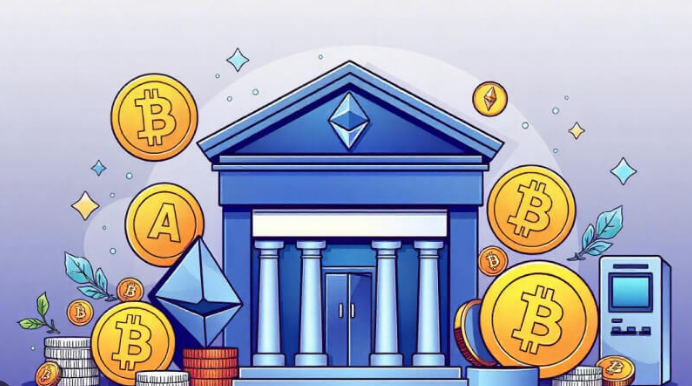
Image: Altorise

Belarus: Short-Term Business Plans

National Bank officials said that the decree could be followed by real market steps fast. Aliaksandr Yahorau, the First Deputy Chairman of the National Bank, said Belarus could see its first operating cryptobank within six months after laws and rules are aligned.

He added that cryptobanks may be able to issue loans secured by cryptocurrency, provide payment cards linked to crypto accounts, and allow self-employed people to receive salaries in tokens.

What Comes Next For Belarus

The decree builds on earlier efforts to attract tech and crypto business to Belarus, and it clearly signals a state interest in bringing token activity under formal control.

The next steps will include drafting implementing rules, creating the special registry at the National Bank, and deciding capital and licensing thresholds for applicants.

Featured image from Unsplash, chart from TradingView

Пов'язані питання

QWhat is the main purpose of Decree No. 19 signed by President Aleksandr Lukashenko on January 16, 2026?

AThe main purpose of Decree No. 19 is to create a clear legal framework for 'cryptobanks,' which are companies that combine token operations with traditional banking and payment services.

QWhat are the two supervisory bodies that will oversee cryptobanks in Belarus?

ACryptobanks will be under the dual supervision of the National Bank of the Republic of Belarus and the governing bodies of the High-Tech Park (HTP).

QWhat is a key requirement for a company to be recognized as a cryptobank in Belarus?

AA key requirement is that the company must be a resident of the Belarus High-Tech Park (HTP) and will be listed in a special register maintained by the National Bank.

QAccording to the First Deputy Chairman of the National Bank, what are some of the services that cryptobanks may be able to provide?

ACryptobanks may be able to issue loans secured by cryptocurrency, provide payment cards linked to crypto accounts, and allow self-employed people to receive salaries in tokens.

QWhat are the next steps following the signing of the presidential decree on cryptobanks?

AThe next steps include drafting implementing rules, creating the special registry at the National Bank, and deciding on the capital and licensing thresholds for applicants.

Пов'язані матеріали

TechFlow Intelligence: Trump-Linked Companies Transfer $12 Million in Assets Before China Visit, 'The Big Short' Protagonist Warns of Stock Market Bubble Again

The article reports multiple developments across tech, crypto, and finance. In AI, Mozilla used AI for large-scale code review, Google confirmed hackers used AI to find zero-day exploits, and OpenAI deployed GPT-5.5 to find errors in math benchmarks. A court ruled Anthropic's scanning and destroying books for AI training as fair use, while its Claude platform launched on AWS. Google's new video model 'Omni' was leaked. In crypto/Web3, Trump-linked companies transferred $12M in crypto assets before a China visit. BlackRock chose Ethereum for tokenized funds, and a hacker stole $174k via a malicious NFT that tricked an AI. Jack Dorsey's first tweet NFT plummeted from $2.9M to under $5. In chips/hardware, TSMC approved an additional $20B for its Arizona plant. Apple's Tim Cook and Elon Musk will accompany Trump to China, while Nvidia's Jensen Huang is notably absent. For markets, Michael Burry warned of parabolic stock rises and suggested near-total sell-offs, with online discussions comparing current sentiment to the 1999 bubble. Other notes include WTI oil surpassing $100, a 20% price hike for Beijing-Shanghai high-speed rail, and new products like Unitree's $26.9k humanoid robot. The underlying theme suggests AI is becoming infrastructure, creating pressure on old systems while a new order is not yet ready, leaving investors anxious.

marsbit5 хв тому

TechFlow Intelligence: Trump-Linked Companies Transfer $12 Million in Assets Before China Visit, 'The Big Short' Protagonist Warns of Stock Market Bubble Again

marsbit5 хв тому

2026 New Policy Interpretation: The "Mutual Pursuit" of Intelligent Agents and AI Terminals, and the Three Major Value Reconstructions in the AIoT Industry

In May 2026, China's national ministries released two pivotal policy documents that jointly establish a strategic "dual-track" framework for the AIoT industry. The "Intelligent Agent Standardized Application and Innovation Development Implementation Opinions" defines the "soul"—positioning intelligent agents as core AI products. The "Artificial Intelligence Terminal Intelligence Grading" national standard defines the "body"—establishing a four-tier capability ladder (L1 to L4) for AI hardware. This synchronized policy approach is globally unique, moving beyond market-led (US) or risk-focused (EU) models. It frames AIoT as a new type of "intelligent infrastructure," comparable to electricity or the internet in historical significance. The core analysis identifies a value evolution from IoT 1.0 (connection) to AIoT 4.0 (collaboration, represented by the forward-looking L4 level). This "L4" signifies a paradigm shift: from users operating tools to delegating tasks to agent-like devices ("Intelligent Action of All Things"). The article outlines three strategic paths for companies: becoming Standard Definers, Scenario Integrators (focusing on 19 specified application areas), or Infrastructure Builders. A critical 18-24 month window is identified for strategic positioning. A "Four Levers" strategy is proposed: leveraging Standards (L-level certification), leveraging Scenarios (deep vertical focus), leveraging Open Source (for cost reduction and ecosystem influence), and leveraging Momentum (engaging in global protocol ecosystems). In conclusion, these policies are a starting gun for a decade-long industrial transformation, shifting the industry narrative from "Intelligent Connection of All Things" to "Intelligent Action of All Things," with companies needing to choose their赛道and execution strategy decisively.

marsbit1 год тому

2026 New Policy Interpretation: The "Mutual Pursuit" of Intelligent Agents and AI Terminals, and the Three Major Value Reconstructions in the AIoT Industry

marsbit1 год тому

Splashing Out 27 Billion Yuan, OpenAI Establishes New Company to Accelerate AI Deployment

On May 11th, OpenAI announced the formation of a new company, "OpenAI Deployment Company," with an initial investment of over $4 billion (approximately 27.2 billion RMB). This venture aims to help businesses build and deploy AI solutions. OpenAI is also acquiring the AI consulting firm Toromo to rapidly scale the deployment company's capabilities. This new entity, majority-owned by OpenAI, brings together 19 investment, consulting, and system integration partners, led by TPG with co-lead founding partners including Advent International, Bain Capital, and Brookfield. OpenAI's Chief Revenue Officer, Denise Dresser, stated that while AI is becoming increasingly capable, the current challenge lies in integrating these systems into core business infrastructure and workflows. The deployment company is designed to bridge this gap and translate AI capabilities into operational impact. This move comes as OpenAI emphasizes the next competitive phase will depend on the efficiency of deploying AI in real business scenarios. The company reports over 1 million businesses already use its products and APIs. OpenAI is significantly increasing its investments in computing power, with co-founder Greg Brockman stating the company expects to spend $50 billion on compute this year, a dramatic increase from $3 million in 2017. The announcement follows OpenAI's recent completion of a record $122 billion funding round in late March, led by Amazon, Nvidia, and SoftBank, valuing the company at $852 billion post-money. Major strategic investors committed $110 billion as a base for this round. Concurrently, OpenAI is advancing its core model development. It has shifted focus from its Sora video generator to developing advanced robotics and AI models that interact with the physical world. It has also begun allowing select users access to a new model specialized in identifying software vulnerabilities and is reportedly preparing to launch an enhanced image generation model in the coming weeks. According to reports citing founder Sam Altman, OpenAI is considering an IPO as early as 2027, with a potential valuation around $1 trillion.

marsbit1 год тому

Splashing Out 27 Billion Yuan, OpenAI Establishes New Company to Accelerate AI Deployment

marsbit1 год тому

Торгівля

Спот
Ф'ючерси
活动图片