Behind Gas's 80% Plunge: Why Focusing on Work Became a Reason to Sell?

marsbitОпубліковано о 2026-01-19Востаннє оновлено о 2026-01-19

Анотація

Recent discussions have been dominated by BAGS, a Solana-based token launch and trading platform built on Meteora. The project gained significant attention after veteran engineer Steve Yegge—formerly of Amazon and Google—shared his experience of unexpectedly receiving funds through the platform, shifting his initial skepticism to support. BAGS allows creators to receive a 1% transaction royalty on tokens, enabling passive income even without holding or issuing tokens. It also includes a profit-sharing mechanism for top token holders and integrates social features with token ownership. Two major meme tokens in the BAGS ecosystem are RALPH, a tribute to an AI-assisted coding method, and Gas, linked to Yegge’s AI coding coordinator project Gas Town. Gas notably routed 99% of its $270k in transaction fees back to Yegge. However, when Yegge recently announced he would focus on development rather than community engagement, the token’s market cap plummeted over 80%. This reaction highlights a core tension in Web3: the conflict between rapid speculative trading and the slow, focused work required for genuine technical development. While BAGS presents an innovative model for creator monetization, it also reveals a market preference for hype over substance. The incident underscores the need for greater alignment between long-term building and crypto market dynamics.

In recent days, it's hard to scroll through Twitter without seeing BAGS everywhere.

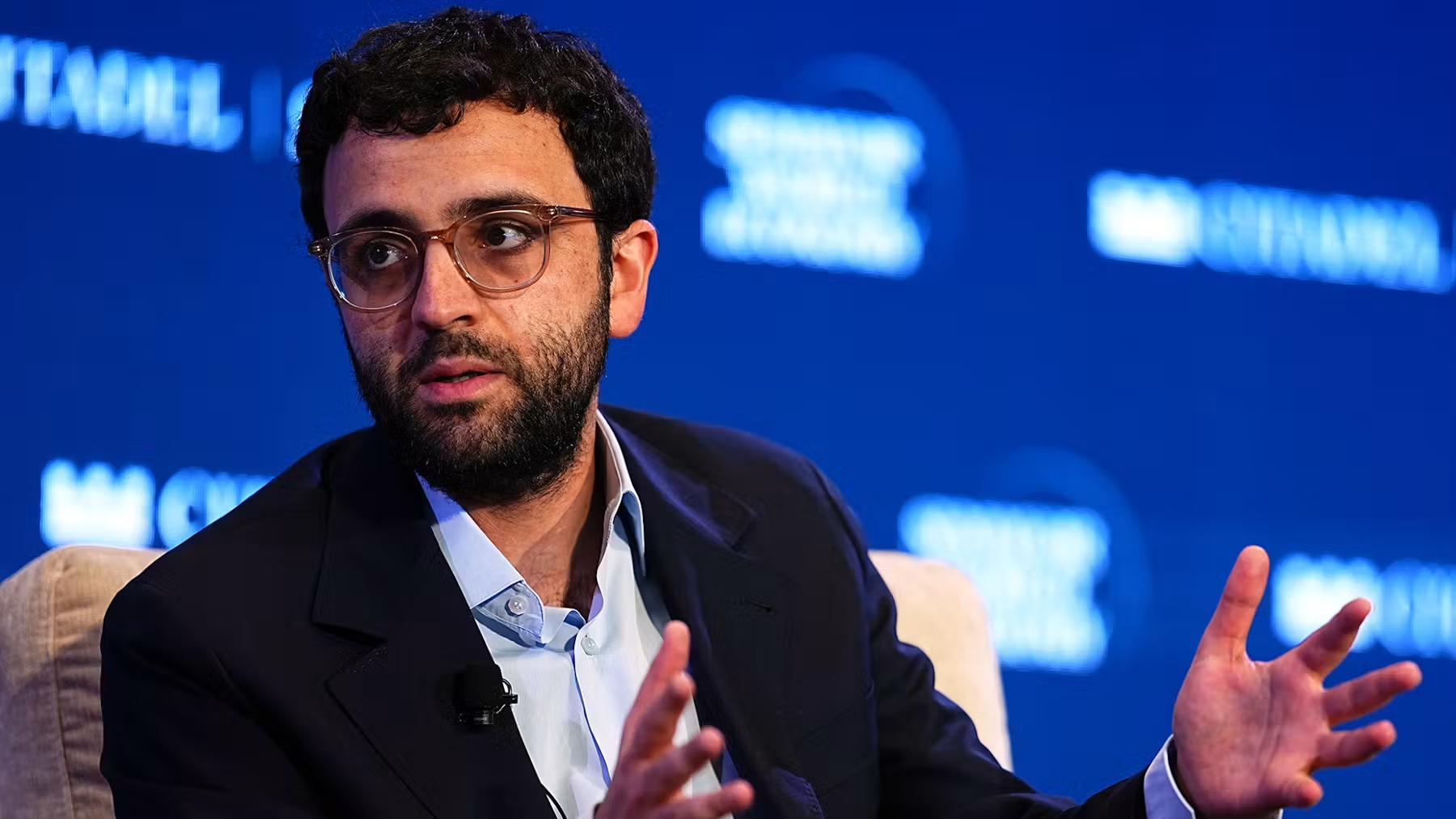
BAGS' popularity isn't just due to the influx of on-chain players; it was also ignited by an article—programmer Steve Yegge's lengthy post titled "BAGS and the Creator Economy," published on January 15, which detailed his journey from "suspecting a scam" to "falling in love" with BAGS.

When a Tech Geek Encounters "Unexpected Wealth"

The author, Steve Yegge, is no small figure. With 40 years of coding experience and having worked at giants like Amazon, Google, and Grab, this tech veteran is known for his sharp critiques of platform architecture and extreme engineering mindset.

The story is quite dramatic:

1. Suspected Scam: Steve Yegge received a message on LinkedIn saying someone had sent him money (initially $49,000) and mentioned that developer Geoffrey Huntley had claimed $56,000 the week before. His wife called it a scam, and his intuition told him it was a trick, but he decided to give it a try.

2. Real Money: The money actually arrived! This made him realize that BAGS might not be just another meme coin but a paradigm shift in the creator economy.

Steve Yegge pointed out, "BAGS is a market that fuels creativity, where people try to predict and support future winners. These creators can be individuals or small teams creating amazing things. As we move into 2026, with tools like Gas Town, individual creators will be able to produce products that rival those of large companies."

When such a "tech geek" began seriously analyzing a Web3 product, the market briefly realized that BagsApp might not just be a meme frenzy but a fundamental restructuring of the creator economy. Many believe he represents Silicon Valley's most hardcore and pragmatic engineering mindset.

How Does BAGS Work?

BAGS is a token launch and trading platform on Solana utilizing Meteora. What sets it apart from most launch platforms is that creators can specify who receives the transaction royalties when a token is launched. Currently, the default token transaction royalty on BAGS is 1%.

This presents a new opportunity for Web2 developers. Even if they don't launch tokens or hold any, as long as the token has trading volume, they can earn continuous passive income.

Whether individuals create tokens and set their own royalties or communities launch tokens for developers they believe in and designate their wallets or Twitter accounts to receive proceeds, it lowers the barrier for creators to monetize.

Additionally, BAGS has a dividend feature. Token creators can enable a fee-sharing mechanism to reward top holders with a portion of the transaction income. The system checks every 24 hours, and if unclaimed earnings exceed 10 SOL, they are automatically distributed proportionally to the top 100 holders.

Moreover, holding tokens grants chat access to the token's community, achieving a native integration of finance and social interaction.

In another sense, BAGS creates a deceptively "gentle" system: even if you don't launch a token, as long as you're famous, the community can essentially force money upon you.

But this also creates a paradox: when a developer can earn "passive royalties," do they still have the motivation to complete the tedious, lengthy, and potentially failed technical deliveries?

Top Memes in the BAGS Ecosystem

The top two memes in the BAGS ecosystem by market cap are:

RALPH (Current Market Cap: $29 Million)

A tribute to the AI programming circle's "Ralph Wiggum Technique" (i.e., using AI to repeatedly trial and error until the code works). This token was created by the community as a meme of a development culture. Geoffrey Huntley did not deploy this smart contract.

Gas (Current Market Cap: $9.24 Million)

Gas originates from Steve Yegge's AI coding agent coordinator, Gas Town. On January 2, 2026, Steve Yegge released Gas Town, a tool for coordinating multiple AI coding agents simultaneously. Gas Town plans to expand in three areas this year: 1. Model cognitive capabilities; 2. Enhanced agent compatibility with Gas Town; 3. Inclusion of Gas Town and Beads datasets in the training corpus of cutting-edge models. The Gas token was launched independently by the community.

More importantly, of the $270,000 in transaction fees generated by the Gas token, 99% flowed back to Steve Yegge himself, forming a seemingly perfect closed loop of "developers focusing on building, community continuously empowering."

When "Focusing on Development" Becomes a Negative

But the reality is, when Steve Yegge stated on January 17 that he would "return to development, fully immerse himself in Gas Town, and won't be able to spend much time on CT (Crypto Twitter)," the community's enthusiasm instantly cooled. Gas's market cap peaked at $60 million on January 16 but has since fallen over 83% from its high at the time of writing.

This contradiction highlights a harsh truth: the market never treated Gas as a real AI product but rather as the next AI meme炒作 target.

When "focusing on development" becomes a bearish factor for the token price, we must admit: the current Web3 AI sector is still a PVP battlefield dominated by the attention economy.

Gas's awkward situation reveals Web3's deepest structural矛盾: the speed of capital flow is seconds (trading), while the pace of building quality products is snail-like (months or even years).

In Steve Yegge's case, the market sending him money was essentially buying into his future "expectations." But the crypto market is too impatient; it demands that money invested this second must yield "positive news" the next. When developers choose to go into seclusion to fulfill their promises, they cut off the "emotional liquidity" that speculators crave the most. However, real coding requires long periods of silence and deep focus.

Everyone wants Builder stories to support valuations but is unwilling to wait for the lengthy process of technological沉淀. When the novelty of the story fades, when founders no longer engage in流量 operations, the token reverts to its speculative nature.

Summary

Is BAGS the future of the creator economy? Perhaps. But for now, it seems more like an entry ticket for Web2 developers to passively participate in "attention harvesting."

Web2 developers are accustomed to being responsible for codebases, while Web3 forces them to be responsible for market caps. When Steve Yegge wanted to return to his engineering roots, the market punished his "inaction." This might be the biggest warning BAGS leaves for the industry: if we only learn how to "financialize" people but fail to protect their "creativity," what we'll get are shells drained by流量, not a genuine technological revolution.

Only when the market begins to appreciate Builders' long, deep dives into code rather than just盯着 the瞬间 spikes on the K-line chart will the "long-termism" spring for tech geeks truly arrive.

DYOR is particularly crucial in this博弈 between technology and memes.

Трендові криптовалюти

Пов'язані питання

QWhat is the core contradiction highlighted by the Gas token's 80% price drop after Steve Yegge announced he would focus on development?

AThe contradiction is that the market treats Gas as a speculative meme asset rather than a genuine AI product. While investors demand a compelling 'builder narrative' to drive valuation, they are unwilling to wait for the actual long-term technical development. When Yegge chose to focus on coding instead of maintaining social media hype, it cut off the 'emotional liquidity' speculators needed, causing the price to collapse.

QHow does the BAGS platform fundamentally change the revenue model for Web2 developers according to the article?

ABAGS allows developers to receive a 1% transaction royalty on token trades even if they create or hold no tokens themselves. This enables passive income based on community recognition, lowering the barrier for creators to monetize their influence or work without direct token issuance.

QWhat critical dilemma does BAGS create for developers who receive passive royalties from the community?

AIt creates a paradox where developers may lose motivation to undertake difficult, long-term technical projects because they can earn steady income from passive royalties without delivering tangible products, potentially stifling innovation and actual development.

QWhy did Steve Yegge's initial skepticism about BAGS turn into support?

AHe received an unsolicited payment of $49,000, which was real, leading him to realize that BAGS was not a scam but a potential paradigm shift in the creator economy by providing a market that fuels creativity and rewards future winners.

QWhat does the Gas token's sharp decline reveal about the current state of the Web3 AI sector?

AIt shows that the Web3 AI space is still dominated by attention economy and speculative trading (PVP), where short-term hype and social media activity outweigh genuine technological progress and long-term value creation.

Пов'язані матеріали

Snap, Unprofitable for Nine Years, and a Decade-Long AR Obsession Without Return

Snap's AR Obsession: A Decade of Betting Against the Odds On June 16, Snap CEO Evan Spiegel unveiled the new AR glasses, Specs, priced at $2,195, causing the company's stock (SNAP) to plummet nearly 10%. The launch was met with intense criticism online, with investors questioning why a consistently unprofitable company would stake its future on an expensive product its core young user base can't afford. Snapchat, known for pioneering features like ephemeral Stories and popular AR lenses (like the iconic dog filter), has a history of innovation often copied by rivals like Instagram and Meta. Despite this, it has struggled to translate first-mover advantage into commercial success. Since its 2017 IPO, Snap has reported annual net losses, with a Q1 2026 loss of $89 million. Its stock is down 94% from its 2021 peak, hampered by iOS privacy changes, competition, and a young demographic less attractive to major advertisers. In this challenging context, Spiegel is doubling down on AR. He calls 2026 a "crucible moment," having recently laid off 16% of staff while reportedly investing over $3.5 billion cumulatively in its AR glasses line over nearly a decade. The new Specs represent a significant leap from the 2016 camera-focused Spectacles, offering true AR overlays, gesture control, and standalone operation. However, at $2,195, it faces tough comparisons. While more advanced than Meta's $799 Ray-Ban smart glasses, critics point to its heavier weight, short battery life, and features largely replicable by a smartphone. Facing pressure from investors to cut losses on the Specs project, Spiegel has refused, framing it as essential to Snap's long-term vision. The company finds itself in a paradoxical position: cutting costs while heavily funding a decade-long, unproven bet. Some see Specs as an awkward but necessary step in AR's evolution, akin to early mobile phones. Whether Spiegel is a visionary outlier or a gambler destined to fail remains an open question, highlighting the tension between long-term ambition and short-term market demands.

marsbit13 хв тому

Snap, Unprofitable for Nine Years, and a Decade-Long AR Obsession Without Return

marsbit13 хв тому

Annualized Revenue Exceeds $20 Billion, Kalshi Aims to Become the First Prediction Platform IPO?

Kalshi, a leading U.S. prediction markets platform, is reportedly in early, informal discussions for an Initial Public Offering (IPO). The company's annualized revenue now exceeds $2 billion, fueled by its dominance of over 90% of the domestic prediction market activity. This growth stems from a surge in trading volume—reaching a total of $52.7 billion—and an increase in fee rates, largely driven by sports event contracts like the NBA playoffs and the 2026 FIFA World Cup. Monthly active users are approximately 2 million. Kalshi recently raised $1 billion in a funding round led by Coatue Management, valuing the company at $22 billion. It has also expanded its offerings to include Bitcoin perpetual contracts and plans to launch a dedicated trading platform, Kalshi Pro. However, Kalshi's path to an IPO faces significant regulatory hurdles. The core risk involves jurisdictional conflicts, as multiple U.S. states are challenging its operations under local gambling laws. For instance, Arizona has filed criminal charges against the platform, while states like Kentucky have filed lawsuits. Kalshi and the Commodity Futures Trading Commission (CFTC) argue that its event contracts fall under exclusive federal jurisdiction as "swaps." The outcomes of these ongoing legal battles could critically impact Kalshi's core revenue and its IPO timeline. Analysts suggest that while an IPO could theoretically occur by late 2026, a more likely timeframe is late 2027 or 2028, contingent on resolving legal issues and favorable market conditions. If successful, its fundraising could significantly exceed $1 billion, given its current valuation and revenue multiple.

Foresight News31 хв тому

Annualized Revenue Exceeds $20 Billion, Kalshi Aims to Become the First Prediction Platform IPO?

Foresight News31 хв тому

Financing Weekly Report | 11 Public Financing Events, Stablecoin Payment Infrastructure Company Trace Finance Completes $32 Million Series A Round Led by CoinFund

Financing Weekly Report | 11 public funding events recorded, with a total scale exceeding $264 million. The stablecoin payment infrastructure sector remains a hot spot. Key Deals: - Trace Finance, a stablecoin payment infrastructure firm, raised $32 million in a Series A round led by CoinFund to expand in Latin America and Asia-Pacific. - Galaxy Ventures co-led a $140 million Series A round for Karta, a US credit card provider for global travelers without requiring an SSN. - Instant payment platform Interchecks completed a $50 million Series C round. - Paradigm led a $9 million Series A for Latin American cross-border payment app El Dorado. - Range, a stablecoin compliance startup, raised $8.3 million in an oversubscribed Series A. - RWA infrastructure project Renaiss raised $1.5 million to expand its on-chain collectibles platform. Sector Breakdown: - Infrastructure & Tools: 6 deals, including the above-mentioned Trace Finance, Range, and Renaiss. - Centralized Finance (CeFi): 3 deals, led by Karta's $140 million round. - DeFi: 1 deal – reinsurance protocol Re secured strategic investment from Coinbase Ventures. - Prediction Markets: 1 deal – K25.ai completed a $10 million Pre-A round from NewGen. Other notable transactions include digital asset depository RDC raising $7 million, ad-tech startup EarnOS securing $6 million, and a $1 million strategic investment in LitVM, a ZK Layer 2 for Litecoin. The report highlights sustained investor interest in stablecoin payment infrastructure, compliant on-chain finance, and real-world asset (RWA) tokenization.

marsbit1 год тому

Financing Weekly Report | 11 Public Financing Events, Stablecoin Payment Infrastructure Company Trace Finance Completes $32 Million Series A Round Led by CoinFund

marsbit1 год тому

When Transfers Become Truly Frictionless: How Sui Uses 'Zero Gas' to Become the Underlying Infrastructure for Stablecoin Payments

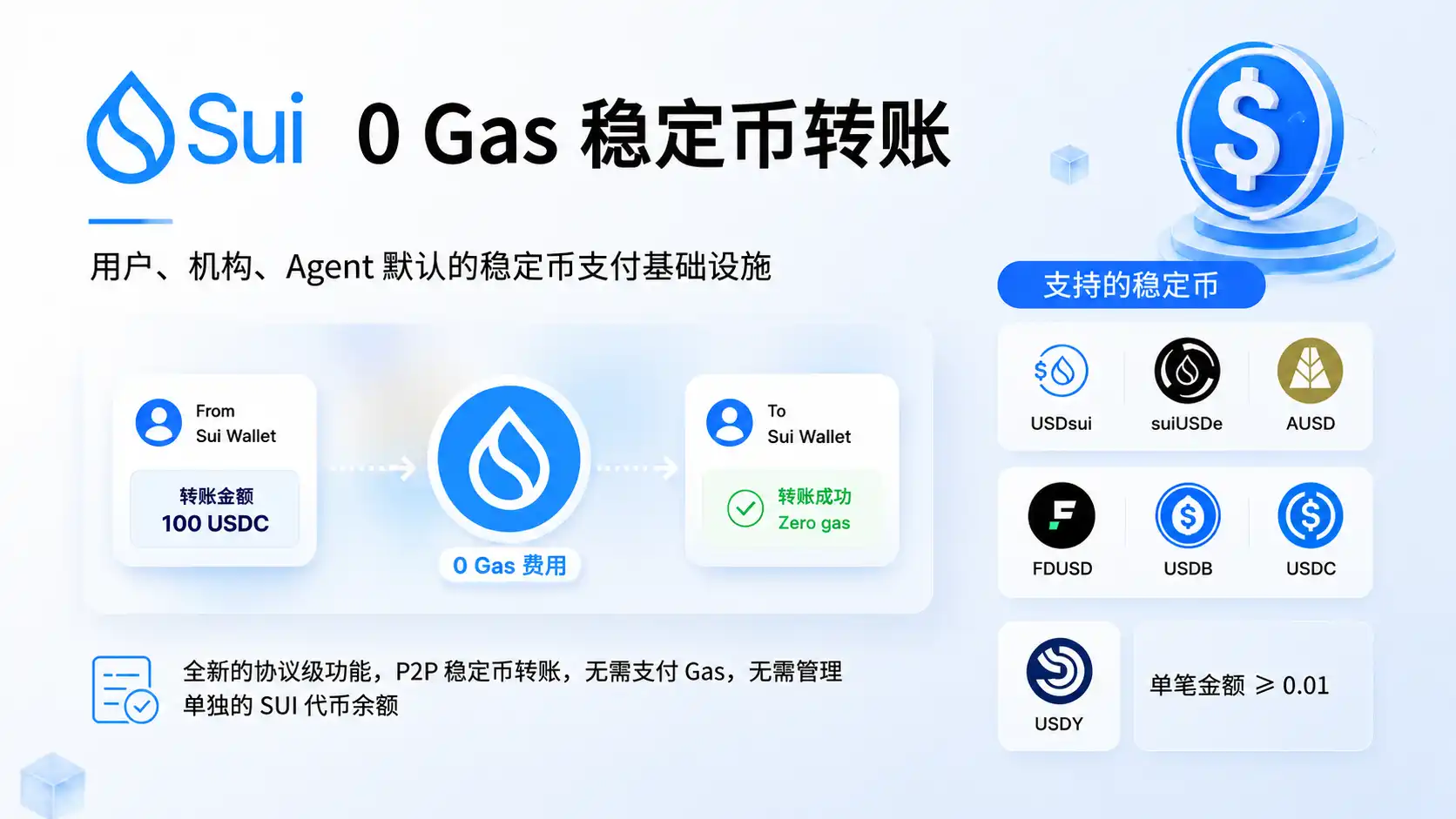
Title: Sui Launches Zero-Gas Stablecoin Transfers to Become the Foundation for Stablecoin Payments Sui has introduced a zero-gas fee feature for peer-to-peer stablecoin transfers, eliminating the need for users or businesses to hold separate SUI tokens to pay transaction costs. This innovation, built on a new underlying account architecture called Address Balances, significantly reduces validator processing costs for eligible transactions. Currently, the feature applies to a whitelist of stablecoins for transfers meeting a minimum amount, effectively preventing spam. This development aims to unlock mainstream payment use cases for stablecoins—such as everyday purchases, remittances, and subscriptions—by removing cost and complexity barriers. It is also positioned to benefit high-frequency micro-payments for AI agents and institutional B2B payments, reducing operational friction. Major custody provider Fireblocks has already announced support. The move follows Sui processing over $1 trillion in stablecoin transfer volume since August 2025. Looking ahead, Sui plans to enhance this infrastructure with protocol-level confidential transactions later in 2026, aiming to provide scalable, free, and privacy-preserving payments. Together, these advancements strengthen Sui's goal of becoming the default settlement layer for stablecoin payments.

marsbit1 год тому

When Transfers Become Truly Frictionless: How Sui Uses 'Zero Gas' to Become the Underlying Infrastructure for Stablecoin Payments

marsbit1 год тому

Торгівля

Спот
Ф'ючерси

Популярні статті

Як купити GAS

Ласкаво просимо до HTX.com! Ми зробили покупку GAS (GAS) простою та зручною. Дотримуйтесь нашої покрокової інструкції, щоб розпочати свою криптовалютну подорож.Крок 1: Створіть обліковий запис на HTXВикористовуйте свою електронну пошту або номер телефону, щоб зареєструвати обліковий запис на HTX безплатно. Пройдіть безпроблемну реєстрацію й отримайте доступ до всіх функцій.ЗареєструватисьКрок 2: Перейдіть до розділу Купити крипту і виберіть спосіб оплатиКредитна/дебетова картка: використовуйте вашу картку Visa або Mastercard, щоб миттєво купити GAS (GAS).Баланс: використовуйте кошти з балансу вашого рахунку HTX для безперешкодної торгівлі.Треті особи: ми додали популярні способи оплати, такі як Google Pay та Apple Pay, щоб підвищити зручність.P2P: Торгуйте безпосередньо з іншими користувачами на HTX.Позабіржова торгівля (OTC): ми пропонуємо індивідуальні послуги та конкурентні обмінні курси для трейдерів.Крок 3: Зберігайте свої GAS (GAS)Після придбання GAS (GAS) збережіть його у своєму обліковому записі на HTX. Крім того, ви можете відправити його в інше місце за допомогою блокчейн-переказу або використовувати його для торгівлі іншими криптовалютами.Крок 4: Торгівля GAS (GAS)Легко торгуйте GAS (GAS) на спотовому ринку HTX. Просто увійдіть до свого облікового запису, виберіть торгову пару, укладайте угоди та спостерігайте за ними в режимі реального часу. Ми пропонуємо зручний досвід як для початківців, так і для досвідчених трейдерів.

193 переглядів усьогоОпубліковано 2024.12.12Оновлено 2026.06.02

Як купити GAS

Обговорення

Ласкаво просимо до спільноти HTX. Тут ви можете бути в курсі останніх подій розвитку платформи та отримати доступ до професійної ринкової інформації. Нижче представлені думки користувачів щодо ціни GAS (GAS).

活动图片