Before You Jump on Any ICO Bandwagon, Read This First

深潮Опубліковано о 2025-12-16Востаннє оновлено о 2025-12-16

Анотація

Before participating in any ICO, it's crucial to understand that most projects fail, and only a few achieve success. The recent hype around ICOs, driven by projects like MegaETH and Plasma, often leads to impulsive investments without proper due diligence. Here are key points to consider: 1. **Product Fundamentals**: Evaluate if the product solves a real problem and has genuine innovation. Avoid projects based on future promises or testnet data without a working product. 2. **Team Experience**: The team's track record matters. Experienced teams can adapt to market changes, while weak teams may disappear when hype fades. 3. **Investors and Valuation**: Check if reputable VCs are involved and assess the valuation. Avoid projects where insiders have low valuations, leaving retail investors at risk. 4. **Authentic Data**: Look beyond surface metrics like TVL or user numbers. Ensure data is genuine and not inflated by incentives or fake activity. 5. **Marketing and Narrative**: Strong projects control their narrative and attract organic attention. Poor projects rely on buzzwords without substance. 6. **Tokenomics**: Understand token unlock schedules, vesting, and fully diluted valuation (FDV). Avoid structures that favor insiders and shift risk to retail. 7. **Market Conditions**: Market cycles significantly impact valuation and returns. The same project may perform differently in a bull vs. bear market. ICO investments are not free money. Avoid FOMO-driven decisions and p...

Written by: Ola Ξlixir

Compiled by: AididiaoJP, Foresight News

ICOs are the hottest topic on crypto Twitter right now, and everyone is talking about them.

Everyone thinks they've found the next MegaETH or Plasma.

But most people are overlooking one key point:

Only a small fraction of these ICOs will actually make money; that's how the crypto market has always been.

One project pioneers a model, and it succeeds.

Then ten teams copy it, thinking they can replicate that success, but it's hard to duplicate, and eight or nine out of ten will fail.

Right now, every team wants to do an ICO, just because MegaETH and Plasma are hot.

They figure, instead of giving you an airdrop, why not have you pay to "get in."

However, those two projects succeeded because they were well-planned before execution.

So, before you invest in any ICO, consider the following points.

1. The Product is Fundamental

Ignore the flashy PowerPoints and the hype posts from KOLs.

Just ask a simple question:

Does this product actually solve a real problem today? Does it have genuine innovation? Why do they need to issue a token?

If the product only exists in a "future story" or requires a bunch of assumptions to work, that's dangerous.

Good ICOs usually have something actually running, not just empty promises or testnet data.

If they can't explain what the product does in one sentence, that's your first red flag.

2. The Team Matters

The quality of a project depends on the strength of the team behind it.

Look at the team's track record:

Have they built products before, in crypto or elsewhere?

Experience is a plus; it shows they've been down this road.

An anonymous team isn't necessarily a bad thing,

but they must deliver exceptional results to earn trust.

When the market shifts, strong teams adapt;

weak teams vanish as soon as the hype dies down. This is an "attention economy."

3. Investors and Valuation

Who invested in this project? Top-tier VCs or third-rate funds?
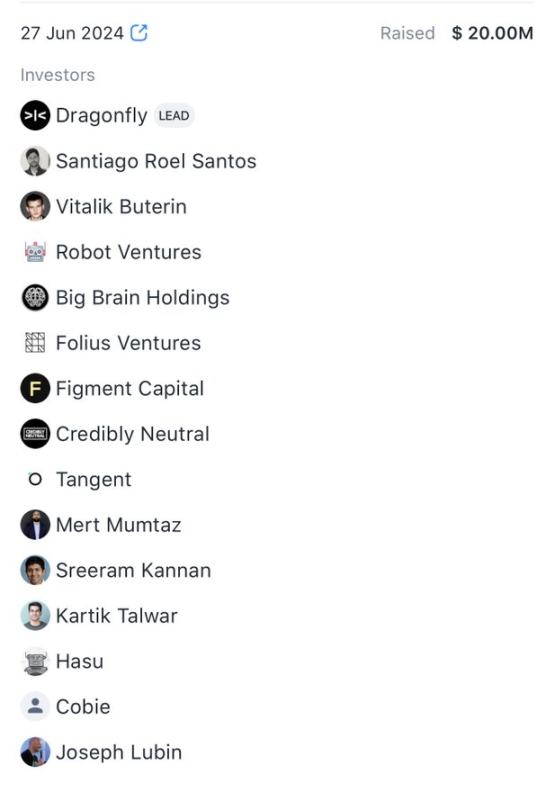
How much did they raise? What's the valuation? This is more important than many think.

If insiders and early investors got in at extremely low valuations, you're likely their "exit liquidity."

A good ICO's valuation makes sense even without hype;

a bad ICO relies on buzz and vanity metrics to justify its price.

4. Look at Real Data, Not Surface Numbers

Do they have real revenue? What are the active user numbers and Total Value Locked (TVL)?

Most importantly, the quality of this data—any data can be faked.

Testnet data is meaningless if it's easy to manipulate.

A dashboard full of fake activity won't magically turn into real usage—Monad is a prime example.

See if user demand is organic: are people willing to use the product without incentives,

or are they just there for a potential airdrop?

5. Marketing and Narrative Power

Marketing is more important than many realize.

MegaETH's marketing was executed masterfully.

The team controlled everything, perfectly steering the narrative.

Everyone was actively discussing MegaETH.

In the Web3 world, attention is everything.

If an ICO gets no attention before launch, don't expect miracles afterward—again, think Monad.

Good projects know how to tell their story clearly from the start.

Bad projects hide behind buzzwords: "We're building Web3's next ChatGPT + Nvidia + prediction market..." Nice story.

6. Offering Terms and Valuation

Read the terms carefully:

  • Token unlock rules

  • Vesting schedule

  • Circulating supply

  • Fully Diluted Valuation (FDV) at listing

Understanding the full tokenomics is crucial. If you can't, use AI tools to help analyze it.

If the ICO structure heavily favors insiders and dumps all the risk on retail, stay away.

A fair launch doesn't mean cheap; it means the interests of the project and participants are aligned.

7. Market Conditions are Key

This is the most easily overlooked point.

In a real bull market, a decent project can hit a $500M to $1B FDV on narrative alone.

Right now, even the hottest projects often cap out at $100M to $300M valuations.

This directly impacts your risk-reward calculation.

The same project can have wildly different outcomes in different markets.

Timing isn't everything, but it's never irrelevant.

Final Thoughts

ICOs are not free money; they never were.

The current trend will create some winners and leave a long list of lessons.

Don't buy just because everyone else is, or because a KOL you like is shilling it.

Don't assume every promoted project will be the next MegaETH.

The worst projects will just exploit your FOMO and hype-chasing mentality, with zero substance.

Пов'язані питання

QWhat is the main reason many ICOs fail to replicate the success of projects like MegaETH or Plasma?

AMost ICOs fail because they are merely copying a successful model without proper planning, execution, or innovation, unlike the original projects which were well-planned from the start.

QAccording to the article, what should be the primary focus when evaluating an ICO?

AThe primary focus should be on the product itself—whether it solves a real problem, has actual innovation, and has a working product rather than just promises or testnet data.

QWhy is the team behind an ICO important, as mentioned in the article?

AThe team's experience and track record are crucial because a strong team can adapt to market changes, while a weak one may disappear when hype fades. Anonymous teams need to deliver exceptional results to gain trust.

QWhat does the article suggest about ICO valuations and investor alignment?

AThe article warns that if insiders and early investors get in at very low valuations, retail investors might become 'exit liquidity.' A good ICO should have a logical valuation and fair terms that align interests between the project and participants.

QHow does market timing affect the outcome of an ICO, based on the article?

AMarket timing is critical—the same project can have vastly different results in a bull market versus the current environment. Valuations and risk-reward ratios are heavily influenced by the overall market conditions.

Пов'язані матеріали

Tensions in the Strait of Hormuz Escalate, Bitcoin Plunges to $61,700 Amid Safe-Haven Selling

Bitcoin fell sharply to around $61,700 on Monday, July 13th, as geopolitical tensions in the Strait of Hormuz triggered a broad shift toward risk-off sentiment across global markets. The decline of roughly 4% mirrored weaker performances in major U.S. stock indices. Market analysts attributed the sell-off to a confluence of factors stemming from the heightened U.S.-Iran tensions. These tensions reignited inflation concerns, reduced expectations for near-term Federal Reserve rate cuts, and prompted investors to reduce exposure to risk assets like Bitcoin. Additional pressure came from slowed institutional ETF inflows, Bitcoin's failure to breach a key resistance level, and a wave of liquidations for leveraged long positions. Despite the drop, analysts largely viewed the move as a typical macro-driven correction within a healthy long-term cycle. They emphasized that Bitcoin's underlying growth trajectory remains intact. The sell-off was seen more as a liquidation event targeting over-leveraged longs rather than a structural loss of confidence. Attention now turns to the upcoming U.S. Consumer Price Index (CPI) report. A higher-than-expected inflation reading could further delay Fed rate cuts, making safer assets like bonds more attractive and continuing to pressure volatile assets like Bitcoin. The consensus is that the current volatility reflects short-term macro and geopolitical shocks, not a fundamental breakdown in Bitcoin's long-term proposition.

Foresight News56 хв тому

Tensions in the Strait of Hormuz Escalate, Bitcoin Plunges to $61,700 Amid Safe-Haven Selling

Foresight News56 хв тому

BitMart Research Institute Weekly Highlights: Rising Rate Hike Expectations, Crypto Market Stabilizes Amid Fluctuations

BitMart Research Weekly Market Review: Rate Hike Expectations Rise, Crypto Market Stabilizes Macro & Traditional Markets: U.S. stocks weakened with tech and semiconductors leading losses (Nasdaq down 1.55%, Philly Semi Index down 4.78%), while Apple bucked the trend. Brent oil surged 9.3% after Middle East ceasefire破裂, but gold fell 1% as美元 strengthened. The Fed's June FOMC纪要 was hawkish, shifting market expectations toward potential rate hikes, pushing the 10-year Treasury yield to 4.56%. Crypto Market Overview: BTC saw a slight 0.2% weekly gain, trading between ~$61.3K and $64.7K and settling near $64K. ETH outperformed, rising 1.2%. Market fear eased slightly but remained in "Fear" territory. Altcoin performance was mixed, with gains concentrated in large-cap assets. Key Developments: U.S. spot Bitcoin ETFs ended an 8-week outflow streak with a $197.4M net inflow, aiding price stabilization. On-chain, stablecoin growth was minimal. Robinhood Chain's TVL surpassed $132M within two weeks, largely driven by institutional stablecoin deposits. MicroStrategy executed its first major BTC sale (3,588 BTC for $216M) to fund dividends, while maintaining a large BTC reserve. Institutional infrastructure advanced with Swift's blockchain pilot for tokenized deposits and growing Asia-Pacific stablecoin initiatives. *This is market analysis, not investment advice. Cryptocurrency investment is high-risk; assess your risk tolerance and implement strict risk management.*

marsbit1 год тому

BitMart Research Institute Weekly Highlights: Rising Rate Hike Expectations, Crypto Market Stabilizes Amid Fluctuations

marsbit1 год тому

Торгівля

Спот
活动图片