Are Altcoins Soaring? Is the Bull Market Back?

marsbitОпубліковано о 2026-04-17Востаннє оновлено о 2026-04-17

Анотація

Recent days have seen significant volatility in altcoins while Bitcoin remained relatively stable. Some low-market-cap tokens, with circulations under $20 million, surged by several hundred percent within days—without fundamental improvements, ecosystem breakthroughs, or new institutional inflows. This is not a true altseason. The Altseason Index stands at 34, and Bitcoin dominance is at 58.5%, indicating the market is still in a "Bitcoin season." The altcoin market cap has shrunk by ~40% since its peak in December 2024, falling to around $700 billion. This severe decline has made it cheaper for large holders to accumulate significant portions of circulating supply, enabling price manipulation. A case in point is SIREN, where a single entity allegedly controlled up to 88% of the circulating supply. Such concentration allows a small group to dictate price movements. Additionally, deeply negative funding rates (as low as -0.3% every 8 hours, annualized to -328%) force short sellers to pay high fees, accelerating liquidations and further fueling upward price spikes. On-chain activity, like a 97% weekly increase in BSC DEX volume, suggests excitement, but it is largely driven by existing capital, not new inflows. Institutional flows into altcoin ETFs (like those for Solana and XRP) have been weak or negative, indicating caution rather than rotation into altcoins. This rally is a signal of structural fragility, not broad bullish momentum. Until Bitcoin dominance falls ...

While Bitcoin has been holding steady these past few days, the altcoin season has seen a long-absent surge of intense volatility.

Tokens with a circulating market cap of less than $20 million have doubled, tripled, or even increased fivefold within a few days, with some approaching tenfold gains. There were no major developments, no ecosystem breakthroughs, no new institutional entries—the price was simply pushed up.

There's a ready explanation for this phenomenon: altcoins are high-Beta assets; when Bitcoin rises, alts run even faster. This holds true statistically but doesn't tell the whole story. High Beta can explain why alts outperform Bitcoin, but it can't explain the dozens-of-times difference in gains. That multiple comes from something else.

The Altcoin Season Index currently sits at 34, and the BTC Dominance rate is 58.5%. Both numbers tell you that this market is still quite a distance from a true altcoin season. Yet, in this market devoid of an alt season, certain tokens are moving with the intensity of one.

From December 2024 to April 2026, the total market capitalization of altcoins (excluding Bitcoin and Ethereum) shrank from a peak of approximately $1.16 trillion to around $700 billion, evaporating nearly 40%. When the market cap shrinks sufficiently, the rules of the game change. Price is no longer determined by market consensus but by who holds enough chips.

This is a vulnerability created by oversold conditions, not a signal from a bull market.

Altcoins Have Simply Fallen Too Much

The blockchain space has the concept of a 51% attack—controlling more than half of a network's hash rate allows one to alter records, double-spend tokens, and rewrite history. The capital version of this is logically simpler; it requires no technology, no computing power, just money. And in this cycle, the altcoin market, with its nearly 40% evaporation in market cap, has proportionally lowered the entry barrier by 40%.

As of early April 2026, the total altcoin market cap is approximately $700 billion, down about 40% from its peak of ~$1.16 trillion in December 2024. Using end-2025 as a cutoff point, the decline is about 44%. The two measurements use different time nodes, but the direction is consistent: the overall size of this market has nearly halved.
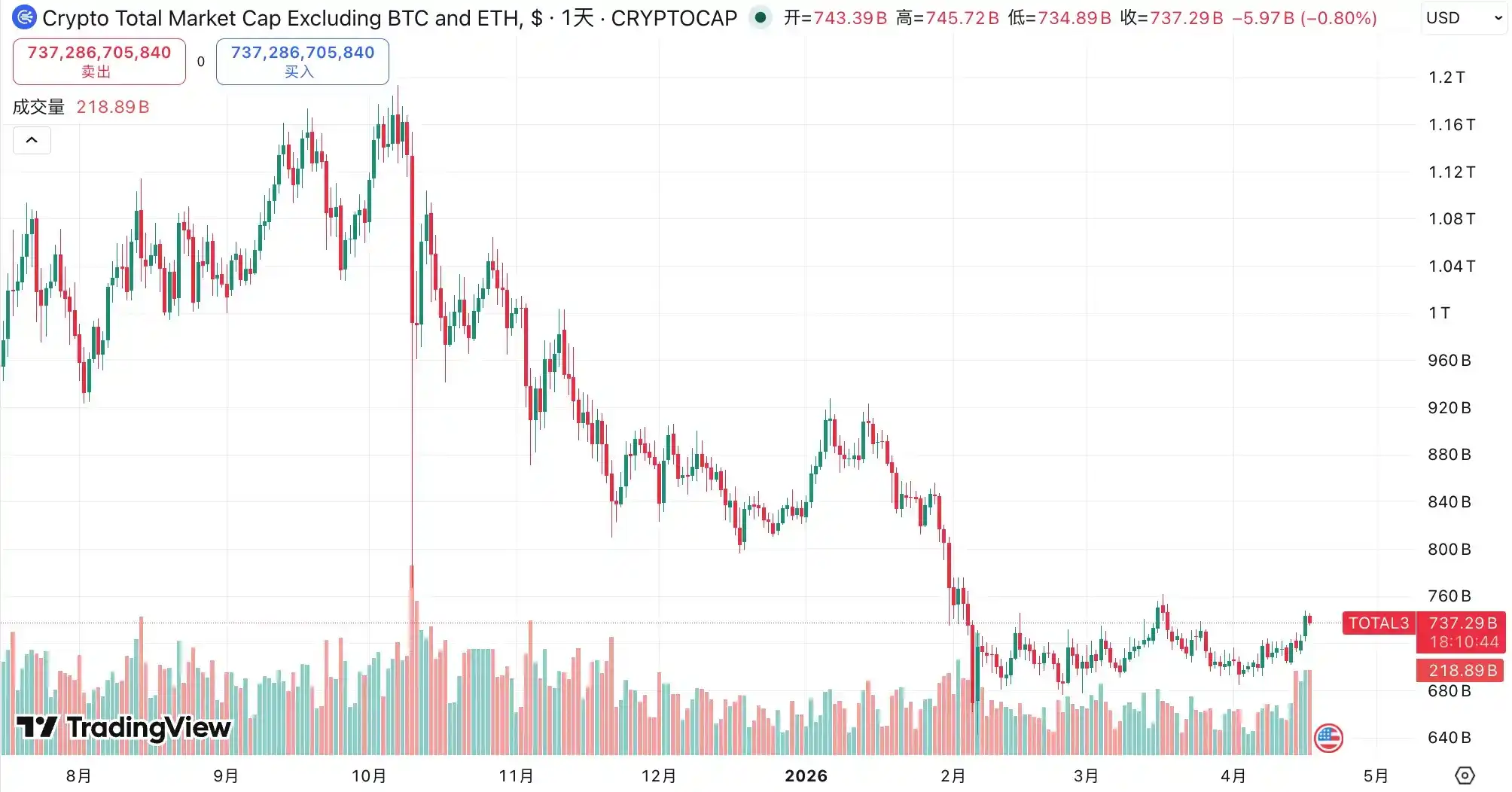
What does a halved market cap mean? $10 million represents 2% of the circulating supply in a market with a $500 million market cap, but 20% in a market with a $50 million market cap. The threshold has been lowered tenfold, but the amount of money hasn't changed. After being oversold, the cost of controlling the market becomes calculable. And if it's calculable, it's executable.

The recent sharp rise of the SIREN token provides a case study. SIREN experienced a rapid pump in late March, drawing significant attention. On March 24th, on-chain analyst EmberCN issued a warning: a single entity potentially controlled up to 88% of SIREN's circulating supply, worth approximately $1.8 billion at the time. As the news spread, SIREN plummeted from $2.56 to $0.79 that day, a drop of over 70%. During the rapid price exodus, almost no one could exit at a reasonable price because that price was never formed by the market in the first place.
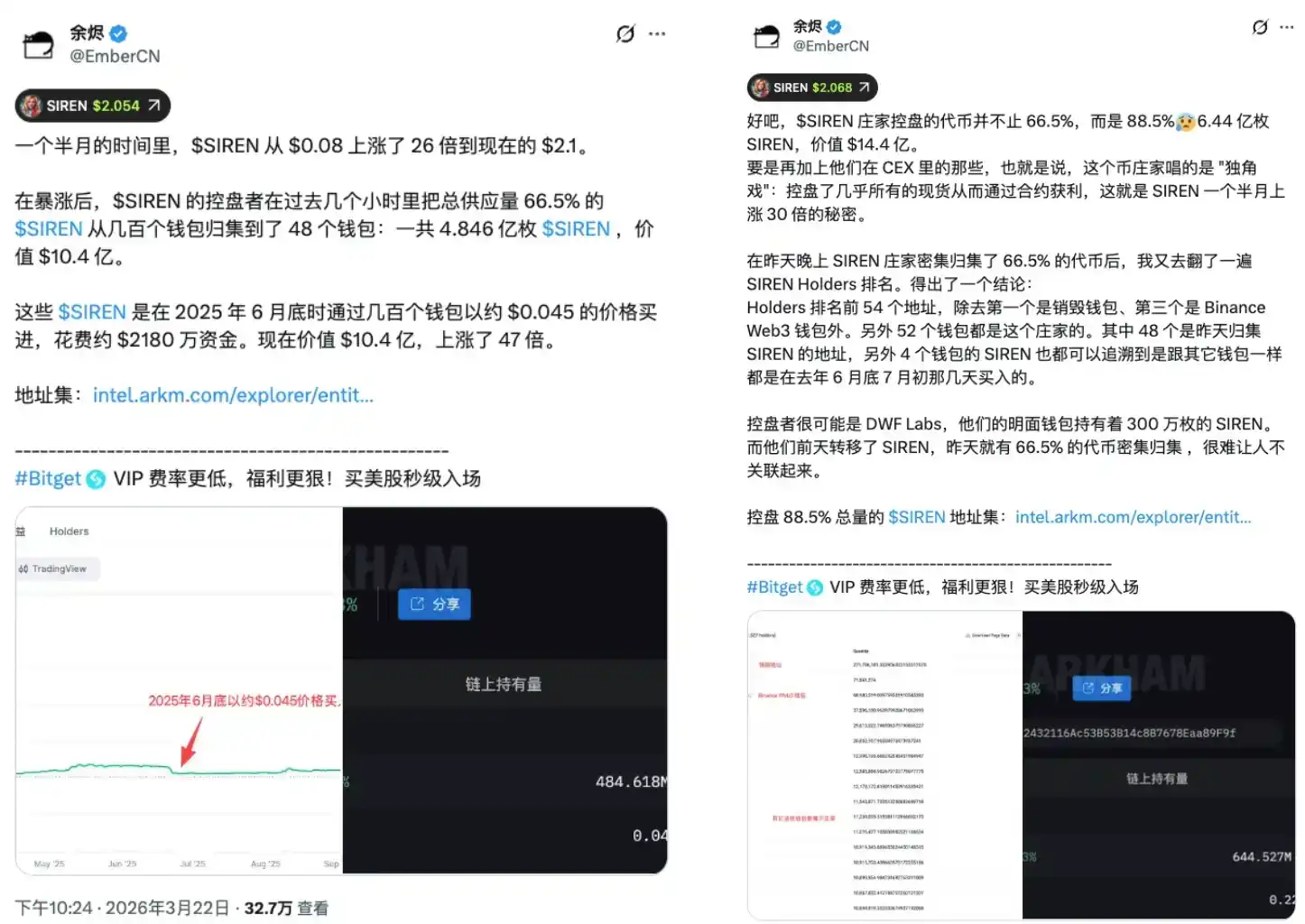
A conservative estimate suggests 48 wallets hold about 66.5% of the circulating chips. Even by this most conservative measure, an extremely limited set of addresses already possesses the structural conditions to control the price direction. From the moment the price was formed, the symmetry of this game was broken. Retail traders, bringing money they thought was participating in a free market, entered a container with a pre-set exit path.

SIREN is not an isolated case, nor a black swan; it is the structural norm for oversold altcoins. The deeper the fall, the less money is needed, and the easier it is to be hijacked. Being oversold isn't a discount; it's fragility. And this cycle's overall 40% market decline means this fragility has systematically expanded across the entire market.

Shorts Are the Fuel

If the story ended there, the logic would be one-directional: whales lock up supply, pump the price, dump on retail, and the price crashes. But the行情 of ultra-low market cap alts usually has another layer of structure superimposed on it: shorts become the kindling for the fire.

During SIREN's rapid price increase, the funding rate touched -0.2989% per 8 hours, annualized at approximately -328%. Translated, this means that shorting SIREN and holding the position requires paying the long side about 0.3% of the principal every 8 hours as a funding fee. Holding for a month, this fee alone could devour over 25% of the principal, not even counting the paper losses from the rising price.
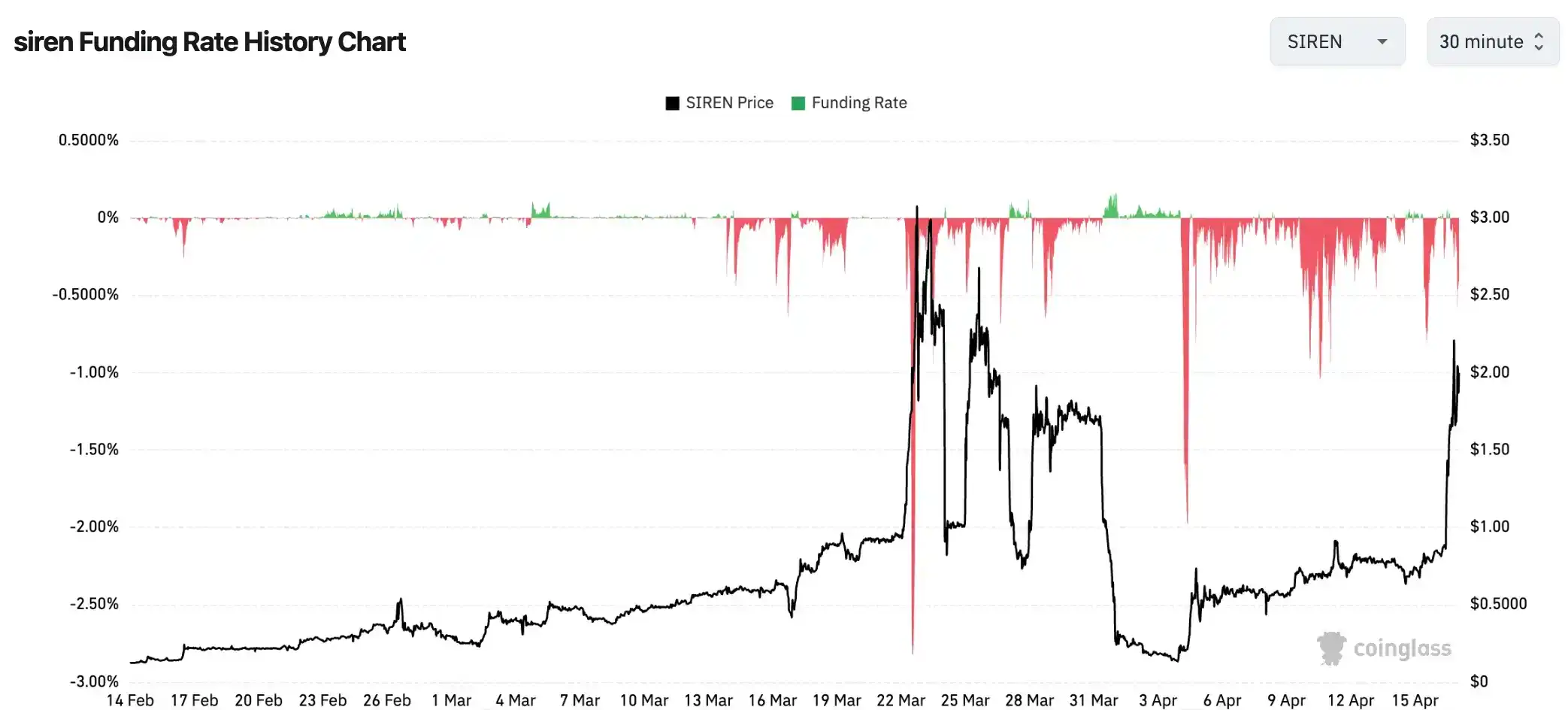
This number is not uncommon in small-cap alt markets. Some tokens have seen funding rates as low as -0.4579% per 8 hours during extreme moves, annualized at roughly -501%. At this level, short sellers face not the risk of being wrong on direction, but the certainty of being slowly ground down by a machine. Even if the eventual direction is correct, they are depleted before the right day arrives.

You see an altcoin pump 80% and decide to short it, waiting for a pullback. Every short position you open pays an interest payment to the opposing long side. Meanwhile, if the price continues to rise and hits your liquidation price, the system automatically buys back at market price to close your position. This forced buying further pushes the price higher.

The传导链 of a short squeeze operates like this: Price rises -> Shorts show paper losses -> Paper losses hit forced liquidation levels -> System automatically buys to close positions at market price -> This buying pushes price higher -> More shorts are triggered -> A new wave of buying arrives. In thin, low-liquidity, small-cap markets, each order can cause a much larger price move, making the chain reaction far more efficient than in large-cap assets.

There is an often-overlooked asymmetry here. Someone who sees a token surge 90% and decides to short it typically believes they are making a probabilistically correct judgment: "It has to pull back after rising so much." But in a market highly concentrated and locked up by holdings, this judgment must contend not only with the price direction but also with a funding fee bleeding 0.3% of principal every 8 hours, plus the chain reaction triggered by forced buying once liquidation levels are hit. This game is asymmetric from the start.

Extreme negative funding rates are the dashboard reading of this machine. Shorts have accumulated, ammunition is loaded, and accelerating the pump now means the people on the other side have only two choices: get liquidated or FOMO in and buy high. Both choices add fuel to the price. This isn't a rise formed by market consensus; it's a one-sided consumption event with a pre-designed structure.

A Bustling Market Without New Money

BSC chain's weekly DEX volume is up 97% year-over-year; the Altcoin Season Index is 34/100; BTC Dominance is 58.5%. These three numbers can be true simultaneously, and are simultaneously contradictory.

The on-chain heat is indeed scorching, but the latter two numbers tell you this market is still in "Bitcoin Season"—fewer than half of the major altcoins are outperforming Bitcoin, dominant capital is highly concentrated in Bitcoin, far from the point of diffusion. But the three numbers also point to the same reality: this is存量资金 accelerating their circulation, not new money entering. The hustle and bustle is real, but hustle and bustle does not equal expansion.

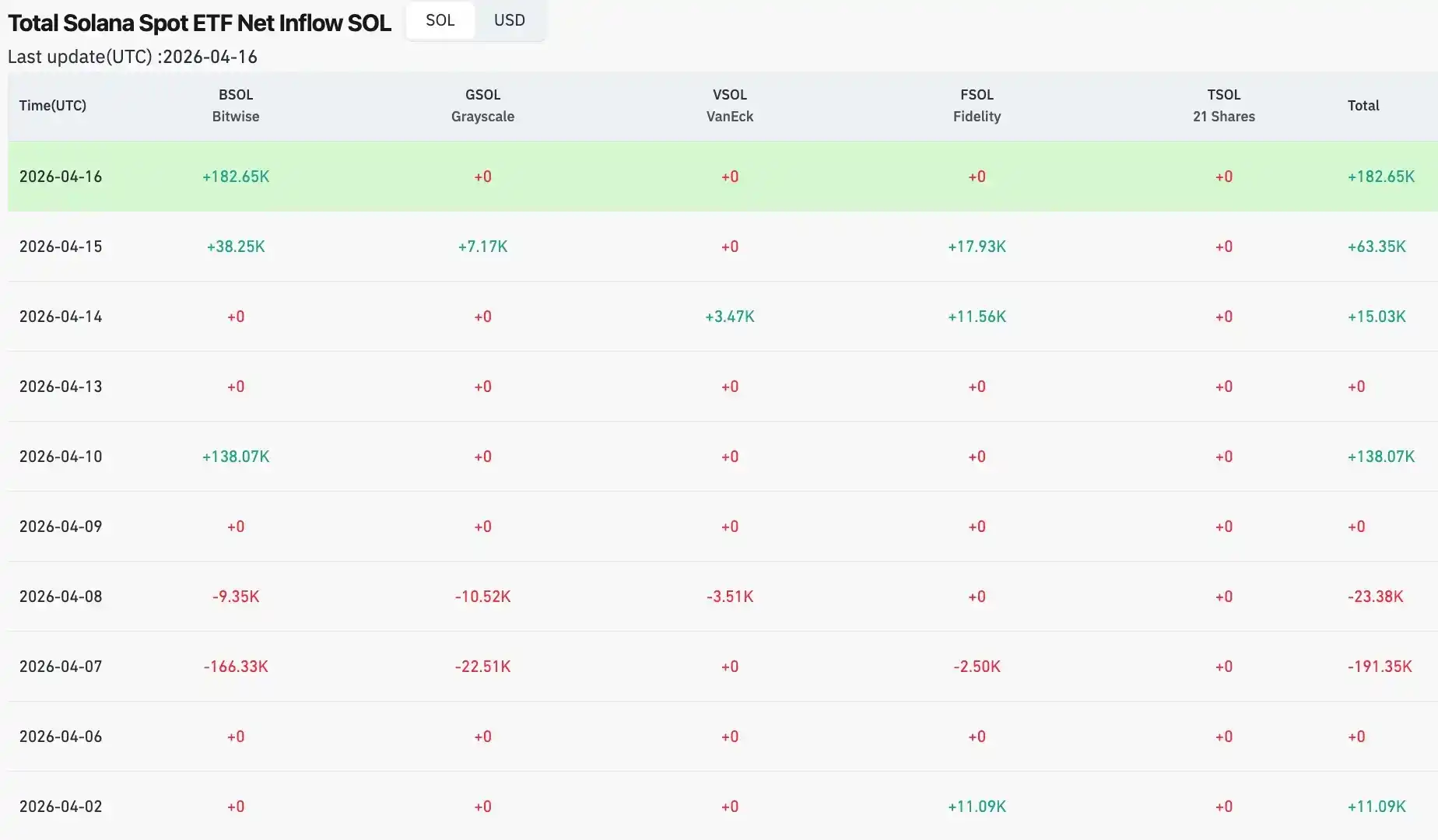
Institutional fund flows provide corroboration. In early April, net inflows for the Solana ETF fell to zero in a single day, after recording a net outflow of $6.2 million on March 30th. The XRP ETF saw continuous net outflows at the start of the month, with only a微量 inflow of about $64.6k on April 2nd. The Ethereum ETF, while seeing a single-day net inflow of $120 million on April 6th, had already experienced an outflow of $71 million the previous day. The overall pattern of institutional funds towards alts is观望, not rotation.
Comparing this to the true altcoin season of 2021 reveals a structural gap. That cycle, from the beginning of the year to May, BTC Dominance fell from over 70% to below 40%, touching a low of around 39%. The rotation of funds between Bitcoin and alts was clear, and the Altcoin Season Index once exceeded 90. That was a全面扩张 driven by泛滥的宏观流动性, with the afterglow of DeFi Summer still warm, retail FOMO entering en masse, stablecoin issuance rapidly expanding同期, and incremental funds continuously pouring into the entire ecosystem. Today's score of 34 and 58.5% dominance paint a different picture; the engine is just warming up, far from running at full speed.

There is also a variable unique to this cycle. Institutional money entering the market via ETFs follows an internal asset allocation logic, not the emotional logic of the crypto market. Institutions are doing "adjust Bitcoin allocation to X%", not "alt season is coming, load up on alts". Structurally, this capital will not spontaneously rotate into the alt market unless explicit instructions are given. This is the most fundamental structural difference between 2021 and 2026. The money that came in 2021 included a large amount of retail capital that went "wherever was hot". Today's institutional money is anchor-style, with a fixed path, not drifting with market sentiment.

The +97% on-chain volume hustle is real, but a market without new money is zero-sum. Every winner's gain corresponds to another player's loss; the total size of the pool hasn't grown.存量博弈 doesn't necessarily mean a crash, but it defines the structure of the game. The热闹 belongs only to those already in the field, those who already hold chips. Those who come in later are typically using their own money to complete the last mile of someone else's exit.

Epilogue

Returning to the data from the beginning: Bitcoin rose about 0.85% in four days, while a few small-cap tokens multiplied several times over the same period. Now you have a framework. Bitcoin's rise is one thing—the macro environment is catching its breath, institutional money is testing the waters, the market is waiting for the next clear signal. The altcoin暴拉 is another thing—low market caps post-overfall create structural vulnerabilities, small amounts of capital leverage price in thin liquidity containers, and extreme negative funding rates turn shorts into fuel for longs. These two things happening simultaneously does not mean they are telling the same story.

Altcoin Season Index 34, BTC Dominance 58.5%. By the historical standards of 2021, this machine hasn't even finished its warm-up procedure. BTC Dominance needs to fall from 58% towards the ~39% seen back then, institutional funds need to expand from "Bitcoin allocation" to "crypto asset portfolio allocation", incremental funds need to持续流入 instead of cashing out at highs. None of these are things a single price surge can solve.

There are two types of people in this machine: those who know for whom it is running, and those who are the fuel required for its operation.

BTC's rise is the signal; the altcoin暴拉 is the echo. Distinguishing between these two things is necessary to make choices in this market that aren't pre-designed by the machine.

Пов'язані питання

QWhat is the main reason behind the recent sharp price increases in some small-cap altcoins, according to the article?

AThe main reason is that the altcoin market has experienced a nearly 40% decline in total market cap, making it cheaper for entities to accumulate large portions of a token's supply and manipulate its price, rather than a signal of a true bull market.

QWhat does the article suggest is the role of short sellers in these altcoin price surges?

AShort sellers act as fuel for the price surges. Extremely negative funding rates force them to pay high fees to longs, and if the price continues to rise, their forced liquidations create automatic buy orders that further push the price up in a cascading effect.

QWhat key metric does the article use to argue that a true 'altcoin season' has not yet arrived?

AThe article cites the Altcoin Season Index, which is at 34/100, and the Bitcoin Dominance rate, which is at 58.5%, as indicators that the market is still in a 'Bitcoin season' and far from a broad-based altcoin rally.

QHow does the source of new capital in this cycle differ from the 2021 cycle, according to the article?

AIn the 2021 cycle, new capital included a large amount of retail 'FOMO' money that flowed to wherever was hot. In the current cycle, capital is primarily from institutions via ETFs, which follow internal asset allocation logic (e.g., 'allocate X% to Bitcoin') and are not easily rotated into altcoins based on market sentiment.

QWhat is the article's final conclusion about the relationship between Bitcoin's price action and the altcoin surges?

AThe article concludes that Bitcoin's rise is a potential signal of macro improvement, while the altcoin surges are an 'echo'—a result of structural vulnerabilities and manipulation in a low-liquidity, oversold market, and that the two phenomena are not telling the same story.

Пов'язані матеріали

Торгівля

Спот
Ф'ючерси

Популярні статті

Що таке BITCOIN

Розуміння HarryPotterObamaSonic10Inu (ERC-20) та його позиції у крипто-просторі Останніми роками ринок криптовалют спостерігав за зростанням популярності мем-коінів, які привертають інтерес не тільки трейдерів, але й тих, хто шукає спілкування та розважальну цінність. Серед цих унікальних токенів є HarryPotterObamaSonic10Inu (ERC-20), інтригуючий проект, що поєднує культурні посилання з тканинами криптовалюти. Ця стаття досліджує ключові аспекти HarryPotterObamaSonic10Inu, вивчаючи його механізми, спільноту та його взаємодію з ширшим крипто-ландшафтом. Що таке HarryPotterObamaSonic10Inu (ERC-20)? Як випливає з його назви, HarryPotterObamaSonic10Inu є мем-коіном, побудованим на блокчейні Ethereum, класифікованим за стандартом ERC-20. На відміну від традиційних криптовалют, які можуть підкреслювати практичну корисність або інвестиційний потенціал, цей токен процвітає завдяки розважальній цінності та силі своєї спільноти. Проект спрямований на створення середовища, де зацікавлені користувачі можуть об'єднуватися, ділитися ідеями та брати участь у заходах, натхненних різноманітними культурними явищами. Однією з примітних особливостей HarryPotterObamaSonic10Inu є нульовий податок на транзакції. Цей привабливий елемент має на меті заохочувати торгівлю та участь у спільноті, позбавлену додаткових витрат, які можуть відлякувати дрібних трейдерів. Загальна пропозиція монет становить один мільярд токенів, що позначає намір підтримувати суттєву циркуляцію в межах спільноти. Творець HarryPotterObamaSonic10Inu (ERC-20) Походження HarryPotterObamaSonic10Inu дещо окутане таємницею; деталі про творця залишаються невідомими. Розвиток цього токена позбавлений впізнаваної команди або чіткої стратегії, що не є рідкістю в секторі мем-коінів. Натомість проект виник органічно, а його розвиток значною мірою залежить від ентузіазму та участі його спільноти. Інвестори HarryPotterObamaSonic10Inu (ERC-20) Щодо зовнішніх інвестицій та підтримки, HarryPotterObamaSonic10Inu також залишається невизначеним. Токен не зазначає жодних відомих інвестиційних фондів або значної організаційної підтримки. Натомість життєва сила проекту полягає в його базовій спільноті, яка інформує про його зростання та стійкість через колективні дії та залученість у крипто-просторі. Як працює HarryPotterObamaSonic10Inu (ERC-20)? Як мем-коін, HarryPotterObamaSonic10Inu функціонує передусім поза традиційними рамками, що часто регулюють вартість активів. Є кілька відмінних аспектів, що визначають, як працює проект: Транзакції без податку: Завдяки відсутності податкових зборів на транзакції, користувачі можуть вільно купувати та продавати токен, не турбуючись про приховані витрати. Залучення спільноти: Проект процвітає завдяки взаємодії спільноти, використовуючи соціальні медіа для створення шуму та сприяння залученню. Обговорення, обмін контентом та залученість є ключовими елементами, що допомагають розширити його охоплення та зміцнити лояльність серед прихильників. Відсутність практичної корисності: Слід зазначити, що HarryPotterObamaSonic10Inu не пропонує конкретної корисності в рамках фінансової екосистеми. Натомість він класифікується як токен, що призначений в основному для розваги та спільнотних активностей. Культурне посилання: Токен кмітливо вплітає елементи популярної культури, щоб привернути інтерес, зв'язуючи з ентузіастами мемів та крипто-стежками. HarryPotterObamaSonic10Inu ілюструє, як мем-коіни функціонують інакше, ніж традиційні криптовалютні проекти, увійшовши на ринок як інноваційні соціальні конструкти, а не утилітарні активи. Хронологія HarryPotterObamaSonic10Inu (ERC-20) Історія HarryPotterObamaSonic10Inu відзначена кількома значними етапами: Створення: Токен виник з вірусного мему, захопивши уяву багатьох крипто-ентузіастів. Конкретні дати створення недоступні, що підкреслює його органічний розвиток. Лістинг на біржах: HarryPotterObamaSonic10Inu з'явився на різних біржах, дозволяючи зручніший доступ і торгівлю спільноти. Ініціативи залучення спільноти: Ведення діяльності, спрямованої на покращення взаємодії спільноти, включаючи конкурси, кампанії в соціальних мережах та створення контенту від фанатів та прихильників. Плани на майбутнє: Дорожня карта проекту включає запуск колекції NFT, мерчандайзинг та електронну комерцію, пов'язану з його культурними темами, що далі залучає спільноту та намагається додати більше вимірів до його екосистеми. Ключові моменти про HarryPotterObamaSonic10Inu (ERC-20) Спільнотний підхід: Проект надає пріоритет колективному внеску та креативності, забезпечуючи, щоб участь користувачів була в центрі його розвитку. Класифікація як мем-коін: Це є його епігенез розважальної криптовалюти, що відрізняється від традиційних інвестиційних інструментів. Жодного прямого відношення до Bitcoin: Незважаючи на схожість у назві, HarryPotterObamaSonic10Inu є відмінним і не має жодного зв’язку з Bitcoin або іншими усталеними криптовалютами. Зосередженість на співпраці: HarryPotterObamaSonic10Inu створено для того, щоб надати простір для співпраці та обміну історіями серед його власників, забезпечуючи шлях для творчості та спільного зв'язку. Перспективи на майбутнє: Амбіція розширитися за межі початкової концепції в NFT та мерчандайз відкриває шлях для проекту потенційно потрапити в більш мейнстрімні сфери цифрової культури. Оскільки мем-коіни продовжують захоплювати уяву спільноти криптовалют, HarryPotterObamaSonic10Inu (ERC-20) вирізняється своїми культурними зв'язками та орієнтованим на спільноту підходом. Хоча він може не відповідати типовій моделі утилітарного токена, його суть полягає в радощах і товариськості, що підтримуються серед його прихильників, підкреслюючи еволюційну природу криптовалют в усе більш цифрову епоху. Оскільки проект продовжує розвиватися, важливо спостерігати за тим, як динаміка спільноти вплине на його траєкторію в постійно змінюваному ландшафті технології блокчейн.

1.7k переглядів усьогоОпубліковано 2024.04.01Оновлено 2024.12.03

Що таке BITCOIN

Як купити BTC

Ласкаво просимо до HTX.com! Ми зробили покупку Bitcoin (BTC) простою та зручною. Дотримуйтесь нашої покрокової інструкції, щоб розпочати свою криптовалютну подорож.Крок 1: Створіть обліковий запис на HTXВикористовуйте свою електронну пошту або номер телефону, щоб зареєструвати обліковий запис на HTX безплатно. Пройдіть безпроблемну реєстрацію й отримайте доступ до всіх функцій.ЗареєструватисьКрок 2: Перейдіть до розділу Купити крипту і виберіть спосіб оплатиКредитна/дебетова картка: використовуйте вашу картку Visa або Mastercard, щоб миттєво купити Bitcoin (BTC).Баланс: використовуйте кошти з балансу вашого рахунку HTX для безперешкодної торгівлі.Треті особи: ми додали популярні способи оплати, такі як Google Pay та Apple Pay, щоб підвищити зручність.P2P: Торгуйте безпосередньо з іншими користувачами на HTX.Позабіржова торгівля (OTC): ми пропонуємо індивідуальні послуги та конкурентні обмінні курси для трейдерів.Крок 3: Зберігайте свої Bitcoin (BTC)Після придбання Bitcoin (BTC) збережіть його у своєму обліковому записі на HTX. Крім того, ви можете відправити його в інше місце за допомогою блокчейн-переказу або використовувати його для торгівлі іншими криптовалютами.Крок 4: Торгівля Bitcoin (BTC)Легко торгуйте Bitcoin (BTC) на спотовому ринку HTX. Просто увійдіть до свого облікового запису, виберіть торгову пару, укладайте угоди та спостерігайте за ними в режимі реального часу. Ми пропонуємо зручний досвід як для початківців, так і для досвідчених трейдерів.

4.4k переглядів усьогоОпубліковано 2024.12.12Оновлено 2025.03.21

Як купити BTC

Що таке $BITCOIN

ЦИФРОВЕ ЗОЛОТО ($BITCOIN): Комплексний аналіз Вступ до ЦИФРОВОГО ЗОЛОТА ($BITCOIN) ЦИФРОВЕ ЗОЛОТО ($BITCOIN) — це проект на основі блокчейну, що працює в мережі Solana, який має на меті поєднати характеристики традиційних дорогоцінних металів з інноваціями децентралізованих технологій. Хоча він має таку ж назву, як і Bitcoin, який часто називають “цифровим золотом” через його сприйняття як засобу збереження вартості, ЦИФРОВЕ ЗОЛОТО є окремим токеном, розробленим для створення унікальної екосистеми в ландшафті Web3. Його мета — позиціонувати себе як життєздатний альтернативний цифровий актив, хоча деталі щодо його застосувань і функціональностей все ще розробляються. Що таке ЦИФРОВЕ ЗОЛОТО ($BITCOIN)? ЦИФРОВЕ ЗОЛОТО ($BITCOIN) — це токен криптовалюти, спеціально розроблений для використання в блокчейні Solana. На відміну від Bitcoin, який виконує широко визнану роль зберігання вартості, цей токен, здається, зосереджується на більш широких застосуваннях і характеристиках. Помітні аспекти включають: Інфраструктура блокчейну: Токен побудований на блокчейні Solana, відомому своєю здатністю обробляти швидкі та низьковартісні транзакції. Динаміка постачання: ЦИФРОВЕ ЗОЛОТО має максимальне постачання, обмежене 100 квадрильйонами токенів (100P $BITCOIN), хоча деталі щодо його обігового постачання наразі не розголошуються. Утиліта: Хоча точні функціональності не викладені, є вказівки на те, що токен може бути використаний для різних застосувань, потенційно пов'язаних з децентралізованими додатками (dApps) або стратегіями токенізації активів. Хто є творцем ЦИФРОВОГО ЗОЛОТА ($BITCOIN)? На даний момент особа творців і команди розробників, що стоять за ЦИФРОВИМ ЗОЛОТОМ ($BITCOIN), залишається невідомою. Ця ситуація є типовою для багатьох інноваційних проектів у сфері блокчейну, особливо тих, що пов'язані з децентралізованими фінансами та феноменом мем-коінів. Хоча така анонімність може сприяти культурі, орієнтованій на спільноту, вона посилює занепокоєння щодо управління та підзвітності. Хто є інвесторами ЦИФРОВОГО ЗОЛОТА ($BITCOIN)? Доступна інформація вказує на те, що ЦИФРОВЕ ЗОЛОТО ($BITCOIN) не має жодних відомих інституційних спонсорів або помітних венчурних капіталовкладень. Проект, здається, працює за моделлю “рівний до рівного”, зосереджуючись на підтримці та прийнятті спільноти, а не на традиційних шляхах фінансування. Його активність і ліквідність переважно розташовані на децентралізованих біржах (DEX), таких як PumpSwap, а не на встановлених централізованих торгових платформах, що ще більше підкреслює його підхід знизу вгору. Як працює ЦИФРОВЕ ЗОЛОТО ($BITCOIN) Операційні механізми ЦИФРОВОГО ЗОЛОТА ($BITCOIN) можна детальніше розглянути на основі його дизайну блокчейну та характеристик мережі: Механізм консенсусу: Використовуючи унікальний proof-of-history (PoH) Solana в поєднанні з моделлю proof-of-stake (PoS), проект забезпечує ефективну валідацію транзакцій, що сприяє високій продуктивності мережі. Токеноміка: Хоча конкретні дефляційні механізми не були детально описані, велике максимальне постачання токенів вказує на те, що воно може задовольняти мікротранзакції або нішеві випадки використання, які ще потрібно визначити. Інтероперабельність: Існує потенціал для інтеграції з більш широкою екосистемою Solana, включаючи різні платформи децентралізованих фінансів (DeFi). Однак деталі щодо конкретних інтеграцій залишаються невизначеними. Хронологія ключових подій Ось хронологія, яка підкреслює значні віхи, пов'язані з ЦИФРОВИМ ЗОЛОТОМ ($BITCOIN): 2023: Початкове розгортання токена відбувається на блокчейні Solana, позначене його адресою контракту. 2024: ЦИФРОВЕ ЗОЛОТО набуває видимості, оскільки стає доступним для торгівлі на децентралізованих біржах, таких як PumpSwap, що дозволяє користувачам торгувати ним проти SOL. 2025: Проект спостерігає спорадичну торгову активність і потенційний інтерес до ініціатив, очолюваних спільнотою, хоча на даний момент не зафіксовано жодних значних партнерств або технічних досягнень. Критичний аналіз Сильні сторони Масштабованість: Основна інфраструктура Solana підтримує високі обсяги транзакцій, що може підвищити утиліту $BITCOIN у різних сценаріях транзакцій. Доступність: Потенційно низька торгова ціна за токен може привабити роздрібних інвесторів, сприяючи більш широкій участі завдяки можливостям дробового володіння. Ризики Відсутність прозорості: Відсутність публічно відомих спонсорів, розробників або процесу аудиту може викликати скептицизм щодо стійкості та надійності проекту. Волатильність ринку: Торгова активність сильно залежить від спекулятивної поведінки, що може призвести до значної волатильності цін і невизначеності для інвесторів. Висновок ЦИФРОВЕ ЗОЛОТО ($BITCOIN) постає як цікавій, але неоднозначний проект у швидко розвиваючійся екосистемі Solana. Хоча він намагається використати наратив “цифрового золота”, його відхід від встановленої ролі Bitcoin як засобу збереження вартості підкреслює необхідність чіткішого розмежування його передбачуваної утиліти та структури управління. Майбутнє прийняття та адаптація, ймовірно, залежатиме від вирішення поточної непрозорості та більш чіткого визначення його операційних та економічних стратегій. Примітка: Цей звіт охоплює синтезовану інформацію, доступну станом на жовтень 2023 року, і можуть відбутися події, що виходять за межі дослідницького періоду.

75 переглядів усьогоОпубліковано 2025.05.13Оновлено 2025.05.13

Що таке $BITCOIN

Обговорення

Ласкаво просимо до спільноти HTX. Тут ви можете бути в курсі останніх подій розвитку платформи та отримати доступ до професійної ринкової інформації. Нижче представлені думки користувачів щодо ціни BTC (BTC).

活动图片