Apple Gains Full Access to Google's Gemini, Accelerates On-Device AI Model Development with Distillation Technology

marsbitОпубліковано о 2026-03-27Востаннє оновлено о 2026-03-27

Анотація

Apple has secured full access to Google's Gemini model, aiming to accelerate the development of its on-device lightweight AI systems using advanced data distillation techniques. The company will utilize Gemini’s high-quality answers and chain-of-thought reasoning as training data to “feed” its own smaller, proprietary models. This approach, known as model distillation, enables compact models to achieve reasoning capabilities comparable to top-tier large models while maintaining computational efficiency. Although Gemini was originally designed for chatbots and enterprise applications—differing from Apple’s system-level integration vision for Siri—this collaboration significantly addresses Apple's need for high-quality synthetic data. In parallel, Apple continues its in-house development efforts through its Apple Foundation Models team. New AI features leveraging this distilled technology are expected to debut at Apple’s Worldwide Developers Conference (WWDC) in June. This partnership highlights a shift in the AI industry from pure computing power competition toward more efficient training strategies. By investing in access to leading model capabilities to enhance its edge computing advantages, Apple illustrates the ongoing balance between general-purpose large models and private on-device AI. This move also signals a future where edge devices will possess stronger local inference and complex task-handling abilities, further advancing the democratization of AI.

Recently, Apple has obtained extensive access to Google's Gemini model, aiming to accelerate the development of its lightweight on-device artificial intelligence through advanced data distillation technology.

According to related reports, Apple currently has full access to the Gemini model within its data centers. The core of this strategic move is to use the high-quality answers and logical reasoning chain records generated by Gemini as training data to "feed" Apple's self-developed small models. This "model distillation" approach, where large models guide the training of small models, enables the lightweight versions to maintain efficient computation while possessing logical processing capabilities similar to those of top-tier large models.
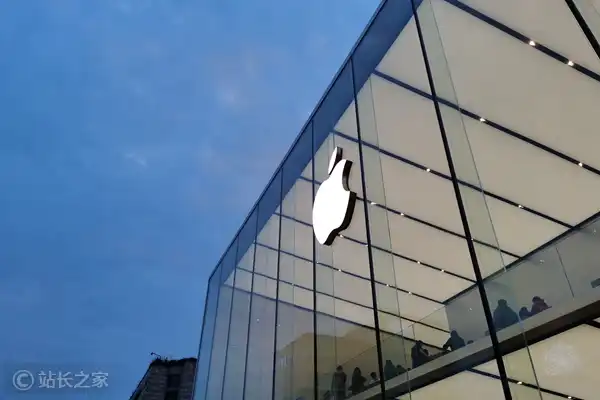
Although Gemini was initially designed for chatbots and enterprise-level applications, differing from Apple's deep system-level planning for Siri in terms of product logic, this collaboration significantly fills the gap in Apple's access to high-quality synthetic data. At the same time, Apple has not abandoned its self-development path; its Apple Foundation Models team is simultaneously advancing the in-house development of underlying models. It is expected that these new-generation AI features, incorporating distillation technology, will be showcased at the upcoming Apple Worldwide Developers Conference (WWDC) in June.

This collaboration marks a shift in the AI industry from pure computing power competition to more efficient training strategy competition. Apple's choice to "pay for data," by absorbing the capabilities of top-tier models to strengthen its edge computing advantage, not only reflects the game and balance between tech giants in general-purpose large models and private on-device AI but also预示着 that on-device equipment in the future will possess stronger local reasoning and complex task processing capabilities, further advancing the process of AI democratization.


Пов'язані питання

QWhat is the core purpose of Apple gaining full access to Google's Gemini model?

AThe core purpose is to use Gemini's high-quality answers and chain-of-thought reasoning data to train Apple's own smaller, on-device AI models through a process called model distillation.

QHow does the 'model distillation' technique mentioned in the article work?

AModel distillation works by using a large, powerful model (like Gemini) to generate high-quality training data and logical reasoning traces, which are then used to 'teach' and train a smaller, more efficient model to achieve similar capabilities.

QWhat gap does this collaboration with Google help Apple fill?

AThis collaboration significantly fills Apple's gap in obtaining high-quality synthetic data for training its AI models.

QWhat is the name of Apple's team that is continuing its own foundational model research?

AThe team is called the Apple Foundation Models team.

QWhat industry shift does this Apple-Google collaboration signify according to the article?

AIt signifies a shift in the AI industry from pure computing power competition towards competition over more efficient training strategies.

Пов'язані матеріали

Within Strategy's Framework, STRC's Dividend Yield Remains at 12% as Share Price Stays Below Par Value

Michael Saylor, Executive Chairman of Strategy (MSTR), confirmed that the dividend rate for its STRC perpetual preferred shares will remain at 12.00% through August 2026. The rate has increased from 9% at its July 2025 launch to the current high via a "ratchet" mechanism, which permanently raises the rate by 0.5% whenever the share price falls below $95. This mechanism is intended to push the price back toward its $100 par value and support Strategy's "at-the-market" (ATM) program for issuing new shares to fund Bitcoin purchases. However, the mechanism has not worked as intended. STRC shares closed at $89.46 on July 31, remaining about 10-11% below par value despite the record-high dividend. Competition from rival Strive's higher-yielding SATA securities has pressured demand. The persistent discount has forced Strategy to suspend new STRC issuances via its ATM program, limiting this funding channel for Bitcoin acquisitions. STRC's struggles reflect Bitcoin's own volatility, as the preferred shares historically move in tandem. Analysts have warned the ratchet structure carries long-term, one-way risk. A law firm is investigating Strategy's ability to maintain dividend payments if Bitcoin's price stays low. Retail investors own roughly 83% of outstanding STRC shares, a group seen as prone to panic selling during downturns. In response, Strategy has established financial reserves, including a liquidity cushion covering about 26 months of dividend/interest obligations, and a $2 billion share buyback program alongside a Bitcoin monetization framework, though the company emphasized it is not obligated to sell any Bitcoin.

cryptonews.ru11 хв тому

Within Strategy's Framework, STRC's Dividend Yield Remains at 12% as Share Price Stays Below Par Value

cryptonews.ru11 хв тому

Analyst: Bitcoin's Price Will Drop to $60k in August, Then Rebound to $70k

Financial analyst Andrey Poroshin has provided a new forecast for Bitcoin's price dynamics in August. Poroshin, an analyst at the Bitbanker exchange, expects the cryptocurrency market to experience a downturn this month, with prices retesting the $60,000 level due to a lack of supportive macroeconomic catalysts. He noted that the recent US Federal Reserve decision to hold interest rates did not significantly impact the market, while inflation remains above the 2% target. Poroshin stated that Bitcoin is ending July under pressure from moderate volatility and a lack of new macroeconomic stimuli, leading to continued market caution. According to his base scenario, Bitcoin will drop to a range of $60,000 to $62,000 before recovering to $70,000. He pointed out that even $70,000 remains below the cost of mining in the US, which has prompted some miners to shift towards AI data center operations. Poroshin cited the winding down of BitMEX's operations as a potential catalyst for a price rebound, suggesting the exit of weaker players often coincides with market reversals and reduced short-term selling pressure. He believes Bitcoin is currently less susceptible to geopolitical shocks, such as the Iran-US conflict, and does not expect significant market changes in August related to the pending CLARITY Act. Looking ahead, Poroshin forecasts that September will bring more active price fluctuations driven by potential Fed rate decisions and possible discussions or approval of the CLARITY Act.

cryptonews.ru11 хв тому

Analyst: Bitcoin's Price Will Drop to $60k in August, Then Rebound to $70k

cryptonews.ru11 хв тому

Торгівля

Спот
活动图片




