Apple Finally Admits, Siri Is Getting Old

marsbitОпубліковано о 2026-06-09Востаннє оновлено о 2026-06-09

Анотація

In a significant shift, Apple has rebranded Siri to "Siri AI" at WWDC 2026, acknowledging the assistant's limitations after years of stagnation. The company announced a deep partnership with Google, leveraging Gemini's model capabilities to train its new Apple Foundation Models. This collaboration extends Apple's Private Cloud Compute to Google Cloud and Nvidia GPUs for the first time. The article traces Siri's history from its groundbreaking 2011 debut to its subsequent confinement within Apple's closed ecosystem, prioritizing control and privacy over expansive functionality. While Apple integrated AI into its hardware and systems over the years (e.g., Neural Engine, Core ML), it missed the paradigm shift brought by generative AI models like ChatGPT. Facing pressure, Apple restructured its AI leadership and opted to license Google's Gemini technology—reportedly paying around $1 billion annually—to power the revamped Siri. The strategy involves "distilling" knowledge from the large Gemini model into smaller, on-device models. Apple also plans to use Google Cloud's Nvidia GPUs for complex cloud inference tasks. The core vision for "Apple Intelligence" is a system-level assistant that reduces cognitive load: summarizing notifications and emails, drafting context-aware replies, and retrieving relevant information across apps. Siri gains a dedicated app with memory and cross-device sync. However, this AI push comes with hardware requirements, potentially excluding older iPhone...

By Sleepy

Beijing time, in the early hours of June 9, 2026, Apple's WWDC 2026 commenced as scheduled.

At the event, it rebranded Siri as Siri AI, announced a deep collaboration with Google, using Gemini's model capabilities to train its new generation of foundation models. It extended Private Cloud Compute for the first time to Google Cloud and Nvidia's GPUs.
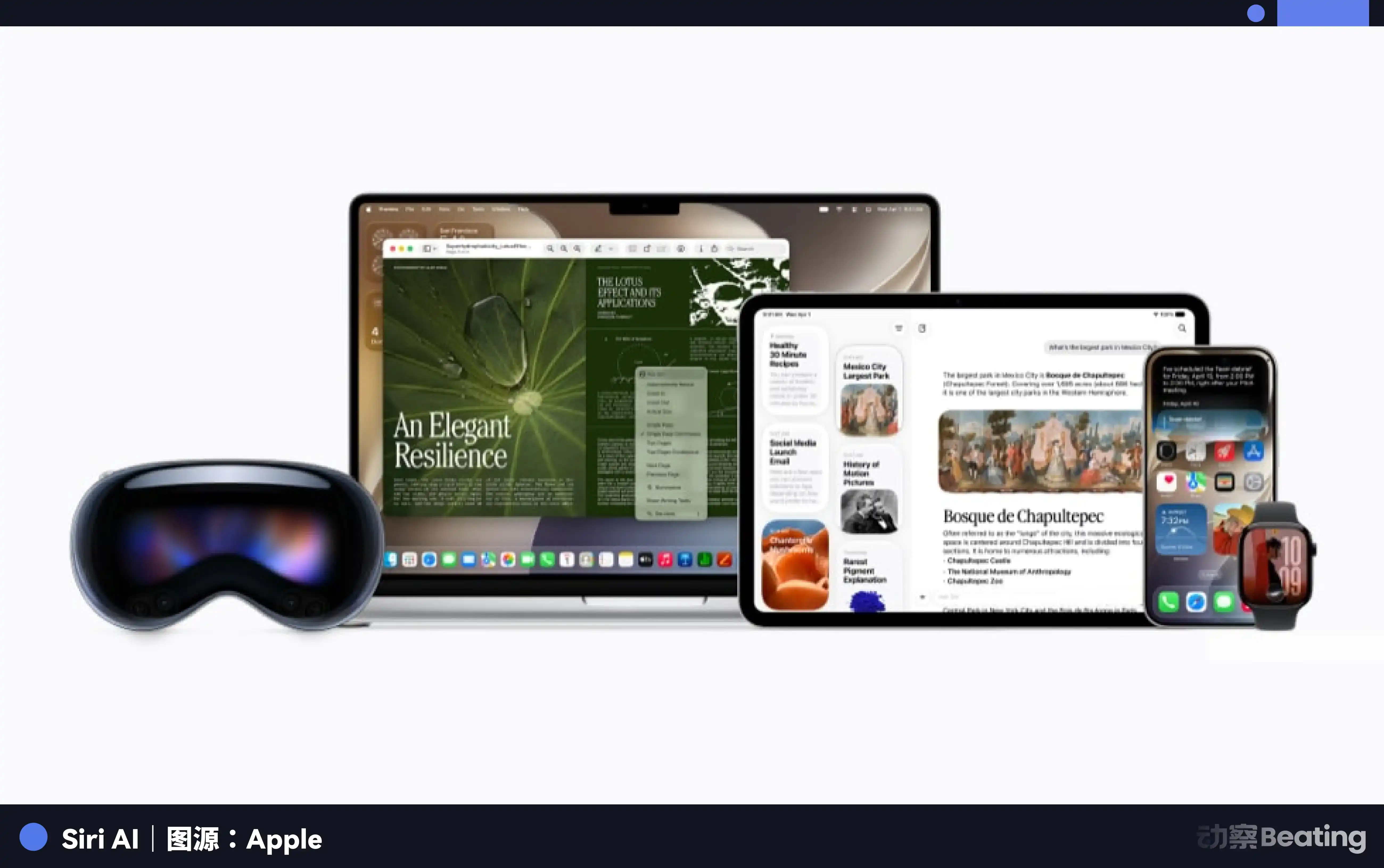
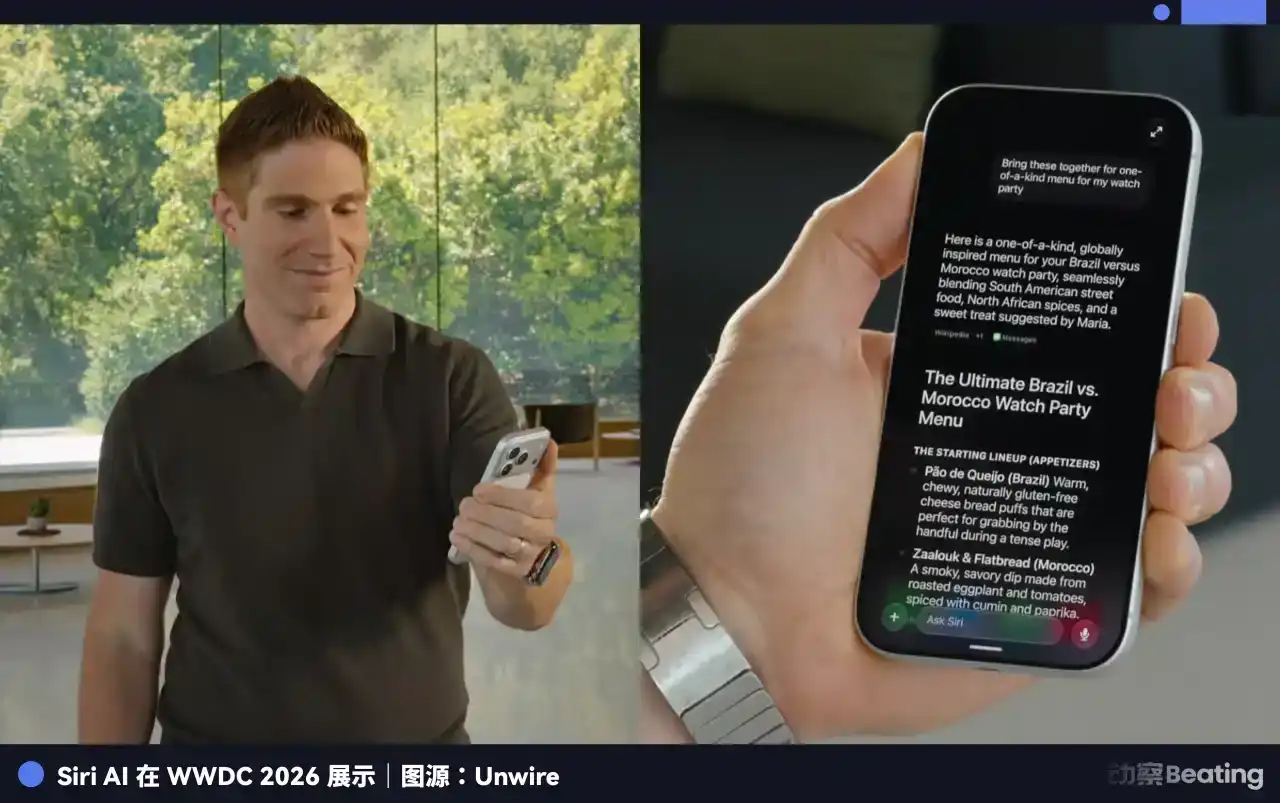
It released five Apple Foundation Models, with the smallest on-device model having 3 billion parameters and the largest cloud model optimized specifically for Nvidia GPUs. Almost every core app was rewritten. Siri even got its own standalone app, with the ability to save conversations, sync across devices, and possess memory.

This was Apple's most information-dense keynote in recent years.

Taming a Future

Apple's AI story can be traced back to the fall of 2011, at the iPhone 4S launch event, where Siri first took the stage.
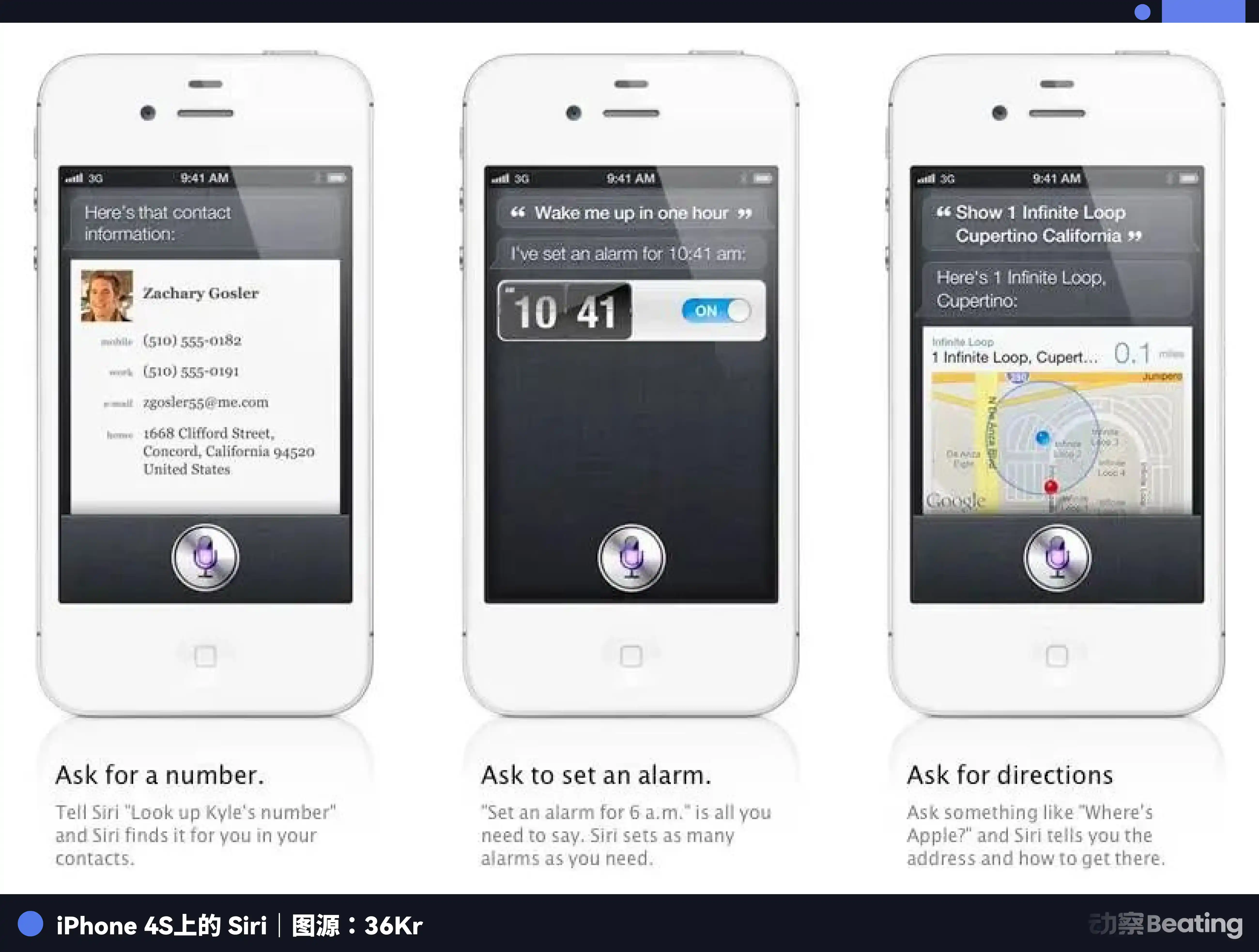
At that time, Steve Jobs was gravely ill, and Apple stood at the crossroads of an era. Siri was like a little creature that had escaped from a sci-fi movie. You could ask it about the weather, restaurants, or set an alarm. It would answer you in a slightly mechanical tone, making you feel for the first time that a phone was more than just a piece of cold glass.

Siri evolved from the CALO project by SRI International, originally a military-grade AI assistant funded by DARPA. In 2010, Apple acquired it. According to TechCrunch, the deal likely exceeded $200 million. A year later, Siri debuted with the iPhone 4S. Apple claimed it could understand natural language and act as a personal assistant to handle tasks.

At that moment, Apple secured the world's best entry point for personal intelligence. Then, it delayed for over a decade.

Looking back today, what Siri initially changed was the posture of how people talked to machines. In 2011, the iPhone was turning mobile phones from communication tools into personal computing devices. The App Store redefined software distribution, and the mobile internet migrated from the PC desktop into the palm of your hand. Siri appeared at the crest of a rising wave. But after entering Apple, it quickly transformed from an ambitious personal assistant into a obedient voice remote control.

At its core, Apple believes in being closed and in control. But a true personal assistant must integrate with more services, understand more context, and tolerate more uncertainty. Uncertainty means errors, privacy risks, and the disorder that Apple is least equipped to handle.

Thus, Siri was only allowed to perform deterministic tasks, like a future that had been tamed. It had a name, a voice, a personality wrapper, but lacked the initiative and memory required for a genuine persona. Users were initially amazed by it, later made jokes about it, and eventually stopped using it much.

Apple was the first to put a "personal assistant" into a phone and also the first to lock it away.

The Agent that the entire industry is now working on, looking back, Siri in 2011 was almost its prototype. One could say Apple was the earliest company to create the prototype of an Agent, yet ended up being one of the last to fully realize it.

The AI That Doesn't Look Like AI

During the years Siri didn't grow up, did Apple's AI stagnate?

Quite the opposite. Apple did a lot of AI; it just didn't look like AI.

If measured by the volume of keynote announcements, Apple seemed to only start talking seriously about AI in 2024. But if you trace the technical path backward, Apple had been in motion for a decade.

In 2015, it acquired two companies in succession—one to bolster natural language dialogue, another to explore running deep learning directly on phones. That same year at WWDC, it discussed the Proactive Assistant, attempting to make the system offer suggestions before the user even asked. This idea was ahead of its time but, under the technological constraints of that period, it was more like a slogan.

The following year, it launched SiriKit, cautiously opening Siri up to developers with limited functionality. It also publicly discussed Differential Privacy, stating its intention to learn from large-scale data while protecting individual privacy. In 2017, the iPhone X brought the Neural Engine. Face ID and the camera began relying on on-device machine learning. Apple simultaneously introduced Core ML, allowing developers to run models on Apple devices, and acquired Workflow, which later became Shortcuts.

This was a very Apple-like set of answers. It wanted AI, but not by betting everything on the cloud and massive personal data like Google. It wanted developers, but didn't want Siri to become a messy stew. So Apple chose the hardest and slowest path: focus on the device, privacy, and system integration.

Around 2020, Apple bought several more companies focused on low-power edge AI and speech understanding. That same year, the M1 chip was released, bringing a 16-core Neural Engine to the Mac, pushing on-device AI compute from phones in pockets all the way to computers. The next year, Live Text and Visual Look Up landed. Text in photos could be copied directly, the camera could identify plants and flowers, and more voice requests could be processed on the device without needing the cloud.

Apple indeed didn't release a standalone AI app in these years, but it did make the phone smarter.

Choosing this path had its reasons. AI on a phone isn't just a Q&A machine. It needs to see photos, hear voice, understand contacts, launch apps, sense battery, location, and time. It's best if it can do some things offline, and preferably not bundle up a user's life and upload it to the cloud with every request. Apple's hardware control gave it the qualification to walk this path.

But between localized intelligence and holistic intelligence lies a deep chasm. Apple excels at breaking technology down into reliable components, but generative AI demands it reassemble those components into a whole.

These components quietly lay buried within the system, waiting for a catalyst.

The catalyst didn't arrive first. ChatGPT did.

When ChatGPT emerged at the end of 2022, Apple wasn't unprepared. Tim Cook repeatedly emphasized in various forums that AI and machine learning had been core technologies in Apple products for many years. Bloomberg also reported in 2023 on Apple's internal Ajax large model framework and internal Chatbot project.

The problem wasn't whether Apple had cards in its hand; the problem was that the rules of the game had changed.

ChatGPT shifted user attention from "functions" to "capabilities." Users began to expect AI on their phones by default, and then compared whose was stronger. When ChatGPT could already organize messy thoughts into a coherent email, Siri was still saying, "I found this on the web."

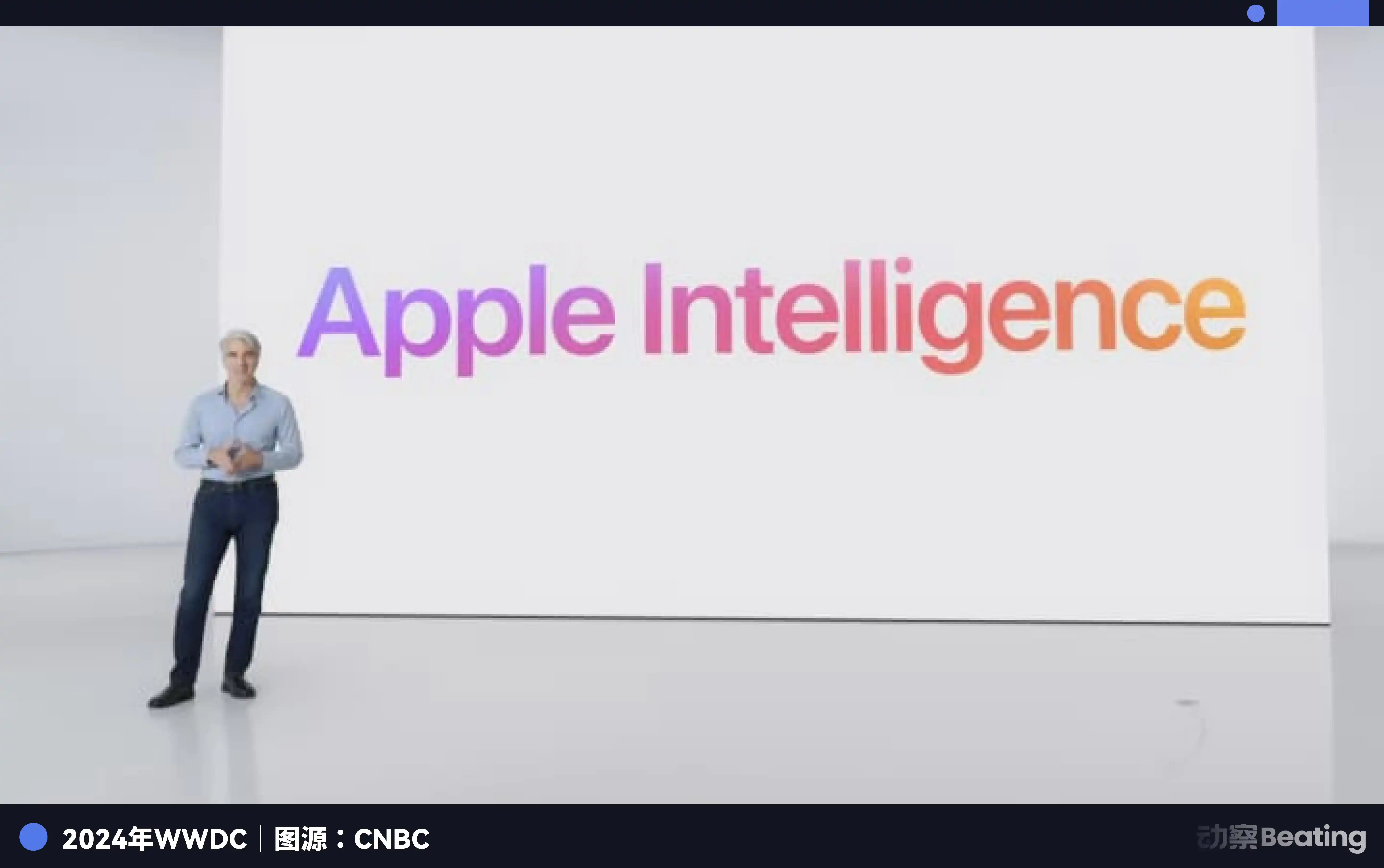
At WWDC 2024, Apple put Apple Intelligence on the table. Writing tools, notification summaries, photo search, personalized Siri understanding, ChatGPT integration. Apple finally admitted that relying solely on in-house models, at least in 2024, couldn't meet user expectations. But the vision it painted ultimately failed to land on the announced schedule.
Hiring Google as a Tutor

Behind the delay of Apple Intelligence wasn't just technology lagging, but the entire Siri team structure failing to keep pace with this round of AI.

Multiple media outlets confirmed that Apple's former AI head, John Giannandrea, stepped down. Craig Federighi took over AI direction, and Vision Pro head Mike Rockwell was transferred to lead the Siri team. A large number of Siri engineers were sent to learn AI programming tools. This wasn't a graceful rotation. Internally, Apple had realized that with the original people and the original pace, it couldn't catch up.

In January 2026, Apple and Google issued a joint statement. Apple would leverage Gemini technology to tailor Apple Intelligence features for the iPhone and other products. According to reports, Apple plans to pay Google approximately $1 billion annually to use a custom Gemini model at the 1.2 trillion parameter level to support the Siri overhaul. Apple had previously tested models from OpenAI and Anthropic but ultimately chose Google.

This is completely different from the ChatGPT integration in 2024. Back then, ChatGPT was more like a lifeline users could authorize when Siri couldn't answer—its brand was OpenAI's, and the interface was pop-up style. This time, Gemini goes directly into the underlying layers, becoming part of Apple's new generation of foundation models.

The key action is distillation. Google gave Apple full access to Gemini. Apple uses the large model within Google's data centers to generate high-quality answers and reasoning processes, then uses those results to train smaller, cheaper models that can run on the iPhone.

A technical paper published by Apple the day before WWDC framed this partnership as the third-generation Apple Foundation Models. Collaborating with Google, it custom-developed five models. On-device, there's the 3-billion-parameter AFM 3 Core, and a 20-billion-parameter sparse model, AFM 3 Core Advanced, which only activates parts per request. For the cloud, there are AFM 3 Cloud, the image model ADM 3 Cloud, and the most powerful AFM 3 Cloud Pro.

More pragmatic changes lie in compute power. No matter how smart on-device models are, they can't handle all tasks. Apple's Private Cloud Compute infrastructure alone could not fully bear Gemini-level inference. Some requests would run on Nvidia GPUs within Google Cloud. Apple subsequently confirmed PCC's first extension beyond Apple's own data centers, with the tech stack covering Nvidia Confidential Computing, Intel TDX, and Google Titan chips. Apple emphasized it still controls PCC software, with devices only trusting programs encrypted and approved by Apple. Related binary files would also be open for inspection by security researchers.

Apple didn't truly relinquish control, but it gave up the dignity of full self-reliance.

Borrowed Bones

To understand Apple's position in the AI era, one must first see its most core asset.

It's not chips, not models, but devices. Devices hold photos, emails, calendars, maps, payments, carrying the fragments of billions of ordinary lives. Whichever AI can mobilize these fragments is no longer just a chatbot; it can become the true personal intelligence hub.

Apple started paving the way for this hub long ago. The Workflow it acquired in 2017 later became Shortcuts, deeply integrated with Siri and system automation. The App Intents introduced in 2022 let third-party apps expose their capabilities to system entry points. In the Apple Intelligence era, these interfaces become the hands and feet for AI to call real-world actions.

With these interfaces, OpenAI can enter, Gemini can enter, and in the future, local partners can be found for the Chinese market. But their entry isn't directly taking over the iPhone; they are fitted into Apple's permission framework and privacy rules.
What Apple fears most isn't whose model is stronger. It fears users starting to bypass the system and directly hand over their lives to another entry point. If one day users opened not apps but an AI assistant that could orchestrate everything for them, Apple would be relegated to a well-crafted shell.

So from now on, the "Apple" in Apple Intelligence represents product control more than complete technological sovereignty. The skin is its own, the clothes are tailored by itself, but the bones are borrowed. Google provides the skeleton, Nvidia provides the joints, and Apple's job is to dress this body in its own clothes and send it out into the world.

What Google gains from this deal is a massive endorsement—even Apple acknowledges Gemini's underlying capabilities as more reliable. What Nvidia gains is another proof that even with the strongest consumer-grade chips and ambitions for self-developed servers, when it comes to cutting-edge inference and complex agent tasks, GPU clouds are still unavoidable.

But the more bones are borrowed, the less the body is truly one's own. Behind every borrowed bone lie supplier business calculations, regulations, and technology cadences. If one day someone decides to pull those bones back, can Apple stand on its own? It's a question Apple doesn't need to answer for now, but it will have to eventually.

A New Tenant Moving into the System

Ordinary people don't care about model parameters. They care if their phone can bother them less.

On the WWDC26 stage, Apple said: "There are times when you expect more from Siri."

For Apple, this almost counts as an apology.

Then it tried to show you a different morning.

You wake up, and the screen is cluttered with twenty notifications. In the past, you'd have to swipe them away one by one. Now the system has already sorted them by priority for you—your boss's messages are at the top, ads and promotions are condensed into a line of gray text. You open your email. A long work email has been summarized into three sentences. You decide to reply, and Siri drafts a response for you based on your usual tone when speaking with this person. You remember you need to call a merchant to return an item in the afternoon. Before you even dial, the system has already pulled the order number from your email from a couple of days ago and placed it on the call interface.

This is the story Apple wants to tell—a layer of intelligence laid beneath the system, saving you from the daily cognitive chores. Read less nonsense, search for files less, get interrupted by notifications less.

To tell this story well, Apple almost completely redesigned Siri's entry point. On the iPhone, it's placed in the Dynamic Island, accessible with a pull-down. On iPad and Mac, it's merged with Spotlight. It has its own standalone app, capable of saving and continuing past conversations, syncing across devices via iCloud. Apple wants Siri to become an AI assistant living within the system, with memory and context, but tries hard not to make it look like ChatGPT.

Vision is also a crucial direction. The camera adds a Siri mode—point it at food for nutritional info, point it at something unrecognizable for identification and search. System-wide dictation is no longer just speech-to-text; it automatically adds punctuation, adjusts formatting, turning spoken words into text ready to send.

The path is also being paved on the developer side. Apple opened the Core AI framework, allowing third parties to load their own models on devices. Upgraded App Intents make it easier for Siri to understand third-party apps. The Foundation Models Framework no longer just calls Apple's on-device models; it also supports integrating external providers like Claude and Gemini. Apple is paving a path for the entire ecosystem: for Siri to perform tasks across apps in the future, developers must hand over content and actions for the system to understand.

If these plans materialize, Apple AI will no longer be just "Siri that can chat."

But Apple is more cautious this time than in the past. Siri AI will only open to users in beta later this year, starting with English. And the same Apple Intelligence, when it reaches China, will likely be a different product.

For Chinese users, watching Apple AI is mostly just for entertainment. The keynote is lively, the features look good, but "not available in your region" for China.

The Chinese market has a whole set of rules for generative AI: filing, content safety, and data localization. Apple needs to find local model partners and pass regulatory approvals. Apple Intelligence in China isn't just a matter of launching months later; it may fundamentally be a different thing from the ground up.

What U.S. users see is a combination of in-house models and Gemini. What Chinese users may see is a version kneaded together by Apple's system permissions, local cloud services, domestic models, and regulatory requirements. They are both called Apple Intelligence, but their actual capabilities and reachable boundaries could be entirely different.

iCloud services in Mainland China are operated by GCBD. The cloud drive saves files, AI needs to understand files; the cloud drive stores photos, AI needs to understand photos; the cloud drive syncs notes, AI needs to extract your plans, habits, and relationships from notes. This data has new uses in the AI era and naturally faces varying degrees of scrutiny.

A more immediate threat comes from competition. Domestic smartphone manufacturers are moving fast with on-device large models, Chinese-language assistants, and imaging AI. For Chinese users, spending ten to twenty thousand yuan on a new iPhone only to find its core AI features unavailable might just prompt them to switch brands.

The daily scenarios in the Chinese market are particularly tricky for Apple. WeChat, Alipay, Meituan, Douyin, ride-hailing apps, government services, hospital registrations—these are what many people actually use their phones for every day. An AI assistant that cannot access these scenarios, cannot understand group chats, receipts, verification codes, and expressions only locals instantly grasp, can hardly be called "intelligent."

Understanding a Person

Apple Intelligence also has another issue: it doesn't cover all iPhones.

iOS 27 can cover down to the iPhone 11 and the second-gen iPhone SE, but Apple Intelligence requires at least the iPhone 15 Pro and newer models, M-series iPads, and Macs. The strongest on-device models require even more: iPhone 17 Pro, iPhone Air, iPads with at least 12GB of unified memory on M4, or M3 Macs.

In recent years, upgrade cycles have been stretching longer. Screens are good enough, cameras are sufficient, and many no longer change phones yearly. AI might become the reason Apple uses to stimulate upgrades again. On-device AI indeed requires stronger chips and more memory, making hardware thresholds inevitable. A capability packaged as "understanding you better" ultimately becomes a price barrier.

For over a decade, Apple has constantly asked, "What comes after the iPhone?" It tried watches, headphones, TVs, and that rumored car project that lasted ten years before being canceled. In 2024, part of the car team's staff were transferred to the generative AI team.

AI arrived just in time. It gives Apple a next-generation story without needing to create a new hardware category from scratch—just transform the devices already in the hands of over a billion users. What comes after the iPhone might still be the iPhone, but it must become something else.

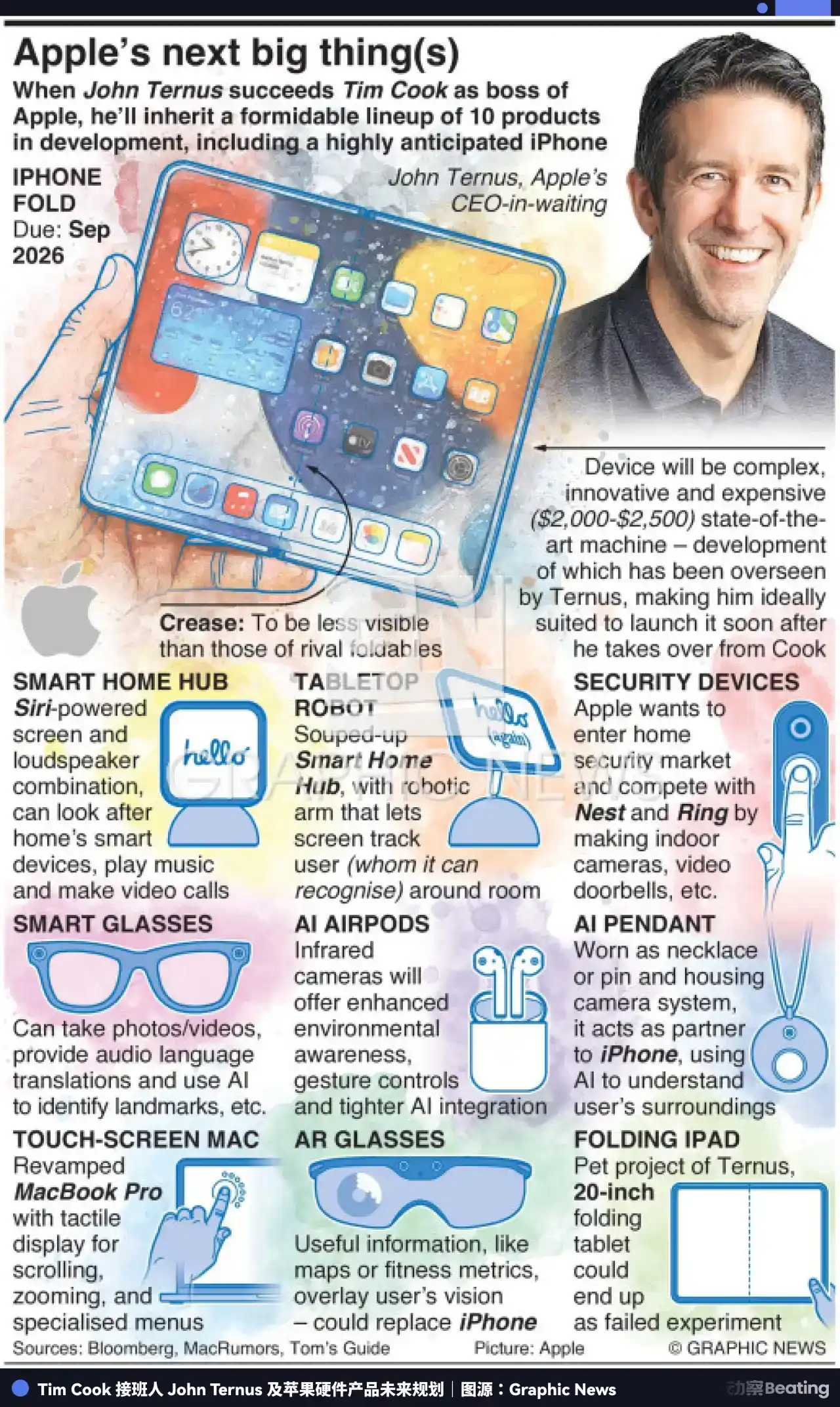
The future hardware plans overseen by Ternus, Tim Cook's successor, hint at Apple's next steps. He is advancing a set of unreleased AI devices—glasses with cameras and wearables that use computer vision to understand the surrounding environment. If these products come to fruition, Apple Intelligence will extend from phones outward, with phones, headphones, glasses, and home hubs potentially becoming new senses.
But no matter how the senses extend, the core question remains the same.

The relationship between people and their phones isn't mostly sitting down for long conversations, but mutual interruptions in extremely trivial scenarios. You're rushing for the subway, the kid is crying, the boss is pressing, and the screen is piled with 20 notifications. The most concrete meaning of Apple Intelligence for ordinary people isn't an omnipotent assistant, but a phone starting to shoulder part of your cognitive load. Read less nonsense, search for files less, get interrupted by notifications less.

Apple has always positioned itself as being on the user's side. It says privacy is a fundamental human right, that devices belong to users, that technology should serve people. In the AI era, this rhetoric will face its real test. Because once a system starts understanding you, it's not just protecting your data; it's also shaping your actions. It gives you summaries, suggestions, filters information for you, decides for you what's important and what can be ignored.

The difficulty of personal intelligence has never been just intelligence; it's also "personal." A person's life isn't a database. It contains emotions, misunderstandings, awkward moments, and corners one doesn't want any system to see. For AI to enter these places, efficiency alone cannot be the pass.

Kazuo Ishiguro wrote about an AI companion named Klara in "Klara and the Sun." She spent her entire existence trying to understand a girl. She learned to observe changes in light, to read expressions and silence, to know when to be quiet.

But the most moving part of the book is when Klara finally understands there is a part of the girl she can never touch. It's not that she isn't smart enough, but she learns one thing: understanding a person and possessing a person's data are two completely different matters.

It took Apple fifteen years to reach the point of admitting Siri wasn't good enough. On this WWDC night, it borrowed models from Google, compute from Nvidia, and another year of patience from users. It proved it's willing to bow its head, but bowing is just the beginning.

What it needs to learn next is what Klara already knew. It's not about becoming smarter, but knowing where to stop after stepping into someone's life.

-END-
Пов'язані питання

QAccording to the article, what is the core reason Apple is integrating Google's Gemini technology into Siri AI in 2026?

AThe article states that Apple's core reason is that despite over a decade of internal development, its own AI technology, particularly for complex reasoning and agent-like capabilities, could not meet user expectations. It acknowledges a technology gap and chooses to 'borrow bones'—leveraging Gemini's advanced foundational model power while maintaining its own product control and privacy framework.

QHow does the article contrast Apple's historical approach to AI (pre-2024) with the approach it announced in 2026?

AHistorically, Apple's approach was characterized by closed, controlled, and device-centric AI focused on privacy and specific, reliable features (like Face ID, Live Text). It avoided large-scale cloud-based models and broad data access, which inadvertently limited Siri's growth. In 2026, its approach pivots to strategic openness, deeply integrating a powerful external model (Gemini) into its foundation and expanding its private cloud compute to third-party infrastructure to achieve the advanced intelligence it now prioritizes.

QWhat are the two main strategic benefits the article suggests Google and Nvidia gain from their partnerships with Apple on AI?

AFor Google, the primary benefit is a massive endorsement, as Apple's adoption validates Gemini's underlying model capabilities as superior and reliable. For Nvidia, the benefit is proving the indispensable role of its GPU cloud infrastructure for cutting-edge AI inference and complex tasks, even for a company with Apple's formidable in-house chip design.

QWhat unique challenge does the article identify for Apple Intelligence in the Chinese market compared to the US?

AThe article identifies that in China, Apple Intelligence faces unique regulatory hurdles involving AI model filing, content security, and data localization laws. This likely means the Chinese version will be a fundamentally different product, built with a local model partner and tailored to local compliance, potentially offering different capabilities and boundaries than the Gemini-powered version available elsewhere.

QBeyond technical capability, what deeper humanistic challenge does the article imply Apple's 'personal intelligence' must eventually address?

AThe article implies that the ultimate challenge for a 'personal intelligence' is not just technical smartness, but the ethical and experiential understanding of human life. It references the novel 'Klara and the Sun' to suggest that truly understanding a person involves more than processing their data; it requires knowing when to be quiet, respecting unquantifiable human elements like emotion and privacy, and understanding where to stop—a challenge of empathy and restraint.

Пов'язані матеріали

AI Agent Completely Transforms Web3 Gaming: From the Rugpull Bakery Bot Controversy to the New 2026 Agent Paradigm

This article explores how the AI Agent paradigm is fundamentally transforming Web3 gaming, moving from a disruptive force to a core, legitimized element. It begins with the controversy in the competitive baking game Rugpull Bakery, where automated scripts caused fairness issues. Instead of banning them, the developers integrated AI Agents into the official gameplay by providing technical documentation (skill.md, agent.json), marking a shift towards "Agentic Gaming." The piece outlines three primary implementation models for AI Agents in Web3 games by 2026: 1. **Autonomous Competitors & Economic Entities:** AI Agents act as independent players with unique strategies. Examples include TEN Protocol's poker agents, AI Arena's trainable NFT fighters, and Satoshi Strike Force's "Digital Athletes" trained on player data. The Somnia blockchain is highlighted as a dedicated "Agentic L1" infrastructure supporting this model at scale. 2. **Modular Infrastructure & Programmable Environments:** This model, exemplified by EVE Frontier, allows AI Agents to program game world logic itself. Using "Smart Assemblies" (e.g., Smart Turrets, Smart Gates), Agents can modify shared economic and physical rules on-chain, creating dynamic, player/AI-built worlds. The ERC-8183 standard further enables these automated entities to hire other AI services for complex tasks. 3. **Hybrid Companions & Dynamic Adaptation:** Here, AI serves as a collaborative partner. In Parallel Colony, highly autonomous AI Avatars work alongside human players who provide high-level guidance. Illuvium plans to use AI to make NPCs dynamic and responsive, creating personalized, emergent narratives for each player. The conclusion posits that Web3 gaming has reached a "post-human" inflection point. Blockchains' transparency and programmability, combined with new standards and infrastructure like Somnia, make integrating and governing AI Agents not just viable but essential. The future lies in a symbiotic digital order where players transition from manual laborers to commanders and partners of algorithmic intelligence.

marsbit15 хв тому

AI Agent Completely Transforms Web3 Gaming: From the Rugpull Bakery Bot Controversy to the New 2026 Agent Paradigm

marsbit15 хв тому

Saylor's Purchase of 1550 Bitcoin Is a Bad Trade

**Title: Saylor's Purchase of 1,550 Bitcoins Was a Bad Trade** The article critically analyzes Strategy's recent move of selling 32 bitcoins followed by a much larger purchase of 1,550 bitcoins. While appearing bullish, the author argues this trade is detrimental to MSTR shareholders. The core argument revolves around the concept of "breakeven modified Net Asset Value (mNAV)," a key metric for Strategy. To increase Bitcoin per share (BPS) for MSTR holders, Strategy must issue new shares at a premium high enough that the funds raised can buy more bitcoin than the bitcoin backing each existing share. Currently, this breakeven mNAV is estimated at 1.30. The recent trade failed on two counts: 1. The shares for the $181 million raise were issued at an mNAV *below* the 1.30 breakeven point. Selling "cheap" shares to buy bitcoin actually *reduces* BPS. 2. Only $101.3 million of the raised funds were used to buy bitcoin; the rest went to boost the company's dollar reserves. The breakeven mNAV calculation assumes *100%* of proceeds are used for bitcoin purchases. Diverting funds, even if mNAV were high, dilutes BPS. The result is an estimated 0.19% decrease in Bitcoin per share for MSTR holders. In exchange, Strategy merely extended its operational runway for its dollar reserves from ~6.3 months to 7 months. The author interprets this as Strategy prioritizing the survival and development of its STRC business over its stated core goal of increasing MSTR's BPS. This constitutes a gamble: if sacrificing MSTR value leads to improved market sentiment and a recovery in STRC's price (and thus mNAV), the whole system could work. If not, Strategy may be forced into a cycle of further diluting MSTR to stay afloat, potentially leading to deferred STRC dividends or corporate decline. The article concludes with a hope for price recovery for Bitcoin, MSTR, and STRC.

Foresight News25 хв тому

Saylor's Purchase of 1550 Bitcoin Is a Bad Trade

Foresight News25 хв тому

The AI Bear Market Lasting Two Days Is Over; Why Did Funds Buy Back Storage Stocks First?

After a severe two-day selloff in early June that erased over $1 trillion from U.S. chip stock market value, capital is flowing back first to the memory sector. The correction was not driven by a collapse in AI demand but rather a market reassessment of high expectations. Stocks like Broadcom faced selling pressure despite strong AI revenue guidance, signaling a shift in focus from who has an "AI story" to who can most rapidly translate AI demand into verifiable profits and earnings per share (EPS). Memory companies, such as Micron and SK Hynix, are leading the recovery because their EPS growth is more immediately verifiable. The AI server boom directly increases demand for high-bandwidth memory (HBM) and high-capacity server DRAM, tightening supply and driving up contract prices for conventional DRAM and NAND Flash. This price increase, coupled with a shift to higher-margin products, flows directly into near-term revenue and profitability, as evidenced in recent earnings reports. In contrast, other AI semiconductor segments like GPUs, ASICs, and optical modules, while central to the long-term AI infrastructure story, face longer and less certain paths to EPS validation. Their growth depends more on future product cycles, customer adoption timelines, and capital expenditure plans. The rebound in memory stocks highlights a market preference for assets with shorter, more transparent EPS conversion cycles following the recent de-risking phase. However, this does not negate the potential of other AI hardware segments should they provide clearer near-term order visibility. The episode has raised the validation bar for all AI-related investments.

marsbit25 хв тому

The AI Bear Market Lasting Two Days Is Over; Why Did Funds Buy Back Storage Stocks First?

marsbit25 хв тому

Торгівля

Спот
Ф'ючерси

Популярні статті

Що таке $S$

Розуміння SPERO: Комплексний огляд Вступ до SPERO Оскільки ландшафт інновацій продовжує еволюціонувати, виникнення технологій web3 та криптовалютних проектів відіграє ключову роль у формуванні цифрового майбутнього. Один з проектів, який привернув увагу в цій динамічній сфері, — це SPERO, позначений як SPERO,$$s$. Ця стаття має на меті зібрати та представити детальну інформацію про SPERO, щоб допомогти ентузіастам та інвесторам зрозуміти його основи, цілі та інновації в рамках web3 та крипто-сектору. Що таке SPERO,$$s$? SPERO,$$s$ — це унікальний проект у криптопросторі, який прагне використати принципи децентралізації та технології блокчейн для створення екосистеми, що сприяє залученню, корисності та фінансовій інклюзії. Проект розроблений для полегшення взаємодії між користувачами новими способами, надаючи їм інноваційні фінансові рішення та послуги. У своїй основі SPERO,$$s$ прагне надати можливості індивідам, забезпечуючи інструменти та платформи, які покращують користувацький досвід у криптовалютному просторі. Це включає в себе можливість більш гнучких методів транзакцій, сприяння ініціативам, що підтримуються спільнотою, та створення шляхів для фінансових можливостей через децентралізовані додатки (dApps). Основна концепція SPERO,$$s$ обертається навколо інклюзивності, прагнучи зменшити розриви в традиційній фінансовій системі, використовуючи переваги технології блокчейн. Хто є творцем SPERO,$$s$? Особистість творця SPERO,$$s$ залишається дещо невідомою, оскільки є обмежені публічно доступні ресурси, що надають детальну інформацію про його засновників. Ця відсутність прозорості може бути наслідком зобов'язання проекту до децентралізації — етики, яку багато проектів web3 поділяють, ставлячи колективні внески вище за індивідуальне визнання. Зосереджуючи обговорення навколо спільноти та її колективних цілей, SPERO,$$s$ втілює суть наділення без виділення конкретних осіб. Таким чином, розуміння етики та місії SPERO є більш важливим, ніж ідентифікація єдиного творця. Хто є інвесторами SPERO,$$s$? SPERO,$$s$ підтримується різноманітними інвесторами, починаючи від венчурних капіталістів до ангельських інвесторів, які прагнуть сприяти інноваціям у крипто-секторі. Зосередження цих інвесторів зазвичай узгоджується з місією SPERO — пріоритет надається проектам, які обіцяють технологічний прогрес у суспільстві, фінансову інклюзію та децентралізоване управління. Ці інвесторські фонди зазвичай зацікавлені в проектах, які не лише пропонують інноваційні продукти, але й позитивно впливають на спільноту блокчейн та її екосистеми. Підтримка з боку цих інвесторів підкріплює SPERO,$$s$ як значного конкурента в швидко змінюваній сфері крипто-проектів. Як працює SPERO,$$s$? SPERO,$$s$ використовує багатогранну структуру, яка відрізняє його від традиційних криптовалютних проектів. Ось деякі ключові особливості, які підкреслюють його унікальність та інноваційність: Децентралізоване управління: SPERO,$$s$ інтегрує моделі децентралізованого управління, надаючи користувачам можливість активно брати участь у процесах прийняття рішень щодо майбутнього проекту. Цей підхід сприяє відчуттю власності та відповідальності серед членів спільноти. Корисність токена: SPERO,$$s$ використовує свій власний криптовалютний токен, розроблений для виконання різних функцій в екосистемі. Ці токени дозволяють здійснювати транзакції, отримувати винагороди та полегшувати послуги, що пропонуються на платформі, підвищуючи загальну залученість та корисність. Шарова архітектура: Технічна архітектура SPERO,$$s$ підтримує модульність та масштабованість, що дозволяє безперешкодно інтегрувати додаткові функції та додатки в міру розвитку проекту. Ця адаптивність є надзвичайно важливою для збереження актуальності в постійно змінюваному крипто-ландшафті. Залучення спільноти: Проект підкреслює ініціативи, що підтримуються спільнотою, використовуючи механізми, які стимулюють співпрацю та зворотний зв'язок. Підтримуючи сильну спільноту, SPERO,$$s$ може краще задовольняти потреби користувачів та адаптуватися до ринкових тенденцій. Фокус на інклюзію: Пропонуючи низькі комісії за транзакції та зручні інтерфейси, SPERO,$$s$ прагне залучити різноманітну базу користувачів, включаючи осіб, які раніше не брали участі в крипто-просторі. Це зобов'язання до інклюзії узгоджується з його загальною місією наділення через доступність. Хронологія SPERO,$$s$ Розуміння історії проекту надає важливі уявлення про його розвиток та етапи. Нижче наведено пропоновану хронологію, що відображає значні події в еволюції SPERO,$$s$: Етап концептуалізації та ідеації: Початкові ідеї, що стали основою SPERO,$$s$, були сформовані, тісно пов'язані з принципами децентралізації та фокусом на спільноті в індустрії блокчейн. Запуск білого паперу проекту: Після концептуального етапу був випущений комплексний білий папір, що детально описує бачення, цілі та технологічну інфраструктуру SPERO,$$s$, щоб залучити інтерес та зворотний зв'язок від спільноти. Створення спільноти та ранні залучення: Активні зусилля були спрямовані на створення спільноти ранніх прихильників та потенційних інвесторів, що полегшило обговорення цілей проекту та отримання підтримки. Подія генерації токенів: SPERO,$$s$ провів подію генерації токенів (TGE) для розподілу своїх рідних токенів серед ранніх прихильників та встановлення початкової ліквідності в екосистемі. Запуск початкового dApp: Перший децентралізований додаток (dApp), пов'язаний з SPERO,$$s$, став доступним, дозволяючи користувачам взаємодіяти з основними функціями платформи. Постійний розвиток та партнерства: Безперервні оновлення та вдосконалення пропозицій проекту, включаючи стратегічні партнерства з іншими учасниками блокчейн-простору, сформували SPERO,$$s$ у конкурентоспроможного та еволюціонуючого гравця на крипто-ринку. Висновок SPERO,$$s$ є свідченням потенціалу web3 та криптовалют для революціонізації фінансових систем та наділення індивідів. Завдяки зобов'язанню до децентралізованого управління, залучення спільноти та інноваційно спроектованих функцій, він прокладає шлях до більш інклюзивного фінансового ландшафту. Як і з будь-якими інвестиціями в швидко змінюваному крипто-просторі, потенційним інвесторам та користувачам рекомендується ретельно досліджувати та обдумано взаємодіяти з поточними подіями в SPERO,$$s$. Проект демонструє інноваційний дух крипто-індустрії, запрошуючи до подальшого дослідження його численних можливостей. Хоча подорож SPERO,$$s$ ще триває, його основні принципи можуть справді вплинути на майбутнє того, як ми взаємодіємо з технологією, фінансами та один з одним у взаємопов'язаних цифрових екосистемах.

73 переглядів усьогоОпубліковано 2024.12.17Оновлено 2024.12.17

Що таке $S$

Що таке AGENT S

Агент S: Майбутнє автономної взаємодії в Web3 Вступ У постійно змінюваному ландшафті Web3 та криптовалюти інновації постійно переосмислюють, як люди взаємодіють з цифровими платформами. Один з таких новаторських проектів, Агент S, обіцяє революціонізувати взаємодію людини з комп'ютером через свою відкриту агентну структуру. Прокладаючи шлях для автономних взаємодій, Агент S прагне спростити складні завдання, пропонуючи трансформаційні застосування в штучному інтелекті (ШІ). Це детальне дослідження заглиблюється в складності проекту, його унікальні особливості та наслідки для сфери криптовалюти. Що таке Агент S? Агент S є революційною відкритою агентною структурою, спеціально розробленою для вирішення трьох основних викликів в автоматизації комп'ютерних завдань: Набуття специфічних знань у галузі: Структура інтелектуально навчається з різних зовнішніх джерел знань та внутрішнього досвіду. Цей подвійний підхід дозволяє їй створити багатий репозиторій специфічних знань у галузі, покращуючи її продуктивність у виконанні завдань. Планування на довгих горизонтах завдань: Агент S використовує планування з підкріпленням досвіду, стратегічний підхід, який полегшує ефективний розподіл та виконання складних завдань. Ця функція значно підвищує її здатність ефективно та результативно управляти кількома підзавданнями. Обробка динамічних, неоднорідних інтерфейсів: Проект представляє Інтерфейс Агент-Комп'ютер (ACI), інноваційне рішення, яке покращує взаємодію між агентами та користувачами. Використовуючи багатомодальні великі мовні моделі (MLLMs), Агент S може безперешкодно орієнтуватися та маніпулювати різноманітними графічними інтерфейсами користувача. Завдяки цим новаторським функціям Агент S надає надійну структуру, яка вирішує складнощі, пов'язані з автоматизацією людської взаємодії з машинами, прокладаючи шлях для численних застосувань у ШІ та за його межами. Хто є творцем Агент S? Хоча концепція Агент S є фундаментально новаторською, конкретна інформація про його творця залишається невідомою. Творець наразі невідомий, що підкреслює або початкову стадію проекту, або стратегічний вибір зберегти засновників у таємниці. Незважаючи на анонімність, акцент залишається на можливостях та потенціалі структури. Хто є інвесторами Агент S? Оскільки Агент S є відносно новим у криптографічній екосистемі, детальна інформація про його інвесторів та фінансових спонсорів не задокументована. Відсутність публічно доступних відомостей про інвестиційні фонди або організації, що підтримують проект, викликає питання щодо його фінансової структури та дорожньої карти розвитку. Розуміння підтримки є критично важливим для оцінки стійкості проекту та потенційного впливу на ринок. Як працює Агент S? В основі Агент S лежить передова технологія, яка дозволяє йому ефективно функціонувати в різних умовах. Його операційна модель побудована навколо кількох ключових функцій: Взаємодія з комп'ютером, подібна до людської: Структура пропонує розширене планування ШІ, прагнучи зробити взаємодії з комп'ютерами більш інтуїтивними. Імітуючи людську поведінку при виконанні завдань, вона обіцяє підвищити досвід користувачів. Наративна пам'ять: Використовується для використання високорівневого досвіду, Агент S використовує наративну пам'ять для відстеження історій завдань, тим самим покращуючи свої процеси прийняття рішень. Епізодична пам'ять: Ця функція надає користувачам покрокові інструкції, дозволяючи структурі пропонувати контекстуальну підтримку в міру виконання завдань. Підтримка OpenACI: Завдяки можливості працювати локально, Агент S дозволяє користувачам зберігати контроль над своїми взаємодіями та робочими процесами, узгоджуючи з децентралізованою етикою Web3. Легка інтеграція з зовнішніми API: Його універсальність і сумісність з різними платформами ШІ забезпечують те, що Агент S може безперешкодно вписатися в існуючі технологічні екосистеми, роблячи його привабливим вибором для розробників та організацій. Ці функціональні можливості колективно сприяють унікальному положенню Агент S у крипто-просторі, оскільки він автоматизує складні, багатоступеневі завдання з мінімальним втручанням людини. У міру розвитку проекту його потенційні застосування в Web3 можуть переосмислити, як відбуваються цифрові взаємодії. Хронологія Агент S Розробка та етапи Агент S можуть бути узагальнені в хронології, яка підкреслює його значні події: 27 вересня 2024 року: Концепція Агент S була представлена в комплексній науковій статті під назвою “Відкрита агентна структура, яка використовує комп'ютери як людина”, що демонструє основи проекту. 10 жовтня 2024 року: Наукова стаття була опублікована на arXiv, пропонуючи детальне дослідження структури та її оцінки продуктивності на основі бенчмарку OSWorld. 12 жовтня 2024 року: Було випущено відеопрезентацію, що надає візуальне уявлення про можливості та особливості Агент S, ще більше залучаючи потенційних користувачів та інвесторів. Ці маркери в хронології не лише ілюструють прогрес Агент S, але й вказують на його прихильність до прозорості та залучення громади. Ключові моменти про Агент S У міру розвитку структури Агент S кілька ключових характеристик виділяються, підкреслюючи її новаторський характер та потенціал: Інноваційна структура: Розроблена для забезпечення інтуїтивного використання комп'ютерів, подібного до людської взаємодії, Агент S пропонує новий підхід до автоматизації завдань. Автономна взаємодія: Здатність автономно взаємодіяти з комп'ютерами через GUI означає стрибок до більш інтелектуальних та ефективних обчислювальних рішень. Автоматизація складних завдань: Завдяки своїй надійній методології він може автоматизувати складні, багатоступеневі завдання, роблячи процеси швидшими та менш схильними до помилок. Безперервне вдосконалення: Механізми навчання дозволяють Агенту S покращуватися на основі минулого досвіду, постійно підвищуючи свою продуктивність та ефективність. Універсальність: Його адаптивність до різних операційних середовищ, таких як OSWorld та WindowsAgentArena, забезпечує його здатність служити широкому спектру застосувань. Оскільки Агент S займає своє місце в ландшафті Web3 та криптовалюти, його потенціал покращити можливості взаємодії та автоматизувати процеси означає значний прогрес у технологіях ШІ. Завдяки своїй інноваційній структурі Агент S є прикладом майбутнього цифрових взаємодій, обіцяючи більш безперешкодний та ефективний досвід для користувачів у різних галузях. Висновок Агент S представляє собою сміливий крок вперед у поєднанні ШІ та Web3, з можливістю переосмислити, як ми взаємодіємо з технологією. Хоча проект все ще на ранніх стадіях, можливості для його застосування є величезними та переконливими. Завдяки своїй комплексній структурі, що вирішує критичні виклики, Агент S прагне вивести автономні взаємодії на передній план цифрового досвіду. У міру того, як ми заглиблюємося в сфери криптовалюти та децентралізації, проекти, подібні до Агент S, безсумнівно, відіграватимуть ключову роль у формуванні майбутнього технологій та співпраці людини з комп'ютером.

689 переглядів усьогоОпубліковано 2025.01.14Оновлено 2025.01.14

Що таке AGENT S

Як купити S

Ласкаво просимо до HTX.com! Ми зробили покупку Sonic (S) простою та зручною. Дотримуйтесь нашої покрокової інструкції, щоб розпочати свою криптовалютну подорож.Крок 1: Створіть обліковий запис на HTXВикористовуйте свою електронну пошту або номер телефону, щоб зареєструвати обліковий запис на HTX безплатно. Пройдіть безпроблемну реєстрацію й отримайте доступ до всіх функцій.ЗареєструватисьКрок 2: Перейдіть до розділу Купити крипту і виберіть спосіб оплатиКредитна/дебетова картка: використовуйте вашу картку Visa або Mastercard, щоб миттєво купити Sonic (S).Баланс: використовуйте кошти з балансу вашого рахунку HTX для безперешкодної торгівлі.Треті особи: ми додали популярні способи оплати, такі як Google Pay та Apple Pay, щоб підвищити зручність.P2P: Торгуйте безпосередньо з іншими користувачами на HTX.Позабіржова торгівля (OTC): ми пропонуємо індивідуальні послуги та конкурентні обмінні курси для трейдерів.Крок 3: Зберігайте свої Sonic (S)Після придбання Sonic (S) збережіть його у своєму обліковому записі на HTX. Крім того, ви можете відправити його в інше місце за допомогою блокчейн-переказу або використовувати його для торгівлі іншими криптовалютами.Крок 4: Торгівля Sonic (S)Легко торгуйте Sonic (S) на спотовому ринку HTX. Просто увійдіть до свого облікового запису, виберіть торгову пару, укладайте угоди та спостерігайте за ними в режимі реального часу. Ми пропонуємо зручний досвід як для початківців, так і для досвідчених трейдерів.

1.5k переглядів усьогоОпубліковано 2025.01.15Оновлено 2026.06.02

Як купити S

Обговорення

Ласкаво просимо до спільноти HTX. Тут ви можете бути в курсі останніх подій розвитку платформи та отримати доступ до професійної ринкової інформації. Нижче представлені думки користувачів щодо ціни S (S).

活动图片