An 80s-Born from Tianjin, Set to Become the First Human on a Journey to Mars

Odaily星球日报Опубліковано о 2026-05-22Востаннє оновлено о 2026-05-22

Анотація

Chun Wang, an 80s-born native of Tianjin, is set to become the first person to journey to Mars. SpaceX recently announced that Wang, co-founder of F2Pool and commander of the Fram2 mission, will travel on Starship for a historic two-year deep-space mission to fly by Mars (without landing) and return to Earth. Prior to this, he will also participate in a week-long commercial crewed mission around the Moon. Wang's passion for exploration began in childhood. After university, he embarked on extensive travels, eventually visiting every province in China by train and earning the nickname "Thousand High-Speed Rail Man." His interest in technology led him to programming and, in 2011, to Bitcoin. He purchased his first bitcoin at $8.70 and later co-founded F2Pool, one of the world's largest mining pools, in 2013. The success of his cryptocurrency ventures provided the wealth that later funded his ambitious projects. Having reached both the South and North Poles, Wang sought new frontiers. Inspired by SpaceX's advancements, he conceived and funded the private Fram2 mission in 2025. As mission commander, he led an all-civilian, non-American crew on a unique polar orbit flight aboard a Crew Dragon spacecraft, conducting scientific experiments and capturing unprecedented views of Earth's poles. Now, his journey continues toward the ultimate destination. From his current location on the remote Bouvet Island near Antarctica, Wang prepares for the next steps: a lunar flyby and humanity's...

Original | Odaily Planet Daily(@OdailyChina)

Author | Azuma(@azuma_eth)
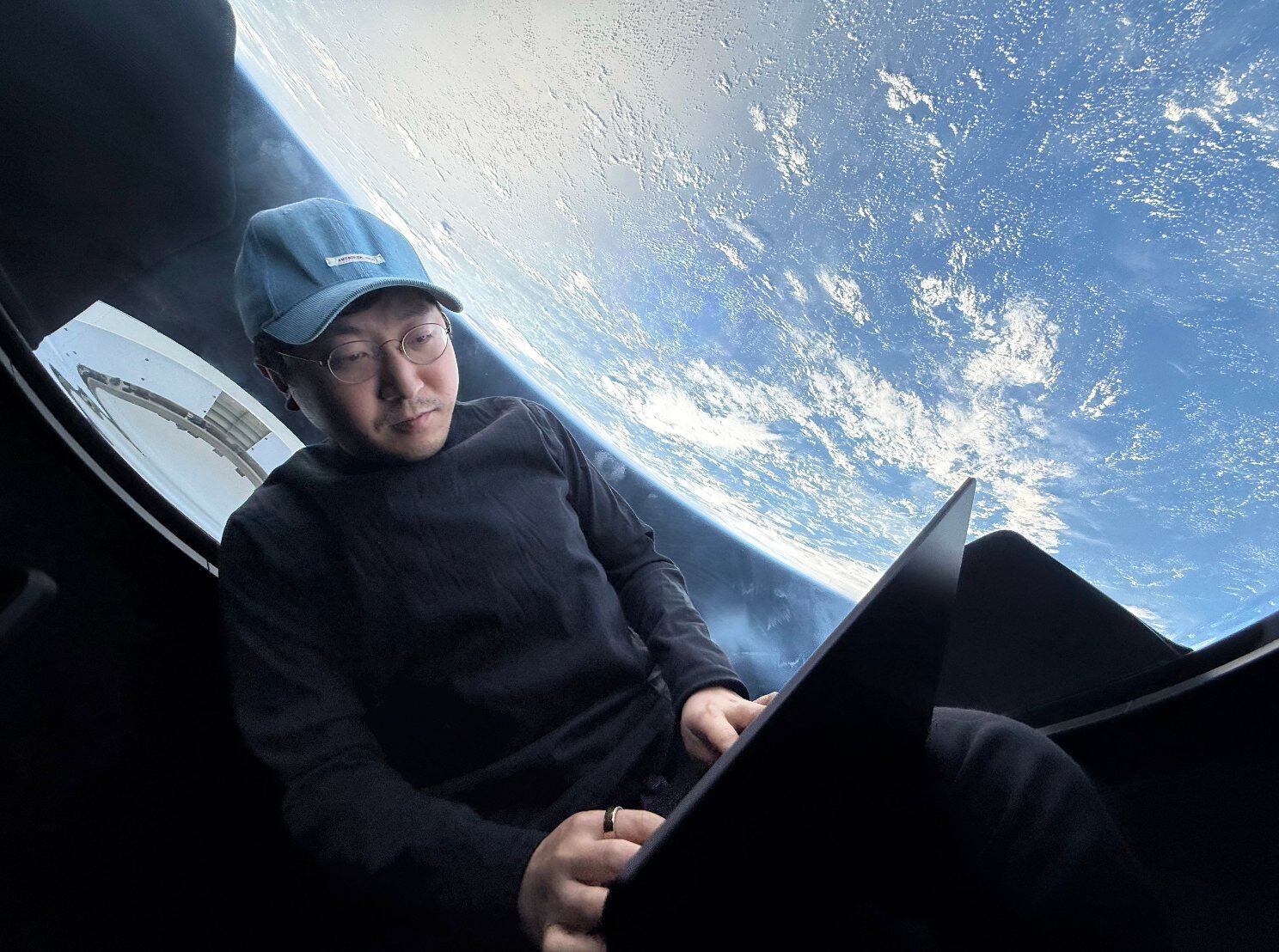
Humanity is finally embarking on its journey to Mars, and the central figure about to undertake this historic aerospace mission is someone from Tianjin.

On the morning of May 22, Beijing Time, SpaceX, which is gearing up for an IPO, dropped a major announcement — Chun Wang, co-founder of F2Pool and Mission Commander of Fram2, will board the Starship to execute the first batch of manned interplanetary Mars flight missions! The mission is planned as a two-year deep space flight, exiting the Earth-Moon system, passing by Mars (without landing), and finally returning to Earth.

Prior to this mission, Chun Wang, along with Dennis Tito and Akiko Tito, will participate in Starship's first commercial manned lunar flyby mission, expected to last about a week, with a flyby approximately 200 km from the lunar surface.
The Travel Maniac from Tianjin

On March 31, 2025, on the eve of the Fram2 mission launch, Chun Wang gave an interview to the aerospace professional media "Spaceflight Now," revealing many previously unknown stories from his upbringing.

Chun Wang was born in 1982 in Tianjin, China, and was raised by his grandparents. Until he left for university in 2000, he had hardly ever ventured beyond his hometown.

However, from a very young age, Chun Wang developed a strong interest in travel, always fantasizing about exploring the world: "In 1987, when I was 5 years old, my grandfather brought home a world map he found during a walk. That map instantly became my favorite toy and ignited my curiosity. What truly caught my eye was the vast blank area at the bottom of the map — the polar regions. From that moment on, I was deeply captivated by the mystery and excitement of these distant and unknown lands."

After university, Chun Wang first worked for a Norwegian software company in Beijing. It was then that his travel mileage truly began to skyrocket — to save money, he often slept on his French colleague's sofa or directly in the office, commuting back home about 120 kilometers away on weekends.

Chun Wang mentioned: "Despite having a full-time job, I traveled over 75,900 kilometers by train during weekends in the year 2007 alone. In total, I spent two full months that year inside train compartments, heading straight to the railway station after work on Fridays and not returning to the company until Monday morning."

Over the next four years, Chun Wang further expanded his travel footprint. By train, he visited every province in China.

In 2010, Chun Wang embarked on his first trip abroad — Nepal followed by India. That trip took him to the southernmost tip of the Indian subcontinent. He boarded what was then India's longest-running, non-stop train — the 16317 Himsagar Express, traveling all the way from Kanyakumari to Kashmir and continuing his journey in the country.

That journey ultimately cost him about $1,000, which was all the savings he had at the time.

"During those years, I was obsessed with infrastructure and transportation, especially railways. I meticulously recorded every train journey down to the minute or even second and posted these records on online forums and message boards. Someone once gave me the nickname 'Thousand-HSR-Man,' because I was counting my high-speed rail rides at the time, aiming for the goal of 1,000 trips."

Chun Wang revealed that as of March 20, 2025, he had taken 854 high-speed rail trips, but the number of his commercial airline flights was already extremely close to 1,000.

Wealth, Capability, and Resource Accumulation, Rooted in Cryptocurrency

Apart from travel, Chun Wang also displayed a keen interest in various emerging technologies.

At the age of 7, Chun Wang first heard about computers, but it wasn't until he graduated from elementary school at 13 that he owned his first computer, a 486SX running MS-DOS 5.0.

Chun Wang mentioned: "Besides playing games, I also used it to write many interesting programs. One of the earliest was a gravity simulator that visually demonstrated the motion of planets in the solar system... At school, I participated in various programming competitions, including the International Olympiad in Informatics (IOI) and the ACM-ICPC (International Collegiate Programming Contest). Due to my outstanding performance in these competitions, I was directly admitted to university without taking the National College Entrance Examination (Gaokao)."

In 2011, Chun Wang first heard about Bitcoin through the tech website Solidot, and on May 28 of that year, he bought his first Bitcoin at $8.7 each.
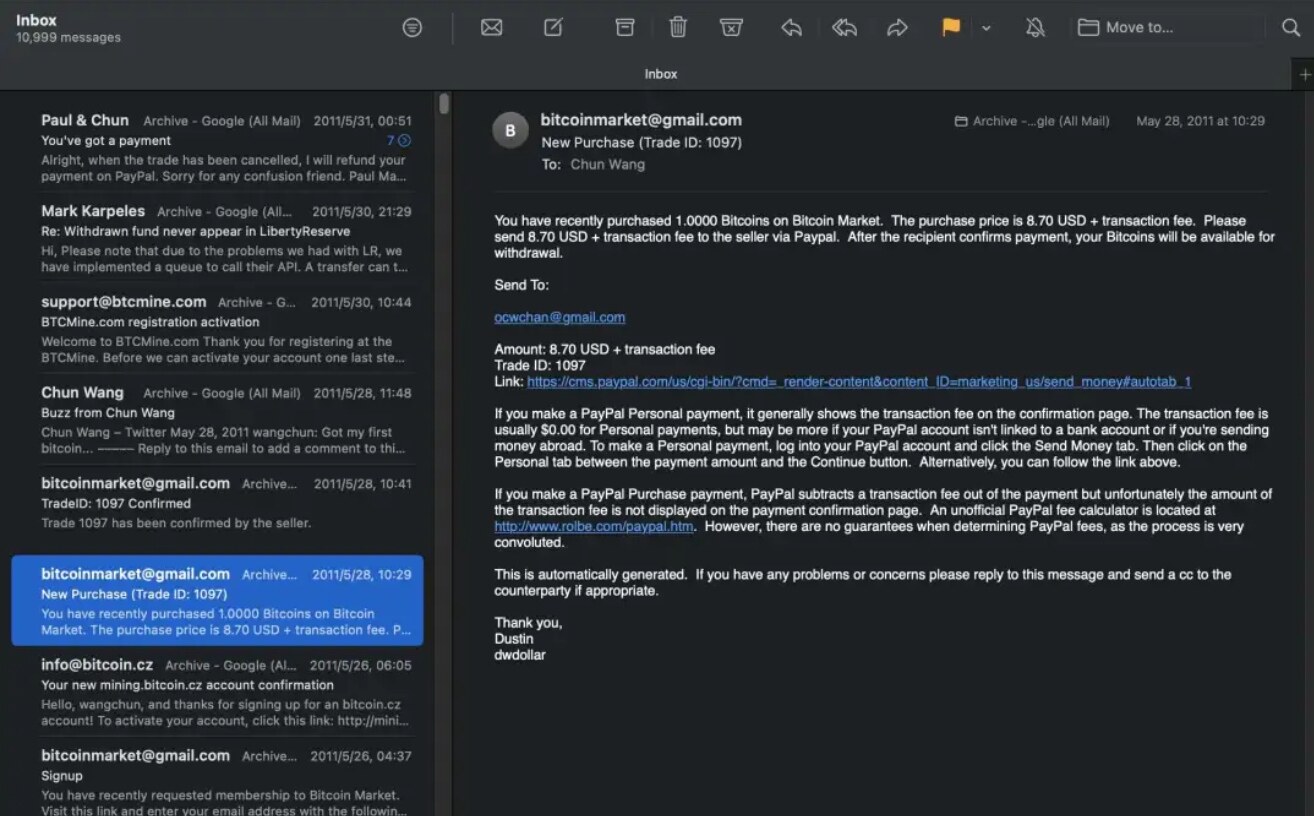
Simultaneously, as a tech enthusiast, Chun Wang began trying to assemble his own mining rigs to mine Bitcoin.

The initial story wasn't smooth sailing. Chun Wang first collaborated with Wu Gang, the later founder of Bixin, renting a few residential rooms and building a relatively crude mining farm with several dozen rigs. The startup capital was even borrowed from his father... Yet, despite this, Chun Wang managed to mine 7,700 Bitcoins over two years, spending 4,000 on electricity, trading 660 for an iPhone (which was later stolen at the St. Petersburg subway station), and liquidating the rest at $17 each in early 2023...

The turning point came in 2013. In April of that year, he co-founded F2Pool (known in the cryptocurrency community as 'Fish Pool') in Wenzhou with Mao Shixing, nicknamed 'Shenyu.' The more introverted Chun Wang handled backend coding, while the more extroverted Shenyu managed operations. This was China's first Bitcoin mining pool, which later developed into one of the world's largest comprehensive mining pools.

In 2018, Chun Wang founded his second company, Stake.fish, in Thailand, a staking service provider specializing in PoS networks, offering comprehensive node staking services for networks like Ethereum, Cosmos, and Polygon.

The success of F2Pool and Stake.fish, coupled with the soaring price of cryptocurrencies, accumulated immense personal wealth for Chun Wang — in 2025, Chun Wang revealed that over the past decade or so, F2Pool had mined over 1.3 million Bitcoins.

A Space Dreamer

The rapid growth in wealth allowed Chun Wang to realize his childhood dream of traveling to the polar regions. In December 2021, Chun Wang successfully reached the South Pole; in July 2023, he reached the North Pole.

But after fulfilling these dreams, Chun Wang found that it still wasn't enough... His entire life had been a journey, continuously moving towards unknown horizons.

  • 2006: He traveled west to the Kazakhstan border at 82° East longitude;
  • 2011: He went to the southernmost tip of India, reaching 8° North latitude;
  • 2012: He took the Trans-Siberian Railway to Europe, reaching St. Petersburg at 60° North, 30° East;
  • 2013: He traveled to the Kamchatka Peninsula, reaching 160° East longitude;
  • 2016: He visited the United States for the first time;
  • December 2021: He successfully reached the South Pole;
  • July 2023: He successfully reached the North Pole...

But now, there are no further endpoints left on Earth. Where else could one go?

Chun Wang soon found the answer: "Since SpaceX began recovering Falcon 9 first-stage rockets, the commercial aerospace industry has been advancing at an incredible pace. I once again see something completely new and exciting unfolding, a feeling just like when I first heard about computers or discovered Bitcoin."

Chun Wang's choice was to fly into space. In 2023, Chun Wang proposed an extremely bold idea to SpaceX — he wished to privately and fully fund a SpaceX Crew Dragon mission to fly over a polar orbit passing both the Earth's North and South Poles.

Chun Wang's idea was that since humans entered space in 1961, because most rocket launches are concentrated near the equator or at mid-latitudes, the International Space Station (ISS) and almost all previous manned spacecraft (except for Apollo missions that passed by from a distance) have been unable to fly over the Earth's poles. In other words, for nearly 60 years of manned spaceflight history in low Earth orbit, the Earth's polar ice caps have been a visual and scientific blank. Therefore, Chun Wang hoped to take a never-before-taken polar retrograde orbit (Polar Orbit) at a 90-degree inclination, directly crossing and overlooking the Earth's poles.

Chun Wang named the mission "Fram2," in homage to the legendary polar research vessel "Fram," which carried Norwegian explorers to the Arctic and Antarctic in history.

On April 1, 2025, a Falcon 9 rocket carrying the Crew Dragon "Resilience" lifted off on time from LC-39A at the Kennedy Space Center in Florida. Chun Wang, as the Mission Commander, led the all-civilian, fully non-American crew he personally selected (including a Norwegian filmmaker, a German robotics engineer, and an Australian Arctic explorer) and officially embarked on their space journey.
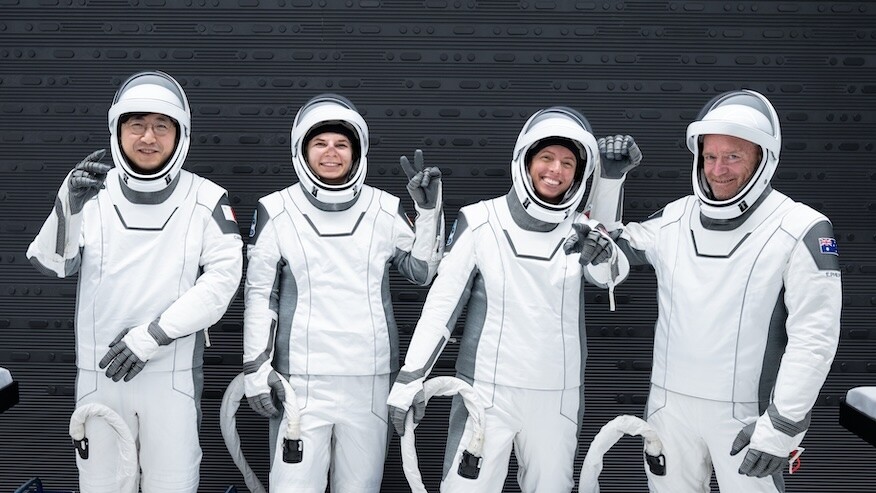
In a 90-degree polar orbit with an apogee of 413 km and a perigee of 202 km, the spacecraft orbited the Earth every 93 minutes, taking only 46 minutes to fly from the North Pole to the South Pole. During the three-and-a-half-day flight mission, Chun Wang and the crew completed a significant amount of extremely hardcore scientific research and visual capture — including close observation of the rare, high-latitude atmospheric phenomenon STEVE (Strong Thermal Emission Velocity Enhancement); capturing the first-ever space X-ray image in microgravity; and humanity's first attempt to grow fungal organisms in microgravity...

One noteworthy detail is that before the mission began, Chun Wang's friend Bao Er Ye (宝二爷) revealed online that Chun Wang had not made any backups of his Bitcoin private keys. He had stated that if anything happened to him during the mission, his Bitcoin holdings would be permanently destroyed.

Flying to Mars

Chun Wang's aerospace dreams did not end with the successful conclusion of Fram2 but continued to evolve further.

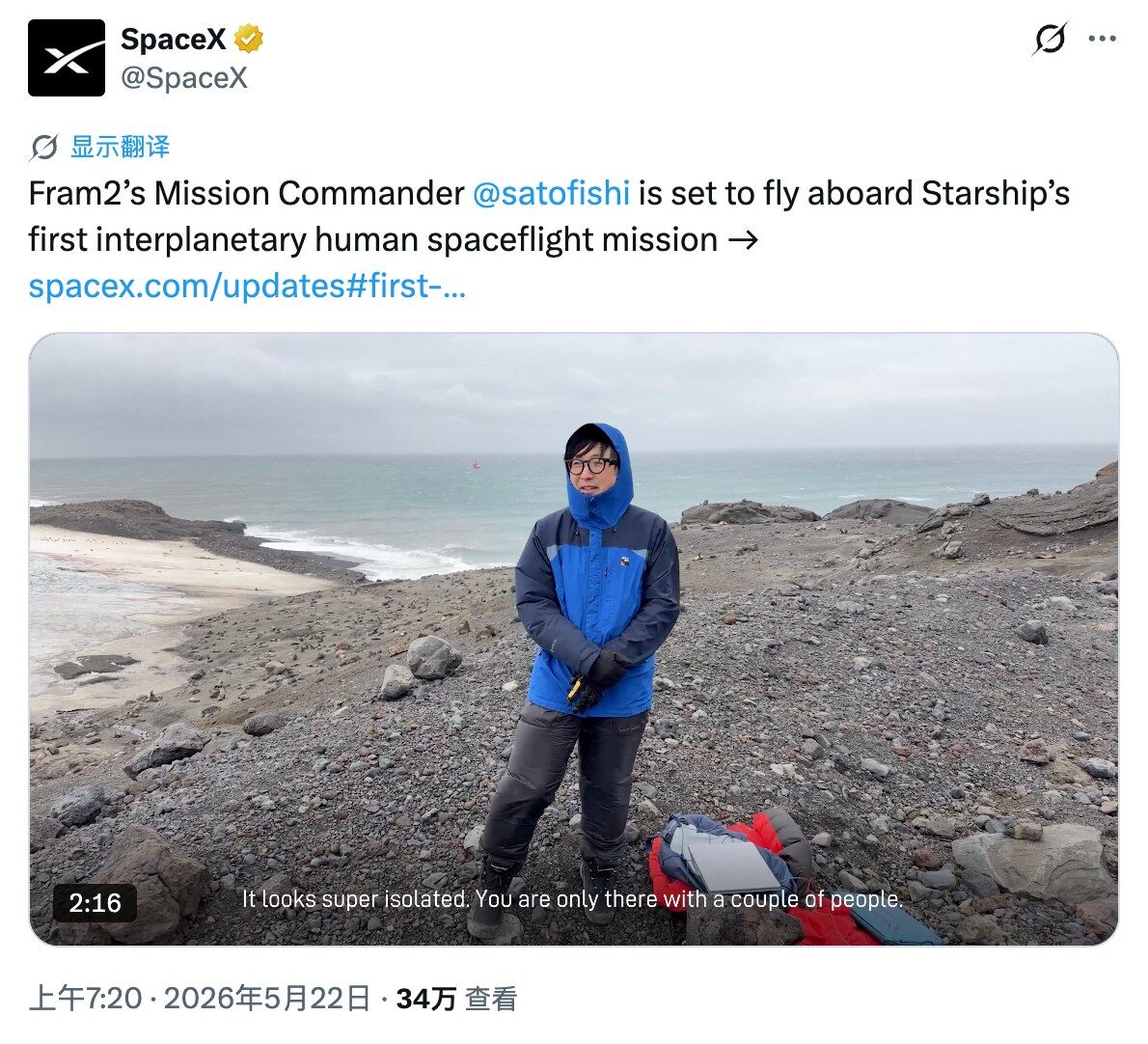
Returning to the story at the beginning, just before SpaceX tested the launch of its latest-generation Starship, SpaceX officially announced during a livestream two subsequent space plans for Chun Wang — a week-long manned lunar flyby mission, and the first-ever two-year-long manned interplanetary Mars flight mission in human history.

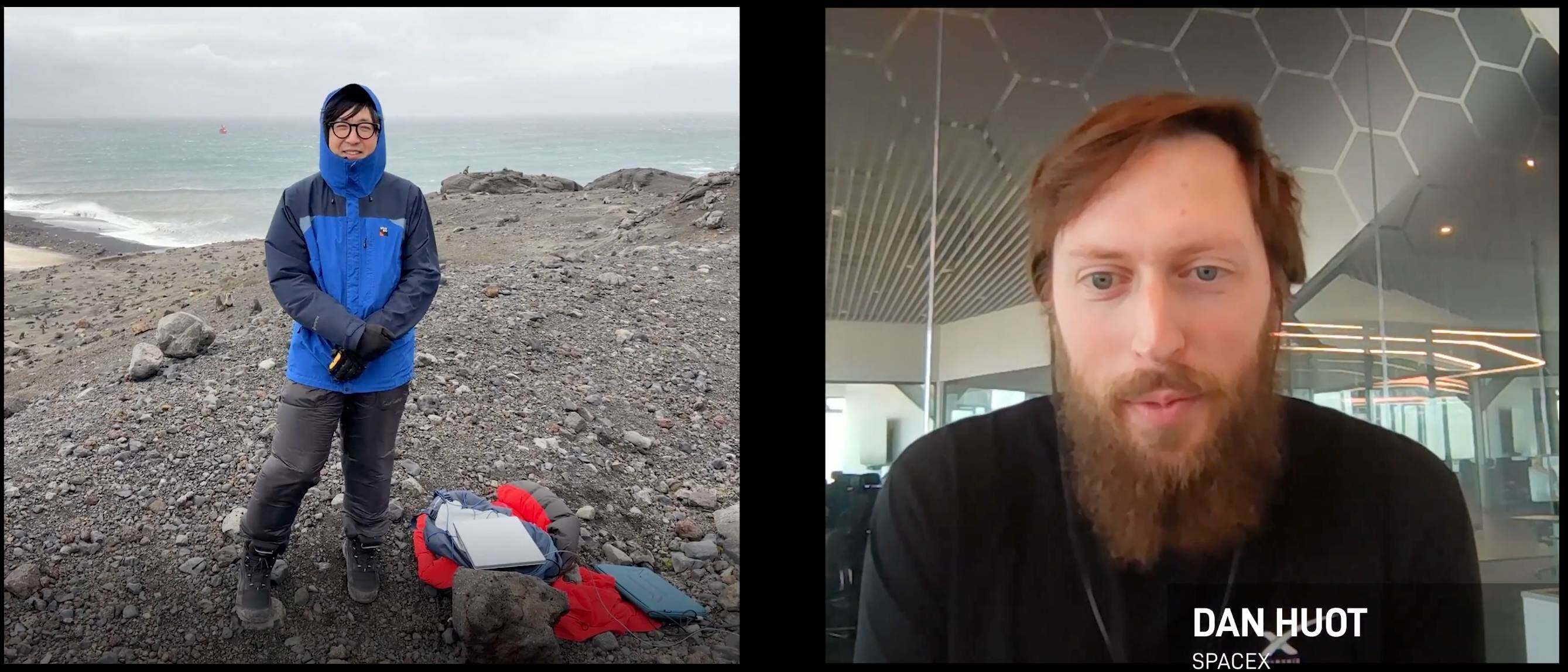
During SpaceX's live connection with Chun Wang, he was standing in the fierce winds on Bouvet Island at 54°26′ South, 3°24′ East. The island is located in the South Atlantic Ocean, near Antarctica, is an overseas territory of Norway (Norwegian Antarctic Territory), and lies outside the land claims frozen by the Antarctic Treaty.
On Chun Wang's personal X profile, he detailed his travel progress. As of the time of writing, the current status is: "60% of territories visited on 1 celestial body (150 / 249), to be continued..."


Пов'язані питання

QWho is Chun Wang, and what significant achievement is he about to accomplish according to the article?

AChun Wang is an 80s-born entrepreneur from Tianjin, China, co-founder of F2Pool and Stake.fish. According to the article, he is about to become the first person to undertake a manned interplanetary mission to Mars, flying by Mars (without landing) on SpaceX's Starship for a two-year mission.

QHow did Chun Wang accumulate the wealth and resources that enabled his space ambitions?

AChun Wang accumulated his wealth primarily through cryptocurrency. He co-founded F2Pool, one of the world's largest mining pools, which has mined over 1.3 million Bitcoins. He also founded the staking service provider Stake.fish. The success of these ventures, coupled with the rise in cryptocurrency value, provided him with significant personal wealth.

QWhat was the name and primary objective of Chun Wang's first private space mission with SpaceX?

AHis first private space mission was named 'Fram2'. Its primary objective was to fly a Crew Dragon spacecraft on a polar orbit (90-degree inclination), allowing it to pass directly over and visually survey Earth's North and South Poles—areas previously unseen by crewed spacecraft in low-Earth orbit.

QWhat personal characteristic, evident from his youth, is cited as a driving force behind Chun Wang's extensive travels and eventual space ventures?

AFrom a very young age, Chun Wang exhibited an intense fascination with travel and exploration. After his grandfather brought home a world map when he was five, he became deeply curious about remote and unknown places, particularly the polar regions. This lifelong passion for pushing geographical and experiential boundaries ultimately led him to space exploration.

QBefore the planned Mars mission, what other upcoming SpaceX mission is Chun Wang scheduled to participate in?

ABefore the Mars mission, Chun Wang is scheduled to participate in SpaceX's first commercial crewed circumlunar flight mission. He will join Dennis Tito and Akiko Tito on a week-long journey that will include a flyby approximately 200 km from the lunar surface.

Пов'язані матеріали

ETH Bull and Bear Views Compilation: Can Ethereum's Value Flow Back to ETH?

Titled "ETH Bull and Bear Views: Can Ethereum's Value Flow Back to ETH?", this article synthesizes the current heated debate around Ethereum's native token, ETH, following Bankless co-founder David Hoffman's decision to sell his entire ETH holdings. The **bullish case**, represented by figures like Tom Lee (BitMine CEO) and Raoul Pal, argues that ETH's core thesis remains intact. They contend Ethereum is the essential, secure, and neutral foundational layer for future finance—encompassing stablecoins, RWA, DeFi, L2s, and Agentic AI. Bulls bet on ETH's long-term revaluation as institutional adoption of on-chain finance grows, with significant buying activity from entities like BitMine and Consensys cited as evidence. Conversely, the **bearish perspective**, led by Hoffman and analysts like Markus Thielen, questions ETH's value capture mechanism. They acknowledge Ethereum's network success but argue that the value created by L2s, DeFi, and applications does not sufficiently accrue to the ETH token itself. Bears point to ETH's prolonged underperformance versus the broader crypto market, lack of traditional cash flows, weakening "ultrasound money" narrative, and apparent institutional retreat (e.g., Harvard Management Company exiting its ETH ETF position) as key concerns. The debate highlights a pivotal shift: ETH is no longer just a community belief asset. The central question is whether ETH can transition from being a "**used infrastructure**" to a "**continuously bought and held core asset**" as more value enters the Ethereum ecosystem. The market is now critically examining the direct link between network growth and ETH's value.

marsbit42 хв тому

ETH Bull and Bear Views Compilation: Can Ethereum's Value Flow Back to ETH?

marsbit42 хв тому

Crypto is dead, Perps are forever

The crypto industry is shifting from a focus on creating native assets (like altcoins and protocol tokens) to becoming a "global asset pipeline." Native cryptocurrencies, except for Bitcoin, are seen as failing in their value storage and utility promises, with demand driven largely by speculation. Attention and liquidity are now moving toward real-world assets (RWAs) like U.S. stocks, bonds, gold, and oil traded on-chain via perpetual contracts (Perps). Stablecoins like USDT and USDC set the precedent, proving blockchain's core strength is efficient global settlement and transfer, not inventing new monetary systems. Meanwhile, assets like Ethereum and many DeFi tokens struggle as their narratives weaken against tangible traditional assets and the rapid real-world progress of AI. Perpetual contracts have emerged as a pivotal innovation. They simplify trading by offering pure price exposure to any asset, bypassing complexities of ownership, custody, and traditional market hours. Projects like Hyperliquid gained traction by combining CEX-like efficiency with on-chain transparency, capitalizing on post-FTX distrust, macroeconomic volatility, and the surge in demand for 24/7 stock trading. In conclusion, while the era of speculative native "crypto assets" may be over, perpetual contracts persist as the industry's most potent financial instrument—transforming all assets into globally accessible, constantly tradable instruments centered on price speculation.

marsbit47 хв тому

Crypto is dead, Perps are forever

marsbit47 хв тому

Tencent, Alibaba, ByteDance in a Battle for the Skill Store

Skill is becoming a key concept in the AI field, essentially serving as a structured "instruction manual" for AI Agents that specifies tool calls, decision logic, and output standards. This allows Agents to execute predefined tasks. As the number of Skills grows, distribution platforms have emerged. Major tech companies are swiftly entering this space. In March, Tencent, Alibaba, and ByteDance launched Skill stores within their respective Agent platforms. Subsequently, players like Zhipu AI, Meituan, and Xiaohongshu joined the fray. This competition for the "Skill store" is fundamentally a battle for the AI-era user entry point; whoever controls distribution controls the users. While ByteDance's Coze has experimented with paid Skills, most platforms offer them for free. The real value lies not in the stores themselves but in using them to attract and retain users within an ecosystem, driving revenue from services like cloud computing, model calls, or advertising. The landscape features three main player types: 1) **Internet giants** (e.g., Alibaba, ByteDance, Tencent, Meituan), leveraging Skills to drive traffic and monetize through their broader ecosystems (cloud services, transactions, ads). 2) **Large model companies** (e.g., Zhipu AI, Moonshot AI), using Skill stores to increase user engagement and monetize model API calls. 3) **Content platforms** (e.g., Xiaohongshu), treating Skills as a new content format to generate traffic and ad revenue. However, transforming Skill stores into a sustainable business faces significant hurdles. Key challenges include: the **difficulty in pricing Skills** due to inconsistent outputs across different models and contexts; **lack of cost transparency** (varying token consumption); **security risks** like Skill poisoning; and the **absence of standardized protocols** for development and evaluation. Unlike standardized mobile apps, Skills are often personalized workflows resistant to uniformity, which hinders the establishment of a reliable review and monetization system akin to the App Store. While there is genuine user demand for paid Skills—particularly in enterprise (e.g., contract review) and certain personal productivity scenarios—current platforms offer developers limited and unpredictable distribution. The future of Skill stores depends on overcoming these standardization, evaluation, and safety challenges to make acquiring a Skill as straightforward as downloading an app. For now, the stores function more as display shelves than robust marketplaces.

marsbit47 хв тому

Tencent, Alibaba, ByteDance in a Battle for the Skill Store

marsbit47 хв тому

The Crypto Scene Is Dead, Perpetual Swaps Are Eternal

The crypto industry is undergoing a fundamental shift. The era defined by minting novel, native digital assets (altcoins) is fading. These assets, lacking real-world cash flows or clear value, are losing relevance as attention and capital flow elsewhere. Two powerful external forces are reshaping the space. First, traditional assets like U.S. stocks, bonds, gold, and oil are being tokenized and traded on-chain. Second, the explosive growth of AI, with its tangible products, has overshadowed crypto's once-dominant "future narrative." This marks a critical pivot: crypto is transitioning from being a "factory for new assets" to becoming a "global conduit for existing assets." Its validated utility is not complex financial reinvention but efficient global settlement, transfer, and trading—the original promise of blockchain. Stablecoins like USDT and USDC exemplify this, offering faster dollar movement rather than replacing it. Consequently, native ecosystems like Ethereum face profound challenges. While still crucial infrastructure, ETH struggles to capture value as users interact with Layer 2s or trade traditional assets without needing to hold it. DeFi's grand narrative of rebuilding finance has narrowed to core needs like cheap transfers and deep liquidity. The true breakout innovation is the perpetual contract (Perp). It brilliantly bypasses the complexities of direct asset ownership (custody, compliance, dividends) by creating pure price exposure. Users can speculate on the price movement of *any* asset—NVIDIA, gold, oil—24/7, globally, and with leverage. This "price casino" model, while risky and ethically fraught, delivers unmatched liquidity and accessibility. Projects like Hyperliquid succeeded not by inventing new mechanics but by perfecting the timing and execution of this model. Key drivers included making on-chain Perps feel like centralized exchanges, post-FTX trust migration towards transparency, and rising demand to trade macro assets and equities round-the-clock. In conclusion, the crypto world's most enduring successes are the dollar (via stablecoins), Bitcoin, and trading. Its new frontier is not creating alternative assets but providing a seamless, perpetual trading layer—a new API—for the world's existing financial system. The age of native altcoins is over; the age of perpetual synthetic exposure has begun.

Odaily星球日报56 хв тому

The Crypto Scene Is Dead, Perpetual Swaps Are Eternal

Odaily星球日报56 хв тому

Торгівля

Спот
Ф'ючерси
活动图片




