AI's Deceptive Perfection: How Can Crypto Users Defend Against New Scams?

Foresight NewsОпубліковано о 2026-06-08Востаннє оновлено о 2026-06-08

Анотація

AI-generated content is making cryptocurrency scams more sophisticated and harder to detect. Previously, users could spot phishing attempts through poor grammar and spelling errors. Now, AI tools allow scammers to produce flawless, professional-looking emails, websites, and social media posts, often personalized using stolen user data. This shift poses unique risks in crypto, where transactions are irreversible and self-custody wallets can be compromised by a single malicious authorization. The article advises a shift from relying on visual cues to adopting rigorous verification as the primary defense. Key recommendations include: manually checking website URLs against official sources, scrutinizing wallet permissions before approving transactions, verifying smart contract addresses directly from project websites or block explorers, and being wary of unsolicited "urgent" messages from impersonated customer support. The core message is that in the AI era, a polished appearance is no guarantee of safety; every link, request, and interaction must be independently verified before any action is taken.


Author: Dilip Kumar Patairya

Compiled by: Chopper, Foresight News


In the past, cybersecurity education often taught simple methods to identify scams: watch for spelling errors, awkward phrasing, and abnormal formatting. In early phishing attacks, this approach was indeed effective. Scam emails were often hastily written, poorly translated, and full of obvious flaws. Over time, people began to view clumsy writing as a red flag.


The emergence of artificial intelligence has completely changed this landscape.


Using advanced AI tools, fraudsters can quickly produce fluent emails, realistic customer service chats, professional-looking websites, and highly deceptive social media content. Scammers no longer need strong writing skills to create convincing traps. In the crypto space, where a single click to authorize a transaction can lead to instant asset loss, this shift presents entirely new security risks.


Today, the threat no longer comes from information riddled with errors. Instead, well-written, seemingly legitimate scam content is more likely to lower people's guard.


As AI technology continues to evolve, the mindset of crypto users regarding security must also change. Rather than obsessing over whether information itself seems suspicious, it's better to verify each operational request through independent channels.
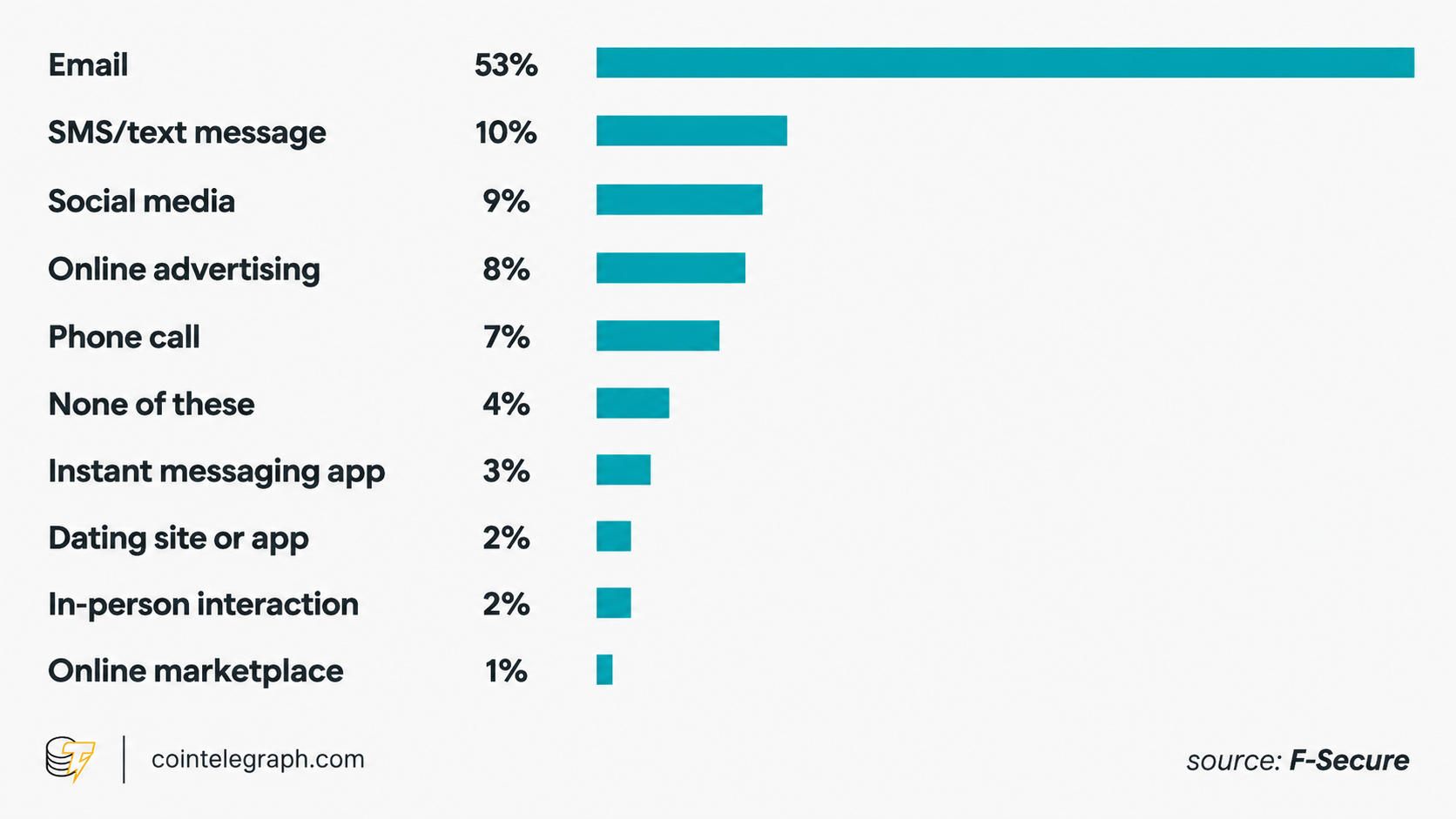

Common Scam Channels


Why Text Authentication Used to Work


Early phishing scams focused on casting a wide net, prioritizing quantity over content quality. Scammers sent out mass messages, hoping just a few people would bite.


Since most scam operations were based overseas or used simple translation tools, the sent information often contained grammatical errors, awkward expressions, and messy formatting. Users gradually learned to treat these details as warning signs.


Various cybersecurity awareness campaigns also popularized a series of basic identification techniques:


  • Check if the text contains spelling mistakes.
  • Avoid messages with poor grammar.
  • Be wary of strange or unusual phrasing.
  • Watch for abnormal formatting.


These small tricks could quickly filter out crudely made scam content.


However, this was never a foolproof defense method, serving only as a reminder. But over time, many people began to assume that professional, fluent writing equated to trustworthy content. The widespread adoption of AI has completely shattered this ingrained perception.


AI tools can generate well-formatted and eloquently phrased phishing content in bulk. Relying on spotting textual errors to prevent scams is becoming increasingly unreliable.


How AI Upgrades Scam Tactics


Large language models can generate natural, fluent text in multiple languages, allowing fraudsters to fabricate various types of false content:


  • Falsify customer service chat logs
  • Produce sophisticated phishing emails
  • Impersonate legitimate exchange notifications
  • Write highly enticing investment pitches
  • Post realistic Telegram group announcements
  • Create customized fake wallet recovery guides


Simultaneously, AI also assists in implementing precise targeted attacks. Scammers use data breach information and user data from platforms like LinkedIn, X, Discord, and Telegram to tailor scam narratives.


Information received by users might mention these details:


  • Tokens you recently purchased
  • Your exchange account information
  • The wallet service provider you are using
  • Decentralized Finance (DeFi) platforms you've interacted with
  • Customer service questions you've asked in public channels


Highly customized content significantly increases the credibility of scams.


Furthermore, AI image generation and voice cloning technologies make identity impersonation much easier. Forging executive videos, simulating customer service voices, and replicating brand visual elements can now be achieved effortlessly.


Unique Risks Faced by Crypto Users


The security logic of crypto assets is fundamentally different from traditional banking. In traditional finance, if you encounter a mistaken transfer or scam, you can usually contact your bank, payment institution, or risk control team to recover the funds. However, once a crypto transaction is confirmed on the blockchain, it is essentially irreversible.


Self-custody wallets also expand the attack surface. Scammers may not need to steal passwords or private keys; often, simply tricking users into authorizing malicious transactions or granting high-risk wallet permissions is enough to succeed.


This means that even if users never leak their seed phrase, well-crafted scam interfaces still pose a significant risk.


Common scam forms in the crypto space include:


  • Fake airdrop claim websites
  • Counterfeit NFT minting events
  • Impersonated exchange login pages
  • Inducement to connect to malicious wallets
  • Pop-ups prompting authorization of malicious tokens
  • Fake staking or mining interfaces
  • Impersonation of official customer support
  • High-imitation accounts registered on platforms like Telegram and Discord


With the help of AI, such scams can be produced in bulk while maintaining high fidelity in content and interface design.


Core Verification Methods Users Should Master


Facing increasingly realistic scams, crypto users can no longer rely on superficial judgment; verification must become the primary rule.


1) Scrutinize the Domain Name Carefully


A website's appearance can be copied, but the URL is difficult to replicate perfectly. Fraudulent domains commonly use these tricks: adding extra characters, inserting random hyphens, using look-alike symbols, tampering with subdomains, choosing obscure top-level domains.


Even if the page looks identical to a legitimate platform, do not trust it based solely on logos and visual effects. Recommended practices include:


  • Manually type the URLs of commonly used platforms.
  • For wallets and exchanges, prioritize using saved bookmarks.
  • Always verify the domain name before connecting a wallet.
  • Avoid clicking links in unfamiliar messages or promotional content.


A beautiful page does not equate to a legitimate website.


2) Prioritize Links from Official Channels


Fake announcements, impersonated influencer accounts, and scam accounts are common vectors for spreading scams. Fraudulent links primarily spread through: Telegram groups, Discord channels, X (formerly Twitter) comment sections, paid search ads, fake customer service messages.


Always confirm that links originate from the project's official website or officially announced channels. Cross-referencing information across multiple official accounts can further reduce risk.


Be highly vigilant when receiving unsolicited private messages claiming your account has an urgent issue.
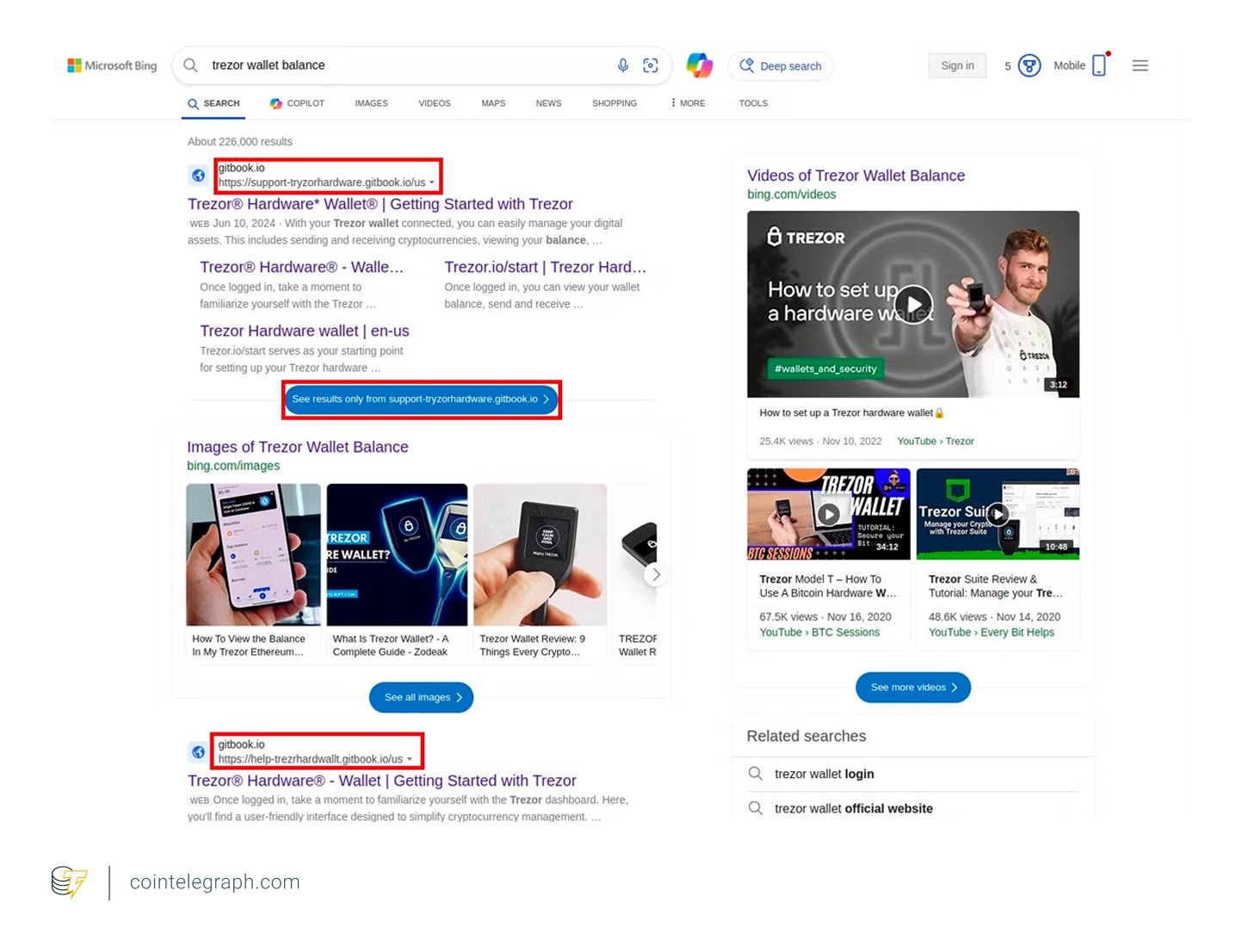

Malicious Trezor Balance Check Link Found in Bing Search


3) Understand Wallet Permissions Before Authorizing


Many users have the misconception that any request popping up from their wallet must be safe. Especially when faced with professional-looking websites, people often casually click confirm, overlooking permission details.


Wallet interactions involve various operation types: connecting a wallet, signing messages, authorizing token transfers, granting general permissions, triggering smart contract interactions, etc.


Among these, unlimited approvals carry the highest risk, allowing malicious contracts to transfer your assets arbitrarily in the future. Before approving, always verify that the token types, allowed transfer amounts, the requesting contract address, and the operation details match your expectations.


Even if a website looks flawless, it might trigger high-risk wallet operations.


4) Verify All Details Before Signing a Transaction


AI scams often exploit a sense of urgency to rush users into quick confirmation. Before signing any transaction, meticulously check the recipient address, token amount, selected blockchain, contract interaction information, fee structure, and approval scope.


If a page is labeled "Claim Reward" but requests unlimited token permissions, or labeled "Wallet Verification" but initiates an asset transfer, stop immediately and investigate the risk.


Once transaction details deviate from expectations, do not proceed.


Many wallet scams begin when users publicly complain about account issues on social media. Scammers monitor such posts and then impersonate customer support via private messages.


5) Verify Contract Addresses, Don't Blindly Trust Token Names


Scammers can copy token names and icons to create high-imitation fake tokens. A token that appears to be named "USDT" or "ETH Earnings" might be issued by a completely unrelated entity.


Verification method: Confirm the token's corresponding contract address through the project's official website, legitimate blockchain explorers, officially published materials, or mainstream exchange information. As AI scams become more convincing, relying solely on token names and icons to judge authenticity is increasingly risky.


6) Be Wary of Unsolicited Customer Service Private Messages


Impersonating official customer support remains a prevalent scam method in the crypto space. Scammers monitor users' help-seeking comments on social platforms, then send private messages posing as staff. They may induce users to perform wallet "verification," ask for seed phrases, send malicious links, recommend remote control tools, or guide users to complete dangerous authorizations.


Legitimate official customer support almost never initiates private contact first. Platforms will also never ask for private keys or seed phrases. If you encounter a problem, proactively contact support through official channels. Do not respond to unsolicited private messages.


7) Urgent Pressure is Often a Sign of a Scam


Even the most professionally crafted scams often use psychological pressure to create urgency. Common narratives include: "Your wallet has been hacked," "Tokens are about to expire, claim now," "Account will be suspended soon," "KYC failed," "Security update required immediately."


Such tactics can cloud judgment. The more someone pressures you to act immediately, the more you should slow down and verify carefully.


A simple rule for crypto security: Whenever you're asked to act on your wallet immediately, pause and calmly verify first.


Polished Appearance No Longer Equals Security


Today's scam websites can accurately replicate brand logos, color schemes, page layouts, and writing styles. AI can also help create high-fidelity FAQ pages, fake customer service replies, impersonated news articles, and complete new user onboarding flows and promotional copy.


Judging a platform's trustworthiness based on visual appeal alone is no longer possible. Attackers only need to catch a user off guard for a moment to execute irreversible asset theft.


The core of security protection remains verification: check the domain name, inspect the contract, review wallet requests, confirm support identities, clarify transaction purposes. A beautifully designed interface does not equate to trustworthiness.


Crypto Security Has Evolved into a Battle of Verification


AI hasn't created entirely new scam models; it has simply significantly upgraded the presentation and disguise of traditional scam techniques. In the past, people relied on surface characteristics to identify risks but neglected the act of verification itself. This mindset can lead to massive losses in the crypto industry.


Behind a perfectly phrased paragraph, a malicious link might lurk. Within a seemingly professional customer service reply, instructions to authorize asset transfers could be hidden. A convincingly realistic website might also request high-risk permissions.


The core takeaway is simple: fluent copy, exquisite interfaces, and familiar brand imagery cannot serve as security credentials. Faced with every link, every wallet pop-up, every customer service message: verify first, then act.


Трендові криптовалюти

Пов'язані питання

QHow has the use of AI by scammers fundamentally changed the nature of phishing attacks in the cryptocurrency space?

AAI has shifted phishing attacks from relying on easily identifiable signs like poor grammar, spelling errors, and awkward phrasing to generating highly polished, fluent, and contextually convincing content. This makes scams appear legitimate and professional, breaking users' long-held association of sloppy text with danger.

QWhat are some of the unique risks cryptocurrency users face compared to traditional banking users, especially in the context of AI-enhanced scams?

ACryptocurrency transactions are irreversible once confirmed on the blockchain, unlike traditional banking where chargebacks are often possible. AI can create convincing fake websites and interfaces that trick users into signing malicious transactions or granting unlimited token approvals, leading to instant asset loss even if seed phrases are never shared.

QAccording to the article, what is the most critical principle for crypto users to adopt for security in the age of AI scams?

AThe core principle is 'verification before action.' Users must move beyond judging content by its polished appearance and instead rigorously verify every request through independent channels. This includes checking domains, contract addresses, wallet permissions, and the identity of support personnel.

QWhat are three specific verification methods the article recommends for crypto users to protect themselves?

A1) Carefully verify website URLs and domain names, avoiding links from unknown sources. 2) Always check the details of any wallet transaction or signature request before approving, especially the token permissions and recipient addresses. 3) Verify token authenticity by checking the official contract address, not just the name or logo, and be wary of unsolicited private messages from 'support staff.'

QWhy is a sense of urgency often a red flag in potential crypto scams, even if the communication looks professional?

AScammers use urgency (e.g., claims of a hacked wallet, expiring tokens, or account suspension) to create psychological pressure and short-circuit a user's normal verification process. The article advises that the more a message pressures you to act immediately, the more you should slow down and perform thorough checks.

Пов'язані матеріали

7 Months After the Collapse of Huiwang, Southeast Asia's Escrow Platforms Undergo a Major Reshuffle

Following the collapse of Huione Pay—dubbed the "Alipay of Southeast Asia"—seven months ago, the region's underground financial guarantee platform sector is undergoing a significant reshuffle. This power vacuum has been swiftly filled by emerging platforms such as XinBi, Tiger/Navigator, JinBei (renamed JinBo), Dali/Tiancheng, and FullyLight. These platforms, operating largely via Telegram and offering services like escrow for illicit transactions, have absorbed the vast user base and markets left behind by Huione. While positioning themselves as "trust intermediaries," their primary clientele consists of networks involved in online scams, money laundering, illegal gambling, and even human trafficking. For instance, the Tiger/Navigator platform explicitly provides "escrow" services for kidnapping-for-ransom operations ("强押车交易"). Data underscores the immense scale: Huione alone processed over $103 billion in cryptocurrency payments and facilitated over $31 billion through its escrow market before its downfall, linking it to Cambodia's notorious Prince Group. Since its collapse, competitors have seen explosive growth. For example, the XinBi platform has accumulated over $1.6 billion in total USDT revenue, while platforms like NewPay, OkPay (under Dali), and FullyLight Wallet collectively processed over $4.8 billion in USDT in a single year. This ecosystem thrives in regions like Cambodia and Myanmar, where regulatory gaps allow these platforms to act as critical financial infrastructure for sprawling cybercrime industries, from scam compounds to online casinos. The article concludes that the moniker "Southeast Asian Alipay" is a misnomer, obscuring the platforms' fundamental role in enabling serious criminal enterprises rather than representing legitimate financial innovation.

Odaily星球日报58 хв тому

7 Months After the Collapse of Huiwang, Southeast Asia's Escrow Platforms Undergo a Major Reshuffle

Odaily星球日报58 хв тому

The Changing Landscape: What Are Crypto VCs Experiencing?

Title: The Shifting Landscape of Crypto Venture Capital The era of dedicated crypto venture capital funds is undergoing a significant transformation. Once essential for navigating the sector's complexity and high risk, these specialized funds are now facing an identity crisis as the market matures. This shift mirrors historical patterns in other specialized investment classes like cleantech and SPACs, where initial information advantages dissipate as technologies become mainstream and integrated into existing industry frameworks. The article argues that crypto is reaching a critical inflection point, transitioning from a "building phase" to an "integration phase." Major players like Stripe, BlackRock, and Visa now engage with crypto not for its novel mechanics but as a foundational financial infrastructure. Their needs—regulatory compliance, banking partnerships, distribution channels—align with traditional fintech, a domain easily understood by large, generalist funds like Sequoia and Founders Fund. This evolution creates a "barbell effect" within the VC landscape. On one end are massive, diversified platforms that can incorporate crypto as one vertical among many. On the other are small, nimble funds focused on niche, experimental projects. The middle ground—medium-sized dedicated crypto funds—is being squeezed out. Their typical fund size makes it impossible to generate sufficient returns solely from early-stage crypto bets, yet they cannot compete with giants for later-stage deals. Consequently, leading crypto-native firms like Paradigm and Framework Ventures are expanding into AI, robotics, and other sectors, driven partly by LP pressure for better returns amid a broader VC DPI crisis. Others, like Dragonfly and a16z, have narrowed their crypto focus predominantly to financial infrastructure like stablecoins, reframing the sector's core narrative. For crypto entrepreneurs, this consolidation presents challenges. While generalist funds offer larger checks and broader resources, crypto projects now compete fiercely with AI for attention and capital within these firms. Furthermore, the long-term, non-commercial foundational work that built the ecosystem—funded by dedicated crypto VCs—is less likely to attract generalist capital focused on direct returns. The conclusion is that "crypto investor" as a standalone category is becoming obsolete, akin to "internet investor." Crypto is becoming a baseline infrastructure layer. The future will see a barbell structure: large-scale growth financing handled by generalist funds, while pioneering, speculative projects are funded by small, specialized vehicles. The dedicated crypto funds of the 2017-2021 boom, which incubated core infrastructure, are giving way to this new, bifurcated reality.

Foresight News1 год тому

The Changing Landscape: What Are Crypto VCs Experiencing?

Foresight News1 год тому

As Consensus Accelerates, What Are Young Investors Betting On?

Title: As Consensus Forms Faster, What Are Young Investors Betting On? In the rapid evolution of tech investment, a new generation of young investors is navigating a landscape where AI, robotics, commercial aerospace, and quantum computing are advancing simultaneously. Traditional investment logic based on financial models is giving way to a need for deep technical understanding and the ability to act before industry consensus forms. An analysis of trends from the "WAIC FUTURE TECH" list of young investment leaders reveals key shifts in focus. The first major trend is the movement of AI from the digital screen into the physical world. Investment is shifting from large language models and chatbots towards embodied AI, robotics, AI hardware, and edge computing. While demonstrations generate excitement, the real challenge lies in achieving scalable, reliable, and cost-effective delivery in complex real-world environments like factories and logistics. Success depends not just on algorithms but on the integration of sensors, actuators, and control systems. Second, the competitive focus for large models is moving beyond raw capability toward building an "intelligence flywheel." The goal is to create self-reinforcing systems where user interaction generates data, improving the model, which in turn enhances the user experience and attracts more engagement. Companies that successfully embed AI into workflows to create these closed-loop systems can build lasting value that isn't easily erased by the next model upgrade. Third, facing a potential bottleneck in high-quality human-generated data, investors are looking at new underlying technologies. Reinforcement learning and self-play, as demonstrated by AlphaGo Zero, offer paths for AI to generate its own experience. Scientific foundation models, which aim to build general AI capabilities for fields like life sciences and materials discovery, represent a non-consensus direction that could unlock new frontiers of knowledge and data. Finally, in deep-tech areas like quantum computing, commercial aerospace, and space-based infrastructure, patient capital is essential. These fields have long, uncertain development and validation cycles involving complex engineering, supply chains, and regulations. Investment here requires a long-term view, focusing on foundational team capabilities and the eventual emergence of market demand, even if commercial returns are distant. Collectively, these trends illustrate how young investors are adapting to a new era. They are learning to make earlier, technically-informed judgments, balance hype with real-world viability, and provide the patient capital needed to build the deep-tech foundations of the future.

marsbit1 год тому

As Consensus Accelerates, What Are Young Investors Betting On?

marsbit1 год тому

Торгівля

Спот

Популярні статті

Що таке $S$

Розуміння SPERO: Комплексний огляд Вступ до SPERO Оскільки ландшафт інновацій продовжує еволюціонувати, виникнення технологій web3 та криптовалютних проектів відіграє ключову роль у формуванні цифрового майбутнього. Один з проектів, який привернув увагу в цій динамічній сфері, — це SPERO, позначений як SPERO,$$s$. Ця стаття має на меті зібрати та представити детальну інформацію про SPERO, щоб допомогти ентузіастам та інвесторам зрозуміти його основи, цілі та інновації в рамках web3 та крипто-сектору. Що таке SPERO,$$s$? SPERO,$$s$ — це унікальний проект у криптопросторі, який прагне використати принципи децентралізації та технології блокчейн для створення екосистеми, що сприяє залученню, корисності та фінансовій інклюзії. Проект розроблений для полегшення взаємодії між користувачами новими способами, надаючи їм інноваційні фінансові рішення та послуги. У своїй основі SPERO,$$s$ прагне надати можливості індивідам, забезпечуючи інструменти та платформи, які покращують користувацький досвід у криптовалютному просторі. Це включає в себе можливість більш гнучких методів транзакцій, сприяння ініціативам, що підтримуються спільнотою, та створення шляхів для фінансових можливостей через децентралізовані додатки (dApps). Основна концепція SPERO,$$s$ обертається навколо інклюзивності, прагнучи зменшити розриви в традиційній фінансовій системі, використовуючи переваги технології блокчейн. Хто є творцем SPERO,$$s$? Особистість творця SPERO,$$s$ залишається дещо невідомою, оскільки є обмежені публічно доступні ресурси, що надають детальну інформацію про його засновників. Ця відсутність прозорості може бути наслідком зобов'язання проекту до децентралізації — етики, яку багато проектів web3 поділяють, ставлячи колективні внески вище за індивідуальне визнання. Зосереджуючи обговорення навколо спільноти та її колективних цілей, SPERO,$$s$ втілює суть наділення без виділення конкретних осіб. Таким чином, розуміння етики та місії SPERO є більш важливим, ніж ідентифікація єдиного творця. Хто є інвесторами SPERO,$$s$? SPERO,$$s$ підтримується різноманітними інвесторами, починаючи від венчурних капіталістів до ангельських інвесторів, які прагнуть сприяти інноваціям у крипто-секторі. Зосередження цих інвесторів зазвичай узгоджується з місією SPERO — пріоритет надається проектам, які обіцяють технологічний прогрес у суспільстві, фінансову інклюзію та децентралізоване управління. Ці інвесторські фонди зазвичай зацікавлені в проектах, які не лише пропонують інноваційні продукти, але й позитивно впливають на спільноту блокчейн та її екосистеми. Підтримка з боку цих інвесторів підкріплює SPERO,$$s$ як значного конкурента в швидко змінюваній сфері крипто-проектів. Як працює SPERO,$$s$? SPERO,$$s$ використовує багатогранну структуру, яка відрізняє його від традиційних криптовалютних проектів. Ось деякі ключові особливості, які підкреслюють його унікальність та інноваційність: Децентралізоване управління: SPERO,$$s$ інтегрує моделі децентралізованого управління, надаючи користувачам можливість активно брати участь у процесах прийняття рішень щодо майбутнього проекту. Цей підхід сприяє відчуттю власності та відповідальності серед членів спільноти. Корисність токена: SPERO,$$s$ використовує свій власний криптовалютний токен, розроблений для виконання різних функцій в екосистемі. Ці токени дозволяють здійснювати транзакції, отримувати винагороди та полегшувати послуги, що пропонуються на платформі, підвищуючи загальну залученість та корисність. Шарова архітектура: Технічна архітектура SPERO,$$s$ підтримує модульність та масштабованість, що дозволяє безперешкодно інтегрувати додаткові функції та додатки в міру розвитку проекту. Ця адаптивність є надзвичайно важливою для збереження актуальності в постійно змінюваному крипто-ландшафті. Залучення спільноти: Проект підкреслює ініціативи, що підтримуються спільнотою, використовуючи механізми, які стимулюють співпрацю та зворотний зв'язок. Підтримуючи сильну спільноту, SPERO,$$s$ може краще задовольняти потреби користувачів та адаптуватися до ринкових тенденцій. Фокус на інклюзію: Пропонуючи низькі комісії за транзакції та зручні інтерфейси, SPERO,$$s$ прагне залучити різноманітну базу користувачів, включаючи осіб, які раніше не брали участі в крипто-просторі. Це зобов'язання до інклюзії узгоджується з його загальною місією наділення через доступність. Хронологія SPERO,$$s$ Розуміння історії проекту надає важливі уявлення про його розвиток та етапи. Нижче наведено пропоновану хронологію, що відображає значні події в еволюції SPERO,$$s$: Етап концептуалізації та ідеації: Початкові ідеї, що стали основою SPERO,$$s$, були сформовані, тісно пов'язані з принципами децентралізації та фокусом на спільноті в індустрії блокчейн. Запуск білого паперу проекту: Після концептуального етапу був випущений комплексний білий папір, що детально описує бачення, цілі та технологічну інфраструктуру SPERO,$$s$, щоб залучити інтерес та зворотний зв'язок від спільноти. Створення спільноти та ранні залучення: Активні зусилля були спрямовані на створення спільноти ранніх прихильників та потенційних інвесторів, що полегшило обговорення цілей проекту та отримання підтримки. Подія генерації токенів: SPERO,$$s$ провів подію генерації токенів (TGE) для розподілу своїх рідних токенів серед ранніх прихильників та встановлення початкової ліквідності в екосистемі. Запуск початкового dApp: Перший децентралізований додаток (dApp), пов'язаний з SPERO,$$s$, став доступним, дозволяючи користувачам взаємодіяти з основними функціями платформи. Постійний розвиток та партнерства: Безперервні оновлення та вдосконалення пропозицій проекту, включаючи стратегічні партнерства з іншими учасниками блокчейн-простору, сформували SPERO,$$s$ у конкурентоспроможного та еволюціонуючого гравця на крипто-ринку. Висновок SPERO,$$s$ є свідченням потенціалу web3 та криптовалют для революціонізації фінансових систем та наділення індивідів. Завдяки зобов'язанню до децентралізованого управління, залучення спільноти та інноваційно спроектованих функцій, він прокладає шлях до більш інклюзивного фінансового ландшафту. Як і з будь-якими інвестиціями в швидко змінюваному крипто-просторі, потенційним інвесторам та користувачам рекомендується ретельно досліджувати та обдумано взаємодіяти з поточними подіями в SPERO,$$s$. Проект демонструє інноваційний дух крипто-індустрії, запрошуючи до подальшого дослідження його численних можливостей. Хоча подорож SPERO,$$s$ ще триває, його основні принципи можуть справді вплинути на майбутнє того, як ми взаємодіємо з технологією, фінансами та один з одним у взаємопов'язаних цифрових екосистемах.

137 переглядів усьогоОпубліковано 2024.12.17Оновлено 2024.12.17

Що таке $S$

Що таке AGENT S

Агент S: Майбутнє автономної взаємодії в Web3 Вступ У постійно змінюваному ландшафті Web3 та криптовалюти інновації постійно переосмислюють, як люди взаємодіють з цифровими платформами. Один з таких новаторських проектів, Агент S, обіцяє революціонізувати взаємодію людини з комп'ютером через свою відкриту агентну структуру. Прокладаючи шлях для автономних взаємодій, Агент S прагне спростити складні завдання, пропонуючи трансформаційні застосування в штучному інтелекті (ШІ). Це детальне дослідження заглиблюється в складності проекту, його унікальні особливості та наслідки для сфери криптовалюти. Що таке Агент S? Агент S є революційною відкритою агентною структурою, спеціально розробленою для вирішення трьох основних викликів в автоматизації комп'ютерних завдань: Набуття специфічних знань у галузі: Структура інтелектуально навчається з різних зовнішніх джерел знань та внутрішнього досвіду. Цей подвійний підхід дозволяє їй створити багатий репозиторій специфічних знань у галузі, покращуючи її продуктивність у виконанні завдань. Планування на довгих горизонтах завдань: Агент S використовує планування з підкріпленням досвіду, стратегічний підхід, який полегшує ефективний розподіл та виконання складних завдань. Ця функція значно підвищує її здатність ефективно та результативно управляти кількома підзавданнями. Обробка динамічних, неоднорідних інтерфейсів: Проект представляє Інтерфейс Агент-Комп'ютер (ACI), інноваційне рішення, яке покращує взаємодію між агентами та користувачами. Використовуючи багатомодальні великі мовні моделі (MLLMs), Агент S може безперешкодно орієнтуватися та маніпулювати різноманітними графічними інтерфейсами користувача. Завдяки цим новаторським функціям Агент S надає надійну структуру, яка вирішує складнощі, пов'язані з автоматизацією людської взаємодії з машинами, прокладаючи шлях для численних застосувань у ШІ та за його межами. Хто є творцем Агент S? Хоча концепція Агент S є фундаментально новаторською, конкретна інформація про його творця залишається невідомою. Творець наразі невідомий, що підкреслює або початкову стадію проекту, або стратегічний вибір зберегти засновників у таємниці. Незважаючи на анонімність, акцент залишається на можливостях та потенціалі структури. Хто є інвесторами Агент S? Оскільки Агент S є відносно новим у криптографічній екосистемі, детальна інформація про його інвесторів та фінансових спонсорів не задокументована. Відсутність публічно доступних відомостей про інвестиційні фонди або організації, що підтримують проект, викликає питання щодо його фінансової структури та дорожньої карти розвитку. Розуміння підтримки є критично важливим для оцінки стійкості проекту та потенційного впливу на ринок. Як працює Агент S? В основі Агент S лежить передова технологія, яка дозволяє йому ефективно функціонувати в різних умовах. Його операційна модель побудована навколо кількох ключових функцій: Взаємодія з комп'ютером, подібна до людської: Структура пропонує розширене планування ШІ, прагнучи зробити взаємодії з комп'ютерами більш інтуїтивними. Імітуючи людську поведінку при виконанні завдань, вона обіцяє підвищити досвід користувачів. Наративна пам'ять: Використовується для використання високорівневого досвіду, Агент S використовує наративну пам'ять для відстеження історій завдань, тим самим покращуючи свої процеси прийняття рішень. Епізодична пам'ять: Ця функція надає користувачам покрокові інструкції, дозволяючи структурі пропонувати контекстуальну підтримку в міру виконання завдань. Підтримка OpenACI: Завдяки можливості працювати локально, Агент S дозволяє користувачам зберігати контроль над своїми взаємодіями та робочими процесами, узгоджуючи з децентралізованою етикою Web3. Легка інтеграція з зовнішніми API: Його універсальність і сумісність з різними платформами ШІ забезпечують те, що Агент S може безперешкодно вписатися в існуючі технологічні екосистеми, роблячи його привабливим вибором для розробників та організацій. Ці функціональні можливості колективно сприяють унікальному положенню Агент S у крипто-просторі, оскільки він автоматизує складні, багатоступеневі завдання з мінімальним втручанням людини. У міру розвитку проекту його потенційні застосування в Web3 можуть переосмислити, як відбуваються цифрові взаємодії. Хронологія Агент S Розробка та етапи Агент S можуть бути узагальнені в хронології, яка підкреслює його значні події: 27 вересня 2024 року: Концепція Агент S була представлена в комплексній науковій статті під назвою “Відкрита агентна структура, яка використовує комп'ютери як людина”, що демонструє основи проекту. 10 жовтня 2024 року: Наукова стаття була опублікована на arXiv, пропонуючи детальне дослідження структури та її оцінки продуктивності на основі бенчмарку OSWorld. 12 жовтня 2024 року: Було випущено відеопрезентацію, що надає візуальне уявлення про можливості та особливості Агент S, ще більше залучаючи потенційних користувачів та інвесторів. Ці маркери в хронології не лише ілюструють прогрес Агент S, але й вказують на його прихильність до прозорості та залучення громади. Ключові моменти про Агент S У міру розвитку структури Агент S кілька ключових характеристик виділяються, підкреслюючи її новаторський характер та потенціал: Інноваційна структура: Розроблена для забезпечення інтуїтивного використання комп'ютерів, подібного до людської взаємодії, Агент S пропонує новий підхід до автоматизації завдань. Автономна взаємодія: Здатність автономно взаємодіяти з комп'ютерами через GUI означає стрибок до більш інтелектуальних та ефективних обчислювальних рішень. Автоматизація складних завдань: Завдяки своїй надійній методології він може автоматизувати складні, багатоступеневі завдання, роблячи процеси швидшими та менш схильними до помилок. Безперервне вдосконалення: Механізми навчання дозволяють Агенту S покращуватися на основі минулого досвіду, постійно підвищуючи свою продуктивність та ефективність. Універсальність: Його адаптивність до різних операційних середовищ, таких як OSWorld та WindowsAgentArena, забезпечує його здатність служити широкому спектру застосувань. Оскільки Агент S займає своє місце в ландшафті Web3 та криптовалюти, його потенціал покращити можливості взаємодії та автоматизувати процеси означає значний прогрес у технологіях ШІ. Завдяки своїй інноваційній структурі Агент S є прикладом майбутнього цифрових взаємодій, обіцяючи більш безперешкодний та ефективний досвід для користувачів у різних галузях. Висновок Агент S представляє собою сміливий крок вперед у поєднанні ШІ та Web3, з можливістю переосмислити, як ми взаємодіємо з технологією. Хоча проект все ще на ранніх стадіях, можливості для його застосування є величезними та переконливими. Завдяки своїй комплексній структурі, що вирішує критичні виклики, Агент S прагне вивести автономні взаємодії на передній план цифрового досвіду. У міру того, як ми заглиблюємося в сфери криптовалюти та децентралізації, проекти, подібні до Агент S, безсумнівно, відіграватимуть ключову роль у формуванні майбутнього технологій та співпраці людини з комп'ютером.

757 переглядів усьогоОпубліковано 2025.01.14Оновлено 2025.01.14

Що таке AGENT S

Як купити S

Ласкаво просимо до HTX.com! Ми зробили покупку Sonic (S) простою та зручною. Дотримуйтесь нашої покрокової інструкції, щоб розпочати свою криптовалютну подорож.Крок 1: Створіть обліковий запис на HTXВикористовуйте свою електронну пошту або номер телефону, щоб зареєструвати обліковий запис на HTX безплатно. Пройдіть безпроблемну реєстрацію й отримайте доступ до всіх функцій.ЗареєструватисьКрок 2: Перейдіть до розділу Купити крипту і виберіть спосіб оплатиКредитна/дебетова картка: використовуйте вашу картку Visa або Mastercard, щоб миттєво купити Sonic (S).Баланс: використовуйте кошти з балансу вашого рахунку HTX для безперешкодної торгівлі.Треті особи: ми додали популярні способи оплати, такі як Google Pay та Apple Pay, щоб підвищити зручність.P2P: Торгуйте безпосередньо з іншими користувачами на HTX.Позабіржова торгівля (OTC): ми пропонуємо індивідуальні послуги та конкурентні обмінні курси для трейдерів.Крок 3: Зберігайте свої Sonic (S)Після придбання Sonic (S) збережіть його у своєму обліковому записі на HTX. Крім того, ви можете відправити його в інше місце за допомогою блокчейн-переказу або використовувати його для торгівлі іншими криптовалютами.Крок 4: Торгівля Sonic (S)Легко торгуйте Sonic (S) на спотовому ринку HTX. Просто увійдіть до свого облікового запису, виберіть торгову пару, укладайте угоди та спостерігайте за ними в режимі реального часу. Ми пропонуємо зручний досвід як для початківців, так і для досвідчених трейдерів.

1.7k переглядів усьогоОпубліковано 2025.01.15Оновлено 2026.06.02

Як купити S

Обговорення

Ласкаво просимо до спільноти HTX. Тут ви можете бути в курсі останніх подій розвитку платформи та отримати доступ до професійної ринкової інформації. Нижче представлені думки користувачів щодо ціни S (S).

活动图片













