AI Reviews 100 Years of Papers, Finding Issues in 99.2% of Top Journal Articles

marsbitОпубліковано о 2026-08-09Востаннє оновлено о 2026-08-09

Анотація

AI-powered scrutiny of top scientific journals reveals that 99.2% of papers contain at least one error, challenging the perception of robust peer review. A recent study using AI agents to audit papers from ICML 2026 found that 58 out of 92 reviewed papers could not be fully reproduced. Reasons for failed replication include missing code, broken dependencies, and results inconsistent with claims. Separately, a GPT-5-based checker analyzed established AI conference papers, detecting an average of 4.7 objective errors per paper, with mathematical mistakes being most common. This trend suggests a growing "reproducibility crisis" as paper volume and complexity outpace traditional verification. However, it also presents an opportunity: researchers can now use AI to efficiently audit past literature, identify errors in foundational work, and publish corrections—a potentially fruitful new research avenue. In one case, AI even corrected century-old chemical data that had been accepted as fact. While AI tools significantly lower the cost of verification, they are not infallible (e.g., 83.2% precision rate in one system) and human oversight remains crucial. The era of AI-assisted verification may redefine the scientific process, where publication marks not an end, but the beginning of automated validation.

Who still says there are no new problems left in scientific research? That all the good directions have been taken by predecessors???

What if I told you—

Most of the papers already published in top journals have issues?

Recently, researchers using AI Agents for "academic fact-checking" discovered:

Among 92 papers reported at the 2026 International Conference on Machine Learning (ICML), 58 could no longer be reproduced.

Really?? Could it be that the opportunity to publish heavily in top journals is actually here?

Top Conference Papers Are Being Collectively "Fact-Checked" by AI

Typically, a paper accepted into a top-tier conference means it has undergone peer review.

However, limited by time, peer reviewers hardly have time to download data from scratch, run models, or reproduce experiments to verify every experimental conclusion in the paper.

Meanwhile, with the explosive growth in AI research papers, models becoming increasingly complex, and experiments growing larger, the code, data, and parameter settings behind a single paper may involve hundreds of details.

The verifiability of papers has thus become increasingly important. A paper is published, but can its conclusions be re-run?

Currently, AI Agents have significantly reduced the cost of such verification and reproduction.

On July 22, a US research auditing company used AI Agents to conduct a systematic result reproducibility audit on all 168 orally presented papers at ICML 2026.

Among the 168 papers, 92 contained at least 5 verifiable conclusive statements.

The final result: only 34 papers had over 40% of their conclusions successfully reproduced by the AI Agent; only 8 papers had over 80% of their conclusions reproduced.

However, it must be clarified that "failure to reproduce" is vastly different from "research fraud."

Reasons for reproduction failure include, but are not limited to: code missing key files, broken dependency library versions, results not matching the paper, and 4 papers whose dependent models had been taken offline, meaning the experimental results could permanently no longer be reproduced by anyone.

Besides these, some errors were quite egregious

For example, one paper touted "training only 0.77% of the base model's parameters" as its core selling point, but its actually open-sourced checkpoint trained 6.31% of the parameters, a difference of approximately 8 times.

Another paper included a reliability table based on a certain evaluation model, but its open-source code did not contain that evaluation model at all, nor any script capable of generating the results in the table.

It's not an isolated case. In 2026, Hugging Face and AlphaXiv jointly launched the 「Agent Reproduction Challenge」 competition, inviting researchers to use AI Coding Agents to automatically reproduce papers accepted at ICML 2026, with similarly unoptimistic results.

A similar trend is even more striking in the detection of paper errors and omissions.

At the end of 2025, a study developed a GPT-5-based paper inspection system to analyze papers already published in top AI conferences and journals, searching for objectively verifiable problems. The researchers explicitly stated:

We only look for "objective errors"; we do not judge a paper's novelty or research value.

The final results showed an average of 4.7 objective errors detected per paper, with 99.2% of papers flagged for at least one problem.

Image generated by AI

Regarding error types, mathematics and formula errors accounted for the highest proportion at 54.0% (including incorrect equations, logical flaws in derivations, incorrect assumptions in proofs, etc.).

Approximately 30.8% of NeurIPS papers and 23.8% of ICLR papers contained at least one substantive error that could affect result interpretation.

More notably, the time trend: the average number of errors per NeurIPS paper increased from 3.8 in 2021 to 5.9 in 2025, a rise of 55.3%.

......

Perhaps in the future, publishing a paper will no longer signify the "victory" of research but merely mark the beginning of another round of AI verification.

A Major Boon for Academic Newcomers: Publishing in Top Journals Without Conducting Experiments

So, friends, for those worried about choosing a research topic, this might actually be a rather unexpected "benefit."

Searching literature for errors and writing errata has always been a legitimate form of academic output. Now it seems like a completely untapped academic blue ocean.
How to get started specifically? Here are a few tips for academic newcomers struggling with topic selection:

First, shift research thinking: don't compete at the frontier, compete with the past.

Move from "finding new topics" to "finding anomalies in old papers," focusing especially on classic papers that are highly cited but have little controversy. After all, "99.2% of papers have at least one error."

Second, let AI help you create knowledge maps and research lineages.

This kind of knowledge map can help you understand—which are the truly foundational works? Which research viewpoints currently have controversy? Which conclusions are heavily cited but lack verification? What are the citation relationships between different papers? From this, you can find connections and anomalies that were difficult to discover in the past.

Third, Ask anything.

Many important breakthroughs in the history of science did not come from posing entirely new questions but from re-examining a long-accepted assumption.

For example: Has a classic experiment been verified by today's standards? Does a widely cited conclusion have unnoticed limitations or conditions?

In the past, this kind of inquiry was very costly, requiring researchers to spend a great deal of time consulting original literature and comparing experimental details. Now, AI has reduced this cost to almost zero.

AI May Begin to Reorganize the History of Science

Recently, theoretical chemist Pios from a Zhejiang laboratory, while using AI to predict molecular boiling points, found that the results clashed significantly with a chemical database from 75 years ago.

Anyone's first reaction to this might be, "Well, I must be wrong then."

Pios was no exception; he quickly checked his model. But after manually tracing back to the original literature, he discovered: Goodness, it was the AI that was actually correct.

Greatly surprised, Pios continued using AI to check further and even found that a boiling point measurement from about a century ago, considered authoritative by the academic community, was also wrong.

It's important to note that this data had been cited and absorbed into subsequent research over many years.

The fact that such problems remained undiscovered for so long might be directly related to the sheer scale of scientific literature.

Image generated by AI

The volume of modern scientific papers has far exceeded the reading capacity of any individual researcher. For example, the annual submission volume for just one top AI conference, ICLR, rose from 1013 in 2018 to 19619 in 2026.

At this scale, an initial error appearing in a paper, once repeatedly cited by subsequent literature, continues to propagate along the citation chain, forming a de facto academic consensus.

Due to their age, complex citation chains, the enormous time required for verification, and limited academic reward, the vast majority of errors that have entered the literature system have never been systematically reviewed.

But now everything is loosening up. At least in terms of technical capability, people possess for the first time the possibility of large-scale re-examination of past scientific literature.

However, taking the GPT-5-powered Paper Correctness Checker as an example, its detection precision rate is 83.2%, and in each detection, about 40% of real errors still remain undetected.

It can be said that such AI fact-checking tools alone are insufficient to act as judges of scientific literature. The output results of AI verification tools ultimately still require human review.

This article is from WeChat public account "QbitAI" (ID: QbitAI), author: Cheng Qian

Трендові криптовалюти

Пов'язані питання

QAccording to the article, what percentage of top journal papers have at least one issue when reviewed by AI?

AAccording to the article, 99.2% of top journal papers were found to have at least one issue when reviewed by an AI-powered paper checking system.

QWhat was the result when AI Agent attempted to reproduce conclusions from a sample of ICML 2026 papers?

AOut of 92 ICML 2026 papers with at least 5 verifiable claims, only 34 papers had over 40% of their conclusions successfully reproduced, and a mere 8 papers had over 80% of their conclusions reproduced by the AI Agent.

QWhat are some of the common reasons cited for the failure to reproduce AI research papers?

ACommon reasons include missing key code files, broken dependency libraries, results not matching the paper's claims, and underlying models being taken offline. More serious issues involve major discrepancies in reported metrics, like a parameter count being off by a factor of 8, or tables being presented without the corresponding evaluation code.

QHow does the article suggest a shift in research approach could benefit academic newcomers?

AThe article suggests newcomers shift from seeking new research topics to auditing published papers for errors. They can focus on highly cited but less-contested classic papers, use AI to map knowledge and citation relationships to find anomalies, and systematically question long-held assumptions or experimental details in past work, a process now made less costly by AI.

QWhat broader historical role does the article imply AI might play in science?

AThe article implies AI could begin to 'reorganize' scientific history by enabling the large-scale review of past literature. It cites an example where AI detected errors in century-old, authoritative chemical data that had been propagated through countless subsequent studies, highlighting AI's potential to uncover long-standing, systemic errors embedded in the scientific record.

Пов'язані матеріали

FBI Agent Steals from Within: Millions in Cryptocurrency Stolen by Memorizing Recovery Phrases

A criminal complaint filed in the U.S. District Court for the Eastern District of Virginia details the case of Patrick Steven Yaroch, a former FBI supervisory special agent. Yaroch is accused of using his position to steal nearly $1 million in cryptocurrency from accounts associated with a "foreign adversary" (reportedly Russia) that were under FBI monitoring. He allegedly accessed the accounts' seed phrases from an FBI system, memorized them, and transferred the funds to personal wallets over 10-12 transactions in late 2024 or early 2025. Some stolen assets were held on the Kraken exchange and others were deposited into the Suilend DeFi protocol to earn yield. Despite his senior GS-14 position and high security clearance, Yaroch claimed his actions stemmed from frustration with the FBI's perceived inaction against the monitored accounts. However, evidence from his phone, including ChatGPT conversations from May and June 2026, revealed plans to move to Europe (specifically Portugal) with $1 million and retire early. He booked flights for his family and initiated steps for Portuguese residency. Tormented by guilt, Yaroch voluntarily confessed to the Justice Department and FBI in late July 2026, surrendering the seed phrase and a hardware wallet. He was immediately fired and arrested. He faces charges of interstate transportation of stolen property and receipt of stolen goods. The case highlights vulnerabilities within law enforcement, including excessive access to sensitive data like seed phrases, inadequate internal oversight, and the difficulty of detecting such insider theft on-chain. It echoes past corruption cases, such as those involving agents Carl Force and Shaun Bridges during the Silk Road investigation, where officials misappropriated Bitcoin. The incident underscores that human fallibility remains a critical risk in managing digital assets, even within heavily monitored agencies.

marsbit3 год тому

FBI Agent Steals from Within: Millions in Cryptocurrency Stolen by Memorizing Recovery Phrases

marsbit3 год тому

Inside a Fake Ledger: How a 4G Modem is Secretly Embedded in a Hardware Wallet

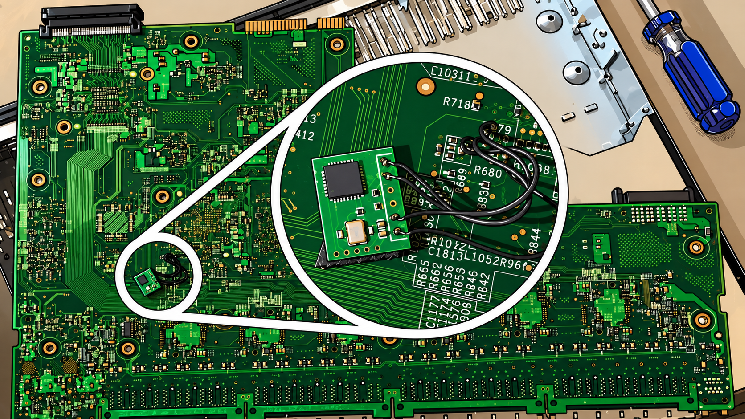
In a presentation at Hardwear.io 2026, hardware security expert Joe Grand detailed a sophisticated spy chip discovered inside counterfeit Ledger Nano X hardware wallets. Initially reported in 2021, these tampered devices reached victims through data leaked from Ledger in 2020 and subsequent phishing campaigns. The implanted board connects to the internal SPI bus, passively intercepting data between the Secure Element and the OLED display. Using pattern recognition, it "reads" the seed phrase words displayed during wallet setup or recovery, stores them in its flash memory, and then exfiltrates the data via a built-in 4G modem and eSIM, independent of the victim's computer. To fit the extra hardware, the attackers reduced the battery size and replaced a thermal sensor with a fixed resistor to fake a 100% charge reading. Grand noted this is not an isolated incident, with similar supply-chain attacks previously targeting Trezor devices where compromised firmware generated predictable seed phrases. The researcher plans to intercept and decrypt the chip's cellular traffic to learn more about the attackers. Ledger advises users to purchase devices directly from the manufacturer or authorized resellers, not third-party marketplaces, and to compare devices against official photos. The company is also considering enhanced physical security for future products. The article questions whether Ledger Live's Secure Element authentication would detect such a passive hardware implant and highlights that the core risk lies in the physical supply chain, not just software.

cryptonews.ru3 год тому

Inside a Fake Ledger: How a 4G Modem is Secretly Embedded in a Hardware Wallet

cryptonews.ru3 год тому

Торгівля

Спот

Популярні статті

Як купити T

Ласкаво просимо до HTX.com! Ми зробили покупку Threshold Network Token (T) простою та зручною. Дотримуйтесь нашої покрокової інструкції, щоб розпочати свою криптовалютну подорож.Крок 1: Створіть обліковий запис на HTXВикористовуйте свою електронну пошту або номер телефону, щоб зареєструвати обліковий запис на HTX безплатно. Пройдіть безпроблемну реєстрацію й отримайте доступ до всіх функцій.ЗареєструватисьКрок 2: Перейдіть до розділу Купити крипту і виберіть спосіб оплатиКредитна/дебетова картка: використовуйте вашу картку Visa або Mastercard, щоб миттєво купити Threshold Network Token (T).Баланс: використовуйте кошти з балансу вашого рахунку HTX для безперешкодної торгівлі.Треті особи: ми додали популярні способи оплати, такі як Google Pay та Apple Pay, щоб підвищити зручність.P2P: Торгуйте безпосередньо з іншими користувачами на HTX.Позабіржова торгівля (OTC): ми пропонуємо індивідуальні послуги та конкурентні обмінні курси для трейдерів.Крок 3: Зберігайте свої Threshold Network Token (T)Після придбання Threshold Network Token (T) збережіть його у своєму обліковому записі на HTX. Крім того, ви можете відправити його в інше місце за допомогою блокчейн-переказу або використовувати його для торгівлі іншими криптовалютами.Крок 4: Торгівля Threshold Network Token (T)Легко торгуйте Threshold Network Token (T) на спотовому ринку HTX. Просто увійдіть до свого облікового запису, виберіть торгову пару, укладайте угоди та спостерігайте за ними в режимі реального часу. Ми пропонуємо зручний досвід як для початківців, так і для досвідчених трейдерів.

678 переглядів усьогоОпубліковано 2024.12.10Оновлено 2026.06.02

Як купити T

Обговорення

Ласкаво просимо до спільноти HTX. Тут ви можете бути в курсі останніх подій розвитку платформи та отримати доступ до професійної ринкової інформації. Нижче представлені думки користувачів щодо ціни T (T).

活动图片