After Three Days on Hotel Wi-Fi, My Crypto Wallet Was Drained

marsbitОпубліковано о 2026-01-09Востаннє оновлено о 2026-01-09

Анотація

While on vacation, the author connected to an unsecured hotel Wi-Fi network without a password, only a captive portal login. After discussing cryptocurrency topics on a phone call in a shared space, an attacker nearby identified him as a crypto user with a Phantom wallet. The attacker executed a man-in-the-middle attack, injecting malicious code into a webpage the author visited. While using JupiterExchange for a swap, a fraudulent transaction approval request was triggered, disguised as a legitimate platform action. The author approved what appeared to be an authorization or session confirmation—not a direct fund transfer—granting the attacker permission to access his wallet. Days after leaving the hotel, the attacker drained his SOL, tokens, and NFTs. The author lost around $5,000 from a secondary hot wallet, emphasizing mistakes: using public Wi-Fi, discussing crypto in public, and approving transactions without thorough verification. He advises using mobile hotspots, avoiding public crypto discussions, and scrutinizing every wallet request.

Original Author:The Smart Ape

Original Compilation: Deep Tide TechFlow

A few days ago, I went with my family to a very nice hotel for the year-end holiday. One day after leaving the hotel, my wallet was completely drained. I couldn't figure out why, as I hadn't clicked on any phishing links or signed any malicious transactions.

After hours of investigation and seeking help from experts, I finally uncovered the truth. It all turned out to be due to the hotel's Wi-Fi network, a brief phone call, and a series of foolish mistakes.
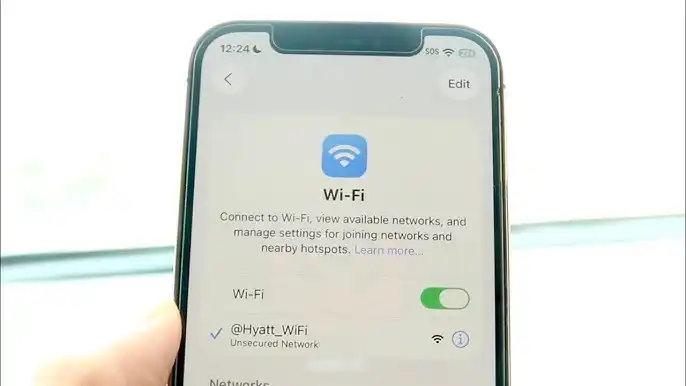
Like most cryptocurrency enthusiasts, I brought my laptop with me, thinking I could squeeze in some work while on vacation with my family. My wife repeatedly insisted that I shouldn't work during these three days—I really should have listened to her.

Like other guests, I connected to the hotel's Wi-Fi network. This network didn't require a password; it only needed to be logged into via a captive portal.

I worked as usual in the hotel without doing anything risky: I didn't create new wallets, click on strange links, or visit suspicious decentralized applications (dApps). I just checked X (Twitter), my balances, Discord, Telegram, etc.

At one point, I received a call from a crypto friend, and we chatted about market trends, Bitcoin, and other cryptocurrency-related topics. But what I didn't know was that someone nearby was eavesdropping on our conversation and realized I was involved in cryptocurrency. This was my first mistake. The other party learned from our conversation that I was using a Phantom wallet and that I was a user with significant holdings.

This made me his target.

In public Wi-Fi networks, all devices share the same network, and the visibility between devices is actually much higher than you might think. There is almost no real protection between users, which creates an opportunity for "Man-in-the-Middle Attacks." The attacker acts like a middleman, quietly inserting themselves between you and the internet, much like someone secretly reading and tampering with your mail before it reaches you.
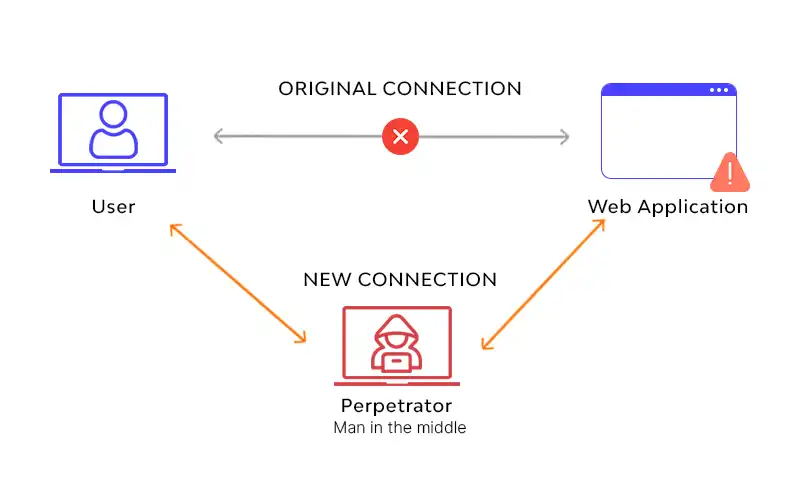
While I was browsing the web on the hotel Wi-Fi, one website appeared to load normally, but in reality, malicious code was injected behind the page. I didn't notice anything unusual at the time. If I had installed some security tools, I might have detected these issues, but unfortunately, I hadn't.

Normally, websites might request your wallet to sign certain operations. The Phantom wallet would pop up a window, and you could choose to approve or reject. Generally, you would sign without suspicion because you trust the website and the browser. However, I shouldn't have done so that day.

Just as I was performing a token swap on the @JupiterExchange platform, the malicious code triggered a wallet request that replaced my normal swap operation. I could have detected it as a malicious request by carefully checking the transaction details, but since I was already performing a swap on Jupiter, I didn't suspect anything.
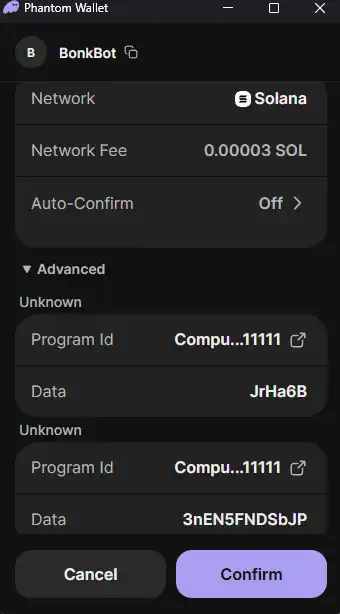
That day, I didn't sign any transaction to transfer funds; instead, I signed an authorization. This was the reason my assets were stolen days later.

The malicious code didn't directly ask me to send SOL (Solana), as that would have been too obvious. Instead, it requested me to "authorize access," "approve account," or "confirm session." In simple terms, I was actually giving another address permission to operate on my behalf.

I approved it because I mistakenly thought it was related to my operation on Jupiter. The message that popped up in the Phantom wallet at the time looked very technical, showing no amounts and no prompt for an immediate transfer.

And that was all the attacker needed. He waited patiently until I left the hotel before taking action. He transferred my SOL, withdrew my tokens, and moved my NFTs to another address.
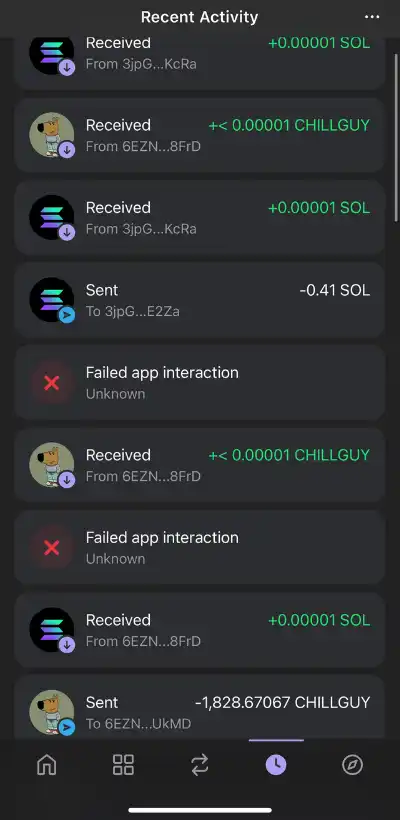
I never thought something like this would happen to me. Fortunately, this wasn't my main wallet but a hot wallet used for specific operations, not for long-term asset holding. But even so, I made many mistakes, and I believe I am primarily responsible for this.

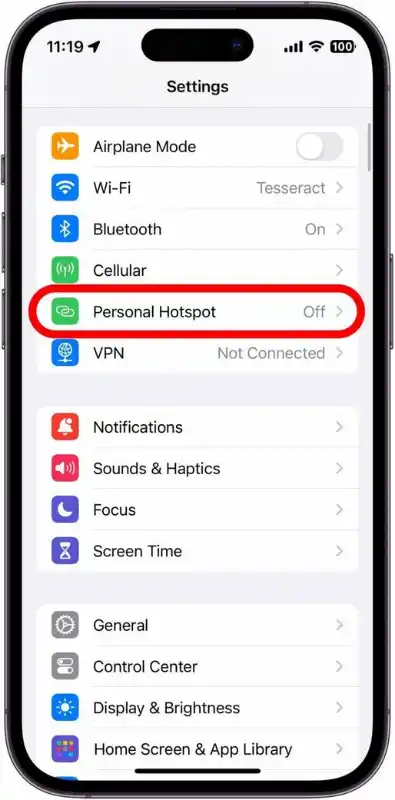
First, I should never have connected to the hotel's public Wi-Fi. I should have used my phone's hotspot for internet access.
My second mistake was talking about cryptocurrency in the hotel's public area, where many people might have overheard our conversation. My father once warned me never to let others know you're involved in cryptocurrency. This time, I was lucky; some people have even faced kidnapping or worse because of their crypto assets.
Another mistake was approving the wallet request without paying full attention. Because I was sure the request came from Jupiter, I didn't analyze it carefully. In fact, every wallet request should be carefully reviewed, even on applications you trust. Requests can be intercepted and may not actually come from the app you think.

In the end, I lost about $5,000 from a secondary wallet. While it wasn't the worst-case scenario, it was still very frustrating.


Пов'язані питання

QWhat was the primary security vulnerability that led to the author's wallet being drained?

AThe author connected to the hotel's unsecured public Wi-Fi network, which allowed an attacker to perform a Man-in-the-Middle (MitM) attack, intercept and inject malicious code into web pages, and trick the author into signing a malicious transaction approval.

QHow did the attacker identify the author as a potential target for the cryptocurrency theft?

AThe attacker overheard the author's phone conversation about cryptocurrency, market trends, and Bitcoin in a public area, which revealed that the author used a Phantom wallet and was a sizable holder.

QWhat specific action did the author unknowingly approve that led to the theft days later?

AThe author approved a malicious transaction that granted authorization or permission for another address to operate on their behalf, rather than directly transferring funds. This approval was disguised as part of a normal token swap on Jupiter Exchange.

QWhat security measures does the author mention could have prevented this incident?

AThe author states they should have used a mobile hotspot instead of public Wi-Fi, avoided discussing cryptocurrency in public, and carefully inspected every wallet transaction request, even from trusted applications.

QWhat was the financial impact of the attack on the author?

AThe author lost approximately $5,000 from a secondary hot wallet used for specific operations, not their main wallet, which mitigated the severity of the loss.

Пов'язані матеріали

Must-Watch Events Next Week|CLARITY Act Could Face Senate Vote; SpaceX, Circle to Report Earnings (8.3-8.9)

**Summary: Key Events and Developments to Watch (August 3-9)** The upcoming week is marked by significant financial disclosures, key legislative deadlines, and notable product updates. **Major Financial Events:** Several companies are scheduled to release their Q2 2026 earnings. American Bitcoin (ABTC) will report on August 3, followed by SpaceX and Hut 8 Mining Corp. on August 4, and Circle on August 5. Notably, a significant portion of SpaceX shares (up to 12% of total shares) will be unlocked on August 6 following their earnings release. **Key Legislative Deadline:** The U.S. Senate faces an August 7 deadline to secure 60 votes for the CLARITY Act, a bipartisan bill aiming to establish a federal regulatory framework for cryptocurrencies. The Senate may hold a full vote on the bill during the week. **Economic Data:** The U.S. July Non-Farm Payrolls report will be released on August 7, providing crucial labor market data. **Technology & Product Updates:** * **Shutdowns:** DeFi portfolio tracker Zapper and wallet app Ctrl Wallet will cease operations on August 3. * **Upgrades:** LayerZero will deprecate its v1 relayers on August 3. XRP Ledger's new version 3.3.0, featuring five new functions, is expected next week. * **AI:** Elon Musk announced that the advanced Grok 4.6 AI model is set for release around August 7. * **Bitcoin:** The BIP-110 forced signaling for a potential Bitcoin network change is scheduled to begin around August 8. **Other Notable Events:** Chinese robotics firm Unitree Tech has set its preliminary price inquiry for its IPO for August 5. South Korean exchange Upbit will delist AQT and AERGO tokens on August 3.

marsbit1 год тому

Must-Watch Events Next Week|CLARITY Act Could Face Senate Vote; SpaceX, Circle to Report Earnings (8.3-8.9)

marsbit1 год тому

Stocks Are Plummeting More Sharply Than Cryptocurrencies. Where Has the Money Gone?

Stock Markets Plunge Deeper Than Cryptocurrencies: Where Did the Money Go? In late July, Seoul's Kospi index triggered circuit breakers for two consecutive days, plummeting over 40% from its June high. The collapse was led by heavyweight stocks like SK Hynix, whose record profits still disappointed investors, and devastating leveraged ETFs, with one major product losing over 83% of its value. This signaled a global, forced deleveraging targeting the most crowded trades. Interestingly, while stocks exhibited extreme volatility akin to crypto markets, Bitcoin rose nearly 15% in July after a prior steep drop. Analysis shows the money fleeing equities did not flow into Bitcoin. Instead, Bitcoin had already absorbed its sell-off in May-June, when U.S. spot Bitcoin ETFs saw historic outflows. The true safe-haven beneficiary was gold, whose price rose over 20% year-on-year, highlighting a decoupling between Bitcoin and gold as "digital gold." The sell-off was a targeted unwinding of leveraged positions in tech and semiconductors, accelerated by broker-dealer risk management and shifts in the AI narrative, including new competition from Chinese memory chipmakers. The retreat path was clear: from high-valuation tech stocks to cash and U.S. Treasuries, then to gold. For Bitcoin to attract sustained institutional inflows, conditions like eased global liquidity pressure, a "soft-landing" Fed rate cut, and U.S. regulatory clarity via legislation like the stalled CLARITY Act are needed. Currently, Bitcoin is not a safe haven but an already-cleared asset. Its low correlation with tech stocks, however, makes it a potential diversification play for institutional portfolios once the storm passes. The money isn't here yet, but the positioning is underway.

marsbit1 год тому

Stocks Are Plummeting More Sharply Than Cryptocurrencies. Where Has the Money Gone?

marsbit1 год тому

In Conversation with Ray Dalio: We Are Currently in an AI Bubble, with 1% of My Portfolio in Bitcoin

Ray Dalio, founder of Bridgewater Associates, warns in an interview that the current AI boom shows classic bubble characteristics, which could lead to significant economic downturns as seen in past cycles like 1929 or 2000. He explains that speculative enthusiasm, fueled by debt and overvaluation, often precedes a crash when rising rates or taxation force asset sales, causing widespread losses and recession. Dalio also outlines his "Big Cycle" theory, describing an approximate 80-year pattern where widening wealth gaps, massive government deficits, and shifting geopolitical power (like China's rise) create internal conflict and global instability. He emphasizes that we are in a late-cycle, transitional phase where traditional powers like the US and UK face decline. For personal wealth protection, Dalio advises diversification beyond cash into assets like stocks, bonds, real estate, and particularly gold, which he prefers over Bitcoin. While he holds about 1% of his portfolio in Bitcoin as a non-printable hard asset, he views gold as more secure from technological or governmental threats. Regarding AI's impact, Dalio believes it will disproportionately benefit capital owners, worsening inequality by replacing both physical and cognitive labor. He suggests that human intuition and emotional intelligence, combined with AI, will be key for future workers. On taxation, Dalio argues that wealth taxes are impractical and risk triggering asset sell-offs, reducing productive investment. He points to the UK as a cautionary example of debt, low productivity, and political strife. Geopolitically, Dalio foresees a more regionalized world, with the US showing weakness in prolonged conflicts like with Iran, akin to past imperial declines. The ideal outcome, he suggests, is coexisting powerful blocs (e.g., Americas, China-Asia Pacific) without major war.

marsbit5 год тому

In Conversation with Ray Dalio: We Are Currently in an AI Bubble, with 1% of My Portfolio in Bitcoin

marsbit5 год тому

Торгівля

Спот
活动图片




