After the Crypto Craze, What Is Changpeng Zhao Thinking?

marsbitОпубліковано о 2026-01-27Востаннє оновлено о 2026-01-27

Анотація

In the post-crypto boom era, Binance founder Changpeng Zhao (CZ) is shifting focus from short-term price speculation to long-term structural cycles, regulation, and government engagement. Speaking at Davos 2026, CZ avoided making specific price predictions but suggested Bitcoin could reach new highs in 2026 due to increasingly favorable regulatory environments, particularly in the U.S. and other countries. He revealed he is now acting as an unofficial coordinator between governments and the crypto industry, engaging with over a dozen countries on topics like regulatory frameworks, asset tokenization, and stablecoin design. CZ explicitly denied having any personal or business ties with Donald Trump, emphasizing that policy benefits are industry-wide, not personal. A key insight from his talk was the ongoing friction between traditional banking and crypto, with stablecoins serving as a temporary bridge. CZ’s evolution from a disruptive exchange CEO to a policy dialogue participant signals a broader industry shift from "price narrative" to "institution narrative." The new cycle is expected to be slower, longer, and more structured, driven by regulatory clarity and institutional maturity rather than mere market speculation.

Author: 137Labs

As the crypto market gradually cools and the narrative shifts toward long-term structures, the recent statements by Binance founder Changpeng Zhao provide a noteworthy perspective. This article does not focus on short-term price predictions but instead analyzes how he has shifted the discussion toward more macro variables such as cycles, governments, regulation, and time, based on his recent remarks at Davos. Through this shift, the article attempts to answer a more critical question: After the crypto craze, what stage has the industry truly entered?

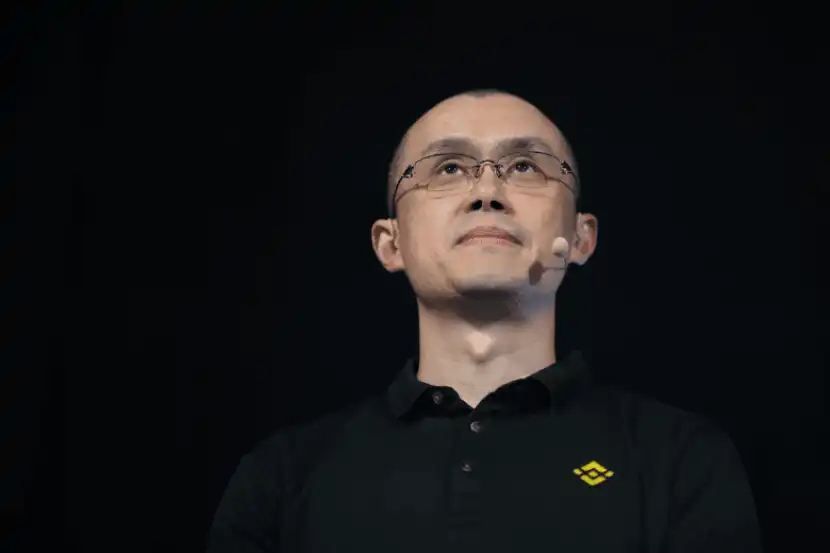
At Davos, Changpeng Zhao (CZ) appeared more cautious than ever before.

The founder and former CEO of Binance no longer leads the world's largest cryptocurrency exchange. Yet, at the 2026 World Economic Forum, he remained a figure of interest for the media and policy circles.

The reason lies not in any radical price predictions he offered—quite the opposite, he almost deliberately avoided short-term judgments.
I. He No Longer Predicts Prices, But Talks About "Time"

In an interview with CNBC, when asked about Bitcoin's price, Changpeng Zhao's response was surprisingly conservative:

Short-term prices are almost impossible to predict.

But immediately after, he offered a more macro judgment—

The cryptocurrency market may be entering a structural cycle that lasts for years.

In his description, this is not a traditional bull-bear switch but more of a change in cycle patterns.

He mentioned that Bitcoin historically fluctuated in four-year cycles, but this pattern is now being influenced by changes in the policy environment.

II. Why Might This Cycle Be Different?

The core reason Zhao gave was not technological upgrades or the halving narrative, but politics and regulatory environment.

He pointed out:

· The U.S. attitude toward cryptocurrency is becoming more friendly

· Other countries are quickly following suit with similar policies

· Crypto assets are gradually being incorporated into a "regulatable, discussable" category

In this context, he believes:

Bitcoin could reach a new all-time high in 2026.

However, it's important to note that this is not a statement of bullishness but more of a judgment on a policy-driven cycle.

III. "I Am in Dialogue with About a Dozen Governments"

More noteworthy than his price predictions is Zhao's main focus now.

He revealed in the interview that he is in communication with about a dozen governments, discussing key topics including:

· Cryptocurrency regulatory frameworks

· Asset tokenization

· The design and issuance of stablecoins

This stands in stark contrast to his earlier image of "innovate first, regulate later."

Today, he更像是一名:

Unofficial coordinator navigating between governments and the crypto industry.

IV. Regarding Trump, He Chose a "Clarification with Distance"

As U.S. politics increasingly influences the crypto industry, speculation about the relationship between Changpeng Zhao and Donald Trump has frequently surfaced.

To this, he gave a very clear response:

· He has never met Trump in person

· There is no close personal or business relationship

· The so-called "relationship" stems more from overlapping policy environments

In his explanation, the logic is very clear:

Policy benefits are at the industry level, not the result of personal relationships.

V. An Easily Overlooked Detail:

Why "Bypass the Banks"?

When discussing a Binance-related investment completed using a $1 stablecoin, Zhao added a thought-provoking detail:

The only requirement for using cryptocurrency was to avoid dealing with the banking system.

This statement highlights a practical issue:

Even as regulation becomes clearer, structural friction still exists between the traditional financial system and the crypto industry.

And stablecoins are becoming a temporary solution to bridge the two.

VI. Why Are Governments Becoming the Decisive Variable in the New Cycle?

In the early crypto narrative, governments were often seen as external disruptions, with cycles driven primarily by technological breakthroughs and market sentiment.

But today, that logic is fading.

As crypto assets are incorporated into formal regulatory frameworks, the market's focus shifts from "can it be done" to "how to do it, and under what system." When rules begin to be systematically designed, cycles are no longer solely determined by risk appetite but start to be influenced by the pace of institutional progress.

Regulatory clarity, compliance paths, and the confirmation of legal status do not immediately drive up prices, but they reshape long-term expectations, attracting institutional capital and national-level projects.

In this context, the new cycle is likely to be slower, longer, and more restrained.

Extreme bubbles decrease, while infrastructure and institutions gradually take shape.

If the early crypto cycles relied on imagination, the next phase seems more driven by policy patience and institutional maturity.

Conclusion:

CZ's Transformation Might Be More Important Than His Predictions

If one only extracts a few sentences, Zhao's remarks can easily be interpreted as price predictions.

But what is truly worth noting is his change.

From exchange CEO to industry advisor;

From resisting regulation to participating in institutional discussions;

From talking about coin prices to talking about time.

This perhaps signifies one thing:

The crypto industry is moving from "price narrative" to "institutional narrative."

And this time, the rhythm of the cycle may no longer be determined solely by the market.

This article represents the author's personal views only and does not constitute any investment, legal, or financial advice. The views are based on public information and are for discussion and reference only.


Пов'язані питання

QWhat is the main shift in Zhao Changpeng's (CZ) focus according to the article?

ACZ has shifted his focus from short-term price predictions and a 'build first, regulate later' approach to engaging in macro-level discussions about cycles, government relations, and regulatory frameworks. He is now acting more as an unofficial coordinator between governments and the crypto industry.

QWhat reason does CZ give for why the current crypto market cycle might be different from previous ones?

ACZ states that the core reason is not technological upgrades or the 'halving' narrative, but the changing political and regulatory environment, particularly more friendly attitudes from the U.S. and other countries, which is integrating crypto into a 'governable and discussable' category.

QWhat detail does CZ provide about his relationship with former U.S. President Donald Trump?

ACZ explicitly clarifies that he has never met Donald Trump in person and that there is no close personal or business relationship. He attributes any perceived connection to an overlap in policy environments, not personal rapport.

QAccording to the article, what role is stablecoin playing in the current crypto landscape?

AStablecoins are serving as a temporary solution to bridge the structural friction that still exists between the traditional banking system and the crypto industry, allowing transactions to be settled without directly dealing with banks.

QWhat does the article suggest is the new primary driver of the crypto market's long-term cycle?

AThe article suggests that government policy, regulatory clarity, and institutional maturity are becoming the key long-term drivers, shifting the cycle from being driven by market speculation and imagination to being shaped by policy patience and the pace of regulatory development.

Пов'язані матеріали

Agent Race Ends, Super Workbench Takes Over

The era of fragmented AI agents is ending. Over the past month, China's tech giants—Tencent, Alibaba, and ByteDance—have simultaneously shifted strategy: instead of launching new, standalone AI agents, they are consolidating their various agent projects into unified "super workbenches." Tencent integrated its QClaw teams into WorkBuddy, a strategic product hailed as a potential third flagship after QQ and WeChat. Alibaba is merging its QoderWork, Wukong, and MuleRun agents into a new "Qianwen Office" platform under DingTalk's leadership. ByteDance rebranded its TRAE SOLO coding agent to TRAE Work, signaling a broader focus on workflow collaboration. This convergence marks a pivotal industry consensus. The initial exploration phase, where companies rapidly built numerous overlapping agents for different scenarios, proved costly and inefficient. With open-source tools eroding technical barriers, competition has shifted from agent creation to resource consolidation and cost control. Historically, platform wars are won not by creating more products, but by simplifying them—as seen with browsers unifying web access and super-apps consolidating services. Now, the "super workbench" aims to become the unified AI entry point for work. This reflects a deeper market realization: the primary audience for AI is no longer just programmers (a market in the tens of millions) but all knowledge workers (a market of billions). The real opportunity lies in augmenting everyday tasks—managing emails, documents, data, and meetings—across the entire workday. The core battleground is becoming control over the primary AI entry point that employees use daily. Tencent's WorkBuddy leverages WeChat and Tencent Docs; Alibaba's Qianwen Office taps into DingTalk's organizational data; ByteDance's TRAE Work integrates with Feishu's workflows. Whoever owns this "super workbench" gains strategic control over orchestrating enterprise data and APIs. This shift is redefining enterprise software. Traditional SaaS applications, valued for their user interfaces, will recede into the background. Their core functionalities will be exposed as standardized "Skills" or APIs for the super workbench's agents to invoke. Software value will shift from selling user seats to charging based on API calls and outcomes delivered. The evolution of agents is moving through clear stages: first as novel standalone products, then as consolidated primary work entry points, and finally as pervasive, invisible capabilities embedded into the digital fabric. The recent moves by major tech firms signal the transition from the first stage into the second, accelerating toward the third. In the end, the most successful agent technology may become invisible—like electricity or the HTTP protocol—a fundamental, unnamed infrastructure powering work itself.

marsbit14 хв тому

Agent Race Ends, Super Workbench Takes Over

marsbit14 хв тому

Michael Saylor: 110 Reasons to Oppose BIP-110

Michael Saylor presents 110 arguments against Bitcoin Improvement Proposal (BIP) 110, a soft fork aimed at restricting certain non-monetary data storage uses (like inscriptions) on the Bitcoin blockchain. He acknowledges the proponents' valid concerns—such as node costs, fee pressure, and preserving Bitcoin's monetary focus—but fundamentally disagrees with the proposed solution. Saylor argues that BIP 110 represents a dangerous precedent of using consensus rules to enforce value judgments on transaction validity, moving away from Bitcoin's core principles of neutrality and permissionless innovation. His key objections are organized into eleven categories: 1) It violates neutrality and hard consensus by banning currently valid transactions. 2) It fails to meet the high burden of proof required for a consensus change, lacking concrete data on the alleged crisis. 3) Its seven bundled technical restrictions are overly broad, targeting generic script functionalities and blocking future upgrade paths. 4) It sacrifices compatibility and future optionality by closing off designed upgrade hooks. 5) Its temporary rules add significant complexity (grandfathering, expiry states) without sufficient justification. 6) The economic and security impacts, particularly on miner revenue and fee markets, are uncertain and unmodeled. 7) Superior, market-based tools (fee markets, relay/mining policies) already exist to manage blockchain load. 8) It stifles innovation by creating a chilling effect for developers. 9) Its modified activation mechanism (55% threshold, forced signaling) is aggressive and risks network splits. 10) The precedent it sets—using consensus to suppress disliked but legal uses—is more dangerous than the problem it aims to solve. 11) A better path exists: improving measurements, refining resource-based policies, and allowing market forces to work. Saylor concludes that Bitcoin's strength lies in its neutral rules, open markets, and hard consensus. Changing these foundational elements to target specific use cases is an unnecessary and risky "iatrogenic" intervention. He advocates for guarding Bitcoin's neutrality rather than acting as its redeemer.

marsbit29 хв тому

Michael Saylor: 110 Reasons to Oppose BIP-110

marsbit29 хв тому

Торгівля

Спот
活动图片

