After Significant Growth, Bullish Scenario for Bitcoin Gains Momentum: Prominent US CEO Unveils Expectations and Timeframe!

cryptonews.ruОпубліковано о 2026-08-24Востаннє оновлено о 2026-08-24

Анотація

Bitcoin has surged approximately 23% in the past week, trading above $77,000. This marks its first time exceeding the 200-day moving average since November 2025 and its largest weekly gain since March 2023. Altcoins like Ethereum, Solana, and XRP also saw significant gains. Strive CEO Matt Cole commented via X that Bitcoin's bear market has ended. He predicts BTC could enter a strong upward trend within the next 12-18 months. Cole's analysis focuses on the BTC/Gold ratio, which he considers a key leading indicator. He notes the ratio peaked in December 2024, while Bitcoin's USD price peaked later in October 2025. Similarly, the ratio bottomed in February 2026, preceding Bitcoin's USD low in July 2026. Cole finds Bitcoin's recent simultaneous breakout against both the US dollar and gold particularly notable, strengthening his conviction that the bear market is over. He suggests current negative trends for gold and the dollar might signal the start of a new Bitcoin bull cycle, potentially the strongest one yet.

Over the past week, Bitcoin has risen approximately 23% and is trading above the $77,000 mark.

At this stage, Bitcoin has surpassed its 200-day moving average for the first time since November 2025 and recorded its largest weekly gain since March 2023.

Simultaneously, altcoins also experienced growth. Ethereum rose by 30%, Solana by 25%, and XRP by 47%.

While the market speculates whether this growth will continue, Strive CEO Matt Cole has made promising statements.

Matt Cole, commenting on the situation via X, stated that Bitcoin's bear market has ended and that $BTC could enter a strong uptrend within the next 12-18 months.

In his analysis comparing Bitcoin and gold, Cole argued that the $BTC to Gold ratio ($BTC/Gold) is a crucial leading indicator for Bitcoin's price movement in US dollar terms.

The $BTC/Gold Ratio Provided an Early Warning!

The CEO of Strive stated that the peak of the Bitcoin to Gold ratio occurred in December 2024, while its peak in US dollar terms was reached approximately a year later, in October 2025.

A similar pattern was observed at the lows. According to Cole, Bitcoin's low against Gold was reached in February 2026, and its low in dollar terms was reached about five months later, in July 2026.

"The fact that Bitcoin simultaneously broke above both its dollar and gold marks is particularly noteworthy," said Cole, adding that this double breakthrough significantly strengthened his confidence that Bitcoin's bear market is over.

Cole also added that Bitcoin's price relative to Gold confirms his view that its next growth cycle will be the strongest we have seen so far.

Bitcoin's Next Cycle Could Be the Strongest in History!

The CEO of Strive stated that current events negatively affecting gold and the dollar could signal the beginning of a new bull cycle for Bitcoin, asserting that the next $BTC cycle could be the strongest to date.

*This is not investment advice.

end-content

Пов'язані питання

QWhat recent price milestone has Bitcoin achieved, according to the article?

ABitcoin has risen about 23% over the past week and is trading above $77,000. It also surpassed the 200-day moving average for the first time since November 2025 and recorded its largest weekly gain since March 2023.

QWho is Matt Cole, and what is his primary prediction for Bitcoin?

AMatt Cole is the CEO of Strive. He stated that the Bitcoin bear market is over and predicted that Bitcoin ($BTC) could enter a strong upward trend within the next 12-18 months.

QAccording to Matt Cole's analysis, what is the significance of the Bitcoin-to-Gold ($BTC/Gold) ratio?

ACole claims that the Bitcoin-to-Gold ratio is an important leading indicator for Bitcoin's price movement in dollar terms. He points out that peaks and troughs in this ratio historically occurred before corresponding peaks and troughs in Bitcoin's USD price.

QWhat specific pattern did Matt Cole highlight regarding the peaks and troughs of Bitcoin relative to gold and the US dollar?

ACole noted that the Bitcoin-to-Gold ratio peaked in December 2024, while Bitcoin's peak in USD terms came later in October 2025. Similarly, the ratio bottomed in February 2026, and Bitcoin's USD price bottomed approximately five months later in July 2026.

QWhy does Matt Cole believe the next Bitcoin cycle could be the strongest yet?

ACole believes that the simultaneous breakout of Bitcoin above both its dollar and gold resistance levels strongly indicates the bear market's end. Furthermore, he argues that current events negatively impacting both gold and the US dollar could signal the beginning of a new bull cycle, potentially making it the strongest one so far.

Пов'язані матеріали

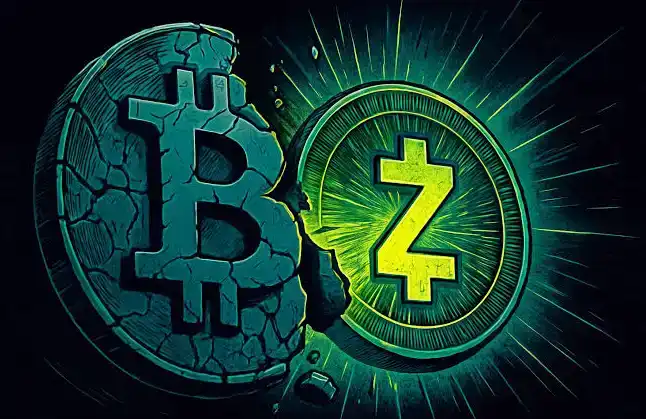
Grayscale Reassesses Zcash: In the Era of AI Surveillance, What is Financial Privacy Worth?

Grayscale Research reevaluates Zcash (ZEC) in the context of AI-powered financial surveillance. The report posits that stablecoins, transparent blockchains, and AI analytics tools are increasing the traceability of digital finance, potentially reigniting mainstream demand for financial privacy as a core monetary attribute. While AI could drive a third wave of privacy concern, Zcash's investment thesis hinges on whether this theoretical demand translates into sustained adoption. Zcash, operational for nearly a decade, uses zero-knowledge proofs to offer users a choice between transparent and shielded transactions, placing control of information disclosure back in users' hands. Recent infrastructure improvements—like wallet enhancements, mining pool expansions, and protocol upgrades—have reduced usability barriers. On-chain data shows shielded transactions comprise ~90% of transaction count, with ~25% of circulating ZEC in shielded pools, indicating existing use. However, significant risks remain. These include regulatory hurdles for exchanges and custodians dealing with shielded assets, past protocol vulnerabilities (theoretical, now patched), long-term quantum computing threats, and execution risks for future scalability upgrades. Grayscale's analysis suggests ZEC's current low market share (~0.6% of the "digital currency" crypto sector) offers valuation upside *if* the market reprices privacy. A scenario analysis notes that capturing 5% of this sector could imply a ~9x valuation increase, though this is a simplified sensitivity test, not a price target. Ultimately, Zcash's opportunity lies in the unresolved question: in an AI-monitored era, what price will the market assign to financial privacy? Validating the thesis requires monitoring growth in real shielded usage, wallet usability, upgrade timelines, and regulatory accessibility, not just price appreciation.

marsbit1 год тому

Grayscale Reassesses Zcash: In the Era of AI Surveillance, What is Financial Privacy Worth?

marsbit1 год тому

AI Democratizes Hacking, Bitcoin Red Team White Hats Race in Speed-Based Attack-Defense Contest

AI is democratizing powerful hacking tools, putting them in the hands of those with little cybersecurity expertise. Cryptocurrency developers are now in a race to find system vulnerabilities before attackers do. The Bitcoin Red Team, a group of 20-25 volunteers including anonymous developers like Calle, has formed to urgently address these AI-augmented security threats within the Bitcoin ecosystem. Calle emphasizes that while the Bitcoin core protocol itself is secure, the real risk lies in the wallets, applications, services, and other third-party software built on top of it—the software most users interact with. Incidents like the Coldcard wallet hack and the emergence of powerful Chinese AI models have accelerated their proactive security auditing efforts. The team both accepts audit requests from Bitcoin projects and proactively scans major open-source projects. They report found vulnerabilities to developers and refine their classification standards. Notably, Calle states the team frequently uses Chinese AI models over US counterparts, as the latter's strict safety guardrails often block cybersecurity research tasks, hindering their utility for finding or fixing vulnerabilities. Calle warns that AI is erasing the information asymmetry that previously protected some vulnerabilities. It lowers the technical barrier, allowing non-experts to exploit simple flaws. He describes the current state of Bitcoin software as "on fire" and believes the direct financial incentive of cryptocurrency makes it a first target in this industry-wide shift, with other sectors to follow. The era of security through obscurity is over.

marsbit1 год тому

AI Democratizes Hacking, Bitcoin Red Team White Hats Race in Speed-Based Attack-Defense Contest

marsbit1 год тому

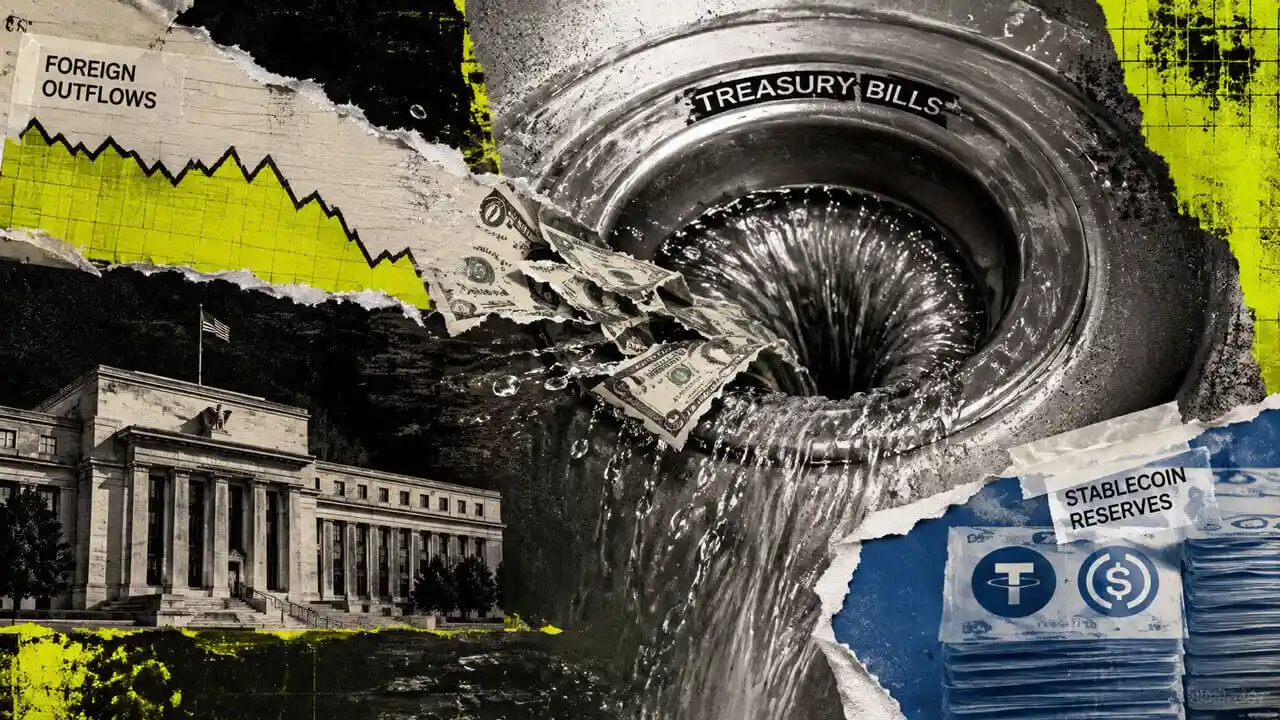
Foreign Capital Sells Off $29 Billion in Short-Term US Treasuries, Why is the US Betting on Stablecoins to "Take Over"?

In June, foreign investors netted $133.5 billion into U.S. financial markets but simultaneously sold $29 billion in short-term U.S. Treasury bills. This divergence highlights a strong preference for U.S. equities over government debt. While overseas buyers purchased $181.4 billion in stocks, demand for Treasuries weakened significantly. This trend explains why the U.S. is looking to stablecoins as a potential new source of demand for its debt. Stablecoin issuers like Tether and Circle back their tokens primarily with highly liquid assets, including short-term Treasuries. As users buy stablecoins, issuers convert that dollar demand into Treasury purchases. Recent U.S. legislative efforts, such as the proposed rules under the *GENIUS Act*, formalize this by mandating stablecoin reserves be held in assets like cash and short-term Treasuries. Currently, stablecoins represent a substantial existing buyer base. For instance, Tether alone held nearly $115 billion in direct T-bill exposure in Q2. However, recent stablecoin supply growth has been minimal and does not account for the $29 billion sell-off by foreign investors in June. For stablecoins to act as a meaningful counterbalance to waning foreign demand, their circulating supply would need to expand significantly. The next TIC report will be crucial to monitor whether foreign selling continues and if stablecoin growth begins to fill the demand gap. Ultimately, the U.S. is strategically positioning the regulated stablecoin sector as a potential new pillar of demand for its government debt.

marsbit1 год тому

Foreign Capital Sells Off $29 Billion in Short-Term US Treasuries, Why is the US Betting on Stablecoins to "Take Over"?

marsbit1 год тому

Торгівля

Спот
活动图片