After Nvidia's Earnings, Why Is the Market Still "Yawning"?

marsbitОпубліковано о 2026-02-26Востаннє оновлено о 2026-02-26

Анотація

Nvidia's earnings report, often dubbed the "Super Bowl" of earnings season, met expectations, yet its stock became stuck around the key $200 level in after-hours trading. Surprisingly, the market's reaction was muted, with the VIX 1-day volatility measure rising less than anticipated before falling sharply. This calm suggests a potential major shift in market structure—from extreme individual stock movements toward a broader, more macro theme: "Dispersion Unwind." Prior to earnings, heavy options activity, particularly out-of-the-money calls at strikes like $200 and $195, had set up aggressive bets. However, as the stock failed to break above these levels, the options market shifted from being a potential catalyst to a drag, with gamma squeeze dynamics likely working in reverse and accelerating the stock's stagnation. This overall market "boredom" post-Nvidia indicates that the previous high-dispersion regime—where a few AI winners like Nvidia and AMD saw extreme volatility while many other stocks lagged—may be ending. Key indicators like the 3-month dispersion vs. correlation spread (DSPX-COR3M) suggest a reversion to the mean is likely, meaning individual stock volatility will converge toward index volatility, and correlations between stocks will rise. This would make alpha-generating long/short strategies more difficult and could prompt a broader sector rotation. Adding to the technical backdrop is the settlement of approximately $1370 billion in US Treasury securities ...

The "Super Bowl" of earnings season has just concluded. Nvidia (NVDA) delivered a report that met expectations, yet its stock price seemed glued to the crucial psychological barrier of $200 in after-hours trading, unable to move significantly up or down. Meanwhile, the VIX index, a measure of market fear, saw its 1-day volatility (VIX 1-day) rise much less than many traders anticipated following the earnings release, before opening significantly lower, dropping to around 9. It felt like a highly anticipated concert where the lead singer performed steadily, yet the audience remained unusually calm, with some even dozing off.
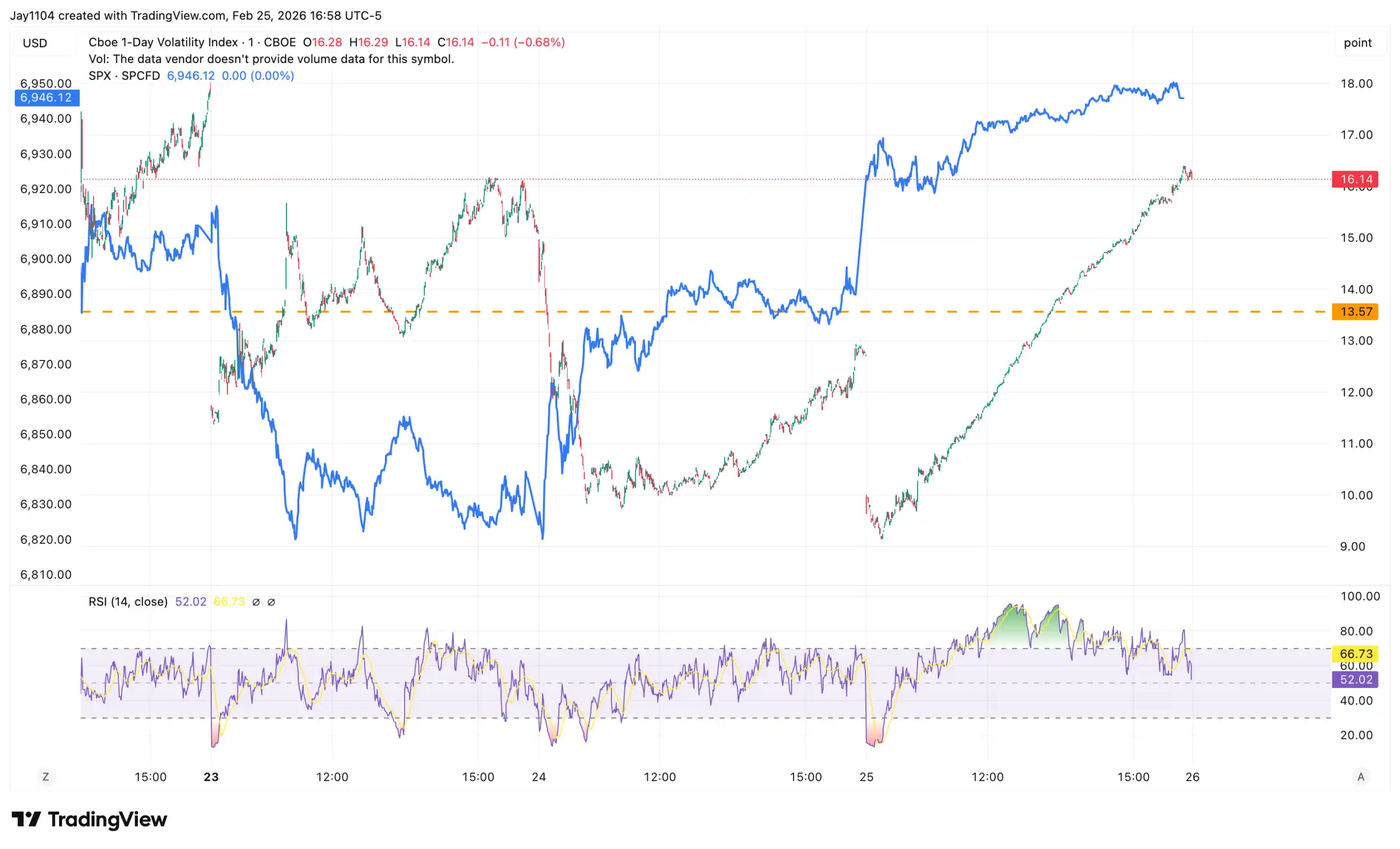
Behind this calm, a significant shift in market structure might be brewing. After the most heavyweight "shoe" has dropped, the market's focus is shifting from extreme individual stock performances to a broader, and perhaps drier, theme: "Dispersion Unwind."

The Options Dilemma of "Buy the Rumor, Sell the News"

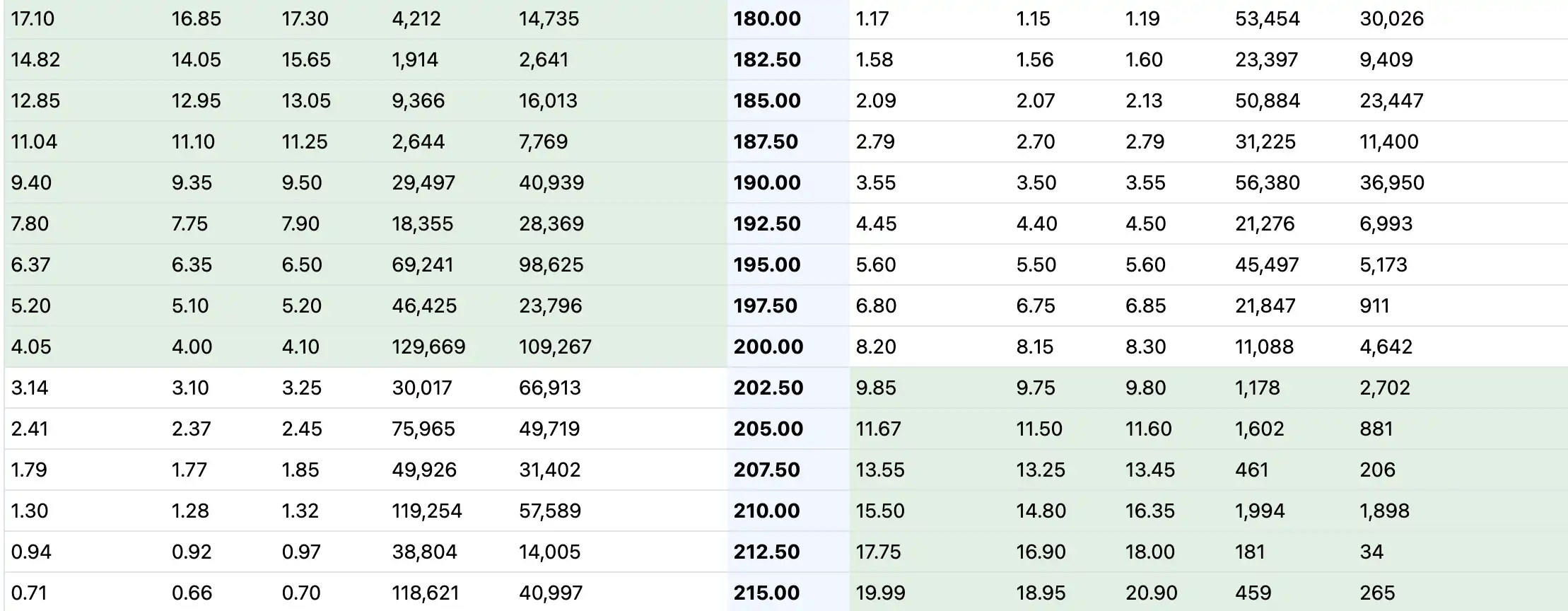
First, look at Nvidia itself. Pre-earnings, market sentiment was maxed out, especially in the options market. Significant capital was bet on the stock breaking above the $200-$205 range post-earnings. However, reality was harsh. After the report, the stock hovered around $200, causing the value of numerous out-of-the-money options (particularly the $200 and $195 call options) to evaporate rapidly.

I recall a similar scenario during a tech earnings season in 2023. A star company then reported better-than-expected earnings, but its stock opened high and then fell, largely due to the reverse effect of a Gamma Squeeze—when the stock price fails to break through key strike prices, the selling operations conducted by market makers for hedging purposes actually amplify the downward pressure on the stock. The situation with Nvidia's options chain this time feels somewhat familiar. When the most optimistic expectations aren't met, the options market turns from a "booster" into a "speed bump."
Intermission After the Market "Blockbuster": Dispersion Unwind Takes the Stage

Why did the entire market seem a bit "boring" after Nvidia's earnings? It's likely because the main logic driving the market recently—extreme divergence in individual stock performances—is approaching an inflection point.

Dispersion, simply put, is the difference between the volatility of individual stocks and the overall market volatility. During the AI frenzy, we've seen a few giants like Nvidia and AMD surge ahead with剧烈 volatility, while many other stocks have performed modestly. This high-dispersion environment is a playground for active stock pickers and quantitative hedge funds. However, this state cannot last forever.

A key indicator to watch now is the three-month dispersion vs. correlation spread (DSPX-COR3M). When this spread is high, it means individual stock movements are highly divergent (high dispersion), while the co-movement between stocks (correlation) is low. Historical experience suggests this state tends to mean-revert. That is, the implied volatility of individual stocks will gradually converge towards the volatility of the broader market index, leading to decreased dispersion and increased correlation among stocks.
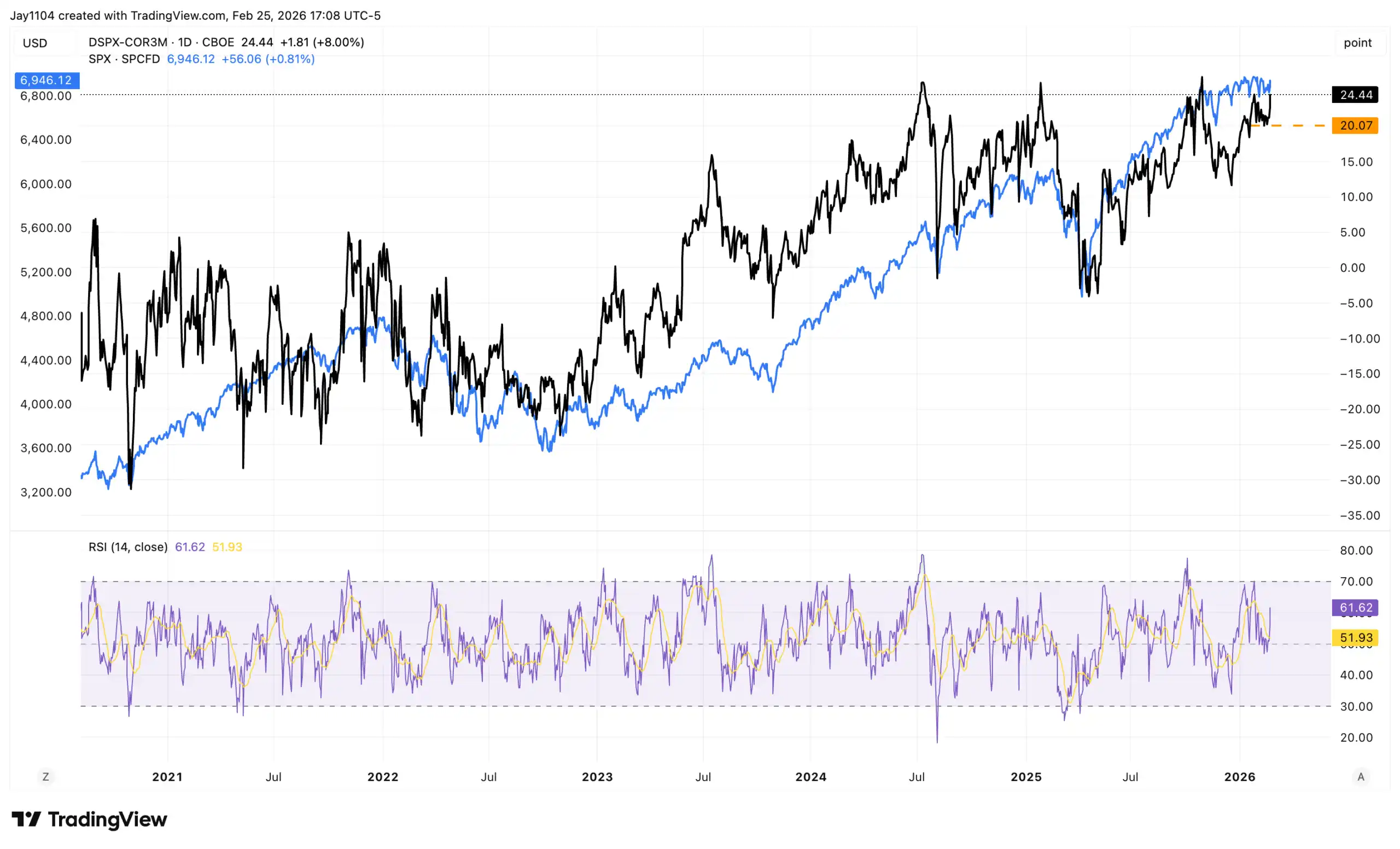
In plainer terms: the "star solo performance" might be taking a brief intermission, and what follows could be a time for a "chorus." If dispersion begins to unwind, the profitable environment for long-short strategies—which made money by going long strong AI stocks and shorting weak ones over the past few months—could deteriorate. Capital might重新审视 sector rotation or return to trades more focused on macro beta (the overall market's rise and fall).

The Unignorable "Background Noise": Massive Treasury Settlement

While the market ponders this style shift, a technical factor is humming in the background—the settlement of a massive amount of US Treasury securities.

According to the public settlement schedule, approximately $1370 billion in Treasuries are set to settle in the immediate following trading days (including $22 billion on the earnings day, $37 billion the next day, etc.). While these massive fund transfers don't directly represent capital flowing out of the stock market, they can impact liquidity in the financial system in the short term, potentially exacerbating short-term market volatility. It's like a swimming pool simultaneously draining and refilling; beneath the calm surface, undercurrents are swirling.

I recall similar liquidity disturbances during a "rebalancing week" at a previous quarter-end last year. At that time, the US market experienced several days of low-volume sell-offs into the close without any fundamental negative news, largely due to the combined effect of institutional position adjustments and bond settlements. For short-term traders, these dates represent additional "calendar risk" to be mindful of.

Where Does the Market Go From Here?

Overall, Nvidia's earnings might signal a temporary lull in micro-driven forces. The market needs a new catalyst. This catalyst could come from:

  1. Further clarity on macro policy: The monetary policy path of major global central banks, especially the Fed, will come back into focus. Any hints regarding the timing and pace of interest rate cuts could trigger a repricing of market styles.
  2. Broad validation through earnings: The AI narrative cannot be sustained by Nvidia alone. The market needs to see more companies (whether tech giants or traditional industries) provide concrete AI capital expenditure plans and revenue contributions in their earnings calls to prove the breadth and depth of this wave.
  3. The self-fulfilling prophecy of dispersion unwind: Once more and more investors begin anticipating and trading the "dispersion unwind," the process itself will accelerate. Capital partially withdrawing from the crowded AI trade to seek other valuation洼地 could facilitate a healthy sector rotation.

For investors, strategy adjustments might be necessary now. Chasing after single明星 stocks that are fully valued and have extremely crowded options is seeing a changing risk-reward ratio. Instead, one might start focusing on two aspects: First, sectors that could benefit from dispersion unwind (e.g., macro-sensitive cyclical or financial stocks that have lagged recently). Second, monitoring changes in overall market volatility; if the VIX is at low levels, it might be time to buy some "insurance" for the portfolio (like index put options).

The market will never be高潮迭起 (continuously climactic) forever. "Flat periods" like the present are precisely windows to observe capital flows and adjust positioning. After all, when the choir starts tuning their instruments, the next piece isn't far from beginning. Of course, any judgment must be combined with real-time market dynamics. At nodes of liquidity change and style rotation, staying flexible is more important than stubborn persistence.

Related reading: A 10,000-Word Deconstruction of Nvidia's 20-Year Rise: From Two Gaming GPUs to a $5 Trillion Empire


Пов'язані питання

QWhy did Nvidia's stock price remain stagnant around $200 after its earnings report, despite meeting expectations?

AThe stagnation was largely due to the 'buy the rumor, sell the news' effect in the options market. Many out-of-the-money call options (e.g., at $200 and $195 strikes) lost value quickly as the stock failed to break above key levels, leading to gamma squeeze dynamics where market makers' hedging activities added downward pressure instead of upward momentum.

QWhat is 'Dispersion Unwind' and how does it relate to the market's reaction to Nvidia's earnings?

A'Dispersion Unwind' refers to the convergence of individual stock volatility towards the broader market's volatility, reducing the divergence in stock performances. After Nvidia's earnings, the market's focus shifted from extreme individual movements (like Nvidia's previous rallies) to this broader theme, indicating that the high-dispersion environment driven by AI hype might be pausing, leading to a calmer, more correlated market.

QHow did the VIX 1-day index behave after Nvidia's earnings report, and what does this suggest about market sentiment?

AThe VIX 1-day index initially rose less than expected after Nvidia's earnings and then fell sharply to around 9 at the open. This indicates that market anticipation and panic were low, suggesting a lack of fear or surprise despite the high-profile event, which aligns with the overall theme of dispersion unwind and reduced volatility in individual stocks.

QWhat role did the settlement of U.S. Treasury bonds play in the market dynamics around Nvidia's earnings?

AThe settlement of approximately $1370 billion in U.S. Treasury bonds around the time of Nvidia's earnings created liquidity pressures in the financial system. While not directly causing equity outflows, this technical factor could amplify short-term market volatility by affecting liquidity, similar to past events where such settlements led to unexplained end-of-day market moves.

QWhat future catalysts might drive the market following Nvidia's earnings, according to the article?

AThe market may seek new catalysts from: 1) Macro policy clarity, especially from the Fed on interest rate cuts; 2) Broader validation of AI earnings and capital expenditure plans across more companies; and 3) The self-fulfilling process of dispersion unwind, which could lead to sector rotation into undervalued areas like cyclical or financial stocks, away from crowded AI trades.

Пов'язані матеріали

South Korean Exchanges 'Battle' Regulators, Challenging the Boundaries of Enforcement and Legislation

South Korea's cryptocurrency industry is engaged in a rare, direct confrontation with regulators. The Financial Intelligence Unit (FIU), the primary anti-money laundering (AML) watchdog, has recently imposed heavy penalties on major exchanges like Upbit and Bithumb for alleged violations involving unregistered overseas VASPs and AML procedures. However, exchanges are now actively challenging these actions in court and through industry associations. In a significant shift, the Seoul Administrative Court ruled in favor of Upbit's operator, Dunamu, overturning part of an FIU-ordered business suspension. The court found the FIU's penalty criteria and justification insufficiently clear. Similarly, the court suspended the enforcement of a six-month business suspension against Bithumb pending a final ruling, citing potential irreversible harm to the exchange. Beyond legal battles, the industry is contesting proposed legislative amendments. The Digital Asset eXchange Alliance (DAXA) strongly opposes a draft rule that would mandate Suspicious Transaction Reports (STRs) for all crypto transfers over 10 million KRW (~$6,800). DAXA argues this "poison pill" clause violates legal principles and would overwhelm the STR system, increasing reports from 63,000 to an estimated 5.45 million annually for major exchanges, thereby crippling effective AML monitoring. This conflict highlights a structural tension in South Korea's crypto governance: comprehensive digital asset laws are still developing, while regulators rely heavily on AML enforcement. The industry's move from passive compliance to active legal and legislative challenges signifies a new phase, pressing for clearer rules and more proportionate enforcement. While short-term disputes may intensify, this clash could ultimately lead to a more mature and sustainable regulatory framework for South Korea's vibrant crypto market.

marsbit38 хв тому

South Korean Exchanges 'Battle' Regulators, Challenging the Boundaries of Enforcement and Legislation

marsbit38 хв тому

After 50x Storage Surge, Justin Sun Always Looks to the Next Decade

Sun Yuchen, known for his controversial stunts like a $30 million lunch with Warren Buffett (canceled due to a kidney stone) and eating a $6.2 million duct-taped banana, is often overshadowed by a significant fact: his decade-long track record of spotting major investment trends. In 2016, he famously advised young people to invest in Bitcoin, Nvidia, Tesla, and Tencent instead of buying property. A hypothetical $20,000 investment in Nvidia and Tesla from that list would now be worth over 50 million RMB. His latest major call was on November 6, 2025, predicting a "50x storage opportunity" tied to the AI boom, which materialized with Sandisk's stock surging nearly 50-fold by 2026. Looking ahead, Sun now focuses on the next frontier: Physical AI. He identifies four key areas: 1. **Embodied AI/Robotics**: He sees this reaching its "iPhone moment," with companies like UBTech and Galaxy General leading in commercialization. 2. **Drones**: Viewed as the first commercially viable form of Physical AI, revolutionizing sectors from warfare (e.g., AeroVironment's Switchblade) to logistics. 3. **Spatial Computing**: Beyond VR, it's about AI understanding physical space, a foundational technology for robotics and autonomous systems, exemplified by Apple's Vision Pro. 4. **Space Exploration**: After a 2025 suborbital flight with Blue Origin, Sun advocates for space as the ultimate frontier, discussing blockchain's potential role in space asset management and data transactions. His investment philosophy involves betting on entire, inevitable trends rather than single companies. For robotics, he sees Tesla (the body/manufacturer) and Nvidia (the brain/AI platform) as complementary plays. In defense drones, he highlights companies making tanks obsolete (AeroVironment) and those augmenting fighter jets (Kratos). For space, he participated in Blue Origin's flight and anticipates SpaceX's potential IPO to redefine the sector's valuation. Sun Yuchen's vision frames the next two decades not as a revolution in information flow (like the internet), but in the fundamental operation of the physical world through AI-powered robots, autonomous systems, and spatial intelligence, ultimately extending human and AI activity into space. While many still focus on conventional assets, he continues to look toward the next technological horizon.

marsbit1 год тому

After 50x Storage Surge, Justin Sun Always Looks to the Next Decade

marsbit1 год тому

The Billionaires Behind the Most Expensive Midterm Election in History

"The Most Expensive Midterm Elections and Their Billionaire Backers" This analysis details the unprecedented scale of spending in the 2026 midterm elections, highlighting the key billionaire donors shaping the political landscape. Jeff Yass, founder of Susquehanna International Group, has contributed over $81 million, ranking third among individual donors behind George Soros ($102.6M) and Elon Musk ($84.8M). Yass is a major donor to Trump's MAGA Inc. and supports school choice and various candidates. Overall, federal committees have raised over $4.7 billion this cycle, with political ad spending projected to reach $10.8 billion. Republican-aligned groups are significantly out-raising their Democratic counterparts. "Dark money" from undisclosed sources continues to grow. The core stakes involve control of Congress and policy direction for Trump's final term. Donors are also motivated by specific issues: Sergey Brin and Chris Larsen are funding opposition to a proposed California wealth tax and supporting crypto-friendly policies. Other top donors include OpenAI's Greg Brockman and his wife Anna ($50M total to MAGA Inc. and an AI-focused PAC), Richard Uihlein ($45.3M to conservative causes), venture capitalists Marc Andreessen and Ben Horowitz (each over $44M to crypto/AI PACs and MAGA Inc.), Miriam Adelson ($42.6M to GOP leadership PACs), Paul Singer ($33.9M), and Diane Hendricks ($25.8M to MAGA Inc.). The article notes that the peak fundraising period is still ahead, with major primaries approaching.

marsbit1 год тому

The Billionaires Behind the Most Expensive Midterm Election in History

marsbit1 год тому

The Largest IPO in History Is Approaching, Surpassing SpaceX, 28 Years of AI Self-Iteration, Countdown to Intelligence Explosion

"Anthropic Nears Trillion-Dollar IPO, Fueled by Explosive Growth and 2028 'Intelligence Explosion' Warning Anthropic is considering a deal valuing the AI company near $1 trillion, potentially leading to one of the largest IPOs ever and surpassing SpaceX. Its revenue has skyrocketed, with Annual Recurring Revenue (ARR) reaching $45 billion in May 2026—a 500% increase in just five months. This vertical growth curve is attributed to its key products, Claude Code and Cowork, dominating AI coding and enterprise collaboration. Beyond commercial success, co-founder Jack Clark issued a pivotal warning in an interview: there is a greater than 50% chance that by the end of 2028, AI systems will achieve recursive self-improvement—the ability to autonomously build a 'better version' of themselves, initiating an 'intelligence explosion.' This prophecy underpins the company's astronomical valuation, as the market prices in the potential for transformative and disruptive AI. Further signaling its ambition, Anthropic formed a $1.5 billion joint venture with Goldman Sachs and Blackstone, aiming to disrupt traditional consulting firms like McKinsey by deploying Claude AI for complex strategic work. This move tests AI's capacity to replace high-level cognitive labor, a precursor to its predicted autonomous evolution. The narrative presents a dual future: unprecedented economic opportunity alongside significant risks like economic restructuring and security threats. Anthropic's meteoric rise and Clark's 2028 prediction frame the coming years as a countdown to a potential technological singularity."

marsbit1 год тому

The Largest IPO in History Is Approaching, Surpassing SpaceX, 28 Years of AI Self-Iteration, Countdown to Intelligence Explosion

marsbit1 год тому

Торгівля

Спот
Ф'ючерси
活动图片




