Afghanistan Stablecoins: An Overlooked Crypto Innovation Hub

比推Опубліковано о 2026-01-26Востаннє оновлено о 2026-01-26

Анотація

An Afghan startup, HesabPay, is using blockchain-based stablecoin technology to transform humanitarian aid delivery in conflict zones like Afghanistan and Syria. Founded by Sanzar Kakar after the Taliban’s return disrupted Afghanistan’s financial system, the platform enables direct digital cash transfers via mobile wallets, bypassing traditional banks and high fees. The system is used by organizations including the UNHCR and Mercy Corps to distribute aid efficiently and transparently. In Afghanistan, it supports over 65,000 active wallets moving around $60 million in Afghan afghani-pegged stablecoins monthly. In Syria, where banking access is limited, dollar-backed crypto aid offers a lifeline. Blockchain ensures traceability and accountability, allowing real-time monitoring of fund usage and reducing fraud risks. While the model offers significant advantages over physical cash, experts note potential vulnerabilities, including political interference and technical barriers. Nonetheless, it represents a scalable innovation in aid distribution for fragile states.

Author: Aryn Baker, The New York Times

Compiled by: Felix, PANews

Original Title: Afghan Stablecoins, An Unexpected Hub of Crypto Innovation


At a bustling currency exchange in northwestern Syria, a 46-year-old farmer clutched a plastic card as if it were her lifeline. She had never heard of cryptocurrency, but this card contained $500 worth of crypto, helping her restart her farm after nearly 14 years of civil war.

As the teller confirmed the total and withdrew cash for Hala Mahmoud Almahmoud's account, the farmer smiled with relief and paused to express her gratitude. She asked where such technology came from.

The answer surprised her: Afghanistan.

Many might not imagine that this blockchain-based innovation in cash transfers originates from a country known for the Taliban's authoritarian rule and skeptical stance toward the internet. Yet, in this nearly isolated nation, an Afghan startup is developing tools aimed at transforming how humanitarian aid is delivered in conflict-ravaged countries.

Zakia Hussain, a 26-year-old programmer at the startup HesabPay, said, "We have faced these challenges ourselves, so we know how to create effective solutions." It was HesabPay that designed the technology behind the card held by Ms. Almahmoud.
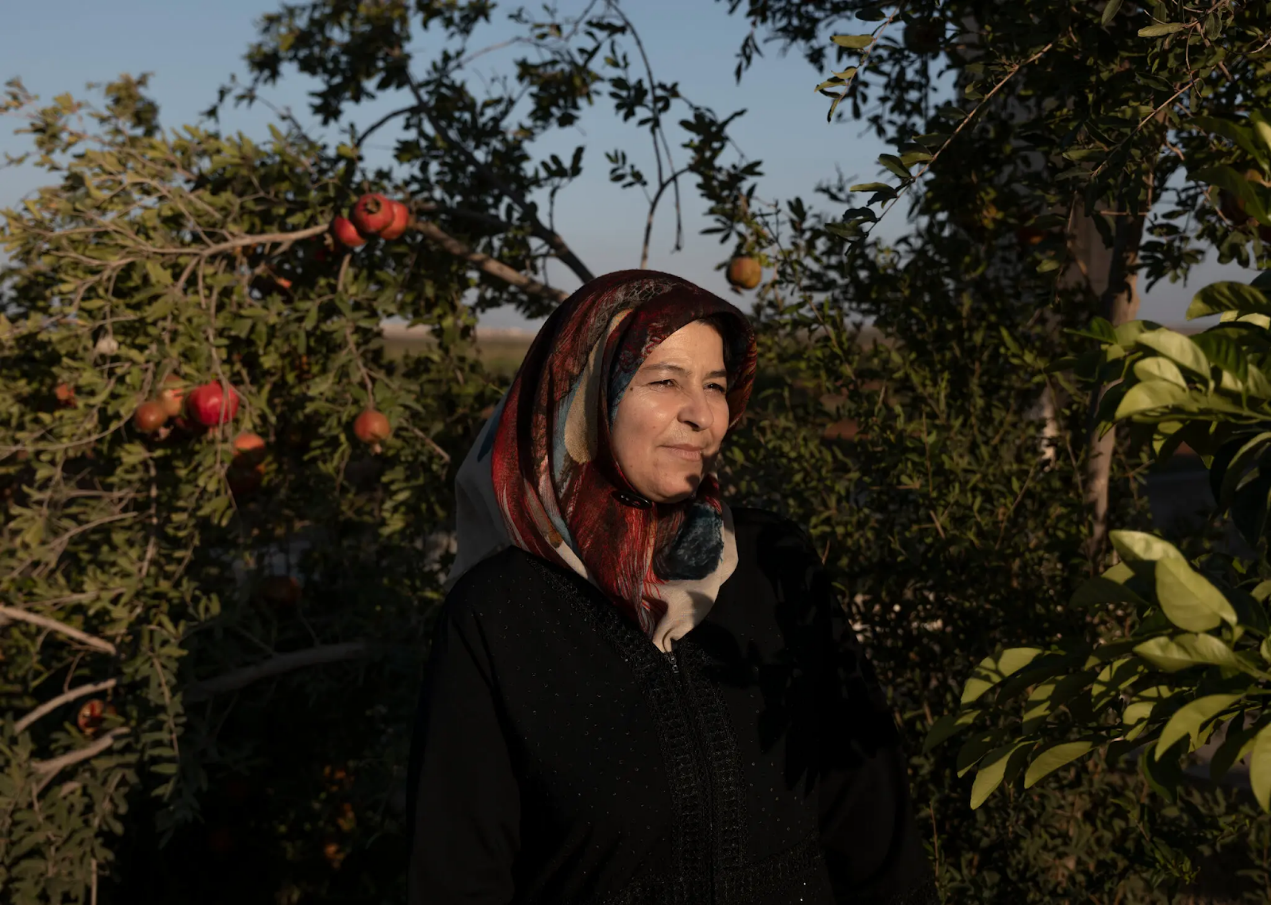
Hala Mahmoud Almahmoud outside her home near Latamina, Syria. She received $500 in cryptocurrency aid to help reopen her farm.

The United Nations Refugee Agency (UNHCR) was one of the early supporters of the platform. The agency uses it to support over 86,000 families in Afghanistan, making it one of the largest public blockchain aid projects globally. Mercy Corps, the charitable organization that donated to Ms. Almahmoud, partnered with HesabPay to extend aid to Syria and is currently developing projects for Sudan and Haiti.

In Syria, accessing funds from abroad is highly complex. Cash is scarce, international banks avoid the region, and remittance companies like Western Union charge up to 10% in transfer fees. HesabPay enables organizations like Mercy Corps to bypass these obstacles.

Sanzar Kakar, an Afghan-American entrepreneur and founder of HesabPay, previously ran Afghanistan's largest payroll processing company. However, the 2021 U.S. withdrawal from Afghanistan and the Taliban's return to power triggered a financial collapse. Sanctions halted international remittances, and the central bank became paralyzed.

To address the country's growing financial insecurity, Kakar turned to blockchain technology. He created HesabPay (meaning "account" in the local language), a mobile-based application that allows instant transfers from one digital wallet to another, bypassing banks and the Taliban government. He stated that the Afghan government has granted his company a formal financial license to operate.
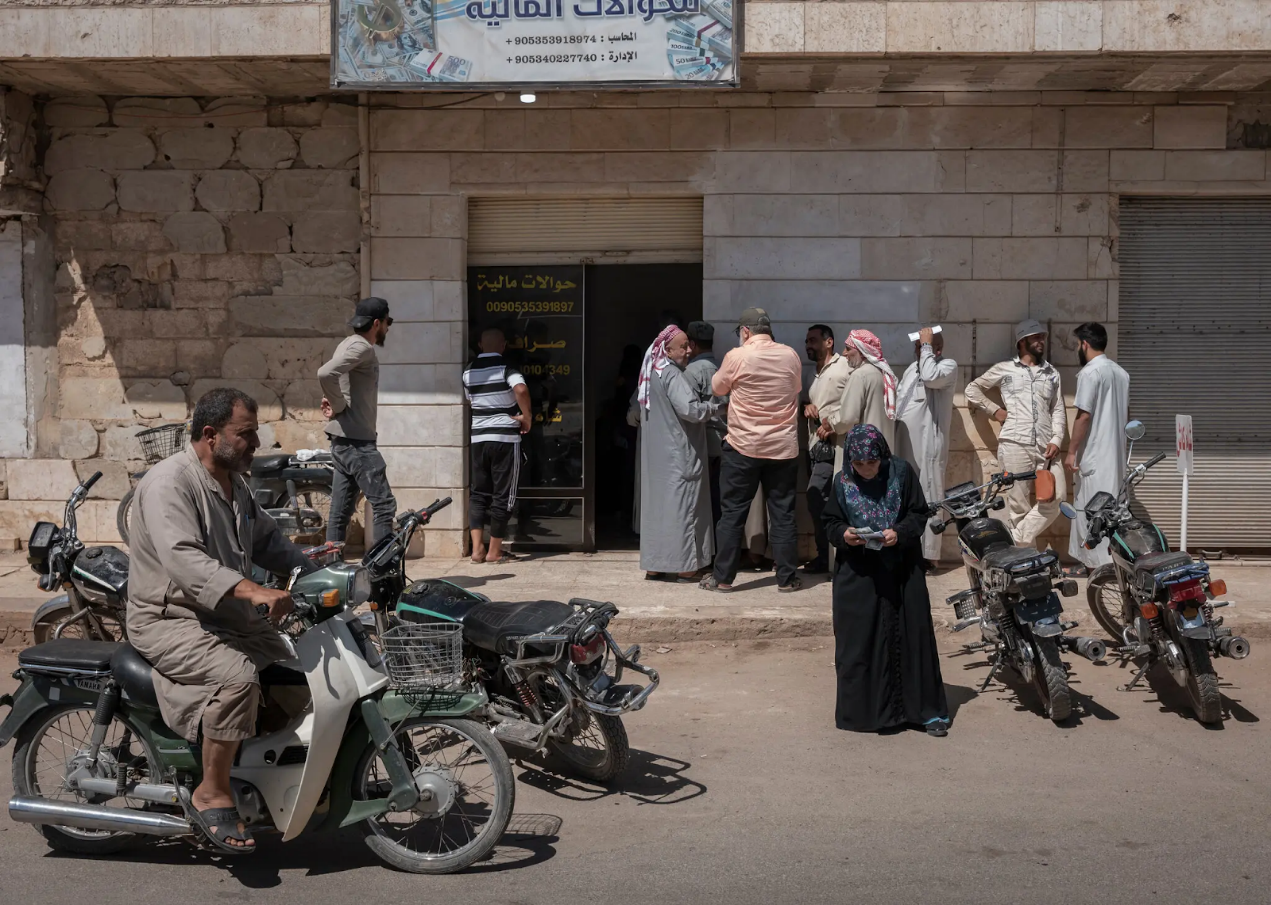
The aid organization Mercy Corps, which donated funds, partnered with HesabPay to extend the platform's services to Syria.

Today, the platform has over 650,000 wallets in Afghanistan, with about 50,000 actively used, transferring approximately $60 million worth of Afghan afghani stablecoins (stablecoins pegged to the Afghan currency) monthly.

Since February 2025, the UN has used HesabPay to distribute nearly $25 million to returning Afghans through 80,000 digital wallets. Carmen Hett, the UNHCR's corporate treasurer, said, "This helps reduce transaction fees, shorten waiting times, and enhance traceability, real-time monitoring, and accountability."

Ric Shreves, an expert in decentralized financial solutions and president of the Decentralized Cooperation Foundation, noted that it is not surprising for organizations like Mercy Corps and the UN to turn to blockchain-based fund transfers for aid. He stated, "For such organizations, this approach offers almost all advantages compared to traditional aid methods."

However, he pointed out that risks remain, especially when payment systems are based on local currency stablecoins, as in Afghanistan. (In Syria, the cryptocurrency in HesabPay wallets is backed by the U.S. dollar, a more stable option.) Just as wallets can be shut down for interacting with sanctioned individuals, they could theoretically be closed for political reasons by a central bank.
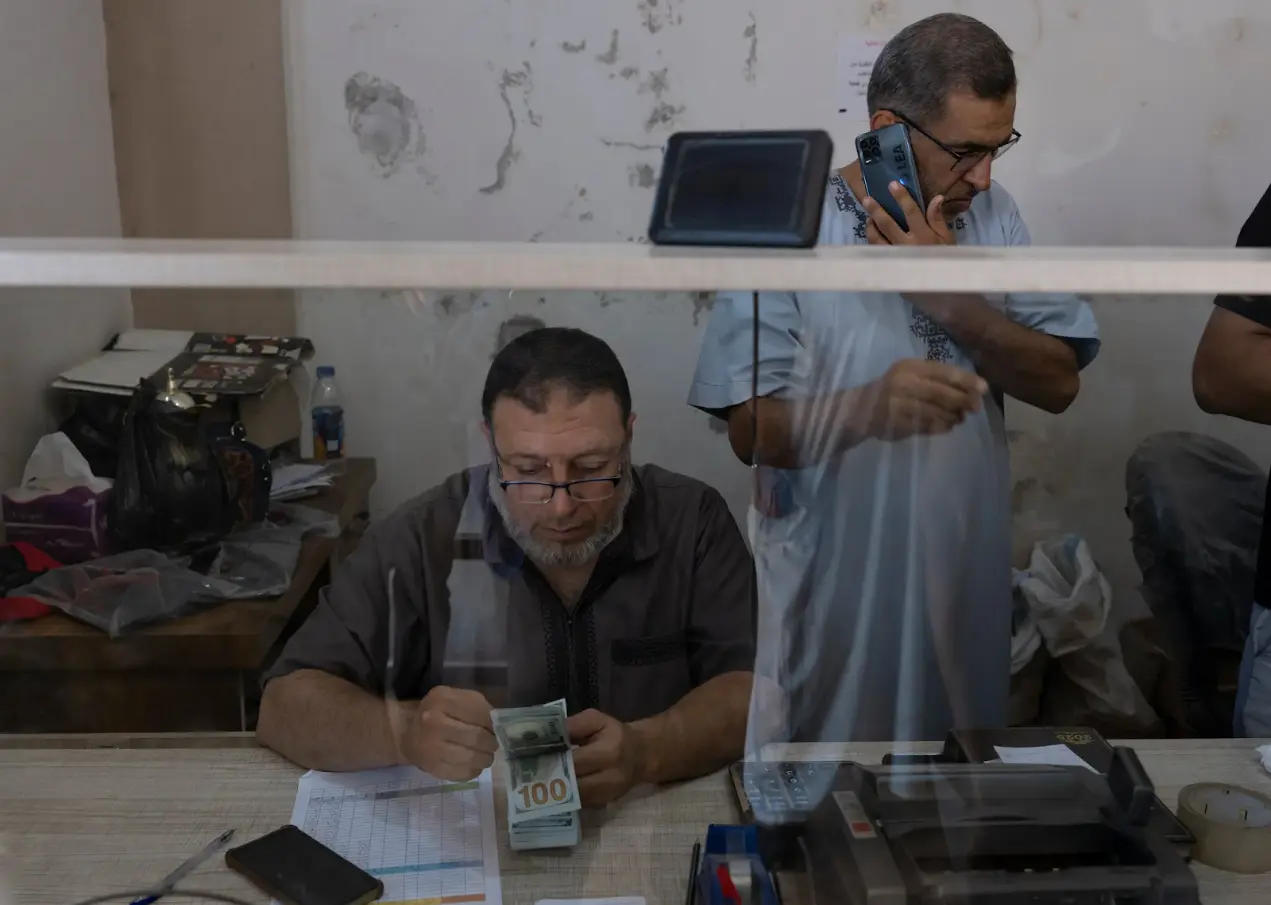
Using blockchain technology makes it easier for Mercy Corps to send funds to Syria, where cash is scarce and international banks typically do not operate.

Ric Shreves added, "When we provide people with non-physical transaction methods, it also means these transactions can potentially be blocked through technological means." He further noted that digital currencies are clearly safer than cash, but they still cannot be hidden under a mattress like cash.

In recent years, aid organizations have increasingly opted for cash assistance, viewing it as a quick and dignified form of aid. However, cash assistance has a drawback: it is difficult to track where the money goes. Donors want to see their contributions reach those in need. Since former President Trump significantly cut U.S. foreign aid early last year, organizations like Mercy Corps face greater pressure to demonstrate the effectiveness and integrity of their aid.

This is where blockchain comes into play, creating a digital record that accurately tracks how much money was sent, to whom, and where it went. Scott Onder, Mercy Corps' chief investment officer, stated that this combination of speed and accountability "might help regain the trust of those who have become skeptical about the effectiveness of aid."

HesabPay also includes additional security measures, such as real-time dashboards to track wallet activity and cross-check it with international compliance databases. The company stated that the system is designed to detect illegal activities like terrorist financing, money laundering, and cyber fraud, immediately alerting users to suspicious transactions. For aid donors, this provides a level of oversight that is nearly impossible to achieve in fragile countries.

Abdul Moti Hammoud, a resident of Halfaya, lost a leg after accidentally triggering a landmine while driving a tractor. He is a beneficiary of the aid organization Mercy Corps.

During a recent online demonstration, Nigel Pont, the company's senior advisor, clicked on a purple dot representing a HesabPay agent in Afghanistan. Dozens of light blue beneficiary wallets unfolded, showing recent transfer records. Another click revealed where the funds went. Suddenly, a wallet turned red, triggering a suspected fraud alert—a slightly awkward moment during the live demo but precisely the risk the system is designed to identify.

"From an aid donor's perspective, this is incredibly valuable," said Nigel Pont, former chief strategy officer at Mercy Corps. "A system that automatically flags fraud risks means you can verify immediately, rather than waiting six months for a report that someone stole $20,000." Nigel Pont acknowledged that no system can completely eliminate corruption, but then again, neither can cash.

Twenty-two-year-old Abdul Halim Hasan was waiting in line at the same currency exchange in Syria as Ms. Almahmoud. He said he imagines a day when HesabPay could be used like a regular bank account—receiving funds, paying bills, and saving money securely. For now, though, his HesabPay card allows him to access the funds needed to restart his life after the war, and that is enough.


Twitter:https://twitter.com/BitpushNewsCN

Bitpush TG Discussion Group:https://t.me/BitPushCommunity

Bitpush TG Subscription: https://t.me/bitpush

Original link:https://www.bitpush.news/articles/7605966

Пов'язані питання

QWhat is the innovative blockchain-based cash transfer system mentioned in the article, and where was it developed?

AThe innovative system is called HesabPay, and it was developed in Afghanistan.

QWhich major international organization is an early supporter of the HesabPay platform, and how many families in Afghanistan have they supported with it?

AThe United Nations High Commissioner for Refugees (UNHCR) is an early supporter, and they have used the platform to support over 86,000 families in Afghanistan.

QWhat are two key advantages of using a blockchain system like HesabPay for humanitarian aid delivery, according to the article?

ATwo key advantages are the speed of transactions and the enhanced traceability, real-time monitoring, and accountability it provides for donors.

QWhat is a potential risk associated with using a local currency stablecoin, as opposed to a dollar-backed one, in a system like HesabPay?

AA potential risk is that a wallet or the system could theoretically be shut down by a country's central bank for political reasons, as it is tied to the local currency.

QWhat specific feature does HesabPay have to help ensure the security and integrity of aid distribution?

AHesabPay has a real-time dashboard that tracks wallet activity, cross-references it with international compliance databases, and immediately flags suspicious transactions related to terrorism financing, money laundering, or cyber fraud.

Пов'язані матеріали

In Conversation with Ray Dalio: We Are Currently in an AI Bubble, with 1% of My Portfolio in Bitcoin

Ray Dalio, founder of Bridgewater Associates, warns in an interview that the current AI boom shows classic bubble characteristics, which could lead to significant economic downturns as seen in past cycles like 1929 or 2000. He explains that speculative enthusiasm, fueled by debt and overvaluation, often precedes a crash when rising rates or taxation force asset sales, causing widespread losses and recession. Dalio also outlines his "Big Cycle" theory, describing an approximate 80-year pattern where widening wealth gaps, massive government deficits, and shifting geopolitical power (like China's rise) create internal conflict and global instability. He emphasizes that we are in a late-cycle, transitional phase where traditional powers like the US and UK face decline. For personal wealth protection, Dalio advises diversification beyond cash into assets like stocks, bonds, real estate, and particularly gold, which he prefers over Bitcoin. While he holds about 1% of his portfolio in Bitcoin as a non-printable hard asset, he views gold as more secure from technological or governmental threats. Regarding AI's impact, Dalio believes it will disproportionately benefit capital owners, worsening inequality by replacing both physical and cognitive labor. He suggests that human intuition and emotional intelligence, combined with AI, will be key for future workers. On taxation, Dalio argues that wealth taxes are impractical and risk triggering asset sell-offs, reducing productive investment. He points to the UK as a cautionary example of debt, low productivity, and political strife. Geopolitically, Dalio foresees a more regionalized world, with the US showing weakness in prolonged conflicts like with Iran, akin to past imperial declines. The ideal outcome, he suggests, is coexisting powerful blocs (e.g., Americas, China-Asia Pacific) without major war.

marsbit21 хв тому

In Conversation with Ray Dalio: We Are Currently in an AI Bubble, with 1% of My Portfolio in Bitcoin

marsbit21 хв тому

Daily 7.2 Trillion KRW: Foreign Capital's Record Net Buying on Friday! Wall Street Says Headwinds for Korean Stock Fund Flows Have Subsided

South Korean stock market sees a dramatic shift in fund flows. On July 31, foreign investors made a record net purchase of approximately KRW 7.2 trillion in KOSPI stocks, marking a fundamental reversal from the persistent large-scale net outflows seen in previous months. This contributed to a significant narrowing of foreign net selling in July to KRW 9.8 trillion, down sharply from KRW 48.4 trillion in June and KRW 44.5 trillion in May. Simultaneously, domestic institutional pressure eased. South Korean pension funds and asset managers turned to a net buying position in July, purchasing KRW 1.0 trillion worth of KOSPI shares, contrasting with net sales in May and June. Market volatility is expected to be dampened by new financial regulations. Effective July 31, the Financial Services Commission tightened access for retail investors to single-stock leveraged ETFs by raising the minimum cash deposit requirement. Trading volumes for these products subsequently dropped to about 50% of their monthly average. Citigroup Research maintains its year-end KOSPI target of 10,000 points. The firm cites several supportive factors: the substantial easing of headwinds from capital outflows, a robust fundamental outlook for the semiconductor sector, historically low market valuations, strong economic fundamentals, and the potential for policy support from financial authorities if needed.

marsbit21 хв тому

Daily 7.2 Trillion KRW: Foreign Capital's Record Net Buying on Friday! Wall Street Says Headwinds for Korean Stock Fund Flows Have Subsided

marsbit21 хв тому

Thanks to Dice Rolls, Bitcoin Keys Are Stored Offline, But Not Everyone Will Do It

The article discusses using dice rolls to generate secure Bitcoin wallet seeds, providing entropy independent of potentially flawed hardware random number generators. It explains that each fair dice roll offers about 2.585 bits of entropy, with around 50 rolls needed for a standard 12-word seed phrase and 99+ recommended for higher security. This method gained attention after a vulnerability was revealed in some Coldcard hardware wallets, where a faulty firmware RNG (dating back to 2021) compromised generated keys. The analysis notes that while a dice-generated main seed was safe from this specific flaw, other Coldcard functions (like creating paper wallets, backup keys, or passwords) could still be vulnerable if they used the defective RNG. The piece argues that while dice-based entropy is technically robust, the manual process is error-prone, tedious, and unrealistic for most new users, who might make mistakes in recording or inputting rolls. It concludes that while manual entropy generation should remain an option for advanced users, the long-term goal is to develop reliable, user-friendly hardware and software that securely generates randomness without requiring specialized knowledge. Coldcard users are advised to check their firmware version and replace any secondary secrets (like paper wallet keys) created with vulnerable devices, while also considering multi-signature setups with devices from different manufacturers for added security.

cryptonews.ru5 год тому

Thanks to Dice Rolls, Bitcoin Keys Are Stored Offline, But Not Everyone Will Do It

cryptonews.ru5 год тому

Торгівля

Спот
活动图片





