a16z Gathering: 7 Key Rules to Become a Top KOL

marsbitОпубліковано о 2026-01-11Востаннє оновлено о 2026-01-11

Анотація

Hosted by a16z and Tech Week, a gathering of 50 creators—including meme lords, TikTokers, bloggers, and podcasters—revealed key strategies for success in the creator economy. Seven core insights emerged: 1. Own your audience through email lists to ensure direct, lasting connections beyond algorithmic platforms. 2. Build offline touchpoints like events and dinners to deepen community trust and explore high-value collaborations. 3. Bundle sponsorships across newsletters, podcasts, and social media for predictable income and integrated campaigns. 4. Focus on niche markets; specialized audiences often yield stronger, more valuable businesses. 5. Collaborate through cross-promotion and joint ventures to accelerate growth and expand reach. 6. Dominate one primary platform first before expanding, as it remains the core of community connection. 7. Distribution is the ultimate moat—combining brand and distribution creates a competitive edge. The creator economy is maturing, with refined strategies and larger opportunities. Success hinges on ownership, offline engagement, strategic partnerships, and distribution power.

Original Title: 7 Insights from Hosting 50 Creators at a16z

Original Author: Ish Verduzco

Original Compilation: Deep Tide TechFlow

Last night, I hosted a gathering with the Tech Week team at a16z, inviting about 50 creators to participate.

Participants included meme lords, TikTok creators, lifestyle bloggers, cinematic video creators, Substack authors, email newsletter operators, podcast producers, YouTube bloggers, social media managers, and more.

Almost covering the entire spectrum of internet content creators.

In this article, I will share 7 key insights summarized from multiple conversations.
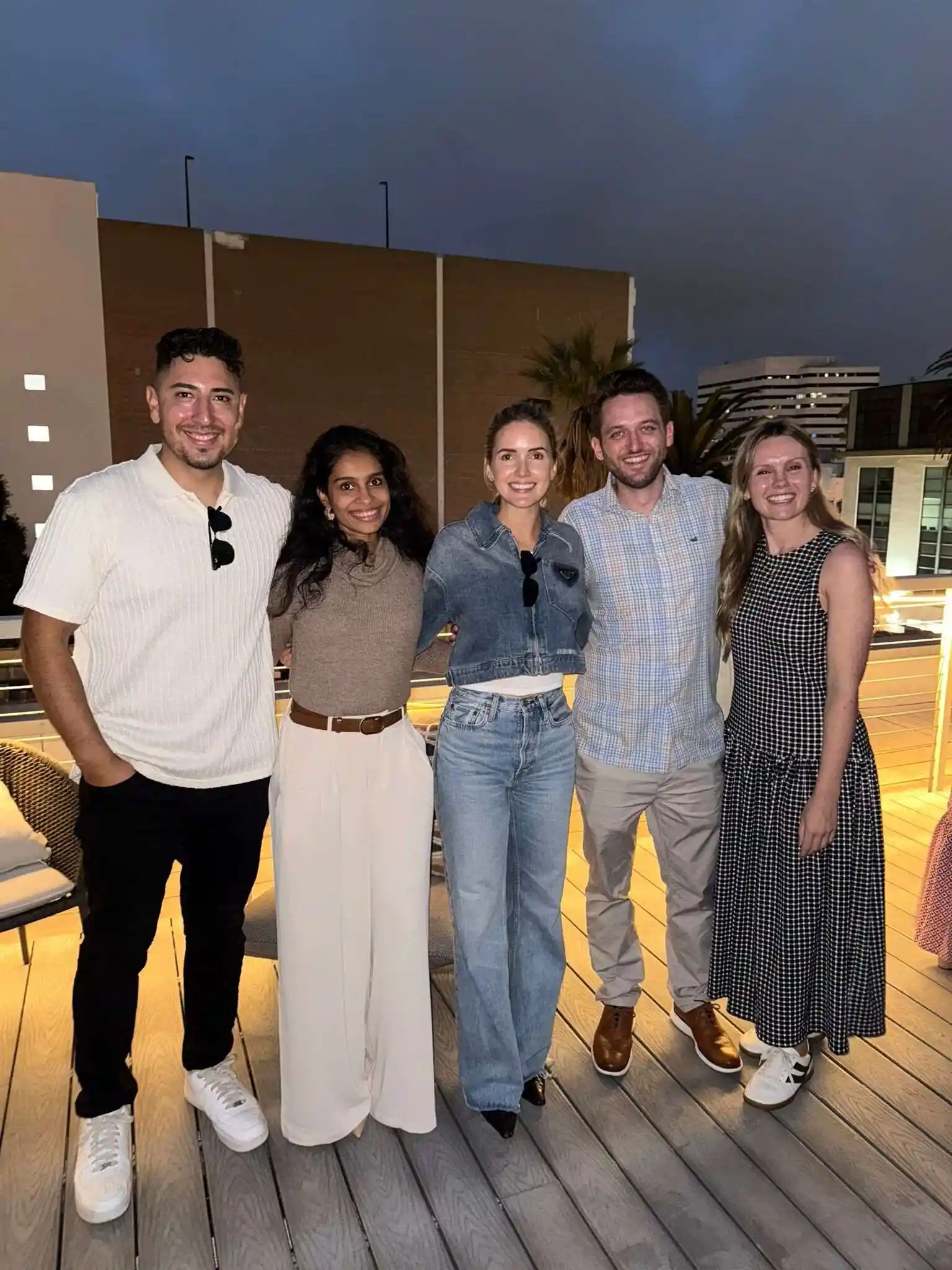
a16z and Tech Week team

1. Own Your Audience

Everyone is building an email list.

Even creators focused on short-form videos like TikTok or Instagram see email as the core foundation of their business.

Some attract new subscribers through events, some through paid ads, creating lead magnets, or using ManyChat to turn Instagram DMs into a growth engine.

Frequency doesn't matter; some publish weekly, some monthly, some quarterly, or even occasionally.

What matters is ownership.

Every creator seems to desire a direct, lasting way to connect with their audience, rather than relying on algorithm changes.

2. Build Offline Touchpoints

Offline interactions are heating up.

Many creators have spent years building their audience, community, and fan base online.

Now, they are looking for ways to turn these connections into offline interactions.

Podcast producers are starting to host live recording events; social media creators organize private dinners, local meetups, and even retreats.

These are not just "fan events" but channels to deepen relationships, build trust, and explore higher-value collaborations.

The flywheel effect of online-to-offline interaction is showing its powerful force.

3. Package Sponsorship Deals

The advertising sponsorship model is being packaged.

Creators are gradually moving away from single-ad deals.

They choose to integrate their newsletters, podcasts, social media content, and offline events into a packaged sponsorship deal.

This model is more beneficial for creators: more predictable income, less negotiation, building long-term relationships, and better multi-platform integration with the audience.

It's also better for brands: one partnership can cover multiple channels, generate a large amount of reusable content, and provide more creative collaboration methods than traditional ad placements.

This shift marks the maturity of the industry, and I really appreciate it.

4. Deep Dive into Niche Markets

Wealth lies in niche markets.

The more precise the niche, the stronger the business.

Just like the Car Dealership Guy, whom I recently invited on my podcast and met for the first time yesterday.

His total target audience is 155,000 car dealerships and their employees, but he has built a huge business because his content and products are completely focused on his ideal customer profile (ICP).

Many people think their niche is too small, but in reality, as long as the positioning is precise, its value is often beyond imagination.
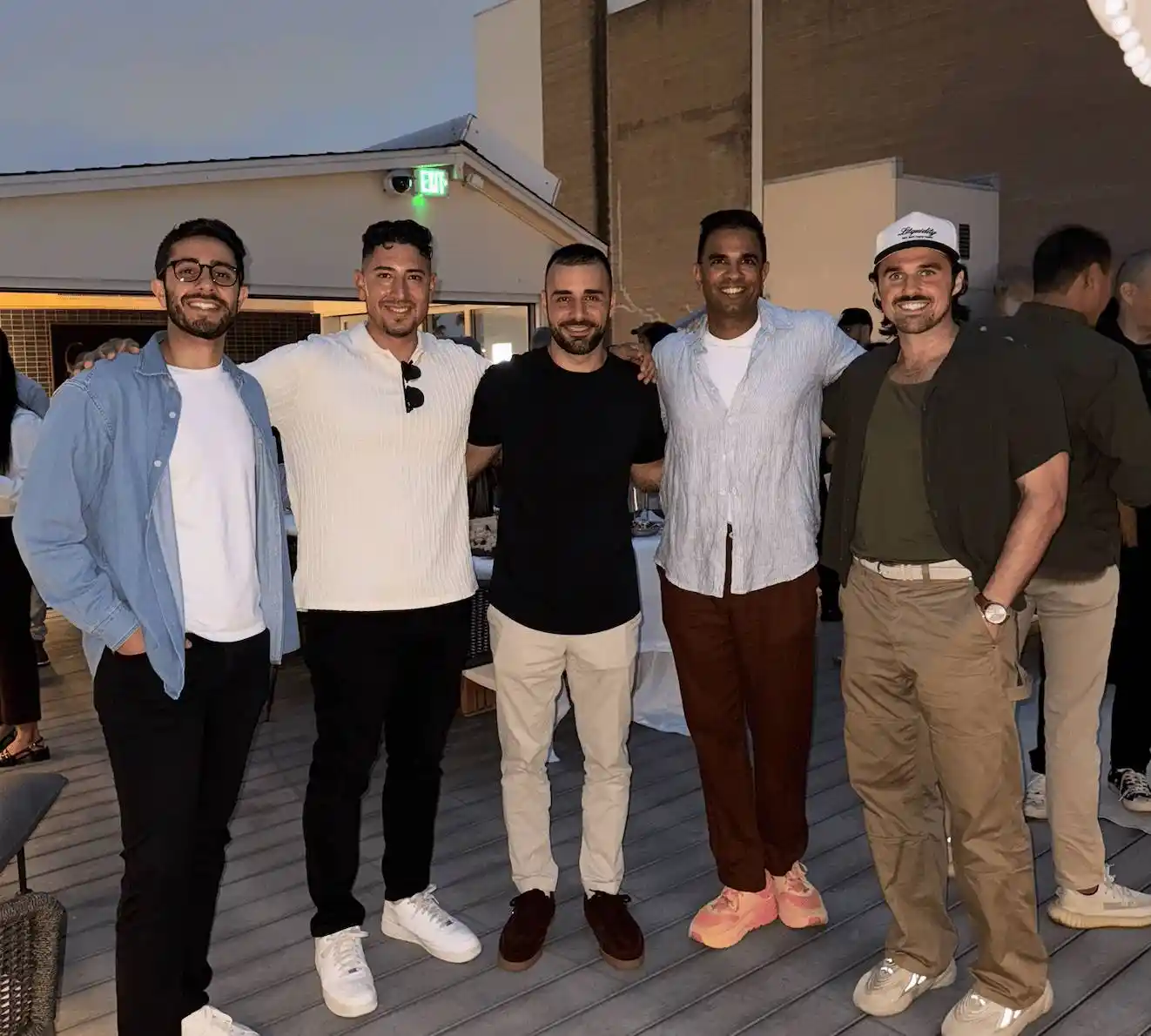
Adam (Blueprint), Yossi (Car Dealership), Avi (Creator Logic), Litquidity

5. Collaboration Leads to Win-Win

Collaboration accelerates growth.

1 + 1 = 3.

Creators are actively seeking collaboration.

Newsletter swaps, podcast guest exchanges, joint events, and cross-promotion of products.

If you can find partners with similar target audiences, growth speed increases exponentially. This is not only faster but also more fun than going it alone.

Although this strategy is not new, it is still reassuring to see it happening in reality.

More and more people are choosing the "make the cake bigger" mindset.

6. Dominate One Platform

Platform dominance still matters.

Almost every creator has a "home base."

Although they may have expanded across platforms, the platform that initially brought them traffic remains their core—whether it's YouTube, Substack, Instagram, or TikTok.

This is where their community has the strongest connection with them.

Expansion is important, but dominance is key.

Some creators even hire teams to fill gaps on other platforms while still firmly controlling the platform that initially made them successful.

First build your empire on one platform.

7. Distribution is the Ultimate Moat

This is something almost everyone agrees on.

In an era where anyone can launch a product, tool, or service, what distinguishes creators is not what they create, but how they distribute it.

Brand + Distribution = Moat.

This is a point I have been emphasizing and will continue to insist on until more people realize its importance.

Honestly, it's refreshing to see such a strong consensus—especially considering that many industries outside the creator economy are still lagging behind this idea.

Summary

The creator economy is maturing.

Strategies are becoming more sophisticated, business models are more complex, and opportunities are greater than ever.

If you are building content online, please pay attention to the following points:

  • Own your audience (email)

  • Build offline touchpoints

  • Package sponsorship deals

  • Deep dive into niche markets

  • Collaborate for win-win outcomes

  • Dominate one platform

  • View distribution as a moat

This is the successful playbook I've seen in practice.

Looking forward to the next wave of innovation and breakthroughs from creators!

Recommended reading:

RootData 2025 Web3 Industry Annual Report

Xiao Hong: From Small-Town Youth to Manus CEO, a Bitcoin Believer's Long-Termism

Binance Power Shift: The Dilemma of a 300 Million User Empire

Has the Project Buyback红利 Really Come to an End?

Пов'язані питання

QWhat is the first key insight for becoming a top KOL according to the a16z event?

AThe first key insight is to own your audience, primarily through building an email list to establish a direct and lasting connection with your audience, independent of algorithm changes.

QHow are creators enhancing their relationships with their audience beyond online interactions?

ACreators are building offline touchpoints by organizing events such as live podcast recordings, private dinners, local meetups, and even retreats to deepen relationships and build trust.

QWhat shift is happening in the sponsorship model for creators?

ACreators are moving away from one-off ad deals and instead bundling their newsletters, podcasts, social media content, and offline events into packaged sponsorship deals for more predictable income and better integration.

QWhy is focusing on a niche market considered valuable for creators?

AFocusing on a niche market is valuable because the more specific the niche, the stronger the business, as it allows creators to tailor their content and products precisely to their ideal customer profile, often yielding higher value than expected.

QWhat is identified as the ultimate moat for creators in the content economy?

ADistribution is identified as the ultimate moat, as the key differentiator is not what creators create but how they distribute it, combining brand and distribution to build a sustainable competitive advantage.

Пов'язані матеріали

In Conversation with Ray Dalio: We Are Currently in an AI Bubble, with 1% of My Portfolio in Bitcoin

Ray Dalio, founder of Bridgewater Associates, warns in an interview that the current AI boom shows classic bubble characteristics, which could lead to significant economic downturns as seen in past cycles like 1929 or 2000. He explains that speculative enthusiasm, fueled by debt and overvaluation, often precedes a crash when rising rates or taxation force asset sales, causing widespread losses and recession. Dalio also outlines his "Big Cycle" theory, describing an approximate 80-year pattern where widening wealth gaps, massive government deficits, and shifting geopolitical power (like China's rise) create internal conflict and global instability. He emphasizes that we are in a late-cycle, transitional phase where traditional powers like the US and UK face decline. For personal wealth protection, Dalio advises diversification beyond cash into assets like stocks, bonds, real estate, and particularly gold, which he prefers over Bitcoin. While he holds about 1% of his portfolio in Bitcoin as a non-printable hard asset, he views gold as more secure from technological or governmental threats. Regarding AI's impact, Dalio believes it will disproportionately benefit capital owners, worsening inequality by replacing both physical and cognitive labor. He suggests that human intuition and emotional intelligence, combined with AI, will be key for future workers. On taxation, Dalio argues that wealth taxes are impractical and risk triggering asset sell-offs, reducing productive investment. He points to the UK as a cautionary example of debt, low productivity, and political strife. Geopolitically, Dalio foresees a more regionalized world, with the US showing weakness in prolonged conflicts like with Iran, akin to past imperial declines. The ideal outcome, he suggests, is coexisting powerful blocs (e.g., Americas, China-Asia Pacific) without major war.

marsbit2 год тому

In Conversation with Ray Dalio: We Are Currently in an AI Bubble, with 1% of My Portfolio in Bitcoin

marsbit2 год тому

Daily 7.2 Trillion KRW: Foreign Capital's Record Net Buying on Friday! Wall Street Says Headwinds for Korean Stock Fund Flows Have Subsided

South Korean stock market sees a dramatic shift in fund flows. On July 31, foreign investors made a record net purchase of approximately KRW 7.2 trillion in KOSPI stocks, marking a fundamental reversal from the persistent large-scale net outflows seen in previous months. This contributed to a significant narrowing of foreign net selling in July to KRW 9.8 trillion, down sharply from KRW 48.4 trillion in June and KRW 44.5 trillion in May. Simultaneously, domestic institutional pressure eased. South Korean pension funds and asset managers turned to a net buying position in July, purchasing KRW 1.0 trillion worth of KOSPI shares, contrasting with net sales in May and June. Market volatility is expected to be dampened by new financial regulations. Effective July 31, the Financial Services Commission tightened access for retail investors to single-stock leveraged ETFs by raising the minimum cash deposit requirement. Trading volumes for these products subsequently dropped to about 50% of their monthly average. Citigroup Research maintains its year-end KOSPI target of 10,000 points. The firm cites several supportive factors: the substantial easing of headwinds from capital outflows, a robust fundamental outlook for the semiconductor sector, historically low market valuations, strong economic fundamentals, and the potential for policy support from financial authorities if needed.

marsbit2 год тому

Daily 7.2 Trillion KRW: Foreign Capital's Record Net Buying on Friday! Wall Street Says Headwinds for Korean Stock Fund Flows Have Subsided

marsbit2 год тому

Thanks to Dice Rolls, Bitcoin Keys Are Stored Offline, But Not Everyone Will Do It

The article discusses using dice rolls to generate secure Bitcoin wallet seeds, providing entropy independent of potentially flawed hardware random number generators. It explains that each fair dice roll offers about 2.585 bits of entropy, with around 50 rolls needed for a standard 12-word seed phrase and 99+ recommended for higher security. This method gained attention after a vulnerability was revealed in some Coldcard hardware wallets, where a faulty firmware RNG (dating back to 2021) compromised generated keys. The analysis notes that while a dice-generated main seed was safe from this specific flaw, other Coldcard functions (like creating paper wallets, backup keys, or passwords) could still be vulnerable if they used the defective RNG. The piece argues that while dice-based entropy is technically robust, the manual process is error-prone, tedious, and unrealistic for most new users, who might make mistakes in recording or inputting rolls. It concludes that while manual entropy generation should remain an option for advanced users, the long-term goal is to develop reliable, user-friendly hardware and software that securely generates randomness without requiring specialized knowledge. Coldcard users are advised to check their firmware version and replace any secondary secrets (like paper wallet keys) created with vulnerable devices, while also considering multi-signature setups with devices from different manufacturers for added security.

cryptonews.ru7 год тому

Thanks to Dice Rolls, Bitcoin Keys Are Stored Offline, But Not Everyone Will Do It

cryptonews.ru7 год тому

Торгівля

Спот
活动图片





