A Well-Designed "Self-Detonation": Analysis of the PGNLZ Attack Incident

marsbitОпубліковано о 2026-01-28Востаннє оновлено о 2026-01-28

Анотація

On January 27, 2026, an attacker executed a well-orchestrated exploit against the PGNLZ token on BNB Smart Chain, resulting in approximately $100k in losses. The attacker initiated a flash loan of 1,059 BTCB from Moolah Protocol, used it as collateral on Venus Protocol to borrow 30 million USDT, and then exchanged 23,337,952 USDT for 982,506 PGNLZ on PancakeSwap. These PGNLZ tokens were intentionally burned (sent to a dead address), drastically reducing the liquidity pool supply. This manipulation caused the price of PGNLZ to surge from approximately $0.10 to over $5,528 per token. The attacker then invoked a fee-on-transfer function, triggering a built-in burn mechanism (_executeBurnFromLP) that further depleted the pool, leaving only a minuscule amount of PGNLZ and artificially inflating the price to an extreme 40 billion times its original value. Finally, the attacker drained the liquidity pool, repaid the flash loan, and netted a significant profit. The root cause was identified as a flawed deflationary economic model with insufficient validation during fee processing and LP burns, allowing price manipulation. The incident underscores the importance of rigorous economic model design and multi-audit practices before contract deployment.

Background Introduction

On January 27, 2026, we monitored an attack on the PGNLZ project on the BNB Smart Chain:

https://bscscan.com/tx/0xa7488ff4d6a85bf19994748837713c710650378383530ae709aec628023cd7cc

After detailed analysis, the attacker continuously launched attacks against the PGNLZ project on January 27, 2026, resulting in a loss of approximately 100k USD.

Attack and Incident Analysis

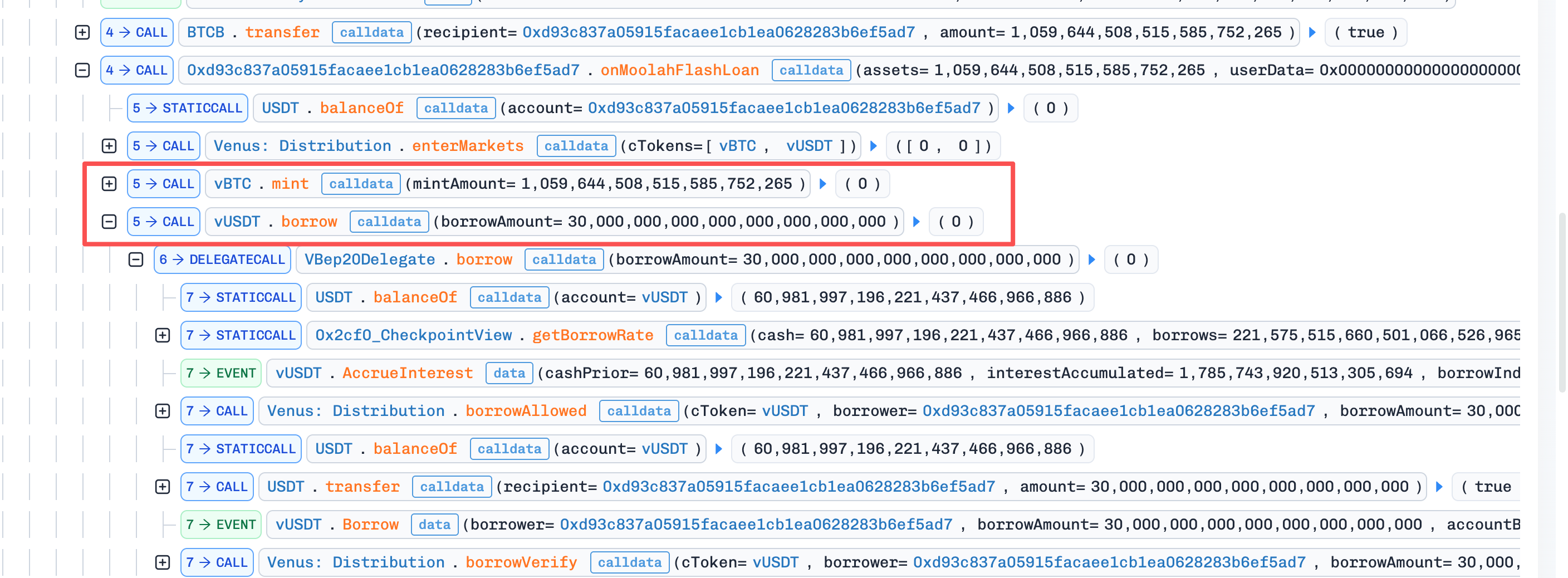
The attacker first borrowed 1,059 BTCB via a flash loan from Moolah Protocol,

Subsequently, they collateralized the 1,059 BTCB on Venus Protocol to borrow 30,000,000 USDT.

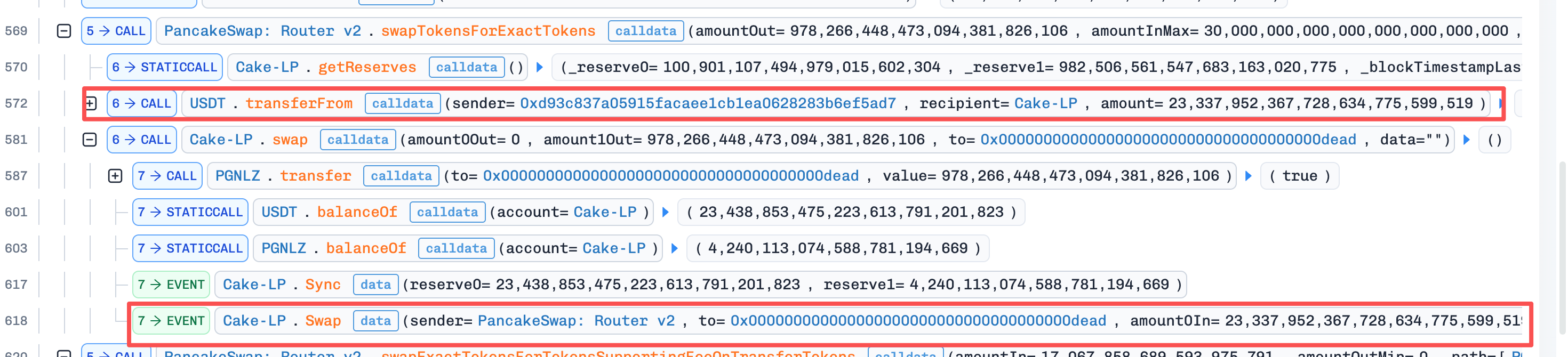
Next, the attacker called the function `swapTokensForExactTokens` on PancakeSwap, using 23,337,952 USDT to exchange for 982,506 PGNLZ, but then burned these PGNLZ (sent them to 0xdead).

Before the swap, the PancakeSwap Pool contained 100,901 USDT and 982,506 PGNLZ, making the price of PGNLZ 1 PGNLZ = 0.1 USDT. After the swap, the PancakeSwap Pool had 23,438,853 USDT and 4,240 PGNLZ remaining, making the price of PGNLZ 1 PGNLZ = 5,528 USDT.

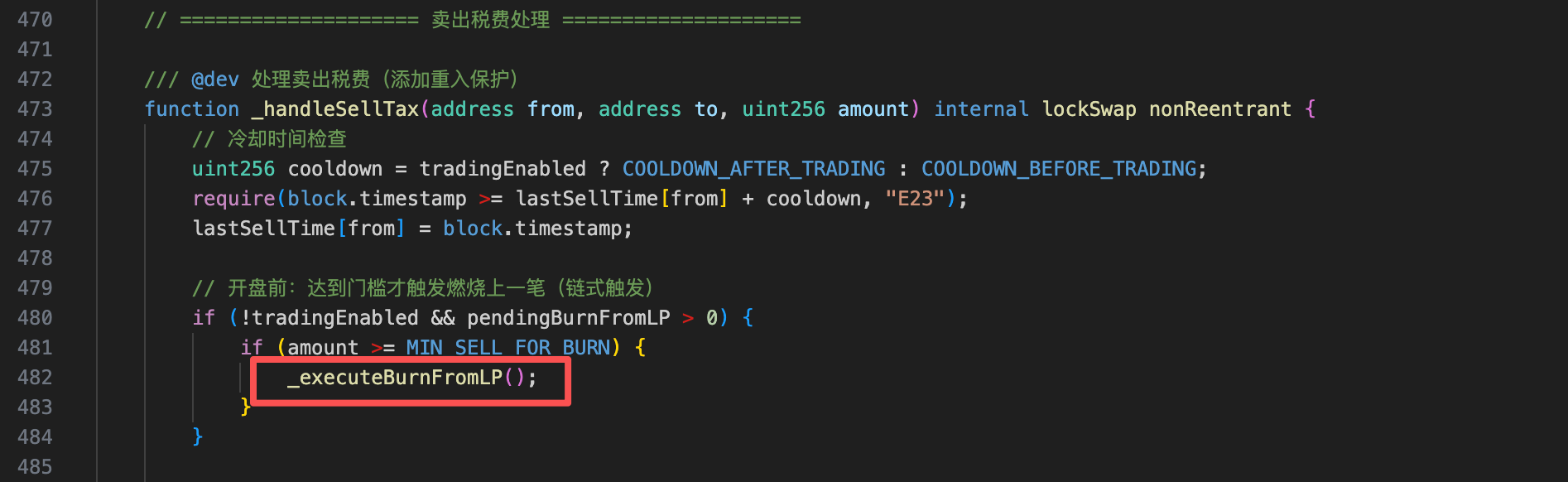
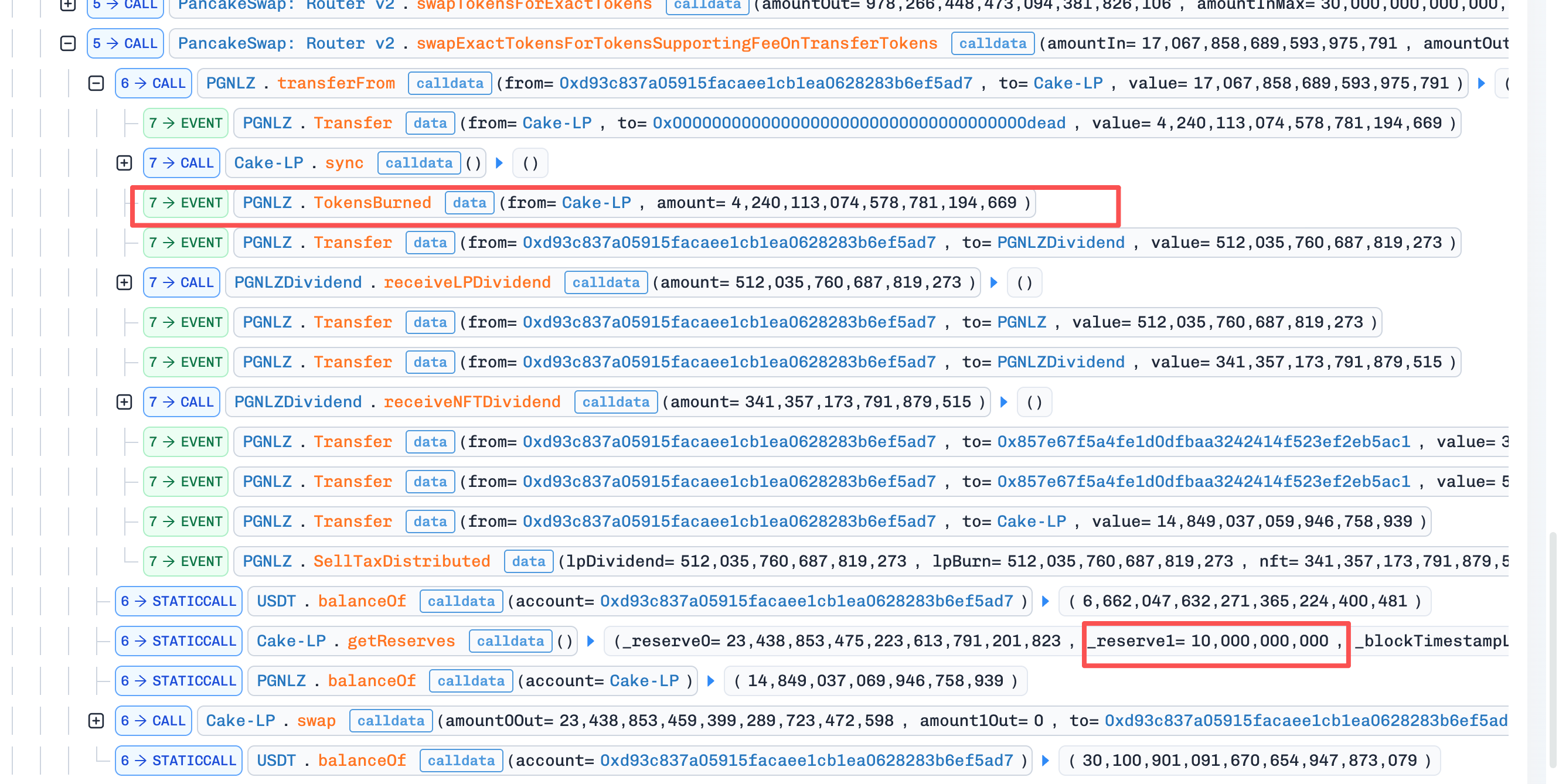
Subsequently, the attacker called the function `swapExactTokensForTokensSupportingFeeOnTransferTokens`. This function primarily supports Fee-On-Transfer Tokens, i.e., tokens that incur fees on transactions. PGNLZ uses `_update` to handle transaction fees. The specific call chain is: transferFrom -> _spendAllowance -> _transfer -> _update

Since this was a sell, `_handleSellTax` was called.

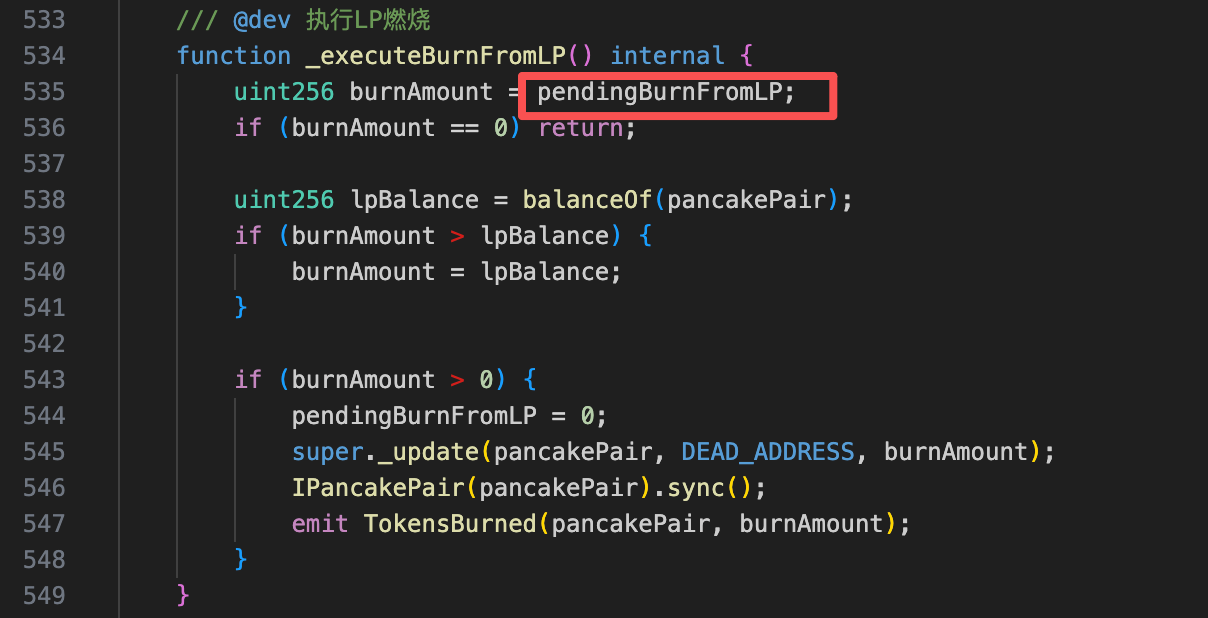
Let's look at how `_executeBurnFromLP` is implemented.

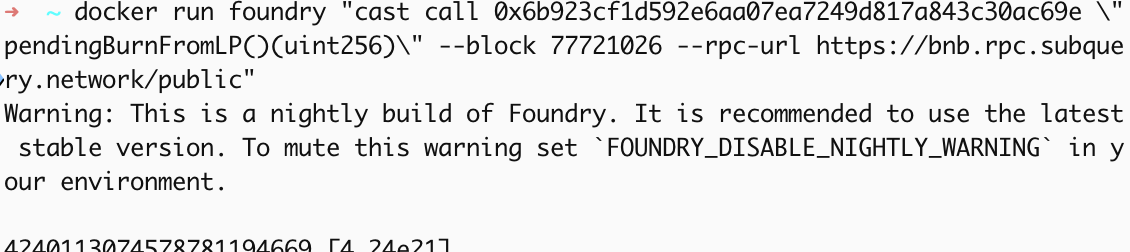
It can be seen that `_executeBurnFromLP` uses `_update` to burn the quantity of PGNLZ specified by `pendingBurnFromLP`. In the previous block, `pendingBurnFromLP` was queried as 4,240,113,074,578,781,194,669.

After the burn, the LP Pool was left with only 0.00000001 PGNLZ, making the price 1 PGNLZ = 234,385,300,000,000 USDT, a 40 Billion-fold increase.

Finally, the attacker drained the LP Pool, repaid the flash loan, and profited 100k USDT.

Summary

The cause of this vulnerability was the deflationary economic model, which lacked validation during fee deductions or LP Pool burns. This allowed the attacker to manipulate the token's price using its deflationary characteristics. It is recommended that project teams conduct thorough multi-party validation when designing economic models and code execution logic. Before contract deployment, opt for cross-audits from multiple auditing firms during the audit phase.

Трендові криптовалюти

Пов'язані питання

QWhat was the total financial loss caused by the attack on the PGNLZ project?

AThe attack resulted in a loss of approximately 100,000 USD.

QHow did the attacker manipulate the price of PGNLZ token during the attack?

AThe attacker first swapped a large amount of USDT for PGNLZ and burned the tokens, drastically reducing the supply in the liquidity pool. This caused the price of PGNLZ to skyrocket by 40 billion times, from 0.1 USDT to 234,385,300,000,000 USDT per token.

QWhich function did the attacker exploit to handle the fee-on-transfer mechanism during the sell operation?

AThe attacker exploited the function swapExactTokensForTokensSupportingFeeOnTransferTokens, which triggered the _handleSellTax function and subsequently _executeBurnFromLP to burn a massive amount of PGNLZ tokens from the liquidity pool.

QWhat was the root cause of the vulnerability in the PGNLZ project?

AThe vulnerability was caused by a deflationary economic model that lacked proper checks when deducting fees or burning tokens from the pool, allowing the attacker to manipulate the token's price through supply reduction.

QWhich protocols did the attacker use to obtain the initial funds for the attack?

AThe attacker used a flash loan from Moolah Protocol to borrow 1,059 BTCB, which was then collateralized on Venus Protocol to borrow 30,000,000 USDT.

Пов'язані матеріали

STAR 50 Soars 10.73%, Why Did A-Shares Stage a "V-Shaped Reversal"?

After a prolonged decline, the Chinese A-share market staged a strong rally on July 21. The STAR 50 index surged 10.73%, its largest single-day gain in nearly a year, leading a broad-based "V-shaped" reversal. The Shanghai Composite Index rose 1.79%, the Shenzhen Component Index gained 4.81%, and the ChiNext Index jumped 7.05%. Total market turnover reached 2.97 trillion yuan, an increase of 256.1 billion yuan from the previous session, with over 3,100 stocks advancing. The semiconductor sector spearheaded the rebound, with related ETFs posting significant gains. Analysts attribute the surge to three converging factors. First, coordinated capital inflows from "national team" institutions, insurance funds, listed company buybacks, and fund house self-purchases have bolstered market liquidity and confidence. Second, supportive policy signals, including commitments from regulators to ensure stable market operations, provided a favorable backdrop. Third, a stabilization and recovery in overseas markets, notably South Korea, created a positive external environment. Institutions suggest the most severe panic selling phase for the tech sector has likely passed, following a significant digestion of crowded positions and leveraged funds. While short-term volatility may persist, the medium to long-term outlook remains underpinned by enduring trends like AI computing demand expansion and semiconductor localization. The market's focus now shifts to the sustainability of supportive fund flows, earnings reports, and upcoming catalysts from the global AI industry chain.

marsbit18 хв тому

STAR 50 Soars 10.73%, Why Did A-Shares Stage a "V-Shaped Reversal"?

marsbit18 хв тому

U.S. Tech Momentum Stocks Post Largest Single-Day Gain Ever, But Is the Plunge Over?

US tech momentum stocks staged a sharp rebound on Tuesday (July 21st). Morgan Stanley's TMT Momentum Factor surged over 12%, marking its largest single-day gain on record, exceeding even peaks from the 2000 dot-com bubble. Key momentum indices from Goldman Sachs also posted their strongest daily performances in years. The rally was led by semiconductors, with the Philadelphia Semiconductor Index jumping 4.6%. This rebound followed three consecutive down days and a cumulative 33% plunge in momentum stocks, one of the steepest drawdowns since the dot-com era. Analysts attribute the surge largely to a short squeeze. Heavy selling had pushed high-beta momentum stocks into deeply oversold territory, forcing many short sellers, particularly in Asia, to cover their positions, creating a self-reinforcing buying spiral. However, the rebound's internals appear weak. Trading volume was notably low, and advancing stocks still lagged decliners on the S&P 500, indicating a narrow, concentrated rally rather than broad market participation. Diverging views emerge on the outlook. BTIG warns the bounce has hit key resistance and recommends selling into strength, citing extreme volatility and historical parallels to past market tops. Conversely, Goldman Sachs and UBS believe the momentum unwind is nearing its end, suggesting it may be time to gradually add exposure, as positioning has been significantly reduced. They caution, however, that high volatility warrants a measured approach, potentially using defined-risk strategies. The upcoming earnings season, particularly reports from major tech firms like Alphabet, is seen as a critical test for the rally's sustainability. Simultaneously, bond markets flashed a warning, with yields rising partly due to spiking oil prices. Analysts note that if long-term Treasury yields break decisively higher, it could pose a significant headwind for equities, especially growth stocks.

marsbit26 хв тому

U.S. Tech Momentum Stocks Post Largest Single-Day Gain Ever, But Is the Plunge Over?

marsbit26 хв тому

U.S. Tech Momentum Stocks Record Largest Single-Day Gain Ever, but Has the Rout Ended?

U.S. tech momentum stocks staged a dramatic rebound on Tuesday, July 21st. Key momentum indices like the Morgan Stanley TMT Momentum Factor and Goldman Sachs' High Beta Momentum Long Index posted historic or near-historic single-day gains, fueled largely by semiconductor stocks. This sharp rally followed a severe three-day sell-off that saw momentum stocks plunge 33%, marking one of the steepest pullbacks since the dot-com bubble. Analysts attribute the bounce primarily to a short squeeze, as forced covering from over-leveraged traders, particularly in Asia, created a buying spiral. However, the rally's health is questioned due to weak market breadth—overall trading volume was low, and decliners outnumbered advancers in the S&P 500 despite the index's gain—suggesting a narrow, concentrated surge rather than broad recovery. Opinions on the sustainability diverge. BTIG strategists warn the rebound has hit key resistance levels, citing extreme volatility and historic stock dispersion as signs of an ongoing broader correction, and recommend selling into strength. Conversely, Goldman Sachs and UBS view the aggressive momentum unwinding as nearing its end, noting reduced positioning and a lack of new fundamental catalysts. They suggest the sell-off presents a selective opportunity to add exposure, albeit cautiously and gradually using defined-risk strategies. The immediate trajectory hinges on the ongoing earnings season, with market focus on Alphabet's capital expenditure guidance for AI investment clarity. Meanwhile, bond markets present a risk, with rising Treasury yields—potentially heading toward 5.5%—and widening credit spreads for mega-cap tech companies posing a threat to equity valuations. The combination of technical factors, earnings results, and macro conditions leaves the durability of the rebound in doubt.

链捕手28 хв тому

U.S. Tech Momentum Stocks Record Largest Single-Day Gain Ever, but Has the Rout Ended?

链捕手28 хв тому

Long-Divided Must Unite, Long-United Must Divide: When L1 Becomes Its Own Rollup, What Is Ethereum's Endgame?

"The Inevitable Cycle: When L1 Becomes Its Own Rollup – What is Ethereum's Endgame?" For years, the Ethereum community grappled with concerns that L2s were fragmenting the ecosystem and eroding L1's value. While L2s provided cheaper execution, they also splintered liquidity and the unified user experience of a single chain. This has prompted a fundamental reassessment of the relationship between L1 and L2. Ethereum's roadmap is evolving. The "Scale" initiative merges L1 and L2 expansion into a holistic framework. L1 itself is advancing with higher gas limits, statelessness, and zkEVM verification, no longer content to be just a low-throughput settlement layer. Consequently, the primary value proposition of L2s is shifting from merely providing cheap blockspace to offering L1 cannot easily provide: application-specific optimizations, privacy features, and flexible governance models. L2s are becoming a spectrum of execution environments with varying degrees of security inheritance from Ethereum. A critical challenge in this multi-chain future is interoperability. The vision is to make Ethereum "feel like one chain again." This relies on advancements in native account abstraction (like EIP-7702) and intent-based architectures (Open Intents Framework), where users declare desired outcomes, and solvers handle the complex cross-chain execution. Furthermore, shortening Ethereum's finality time from minutes to seconds is crucial, as it underpins trust between chains for bridges, stablecoins, and cross-chain applications. Perhaps the most provocative idea is that Ethereum L1 itself could become a form of "its own Rollup." As zkEVM and proof systems mature, high-performance nodes could execute transactions and generate validity proofs. Regular validators would then verify these proofs instead of re-executing all transactions. This blurs the traditional L1/L2 hierarchy, making "Rollup" more of a general execution-verification architecture. Native Rollup aims to integrate L2 validation more directly into the Ethereum protocol, allowing L2s to inherit L1's security more fully and move away from reliance on security councils. In the end, L2s are not destined to replace L1 or be made obsolete by it. The likely future is a unified system where diverse execution environments—each optimized for specific use cases like DeFi, gaming, or privacy—coexist. They will share a common foundation of security, liquidity, and verifiable state, seamlessly connected to restore a cohesive user experience. The next phase for Ethereum is not just about scaling through separation, but about intelligently reintegrating what was separated back into a coherent whole.

链捕手44 хв тому

Long-Divided Must Unite, Long-United Must Divide: When L1 Becomes Its Own Rollup, What Is Ethereum's Endgame?

链捕手44 хв тому

Торгівля

Спот

Популярні статті

Що таке $WELL

WELL3, $$WELL: Революція в Здоров'ї та Добробуті з DePIN та AI Вступ У швидко змінюваному світі цифрових технологій сектор здоров'я та добробуту займає передову позицію в інноваціях, прагнучи покращити догляд за пацієнтами та пропагувати здоровіші способи життя. У цьому домені визначним гравцем є WELL3, інноваційний проект Web3, що прагне революціонізувати те, як люди взаємодіють зі своїм здоров'ям. Використовуючи такі технології, як Децентралізована Фізична Інфраструктурна Мережа (DePIN), Децентралізована Ідентичність (DID) та Штучний Інтелект (AI), WELL3 має на меті сприяти безпечним, даними підкріпленим шляхам до здоров'я. Ця всеосяжна стаття глибоко аналізує основні аспекти WELL3, $$WELL, досліджуючи його функціональні можливості, творців, інвесторів та унікальні характеристики. Що таке WELL3, $$WELL? WELL3 слугує інноваційною платформою, яка має на меті переосмислити підхід до здоров'я та добробуту. Сфокусований на інтеграції DePIN і DID поряд із AI-системами, проект створений для надання персоналізованого досвіду для користувачів, забезпечуючи при цьому безпеку та конфіденційність медичних даних. З вражаючою цифрою понад мільйон попередньо зареєстрованих користувачів, основна місія WELL3 полягає в покращенні добробуту через безпечні, орієнтовані на дані шляхи до здоров'я. В основі WELL3 лежать передові блокчейн-технології, які забезпечують повний контроль користувачів над своїми особистими даними. Цей проект не тільки вирішує проблеми безпеки даних і доступності, але також прагне створити активну спільноту, пов'язану спільним прагненням до кращого здоров'я. Основні риси WELL3: DePIN і DID: Ці технології забезпечують безпечну власність та аутентифікацію даних, надаючи користувачам повний контроль над їхньою інформацією. Інтеграція AI: Використовуючи аналітику AI, WELL3 пропонує персоналізовані поради та рішення, адаптовані до індивідуальних потреб здоров'я. Залучення спільноти: Сприяє підтримуючому середовищу, в якому користувачі можуть спілкуватися, ділитися досвідом та надихати один одного на здоровіше життя. Творець WELL3, $$WELL Ідентичність творця WELL3 не уточнюється в доступній інформації. У міру просування проекту можуть з'явитися нові деталі, що проллють світло на творчі уми, які стоять за цією трансформаційною ініціативою. Інвестори WELL3, $$WELL WELL3 здобув підтримку від безлічі впливових інвестиційних структур, що підкреслює його надійність і потенціал у галузі здоров'я та добробуту. Серед відомих інвесторів: Animoca Brands AWS Samsung The Spartan Group Blocore Fenbushi Capital Newman Group Soul Capital XY Finance Lumoz Підтримка з боку цих визнаних організацій свідчить про сильну віру в місію WELL3, забезпечуючи йому необхідні ресурси для інновацій та розширення своїх пропозицій. Як працює WELL3, $$WELL? WELL3 функціонує, поєднуючи передові технології в мультичейн-рамках, забезпечуючи безперебійну та інноваційну взаємодію користувачів. Нижче наведено деякі фактори, які унікально позиціонують WELL3 на ринку добробуту: 1. Безпечна власність на дані З інтеграцією DePIN і DID користувачі можуть зберігати повний контроль над своїми особистими медичними даними. Цей рівень безпеки є надзвичайно важливим в сучасну епоху цифрових технологій, де порушення безпеки та несанкціонований доступ є поширеними. Через WELL3, власність на дані декентралізована, що дозволяє користувачам проактивно управляти своєю інформацією. 2. Персоналізація через AI WELL3 впроваджує аналітику на базі AI для надання користувачам персоналізованих медичних порад. Використовуючи силу AI, платформа може пропонувати індивідуалізовані рекомендації та рішення, заохочуючи користувачів досягати своїх цілей у здоров'ї більш ефективно. 3. Мультичейн-рамки Проект WELL3 розроблений для роботи на кількох платформах блокчейну, таких як Bitcoin, Ethereum, Polygon, Solana, Blast і TON. Ця мультичейн-можливість забезпечує безперебійну взаємодію користувачів з платформою через різні мережі, підвищуючи доступність та зручність. 4. Токен WELL Центральним елементом екосистеми WELL3 є токен WELL, який виконує кілька функцій, включаючи утиліту, управління та винагороди. Токен дозволяє брати участь в екосистемі, підтримує обмін медичними даними та мотивує користувачів на основі їхньої активності на платформі. Хронологія WELL3, $$WELL Шлях WELL3 демонструє значні віхи у її розвитку, кожна з яких реалізує загальний успіх проекту. Ось коротка хронологія ключових подій в історії WELL3: 10 лютого 2024: WELL3 запустив свій NFT проект, швидко ставши найбільшою колекцією NFT на ланцюзі opBNB з понад 324,000 власниками та досягнувши 8 мільйонів NFT, створених до 27 квітня 2024 року. Публічний продаж: Проект досяг вражаючої загальної заблокованої вартості (TVL) близько 15,237.2 ETH всього за сім днів, що свідчить про robust цікавості на ринку та підтримку. Запуск WELL ID: Платформа зареєструвала понад 900,000 користувачів для WELL ID та відповідного білого списку NFT Ring, відзначаючи значну фазу прийняття в екосистемі. Розвиток партнерства: WELL3 встановила партнерства з провідними організаціями, включаючи Animoca Brands, AWS, Samsung та іншими, щоб поліпшити свою екосистему та розширити свою присутність. Обсяг транзакцій: WELL3 здійснив транзакції на загальну суму понад 17 мільйонів доларів, що відображає зростаючу утиліту та залученість у спільноті здоров'я та добробуту. Ключові моменти про WELL3, $$WELL Як прогресивна ініціатива, що переорієнтовується на ринок добробуту, WELL3 визначила кілька важливих елементів, які сприятимуть її триваючому успіху. Ось кілька основних моментів, на які варто звернути увагу: Токеноміка Токен $$WELL має максимальну пропозицію 42 мільярдів, з значним 71% відведеним для ініціатив спільноти. Ця стратегія розподілу підкреслює зобов'язання проекту перед його базою користувачів та довгостроковою стійкістю. Період блокування Щоб забезпечити стабільність у екосистемі, токени випускаються партіями протягом 24-місячного періоду блокування, що сприяє довірі та впевненості серед користувачів. Розвиток екосистеми Бачення WELL3 поширюється на створення комплексної та стійкої екосистеми для сприяння успішному залученню спільноти, поведінці, що покращує здоров'я, та цифровим рішенням, що вирішують нагальні потреби сфери добробуту. Відповідність ринку Індустрія добробуту, оцінювана в 5.6 трильйонів доларів, пропонує вигідну можливість, яку WELL3 прагне використати. З очікуваним щорічним темпом зростання 5-10%, проект ідеально позиціонується на тлі зростаючої тенденції до здорового способу життя. Носимі пристрої Введення кільця WELL3, носимого пристрою з крипто-інцентуванням, відповідає зростаючому попиту на персоналізовані дані про здоров'я. Цей пристрій не лише підвищує досвід користувача, але й переосмислює те, що означає бути залученим до власного здоров'я в контексті Web3. Висновок WELL3 представляє собою значний прогрес у інтеграції блокчейн-технологій у сектор здоров'я та добробуту. Вирішуючи критично важливі питання щодо володіння даними, персоналізації та залучення спільноти, ця інноваційна платформа пропонує прогресивне рішення для покращення індивідуального добробуту. З потужною підтримкою від відомих інвесторів та зобов'язанням до передових технологій, WELL3 готовий зробити відчутний вплив у сфері добробуту. Для тих, хто прагне орієнтуватися в складнощах здоров'я в цифрову епоху, WELL3 безумовно варто стежити за його еволюцією та зростанням.

63 переглядів усьогоОпубліковано 2024.07.14Оновлено 2024.12.03
Що таке $WELL

Як купити WELL

Ласкаво просимо до HTX.com! Ми зробили покупку Moonwell Artemis (WELL) простою та зручною. Дотримуйтесь нашої покрокової інструкції, щоб розпочати свою криптовалютну подорож.Крок 1: Створіть обліковий запис на HTXВикористовуйте свою електронну пошту або номер телефону, щоб зареєструвати обліковий запис на HTX безплатно. Пройдіть безпроблемну реєстрацію й отримайте доступ до всіх функцій.ЗареєструватисьКрок 2: Перейдіть до розділу Купити крипту і виберіть спосіб оплатиКредитна/дебетова картка: використовуйте вашу картку Visa або Mastercard, щоб миттєво купити Moonwell Artemis (WELL).Баланс: використовуйте кошти з балансу вашого рахунку HTX для безперешкодної торгівлі.Треті особи: ми додали популярні способи оплати, такі як Google Pay та Apple Pay, щоб підвищити зручність.P2P: Торгуйте безпосередньо з іншими користувачами на HTX.Позабіржова торгівля (OTC): ми пропонуємо індивідуальні послуги та конкурентні обмінні курси для трейдерів.Крок 3: Зберігайте свої Moonwell Artemis (WELL)Після придбання Moonwell Artemis (WELL) збережіть його у своєму обліковому записі на HTX. Крім того, ви можете відправити його в інше місце за допомогою блокчейн-переказу або використовувати його для торгівлі іншими криптовалютами.Крок 4: Торгівля Moonwell Artemis (WELL)Легко торгуйте Moonwell Artemis (WELL) на спотовому ринку HTX. Просто увійдіть до свого облікового запису, виберіть торгову пару, укладайте угоди та спостерігайте за ними в режимі реального часу. Ми пропонуємо зручний досвід як для початківців, так і для досвідчених трейдерів.

143 переглядів усьогоОпубліковано 2024.12.10Оновлено 2026.06.02

Як купити WELL

Обговорення

Ласкаво просимо до спільноти HTX. Тут ви можете бути в курсі останніх подій розвитку платформи та отримати доступ до професійної ринкової інформації. Нижче представлені думки користувачів щодо ціни WELL (WELL).

活动图片