A New Era Begins in Institutional Crypto Investment: Morgan Stanley Introduces Investors to Two Giant Altcoins!

cryptonews.ruОпубліковано о 2026-07-28Востаннє оновлено о 2026-07-28

Анотація

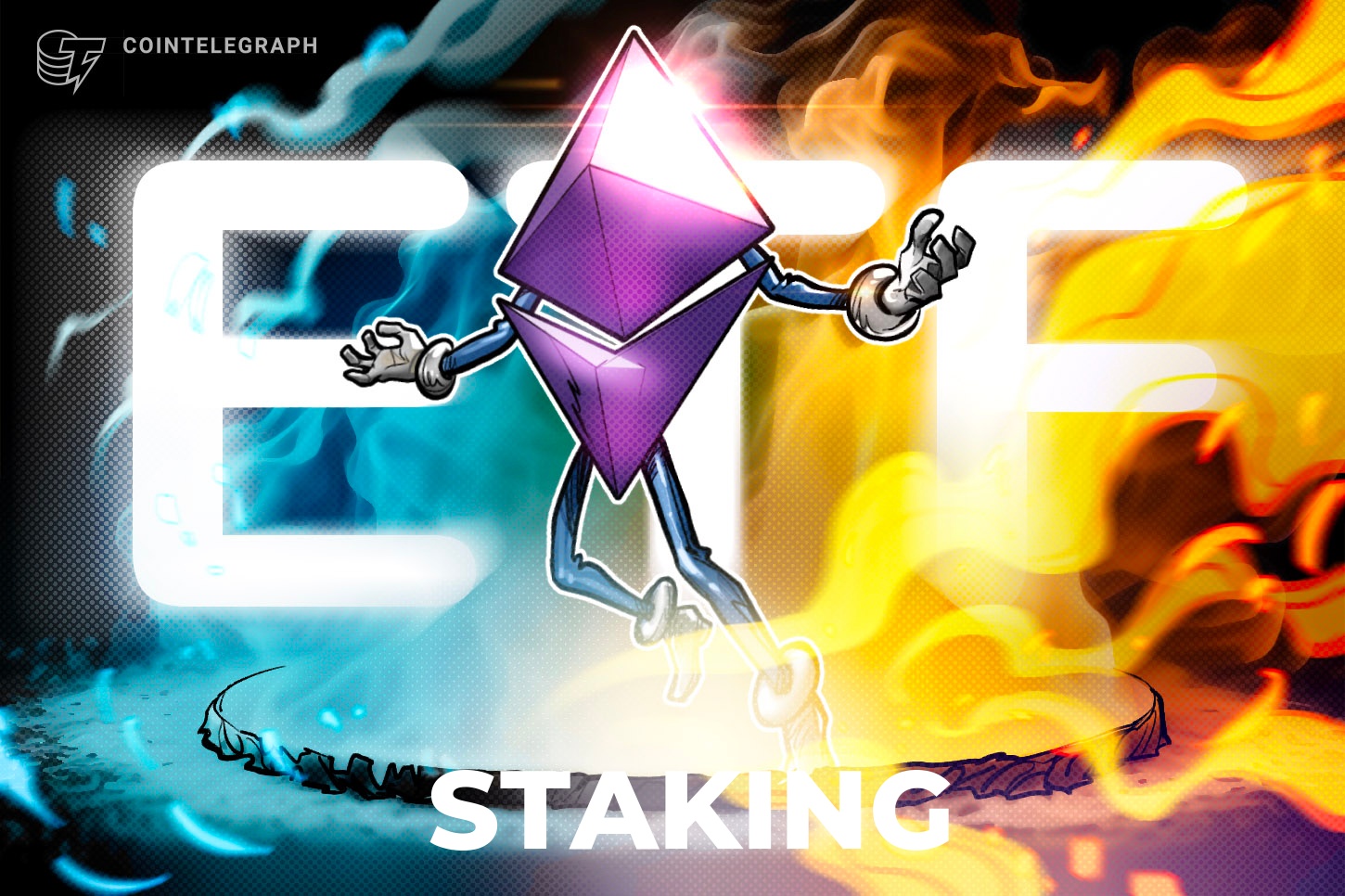
Morgan Stanley continues its expansion into the cryptocurrency investment sector. Its investment management arm has launched two new exchange-traded funds (ETFs) focused on Ethereum and Solana, which have begun trading on the NYSE Arca. The funds, named the Morgan Stanley Ethereum Trust (MSSE) and Morgan Stanley Solana Trust (MSOL), track the price movements of Ethereum ($ETH) and Solana ($SOL), respectively. They follow the firm's earlier launch of the Morgan Stanley Bitcoin Trust (MSBT). A key differentiator for these new products is their incorporation of staking support. Morgan Stanley aims to provide investors with additional yield by staking a portion of the underlying ETH and SOL assets and states it will not retain any portion of the staking rewards earned. This move is part of the firm's effort to expand its product portfolio to meet growing investor demand for cryptocurrency exposure.

The American investment giant Morgan Stanley continues its expansion into the sector of investment products related to cryptocurrencies.

Finally, the company's investment division, Morgan Stanley Investment Management, announced the launch of two new ETFs focused on Ethereum and Solana.

At this stage, Morgan Stanley stated that, based on prior approval from the SEC, ETFs based on Ethereum and Solana will begin trading on the NYSE Arca exchange.

Shares of the Morgan Stanley Ethereum Trust (MSSE) and the Morgan Stanley Solana Trust (MSOL) began trading on the New York Stock Exchange Arca (NYSE Arca).

These two products track the price movements of Ethereum and Solana, respectively.

Additionally, the $ETH and $SOL ETFs follow the Morgan Stanley Bitcoin Trust (NYSE Arca: MSBT), the first cryptocurrency ETP offered by a management company affiliated with a U.S. bank, which was launched earlier this year and manages over $381 million in assets as of July 16, 2026.

Morgan Stanley's management stated that the recent launch of the $ETH and $SOL ETFs is part of efforts to expand the product portfolio to meet investor demand.

The most important feature distinguishing Morgan Stanley's offered products from other traditional cryptocurrency investment instruments is staking support. The company aims to provide investors with additional yield by staking a portion of their Ethereum and Solana assets. Finally, the company added that it will not retain any portion of the rewards generated from these ETFs.

*This is not investment advice.

end-content
Трендові криптовалюти

Пов'язані питання

QWhat two new cryptocurrency ETFs has Morgan Stanley Investment Management announced?

AMorgan Stanley Investment Management has announced two new ETFs: the Morgan Stanley Ethereum Trust (MSSE) and the Morgan Stanley Solana Trust (MSOL).

QOn which exchange will Morgan Stanley's Ethereum and Solana ETF shares begin trading?

AThe shares of the Morgan Stanley Ethereum Trust (MSSE) and Morgan Stanley Solana Trust (MSOL) will begin trading on the NYSE Arca exchange.

QWhat is a key feature that distinguishes Morgan Stanley's new crypto ETFs from traditional crypto investment products?

AA key distinguishing feature is the support for staking. Morgan Stanley aims to provide investors with additional yield by staking a portion of the ETFs' underlying Ethereum and Solana assets.

QAccording to the article, what will Morgan Stanley do with the staking rewards generated by these ETFs?

AMorgan Stanley stated that it will not retain any portion of the staking rewards generated by these ETFs; they will be passed on to investors.

QWhat earlier product paved the way for Morgan Stanley's Ethereum and Solana ETFs, and how much assets did it manage as of July 16, 2026?

AThe earlier product was the Morgan Stanley Bitcoin Trust (MSBT), the first cryptocurrency ETP offered by a U.S. bank-affiliated manager. As of July 16, 2026, it managed assets worth over $381 million.

Пов'язані матеріали

Wall Street Begins to Question Tech Giants' AI Narrative

Wall Street Questions the AI Narrative of Tech Giants Wall Street is shifting its focus from the hype surrounding artificial intelligence (AI) to a rigorous financial reality check. Following strong earnings reports from companies like Google and a massive $500 billion financing initiative from Nvidia for AI infrastructure, the market reaction has been mixed and skeptical. The core concern revolves around the massive capital expenditure (CapEx) required for AI development—building data centers and acquiring chips—and whether future cash flows can justify these upfront costs. Investors are now scrutinizing free cash flow (FCF), which measures the cash left after operational expenses and capital investments. A negative FCF, as seen recently with Alphabet (Google's parent company), signals heavy immediate spending, even if profits are growing. The divergent stock reactions highlight this new scrutiny. Microsoft's stock surged after its earnings, supported by strong operating cash flow, growing cloud revenue (Azure), and a large backlog of committed business. In contrast, Alphabet's stock fell despite profit growth because its capital spending caused FCF to turn negative for the first time. Similarly, Nvidia's announcement of a $500 billion financing platform, while potentially expanding its market, raised questions about whether AI build-out has become too expensive for tech companies to fund internally. Analysts are moving beyond simply asking if there is AI demand—which cloud revenue growth confirms—to deeper questions: the speed at which AI investments translate into revenue, profit, and ultimately, cash returns. The market is evaluating the "return on invested capital" (ROIC) over the long term, considering factors like rapid chip obsolescence, energy costs, and future competition. In summary, Wall Street's AI narrative is evolving from grand vision to a detailed financial and operational examination. The key question is no longer if AI is transformative, but whether companies can generate cash returns fast enough to outpace the immense costs of building it. Free cash flow has become a critical first filter in this reassessment.

marsbit39 хв тому

Wall Street Begins to Question Tech Giants' AI Narrative

marsbit39 хв тому

An Unexpected Player Enters the Lithography Machine Arena

In the spring of 2026, Elon Musk unveiled the TeraFab chip manufacturing plan, aiming to meet the immense computing power needs of SpaceX and Tesla. He subsequently signaled a move into the photolithography machine market, with speculation centering on a Free Electron Laser (FEL) approach to challenge the dominance of traditional EUV technology. Currently, ASML, utilizing Laser-Produced Plasma (LPP) EUV光源, holds a near-monopoly. However, LPP faces bottlenecks in energy conversion efficiency, tin debris contamination, and a power ceiling. In contrast, FEL technology, pursued by companies like xLight (where former Intel CEO Pat Gelsinger serves as executive chairman), offers a different path. It generates EUV light by accelerating electrons, potentially providing higher power without plasma conversion and its associated contamination, targeting the sub-13.5nm "beyond-EUV" wavelength range. The photolithography landscape shows three main trajectories: ASML's incremental evolution (like High-NA EUV),光源革新 like FEL targeting ASML's core component, and non-EUV alternatives like Nanoimprint Lithography (NIL) or Electron Beam Lithography (EBL). While ASML remains the dominant player with strong financials and产能 expansion plans, new entrants are challenging the status quo. xLight claims its FEL could boost productivity by 50-100%. Other paths include Substrate's particle-accelerator-based X-ray lithography and Chinese research into LPP alternatives. Musk's TeraFab is a high-stakes bet that FEL can move from lab to fab, that "plug-and-play"光源 replacement can circumvent ASML's ecosystem, and that massive future compute demand justifies a new supply chain. His public endorsement of FEL signifies that the photolithography business is no longer ASML's game alone.

marsbit39 хв тому

An Unexpected Player Enters the Lithography Machine Arena

marsbit39 хв тому

Торгівля

Спот

Популярні статті

Як купити ERA

Ласкаво просимо до HTX.com! Ми зробили покупку Caldera (ERA) простою та зручною. Дотримуйтесь нашої покрокової інструкції, щоб розпочати свою криптовалютну подорож.Крок 1: Створіть обліковий запис на HTXВикористовуйте свою електронну пошту або номер телефону, щоб зареєструвати обліковий запис на HTX безплатно. Пройдіть безпроблемну реєстрацію й отримайте доступ до всіх функцій.ЗареєструватисьКрок 2: Перейдіть до розділу Купити крипту і виберіть спосіб оплатиКредитна/дебетова картка: використовуйте вашу картку Visa або Mastercard, щоб миттєво купити Caldera (ERA).Баланс: використовуйте кошти з балансу вашого рахунку HTX для безперешкодної торгівлі.Треті особи: ми додали популярні способи оплати, такі як Google Pay та Apple Pay, щоб підвищити зручність.P2P: Торгуйте безпосередньо з іншими користувачами на HTX.Позабіржова торгівля (OTC): ми пропонуємо індивідуальні послуги та конкурентні обмінні курси для трейдерів.Крок 3: Зберігайте свої Caldera (ERA)Після придбання Caldera (ERA) збережіть його у своєму обліковому записі на HTX. Крім того, ви можете відправити його в інше місце за допомогою блокчейн-переказу або використовувати його для торгівлі іншими криптовалютами.Крок 4: Торгівля Caldera (ERA)Легко торгуйте Caldera (ERA) на спотовому ринку HTX. Просто увійдіть до свого облікового запису, виберіть торгову пару, укладайте угоди та спостерігайте за ними в режимі реального часу. Ми пропонуємо зручний досвід як для початківців, так і для досвідчених трейдерів.

657 переглядів усьогоОпубліковано 2025.07.17Оновлено 2026.06.02

Як купити ERA

Обговорення

Ласкаво просимо до спільноти HTX. Тут ви можете бути в курсі останніх подій розвитку платформи та отримати доступ до професійної ринкової інформації. Нижче представлені думки користувачів щодо ціни ERA (ERA).

活动图片