A Hidden Financial War? Iran Collects Strait Passage Fees with Stablecoins

marsbitОпубліковано о 2026-04-07Востаннє оновлено о 2026-04-07

Анотація

Iran has officially institutionalized a mandatory toll system for all large tankers passing through the Strait of Hormuz, rejecting dollar-denominated payments. Instead, fees must be paid either via yuan-denominated wire transfers or in USD-pegged stablecoins via decentralized networks. The move is designed to bypass U.S. financial sanctions and traditional banking channels like SWIFT system. The Islamic Revolutionary Guard Corps (IRGC) is implementing a tiered pricing model based on geopolitical alignment: allies like China and Russia pay the lowest rates, while U.S. allies and Israel are barred entirely. Vessels must display approved flags and are escorted through the strait after payment. This marks the first time a nation has integrated cryptocurrency into strategic-level payment infrastructure at commercial scale. The mechanism could channel over $20 billion annually in stablecoins through Iranian-controlled wallets, creating a grey liquidity pool shielded by sovereign power. However, risks remain. Compliance with sanctions from the EU and UK may void insurance coverage for vessels paying the IRGC, forcing shipowners to choose between longer routes or potential financial penalties. Russia is considering a similar model for the Northern Sea Route, signaling a broader shift toward using geographic chokepoints as financial leverage in a reordered global trade system.

On April 2, Iranian Deputy Foreign Minister Gharibabadi publicly confirmed at a routine press conference in Tehran that all very large crude carriers (VLCCs) passing through the Strait of Hormuz must pay a passage fee to the Islamic Revolutionary Guard Corps (IRGC), explicitly excluding the U.S. dollar as a settlement channel. This statement formalizes rumors previously circulating in shipping circles—Iran is no longer satisfied with traditional tools of geopolitical games but is transforming its control of the strait into a financial experiment targeting dollar hegemony.

The implementation speed of the fee mechanism has exceeded market expectations.

Citing internal documents from the IRGC Navy, Bloomberg reported that the system had completed technical deployment by the end of March. This time, Iran has chosen only two methods to receive passage fees: RMB wire transfers or settlements via decentralized networks using dollar-denominated stablecoins.
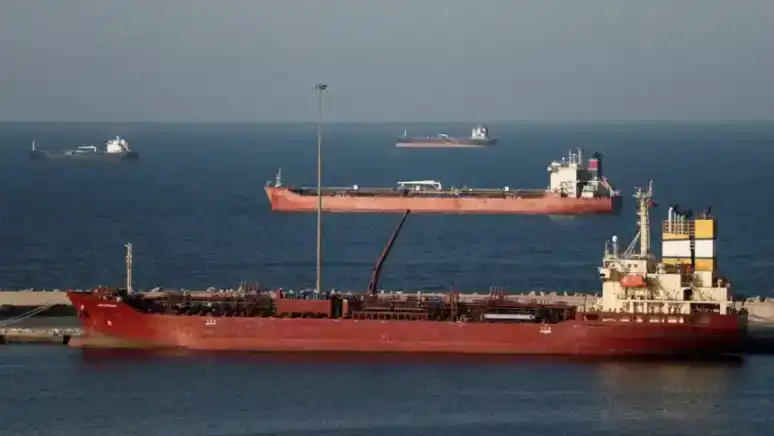
The Iranian customs department has set up a dedicated cryptocurrency exchange window on Qeshm Island to ensure funds are quickly converted into rials or transferred to overseas accounts after receipt.

This arrangement is meticulously designed.

Traditional international shipping settlements rely on the SWIFT network and correspondent banking system; any transaction involving Iran would trigger secondary sanctions from the U.S. Treasury. The combination of the RMB Cross-Border Payment System and public blockchain networks, however, constructs a parallel channel bypassing dollar surveillance.

According to statistics from London-based shipping brokerage Braemar, at least two VLCCs flying unspecified flags of convenience completed RMB payments and safely passed through the strait in late March. The Hormuz Strait Passage Management Act, passed by the Iranian Parliament's National Security Committee on March 30, further provides domestic legal backing for this mechanism.

It is worth noting that Iran has also implemented differentiated fee pricing for vessels based on their geopolitical affiliations.

Citing insider information, Bloomberg reported the oil fee standards for the Strait of Hormuz, starting at $0.5 per barrel, categorized into five tiers based on relationships with different countries.

The first tier is ally preferential rates: China and Russia, $0.5-$0.7 per barrel, with dedicated green channels; regular reporting allows free passage.

The second tier is friendly partners: countries like India and Pakistan, $0.8-$0.9 per barrel.

The third tier is neutral countries: African nations, Southeast Asia, Latin America, $1 per barrel, requiring declaration and inspection to ensure no hostile assets before release.

The fourth tier is high-risk countries: those with close ties to the U.S. but no hostile actions against Iran, such as Japan, South Korea, and many EU countries, $1.2-$1.5 per barrel, subject to full monitoring by Iran and potentially long approval queues.

The fifth tier is the U.S., Israel, and their allies: prohibited from passage.

Once a VLCC pays the toll, the IRGC issues a license code and route instructions. The vessel must fly the flag of a country that has a negotiated passage agreement; in some cases, it must also formally change its registration to that country. As the vessel approaches the Strait of Hormuz, it must broadcast its passage code via VHF radio. A patrol boat will then escort it, navigating close to the coastline through a group of islands now referred to by industry insiders as the "Iranian toll station," to ensure safe passage through the strait.

This is the first time a sovereign state has incorporated stablecoins into strategic-level payment infrastructure.

Unlike El Salvador's symbolic move to adopt Bitcoin as legal tender, Iran's choice involves mandatory commercial scale. The strait handles 21% of global seaborne crude oil traffic, with dozens of vessels passing through daily.

If this mechanism continues to operate, it is estimated that over $20 billion in stablecoins will flow through Iran-controlled digital wallets annually, forming a grey liquidity pool protected by sovereign power.
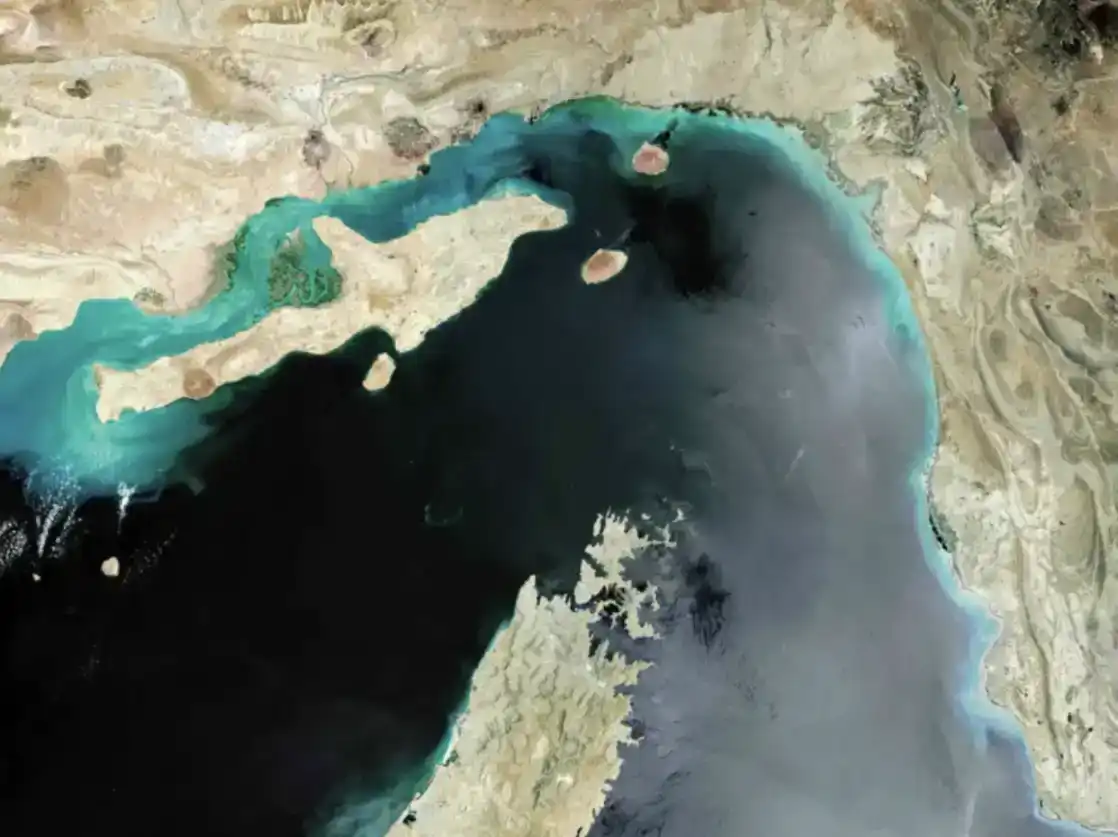
The deeper impact lies in the chain reaction for shipping insurance and trade finance. The International Group of P&I Clubs (IG) has issued an internal warning, noting that payments to the IRGC may trigger compliance risks under EU and UK sanctions, potentially voiding insurance policies. This forces shipowners into a brutal trade-off between shipping economics and legal risks: diverting via the Cape of Good Hope adds 15 days of voyage and tens of thousands in fuel costs, while paying the cryptocurrency toll risks account freezes. Some commodity traders have begun attempting to reroute through Pakistani intermediaries. Islamabad recently announced permission for 20 international tankers to fly the Pakistani flag, essentially providing an offshore outsourcing channel for Iran's system.

Iran is not the only country doing this. Russia previously announced a similar fee policy for the Northern Sea Route and has publicly considered accepting cryptocurrency settlements. This digital financial logic of turning geographical hubs into 'nodes' is reshaping the payment infrastructure of global energy trade.

When merchant ships complete USDT settlements via on-chain protocols in the anchorage of Qeshm Island, it is not merely the payment of a toll but a systematic dismantling of the remnants of the Bretton Woods system.

The fragility of this experiment is equally evident. Since USDT/USDC are essentially dollar-pegged and subject to OFAC tracking, how the shadow public entity established by the IRGC can 'decentralize' and convert large-scale funds into physical assets or fiat currency (rials) is a risk point. However, as long as Iran maintains its geographical monopoly over the Strait of Hormuz, this financial war mediated by cryptocurrency will continue to rewrite the rulebook of global trade.


Пов'язані питання

QWhat are the two payment methods Iran accepts for the Strait of Hormuz transit fee?

AIran accepts payment via RMB wire transfer or in USD stablecoins through a decentralized network.

QHow does Iran categorize countries for its tiered pricing system for the transit fee?

AIran uses a five-tier system: Tier 1 (allies like China and Russia), Tier 2 (friendly partners like India and Pakistan), Tier 3 (neutral countries), Tier 4 (high-risk countries with close US ties), and Tier 5 (US, Israel, and allies, which are banned).

QWhat is the estimated annual value of stablecoins that could flow through Iran's system if the mechanism continues?

AIt is estimated that over $20 billion worth of stablecoins could flow through Iran-controlled digital wallets annually.

QWhat major risk do shipowners face when paying the fee in cryptocurrency according to the International Group of P&I Clubs?

AThe International Group of P&I Clubs warned that paying the fee to the IRGC could trigger EU and UK sanctions compliance risks, potentially leading to the invalidation of their insurance policies.

QBesides Iran, which other country has announced a similar toll system for a strategic waterway and considered crypto payments?

ARussia has announced a similar toll system for the Northern Sea Route and has publicly considered accepting cryptocurrency payments.

Пов'язані матеріали

Gensyn AI: Don't Let AI Repeat the Mistakes of the Internet

In recent months, the rapid growth of the AI industry has attracted significant talent from the crypto sector. A persistent question among researchers intersecting both fields is whether blockchain can become a foundational part of AI infrastructure. While many previous AI and Crypto projects focused on application layers (like AI Agents, on-chain reasoning, data markets, and compute rentals), few achieved viable commercial models. Gensyn differentiates itself by targeting the most critical and expensive layer of AI: model training. Gensyn aims to organize globally distributed GPU resources into an open AI training network. Developers can submit training tasks, nodes provide computational power, and the network verifies results while distributing incentives. The core issue addressed is not decentralization for its own sake, but the increasing centralization of compute power among tech giants. In the era of large models, access to GPUs (like the H100) has become a decisive bottleneck, dictating the pace of AI development. Major AI companies are heavily dependent on large cloud providers for compute resources. Gensyn's approach is significant for several reasons: 1) It operates at the core infrastructure layer (model training), the most resource-intensive and technically demanding part of the AI value chain. 2) It proposes a more open, collaborative model for compute, potentially increasing resource utilization by dynamically pooling idle GPUs, similar to early cloud computing logic. 3) Its technical moat lies in solving complex challenges like verifying training results, ensuring node honesty, and maintaining reliability in a distributed environment—making it more of a deep-tech infrastructure company. 4) It targets a validated, high-growth market with genuine demand, rather than pursuing blockchain integration without purpose. Ultimately, the boundaries between Crypto and AI are blurring. AI requires global resource coordination, incentive mechanisms, and collaborative systems—areas where crypto-native solutions excel. Gensyn represents a step toward making advanced training capabilities more accessible and collaborative, moving beyond a niche controlled by a few giants. If successful, it could evolve into a fundamental piece of AI infrastructure, where the most enduring value in the AI era is often created.

marsbit14 год тому

Gensyn AI: Don't Let AI Repeat the Mistakes of the Internet

marsbit14 год тому

Why is China's AI Developing So Fast? The Answer Lies Inside the Labs

A US researcher's visit to China's top AI labs reveals distinct cultural and organizational factors driving China's rapid AI development. While talent, data, and compute are similar to the West, Chinese labs excel through a pragmatic, execution-focused culture: less emphasis on individual stardom and conceptual debate, and more on teamwork, engineering optimization, and mastering the full tech stack. A key advantage is the integration of young students and researchers who approach model-building with fresh perspectives and low ego, prioritizing collective progress over personal credit. This contrasts with the US culture of self-promotion and "star scientist" narratives. Chinese labs also exhibit a strong "build, don't buy" mentality, preferring to develop core capabilities—like data pipelines and environments—in-house rather than relying on external services. The ecosystem feels more collaborative than tribal, with mutual respect among labs. While government support exists, its scale is unclear, and technical decisions appear driven by labs, not state mandates. Chinese companies across sectors, from platforms to consumer tech, are building their own foundational models to control their tech destiny, reflecting a broader cultural drive for technological sovereignty. Demand for AI is emerging, with spending patterns potentially mirroring cloud infrastructure more than traditional SaaS. Despite challenges like a less mature data industry and GPU shortages, Chinese labs are propelled by vast talent, rapid iteration, and deep integration with the open-source community. The competition is evolving beyond a pure model race into a contest of organizational execution, developer ecosystems, and industrial pragmatism.

marsbit15 год тому

Why is China's AI Developing So Fast? The Answer Lies Inside the Labs

marsbit15 год тому

3 Years, 5 Times: The Rebirth of a Century-Old Glass Factory

Corning, a 175-year-old glass company, is experiencing a dramatic revival as a key player in AI infrastructure, driven by surging demand for high-performance optical fiber in data centers. AI data centers require vastly more fiber than traditional ones—5 to 10 times as much per rack—to handle high-speed data transmission between GPUs. This structural demand shift, coupled with supply constraints from the lengthy expansion cycle for fiber preforms, has created a significant supply-demand gap. Nvidia has invested in Corning, along with Lumentum and Coherent, in a $4.5 billion total commitment to secure the optical supply chain for AI. Corning's competitive edge lies in its expertise in producing ultra-low-loss, high-density, and bend-resistant specialty fiber, which is critical for 800G+ and future 1.6T data rates. Its deep involvement in co-packaged optics (CPO) with partners like Nvidia further solidifies its position. While not the largest fiber manufacturer globally, Corning's revenue from enterprise/data center clients now exceeds 40% of its optical communications sales, and it has secured multi-year supply agreements with major hyperscalers including Meta and Nvidia. Financially, Corning's optical communications revenue has surged, doubling from $1.3 billion in 2023 to over $3 billion in 2025. Its stock price has risen nearly 6-fold since late 2023. Key future catalysts include the rollout of Nvidia's CPO products and the scale of undisclosed customer agreements. However, risks include high current valuations and potential disruption from next-generation technologies like hollow-core fiber. The company's long-term bet on light over electricity, maintained even through the telecom bubble crash, is now being validated by the AI boom.

marsbit16 год тому

3 Years, 5 Times: The Rebirth of a Century-Old Glass Factory

marsbit16 год тому

Торгівля

Спот
Ф'ючерси

Популярні статті

Як купити WAR

Ласкаво просимо до HTX.com! Ми зробили покупку WAR (WAR) простою та зручною. Дотримуйтесь нашої покрокової інструкції, щоб розпочати свою криптовалютну подорож.Крок 1: Створіть обліковий запис на HTXВикористовуйте свою електронну пошту або номер телефону, щоб зареєструвати обліковий запис на HTX безплатно. Пройдіть безпроблемну реєстрацію й отримайте доступ до всіх функцій.ЗареєструватисьКрок 2: Перейдіть до розділу Купити крипту і виберіть спосіб оплатиКредитна/дебетова картка: використовуйте вашу картку Visa або Mastercard, щоб миттєво купити WAR (WAR).Баланс: використовуйте кошти з балансу вашого рахунку HTX для безперешкодної торгівлі.Треті особи: ми додали популярні способи оплати, такі як Google Pay та Apple Pay, щоб підвищити зручність.P2P: Торгуйте безпосередньо з іншими користувачами на HTX.Позабіржова торгівля (OTC): ми пропонуємо індивідуальні послуги та конкурентні обмінні курси для трейдерів.Крок 3: Зберігайте свої WAR (WAR)Після придбання WAR (WAR) збережіть його у своєму обліковому записі на HTX. Крім того, ви можете відправити його в інше місце за допомогою блокчейн-переказу або використовувати його для торгівлі іншими криптовалютами.Крок 4: Торгівля WAR (WAR)Легко торгуйте WAR (WAR) на спотовому ринку HTX. Просто увійдіть до свого облікового запису, виберіть торгову пару, укладайте угоди та спостерігайте за ними в режимі реального часу. Ми пропонуємо зручний досвід як для початківців, так і для досвідчених трейдерів.

185 переглядів усьогоОпубліковано 2024.12.11Оновлено 2026.04.28

Як купити WAR

Обговорення

Ласкаво просимо до спільноти HTX. Тут ви можете бути в курсі останніх подій розвитку платформи та отримати доступ до професійної ринкової інформації. Нижче представлені думки користувачів щодо ціни WAR (WAR).

活动图片












