A Decade's Bet on Cerebras: How the 'Wafer-Scale AI Chip' Reached NASDAQ

marsbitОпубліковано о 2026-05-15Востаннє оновлено о 2026-05-15

Анотація

"Cerebras, a pioneering AI chip company, successfully debuted on NASDAQ (CBRS) on May 14, 2026, with its stock price surging approximately 68% on the first day. This marks a significant milestone following a decade-long journey, as recounted by early investor Steve Vassallo. The story begins not in 2016, but with the deep, 19-year relationship between Vassallo and founder Andrew Feldman, which started with Feldman’s previous company, SeaMicro (acquired by AMD in 2012). In 2016, Feldman and a core team of chip and system experts sought to challenge the emerging consensus. At a time when AI’s practical utility was still debated and GPUs were becoming the default hardware, they envisioned a fundamentally new computer architecture purpose-built for AI workloads. They identified memory bandwidth, not raw compute power, as the critical bottleneck for neural networks. Defying industry inertia, Cerebras pursued a radical, wafer-scale chip design—58 times larger than the biggest existing chips. This meant confronting and solving a cascade of unprecedented engineering challenges: power delivery, thermal management, and maintaining electrical continuity across tens of thousands of connections. It required reinventing nearly every aspect of modern computing—semiconductors, systems, data structures, software, and algorithms. The path was fraught with setbacks, including a prototype that caught fire on its first power-up. Progress was marked by intense, iterative problem-solving, with t...

Editor's Note: On May 14th, Cerebras officially listed on the NASDAQ under the ticker symbol CBRS. Its closing price on the first day rose approximately 68% above the issue price, making it one of the most notable AI hardware IPOs since 2026.

This article is written by Steve Vassallo, an early investor in Cerebras, who recounts his nearly nineteen-year partnership with Andrew Feldman, spanning from SeaMicro to Cerebras. On the surface, the article tells the venture capital story from term sheet to IPO. In essence, it chronicles how a frontier hardware company bet on the fundamental reconstruction of AI computing architecture during a period when consensus was skeptical: From wafer-scale chips and memory bandwidth bottlenecks to a series of engineering challenges in power supply, heat dissipation, and electrical continuity, what Cerebras faced was not a single-point technological challenge, but the re-invention of an entire modern computing system.

The most noteworthy aspect is not that Cerebras ultimately created a wafer-scale chip 58 times larger than traditional chips, but that from the outset, this company chose a direction contrary to industry inertia: When GPUs became the default answer for AI training, it attempted to redefine "what a computer designed for AI truly is." Behind this lies not only technical judgment but also the patience of capital, and, crucially, the long-term, non-transactional trust relationship between investors and the founding team.

For today's AI hardware competition, the significance of Cerebras lies in reminding the market that the compute revolution isn't just about stacking more GPUs; it may also come from re-imagining the computing architecture itself.

The following is the original text:
Friday, April 1st, 2016. I sent Andrew Feldman an email, telling him I would climb over the fence in his backyard and hand-deliver our term sheet for investing in Cerebras to him.

It was April Fools' Day, but I wasn't joking.
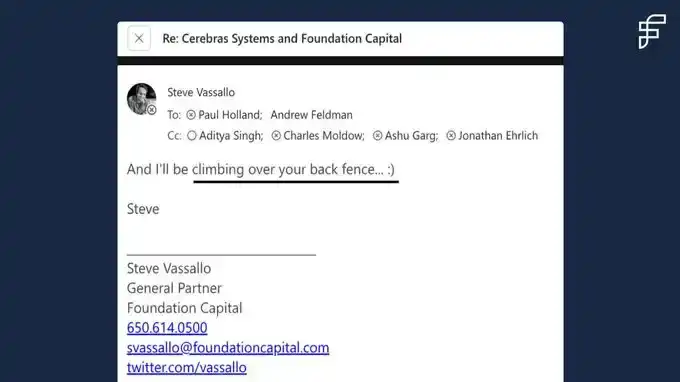
Strictly speaking, this wasn't standard operating procedure for a venture capital firm. But by then, I had known Andrew for nine years and had been discussing his next company with him for nearly two years. I couldn't afford to miss this deal over some sentence in the term sheet that was still being revised on a Saturday afternoon.

I first met Andrew in October 2007. At that time, he and Gary Lauterbach had just founded SeaMicro. I didn't invest in that round, but we really clicked, especially admiring their first-principles approach to problem-solving. I've been following them ever since.

Truly valuable relationships need time to mature. The same is true for truly valuable companies. Today, viewed from the outside, Cerebras is a ten-year-old company about to go public. But in my view, this is the culmination of a nineteen-year relationship, finally reaching the bell-ringing moment.
Deep Relationships, and Unreasonable Ambition

When AMD acquired SeaMicro in 2012, I had a hunch: Andrew wouldn't stay long in a big corporation. He possesses a strong unwillingness to lose and a rebellious heart. By early 2014, he was already looking for opportunities to leave, and we began meeting frequently to discuss what could be next.

At that time, two things were far from consensus: First, that AI would actually become useful; second, that GPUs were not the optimal computing architecture for AI.

Regarding the first question, many smart people I knew also disagreed. After AlexNet emerged in 2012, some corners of the research community had already begun achieving near-magical results with convolutional neural networks. But in the broader software industry, AI was still somewhere between a marketing buzzword and a research project.

The second question, the hardware question, had hardly been seriously raised. GPUs had become the default choice for neural network training, mainly because researchers accidentally discovered they were "less bad" compared to CPUs. Building a new computing system specifically for AI workloads meant challenging the mainstream architecture then being used by researchers worldwide.

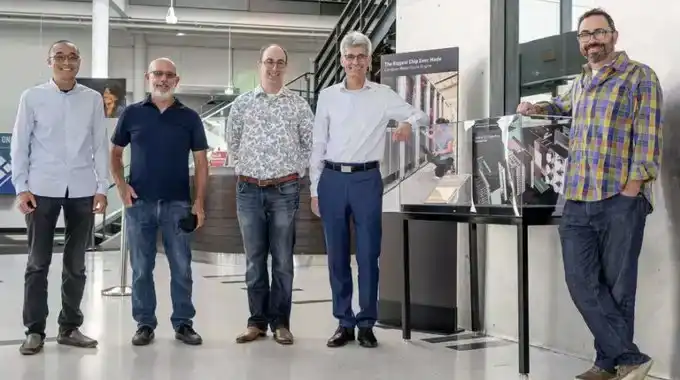
But Andrew, Gary, and their co-founders Sean, Michael, and JP saw a different path. They each brought decades of experience in chips and systems: Gary's background stemmed from pioneering work on dataflow and out-of-order execution in the 1980s; Sean focused on advanced server architecture; Michael handled software and compilers; JP was deeply versed in hardware engineering. They were an exceptionally rare group: individually outstanding; collectively, their capabilities multiplied. They could imagine an entirely new kind of computer.

They believed that if AI truly unlocked its potential, the resulting market size would far exceed the sum of all existing computing paradigms.

They also saw the essence of the GPU: It was originally a chip designed for graphics processing, just temporarily promoted as an AI training tool on a new battlefield. It was indeed better at parallel processing than CPUs, but if one designed from scratch for AI workloads, no one would create an architecture like the GPU. What truly limited neural network capabilities was not raw compute power, but memory bandwidth. This meant the chip they aimed to create would not primarily optimize matrix multiplication in isolated cores, but rather how data flows efficiently throughout the entire computational structure.

Internally, investing in Cerebras was far from a consensus decision. Several of my partners had seen the previous round of semiconductor investments resulting in mostly losses, and they were very candid about their concerns. But ultimately, we agreed as a team. That weekend in April 2016, we clearly told Andrew: We wanted to be the first to give him a term sheet.

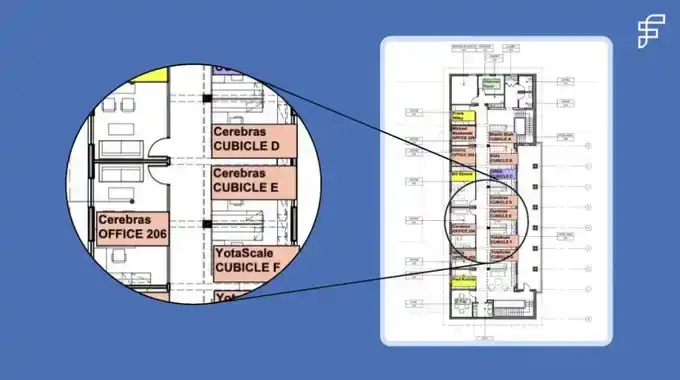
A few weeks later, Andrew, Gary, Sean, Michael, and JP moved into our EIR office space on the second floor at 250 Middlefield. I still have the floor plan the office manager drew back then. On that map, Cerebras sat next to a founder from Foundation, just a few doors away from Bhavin Shah, who later founded Moveworks. It was a good floor for startup growth.
Knowing Which Rules Can Be Bent, Which Must Be Broken

Before Cerebras, the largest chip in computing history was roughly 840 square millimeters, about the size of a postage stamp. The chip Cerebras created measures 46,000 square millimeters, 58 times larger than its predecessor.

Choosing a wafer-scale chip also meant choosing all the downstream design challenges that came with it. In the nearly 80-year history of computing, no one had truly accomplished this before. It also meant that no one had systematically solved these problems: How to power such a massive chip? How to cool it? How to maintain electrical continuity across tens of thousands of connection points?

To achieve wafer-scale computing, Cerebras essentially had to simultaneously reinvent nearly every facet of modern computing: semiconductors, systems, data structures, software, and algorithms. Each direction alone could be a startup. Andrew and his team chose to tackle the most difficult technical problems first. Through their intense, almost tireless efforts, these problems were tackled one by one.

Every six to eight weeks, we'd have a board meeting. They would walk us through what they had tried since the last meeting: a new variant of system design, a new power delivery scheme, or a thermal management adjustment. By repeatedly confronting systemic challenges head-on from every angle, they developed a hard-won clarity in articulation. They would explain where they thought things went wrong and what they planned to try next.

We would ask questions, then dive deep with the team, mobilizing the people, resources, and connections needed to help them find new approaches. Six to eight weeks later, when we met again, the story would repeat with another technical frontier: another boundary that needed exploring. Each solution would reveal the next problem that had to be solved.

Their first prototype wafer literally smoked the first time they powered it on. The team called it a "thermal event"—what you call a fire when you don't want to scare the board or the landlord.

I had been calculating power consumption per square millimeter, partly out of curiosity, partly because the numbers seemed too high to be true. So, we brought in engineers from Exponent, a failure analysis firm whose former company name was, aptly, Failure Analysis. They confirmed that the power numbers were indeed as audacious as they appeared and helped us think through options that didn't challenge the second law of thermodynamics. After all, that was one law Andrew was smart enough not to argue with.

The discipline of an engineer lies in knowing which rules can be broken, which can be bent, and which must be respected. Andrew and his team had a practiced intuition for that distinction. They knew when they were challenging convention—which they intended to do—and when they were challenging physics—which they did not.

When you're building frontier technology, failure is inevitable. The only way through it is discipline, persistence, and most importantly, trust: trust in the mission, trust in each other, and trust in the idea that when the first prototype self-destructs, you'll all be back in the lab the next morning for the next iteration.

There's no transactional version of this work. There's only the long-term version: staying in the room, through the incomplete solutions and patient explanations, so that when it finally works, you are there to see it.

That moment arrived in August 2019. Andrew, Sean, and their team stood in the lab, watching a new computer they had designed from scratch run for the first time. To an outsider, it superficially didn't seem to be doing anything interesting. According to Andrew, it was probably about as exciting as watching paint dry. The difference this time was: no bucket of "paint" like this had ever dried before. They stood there together for 30 minutes, then went back to work.

Who You Build With, Matters

Some people choose problems based on what they know they can solve. Andrew's criteria for choosing problems is what he believes is worth solving. Incremental iteration doesn't excite him; he wants 1000x leaps. From day one, he wanted to build Cerebras into a generational, one-of-a-kind company.

Part of that drive comes from his personality. Andrew describes it as a computer architect's "disease"—being haunted by an idea for decades. But to me, it's more broadly a founder's "disease." He looks at a problem and first asks himself: Can I make something that causes a step-function improvement? Then he asks: If I succeed, will anyone care? If the answer to both is yes, he will commit the next decade of his life to it.

Another part of that drive comes from his upbringing. Andrew grew up surrounded by geniuses as naturally as most kids grow up watching TV. His father was a pioneering evolutionary biology professor who played rotating doubles tennis every Sunday with six other people. Three of those six later won Nobel Prizes, and one won a Fields Medal.

According to Andrew, these giants would patiently explain their work in physics, mathematics, and molecular biology to him in language a child could understand. He formed a deep impression of what true intelligence looks like and also understood, as his mother said, that being smart doesn't mean you have to be a jerk.

I've come to realize this is one of Andrew's core traits, as important as his rebellious ambition and his almost phototropic instinct for truly worthy problems. He deeply believes that the most exceptional people he's encountered are also often extraordinarily kind.

This belief shaped how his team came together to accomplish incredibly hard things. The first 30 people Cerebras hired had all worked with him before; some had been with him since 1996. Today, Cerebras has about 700 employees, and roughly 100 of them have followed him across multiple companies.
The important thing is, kindness and competitiveness are not mutually exclusive. Andrew has an intense desire to win. He likes to say he's a professional version of David, fighting Goliath. Goliath is slow-moving and always guarding against frontal attacks, which leaves room for every other move. David's advantage lies in showing up in ways and places Goliath cannot.

At SeaMicro, Andrew's largest channel partner in Japan was NetOne. NetOne's primary supplier was Cisco, which would entertain partners with private jets and yachts worth more than most houses in Palo Alto. Andrew's budget was far more modest, so he invited NetOne's CEO to his backyard for a barbecue. Later, the CEO told him he had done business with Cisco for decades but had never been invited to anyone's home. That seemingly small, very human gesture—something a Goliath would never think to do—cemented their relationship.

From the First Term Sheet to IPO
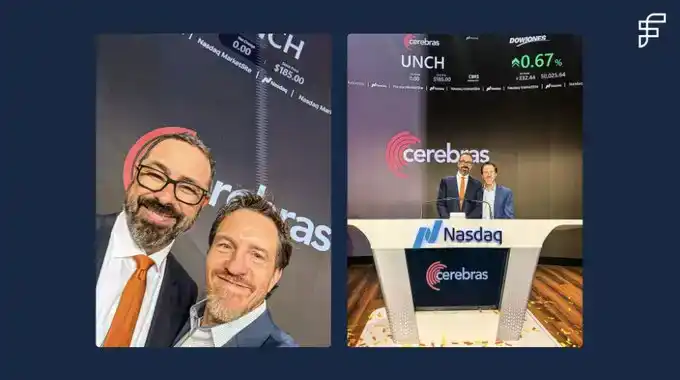
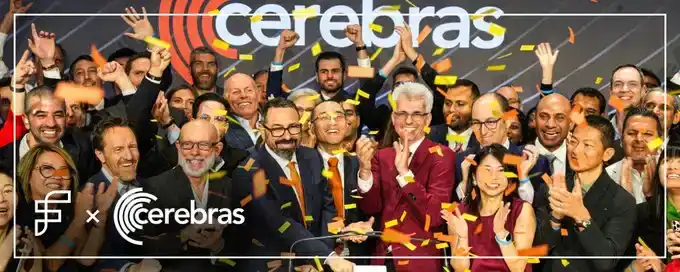
This morning, Andrew rang the opening bell at NASDAQ. I stood next to him. It's been ten years and 2600 miles since it all began in our 250 Middlefield office.

Today, there are still rare founders doing what Andrew did: sketching on whiteboards at 3 a.m., wrestling with technical problems not yet solved. They also harbor a strong unwillingness to lose and a rebellious heart. They are trying to find a partner who is truly willing to work side-by-side: willing to dive in and help solve the problem when the first prototype won't power on; and who will stay until it finally runs.

These are precisely the founders I want to back: those who choose problems worth solving, imagine a solution 1000x better than the status quo, and persistently hone and persevere through the inevitable challenges along the way.

For founders like Andrew, Gary, Sean, Michael, and JP, I'm willing to climb over a backyard fence on a Saturday afternoon to hand-deliver a term sheet.


Пов'язані питання

QWhat was the core technical challenge and architectural vision that Cerebras pursued, as opposed to the industry consensus?

ACerebras challenged the industry consensus that GPUs were the optimal architecture for AI training. While GPUs became the default due to their superior parallel processing compared to CPUs, the Cerebras team believed they were not designed for AI from first principles. Their core architectural vision was to design a computer specifically for AI workloads by fundamentally addressing the memory bandwidth bottleneck, not just raw compute power. This led them to invent the wafer-scale chip, a system 58 times larger than the largest previous chips, which required re-inventing nearly every aspect of modern computing—semiconductors, power delivery, cooling, and software—to enable efficient data flow across the entire compute structure.

QHow does the article characterize the relationship between the investor (Steve Vassallo) and the founder (Andrew Feldman), and why was it crucial for Cerebras's journey?

AThe article characterizes the relationship as a deep, long-term, non-transactional partnership built on trust over nearly two decades. This relationship was crucial because building Cerebras involved tackling a series of unprecedented engineering failures (like the first prototype catching fire) and systemic challenges over many years. The investor's patience, willingness to engage deeply with technical setbacks during bi-monthly board meetings, and commitment to providing resources and relationships allowed the founder and team to persist through iterative failures without pressure for short-term results. This trust-based support system was essential for navigating the 'inevitable' failures of frontier technology development.

QAccording to the article, what are the key personality traits and background influences that shaped Andrew Feldman as a founder?

AAndrew Feldman is described as having a strong不服输 (refusal to accept defeat) and a rebellious heart. He is driven by a desire for 1000x leaps rather than incremental improvements and is drawn to solving problems he believes are truly worth solving. Key traits include: a 'founder's disease' of being obsessed with a transformative idea; a competitive spirit, seeing himself as a 'professional David' against Goliaths; and a core belief that the most brilliant people are also kind, a value instilled by his mother. His background growing up surrounded by intellectual giants (including future Nobel laureates) who were patient and kind gave him a model of excellence coupled with decency, which influenced how he built and led his teams with loyalty and humanity.

QWhat does the Cerebras story suggest about the nature of innovation in AI hardware beyond simply using more GPUs?

AThe Cerebras story suggests that true innovation in AI hardware requires a fundamental re-imagination of computing architecture itself, not just scaling existing solutions like GPUs. It demonstrates that a compute revolution can come from addressing foundational bottlenecks like memory bandwidth and designing a system from the ground up for a specific workload (AI), rather than adapting a tool designed for another purpose (graphics). This path involves tackling a holistic set of interdependent engineering challenges—power, cooling, electrical continuity, software—that constitute 're-inventing the modern computing system.' It underscores that such innovation demands long-term capital patience, technical judgment, and a willingness to pursue a direction contrary to industry inertia.

QWhat symbolic and practical significance did the act of delivering the term sheet over a backyard fence hold, as described in the article?

AThe act of delivering the term sheet by climbing over Andrew Feldman's backyard fence on a Saturday held both symbolic and practical significance. Symbolically, it represented the investor's exceptional commitment, personal dedication, and willingness to go beyond standard venture capital protocols for a founder and a vision he deeply believed in. Practically, it underscored the urgency and importance of securing the deal—the investor did not want to miss the opportunity due to last-minute term sheet edits. This gesture foreshadowed the long-term, hands-on, and trust-based partnership that would be essential for navigating Cerebras's decade-long journey of overcoming seemingly impossible technical hurdles.

Пов'язані матеріали

Breaking: OpenAI Undergoes Major Reorganization, President Brockman Assumes Command

OpenAI has announced a major internal reorganization just months before its anticipated IPO. The company is merging its three flagship product lines—ChatGPT, Codex, and the API platform—into a single, unified product organization. The most significant leadership change involves co-founder and President Greg Brockman moving from a background technical role to take full, permanent control over all product strategy. This follows the indefinite medical leave of AGI Deployment CEO Fidji Simo. Additionally, ChatGPT's longtime lead, Nick Turley, has been reassigned to enterprise products, with former Instagram executive Ashley Alexander taking over consumer offerings. The consolidation, internally framed as a strategic move towards an "Agentic Future," aims to break down internal silos and create a cohesive "Super App." This planned desktop application would integrate ChatGPT's conversational abilities, Codex's coding power, and a rumored internal web browser named "Atlas" to autonomously perform complex user tasks. The reorganization occurs amid significant internal and external pressures. OpenAI has recently seen a wave of high-profile departures, including Sora co-lead Bill Peebles and other senior technical leaders, leading to concerns about a thinning executive bench. Externally, rival Anthropic recently secured funding at a staggering $900 billion valuation, surpassing OpenAI's own. Google's upcoming I/O developer conference also poses a competitive threat. Analysts suggest the dramatic restructure is a pre-IPO move to present a clearer, more focused narrative to Wall Street—streamlining operations and demonstrating decisive leadership under Brockman to counter internal turbulence and intense market competition.

marsbit6 хв тому

Breaking: OpenAI Undergoes Major Reorganization, President Brockman Assumes Command

marsbit6 хв тому

Two Survival Structures of Market Makers and Arbitrageurs

Market makers and arbitrageurs represent two distinct survival structures in high-frequency trading. Market makers primarily use limit orders (makers) to profit from the bid-ask spread, enjoying high capital efficiency (nominally 100%) but bearing inventory risk. This "inventory risk" arises from passive, fragmented, and discontinuous order fills in the limit order book (LOB). This risk, while a potential cost, can also contribute to excess profit if managed within control boundaries, allowing for mean reversion. Market makers essentially sell "time" (uncertainty over execution timing) to the market for price control and low fees. In contrast, cross-exchange arbitrageurs typically use market orders (takers) to exploit price differences or funding rates, resulting in lower nominal capital efficiency (requiring capital on both exchanges) and higher transaction costs. Their risk exposure stems from asymmetries in exchange rules (e.g., minimum order sizes), execution latency, and infrastructure risks (e.g., ADL, oracle drift). These exposures are active, exogenous gaps that primarily erode profits rather than contribute to them. Arbitrageurs essentially sell "space" (capital sunk across venues) for localized, immediate certainty. Both strategies engage in a trade-off between execution friction and residual risk. Optimal systems allow for temporary, controlled risk exposure rather than enforcing zero exposure at all costs. Their evolution converges towards hybrid models: arbitrageurs may use maker orders to reduce costs, while market makers may use taker orders or hedges for risk management. Ultimately, both use different forms of risk exposure—market makers exposing inventory, arbitrageurs immobilizing capital—to extract marginal, hard-won certainty from the market.

链捕手6 хв тому

Two Survival Structures of Market Makers and Arbitrageurs

链捕手6 хв тому

Who Will Define the Rules of the AI Era? Anthropic Discusses the 2028 US-China AI Landscape

This article, based on Anthropic's analysis, outlines the intensifying systemic competition between the U.S./allies and China for AI leadership by 2028. It argues that access to advanced computing power ("compute") is the critical bottleneck, where the U.S. currently holds a significant advantage through chip export controls and allied innovation. However, China's AI labs remain competitive by exploiting policy loopholes—via chip smuggling, overseas data center access, and "model distillation" attacks to copy U.S. model capabilities—keeping them close to the frontier. The piece presents two contrasting scenarios for 2028. In the first, decisive U.S. action to tighten compute controls and curb distillation locks in a 12-24 month AI capability lead, cementing democratic influence over global AI norms, security, and economic infrastructure. In the second, policy inaction allows China to achieve near-parity through continued access to U.S. technology, enabling Beijing to promote its AI stack globally and integrate advanced AI into its military and governance systems, altering the strategic balance. Anthropic contends that maintaining a decisive U.S. lead is essential for shaping safe AI development and governance. The core recommendation is for U.S. policymakers to urgently close compute and model access loopholes while promoting global adoption of the U.S. AI technology stack to secure a lasting strategic advantage.

marsbit2 год тому

Who Will Define the Rules of the AI Era? Anthropic Discusses the 2028 US-China AI Landscape

marsbit2 год тому

“Why Didn’t You Buy 2x Long SK Hynix?”

The article discusses the immense popularity of the "2x Long SK Hynix ETF" (07709.HK) in Hong Kong, which became the world's largest single-stock leveraged ETF by May 2026. Launched in October 2025, the ETF's net value soared over 1000% in seven months, significantly outperforming the 324% gain of SK Hynix's underlying stock, driven by the AI boom and a critical shift in industry demand from computing power to memory. It highlights the mechanics and risks of daily-rebalanced leveraged ETFs. In a smooth bullish market, they generate amplified returns, but during volatile periods—exemplified by market swings during geopolitical tensions in the Strait of Hormuz in March-April 2026—they suffer severe "volatility decay," where choppy price action can cause losses far exceeding twice the drop of the underlying asset. The piece frames SK Hynix, as NVIDIA's primary HBM supplier, within the classic cycle of the memory chip industry—a commoditized sector prone to boom-and-bust cycles of shortage, price hikes, overcapacity, and crashes. While current AI-driven demand and high margins (Q1 2026毛利率~79%) create a "super cycle," the article questions its sustainability. It warns that extreme profits will inevitably tempt competitors like Samsung and Micron to ramp up HBM production, potentially eroding scarcity. Furthermore, the entire narrative remains tethered to the massive AI capital expenditure of tech giants. In conclusion, the ETF's trajectory symbolizes the accelerated, all-in nature of the current AI revolution, where timeframes are compressed and market moves are extreme. However, it also underscores that while industry trends define ultimate returns, macro-geopolitical risks dictate the volatile and uncertain path to get there.

marsbit2 год тому

“Why Didn’t You Buy 2x Long SK Hynix?”

marsbit2 год тому

Торгівля

Спот
Ф'ючерси

Популярні статті

Що таке $S$

Розуміння SPERO: Комплексний огляд Вступ до SPERO Оскільки ландшафт інновацій продовжує еволюціонувати, виникнення технологій web3 та криптовалютних проектів відіграє ключову роль у формуванні цифрового майбутнього. Один з проектів, який привернув увагу в цій динамічній сфері, — це SPERO, позначений як SPERO,$$s$. Ця стаття має на меті зібрати та представити детальну інформацію про SPERO, щоб допомогти ентузіастам та інвесторам зрозуміти його основи, цілі та інновації в рамках web3 та крипто-сектору. Що таке SPERO,$$s$? SPERO,$$s$ — це унікальний проект у криптопросторі, який прагне використати принципи децентралізації та технології блокчейн для створення екосистеми, що сприяє залученню, корисності та фінансовій інклюзії. Проект розроблений для полегшення взаємодії між користувачами новими способами, надаючи їм інноваційні фінансові рішення та послуги. У своїй основі SPERO,$$s$ прагне надати можливості індивідам, забезпечуючи інструменти та платформи, які покращують користувацький досвід у криптовалютному просторі. Це включає в себе можливість більш гнучких методів транзакцій, сприяння ініціативам, що підтримуються спільнотою, та створення шляхів для фінансових можливостей через децентралізовані додатки (dApps). Основна концепція SPERO,$$s$ обертається навколо інклюзивності, прагнучи зменшити розриви в традиційній фінансовій системі, використовуючи переваги технології блокчейн. Хто є творцем SPERO,$$s$? Особистість творця SPERO,$$s$ залишається дещо невідомою, оскільки є обмежені публічно доступні ресурси, що надають детальну інформацію про його засновників. Ця відсутність прозорості може бути наслідком зобов'язання проекту до децентралізації — етики, яку багато проектів web3 поділяють, ставлячи колективні внески вище за індивідуальне визнання. Зосереджуючи обговорення навколо спільноти та її колективних цілей, SPERO,$$s$ втілює суть наділення без виділення конкретних осіб. Таким чином, розуміння етики та місії SPERO є більш важливим, ніж ідентифікація єдиного творця. Хто є інвесторами SPERO,$$s$? SPERO,$$s$ підтримується різноманітними інвесторами, починаючи від венчурних капіталістів до ангельських інвесторів, які прагнуть сприяти інноваціям у крипто-секторі. Зосередження цих інвесторів зазвичай узгоджується з місією SPERO — пріоритет надається проектам, які обіцяють технологічний прогрес у суспільстві, фінансову інклюзію та децентралізоване управління. Ці інвесторські фонди зазвичай зацікавлені в проектах, які не лише пропонують інноваційні продукти, але й позитивно впливають на спільноту блокчейн та її екосистеми. Підтримка з боку цих інвесторів підкріплює SPERO,$$s$ як значного конкурента в швидко змінюваній сфері крипто-проектів. Як працює SPERO,$$s$? SPERO,$$s$ використовує багатогранну структуру, яка відрізняє його від традиційних криптовалютних проектів. Ось деякі ключові особливості, які підкреслюють його унікальність та інноваційність: Децентралізоване управління: SPERO,$$s$ інтегрує моделі децентралізованого управління, надаючи користувачам можливість активно брати участь у процесах прийняття рішень щодо майбутнього проекту. Цей підхід сприяє відчуттю власності та відповідальності серед членів спільноти. Корисність токена: SPERO,$$s$ використовує свій власний криптовалютний токен, розроблений для виконання різних функцій в екосистемі. Ці токени дозволяють здійснювати транзакції, отримувати винагороди та полегшувати послуги, що пропонуються на платформі, підвищуючи загальну залученість та корисність. Шарова архітектура: Технічна архітектура SPERO,$$s$ підтримує модульність та масштабованість, що дозволяє безперешкодно інтегрувати додаткові функції та додатки в міру розвитку проекту. Ця адаптивність є надзвичайно важливою для збереження актуальності в постійно змінюваному крипто-ландшафті. Залучення спільноти: Проект підкреслює ініціативи, що підтримуються спільнотою, використовуючи механізми, які стимулюють співпрацю та зворотний зв'язок. Підтримуючи сильну спільноту, SPERO,$$s$ може краще задовольняти потреби користувачів та адаптуватися до ринкових тенденцій. Фокус на інклюзію: Пропонуючи низькі комісії за транзакції та зручні інтерфейси, SPERO,$$s$ прагне залучити різноманітну базу користувачів, включаючи осіб, які раніше не брали участі в крипто-просторі. Це зобов'язання до інклюзії узгоджується з його загальною місією наділення через доступність. Хронологія SPERO,$$s$ Розуміння історії проекту надає важливі уявлення про його розвиток та етапи. Нижче наведено пропоновану хронологію, що відображає значні події в еволюції SPERO,$$s$: Етап концептуалізації та ідеації: Початкові ідеї, що стали основою SPERO,$$s$, були сформовані, тісно пов'язані з принципами децентралізації та фокусом на спільноті в індустрії блокчейн. Запуск білого паперу проекту: Після концептуального етапу був випущений комплексний білий папір, що детально описує бачення, цілі та технологічну інфраструктуру SPERO,$$s$, щоб залучити інтерес та зворотний зв'язок від спільноти. Створення спільноти та ранні залучення: Активні зусилля були спрямовані на створення спільноти ранніх прихильників та потенційних інвесторів, що полегшило обговорення цілей проекту та отримання підтримки. Подія генерації токенів: SPERO,$$s$ провів подію генерації токенів (TGE) для розподілу своїх рідних токенів серед ранніх прихильників та встановлення початкової ліквідності в екосистемі. Запуск початкового dApp: Перший децентралізований додаток (dApp), пов'язаний з SPERO,$$s$, став доступним, дозволяючи користувачам взаємодіяти з основними функціями платформи. Постійний розвиток та партнерства: Безперервні оновлення та вдосконалення пропозицій проекту, включаючи стратегічні партнерства з іншими учасниками блокчейн-простору, сформували SPERO,$$s$ у конкурентоспроможного та еволюціонуючого гравця на крипто-ринку. Висновок SPERO,$$s$ є свідченням потенціалу web3 та криптовалют для революціонізації фінансових систем та наділення індивідів. Завдяки зобов'язанню до децентралізованого управління, залучення спільноти та інноваційно спроектованих функцій, він прокладає шлях до більш інклюзивного фінансового ландшафту. Як і з будь-якими інвестиціями в швидко змінюваному крипто-просторі, потенційним інвесторам та користувачам рекомендується ретельно досліджувати та обдумано взаємодіяти з поточними подіями в SPERO,$$s$. Проект демонструє інноваційний дух крипто-індустрії, запрошуючи до подальшого дослідження його численних можливостей. Хоча подорож SPERO,$$s$ ще триває, його основні принципи можуть справді вплинути на майбутнє того, як ми взаємодіємо з технологією, фінансами та один з одним у взаємопов'язаних цифрових екосистемах.

73 переглядів усьогоОпубліковано 2024.12.17Оновлено 2024.12.17

Що таке $S$

Що таке AGENT S

Агент S: Майбутнє автономної взаємодії в Web3 Вступ У постійно змінюваному ландшафті Web3 та криптовалюти інновації постійно переосмислюють, як люди взаємодіють з цифровими платформами. Один з таких новаторських проектів, Агент S, обіцяє революціонізувати взаємодію людини з комп'ютером через свою відкриту агентну структуру. Прокладаючи шлях для автономних взаємодій, Агент S прагне спростити складні завдання, пропонуючи трансформаційні застосування в штучному інтелекті (ШІ). Це детальне дослідження заглиблюється в складності проекту, його унікальні особливості та наслідки для сфери криптовалюти. Що таке Агент S? Агент S є революційною відкритою агентною структурою, спеціально розробленою для вирішення трьох основних викликів в автоматизації комп'ютерних завдань: Набуття специфічних знань у галузі: Структура інтелектуально навчається з різних зовнішніх джерел знань та внутрішнього досвіду. Цей подвійний підхід дозволяє їй створити багатий репозиторій специфічних знань у галузі, покращуючи її продуктивність у виконанні завдань. Планування на довгих горизонтах завдань: Агент S використовує планування з підкріпленням досвіду, стратегічний підхід, який полегшує ефективний розподіл та виконання складних завдань. Ця функція значно підвищує її здатність ефективно та результативно управляти кількома підзавданнями. Обробка динамічних, неоднорідних інтерфейсів: Проект представляє Інтерфейс Агент-Комп'ютер (ACI), інноваційне рішення, яке покращує взаємодію між агентами та користувачами. Використовуючи багатомодальні великі мовні моделі (MLLMs), Агент S може безперешкодно орієнтуватися та маніпулювати різноманітними графічними інтерфейсами користувача. Завдяки цим новаторським функціям Агент S надає надійну структуру, яка вирішує складнощі, пов'язані з автоматизацією людської взаємодії з машинами, прокладаючи шлях для численних застосувань у ШІ та за його межами. Хто є творцем Агент S? Хоча концепція Агент S є фундаментально новаторською, конкретна інформація про його творця залишається невідомою. Творець наразі невідомий, що підкреслює або початкову стадію проекту, або стратегічний вибір зберегти засновників у таємниці. Незважаючи на анонімність, акцент залишається на можливостях та потенціалі структури. Хто є інвесторами Агент S? Оскільки Агент S є відносно новим у криптографічній екосистемі, детальна інформація про його інвесторів та фінансових спонсорів не задокументована. Відсутність публічно доступних відомостей про інвестиційні фонди або організації, що підтримують проект, викликає питання щодо його фінансової структури та дорожньої карти розвитку. Розуміння підтримки є критично важливим для оцінки стійкості проекту та потенційного впливу на ринок. Як працює Агент S? В основі Агент S лежить передова технологія, яка дозволяє йому ефективно функціонувати в різних умовах. Його операційна модель побудована навколо кількох ключових функцій: Взаємодія з комп'ютером, подібна до людської: Структура пропонує розширене планування ШІ, прагнучи зробити взаємодії з комп'ютерами більш інтуїтивними. Імітуючи людську поведінку при виконанні завдань, вона обіцяє підвищити досвід користувачів. Наративна пам'ять: Використовується для використання високорівневого досвіду, Агент S використовує наративну пам'ять для відстеження історій завдань, тим самим покращуючи свої процеси прийняття рішень. Епізодична пам'ять: Ця функція надає користувачам покрокові інструкції, дозволяючи структурі пропонувати контекстуальну підтримку в міру виконання завдань. Підтримка OpenACI: Завдяки можливості працювати локально, Агент S дозволяє користувачам зберігати контроль над своїми взаємодіями та робочими процесами, узгоджуючи з децентралізованою етикою Web3. Легка інтеграція з зовнішніми API: Його універсальність і сумісність з різними платформами ШІ забезпечують те, що Агент S може безперешкодно вписатися в існуючі технологічні екосистеми, роблячи його привабливим вибором для розробників та організацій. Ці функціональні можливості колективно сприяють унікальному положенню Агент S у крипто-просторі, оскільки він автоматизує складні, багатоступеневі завдання з мінімальним втручанням людини. У міру розвитку проекту його потенційні застосування в Web3 можуть переосмислити, як відбуваються цифрові взаємодії. Хронологія Агент S Розробка та етапи Агент S можуть бути узагальнені в хронології, яка підкреслює його значні події: 27 вересня 2024 року: Концепція Агент S була представлена в комплексній науковій статті під назвою “Відкрита агентна структура, яка використовує комп'ютери як людина”, що демонструє основи проекту. 10 жовтня 2024 року: Наукова стаття була опублікована на arXiv, пропонуючи детальне дослідження структури та її оцінки продуктивності на основі бенчмарку OSWorld. 12 жовтня 2024 року: Було випущено відеопрезентацію, що надає візуальне уявлення про можливості та особливості Агент S, ще більше залучаючи потенційних користувачів та інвесторів. Ці маркери в хронології не лише ілюструють прогрес Агент S, але й вказують на його прихильність до прозорості та залучення громади. Ключові моменти про Агент S У міру розвитку структури Агент S кілька ключових характеристик виділяються, підкреслюючи її новаторський характер та потенціал: Інноваційна структура: Розроблена для забезпечення інтуїтивного використання комп'ютерів, подібного до людської взаємодії, Агент S пропонує новий підхід до автоматизації завдань. Автономна взаємодія: Здатність автономно взаємодіяти з комп'ютерами через GUI означає стрибок до більш інтелектуальних та ефективних обчислювальних рішень. Автоматизація складних завдань: Завдяки своїй надійній методології він може автоматизувати складні, багатоступеневі завдання, роблячи процеси швидшими та менш схильними до помилок. Безперервне вдосконалення: Механізми навчання дозволяють Агенту S покращуватися на основі минулого досвіду, постійно підвищуючи свою продуктивність та ефективність. Універсальність: Його адаптивність до різних операційних середовищ, таких як OSWorld та WindowsAgentArena, забезпечує його здатність служити широкому спектру застосувань. Оскільки Агент S займає своє місце в ландшафті Web3 та криптовалюти, його потенціал покращити можливості взаємодії та автоматизувати процеси означає значний прогрес у технологіях ШІ. Завдяки своїй інноваційній структурі Агент S є прикладом майбутнього цифрових взаємодій, обіцяючи більш безперешкодний та ефективний досвід для користувачів у різних галузях. Висновок Агент S представляє собою сміливий крок вперед у поєднанні ШІ та Web3, з можливістю переосмислити, як ми взаємодіємо з технологією. Хоча проект все ще на ранніх стадіях, можливості для його застосування є величезними та переконливими. Завдяки своїй комплексній структурі, що вирішує критичні виклики, Агент S прагне вивести автономні взаємодії на передній план цифрового досвіду. У міру того, як ми заглиблюємося в сфери криптовалюти та децентралізації, проекти, подібні до Агент S, безсумнівно, відіграватимуть ключову роль у формуванні майбутнього технологій та співпраці людини з комп'ютером.

626 переглядів усьогоОпубліковано 2025.01.14Оновлено 2025.01.14

Що таке AGENT S

Як купити S

Ласкаво просимо до HTX.com! Ми зробили покупку Sonic (S) простою та зручною. Дотримуйтесь нашої покрокової інструкції, щоб розпочати свою криптовалютну подорож.Крок 1: Створіть обліковий запис на HTXВикористовуйте свою електронну пошту або номер телефону, щоб зареєструвати обліковий запис на HTX безплатно. Пройдіть безпроблемну реєстрацію й отримайте доступ до всіх функцій.ЗареєструватисьКрок 2: Перейдіть до розділу Купити крипту і виберіть спосіб оплатиКредитна/дебетова картка: використовуйте вашу картку Visa або Mastercard, щоб миттєво купити Sonic (S).Баланс: використовуйте кошти з балансу вашого рахунку HTX для безперешкодної торгівлі.Треті особи: ми додали популярні способи оплати, такі як Google Pay та Apple Pay, щоб підвищити зручність.P2P: Торгуйте безпосередньо з іншими користувачами на HTX.Позабіржова торгівля (OTC): ми пропонуємо індивідуальні послуги та конкурентні обмінні курси для трейдерів.Крок 3: Зберігайте свої Sonic (S)Після придбання Sonic (S) збережіть його у своєму обліковому записі на HTX. Крім того, ви можете відправити його в інше місце за допомогою блокчейн-переказу або використовувати його для торгівлі іншими криптовалютами.Крок 4: Торгівля Sonic (S)Легко торгуйте Sonic (S) на спотовому ринку HTX. Просто увійдіть до свого облікового запису, виберіть торгову пару, укладайте угоди та спостерігайте за ними в режимі реального часу. Ми пропонуємо зручний досвід як для початківців, так і для досвідчених трейдерів.

1.4k переглядів усьогоОпубліковано 2025.01.15Оновлено 2025.03.21

Як купити S

Обговорення

Ласкаво просимо до спільноти HTX. Тут ви можете бути в курсі останніх подій розвитку платформи та отримати доступ до професійної ринкової інформації. Нижче представлені думки користувачів щодо ціни S (S).

活动图片