A Clod of Chinese Soil Chokes Two Japanese Giants

marsbitОпубліковано о 2026-06-16Востаннє оновлено о 2026-06-16

Анотація

"Chinese Soil Chokes Japanese Giants" The production of a key electronic specialty gas, tungsten hexafluoride (WF6), vital for manufacturing AI chips, was halted by two leading Japanese producers—Kanto Denka and Central Glass. Their shutdown was not due to a technological failure but a sudden, critical shortage of a raw material they had long taken for granted: ultra-high-purity (6N-grade) tungsten powder, which is almost entirely sourced from China. Following a quiet Chinese export announcement in January 2026, tungsten powder shipments to Japan dropped to zero for months. Despite frantic efforts, Japanese companies found no viable alternative; imported powder was three times more expensive and lacked the required purity. Their existing stockpiles were exhausted by mid-2026. WF6 is essential for depositing tungsten into the microscopic contact holes of High Bandwidth Memory (HBM) chips, which are crucial for advanced processors like those from Nvidia. While Japanese firms had mastered producing ultra-pure WF6 gas, their entire supply chain relied on China's 6N tungsten powder—a dependency now revealed as a fatal vulnerability. China's dominance in this "soil" results from decades of painstaking R&D by companies like Xiamen Tungsten and China Tungsten & Hightech. They overcame immense technical hurdles, such as separating chemically similar molybdenum from tungsten, to achieve mass production of the world's purest tungsten powder. With their primary suppliers gone, Kanto...

Two Japanese companies made a specialty electronic gas a world leader, with even TSMC and Samsung having to heed them.

Then overnight, they announced a permanent production halt. It wasn't a technology failure; it was a raw material cutoff. And that material, they had been buying entirely from China.

Cut Off

On January 6, 2026, the Ministry of Commerce issued Announcement No. 1 of the year. There was no press conference, no explanatory article, just quietly posted on the official website.

The Japanese didn't notice, Kanto Denka Kogyo didn't notice, Central Glass didn't notice.

They still had inventory. High-purity tungsten powder was piled in warehouses, enough for several months. The procurement department placed orders as usual, emails went out, ton-level shipments arrived—cheap, stable.

No one saw this as a risk.

February, customs data came out: Exports of tungsten carbide powder and tungsten powder to Japan—zero.

March, zero. April, still zero.

According to Kyodo News citing General Administration of Customs data, China's tungsten powder exports to Japan remained at zero for three consecutive months from February to April 2026.

Kanto Denka's inventory fell below the red line. Central Glass scrambled to find alternative suppliers. Mitsubishi Materials poured 10 billion yen into boosting tungsten scrap recycling.

Buying from other countries, the price was 3 times higher. As for purity, it fell far short of the 6N grade.

The two Japanese firms together accounted for nearly one-fourth of the global high-end tungsten hexafluoride production capacity. Kanto Denka Kogyo's president, Junichi Hasegawa, and Central Glass's president, Kazuhiko Maeda, now faced a brutal reality:

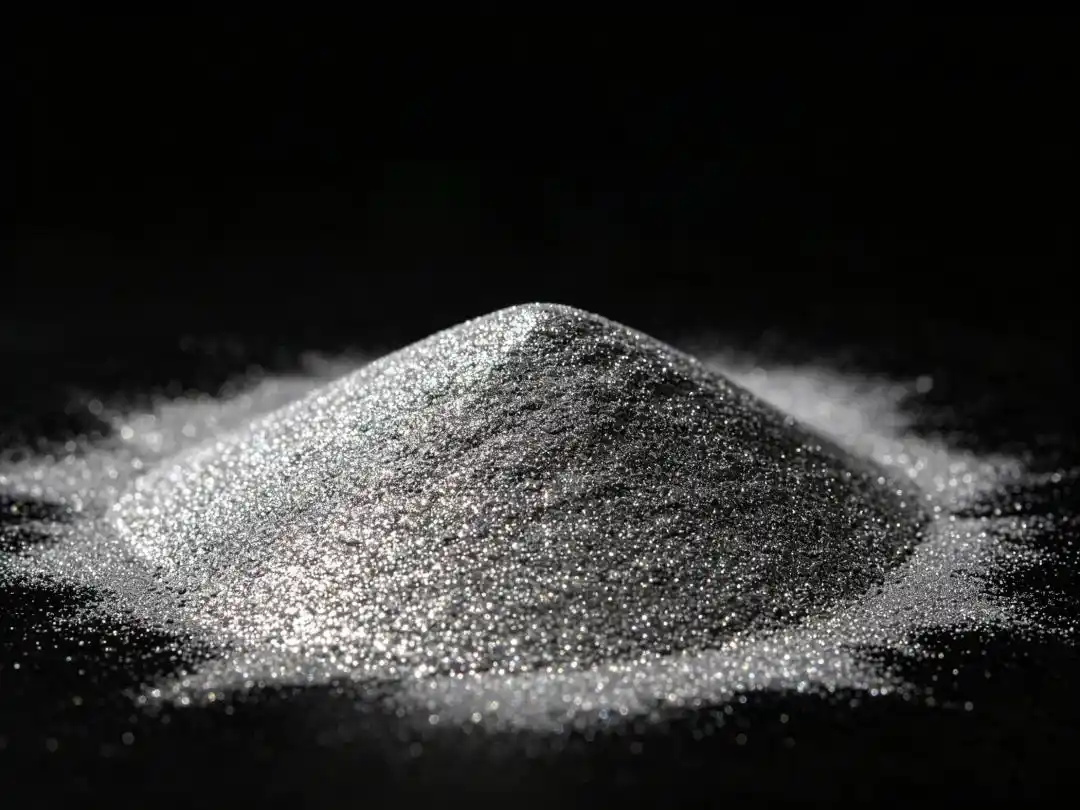
The raw material for making high-end tungsten hexafluoride—6N grade high-purity tungsten powder—was no longer available. And this powder, it's almost entirely in China.
Critical Point

First, what is tungsten hexafluoride?

The soul of AI chips is HBM (High Bandwidth Memory), where over a dozen layers of memory chips are stacked. These chips are densely packed with nanoscale contact holes, thousands of times thinner than a human hair.

Although other metals can be used for these contact holes, tungsten remains the absolute primary material for now. And the key specialty gas that deposits tungsten into these micro-holes is tungsten hexafluoride.

Without tungsten hexafluoride, there is no HBM. Without HBM, Nvidia's GPUs are just scrap metal.

In making this specialty gas, the Japanese were once the best in the world. Kanto Denka could achieve a purity of six nines (6N)—meaning only one impurity molecule per one million molecules.

But a six-nine gas needs six-nine powder.

For over a decade, Chinese tungsten powder was bought by the ton—cheap, stable. To the Japanese, the distillation column was the moat. What was powder? In a sense, just dirt.

But at the critical moment, what choked the Japanese was precisely this dirt.

The Japanese did struggle.

They tried using low-purity coarse powder, relying on distillation columns for forced purification. But the most deadly impurity in coarse powder is molybdenum—molybdenum and tungsten are in the same group on the periodic table, their chemical properties like twins.

Once in the reactor, reacting with fluorine gas, they both turn gaseous. Their boiling points are too close to separate.

You have money, policy, a sense of crisis, but you are powerless against the limits of chemical engineering.

Hard Grind

Leveling this wall was no overnight success for the Chinese either.

Purifying tungsten powder requires removing impurities, and one of the hardest to remove is molybdenum.

Molybdenum and tungsten have similar chemical properties; dissolved in water, they behave the same way. Separating molybdenum from tungsten is no less difficult than separating salt from MSG in a pot of soup.

The solution is to add a sulfidizing agent to the solution. Molybdenum, being more sulfur-loving than tungsten, rushes in first—grabbing the sulfur while tungsten remains unmoved. In that instant, the molybdenum is pulled away.

Sounds simple.

How narrow is that instant? If the pH is off by a bit, molybdenum lets go, mixing back with tungsten. The parameter window is as narrow as walking a tightrope.

To break through, there were no shortcuts, only the most arduous method:

Adjust pH, change adsorbents, modify extraction solutions, grinding through experiments group by group, even redesigning the adsorbents themselves.

Generations, grinding for decades, finally reducing molybdenum in the solution to an acceptable level.

Huang Changgeng, chairman of Xiamen Tungsten, joined the company in 1987 and never left until his recent retirement.

During that time, from the workshop to management, 39 years focused on just this one thing, leading the team from coarse powder to 6N, pushing Chinese tungsten powder to the global ceiling.
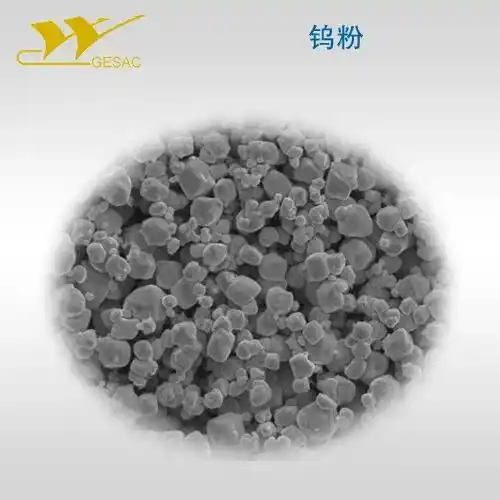
Image source: Xiamen Tungsten

Besides Xiamen Tungsten, there's also China Tungsten and Hightech.

These two are also, so far, among the very few companies globally capable of mass-producing 6N grade high-purity tungsten powder.

China had the high-purity tungsten powder. The Japanese bought the powder, produced tungsten hexafluoride, sold it to Samsung and TSMC, doubling the price.

This business seemed like easy money.

Then, the Japanese themselves smashed the door shut.

Turning the Tables

According to multiple media reports, Kanto Denka Kogyo and Central Glass have officially notified major customers like Samsung and SK Hynix:

June 30th, the last shipment. From July 1st, permanent production halt.

Since January 2026, imports of high-purity tungsten powder from China have essentially been zero. The two Japanese companies' inventories held out for five months, finally running dry.

Not only was the raw material cut off, but more crucially, the uncertainty. Even if they scraped together tungsten powder to restart the line, what about the next cutoff?

During shutdowns, residual tungsten hexafluoride in the pipelines hydrolyzes upon contact with water, producing hydrofluoric acid that corrodes valves and welds. Restarting and repairing is costly.

Repeated shutdowns and restarts are suicide.

When the news reached Seoul, Samsung and SK Hynix panicked. These two South Korean semiconductor giants had previously sourced most of their tungsten hexafluoride from Japan. Samsung's inventory wouldn't last past June.

No tungsten hexafluoride means no HBM, and Nvidia's orders go down the drain.

The certification cycle, the headache for Chinese companies, suddenly wasn't a problem anymore. Chinese tungsten hexafluoride suppliers became the darlings of leading wafer fabs.

The door is open, the players have changed.

Thirty years ago, China mined, others counted the money. Low-purity coarse powder was sold by the ton. Others purified it, made it into gas, into targets, and flipped it for dozens of times the value.

Thirty years later, the Chinese ground their way from 3N to 6N purity. The lowliest dirt overturned the highest throne.

On July 1st, the tungsten hexafluoride production line at Kanto Denka's Shibukawa factory will shut down.

Meanwhile, in Chinese high-purity tungsten powder production lines and tungsten hexafluoride factories, domestic materials are flowing out nonstop, loaded onto trucks heading for ports.

Only this time, Japanese manufacturers are absent from the destination list.

This article is from the WeChat public account "Huashang Strategic" (ID: hstl8888), author: Huashang Strategic


Трендові криптовалюти

Пов'язані питання

QWhat are the names of the two major Japanese companies mentioned in the article that were forced to permanently halt production?

AThe two major Japanese companies are Kanto Denka Kogyo Co., Ltd. (関東電化工業株式会社) and Central Glass Co., Ltd. (セントラル硝子株式会社).

QWhat is the critical raw material that Japan lost access to from China, leading to the production halt?

AThe critical raw material is high-purity 6N grade tungsten powder. This specific grade of powder is essential for manufacturing high-purity tungsten hexafluoride.

QWhy is tungsten hexafluoride (WF6) so crucial in the semiconductor industry according to the article?

ATungsten hexafluoride is crucial as it is the key electronic specialty gas used for depositing tungsten into the nano-sized contact holes within HBM (High Bandwidth Memory) chips. Without it, HBM production for advanced AI chips, such as those used by Nvidia, would not be possible.

QWhat was the primary technical challenge China faced and overcame in producing high-purity tungsten powder?

AThe primary technical challenge was separating molybdenum (Mo) from tungsten (W) due to their very similar chemical properties. China's breakthrough involved a complex purification process using sulfiding agents and precise control of parameters to exploit the slight difference in their affinity for sulfur, which required decades of persistent research and development.

QWhat were the consequences for South Korean semiconductor giants Samsung and SK Hynix due to the Japanese production halt?

ASamsung and SK Hynix faced a critical supply shortage of tungsten hexafluoride, with Samsung's inventory reportedly running out by June. This shortage directly threatened their HBM production capacity and, consequently, their ability to fulfill orders for companies like Nvidia.

Пов'язані матеріали

STAR 50 Soars 10.73%, Why Did A-Shares Stage a "V-Shaped Reversal"?

After a prolonged decline, the Chinese A-share market staged a strong rally on July 21. The STAR 50 index surged 10.73%, its largest single-day gain in nearly a year, leading a broad-based "V-shaped" reversal. The Shanghai Composite Index rose 1.79%, the Shenzhen Component Index gained 4.81%, and the ChiNext Index jumped 7.05%. Total market turnover reached 2.97 trillion yuan, an increase of 256.1 billion yuan from the previous session, with over 3,100 stocks advancing. The semiconductor sector spearheaded the rebound, with related ETFs posting significant gains. Analysts attribute the surge to three converging factors. First, coordinated capital inflows from "national team" institutions, insurance funds, listed company buybacks, and fund house self-purchases have bolstered market liquidity and confidence. Second, supportive policy signals, including commitments from regulators to ensure stable market operations, provided a favorable backdrop. Third, a stabilization and recovery in overseas markets, notably South Korea, created a positive external environment. Institutions suggest the most severe panic selling phase for the tech sector has likely passed, following a significant digestion of crowded positions and leveraged funds. While short-term volatility may persist, the medium to long-term outlook remains underpinned by enduring trends like AI computing demand expansion and semiconductor localization. The market's focus now shifts to the sustainability of supportive fund flows, earnings reports, and upcoming catalysts from the global AI industry chain.

marsbit18 хв тому

STAR 50 Soars 10.73%, Why Did A-Shares Stage a "V-Shaped Reversal"?

marsbit18 хв тому

U.S. Tech Momentum Stocks Post Largest Single-Day Gain Ever, But Is the Plunge Over?

US tech momentum stocks staged a sharp rebound on Tuesday (July 21st). Morgan Stanley's TMT Momentum Factor surged over 12%, marking its largest single-day gain on record, exceeding even peaks from the 2000 dot-com bubble. Key momentum indices from Goldman Sachs also posted their strongest daily performances in years. The rally was led by semiconductors, with the Philadelphia Semiconductor Index jumping 4.6%. This rebound followed three consecutive down days and a cumulative 33% plunge in momentum stocks, one of the steepest drawdowns since the dot-com era. Analysts attribute the surge largely to a short squeeze. Heavy selling had pushed high-beta momentum stocks into deeply oversold territory, forcing many short sellers, particularly in Asia, to cover their positions, creating a self-reinforcing buying spiral. However, the rebound's internals appear weak. Trading volume was notably low, and advancing stocks still lagged decliners on the S&P 500, indicating a narrow, concentrated rally rather than broad market participation. Diverging views emerge on the outlook. BTIG warns the bounce has hit key resistance and recommends selling into strength, citing extreme volatility and historical parallels to past market tops. Conversely, Goldman Sachs and UBS believe the momentum unwind is nearing its end, suggesting it may be time to gradually add exposure, as positioning has been significantly reduced. They caution, however, that high volatility warrants a measured approach, potentially using defined-risk strategies. The upcoming earnings season, particularly reports from major tech firms like Alphabet, is seen as a critical test for the rally's sustainability. Simultaneously, bond markets flashed a warning, with yields rising partly due to spiking oil prices. Analysts note that if long-term Treasury yields break decisively higher, it could pose a significant headwind for equities, especially growth stocks.

marsbit25 хв тому

U.S. Tech Momentum Stocks Post Largest Single-Day Gain Ever, But Is the Plunge Over?

marsbit25 хв тому

U.S. Tech Momentum Stocks Record Largest Single-Day Gain Ever, but Has the Rout Ended?

U.S. tech momentum stocks staged a dramatic rebound on Tuesday, July 21st. Key momentum indices like the Morgan Stanley TMT Momentum Factor and Goldman Sachs' High Beta Momentum Long Index posted historic or near-historic single-day gains, fueled largely by semiconductor stocks. This sharp rally followed a severe three-day sell-off that saw momentum stocks plunge 33%, marking one of the steepest pullbacks since the dot-com bubble. Analysts attribute the bounce primarily to a short squeeze, as forced covering from over-leveraged traders, particularly in Asia, created a buying spiral. However, the rally's health is questioned due to weak market breadth—overall trading volume was low, and decliners outnumbered advancers in the S&P 500 despite the index's gain—suggesting a narrow, concentrated surge rather than broad recovery. Opinions on the sustainability diverge. BTIG strategists warn the rebound has hit key resistance levels, citing extreme volatility and historic stock dispersion as signs of an ongoing broader correction, and recommend selling into strength. Conversely, Goldman Sachs and UBS view the aggressive momentum unwinding as nearing its end, noting reduced positioning and a lack of new fundamental catalysts. They suggest the sell-off presents a selective opportunity to add exposure, albeit cautiously and gradually using defined-risk strategies. The immediate trajectory hinges on the ongoing earnings season, with market focus on Alphabet's capital expenditure guidance for AI investment clarity. Meanwhile, bond markets present a risk, with rising Treasury yields—potentially heading toward 5.5%—and widening credit spreads for mega-cap tech companies posing a threat to equity valuations. The combination of technical factors, earnings results, and macro conditions leaves the durability of the rebound in doubt.

链捕手27 хв тому

U.S. Tech Momentum Stocks Record Largest Single-Day Gain Ever, but Has the Rout Ended?

链捕手27 хв тому

Long-Divided Must Unite, Long-United Must Divide: When L1 Becomes Its Own Rollup, What Is Ethereum's Endgame?

"The Inevitable Cycle: When L1 Becomes Its Own Rollup – What is Ethereum's Endgame?" For years, the Ethereum community grappled with concerns that L2s were fragmenting the ecosystem and eroding L1's value. While L2s provided cheaper execution, they also splintered liquidity and the unified user experience of a single chain. This has prompted a fundamental reassessment of the relationship between L1 and L2. Ethereum's roadmap is evolving. The "Scale" initiative merges L1 and L2 expansion into a holistic framework. L1 itself is advancing with higher gas limits, statelessness, and zkEVM verification, no longer content to be just a low-throughput settlement layer. Consequently, the primary value proposition of L2s is shifting from merely providing cheap blockspace to offering L1 cannot easily provide: application-specific optimizations, privacy features, and flexible governance models. L2s are becoming a spectrum of execution environments with varying degrees of security inheritance from Ethereum. A critical challenge in this multi-chain future is interoperability. The vision is to make Ethereum "feel like one chain again." This relies on advancements in native account abstraction (like EIP-7702) and intent-based architectures (Open Intents Framework), where users declare desired outcomes, and solvers handle the complex cross-chain execution. Furthermore, shortening Ethereum's finality time from minutes to seconds is crucial, as it underpins trust between chains for bridges, stablecoins, and cross-chain applications. Perhaps the most provocative idea is that Ethereum L1 itself could become a form of "its own Rollup." As zkEVM and proof systems mature, high-performance nodes could execute transactions and generate validity proofs. Regular validators would then verify these proofs instead of re-executing all transactions. This blurs the traditional L1/L2 hierarchy, making "Rollup" more of a general execution-verification architecture. Native Rollup aims to integrate L2 validation more directly into the Ethereum protocol, allowing L2s to inherit L1's security more fully and move away from reliance on security councils. In the end, L2s are not destined to replace L1 or be made obsolete by it. The likely future is a unified system where diverse execution environments—each optimized for specific use cases like DeFi, gaming, or privacy—coexist. They will share a common foundation of security, liquidity, and verifiable state, seamlessly connected to restore a cohesive user experience. The next phase for Ethereum is not just about scaling through separation, but about intelligently reintegrating what was separated back into a coherent whole.

链捕手44 хв тому

Long-Divided Must Unite, Long-United Must Divide: When L1 Becomes Its Own Rollup, What Is Ethereum's Endgame?

链捕手44 хв тому

Торгівля

Спот

Популярні статті

Як купити GAS

Ласкаво просимо до HTX.com! Ми зробили покупку GAS (GAS) простою та зручною. Дотримуйтесь нашої покрокової інструкції, щоб розпочати свою криптовалютну подорож.Крок 1: Створіть обліковий запис на HTXВикористовуйте свою електронну пошту або номер телефону, щоб зареєструвати обліковий запис на HTX безплатно. Пройдіть безпроблемну реєстрацію й отримайте доступ до всіх функцій.ЗареєструватисьКрок 2: Перейдіть до розділу Купити крипту і виберіть спосіб оплатиКредитна/дебетова картка: використовуйте вашу картку Visa або Mastercard, щоб миттєво купити GAS (GAS).Баланс: використовуйте кошти з балансу вашого рахунку HTX для безперешкодної торгівлі.Треті особи: ми додали популярні способи оплати, такі як Google Pay та Apple Pay, щоб підвищити зручність.P2P: Торгуйте безпосередньо з іншими користувачами на HTX.Позабіржова торгівля (OTC): ми пропонуємо індивідуальні послуги та конкурентні обмінні курси для трейдерів.Крок 3: Зберігайте свої GAS (GAS)Після придбання GAS (GAS) збережіть його у своєму обліковому записі на HTX. Крім того, ви можете відправити його в інше місце за допомогою блокчейн-переказу або використовувати його для торгівлі іншими криптовалютами.Крок 4: Торгівля GAS (GAS)Легко торгуйте GAS (GAS) на спотовому ринку HTX. Просто увійдіть до свого облікового запису, виберіть торгову пару, укладайте угоди та спостерігайте за ними в режимі реального часу. Ми пропонуємо зручний досвід як для початківців, так і для досвідчених трейдерів.

217 переглядів усьогоОпубліковано 2024.12.12Оновлено 2026.06.02

Як купити GAS

Обговорення

Ласкаво просимо до спільноти HTX. Тут ви можете бути в курсі останніх подій розвитку платформи та отримати доступ до професійної ринкової інформації. Нижче представлені думки користувачів щодо ціни GAS (GAS).

活动图片












