Just now, the mathematics community exploded.
A core conjecture that had tormented top mathematicians worldwide for 22 years was actually solved by a neurosurgeon from Union Hospital?
Through self-study in mathematics, he used ChatGPT 5.6 to run autonomously for 16 hours, putting an end to this 22-year mathematical unsolved case. It’s utterly surreal.
On July 30, 2026, Professor Alex Townsend from the Department of Applied Mathematics at the University of Washington opened arXiv as usual.
Over the past year, Townsend had developed an almost obsessive-compulsive habit: he would periodically ask GPT 5.6 to prove the famous unsolved case in numerical linear algebra—the Crouzeix Conjecture.
In the past few hundred attempts, the AI’s answers were either riddled with logical flaws or got stuck trying to bridge a key lemma. Humans had hit a wall with this conjecture for a full 22 years, and AI didn't seem any smarter.
Yet, on this day, the Crouzeix Conjecture, which had tormented the numerical linear algebra community for 22 years, was proven.
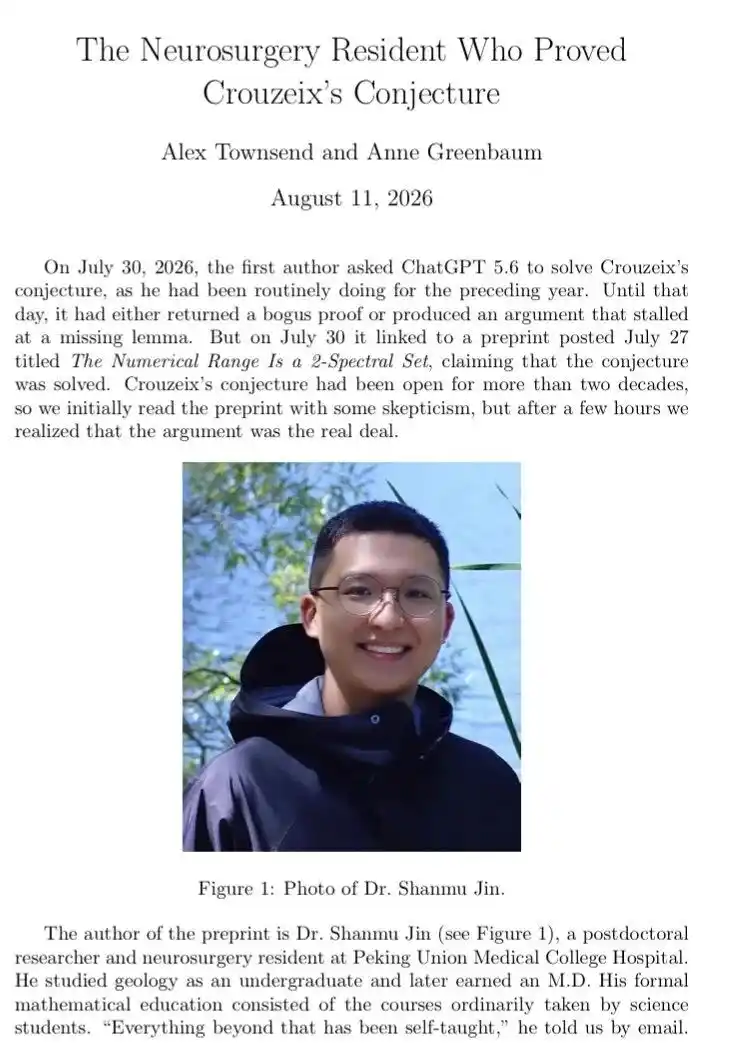
The author wasn't a mathematician but Shanmu Jin, a neurosurgeon resident at Beijing Union Medical College Hospital.
He had no formal advanced mathematics background; his undergraduate degree was in geology, and he later earned a medical doctorate. His sole assistant was GPT-5.6.
GPT-5.6 solved this challenge in one approximately 16-hour autonomous run, completely unassisted.
Moreover, the list of verifiers included Michel Crouzeix himself—the very person who posed this problem 22 years ago, now personally certifying its solution.
Townsend and Greenbaum, also experts in the field, could only describe their feelings with two words after reviewing the proof: "shocked."
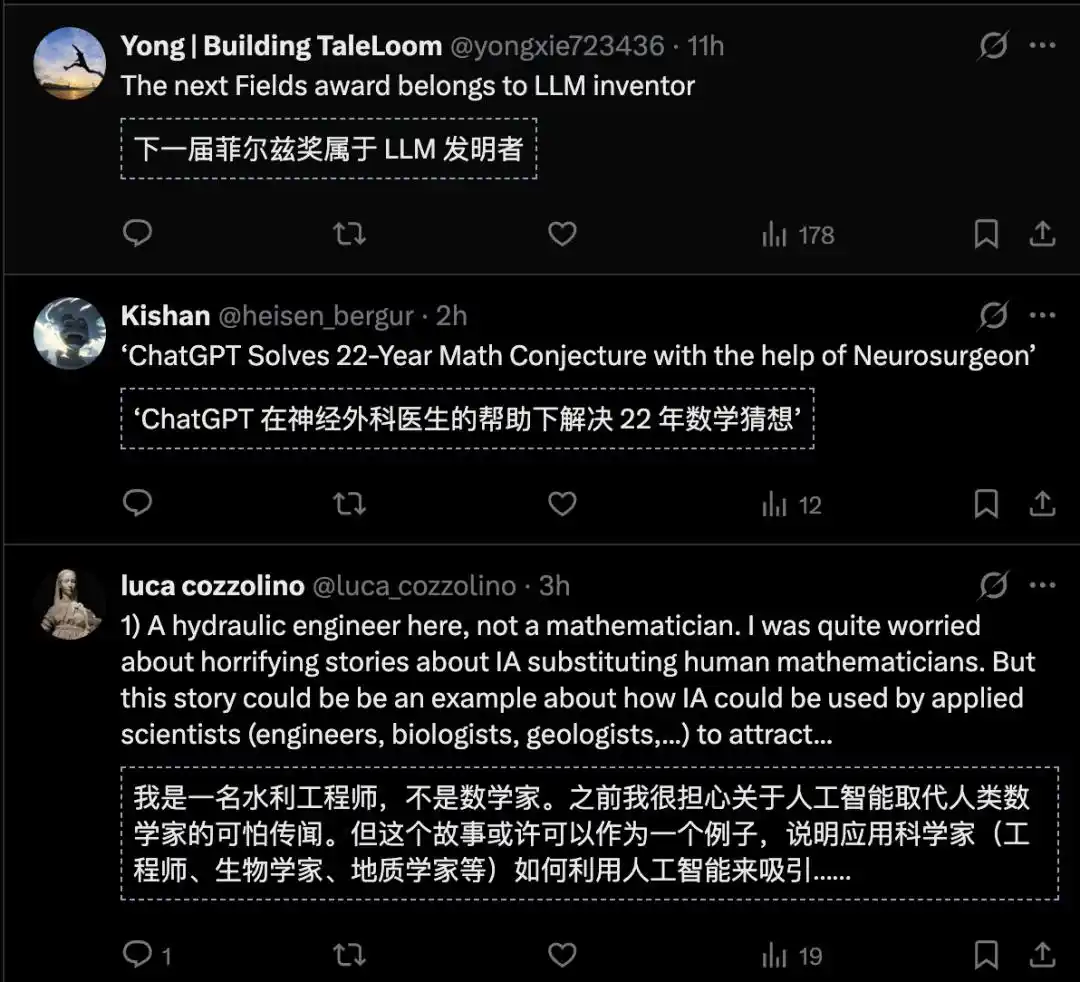
When a Union Hospital Resident Doctor Self-Studies Mathematics
The protagonist of the story is Shanmu Jin, a postdoctoral researcher and neurosurgeon resident at Beijing Union Medical College Hospital.
His resume has nothing to do with mathematics.
His undergraduate major was geology, and he later crossed over to medicine, ultimately earning a medical doctorate. All the mathematics education he received was the basic courses required for science students.
"All other mathematical knowledge beyond that, I taught myself," Dr. Jin wrote nonchalantly in his email to the original authors (Alex Townsend and Anne Greenbaum).
Why would a neurosurgeon tackle a hardcore mathematical conjecture?
This all stemmed from a pain point in Dr. Jin's clinical and research work: transcranial ultrasound studies.
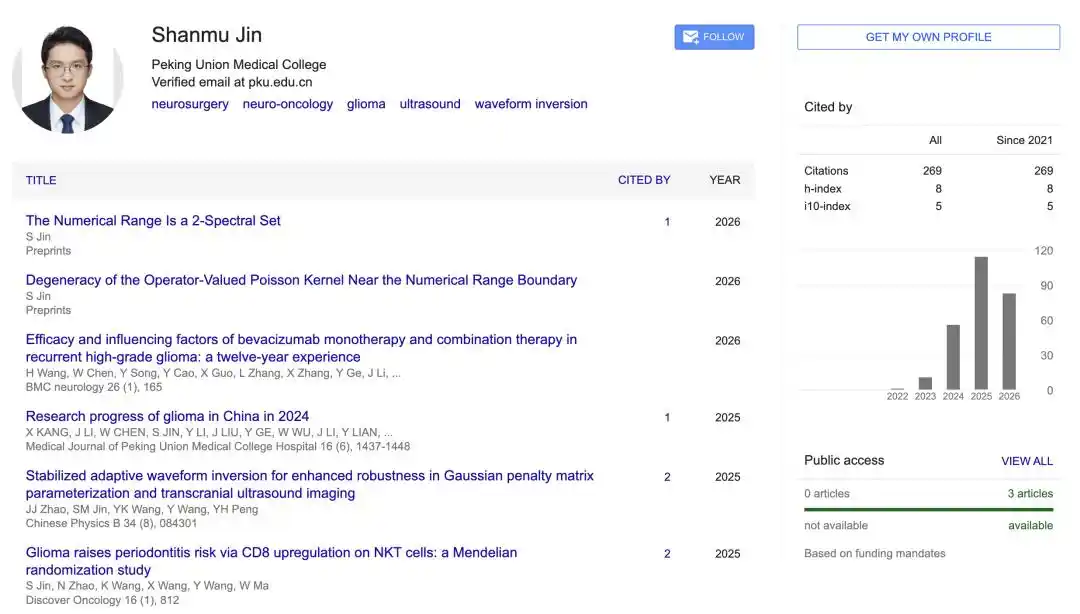
While trying to use ultrasound to penetrate the complex human skull structure, he plunged headfirst into the vast field of "matrix analysis." During his self-study, he caught a glimpse of that thunderous name in the numerical linear algebra world—the Crouzeix Conjecture.
The conjecture is exceptionally concise, and the geometric intuition behind its "numerical range" is profoundly beautiful. This ultimate simplicity and elegance deeply captivated this interdisciplinary explorer.
He decided to give it a try. Not with traditional pen-and-paper derivation, but with a large language model.
The "Devil's Constant" That Tormented the Math World for 22 Years
Why were these mathematicians so shocked? First, we need to understand just how difficult the Crouzeix Conjecture is.
In modern applied mathematics and engineering computation, matrices are the universal language describing the workings of everything.
From quantum state superposition to Google's PageRank algorithm, to the massive parameter iterations when training large language models today, they are essentially the projection and evolution of huge matrices on the complex plane.
However, the behavior of non-normal matrices is extremely bizarre; they are like a pack of irritable, unpredictable beasts.
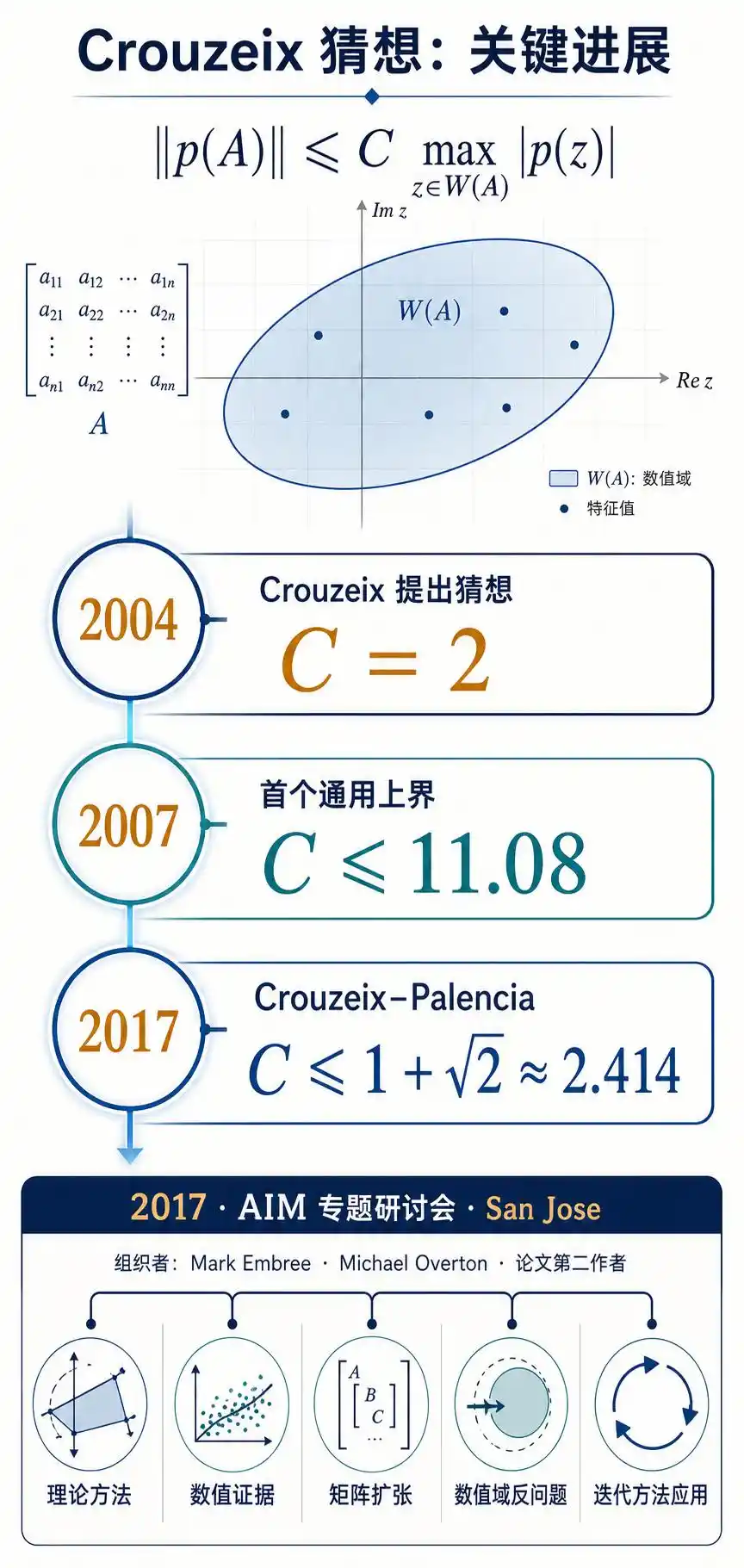
To tame them, French mathematician Michel Crouzeix proposed an extremely geometrically intuitive and beautiful conjecture in 2004:
For any polynomial p on the complex plane and any matrix A, its spectral norm can always be bounded by its maximum value on the "numerical range" W(A).
And the optimal constant between these two is exactly 2.
Formally expressed as:
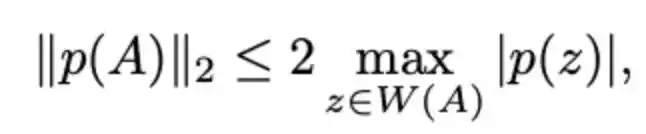
This inequality is extremely important in applied mathematics.
If it holds, we can directly convert approximation errors of scalars on the complex plane into norm bounds for matrix functions. This is of decisive significance for analyzing matrix functions, the GMRES iterative method, Krylov subspace methods, and more.
However, "proving this constant is 2" became a nightmare for countless mathematicians.
But the door leading to the constant "2" remained firmly shut. Until July 30, 2026.
In 2007, Crouzeix himself exhausted all efforts, only managing to prove the inequality held with a constant of 11.08.
A decade later in 2017, the American Institute of Mathematics (AIM) even held a week-long focused workshop in San Jose, gathering top global experts to discuss theoretical approaches, numerical evidence, matrix dilation, and all sorts of weaponry. Crouzeix and his collaborator Palencia finally reduced this universal constant to 2.414.
Since then, humanity's mathematical toolbox seemed to have run out of the last drop of fuel.
Until this summer, when an "outsider" wielding a scalpel barged in.
Modifying the "God-Level Prompt," ChatGPT Dashes for 16 Hours
How did a Union Hospital neurosurgeon resident with an extremely demanding clinical schedule accomplish this?
The secret lies in Prompt Engineering.
Dr. Jin didn't treat the AI as a simple Q&A machine but transformed it into a vast virtual mathematics research institute.
He adapted and modified the famous prompt used by OpenAI when tackling the Cycle Double Cover Conjecture, setting up a strategically brilliant plan:
Physical Disconnection (Depriving External Dependencies): The prompt explicitly cut off the system's access to the public internet and other external contexts. He didn't want the AI to "plagiarize" failed old ideas from human history via search engines, forcing it to start from axioms and conduct purely original thinking.
Multi-Branching and Divergent Thinking (Rejecting Premature Convergence): He instructed ChatGPT to launch numerous "sub-agents," each exploring along genuinely different paths. The instruction sternly warned: Do not prematurely converge onto the same seemingly attractive line of thought!
Brutal Adversarial Auditing (Battle Royale Mode): Candidate proof strategies had to be repeatedly subjected to adversarial scrutiny. A line of reasoning would only be thoroughly eliminated when other agents successfully found counterexamples.
Determination to Persist to the End: The prompt gave an absolute command: under no circumstances should it give up until it obtained a complete proof capable of withstanding extreme logical scrutiny.
After setting all this up, Dr. Jin pressed enter, then turned away to focus on his work, intervening no further.
In ChatGPT Work mode, GPT-5.6 Sol ran like an indefatigable digital behemoth, dashing continuously through the mathematical deep sea for about 16 hours.
During those 16 hours, the AI went through tens of thousands of assumptions, refutations, and reconstructions, ultimately achieving the proof.

When mathematicians saw this proof, they were deeply stunned: The AI didn't use the extremely complicated hard estimates humans had anticipated. Instead, it cleverly reduced the problem to an unexpectedly simple "positivity condition" through a brilliant "sampling strategy."
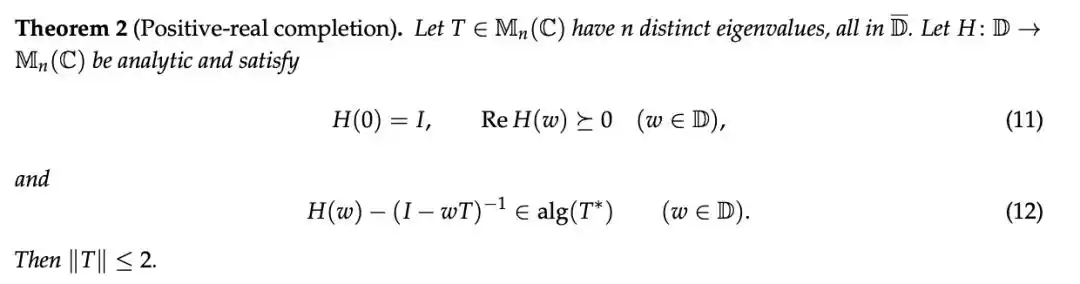
It was like humanity had been trying to push open a massive iron door with brute force, while the AI merely found a minuscule, precise point of leverage in the crack, gave it a light push, and the door swung open—truly a dimensionality reduction strike.
Dr. Jin modestly noted that finding this key insight "definitely involved an element of luck." But everyone knows opportunity only favors those who design the perfect compass.
Even more admirable is that Dr. Jin made this entire process completely open source. His GitHub repository contains not only the final paper but also that god-level prompt, iterative drafts, Lean 4 formal proof code, and axiomatic audit reports. Everything is out in the open, subject to the scrutiny of all humanity.

Open Source Address: https://github.com/jinshanmu/CrouzeixConjecture
Preprint: https://www.preprints.org/frontend/manuscript/f5469a625a8e7313e19bbf4d6c608cff/download_pub
Second Proof Eight Days Later, Shockwaves Through the Math World
Initially, facing this suddenly appearing preprint, top mathematicians scrutinized it with skepticism. After all, "outsiders announcing solutions to world-class conjectures" often turns out to be a farce in mathematics.
But within just a few hours, Alex Townsend and Anne Greenbaum's skepticism turned to shock, and ultimately to admiration—"This argument genuinely holds!"
Subsequently, the conjecture's proposer himself, the famous mathematician Michel Crouzeix, personally got involved, scrutinizing the proof line by line.
Finally, the definitive verdict: Dr. Jin's manuscript is correct. The 22-year-old unsolved case is completely settled.

However, the academic earthquake triggered by AI had only just begun.
Just eight days after Dr. Jin's preprint was released (August 4th), two other mathematicians, Emiel Lorist and Felix Schwenninger, suddenly released an independent proof consisting of a mere 5 pages!
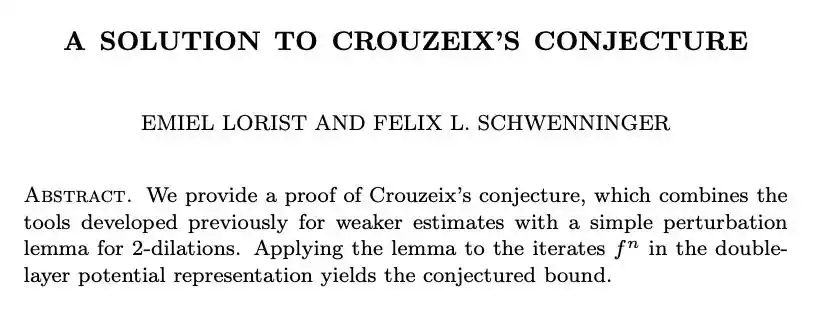
Title: A SOLUTION TO CROUZEIX’S CONJECTURE
Preprint: https://arxiv.org/pdf/2608.03841
This 5-page proof takes a completely different approach from Dr. Jin's, being extremely concise and powerful. It combines classical double-layer potential representation with a perturbation lemma concerning 2-expansion.
For traditional mathematicians, this proof method aligns more with pre-existing human cognitive habits, appearing more "friendly."
Coincidentally: Lorist and Schwenninger admitted that they also used ChatGPT 5.6 when exploring proof strategies.
A problem unsolved for 22 years, with AI's assistance, produced two completely different yet equally exquisite proofs within just 8 days of each other!
Upon learning this, Dr. Jin didn't feel annoyance at being "upstaged" but instead felt pure joy, considering it an interesting complement to his method.
The Dawn of a Golden Age
In the summer of 2026, the gears of history quietly turned.
In the history of mathematics, it's not uncommon for physicians to achieve significant mathematical results, but they were all geniuses who had received specialized mathematical training for their time.
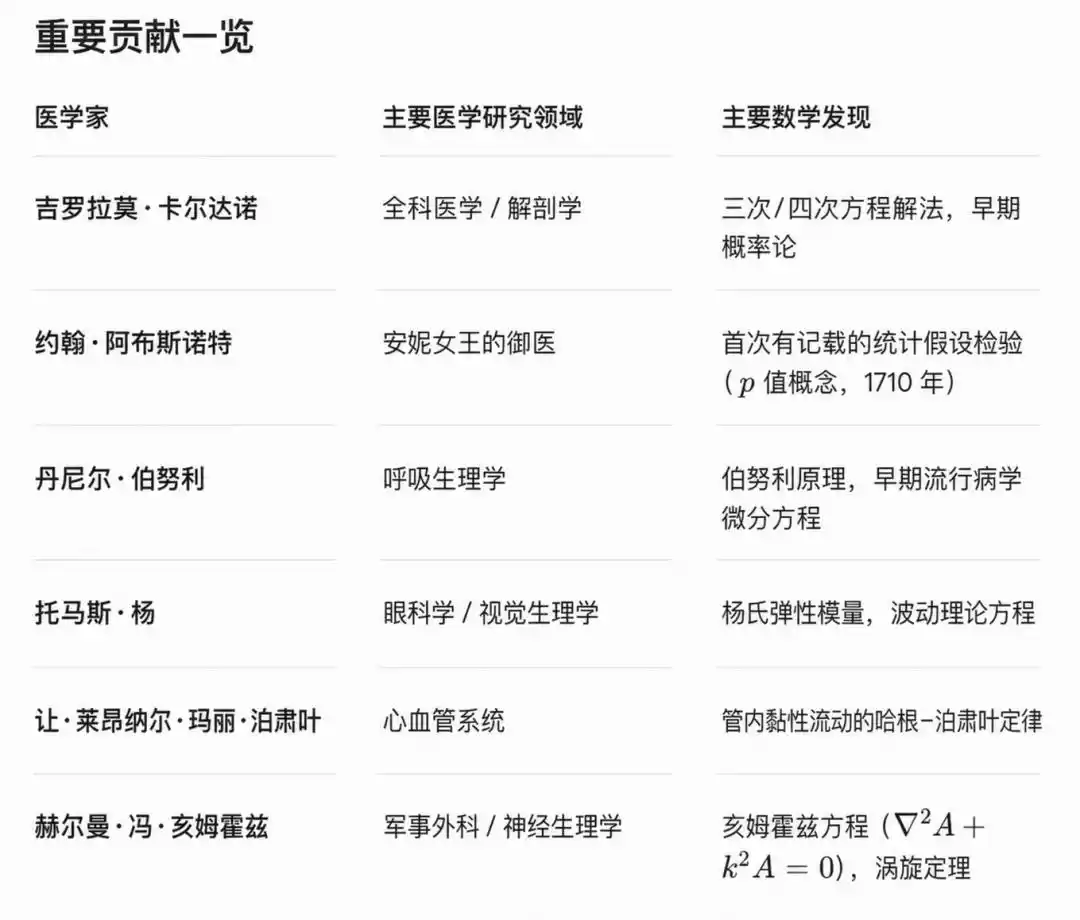
This is likely the first long-standing unsolved conjecture to be definitively solved by a physician without specialized mathematical training, aided by AI.
Just a few years ago, imagining an AI system contributing a "decisive proof idea" to a major conjecture would have been pure fantasy.
But now, it has tangibly happened.
This is akin to two leaps in astronomical history.
The first was when astronomers had to painstakingly calculate orbital data by hand; only a handful of prodigies could glimpse the stars. The second was Galileo building a telescope.
This is undoubtedly the beginning of a "Golden Age" for applied mathematics and indeed the entire scientific community. Scientific discovery will be accelerated unprecedentedly; barriers between different disciplines will be shattered effortlessly by AI.
But simultaneously, this means a reshaping of identity. When immense computational power begins to take over derivation, when a neurosurgeon can pluck a jewel from the mathematical crown in their spare time, the definition of "becoming a mathematician" or "becoming a scientist" is undergoing a violent tearing and rebirth.

The future is here. With AI as this telescope, have you decided which patch of stars to aim it at?
References:
https://alextownsend.net/essays/SIAMNews_CrouzeixConjecture.pdf
https://www.preprints.org/manuscript/202607.1919
https://aimath.org/pastworkshops/crouzeix.html
This article is from the WeChat public account "AI Era Insights," author: ASI Revelation, editor: David