Live-Action Short Series Forced onto the Big Screen by AI

marsbitОпубліковано о 2026-07-17Востаннє оновлено о 2026-07-17

Анотація

Live-action short dramas, originally a popular online format, are now attempting to enter the cinema. Several top IPs like "What a Good Girl" and "One Family, Same Class" have received approval for film adaptations. This shift is driven by several pressures within the short drama industry. After rapid growth fueled by low costs and platform support, the sector now faces a slowdown with fewer hits and reduced investment. A major disruptor is the explosive rise of AI-generated short dramas, which dominate new releases and challenge the traditional model with their speed and low cost. Platform policy changes, such as adjustments to revenue guarantees, have further squeezed producers. In this context, film adaptation is seen as a potential new growth path. It offers a chance to extend a short-lived online hit into a longer-lasting IP asset, moving beyond the "fast production, fast consumption" cycle. Established short dramas bring pre-validated stories and emotional appeal to the table, potentially lowering the risk for film investors. However, significant challenges remain. Translating a fast-paced, fragmented viewing experience designed for phones into a compelling cinematic narrative is difficult. Past attempts by popular TV shows and variety programs to make films have often failed due to weak content. A short drama's massive online viewership does not guarantee box office success, as cinema requires a higher commitment of time and money from audiences. Ultimately, the succe...

Live-action short series are now collectively setting their sights on movie theaters.

Recently, the movie adaptation of the hit short series "Good Girl" has reportedly started preliminary work, with filming expected to begin in September in Sanya. This short-form drama IP, approved as early as May, achieved 4 billion views on the Hongguo platform in 2025 and propelled Ke Chun and Yu Yin to become top stars in the short series realm. However, after the initial hype, both the web series version and the Korean adaptation of "Good Girl" have generated relatively smaller ripples.
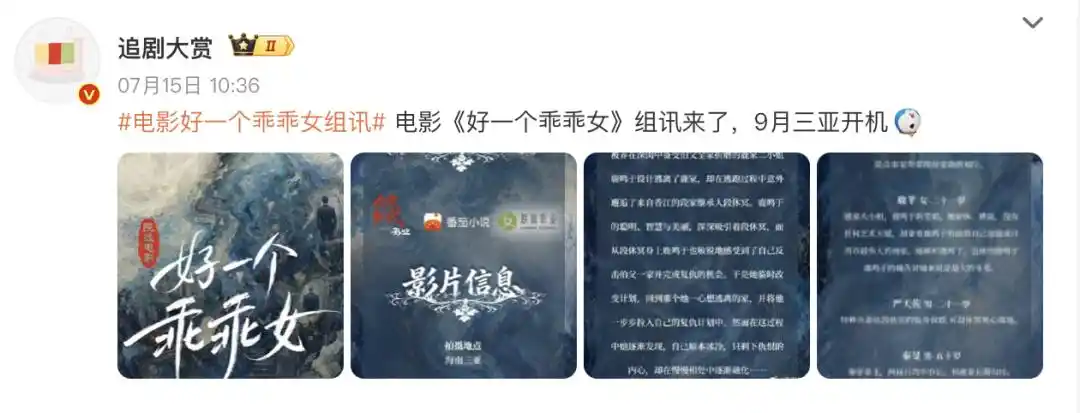
Previously, other top short series IPs like "A Family of Three in the Same Class" and "The Table Flipping" have also been approved by the National Film Administration. From web series to movies, from vertical screen to the big screen, live-action short series are attempting to step beyond their familiar content ecosystem.

This shift is not accidental.

Over the past two years, live-action short series rapidly rose by relying on frequent hits, low production costs, and platform support, becoming the fastest-growing new track in the entertainment industry. However, entering 2026, industry trends are changing: hit series are decreasing, projects are being scaled back, platform policies are adjusting, and AI-generated short series are rapidly expanding. The growth dividends that live-action short series once thrived on are beginning to fade.

Movies are becoming a brand-new attempt for live-action short series to find a second growth curve. But questions immediately arise: Can movies truly become a new outlet for live-action short series?

Short Series Start Making Movies

In the past few years, short series and movies were two barely intersecting tracks. Now, that boundary is being broken.

Including "Good Girl," other recent hit short series IPs like "A Family of Three in the Same Class" and "The Table Flipping" were approved by the National Film Administration in May this year and are expected to release movie versions. This means live-action short series are taking their first step from vertical-screen content towards theatrical films.

While these short series have all chosen cinematic adaptation, their paths differ.

Among them, "Good Girl" leans more towards re-creation. According to the approval information, the movie version will retain the core character relationships and emotional essence of the original but will not copy the short series plot directly. Instead, it will reconstruct the story to fit cinematic narrative pacing. This approach emphasizes the extension of IP value, hoping to attract not just the original short series audience but a broader movie-going public.

In contrast, "The Table Flipping" and "A Family of Three in the Same Class" are more akin to IP continuation, extending the world-building while preserving the original story setting and character relationships. This is closer to fan-oriented development, hoping to leverage the accumulated viewer base for cross-media conversion.

Beyond differing content development approaches, moves within the industry chain are becoming more pronounced.

In recent years, platforms like Tomato Novel and Hongguo Short Series have begun opening up their short series IPs for movie adaptation rights, encouraging mature short series IPs to enter the film market. Previously, commercial development of short series IPs mostly stayed within an internal cycle of sequels, spin-offs, and long-form series. Now, movies are becoming a new development direction, indicating that short series IPs are extending towards a more complete content industry chain.

More notably, those entering this track are no longer just short series companies.

For example, behind the movie versions of "A Family of Three in the Same Class" and "The Table Flipping" is Shanghai Yuanlai Rushi Culture. Though not long established, this company's core team has long been involved in movie promotion and IP marketing, having participated in marketing campaigns for hit films like "Ne Zha" and "Dying to Survive." Its upstream affiliate is Bukong Culture, responsible for projects like "Hi, Mom" and "YOLO," with core businesses in IP development and film/TV word-of-mouth marketing.

This shows that the cinematic adaptation of short series is beginning to attract participation from the traditional film industry chain, not merely a cross-border attempt by short series teams.

In fact, this isn't the first time short series have moved closer to film.

Previously, Xiaohongshu launched a short film support program, and many platforms have also explored content forms like microfilms and vertical-screen films. Meanwhile, top short series actors like Ke Chun and Yu Yin have also reportedly been planning moves into the big screen. From actors to IPs to production companies, the short series industry is probing the film market in various ways.

Observing these actions together reveals a common trend: live-action short series are proactively breaking through their original content boundaries.

However, this doesn't mean film has become the standard answer for live-action short series. Against the backdrop of rapid AI content growth and slowing live-action short series expansion, film seems more like an active exploration by the industry for a second growth curve. Its emergence is not just because the film market still has space, but because the original development model of live-action short series has reached a stage where it must find new increments.

Why Has Cinematization Become a New Choice for Live-Action Short Series?

If interpreting the increasing number of short series IPs being made into movies as proactive upgrading might not be accurate.

The live-action short series' venture into theaters is essentially an experiment born of necessity—its underlying tone is not ambition but anxiety.

Over the past two years, live-action short series almost captured the last wave of content dividends from the mobile internet. Relying on advantages like short production cycles, high投放 efficiency, and mature business models, numerous production companies quickly flooded in, frequently producing hits. "Ten days to shoot, one week to recoup costs" once became an industry myth. However, as the track shifted from an incremental to a存量 market, the original development logic of live-action short series began to falter.

Judging from the first half of this year, under the impact of AI series, live-action short series are entering a major reshuffling phase. According to China Netcasting Services Association data, about 128,000 micro-short series were launched industry-wide in Q1 2026, with AI series accounting for over 95%. Phenomena like project reductions, actors out of work, and investment withdrawal have successively shattered the prosperity dream of the live-action short series industry. Particularly, top production teams struggling to produce new hit series, the scarcity of high-quality short series, and the prevalence of last year's backlogged series being aired have fueled talk of a live-action short series decline.
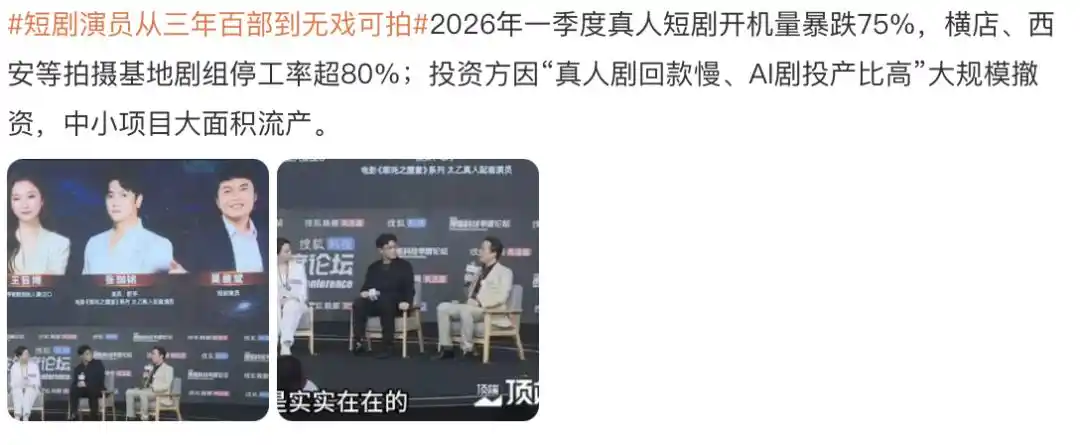
This change is also reflected among practitioners. Top short series actors like Yu Yin and Han Yutong have publicly mentioned the decrease in live-action short series productions, with many actors finding themselves unemployed. Actor Xu Peng even chose to return to his hometown to sell vegetables for a living.

Simultaneously, platform strategies are also changing.

This year, Hongguo Short Series adjusted its guaranteed底 policy, with profit-sharing for some projects decreasing. Many production teams had to reassess project收益, and some live-action short series in preparation even chose to suspend development. For many production companies relying on rolling projects to operate, fewer projects and lower guarantees mean increased cash flow pressure and收益 uncertainty, indicating that the past volume-driven development model is no longer viable.

The era when platforms bore more risk and production companies rapidly expanded is gradually ending. As platform红利 weaken, live-action short series are forced to seek new revenue streams. Cinematization has become one of the most obvious possibilities.

Secondly, what AI changes is not just efficiency, but the entire competitive rules. If platform policies affect profits, then AI alters the very competitive environment live-action short series rely on for survival.

Previously, the biggest advantage of live-action short series was being faster than long-form series and cheaper than movies. But after the emergence of AI, this advantage is rapidly eroding. Now, an AI short series—from script generation and character design to shot production—can be quickly completed with models.
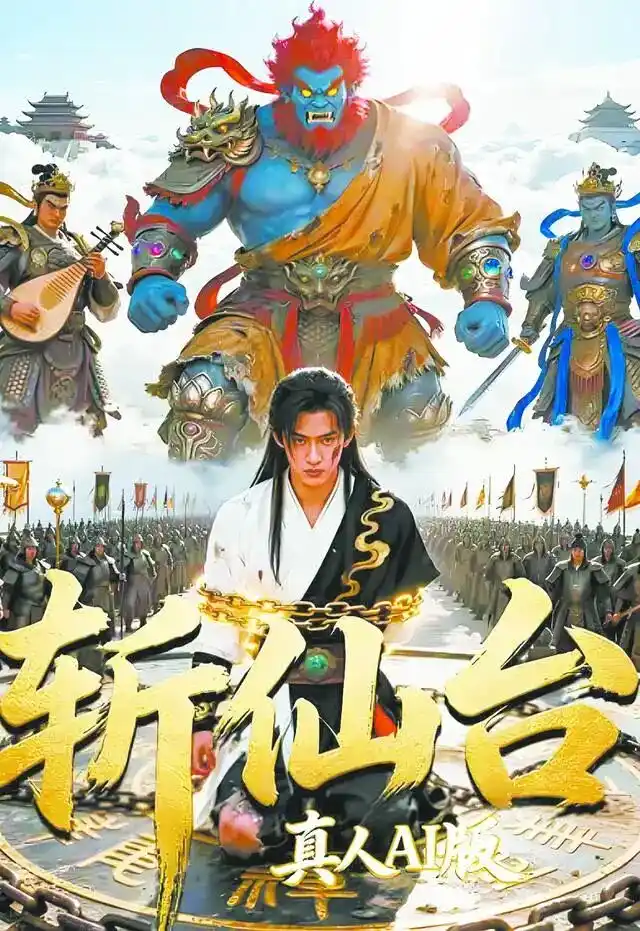
This means the competition live-action short series face is no longer just another production company, but an almost infinitely growing content supply. And the first sector AI冲击 isn't film or long-form series, but precisely the流水线 content that live-action short series excel at and depend on most. Because the more standardized and formulaic the story, the easier it is for AI to replicate.

This is also why more and more live-action short series teams are starting to consider new directions.

If they remain within the competitive logic of "faster, cheaper, higher output," live-action can almost certainly not win against AI. But if they shift towards content forms emphasizing character development, actor performance, and emotional expression, developing films based on short series IPs, live-action still possesses advantages difficult for AI to replace.

Furthermore, the excessively short IP lifecycle has always been an issue in the short series industry.

Over the past two years, live-action short series created one hit神话 after another. Works like "Good Girl," "Peerless," and "I Became a Stepmother in the 80s" achieved惊人的 view counts and讨论度 in extremely short times. But this热度 often comes and goes quickly. The entire industry始终 revolves around the高速 cycle of "produce a hit—monetize the hit—find the next hit," making it difficult to form long-term IP assets through持续运营, unlike TV dramas or films.

Cinematization恰恰 offers such a possibility.

For top短 series that have already undergone market validation, a movie doesn't just mean producing another work; it means transforming a one-time hit into a long-term asset. After the movie, further developments like long-form series, overseas adaptations, merchandise, brand collaborations, and线下 experiences can follow, forming a more complete商业 chain.

Live-action short series choosing cinematization本质上 is about expanding跨媒介 IP operational capabilities.

Will Film Become a New Outlet for Live-Action Short Series?

At this year's Shanghai International Film Festival, the production team for "A Family of Three in the Same Class" admitted that cinematization faces challenges like funding, industrial standards, and team跨越. "We genuinely love it, love it enough to set aside personal talk and first discuss whether this story deserves to be made."

There's no standard answer for whether short series IP cinematization can succeed. What's certain is that it's neither a baseless adventure nor a "cure-all" that solves every problem, but more like an industry upgrade experiment.

Objectively speaking, the most obvious advantage of "remaking" short series IPs into movies is reducing the trial-and-error cost for original films.

In recent years, the most noticeable change in the film market is increasing investment caution. Whether platforms or film companies, they prefer investing in mature IPs already market-tested rather than building original stories from scratch. From web novels and comics to hit TV series and myths, IP adaptation has become a major source for the film market.

Live-action short series similarly possess this foundation. That "Good Girl" achieved over 4.2 billion views on Hongguo platform doesn't just indicate它拥有流量; it proves it has completed a round of market validation. For the film market, the greatest value of such IPs lies not in any自带票房 but in having proven the story, characters, and emotions work.

Secondly, the greatest competitive edge of live-action short series was never production scale, but emotional efficiency. Many believed the main feature of short series was "instant gratification." But what truly supports users'持续付费 isn't the twists themselves, but the ability to evoke emotions within a短时间.

Whether it's the emotional tension in "Good Girl" or the family dynamics in "A Family of Three in the Same Class," they essentially accurately hit a certain大众 emotion. And the success of works like "Hi, Mom," "YOLO," and "Letters to A-Ma" in recent years also shows audiences are willing to pay for genuine emotions and character relationships, not just grand production scenes.
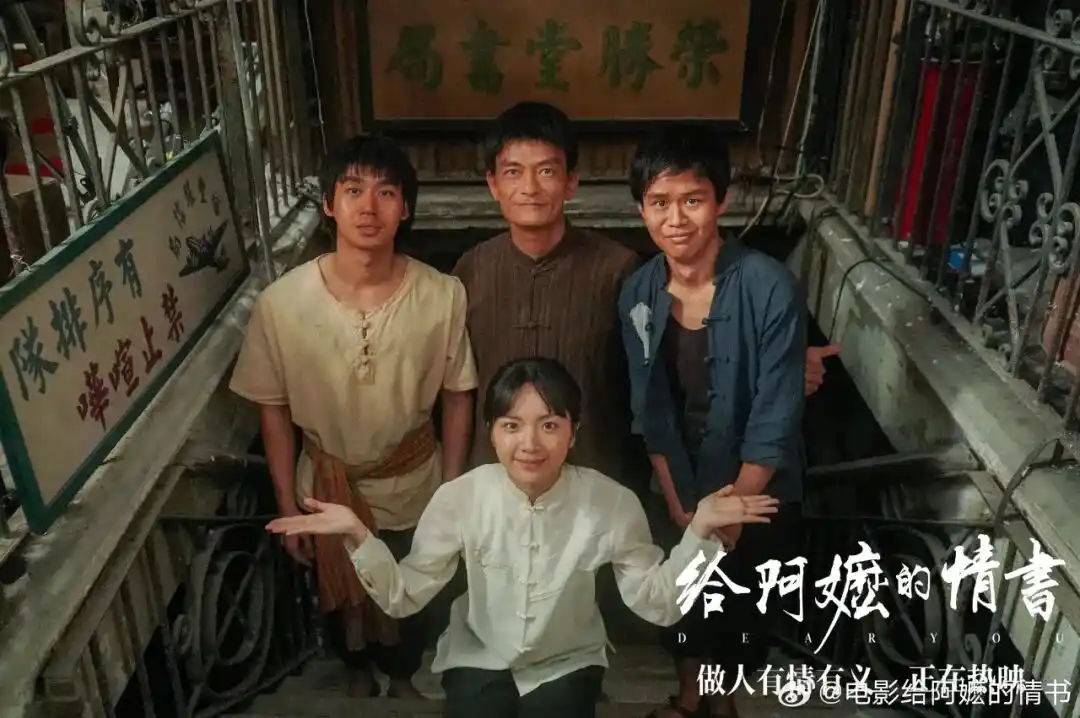
If short series IPs can move beyond simple "gratification point stacking" to further enrich character growth and完善 story structure, they might well grow into viable films.

However, it must be admitted that no matter how popular, short series IPs were essentially one-off deals in the past, lacking long-term value maintenance.

After all, short series and films, while both audiovisual content, have completely different consumption logics. Short series rely on fragmented viewing; users can unlock episodes for free, pay per episode, or exit anytime, with极低试错成本.

Film is entirely different. Audiences need to spend dozens of yuan upfront on a ticket and invest nearly two hours for a complete消费.

This消费门槛 determines that the流量 accumulated by a short series cannot be simply converted into box office. Original short series viewers won't necessarily become your movie audience.

In the past, popular variety shows and TV dramas like "Keep Running!," "Go Fighting!," and "iPartment" released movie versions hoping to leverage IP influence to attract viewers. However, due to insufficient content quality, they ultimately suffered both口碑 and票房 setbacks. These cases have proven that a成熟 IP can help a film get its first wave of viewers but cannot determine the final box office.

In other words, merely lengthening a short series or piling on more gratification points could easily lead to repeating the failures of past variety show movies or TV drama movies.

Moreover, this year, the domestic film market overall is under pressure, audiences are increasingly cautious, and theater scheduling relies more on word-of-mouth驱动. For short series, film standards won't lower just because an IP is hot; instead, it means entering an even more fiercely competitive content market.

What truly attracts audiences to theaters might not be the most流量的 short series, but rather the one with the most complete story, most solid characters, and most持久 emotions. This is perhaps the greatest significance of cinematization for live-action short series.

This article is from the WeChat public account "Entertainment Voice," author: Voice Editorial Department


Трендові криптовалюти

Пов'язані питання

QWhat is the main reason why live-action short dramas are turning to the big screen, according to the article?

AThe primary driver is anxiety and the need to find a second growth curve. The industry is facing a decline due to fewer hit projects, platform policy adjustments, and most significantly, the rapid expansion and competition from AI-generated short dramas. Movie adaptation is seen as a new attempt to break through these challenges.

QWhat are two different approaches mentioned for adapting popular short dramas into movies?

ATwo approaches are mentioned: 1) Creative adaptation (like '好一个乖乖女'), which retains the core relationships and emotional core but rebuilds the story structure for cinematic pacing, aiming for a broader audience. 2) Continuation/sequel (like '掀桌' and '一家三口在同班'), which continues the original story's world and settings, focusing more on fan conversion.

QAccording to the article, how has AI impacted the live-action short drama industry's competitive environment?

AAI has fundamentally changed the competition rules. It has eroded the core advantage of live-action short dramas—being faster and cheaper than traditional film/TV. AI can now produce standardized, formulaic stories (the short drama sweet spot) at an almost infinite scale and speed, putting immense pressure on live-action production.

QWhat key advantage does a successful short drama IP have for movie investors, as per the article?

AA successful short drama IP provides pre-market validation, reducing the trial-and-error cost for original films. High viewership numbers prove that the story, characters, and emotional hooks are already effective with an audience, which is a lower-risk starting point for movie investors compared to a completely new concept.

QWhat is a major challenge in converting short drama popularity into movie success, as warned by the article?

AThe biggest challenge is that the consumption logic is entirely different. Short dramas thrive on low-commitment, fragmented viewing (free/freemium, short episodes), while movies require a significant upfront cost (ticket price) and time investment (2 hours). Past failed adaptations of popular TV shows and variety shows prove that IP traffic alone cannot guarantee box office success; the movie's inherent quality is paramount.

Пов'язані матеріали

From Somersaults to Working 24/7: We Saw the ‘Working-Class’ Aura in Robots at WAIC

From performing acrobatics to working 24/7: Robots at WAIC are getting down to business. This year's World Artificial Intelligence Conference (WAIC) in Shanghai showcased a significant shift in the robotics industry. While "show-off" robots that dance, play music, or compete in sports are still present, the dominant trend is now practical, task-oriented machines. Hundreds of wheeled and humanoid robots were deployed as guides, baristas, factory workers, and even traffic controllers, moving beyond mere demonstrations to highlight real-world "work capabilities." The focus has pivoted from showcasing technical parameters to pursuing mass production and industrial落地 (landing/implementation). This transition presents major challenges. First, deploying powerful AI models onto robots requires overcoming hardware limitations in computing power and latency. Second, robots demand complex, integrated systems for real-time perception and control. Third, achieving reliable mass production necessitates unprecedented industry-wide collaboration on standards and supply chains. A key bottleneck identified by industry leaders is the robot's "brain"—its AI and cognitive capabilities. While hardware and basic movement ("little brain") have advanced rapidly, the higher-level intelligence for understanding complex instructions and adapting to unstructured environments is progressing more slowly. Companies are investing heavily in developing more advanced "brain" systems, but fully autonomous operation in dynamic settings remains a work in progress. Cost is another critical hurdle. While some consumer-oriented humanoid robots are now priced under $15,000, capable industrial models often cost $50,000 or more. The industry consensus is that bringing robots into unstructured home environments for tasks like comprehensive cleaning is still at least five years away due to technical, safety, and cost barriers. Therefore, 2026 is being called the "first year of mass production," but primarily for industrial and specific commercial applications. WAIC 2026 served less as a stage for spectacular tricks and more as a serious examination of robots' commercial viability, marking their transition from laboratory prototypes to real-world products that must prove their value through stable, repetitive work.

marsbit2 год тому

From Somersaults to Working 24/7: We Saw the ‘Working-Class’ Aura in Robots at WAIC

marsbit2 год тому

Asymmetry of Algorithmic Agency: When AI Makes Decisions for You, You Don't Even Have the Right to Oppose

As AI increasingly makes decisions on our behalf, a critical asymmetry emerges: the entities deploying these systems understand and refine their algorithms, while individuals merely endure the consequences. This article explores the three layers of this "algorithmic agency asymmetry." First, opacity shields system goals, incentives, and flaws, creating a "black box fallacy" where outputs seem objective. Second, algorithms amplify historical biases, repackaging past inequalities in a seemingly neutral, computational form. Third, recursive systems lead to "algorithmic drift," where users train the system and are simultaneously trained by it, shaping their own choices and behaviors. This asymmetry has profound implications, extending into hiring, education, policing, and daily life. Users adapt to what the system rewards, but only see the end result—a score, recommendation, or price—without understanding the underlying logic or manipulated conditions. To rebalance this power dynamic, the article proposes policy interventions: 1) Meaningful transparency and explainability for users affected by AI decisions. 2) Enforceable impact assessments before deploying high-risk systems. 3) Genuine human oversight with the power to challenge outputs. 4) Mandatory post-deployment monitoring and auditing. 5) Outright bans on manipulative or exploitative systems. Finally, fostering widespread "algorithmic literacy" is essential public infrastructure. Ultimately, this asymmetry is a structural power imbalance. Good policy cannot eliminate it but can narrow the gap by making automated influence visible, contestable, auditable, and governable.

marsbit3 год тому

Asymmetry of Algorithmic Agency: When AI Makes Decisions for You, You Don't Even Have the Right to Oppose

marsbit3 год тому

Торгівля

Спот

Популярні статті

Що таке GROK AI

Grok AI: Революція в розмовних технологіях ери Web3 Вступ У швидко змінюваному ландшафті штучного інтелекту Grok AI вирізняється як помітний проєкт, що поєднує сфери передових технологій та взаємодії з користувачами. Розроблений компанією xAI, яку очолює відомий підприємець Ілон Маск, Grok AI прагне переосмислити, як ми взаємодіємо зі штучним інтелектом. Оскільки рух Web3 продовжує процвітати, Grok AI має на меті використати потужність розмовного ШІ для відповіді на складні запитання, надаючи користувачам досвід, який є не лише інформативним, але й розважальним. Що таке Grok AI? Grok AI — це складний розмовний чат-бот, розроблений для динамічної взаємодії з користувачами. На відміну від багатьох традиційних систем ШІ, Grok AI охоплює ширший спектр запитів, включаючи ті, які зазвичай вважаються недоречними або виходять за межі стандартних відповідей. Основні цілі проєкту включають: Надійне міркування: Grok AI акцентує увагу на здоровому глузді, щоб надавати логічні відповіді на основі контекстуального розуміння. Масштабоване управління: Інтеграція допоміжних інструментів забезпечує моніторинг та оптимізацію взаємодій користувачів для покращення якості. Формальна верифікація: Безпека є пріоритетом; Grok AI впроваджує методи формальної верифікації для підвищення надійності своїх результатів. Розуміння довгого контексту: Модель ШІ відзначається здатністю зберігати та згадувати обширну історію розмов, що сприяє змістовним та контекстуально обізнаним дискусіям. Стійкість до атак: Зосереджуючись на покращенні своїх захистів від маніпульованих або зловмисних вхідних даних, Grok AI прагне зберегти цілісність взаємодій з користувачами. По суті, Grok AI — це не просто пристрій для отримання інформації; це занурюючий розмовний партнер, який заохочує динамічний діалог. Творець Grok AI Геній, що стоїть за Grok AI, — це ніхто інший, як Ілон Маск, особа, яка стала синонімом інновацій у різних сферах, включаючи автомобільну промисловість, космічні подорожі та технології. Під егідою xAI, компанії, що зосереджена на розвитку технологій ШІ на користь суспільства, бачення Маска прагне переосмислити розуміння взаємодій з ШІ. Лідерство та основоположна етика глибоко впливають на прагнення Маска розширити технологічні межі. Інвестори Grok AI Хоча конкретні деталі щодо інвесторів, які підтримують Grok AI, залишаються обмеженими, загальновідомо, що xAI, інкубатор проєкту, заснований і підтримується переважно самим Ілоном Маском. Попередні підприємства та активи Маска забезпечують надійну підтримку, що додатково зміцнює довіру до Grok AI та потенціал для зростання. Однак наразі інформація про додаткові інвестиційні фонди або організації, що підтримують Grok AI, не є доступною, що позначає область для потенційного майбутнього дослідження. Як працює Grok AI? Операційна механіка Grok AI є такою ж інноваційною, як і його концептуальна структура. Проєкт інтегрує кілька передових технологій, які сприяють його унікальним функціональним можливостям: Надійна інфраструктура: Grok AI побудований з використанням Kubernetes для оркестрації контейнерів, Rust для продуктивності та безпеки, і JAX для високопродуктивних числових обчислень. Ця трійка забезпечує ефективну роботу чат-бота, його масштабованість та швидке обслуговування користувачів. Доступ до знань у реальному часі: Однією з відмінних рис Grok AI є його здатність отримувати дані в реальному часі через платформу X — раніше відому як Twitter. Ця можливість надає ШІ доступ до останньої інформації, що дозволяє надавати своєчасні відповіді та рекомендації, які можуть бути пропущені іншими моделями ШІ. Два режими взаємодії: Grok AI пропонує користувачам вибір між “Розважальним режимом” та “Звичайним режимом”. Розважальний режим дозволяє більш ігровий та гумористичний стиль взаємодії, тоді як Звичайний режим зосереджується на наданні точних і правильних відповідей. Ця універсальність забезпечує індивідуальний досвід, що відповідає різним уподобанням користувачів. По суті, Grok AI поєднує продуктивність із залученням, створюючи досвід, який є одночасно збагачуючим і розважальним. Хронологія Grok AI Шлях Grok AI відзначений важливими етапами, які відображають його розвиток та етапи впровадження: Початковий розвиток: Фундаментальна фаза Grok AI тривала приблизно два місяці, протягом яких проводилося початкове навчання та налаштування моделі. Випуск бета-версії Grok-2: У значному досягненні була оголошена бета-версія Grok-2. Цей випуск представив дві версії чат-бота — Grok-2 та Grok-2 mini — кожна з яких оснащена можливостями для спілкування, кодування та міркування. Публічний доступ: Після бета-розробки Grok AI став доступним для користувачів платформи X. Ті, хто має акаунти, підтверджені номером телефону та активні принаймні сім днів, можуть отримати доступ до обмеженої версії, що робить технологію доступною для ширшої аудиторії. Ця хронологія відображає систематичний розвиток Grok AI від початку до публічної взаємодії, підкреслюючи його прагнення до постійного вдосконалення та взаємодії з користувачами. Ключові особливості Grok AI Grok AI охоплює кілька ключових особливостей, які сприяють його інноваційній ідентичності: Інтеграція знань у реальному часі: Доступ до актуальної та релевантної інформації відрізняє Grok AI від багатьох статичних моделей, забезпечуючи захоплюючий та точний досвід для користувачів. Універсальні стилі взаємодії: Пропонуючи різні режими взаємодії, Grok AI задовольняє різноманітні уподобання користувачів, запрошуючи до творчості та персоналізації у спілкуванні з ШІ. Передова технологічна основа: Використання Kubernetes, Rust та JAX надає проєкту надійну основу для забезпечення надійності та оптимальної продуктивності. Етичні міркування в дискурсі: Включення функції генерації зображень демонструє інноваційний дух проєкту. Однак це також піднімає етичні питання, пов'язані з авторським правом та поважним зображенням впізнаваних фігур — триваюча дискусія в спільноті ШІ. Висновок Як піонер у сфері розмовного ШІ, Grok AI втілює потенціал трансформаційних користувацьких досвідів в цифрову епоху. Розроблений компанією xAI та керований візією Ілона Маска, Grok AI інтегрує знання в реальному часі з передовими можливостями взаємодії. Він прагне розширити межі того, що може досягти штучний інтелект, зберігаючи при цьому акцент на етичних міркуваннях та безпеці користувачів. Grok AI не лише втілює технологічний прогрес, але й представляє нову парадигму спілкування в ландшафті Web3, обіцяючи залучити користувачів як глибокими знаннями, так і ігровою взаємодією. Оскільки проєкт продовжує розвиватися, він слугує свідченням того, що може досягти перетин технологій, творчості та людської взаємодії.

484 переглядів усьогоОпубліковано 2024.12.26Оновлено 2024.12.26

Що таке GROK AI

Що таке ERC AI

Euruka Tech: Огляд $erc ai та його амбіцій у Web3 Вступ У швидко змінюваному ландшафті технології блокчейн та децентралізованих додатків нові проекти з'являються часто, кожен з унікальними цілями та методологіями. Одним з таких проектів є Euruka Tech, який працює у широкій сфері криптовалют та Web3. Основна увага Euruka Tech, зокрема його токена $erc ai, зосереджена на представленні інноваційних рішень, розроблених для використання зростаючих можливостей децентралізованих технологій. Ця стаття має на меті надати всебічний огляд Euruka Tech, дослідження його цілей, функціональності, ідентичності його творця, потенційних інвесторів та його значення в ширшому контексті Web3. Що таке Euruka Tech, $erc ai? Euruka Tech характеризується як проект, який використовує інструменти та функціональність, що пропонуються середовищем Web3, зосереджуючи увагу на інтеграції штучного інтелекту у своїй діяльності. Хоча конкретні деталі про структуру проекту дещо неясні, він розроблений для покращення залучення користувачів та автоматизації процесів у крипто-просторі. Проект має на меті створити децентралізовану екосистему, яка не лише полегшує транзакції, але й включає прогностичні функції через штучний інтелект, звідси і назва його токена, $erc ai. Мета полягає в тому, щоб надати інтуїтивно зрозумілу платформу, яка сприяє розумнішим взаємодіям та ефективній обробці транзакцій у зростаючій сфері Web3. Хто є творцем Euruka Tech, $erc ai? На даний момент інформація про творця або засновницьку команду Euruka Tech залишається невизначеною та дещо непрозорою. Ця відсутність даних викликає занепокоєння, оскільки знання про бекграунд команди часто є важливим для встановлення довіри в секторі блокчейн. Тому ми класифікували цю інформацію як невідому, поки конкретні деталі не стануть доступними в публічному домені. Хто є інвесторами Euruka Tech, $erc ai? Аналогічно, ідентифікація інвесторів або організацій, які підтримують проект Euruka Tech, не надається через доступні дослідження. Аспект, який є критично важливим для потенційних зацікавлених сторін або користувачів, які розглядають можливість співпраці з Euruka Tech, - це впевненість, що походить від встановлених фінансових партнерств або підтримки від авторитетних інвестиційних компаній. Без розкриття інформації про інвестиційні зв'язки важко зробити всебічні висновки про фінансову безпеку або довговічність проекту. Відповідно до знайденої інформації, цей розділ також має статус невідомий. Як працює Euruka Tech, $erc ai? Незважаючи на відсутність детальних технічних специфікацій для Euruka Tech, важливо враховувати його інноваційні амбіції. Проект прагне використовувати обчислювальну потужність штучного інтелекту для автоматизації та покращення досвіду користувачів у середовищі криптовалют. Інтегруючи ШІ з технологією блокчейн, Euruka Tech має на меті надати такі функції, як автоматизовані угоди, оцінка ризиків та персоналізовані інтерфейси користувачів. Інноваційна суть Euruka Tech полягає в його меті створити безшовний зв'язок між користувачами та величезними можливостями, які пропонують децентралізовані мережі. Завдяки використанню алгоритмів машинного навчання та ШІ, він має на меті мінімізувати труднощі для нових користувачів і спростити транзакційні досвіди в рамках Web3. Ця симбіоз між ШІ та блокчейном підкреслює значення токена $erc ai, який виступає як міст між традиційними інтерфейсами користувачів та розвиненими можливостями децентралізованих технологій. Хронологія Euruka Tech, $erc ai На жаль, через обмежену інформацію про Euruka Tech ми не можемо представити детальну хронологію основних подій або досягнень у подорожі проекту. Ця хронологія, яка зазвичай є безцінною для відстеження еволюції проекту та розуміння його траєкторії зростання, наразі недоступна. Як тільки інформація про значні події, партнерства або функціональні доповнення стане очевидною, оновлення, безумовно, підвищать видимість Euruka Tech у крипто-сфері. Роз'яснення щодо інших проектів “Eureka” Варто зазначити, що кілька проектів та компаній мають схожу назву з “Eureka”. Дослідження виявило ініціативи, такі як AI-агент від NVIDIA Research, який зосереджується на навчанні роботів складним завданням за допомогою генеративних методів, а також Eureka Labs та Eureka AI, які покращують користувацький досвід в освіті та аналітиці обслуговування клієнтів відповідно. Однак ці проекти відрізняються від Euruka Tech і не повинні бути змішані з його цілями чи функціональністю. Висновок Euruka Tech, разом із його токеном $erc ai, представляє обіцяючого, але наразі невідомого гравця в ландшафті Web3. Хоча деталі про його творця та інвесторів залишаються невідомими, основна амбіція поєднання штучного інтелекту з технологією блокчейн є центром інтересу. Унікальні підходи проекту до сприяння залученню користувачів через передову автоматизацію можуть виділити його на фоні прогресу екосистеми Web3. Оскільки крипто-ринок продовжує еволюціонувати, зацікавлені сторони повинні уважно стежити за новинами, пов'язаними з Euruka Tech, оскільки розвиток задокументованих інновацій, партнерств або визначеного дорожньої карти може представити значні можливості в найближчому майбутньому. На даний момент ми чекаємо на більш суттєві інсайти, які можуть розкрити потенціал Euruka Tech та його позицію в конкурентному крипто-ландшафті.

462 переглядів усьогоОпубліковано 2025.01.02Оновлено 2025.01.02

Що таке ERC AI

Що таке DUOLINGO AI

DUOLINGO AI: Інтеграція вивчення мов з Web3 та інноваціями штучного інтелекту В епоху, коли технології змінюють освіту, інтеграція штучного інтелекту (ШІ) та блокчейн-мереж відкриває нові горизонти для вивчення мов. З'являється DUOLINGO AI та його асоційована криптовалюта, $DUOLINGO AI. Цей проект прагне об'єднати освітні можливості провідних платформ для вивчення мов з перевагами децентралізованих технологій Web3. У цій статті розглядаються ключові аспекти DUOLINGO AI, його цілі, технологічна структура, історичний розвиток та майбутній потенціал, зберігаючи чіткість між оригінальним освітнім ресурсом та цією незалежною криптовалютною ініціативою. Огляд DUOLINGO AI В основі DUOLINGO AI лежить прагнення створити децентралізоване середовище, де учні можуть отримувати криптографічні винагороди за досягнення освітніх етапів у мовній компетенції. Застосовуючи смарт-контракти, проект має на меті автоматизувати процеси перевірки навичок та розподілу токенів, дотримуючись принципів Web3, які підкреслюють прозорість та власність користувачів. Модель відрізняється від традиційних підходів до вивчення мов, акцентуючи увагу на структурі управління, що базується на спільноті, що дозволяє власникам токенів пропонувати поліпшення змісту курсів та розподілу винагород. Деякі з помітних цілей DUOLINGO AI включають: Гейміфіковане навчання: Проект інтегрує досягнення на блокчейні та невзаємозамінні токени (NFT), щоб представляти рівні мовної компетенції, сприяючи мотивації через захоплюючі цифрові винагороди. Децентралізоване створення контенту: Це відкриває можливості для викладачів та мовних ентузіастів вносити свої курси, сприяючи моделі розподілу доходів, яка вигідна всім учасникам. Персоналізація на основі ШІ: Використовуючи сучасні моделі машинного навчання, DUOLINGO AI персоналізує уроки, щоб адаптуватися до індивідуального прогресу навчання, подібно до адаптивних функцій, що є в усталених платформах. Творці проекту та управління Станом на квітень 2025 року команда, що стоїть за $DUOLINGO AI, залишається псевдонімною, що є поширеною практикою в децентралізованому криптовалютному середовищі. Ця анонімність має на меті сприяти колективному розвитку та залученню зацікавлених сторін, а не зосереджуватися на окремих розробниках. Смарт-контракт, розгорнутий на блокчейні Solana, зазначає адресу гаманця розробника, що свідчить про зобов'язання до прозорості щодо транзакцій, незважаючи на те, що особи творців залишаються невідомими. Згідно з його дорожньою картою, DUOLINGO AI прагне перетворитися на Децентралізовану Автономну Організацію (DAO). Ця структура управління дозволяє власникам токенів голосувати з важливих питань, таких як реалізація функцій та розподіл скарбниці. Ця модель узгоджується з етикою розширення прав і можливостей спільноти, що спостерігається в різних децентралізованих додатках, підкреслюючи важливість колективного прийняття рішень. Інвестори та стратегічні партнерства На даний момент немає публічно відомих інституційних інвесторів або венчурних капіталістів, пов'язаних з $DUOLINGO AI. Натомість ліквідність проекту в основному походить з децентралізованих бірж (DEX), що є різким контрастом до стратегій фінансування традиційних компаній у сфері освітніх технологій. Ця модель знизу вгору вказує на підхід, орієнтований на спільноту, що відображає зобов'язання проекту до децентралізації. У своєму білому документі DUOLINGO AI згадує про формування співпраці з неуточненими “блокчейн-освітніми платформами”, спрямованими на збагачення своїх курсів. Хоча конкретні партнерства ще не були розкриті, ці спільні зусилля натякають на стратегію поєднання інновацій блокчейну з освітніми ініціативами, розширюючи доступ та залучення користувачів у різноманітні навчальні напрямки. Технологічна архітектура Інтеграція ШІ DUOLINGO AI включає два основні компоненти на основі ШІ для покращення своїх освітніх пропозицій: Адаптивний навчальний двигун: Цей складний двигун навчається на основі взаємодій користувачів, подібно до власних моделей великих освітніх платформ. Він динамічно регулює складність уроків, щоб вирішувати конкретні проблеми учнів, зміцнюючи слабкі місця через цілеспрямовані вправи. Розмовні агенти: Використовуючи чат-боти на базі GPT-4, DUOLINGO AI надає платформу для користувачів, щоб брати участь у симульованих розмовах, сприяючи більш інтерактивному та практичному досвіду вивчення мови. Інфраструктура блокчейну Побудований на блокчейні Solana, $DUOLINGO AI використовує комплексну технологічну структуру, яка включає: Смарт-контракти для перевірки навичок: Ця функція автоматично нагороджує токенами користувачів, які успішно проходять тести на компетентність, підкріплюючи структуру стимулів для справжніх навчальних результатів. NFT значки: Ці цифрові токени позначають різні етапи, яких досягають учні, такі як завершення розділу курсу або оволодіння конкретними навичками, що дозволяє їм обмінюватися або демонструвати свої досягнення в цифровому форматі. Управління DAO: Члени спільноти, наділені токенами, можуть брати участь в управлінні, голосуючи за ключові пропозиції, що сприяє культурі участі, яка заохочує інновації в курсах та функціях платформи. Історичний хронологічний графік 2022–2023: Концептуалізація Основи DUOLINGO AI закладаються з створення білого документа, що підкреслює синергію між досягненнями ШІ у вивченні мов та децентралізованим потенціалом блокчейн-технологій. 2024: Бета-реліз Обмежений бета-реліз представляє пропозиції з популярних мов, винагороджуючи ранніх користувачів токенами в рамках стратегії залучення спільноти проекту. 2025: Перехід до DAO У квітні відбувається повний запуск основної мережі з обігом токенів, що спонукає обговорення в спільноті щодо можливих розширень на азійські мови та інші розробки курсів. Виклики та майбутні напрямки Технічні труднощі Незважаючи на свої амбітні цілі, DUOLINGO AI стикається з суттєвими викликами. Масштабованість залишається постійною проблемою, особливо в балансуванні витрат, пов'язаних із обробкою ШІ, та підтриманням чутливої, децентралізованої мережі. Крім того, забезпечення якості створення контенту та модерації в умовах децентралізованої пропозиції створює складнощі у підтримці освітніх стандартів. Стратегічні можливості Дивлячись у майбутнє, DUOLINGO AI має потенціал використовувати партнерства з мікрокреденційними академічними установами, надаючи блокчейн-верифіковані підтвердження мовних навичок. Крім того, розширення через різні блокчейни може дозволити проекту залучити ширші бази користувачів та додаткові екосистеми блокчейну, покращуючи його взаємодію та охоплення. Висновок DUOLINGO AI представляє інноваційне злиття штучного інтелекту та блокчейн-технологій, пропонуючи альтернативу, орієнтовану на спільноту, традиційним системам вивчення мов. Хоча його псевдонімна розробка та нова економічна модель несуть певні ризики, зобов'язання проекту до гейміфікованого навчання, персоналізованої освіти та децентралізованого управління освітлює шлях вперед для освітніх технологій у сфері Web3. Оскільки ШІ продовжує розвиватися, а екосистема блокчейну еволюціонує, ініціативи на кшталт DUOLINGO AI можуть переосмислити, як користувачі взаємодіють з мовною освітою, наділяючи спільноти та винагороджуючи залучення через інноваційні механізми навчання.

500 переглядів усьогоОпубліковано 2025.04.11Оновлено 2025.04.11

Що таке DUOLINGO AI

Обговорення

Ласкаво просимо до спільноти HTX. Тут ви можете бути в курсі останніх подій розвитку платформи та отримати доступ до професійної ринкової інформації. Нижче представлені думки користувачів щодо ціни AI (AI).

活动图片