MiCA strikes again? Revolut to drop USDT as Circle gains momentum

ambcryptoОпубліковано о 2026-07-04Востаннє оновлено о 2026-07-04

Анотація

Europe's largest fintech platform Revolut will delist Tether's USDT stablecoin, halting deposits by the end of July and removing it entirely by August 31. This move is widely attributed to compliance with the EU's new MiCA crypto regulatory framework, which aims to block non-compliant stablecoins. Tether's CEO has criticized MiCA as "dangerous," arguing its reserve requirements could destabilize European banks, and has opted not to seek approval. In contrast, Circle's USDC, which is MiCA-compliant, is gaining significant momentum. Visa data shows USDC's transfer volume doubled that of USDT in June, reaching $1.21 trillion, with a notable shift towards Euro-based stablecoins also observed. The delisting by Revolut and other EU platforms may further accelerate this trend, though USDT maintains a dominant position in overall market supply.

Europe’s largest fintech platform, Revolut, will drop Tether’s USDT by 31st of August. However, USDT deposits will be disabled from the platform by the end of this month.

The tech giant informed users that those who fail to transfer their funds by the end of August will have their USDT automatically exchanged to fiat.

The move is likely informed by regulatory pressure, according to analyst Max Karpis. He noted,

Revolut is delisting USDT on 31 Aug 2026 (regulatory/risk reasons). Not long ago, they expanded support to include zero-fee transfers and 1:1 USDT/USDC swaps. Now a reversal. Compliance hits again.

EU’s crypto regulatory framework, MiCA, is now in effect. Hence, the move is likely to block non-compliant stablecoins and tokens.

Tether CEO deems MiCA as ‘dangerous’ for stablecoins

Interestingly, Tether CEO Paolo Ardoino has been open about not seeking MiCA approval. In fact, he argued that the regulation is “bad” and “dangerous” for stablecoins.

The problem I have with MiCA is that it’s very dangerous for stablecoins. What will happen next year is that a few banks in Europe will go belly up because of MiCA’s requirement that 60% of stablecoin reserves be kept in uninsured cash deposits in European banks.

He also noted that only small banks accept crypto firms, as major ones like UBS are unwilling to accept stablecoin business. For Ardoino, this would be risky as a +20% redemption on USDT could quickly trigger a banking crisis.

He believes that MiCA is designed to position the Digital Euro to control fund flows. Hence, he opted to keep USDT safe for emerging markets that rely heavily on it.

Whether the same risk applies to Circle’s USDC or Euro stablecoin EURC is not clear. However, Circle has MiCA approval and seems to have benefited last month as the MiCA transition period came to an end.

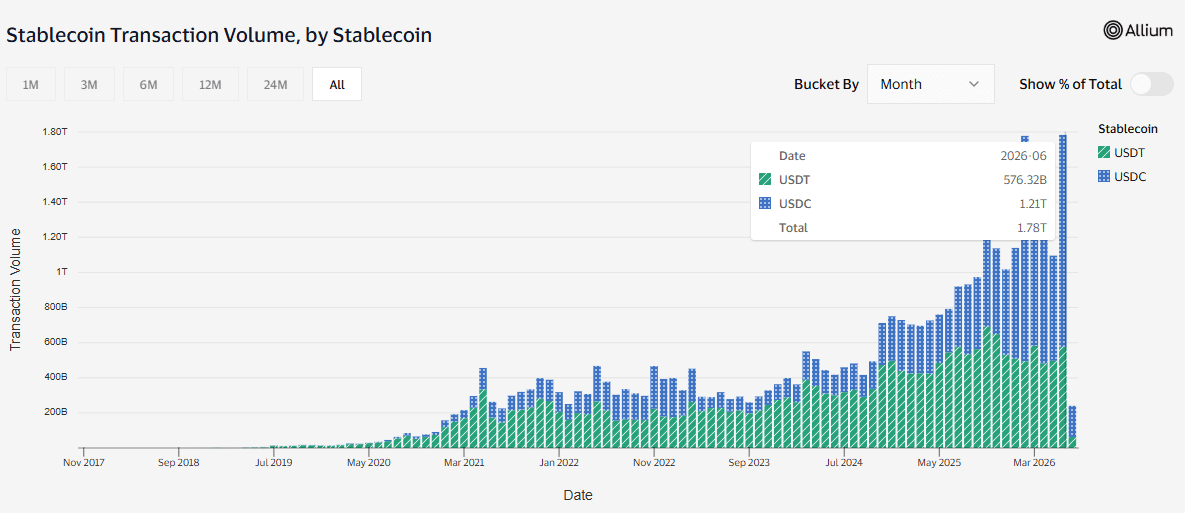
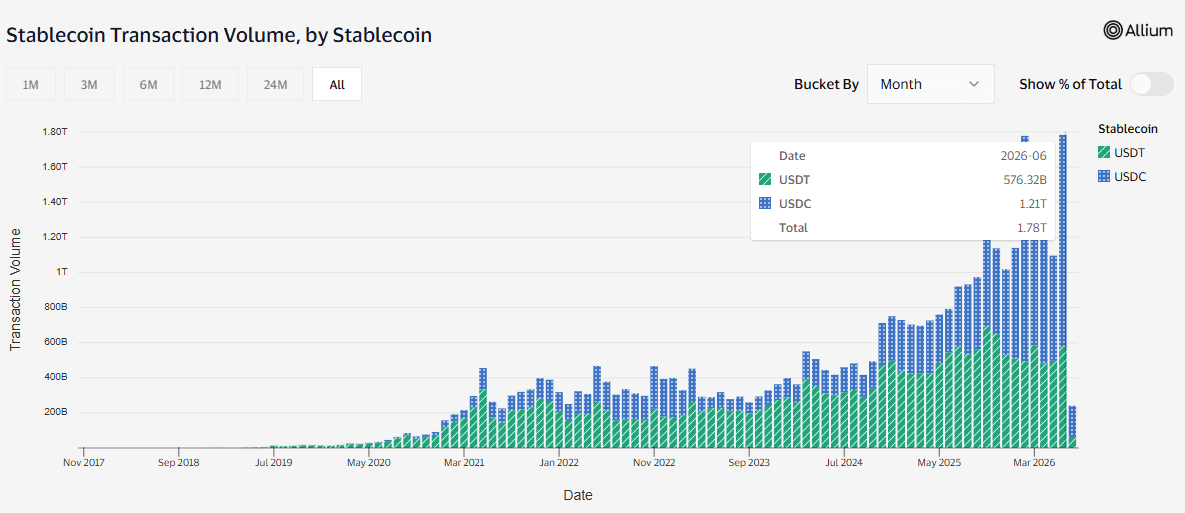
According to Visa data, USDC saw $1.21T in transfer volume in June, doubling Tether’s USDT. This was the second highest monthly transfer volume following February’s record $1.28T amid growing adoption across most blockchains.
Source: Visa

In fact, less than a week into July, USDC’s volume was 3x that of USDT, underscoring a likely shift tied to the MiCA framework. Users across the EU or those sending money to the continent may be opting for USDC instead of USDT.

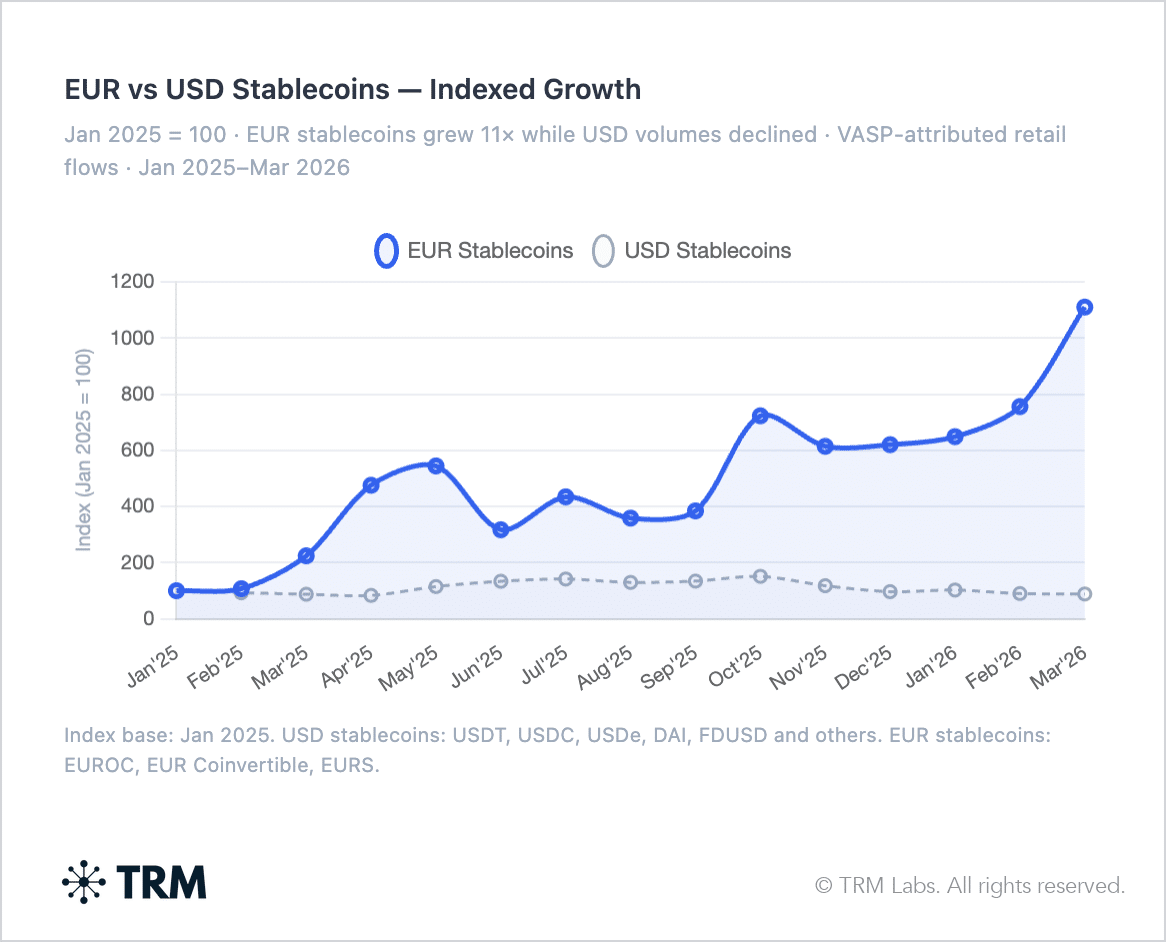
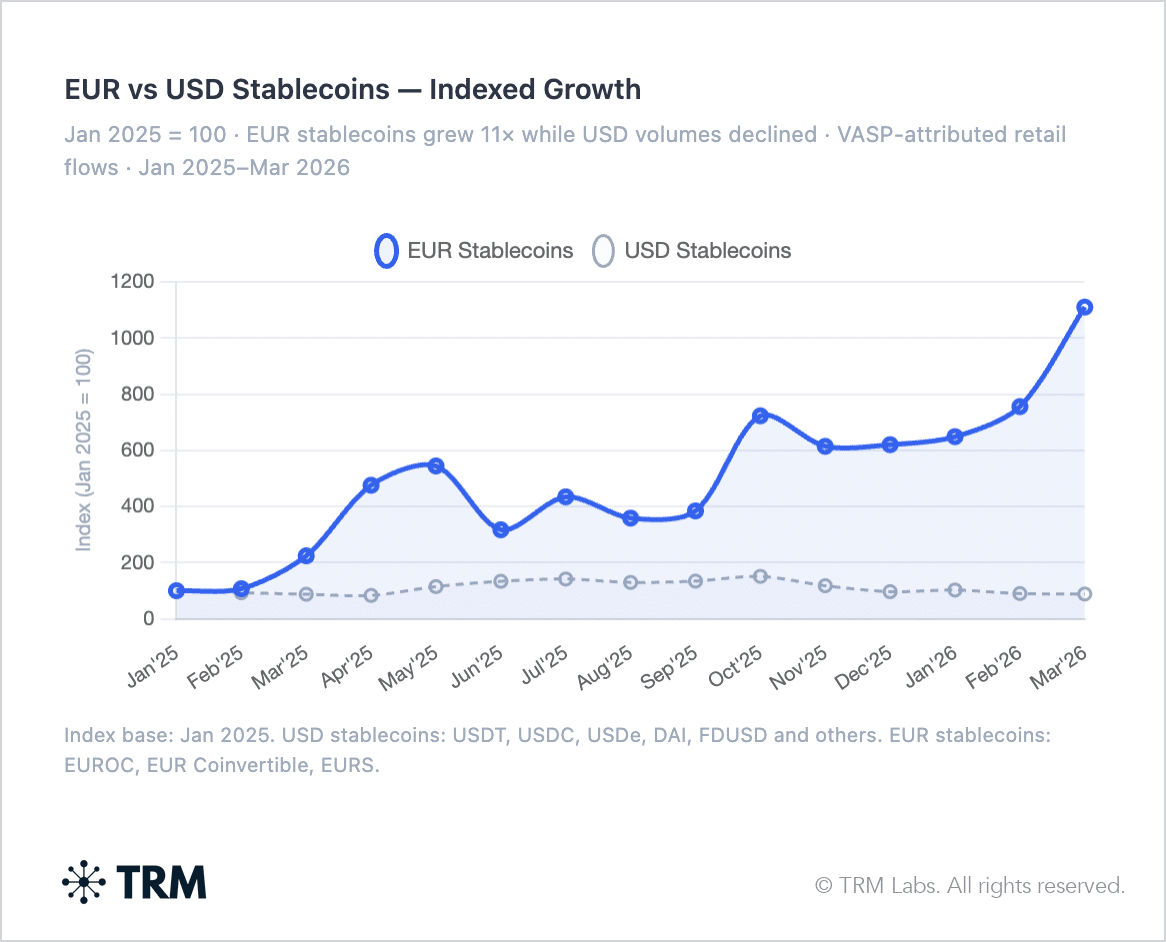
The shift was also evident across US dollar and Euro-based stablecoins. The latter grew 11x while USD-based stablecoin volumes shrank.
Source: TRM Labs

Tether’s USDT still dominates the stablecoin market in terms of supply though. It remains to be seen whether Circle will close the gap as Revolut and other EU platforms continue to delist USDT.


Final Summary

  • Revolut will delist USDT by August 31st and stop accepting deposits from the stablecoin by the end of July.
  • USDC transfer volume hit $1.21T, doubling Tether’s USDT, further underscoring MiCA’s impact on stablecoin adoption.


Пов'язані питання

QWhat is the key deadline and action that Revolut is taking regarding Tether's USDT stablecoin?

ARevolut will stop accepting USDT deposits by the end of July 2026 and will completely delist Tether's USDT from its platform by August 31, 2026. Users who fail to transfer their USDT funds by the end of August will have them automatically exchanged to fiat currency.

QAccording to the analyst Max Karpis, what is the primary reason behind Revolut's decision to delist USDT?

AAccording to analyst Max Karpis, Revolut's decision is primarily due to regulatory and risk reasons, specifically in response to compliance pressures, which he attributes to the EU's MiCA regulatory framework now being in effect.

QWhat are the main criticisms of the MiCA regulation expressed by Tether's CEO, Paolo Ardoino?

ATether CEO Paolo Ardoino criticizes MiCA as being 'bad' and 'dangerous' for stablecoins. He argues that its requirement for 60% of stablecoin reserves to be held as uninsured cash deposits in European banks could lead to bank failures, especially if there is a large-scale redemption event like a +20% redemption of USDT. He also believes it is designed to favor the Digital Euro and control fund flows.

QHow has Circle's USDC stablecoin reportedly been affected by the implementation of MiCA, according to the Visa data mentioned in the article?

AAccording to Visa data cited in the article, USDC's transfer volume reached $1.21 trillion in June 2026, doubling that of Tether's USDT. Furthermore, in early July, USDC's volume was three times that of USDT, indicating a significant shift in adoption likely tied to MiCA compliance.

QBeyond USDT and USDC, what broader trend in stablecoin usage was observed in the EU market as the MiCA transition period ended?

AThe article shows a broader shift towards Euro-based stablecoins. While USD-based stablecoin volumes shrank, Euro-based stablecoin volumes grew by 11 times, indicating a significant move towards euro-denominated stablecoins within the EU market following the MiCA framework's implementation.

Пов'язані матеріали

The Impact of OUSD on Circle, Tether, and Paxos: Not a Simple Negative, but a More Complex Competitive Landscape

OUSD's Impact on Circle, Tether, and Paxos: A Nuanced Competitive Reshuffle The launch of OUSD, a new stablecoin initiative, has complex implications for the stablecoin market. For Circle (CRCL), the initial 15-20% stock drop reflects legitimate competitive concerns but is not a "death sentence." Circle retains deep liquidity, existing integrations, and first-mover advantages. A potential restructuring or termination of its Coinbase partnership could even double its net revenue in the short term, providing more competitive freedom. However, OUSD, backed by Stripe's engineering and product strengths, could become the default stablecoin within the Stripe ecosystem for new adopters, challenging USDC's position. OUSD does not solve the core barrier for corporate adoption: it remains a credit exposure to its issuer (likely a Bridge-related entity), which, like Circle, is not an investment-grade entity. Large banks and asset managers could still capture the most lucrative enterprise use cases. Circle must accelerate its payment/fintech product development and consider defensive M&A. For Tether, OUSD targets a different market segment. Tether will continue focusing on distribution channels not prioritized by Stripe or Circle. Its market share may decline over time, but within a significantly growing total market. Paxos faces the greatest pressure. OUSD undermines the key selling points of its USDG stablecoin, and Paxos's regulatory advantages may diminish as frameworks mature. This poses a more existential challenge, explaining Paxos's recent shift back to its brokerage-as-a-service business.

marsbit3 хв тому

The Impact of OUSD on Circle, Tether, and Paxos: Not a Simple Negative, but a More Complex Competitive Landscape

marsbit3 хв тому

OUSD's Impact on Circle, Tether, and Paxos: Not a Simple Negative, but a More Complex Competitive Reshuffle

This article analyzes the impact of the newly announced stablecoin OUSD, backed by a consortium including Stripe, on major incumbents like Circle (USDC), Tether (USDT), and Paxos (USDG). For Circle, the announcement is not a simple negative. While the initial market reaction was rational, it's not a "death sentence." Circle retains deep liquidity, existing integrations, and first-mover advantage. A potential restructuring or termination of its exclusive revenue-sharing deal with Coinbase could even near-double its net income in the short term, providing more competitive flexibility. However, within the Stripe ecosystem, OUSD, with its strong engineering and product focus, could become the default choice, displacing USDC for new integrations. Circle must accelerate its own fintech product development and consider defensive M&A. OUSD does not directly threaten Tether's core markets, which focus on different distribution channels. Tether's market share may decline over time but within a significantly growing overall market. Paxos faces the greatest pressure. OUSD undermines the primary value proposition of its USDG stablecoin, and Paxos's regulatory advantages may erode as frameworks mature, posing a more existential challenge. This explains Paxos's recent strategic pivot towards brokerage-as-a-service. A fundamental unresolved issue for enterprise adoption remains: if issued by a Bridge-related entity, OUSD, like USDC, still represents a credit exposure to a non-investment-grade issuer, unless a parent company guarantee is provided. Large banks and asset managers entering the space later could still compete for the most lucrative enterprise use cases.

链捕手5 хв тому

OUSD's Impact on Circle, Tether, and Paxos: Not a Simple Negative, but a More Complex Competitive Reshuffle

链捕手5 хв тому

Торгівля

Спот
活动图片