Who Defines AI Hardware in 2026?

marsbitОпубліковано о 2026-05-22Востаннє оновлено о 2026-05-22

Анотація

"Who is Defining AI Hardware in 2026?" This article discusses a pivotal shift in the AI hardware industry in 2026, moving from conceptual demonstrations to widespread, cloud-integrated adoption. Key developments include the release of a national standard (the "Artificial Intelligence Terminal Intelligence Grading") by Chinese authorities, which classifies device intelligence from L1 to L4 based on capabilities like perception and cognition. Most current products are at L1 or L2, with L3 representing a significant leap requiring complex intent understanding and proactive service. Simultaneously, tech giants like Alibaba Cloud are accelerating this transition. At its summit, Alibaba Cloud showcased AI hardware applications and launched initiatives like the "Qianwen Smart Hardware X Tmall Cooperation Plan," offering technical support, traffic, and marketing resources. Its powerful Qwen model series, including the newly released Qwen3.7-Max, provides the essential cloud-based "brain" for advanced hardware, enabling sophisticated multimodal interactions and agent-like capabilities. The industry consensus is that "end-cloud collaboration" is now essential. Examples like the Ecovacs "Bajie"管家 robot and Yyanjiwei's "Shen Mou" cameras demonstrate this model: simple tasks and sensing happen on the device, while complex reasoning and memory are handled in the cloud. This approach lowers development barriers and directly boosts commercial metrics like user engagement and conversion rat...

In 2026, AI hardware, at a critical juncture of industrial leap, has moved beyond the stage of fragmented concept stacking.

The series of national standards titled "Classification of Intelligence Levels for Artificial Intelligence Terminals," jointly released by the Ministry of Industry and Information Technology, the Ministry of Commerce, and the State Administration for Market Regulation, establishes a clear scale for this dynamic track, dividing terminal intelligence into four levels from L1 to L4, progressing stepwise from reactive to collaborative.

This standard system clarifies five core competency elements: perception, cognition, execution, memory, and learning. It covers seven product categories including mobile phones, computers, TVs, glasses, vehicle cockpits, smart speakers, and headphones, essentially outlining the first wave of AI hardware forms poised for mass adoption and providing specific testing methodologies.

For consumers, determining how "smart" a device truly is no longer requires deciphering complex technical logic or relying solely on manufacturers' claims.

Nearly concurrent with the standards release, Alibaba Cloud showcased multiple AI hardware landing achievements at its Cloud Summit held on May 20th. Simultaneously, it announced the "Qianwen Smart Hardware X Tmall Collaboration Plan" in partnership with Tmall. This plan includes exclusive benefits for the Qianwen model, Tmall's billion-level traffic support, and cross-channel brand exposure resources. Both parties will jointly invest over 100 million yuan in resources to help hardware manufacturers achieve a value leap from three dimensions—technology, brand, and sales channels—accelerating the explosion of new AI hardware species.

As the Tmall 618 promotional campaign is about to launch, multiple AI hardware products equipped with Qianwen capabilities will debut on Tmall. Both platforms will provide combined traffic and brand exposure resources to accelerate the commercial landing of AI hardware. While the state has delineated the pyramid for AI hardware, cloud vendors provide the foundational capabilities needed to ascend it.

These rapidly occurring changes point to the same trend:

AI hardware is transitioning from on-device proof-of-concept to the mass adoption of device-cloud collaboration, precisely at the inflection point where AI cloud service capabilities are being unleashed.

01. Who Stays at L1, Who Charges Towards L4?

From L1 to L4, each level's ascent corresponds to a higher threshold of capability.

L1 devices can only execute preset commands, essentially representing a smartified version of traditional appliances. L2 devices begin to possess tool-like attributes, allowing users to actively invoke certain functions.

Yu Xiuming, Vice President of the China Electronics Standardization Institute, noted during the standard interpretation that research and testing analysis indicate widely held user products are generally at L1 and L2 levels, with some new products reaching L3.

Overall, AI terminals are evolving along three parallel paths: upgrading traditional terminals, expanding the volume of emerging terminals, and exploring future terminals.

The real watershed is at the L3 "Assistive" level. The core of L3 is the terminal's ability to comprehensively understand user commands and intentions, and possess proactive recognition and service capabilities.

Taking a smart air conditioner as an example, an L3-level device can automatically detect sweat on a user's forehead and proactively lower the temperature. When the user activates "Away Mode," the camera first checks if anyone is still home and turns off the lights only after the person has put on shoes and left. These actions require synthesizing multiple inputs like audio, video, and sensors to perform complex intent recognition and judgment. The standard requires devices to have complex intent understanding, chain-of-thought reasoning, and long-term memory capabilities, meaning devices must not only answer "what" but also understand "why" and even anticipate "what to do next."

Some hardware manufacturers have been stagnating at the L1 level in recent years, exhibiting several typical characteristics.

One is overly closed product definitions, solving only a single function without reserving sensors or computing redundancy for future upgrades. Another is excessive reliance on lightweight models on the device side, leading to capability breakdowns in complex scenarios.

There's a more subtle type: packaging L1 functionalities as L2 or L3 gimmicks. Such products would quickly be exposed under standard testing, and consumers would vote with their feet.
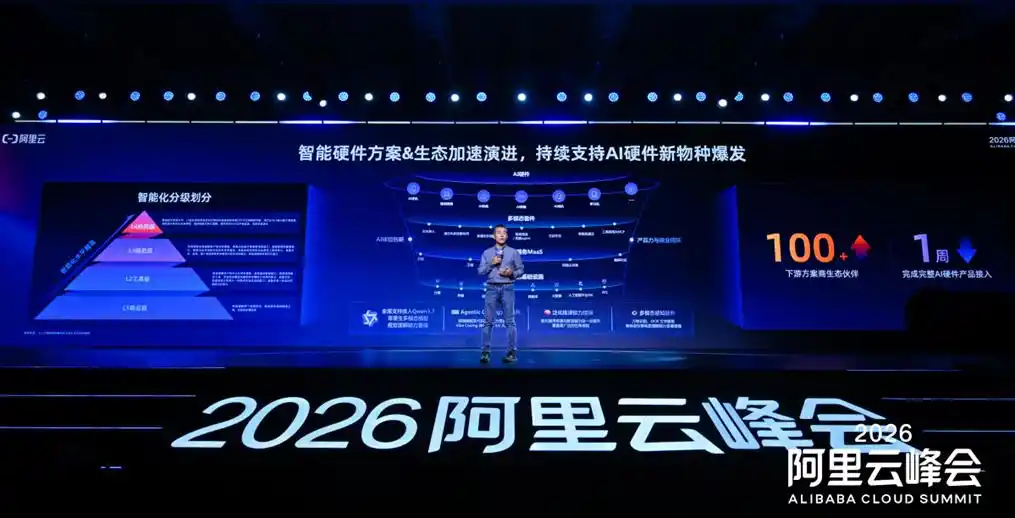
Regarding this, Chen Liwei, Deputy General Manager of the Solutions Architecture Department, Public Cloud Business Group, Alibaba Cloud Intelligence, believes the entire hardware industry is currently transitioning from L2 to L3. Whoever can first build the foundational architecture for L3 and achieve L3-level product experiences will capture a larger market share.

Staying at L1, or even L2, is no longer a safe zone. To smoothly enter the L3 stage, the combination of multimodal perception and generalized reasoning is required.

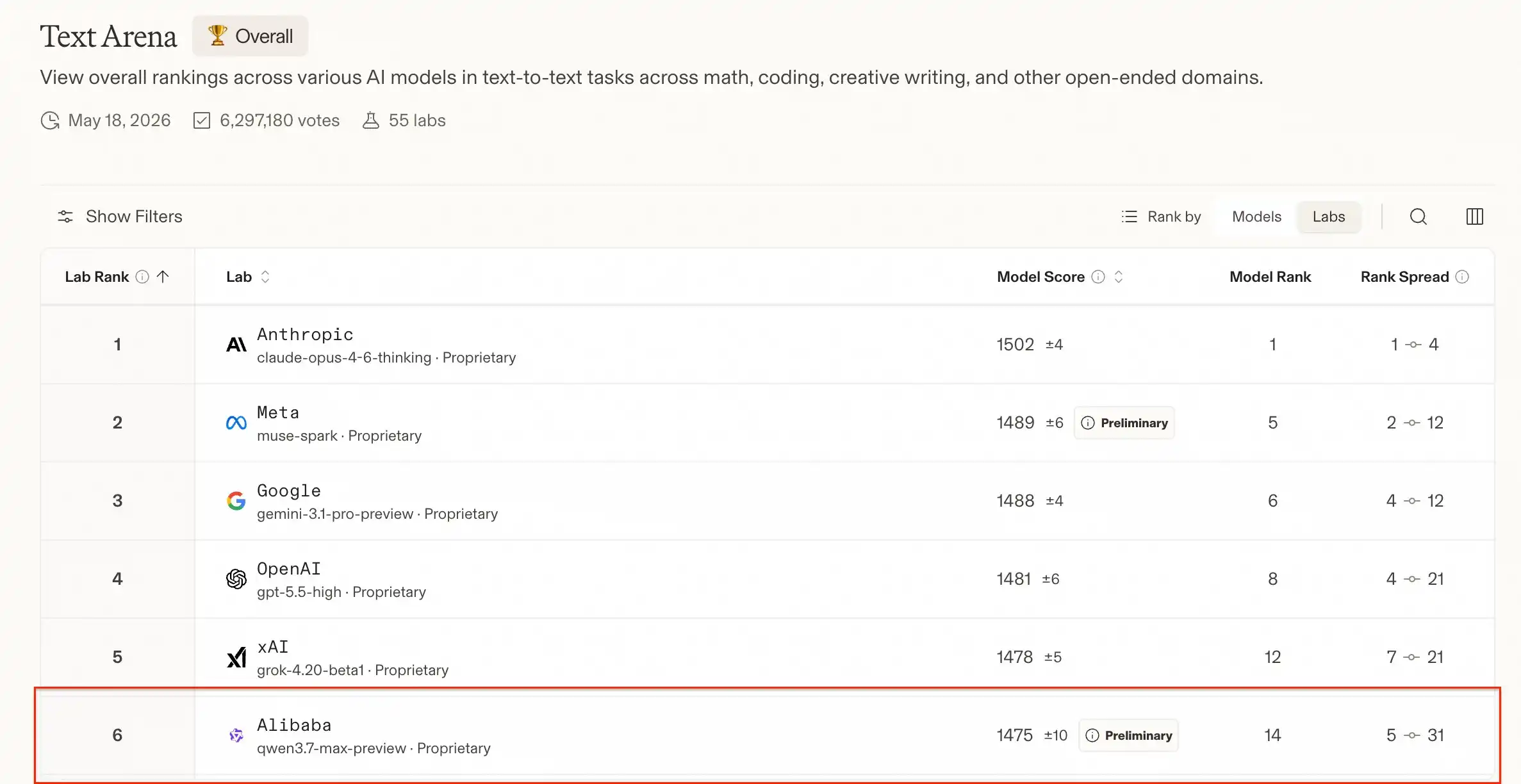
The Alibaba Cloud Summit also重磅 released the flagship model Qwen3.7-Max. In the global large model blind evaluation总榜 by the third-party organization Arena, Qwen3.7-Max ranks first among domestic models, benchmarking against the world's strongest models.

The design初衷 of Qwen3.7-Max is precisely to make the model the core of an Agent,具备 autonomous planning, continuous iteration, and cross-device collaboration capabilities. Its technical upgrades恰好 correspond to the requirements for perception and cognition elements at the L3 level. Currently, the multimodal interaction development kit面向智能硬件行业 provided by Alibaba Cloud fully supports接入 Qwen3.7-Max.
The stronger the cloud-side generalization capabilities, the lower the adaptation cost for hardware to reach L3. Chen Liwei also pointed out: "Today, no single hardware product can achieve an end-to-end closed-loop user experience through a single model. The solution must be a combination of multiple models."

02. Device-Cloud Collaboration Becomes a Necessity

Following the L3 Assistive level, L4 Collaborative represents an even greater leap.

Based on current definitions, the core characteristic of L4 is not whether a single device is smarter, but whether multiple devices form an intelligent system. When a user enters their home, glasses, speakers, robots, and the cockpit automatically share memory and serve the user in the physical world.

Therefore, the biggest challenge hardware manufacturers face in未来 smoothly landing technology and products at L4 is system integration and device collaboration.

In the standard classification table, most products from mobile terminals to glasses and headphones are annotated as "device-cloud collaborative." The underlying logic is straightforward: real-time response relies on the device side, while complex reasoning depends on the cloud—currently the optimal solution for intelligence.

Ecovacs'管家 robot "Bajie" is a prime example. Considering open-source and model iteration capabilities, Ecovacs chose early on to integrate the Qianwen large model.

The core challenge for a管家 robot stems from the non-standard nature of home environments—high safety requirements, dense information, and very long-tail needs. One of the solutions for Ecovacs' "Bajie" is to encapsulate the robot's atomic capabilities (grasping, fetching/placing, perception, planning) into API interfaces easily understood by the model. The cloud side, based on Qwen3.6-Plus, handles complex tasks like environmental perception and action decomposition.

When a user gives a vague command like "tidy up the living room," it can first结合云端理解 what objects the living room contains and what the standard for tidiness is, then拆解 it into a series of action commands sent to the robotic arm. This series of understandings can occur without预编程; the agent on "Bajie" proactively串联 the tasks.

Currently, Ecovacs has also opened up the "Bajie" system, atomic capabilities, and simulation platform, allowing更多生态伙伴 to conveniently participate in algorithm development and application落地 for home robots through "Bajie."

The products from Yanjiwei's Shenmou series similarly confirm the necessity of device-cloud collaboration. As a company focused on low-power intelligent imaging, Yanjiwei's core is optimizing camera power supply and network communication challenges, achieving operation without power or network connections. The challenge posed by low power consumption is the limited算力 of edge chips, unable to handle the inference load of large-scale models.

Their solution is: edge-side real-time tagging and preliminary processing, using edge AI chips to identify people, cars, non-motorized vehicles in the画面, then uploading text/image information via low-power 4G beacons to the cloud. The cloud then performs deep understanding and structured memory based on the Qianwen large model, allowing users to query the camera like searching a photo album, e.g., "What color cat appeared at the door yesterday afternoon?" This体验 is nearly impossible with a纯端侧方案.

Based on this architecture, the company's付费转化率 increased by 25%, average order value increased by 30%, and付费用户持续留存率 reached over 75%. AI capabilities directly translated into commercial competitiveness.

The division-of-labor model of device-cloud collaboration is becoming industry consensus, and the role of cloud vendors has随之 undergone significant changes.

In the past, cloud vendors only provided云 resources like computing and storage. Now, they are transforming into providers of device-cloud collaborative, Agent-centric infrastructure foundations, packaging capabilities like visual understanding, task planning, and even frontend code generation into callable services. They are lowering the门槛 for hardware manufacturers to embed AI capabilities into existing systems through development layers—from providing platforms and models to providing Agentic Coding.

Chen Liwei also summarized Alibaba Cloud's current four core challenges: model组合,工程 complexity, continuous operational capability, and data闭环.

Regarding model组合 and engineering, it's worth mentioning the previously released new-generation全模态大模型 Qwen3.5-Omni.

Qwen3.5-Omni achieved SOTA in 215 tasks including audio-visual understanding, recognition, and interaction, significantly enhancing real-time interaction体验 and possessing "high emotional intelligence." More令人惊喜 is Qwen3.5-Omni's demonstrated ability in音视频 Vibe Coding—users阐述需求 to the camera, and the model can autonomously generate complex product code for apps, web pages, games, etc. Real-time全模态能力 provides the crucial technological foundation for AI hardware progressing from L1/L2 to L3/L4.

While全模态 models不断成熟, hardware manufacturers are also exploring differentiated落地路径.

For example, Robosen, a company focused on toC humanoid robots, is布局 an interesting device-cloud collaboration尝试. Users can completely take over the robot's AI system via home局域网 using their own computer or local agent, enabling the robot to have customized capabilities like smart home control, dialect conversation, and personalized topics.

Guangfan Technology, which just发售 the world's first AI headphone with visual perception capabilities, observed that the biggest change in the AI hardware industry over the past year is "speed"—the惊人迭代速度 of software and hardware. AI has evolved from单纯聊天 to having智能体和自学习能力, and what it can do increases substantially daily. Guangfan's实践路径 is to build一套比 OpenClaw范围更广的 AI-native operating system, covering multimodal interaction, hardware scheduling, software scheduling, and算力调度.

The explorations by these "frontline players" prove that device-cloud collaboration is a "difficult yet correct" long-term theme. Cloud-side intelligence is rapidly evolving, while the execution capabilities and hardware scheduling abilities on the device side remain the key variables determining the intelligence stage of AI hardware.

03. Where the Boundaries of Collaboration Lie, So Lies the Market

Beyond technical guidance, the significance of the分级标准 also includes signaling at the commercialization level.

Consumers can judge products based on L1 to L4, which in turn provides hardware manufacturers with a clear upgrade roadmap.

Especially for startups, self-developing multimodal models and inference frameworks is unrealistic. What更多厂商 need is a standardized AI foundation and a clear path to商业回报.

The commercial imagination for AI hardware services is traceable in the high user stickiness of the Looka Doctor AI Study Camera.公开数据显示 from Looka Doctor shows早期用户日均使用时长 was only over 30 minutes; after integrating Qwen3.6-Plus,日均时长 increased by 50%, with approximately 50 million user-taken photos interacting with AI monthly. More accurate万物识别 and OCR capabilities led to higher-frequency image recognition, and enhanced泛化推理 increased问答轮次. Quantifiable progress in the AI foundation directly fed back as a qualitative change in user stickiness.

After users generate hundreds of daily interactions on a hardware device, accumulating大量个人兴趣数据, a natural需求浮现出来: How can these memories and preferences be联动到其他设备上? For example, continuing to制定学习任务 based on the data on a school device.

Once the intelligence level of a single device reaches a certain高度, the market's true imagination shifts to system intelligence under全场景共生.

The L4 Collaborative level mentioned in the standard focuses on跨设备协同与用户偏好记忆. A phone, a pair of glasses, a cockpit, a speaker—forming an intelligent network围绕用户.

You wear glasses into the car, and the cockpit automatically switches to your driving preferences; you speak to a speaker, and the robot starts tidying the living room. Consistent体验 requires all devices to share the same cloud-side intelligent foundation, and cloud vendors to provide a unified identity, memory, and execution调度体系.

全场景共生 will directly change the商业化逻辑 of AI hardware.

In the past, hardware mostly relied on supply chain profits—each unit sold completed a transaction. Now, AI叠加 opens up entirely new imagination. In the future,溢价服务 can also be generated continuously through subscription models.

In协同场景, users are more willing to pay for跨设备的连续体验, such as subscribing to personal assistant services or purchasing scenario-specific skill packages. Consequently, value distribution across the entire track will be reshuffled.

An existing example: After Rokid glasses integrated Alibaba's version of OpenClaw, JVS Claw,端侧,职场人士 can efficiently perform operations like creating calendars, replying to WeChat, and making payments. If these high-frequency behaviors can be further integrated and沉淀 as scenarios that enhance work efficiency, they could extend into subscription services for life assistants.

During the 618 promotional period, Tmall also上线了数十个主机品牌 equipped with JVS Claw, fully integrated with智能助手, ushering in the Agent PC era.

Hardware becomes the入口 for services, not the终点.

The wave of市场重构 will surge towards products capable of融入这张智能网络, gradually abandoning island-like L1-level devices.

The分级标准 provides guidance for the industry's终局,端云协同 offers a确定性路径, and the云厂商's standardized capabilities are making that path wider and smoother.


Пов'язані питання

QWhat is the significance of the AI terminal intelligence grading standard issued in 2026 according to the article?

AThe standard, issued by multiple Chinese ministries, classifies terminal intelligence into L1 to L4 levels. It provides a clear benchmark for the AI hardware industry, defining five capability elements (perception, cognition, execution, memory, learning) across seven product categories. This helps move beyond vague marketing and allows consumers to objectively evaluate a device's smartness.

QWhat role does Alibaba Cloud play in the AI hardware ecosystem as described in the article?

AAlibaba Cloud provides the foundational capabilities (the 'ability pedestal') for AI hardware to scale. It offers more than just cloud resources; it supplies the models, tools, and infrastructure for effective edge-cloud collaboration. This includes launching the 'Qianwen Smart Hardware X Tmall Cooperation Plan' to provide technical, branding, and sales channel support, helping hardware manufacturers accelerate commercialization.

QWhat defines the key difference between L3 (assistant level) and lower levels of AI hardware intelligence?

AL3 represents a major leap requiring complex intent understanding, chain reasoning, and long-term memory. Unlike L1 (preset commands) or L2 (user-initiated tool functions), L3 devices can proactively identify user needs and provide services without explicit instructions. They can combine multi-modal inputs (audio, video, sensors) to understand 'why' and predict 'what next'.

QWhy is edge-cloud collaboration considered essential for advancing AI hardware beyond L3?

AEdge-cloud collaboration is essential because it balances real-time responsiveness (handled on the device) with complex reasoning and processing (handled in the cloud). This division of labor allows hardware to overcome limitations in on-device compute power and battery life, enabling features like deep environmental understanding and structured memory that are necessary for higher intelligence levels like L4.

QHow might the commercialization model for AI hardware change with the advancement to L4 (collaborative level)?

AThe model is expected to shift from a one-time hardware sale to a service-based economy. As devices form an intelligent, interconnected network around the user, new revenue streams like subscription services for personal assistants or scenario-specific skill packages become viable. The hardware becomes an entry point for ongoing, value-added services rather than just the final product.

Пов'язані матеріали

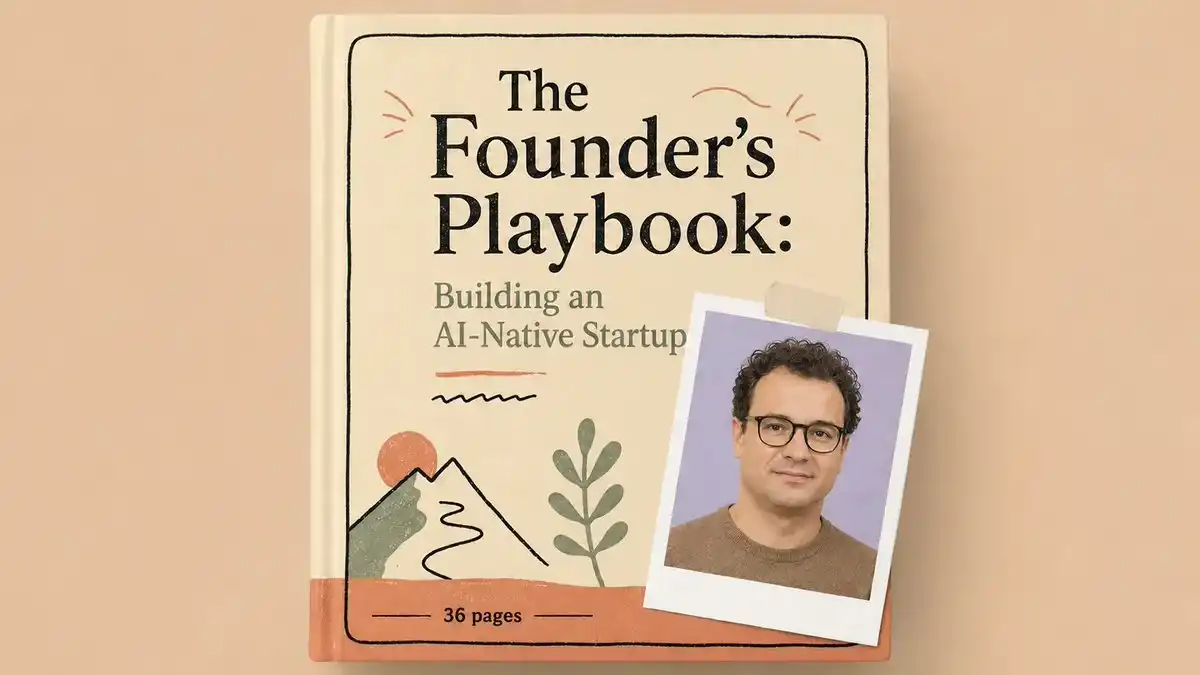
Anthropic Major Release: "The Founder's Playbook" - All 4 Stages of Entrepreneurship, Completely Reimagined with AI

**Anthropic Releases "The Founder's Playbook," Reimagining the Four Stages of Startups with AI** The logic of entrepreneurship is being fundamentally reshaped by AI. Anthropic's new handbook, "The Founder's Playbook: Building an AI-Native Startup," defines the AI-native startup as a new species: not a traditional company with AI tools, but a venture driven by AI from day one. The founder's role is transforming from a hands-on builder to a conductor or architect, orchestrating AI agents for execution while focusing on high-level judgment and strategy. Anthropic outlines a product matrix of Claude tools for different tasks: Claude Chat for interactive research, Claude Code for generating production-ready code, and Claude Cowork for automating knowledge-intensive workflows. The handbook structures the startup lifecycle into four stages, detailing core goals, pitfalls, and AI applications for each: 1. **Idea Stage**: Focuses on validating a real problem. The core challenge is avoiding confirmation bias. AI practices include using Claude as a "structured devil's advocate" to challenge assumptions and for automated market/competitor research. 2. **MVP Stage**: Aims to gather early signals of Product-Market Fit (PMF). Key risks are technical debt and scope creep due to rapid AI-assisted development. Recommended AI uses include maintaining project memory documents (e.g., CLAUDE.md), using Claude Code for structured coding, and automating user feedback analysis. 3. **Launch Stage**: Centers on establishing scalable growth, operations, and compliance. Challenges include accelerating technical debt and founders becoming bottlenecks. AI should be used to build an "operating system" for launch—automating routine tasks (scheduling, reporting, content) and code audits—freeing founders for critical decisions. 4. **Scale Stage**: Focuses on achieving sustainable business operations. The main challenge is delegating operational control. AI should be leveraged for differentiated marketing, operational optimization, and building competitive moats through data network effects. The handbook concludes that in the AI era, "Can we build it?" is no longer the primary constraint. The advantage shifts back to foundational strengths: **insight, judgment, and a deep understanding of a specific problem and audience.**

marsbit5 год тому

Anthropic Major Release: "The Founder's Playbook" - All 4 Stages of Entrepreneurship, Completely Reimagined with AI

marsbit5 год тому

Eight Departments Launch Severe Crackdown on Cross-Border Securities Firms, How to Interpret This?

China's top financial regulators, including the CSRC and seven other ministries, have launched a sweeping crackdown on unlicensed cross-border securities operations. The core action involves a joint enforcement plan and the issuance of administrative penalties against major offshore internet brokers like Futu and Tiger Brokers for conducting unauthorized securities business in mainland China without a domestic license. The primary legal basis is China's requirement for securities businesses to operate with proper, locally issued licenses. The crackdown aims to eliminate a major regulatory gray area, plugging channels that allowed massive, unmonitored capital outflows which posed risks to financial stability, currency controls, and foreign exchange reserves. It also seeks to protect mainland investors who previously lacked legal recourse when dealing with offshore platforms and to secure sensitive financial data. The immediate impact is severe for the targeted brokers, including a complete ban on new mainland business, forced liquidation of existing mainland client positions over two years, and the confiscation of illegal profits estimated in the billions. Their U.S.-listed shares plummeted in response. Market analysts warn that the forced sell-off of an estimated 250-280 billion RMB in assets, concentrated in U.S. tech stocks, Chinese ADRs, and Hong Kong equities, could create sustained selling pressure on these markets over the next two years, potentially lowering valuations. For mainland investors, legal cross-border investment channels will become extremely constrained. The high asset threshold for the Stock Connect program and the severe shortage of QDII fund quotas—leading to chronic high premiums on popular U.S.-focused ETFs—mean retail access to overseas markets like the U.S. will be sharply limited. Conversely, some of the returning capital may flow into domestic A-share sectors like AI, semiconductors, and advanced manufacturing. However, this could further inflate valuations in these already elevated sectors. In conclusion, regulators frame this move not as closing off cross-border investment, but as a necessary step to enforce compliance, manage systemic risk, and steer investors toward regulated, protected channels like QDII and Stock Connect for the long-term health of the financial system.

链捕手5 год тому

Eight Departments Launch Severe Crackdown on Cross-Border Securities Firms, How to Interpret This?

链捕手5 год тому

Торгівля

Спот
Ф'ючерси

Популярні статті

Що таке GROK AI

Grok AI: Революція в розмовних технологіях ери Web3 Вступ У швидко змінюваному ландшафті штучного інтелекту Grok AI вирізняється як помітний проєкт, що поєднує сфери передових технологій та взаємодії з користувачами. Розроблений компанією xAI, яку очолює відомий підприємець Ілон Маск, Grok AI прагне переосмислити, як ми взаємодіємо зі штучним інтелектом. Оскільки рух Web3 продовжує процвітати, Grok AI має на меті використати потужність розмовного ШІ для відповіді на складні запитання, надаючи користувачам досвід, який є не лише інформативним, але й розважальним. Що таке Grok AI? Grok AI — це складний розмовний чат-бот, розроблений для динамічної взаємодії з користувачами. На відміну від багатьох традиційних систем ШІ, Grok AI охоплює ширший спектр запитів, включаючи ті, які зазвичай вважаються недоречними або виходять за межі стандартних відповідей. Основні цілі проєкту включають: Надійне міркування: Grok AI акцентує увагу на здоровому глузді, щоб надавати логічні відповіді на основі контекстуального розуміння. Масштабоване управління: Інтеграція допоміжних інструментів забезпечує моніторинг та оптимізацію взаємодій користувачів для покращення якості. Формальна верифікація: Безпека є пріоритетом; Grok AI впроваджує методи формальної верифікації для підвищення надійності своїх результатів. Розуміння довгого контексту: Модель ШІ відзначається здатністю зберігати та згадувати обширну історію розмов, що сприяє змістовним та контекстуально обізнаним дискусіям. Стійкість до атак: Зосереджуючись на покращенні своїх захистів від маніпульованих або зловмисних вхідних даних, Grok AI прагне зберегти цілісність взаємодій з користувачами. По суті, Grok AI — це не просто пристрій для отримання інформації; це занурюючий розмовний партнер, який заохочує динамічний діалог. Творець Grok AI Геній, що стоїть за Grok AI, — це ніхто інший, як Ілон Маск, особа, яка стала синонімом інновацій у різних сферах, включаючи автомобільну промисловість, космічні подорожі та технології. Під егідою xAI, компанії, що зосереджена на розвитку технологій ШІ на користь суспільства, бачення Маска прагне переосмислити розуміння взаємодій з ШІ. Лідерство та основоположна етика глибоко впливають на прагнення Маска розширити технологічні межі. Інвестори Grok AI Хоча конкретні деталі щодо інвесторів, які підтримують Grok AI, залишаються обмеженими, загальновідомо, що xAI, інкубатор проєкту, заснований і підтримується переважно самим Ілоном Маском. Попередні підприємства та активи Маска забезпечують надійну підтримку, що додатково зміцнює довіру до Grok AI та потенціал для зростання. Однак наразі інформація про додаткові інвестиційні фонди або організації, що підтримують Grok AI, не є доступною, що позначає область для потенційного майбутнього дослідження. Як працює Grok AI? Операційна механіка Grok AI є такою ж інноваційною, як і його концептуальна структура. Проєкт інтегрує кілька передових технологій, які сприяють його унікальним функціональним можливостям: Надійна інфраструктура: Grok AI побудований з використанням Kubernetes для оркестрації контейнерів, Rust для продуктивності та безпеки, і JAX для високопродуктивних числових обчислень. Ця трійка забезпечує ефективну роботу чат-бота, його масштабованість та швидке обслуговування користувачів. Доступ до знань у реальному часі: Однією з відмінних рис Grok AI є його здатність отримувати дані в реальному часі через платформу X — раніше відому як Twitter. Ця можливість надає ШІ доступ до останньої інформації, що дозволяє надавати своєчасні відповіді та рекомендації, які можуть бути пропущені іншими моделями ШІ. Два режими взаємодії: Grok AI пропонує користувачам вибір між “Розважальним режимом” та “Звичайним режимом”. Розважальний режим дозволяє більш ігровий та гумористичний стиль взаємодії, тоді як Звичайний режим зосереджується на наданні точних і правильних відповідей. Ця універсальність забезпечує індивідуальний досвід, що відповідає різним уподобанням користувачів. По суті, Grok AI поєднує продуктивність із залученням, створюючи досвід, який є одночасно збагачуючим і розважальним. Хронологія Grok AI Шлях Grok AI відзначений важливими етапами, які відображають його розвиток та етапи впровадження: Початковий розвиток: Фундаментальна фаза Grok AI тривала приблизно два місяці, протягом яких проводилося початкове навчання та налаштування моделі. Випуск бета-версії Grok-2: У значному досягненні була оголошена бета-версія Grok-2. Цей випуск представив дві версії чат-бота — Grok-2 та Grok-2 mini — кожна з яких оснащена можливостями для спілкування, кодування та міркування. Публічний доступ: Після бета-розробки Grok AI став доступним для користувачів платформи X. Ті, хто має акаунти, підтверджені номером телефону та активні принаймні сім днів, можуть отримати доступ до обмеженої версії, що робить технологію доступною для ширшої аудиторії. Ця хронологія відображає систематичний розвиток Grok AI від початку до публічної взаємодії, підкреслюючи його прагнення до постійного вдосконалення та взаємодії з користувачами. Ключові особливості Grok AI Grok AI охоплює кілька ключових особливостей, які сприяють його інноваційній ідентичності: Інтеграція знань у реальному часі: Доступ до актуальної та релевантної інформації відрізняє Grok AI від багатьох статичних моделей, забезпечуючи захоплюючий та точний досвід для користувачів. Універсальні стилі взаємодії: Пропонуючи різні режими взаємодії, Grok AI задовольняє різноманітні уподобання користувачів, запрошуючи до творчості та персоналізації у спілкуванні з ШІ. Передова технологічна основа: Використання Kubernetes, Rust та JAX надає проєкту надійну основу для забезпечення надійності та оптимальної продуктивності. Етичні міркування в дискурсі: Включення функції генерації зображень демонструє інноваційний дух проєкту. Однак це також піднімає етичні питання, пов'язані з авторським правом та поважним зображенням впізнаваних фігур — триваюча дискусія в спільноті ШІ. Висновок Як піонер у сфері розмовного ШІ, Grok AI втілює потенціал трансформаційних користувацьких досвідів в цифрову епоху. Розроблений компанією xAI та керований візією Ілона Маска, Grok AI інтегрує знання в реальному часі з передовими можливостями взаємодії. Він прагне розширити межі того, що може досягти штучний інтелект, зберігаючи при цьому акцент на етичних міркуваннях та безпеці користувачів. Grok AI не лише втілює технологічний прогрес, але й представляє нову парадигму спілкування в ландшафті Web3, обіцяючи залучити користувачів як глибокими знаннями, так і ігровою взаємодією. Оскільки проєкт продовжує розвиватися, він слугує свідченням того, що може досягти перетин технологій, творчості та людської взаємодії.

413 переглядів усьогоОпубліковано 2024.12.26Оновлено 2024.12.26

Що таке GROK AI

Що таке ERC AI

Euruka Tech: Огляд $erc ai та його амбіцій у Web3 Вступ У швидко змінюваному ландшафті технології блокчейн та децентралізованих додатків нові проекти з'являються часто, кожен з унікальними цілями та методологіями. Одним з таких проектів є Euruka Tech, який працює у широкій сфері криптовалют та Web3. Основна увага Euruka Tech, зокрема його токена $erc ai, зосереджена на представленні інноваційних рішень, розроблених для використання зростаючих можливостей децентралізованих технологій. Ця стаття має на меті надати всебічний огляд Euruka Tech, дослідження його цілей, функціональності, ідентичності його творця, потенційних інвесторів та його значення в ширшому контексті Web3. Що таке Euruka Tech, $erc ai? Euruka Tech характеризується як проект, який використовує інструменти та функціональність, що пропонуються середовищем Web3, зосереджуючи увагу на інтеграції штучного інтелекту у своїй діяльності. Хоча конкретні деталі про структуру проекту дещо неясні, він розроблений для покращення залучення користувачів та автоматизації процесів у крипто-просторі. Проект має на меті створити децентралізовану екосистему, яка не лише полегшує транзакції, але й включає прогностичні функції через штучний інтелект, звідси і назва його токена, $erc ai. Мета полягає в тому, щоб надати інтуїтивно зрозумілу платформу, яка сприяє розумнішим взаємодіям та ефективній обробці транзакцій у зростаючій сфері Web3. Хто є творцем Euruka Tech, $erc ai? На даний момент інформація про творця або засновницьку команду Euruka Tech залишається невизначеною та дещо непрозорою. Ця відсутність даних викликає занепокоєння, оскільки знання про бекграунд команди часто є важливим для встановлення довіри в секторі блокчейн. Тому ми класифікували цю інформацію як невідому, поки конкретні деталі не стануть доступними в публічному домені. Хто є інвесторами Euruka Tech, $erc ai? Аналогічно, ідентифікація інвесторів або організацій, які підтримують проект Euruka Tech, не надається через доступні дослідження. Аспект, який є критично важливим для потенційних зацікавлених сторін або користувачів, які розглядають можливість співпраці з Euruka Tech, - це впевненість, що походить від встановлених фінансових партнерств або підтримки від авторитетних інвестиційних компаній. Без розкриття інформації про інвестиційні зв'язки важко зробити всебічні висновки про фінансову безпеку або довговічність проекту. Відповідно до знайденої інформації, цей розділ також має статус невідомий. Як працює Euruka Tech, $erc ai? Незважаючи на відсутність детальних технічних специфікацій для Euruka Tech, важливо враховувати його інноваційні амбіції. Проект прагне використовувати обчислювальну потужність штучного інтелекту для автоматизації та покращення досвіду користувачів у середовищі криптовалют. Інтегруючи ШІ з технологією блокчейн, Euruka Tech має на меті надати такі функції, як автоматизовані угоди, оцінка ризиків та персоналізовані інтерфейси користувачів. Інноваційна суть Euruka Tech полягає в його меті створити безшовний зв'язок між користувачами та величезними можливостями, які пропонують децентралізовані мережі. Завдяки використанню алгоритмів машинного навчання та ШІ, він має на меті мінімізувати труднощі для нових користувачів і спростити транзакційні досвіди в рамках Web3. Ця симбіоз між ШІ та блокчейном підкреслює значення токена $erc ai, який виступає як міст між традиційними інтерфейсами користувачів та розвиненими можливостями децентралізованих технологій. Хронологія Euruka Tech, $erc ai На жаль, через обмежену інформацію про Euruka Tech ми не можемо представити детальну хронологію основних подій або досягнень у подорожі проекту. Ця хронологія, яка зазвичай є безцінною для відстеження еволюції проекту та розуміння його траєкторії зростання, наразі недоступна. Як тільки інформація про значні події, партнерства або функціональні доповнення стане очевидною, оновлення, безумовно, підвищать видимість Euruka Tech у крипто-сфері. Роз'яснення щодо інших проектів “Eureka” Варто зазначити, що кілька проектів та компаній мають схожу назву з “Eureka”. Дослідження виявило ініціативи, такі як AI-агент від NVIDIA Research, який зосереджується на навчанні роботів складним завданням за допомогою генеративних методів, а також Eureka Labs та Eureka AI, які покращують користувацький досвід в освіті та аналітиці обслуговування клієнтів відповідно. Однак ці проекти відрізняються від Euruka Tech і не повинні бути змішані з його цілями чи функціональністю. Висновок Euruka Tech, разом із його токеном $erc ai, представляє обіцяючого, але наразі невідомого гравця в ландшафті Web3. Хоча деталі про його творця та інвесторів залишаються невідомими, основна амбіція поєднання штучного інтелекту з технологією блокчейн є центром інтересу. Унікальні підходи проекту до сприяння залученню користувачів через передову автоматизацію можуть виділити його на фоні прогресу екосистеми Web3. Оскільки крипто-ринок продовжує еволюціонувати, зацікавлені сторони повинні уважно стежити за новинами, пов'язаними з Euruka Tech, оскільки розвиток задокументованих інновацій, партнерств або визначеного дорожньої карти може представити значні можливості в найближчому майбутньому. На даний момент ми чекаємо на більш суттєві інсайти, які можуть розкрити потенціал Euruka Tech та його позицію в конкурентному крипто-ландшафті.

393 переглядів усьогоОпубліковано 2025.01.02Оновлено 2025.01.02

Що таке ERC AI

Що таке DUOLINGO AI

DUOLINGO AI: Інтеграція вивчення мов з Web3 та інноваціями штучного інтелекту В епоху, коли технології змінюють освіту, інтеграція штучного інтелекту (ШІ) та блокчейн-мереж відкриває нові горизонти для вивчення мов. З'являється DUOLINGO AI та його асоційована криптовалюта, $DUOLINGO AI. Цей проект прагне об'єднати освітні можливості провідних платформ для вивчення мов з перевагами децентралізованих технологій Web3. У цій статті розглядаються ключові аспекти DUOLINGO AI, його цілі, технологічна структура, історичний розвиток та майбутній потенціал, зберігаючи чіткість між оригінальним освітнім ресурсом та цією незалежною криптовалютною ініціативою. Огляд DUOLINGO AI В основі DUOLINGO AI лежить прагнення створити децентралізоване середовище, де учні можуть отримувати криптографічні винагороди за досягнення освітніх етапів у мовній компетенції. Застосовуючи смарт-контракти, проект має на меті автоматизувати процеси перевірки навичок та розподілу токенів, дотримуючись принципів Web3, які підкреслюють прозорість та власність користувачів. Модель відрізняється від традиційних підходів до вивчення мов, акцентуючи увагу на структурі управління, що базується на спільноті, що дозволяє власникам токенів пропонувати поліпшення змісту курсів та розподілу винагород. Деякі з помітних цілей DUOLINGO AI включають: Гейміфіковане навчання: Проект інтегрує досягнення на блокчейні та невзаємозамінні токени (NFT), щоб представляти рівні мовної компетенції, сприяючи мотивації через захоплюючі цифрові винагороди. Децентралізоване створення контенту: Це відкриває можливості для викладачів та мовних ентузіастів вносити свої курси, сприяючи моделі розподілу доходів, яка вигідна всім учасникам. Персоналізація на основі ШІ: Використовуючи сучасні моделі машинного навчання, DUOLINGO AI персоналізує уроки, щоб адаптуватися до індивідуального прогресу навчання, подібно до адаптивних функцій, що є в усталених платформах. Творці проекту та управління Станом на квітень 2025 року команда, що стоїть за $DUOLINGO AI, залишається псевдонімною, що є поширеною практикою в децентралізованому криптовалютному середовищі. Ця анонімність має на меті сприяти колективному розвитку та залученню зацікавлених сторін, а не зосереджуватися на окремих розробниках. Смарт-контракт, розгорнутий на блокчейні Solana, зазначає адресу гаманця розробника, що свідчить про зобов'язання до прозорості щодо транзакцій, незважаючи на те, що особи творців залишаються невідомими. Згідно з його дорожньою картою, DUOLINGO AI прагне перетворитися на Децентралізовану Автономну Організацію (DAO). Ця структура управління дозволяє власникам токенів голосувати з важливих питань, таких як реалізація функцій та розподіл скарбниці. Ця модель узгоджується з етикою розширення прав і можливостей спільноти, що спостерігається в різних децентралізованих додатках, підкреслюючи важливість колективного прийняття рішень. Інвестори та стратегічні партнерства На даний момент немає публічно відомих інституційних інвесторів або венчурних капіталістів, пов'язаних з $DUOLINGO AI. Натомість ліквідність проекту в основному походить з децентралізованих бірж (DEX), що є різким контрастом до стратегій фінансування традиційних компаній у сфері освітніх технологій. Ця модель знизу вгору вказує на підхід, орієнтований на спільноту, що відображає зобов'язання проекту до децентралізації. У своєму білому документі DUOLINGO AI згадує про формування співпраці з неуточненими “блокчейн-освітніми платформами”, спрямованими на збагачення своїх курсів. Хоча конкретні партнерства ще не були розкриті, ці спільні зусилля натякають на стратегію поєднання інновацій блокчейну з освітніми ініціативами, розширюючи доступ та залучення користувачів у різноманітні навчальні напрямки. Технологічна архітектура Інтеграція ШІ DUOLINGO AI включає два основні компоненти на основі ШІ для покращення своїх освітніх пропозицій: Адаптивний навчальний двигун: Цей складний двигун навчається на основі взаємодій користувачів, подібно до власних моделей великих освітніх платформ. Він динамічно регулює складність уроків, щоб вирішувати конкретні проблеми учнів, зміцнюючи слабкі місця через цілеспрямовані вправи. Розмовні агенти: Використовуючи чат-боти на базі GPT-4, DUOLINGO AI надає платформу для користувачів, щоб брати участь у симульованих розмовах, сприяючи більш інтерактивному та практичному досвіду вивчення мови. Інфраструктура блокчейну Побудований на блокчейні Solana, $DUOLINGO AI використовує комплексну технологічну структуру, яка включає: Смарт-контракти для перевірки навичок: Ця функція автоматично нагороджує токенами користувачів, які успішно проходять тести на компетентність, підкріплюючи структуру стимулів для справжніх навчальних результатів. NFT значки: Ці цифрові токени позначають різні етапи, яких досягають учні, такі як завершення розділу курсу або оволодіння конкретними навичками, що дозволяє їм обмінюватися або демонструвати свої досягнення в цифровому форматі. Управління DAO: Члени спільноти, наділені токенами, можуть брати участь в управлінні, голосуючи за ключові пропозиції, що сприяє культурі участі, яка заохочує інновації в курсах та функціях платформи. Історичний хронологічний графік 2022–2023: Концептуалізація Основи DUOLINGO AI закладаються з створення білого документа, що підкреслює синергію між досягненнями ШІ у вивченні мов та децентралізованим потенціалом блокчейн-технологій. 2024: Бета-реліз Обмежений бета-реліз представляє пропозиції з популярних мов, винагороджуючи ранніх користувачів токенами в рамках стратегії залучення спільноти проекту. 2025: Перехід до DAO У квітні відбувається повний запуск основної мережі з обігом токенів, що спонукає обговорення в спільноті щодо можливих розширень на азійські мови та інші розробки курсів. Виклики та майбутні напрямки Технічні труднощі Незважаючи на свої амбітні цілі, DUOLINGO AI стикається з суттєвими викликами. Масштабованість залишається постійною проблемою, особливо в балансуванні витрат, пов'язаних із обробкою ШІ, та підтриманням чутливої, децентралізованої мережі. Крім того, забезпечення якості створення контенту та модерації в умовах децентралізованої пропозиції створює складнощі у підтримці освітніх стандартів. Стратегічні можливості Дивлячись у майбутнє, DUOLINGO AI має потенціал використовувати партнерства з мікрокреденційними академічними установами, надаючи блокчейн-верифіковані підтвердження мовних навичок. Крім того, розширення через різні блокчейни може дозволити проекту залучити ширші бази користувачів та додаткові екосистеми блокчейну, покращуючи його взаємодію та охоплення. Висновок DUOLINGO AI представляє інноваційне злиття штучного інтелекту та блокчейн-технологій, пропонуючи альтернативу, орієнтовану на спільноту, традиційним системам вивчення мов. Хоча його псевдонімна розробка та нова економічна модель несуть певні ризики, зобов'язання проекту до гейміфікованого навчання, персоналізованої освіти та децентралізованого управління освітлює шлях вперед для освітніх технологій у сфері Web3. Оскільки ШІ продовжує розвиватися, а екосистема блокчейну еволюціонує, ініціативи на кшталт DUOLINGO AI можуть переосмислити, як користувачі взаємодіють з мовною освітою, наділяючи спільноти та винагороджуючи залучення через інноваційні механізми навчання.

413 переглядів усьогоОпубліковано 2025.04.11Оновлено 2025.04.11

Що таке DUOLINGO AI

Обговорення

Ласкаво просимо до спільноти HTX. Тут ви можете бути в курсі останніх подій розвитку платформи та отримати доступ до професійної ринкової інформації. Нижче представлені думки користувачів щодо ціни AI (AI).

活动图片