Trader Earns Over $1.2 Million in Seven Hours on Memecoin PIPEDOG

cryptonews.ruОпубліковано о 2026-07-29Востаннє оновлено о 2026-07-29

Анотація

An unknown cryptocurrency trader achieved over $1.2 million in unrealized profit in less than seven hours by investing in the memecoin PIPEDOG, as reported by analysts Lookonchain. The trader purchased 293.75 million PIPEDOG for 8.39 ETH (approximately $16,000). Later, they sold 34.55 million tokens for 32.67 ETH (around $62,000), securing a portion of the gains. The remaining 259.2 million PIPEDOG held in the wallet were valued at about $1.18 million at the time of the report, though this later dropped below $900,000. Including the realized profits, the trader's total return exceeded $1.2 million, representing roughly a 77x gain on the initial investment. The successful trade sparked discussions on social media platform X, with some users speculating the trader might have used a sniper bot to buy the token immediately after its launch. Others highlighted the difficulty in identifying promising tokens before their rapid price appreciation. A user known as That Martini Guy cautioned against focusing solely on success stories, noting that while the 77x return is widely discussed, the many tokens that fall to zero often go unmentioned. The article also recalled a previous instance where a trader turned an $838 investment into approximately $1.05 million (a 1253x return) over 20 days with the token CASHCAT.

An unknown crypto trader received over $1.2 million in unrealized profit in less than seven hours thanks to an investment in the memecoin PIPEDOG. Analysts from Lookonchain drew attention to this.

According to their data, the investor purchased 293.75 million PIPEDOG for 8.39 $ETH (approximately $16,000). Later, the trader sold 34.55 million tokens for 32.67 $ETH (around $62,000), securing a portion of the profit.

At the same time, 259.2 million PIPEDOG remain in the wallet, with a market value estimated by the analysts at the time of their statement at approximately $1.18 million. At the time of writing, it had fallen below $900,000.

The experts noted that the trader's total profit, including the already realized portion, exceeded $1.2 million, corresponding to approximately a 77x return.

Recall that Incrypted has a Telegram channel about memecoins. To stay updated on the most relevant events in this sphere, subscribe to MEMEcrypted.

Community Reaction

The successful trade sparked lively discussion on X. Some users suggested the trader might have used a sniper bot to buy the token immediately after its launch.

Others pointed out that the main difficulty lies in finding promising tokens before their rapid price surge. Meanwhile, a user under the pseudonym That Martini Guy urged people not to focus solely on success stories.

"Everyone writes about the 77x return. But no one writes about the 100 tokens that went to zero before that," he noted.

Recall that previously, an unknown trader turned an initial investment in the CASHCAT token from about $838 into approximately $1.05 million in 20 days, achieving a 1253x return.

end-content

Пов'язані питання

QWhat is the main topic of the article?

AThe article reports on an unknown crypto trader who made over $1.2 million in unrealized profit in less than seven hours by investing in the memecoin PIPEDOG.

QHow much did the trader initially invest in PIPEDOG, and what was its approximate USD value?

AThe trader purchased 293.75 million PIPEDOG for 8.39 ETH, which was approximately $16,000 at the time.

QWhat action did the trader take to realize some of the profit, and how much did they make from that sale?

AThe trader sold 34.55 million PIPEDOG tokens for 32.67 ETH, realizing a profit of approximately $62,000.

QWhat was the community's main criticism regarding such success stories, as mentioned in the article?

AThe community criticism, highlighted by a user named That Martini Guy, was that people only focus on the rare success stories and not on the hundreds of other tokens that fail and go to zero.

QAccording to experts, what was the trader's total return on investment (ROI)?

AExperts noted that the trader's total return, including realized and unrealized profit, exceeded $1.2 million, representing approximately a 77x return on investment.

Пов'язані матеріали

A Brief History of the Lithography Machine: How a Beam of Light Walked Sixty-Nine Years

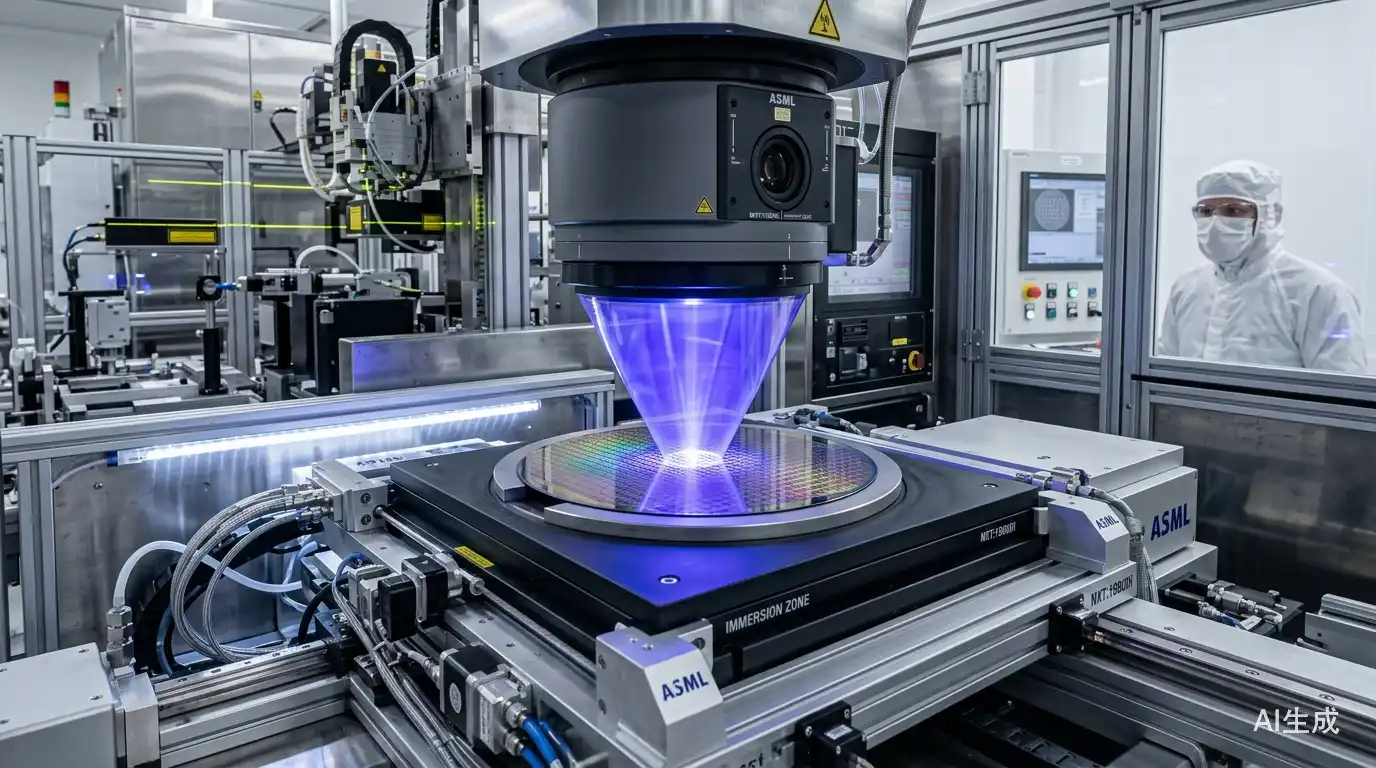
A Brief History of Lithography: 69 Years of Light In July 2026, reports of a Chinese state-backed company producing five immersion DUV lithography machines sent shockwaves through Wall Street, wiping roughly $44 billion from ASML's market cap in a single day. This event signaled a crack in the long-held assumption of Western monopoly over advanced chipmaking equipment. The journey began in 1957 when Jay Lathrop coined the term "photolithography." Early contact aligners (1960s) gave way to PerkinElmer's revolutionary projection aligners in 1973, boosting yields dramatically. GCA's step-and-repeat system (1978) established the modern stepper blueprint. However, within a decade, Japanese firms like Nikon and Canon, supported by a strong domestic market, captured nearly 90% of the global market from American pioneers, who ultimately exited the business. ASML, founded in a leaky shed in 1984, rose to dominance through key strategic moves: the TWINSCAN dual-stage platform (2001) and the acquisition of SVG, gaining access to Intel. A pivotal moment came in the early 2000s with the industry at a 193nm wavelength impasse. While most invested in the costly 157nm path, TSMC's Burn Lin proposed immersion lithography—using water between the lens and wafer. ASML bet on this simpler idea and, with Zeiss, delivered the first commercial immersion tool in 2004, effectively ending the 157nm roadmap and leaving competitors behind. The subsequent push for Extreme Ultraviolet (EUV) lithography was an even greater marathon. Deemed the least promising option in 1997, EUV's development, led by ASML, required vacuum chambers, reflective optics, and a complex tin-droplet laser plasma source. Critical to its eventual success (first high-volume manufacturing in 2018) was the 2012 "Customer Co-Investment Program," where Intel, TSMC, and Samsung provided upfront funding and equity, sharing the immense risk and cost. Today, ASML holds a near-total monopoly in EUV and immersion DUV. The core lesson of this 69-year history is not merely one of technological invention but of sustained partnership. Successive leaders—PerkinElmer, GCA, Nikon—were not ultimately defeated by superior technology but by losing the vital connection to customers willing to tolerate years of iteration, fund long-term R&D, and integrate early, imperfect tools into their production lines. The "light" that completed the journey was always carried by those patient, invested partners.

marsbit20 хв тому

A Brief History of the Lithography Machine: How a Beam of Light Walked Sixty-Nine Years

marsbit20 хв тому

CryptoQuant Analyst Claims 'Frightening Scenario and Simultaneously Promising Signal for Bitcoin' Reveals Ultimate Bottom Point! Here Are the Details

Bitcoin, the leading cryptocurrency, entered a bear market after hitting a historic high of $126,000 in October 2025 and has since fallen over 50%. As BTC recently dropped to around $57,000, opinions diverge on whether the bottom has been reached, with some expecting a drop closer to $50,000. According to a pseudonymous CryptoQuant analyst, the Bitcoin bear market may be nearing its end. The analyst notes that as selling pressure following the all-time high weakens, price corrections are becoming shorter and recovery periods more substantial. The July decline was only slightly below lows seen in early February, and BTC has remained relatively stable around $60,000 since, indicating diminished seller influence. Positive technical signals are also cited, with MACD and RSI showing bullish signals, positive divergences, and oversold conditions, collectively suggesting a potential bottom formation for BTC. However, the analyst does not rule out a final sell-off in the short term. They suggest the ultimate market bottom could be around $51,336, corresponding to the 61.8% Fibonacci retracement level. The $50,000 area is highlighted as a crucial historical support zone, aligning with the average investor cost basis and the 200-week moving average—conditions similar to bottoms in previous bear markets. *This is not investment advice.

cryptonews.ru1 год тому

CryptoQuant Analyst Claims 'Frightening Scenario and Simultaneously Promising Signal for Bitcoin' Reveals Ultimate Bottom Point! Here Are the Details

cryptonews.ru1 год тому

Торгівля

Спот
活动图片