Cryptocurrency mining in Kazakhstan has undergone a journey over several years from a rapidly growing industry with cheap electricity to a tightly regulated market where licenses, access to energy, transparent accounting of digital assets, and state participation in forming a crypto reserve are important.
2026: Strategic Mining and a Bet on a State Crypto Reserve
Strict Requirements Introduced for Strategic Miners
Starting July 28, 2026, rules for strategic digital mining approved by the government on July 18, 2026, came into force in Kazakhstan. The new procedure allows companies to obtain strategic miner status, but only upon fulfilling a set of mandatory conditions.
Applications can be submitted through the state "E-Licensing" system or through the office of the authorized body. Along with the application, the company must confirm compliance with infrastructure, energy, tax discipline, and technical readiness requirements.
- An owned data center with a capacity of at least 150 MW.
- Connection to power grids from substations of 35 kV and above.
- Equipment with a hash rate of at least 150 TH/s per unit.
- No tax debts or encumbrances on property.
- At least two contracts with internet providers.
- A service center with qualified specialists on the data center's premises.
The verification is a two-stage process. First, the authorized body assesses the completeness and accuracy of the information within 3 working days. Then, a commission evaluates whether the miner meets the established criteria and if there is free electricity within the approved quota within 5 working days.
If the decision is positive, the company signs an agreement with the autonomous cluster fund "Astana Hub" within 5 working days and a separate electricity purchase agreement with an energy-producing organization. In case of refusal, a company can reapply after rectifying violations, except in situations where there is simply no free energy volume for the required quota.
A strategic miner is obliged to open a separate wallet for distributing mined digital assets through a mining pool. At the same time, the rules allow combining strategic mining with regular cryptocurrency mining. Essentially, the mined cryptocurrency becomes not only a commercial result but also an asset: accounting must track it separately, especially if a portion of the coins is directed to the state reserve.
Part of Mined Cryptocurrency to Go to National Reserve
The July 18, 2026 resolution also established another key rule: participants in strategic mining will transfer a portion of the mined digital assets to the national crypto reserve.
The mechanism's logic is simple. The state gives mining companies long-term electricity quotas at preferential tariffs for 10 years. In exchange, the business transfers a portion of the mined cryptocurrency monthly to a special circuit linked to the National Strategic Crypto Reserve.
- Opening a separate wallet for strategic mining.
- Receipt of mined assets into the wallet via a mining pool.
- Transfer of a portion of digital assets to the "Astana Hub" fund.
- Transfer of assets to the trust management of the National Investment Corporation of the National Bank.
This is how the state attempts to link the development of private mining with replenishing the reserve and make the market more transparent. For companies, this means access to long-term energy but comes with additional obligations.
Mining Permitted at Oil and Gas Fields
On July 7, 2026, the President of Kazakhstan signed a decree on stimulating and developing the digital asset industry. The document enshrined the possibility of using associated petroleum and natural gas at fields to generate electricity, which can then be directed to mining.
This mechanism is allowed in cases where such resources are not needed for state needs. The idea is to improve energy efficiency, attract investment to regions, and provide the digital industry with a source of autonomous generation.
The decree was prepared by the Ministry of Artificial Intelligence and Digital Development, the National Bank of the Republic of Kazakhstan, relevant government agencies, and the Astana International Financial Centre (AIFC). In addition to mining, the document provides for exploring the use of digital assets and stablecoins for cross-border settlements.
Vice Minister of Artificial Intelligence and Digital Development Gizzat Baytursynov noted that the new rules should make the market more predictable for miners, financial organizations, and other participants in the digital economy.
Number of Licensed Companies Grew to 71
By February 2026, Kazakhstan had 71 licensed mining companies. Of these, 31 owned their own data centers, and 40 placed equipment on third-party operator platforms.
The market grew gradually, but its structure changed noticeably.
- December 2023: 43 companies total; 28 with own sites; 15 rented capacity.
- June 2024: 56 companies total.
- June 2025: 67 companies total.
- February 2026: 71 companies total; 31 with own data centers; 40 rented capacity.
More participants preferred not to build their own facilities but to rent capacity. Over two years, the number of such companies increased from 15 to 40, while the number of owners of their own sites remained almost unchanged.
Financial indicators also reflect this shift. In 2025, the volume of services directly in the digital mining segment decreased by 23.7%, to 18.4 billion tenge against 24.1 billion tenge a year earlier. Meanwhile, the data center rental market grew by 8.1%, to 210.2 billion tenge.
The main external factor for the industry remained the Bitcoin exchange rate. Its dynamics strongly influenced miners' calculations.
- Early 2020: about $7.2k.
- Early 2021: $29.4k.
- January 2022: $47.7k.
- Early 2023: $16.6k.
- January 1, 2024: $44.2k.
- January 1, 2025: $94.4k.
- October 2025: up to $124.8k.
- January 1, 2026: $88.7k.
- March 15, 2026: $72.8k.
Amid the falling price of Bitcoin, network difficulty grew. In early 2026, electricity and equipment costs reached record highs. This pressured direct mining margins and forced companies to either reduce costs or move into infrastructure services.
2025: Bitcoin Production Decreased, Rules Became Softer
Bitcoin Production Fell by 31%
In 2025, accredited mining pools in Kazakhstan mined 2,348 bitcoins. The figure was 3,392 bitcoins in 2024, so the decline reached 31%.
From 2023 through May 2026, approximately 7,192 bitcoins were mined in the country. The peak was in 2024, after which volumes declined. In the first five months of 2026, miners obtained 519.5 coins.
There were 78 digital mining entities operating in the country. Of these, 35 had their own data centers, and 43 legal entities placed equipment on others' sites. More than 465,000 units of equipment were registered in the hardware-software complex register for cryptocurrency mining.
In 2025, Kazakhstan began transitioning to a more balanced model for regulating digital assets. Authorities simplified infrastructure requirements, permitted combining mining with other activities, and abolished the mandatory sale of 75% of mined assets through AIFC exchanges. After this, selling through the platform of the Astana International Financial Centre (AIFC) ceased to be a general obligation for miners: it became possible to manage mined coins more flexibly, but operations with such assets still require an authorized legal framework. Simultaneously, since 2023, the country restricted access to approximately 6,000 unlicensed sites and apps for trading digital assets to reduce fraud risks and protect user personal data.
Miners Allowed to Freely Dispose of Mined Assets
In November 2025, President Kassym-Jomart Tokayev of Kazakhstan signed a law amending the rules for the circulation of digital assets, digitalization, and artificial intelligence. The most notable innovation was the abolition of the requirement to sell the main part of mined cryptocurrency exclusively through the Astana International Financial Centre (AIFC) platform.
Previously, operations with unsecured digital assets were effectively concentrated in the special AIFC zone. The new norms expanded market opportunities: trading platforms and circulation of such assets became possible on the country's territory with permission.
Cryptocurrency mining can now be carried out by entrepreneurs with individual entrepreneur (IP) status, legal entities, and other participants permitted for such activity. In essence, the IP status is close to the concept of an individual entrepreneur (Russia), but regulation remains Kazakhstani and operates under local rules.
Miners gained the ability to decide for themselves what to do with mined coins: sell them on chosen platforms or store them in wallets. This was an important relaxation for entrepreneurship in the crypto sphere. The changes were to take effect two months after official publication to give companies time to prepare documents and obtain necessary permits.
2024: Number of Legal Miners Halved Due to Taxes and Energy Shortage
Number of Wholesale Trading Participants Halved
From 2023 to 2024, the number of legal miners participating in centralized trades on the wholesale electricity market decreased from 12 to 6 companies. The main reasons were tightening rules and a shortage of available energy.
Miners could only buy electricity within the allocated quota. But they didn't even fully utilize this quota: on average, companies purchased only 29% of the available volume.
Industry representatives complained about unstable power supply. During certain periods, miners were completely restricted or given only about 30% of capacity throughout the day. Under such conditions, it is difficult to plan equipment load and forecast profits.
An additional factor was the cryptocurrency mining tax: 1 tenge per 1 kWh. In February 2024, authorities proposed raising the rate to 10 tenge per 1 kWh. Market participants warned that such an increase could make mining in the country economically unviable.
At the end of January 2024, legally registered miners received notifications about the cancellation of electricity supplies until the end of February. The reason cited was a tense situation with the electricity and power balance.
Digital Ministry Demanded Additional Metering and Load Disconnection Systems
In July 2024, the Ministry of Digital Development, Innovation and Aerospace Industry of Kazakhstan approved new requirements for digital miners. Companies had to confirm the presence of an automated commercial electricity metering system, special load disconnection automation, and a telecommunications system.
These solutions must be compatible with the equipment of the system operator and energy transmission organization. The requirements came into force on July 15, 2024, and were based on the electricity law.
Back in May 2023, the Ministry of Energy approved the procedure for connecting miners to grids. Nine documents were required for an electricity supply contract, including a state registration certificate, technical specifications for connection to 35 kV and above grids with a permitted capacity of at least 1 MW, and an acceptance certificate for the commercial metering system.
In 2022, power restrictions for miners amounted to 676 MW, corresponding to approximately 4% of the national power system's peak capacity. Despite this, Kazakhstan had to import 1,462 MW of electricity from Russia.
2023: Mandatory Sale of 75% of Mined Cryptocurrency
In February 2023, Kazakhstan obliged miners to sell 75% of mined cryptocurrencies on registered cryptocurrency exchanges in the country. Authorities hoped such a norm would reduce the risk of tax evasion and make the circulation of digital assets more transparent.
This rule became one of the strictest restrictions for the industry. Later, in 2025, it was abolished as part of a softer approach to regulating digital assets.
2022: Licensing, Energy Exchange, and Blackouts
Miners Required to Obtain Licenses
At the end of December 2022, the Parliament of Kazakhstan approved amendments on regulating digital mining. They introduced industry licensing and were intended to increase budget revenues from cryptocurrency mining.
Two license categories were provided for miners. The first - for companies with their own data processing centers. The second - for those placing equipment on such operators' platforms. Holders of the second category could not apply for an energy quota.
All miners had to work through accredited Kazakhstani mining pools. Deputy Yekaterina Smyshlyayeva explained that Kazakhstan had long been used as a raw material appendage of the blockchain industry, and now miners must create a legal entity, work legally, and become full-fledged taxpayers.
- A miner's corporate income tax is calculated based on the value of the mined asset at the time of receiving the reward.
- A mining pool pays corporate income tax on service fees.
- Individuals pay tax on the increase in value when operating with cryptocurrency, including selling or exchanging assets.
- Cryptocurrency exchanges are removed from the AIFC's preferential regime regarding corporate income tax.
In December 2022, Kassym-Jomart Tokayev stated that Kazakhstan wanted to become a noticeable player in new digital technologies, the crypto ecosystem, and regulated digital mining. One element of the country's future financial system was called the digital tenge.
Electricity Allowed to be Purchased Only Through Auction During Surplus
In December 2022, the Mazhilis approved a bill on digital assets and a package of amendments to existing laws. The new norms changed the procedure for miners' access to electricity.
Companies were obliged to purchase electricity from the general energy system through a special exchange and only in case of a surplus. If there is no energy surplus, it cannot be put up for auction for miners.
Miners can acquire electricity from the general energy system only if there is a surplus and exclusively through the KOREM exchange. Price restrictions are lifted for this volume, and trades are conducted under market rules.
KOREM conducts centralized electricity trades. Participants submit applications and deposit money in a bank in advance. Supply can be scheduled for the next day, week, month, quarter, or year.
The sources from which miners can obtain energy were also clarified. These include renewable generation, own power plants, and imports.
Criminal Group Forced IT Specialists into Mining
In August 2022, the Ministry of Internal Affairs, the National Security Committee of Kazakhstan, and police conducted a joint operation in Almaty, Shymkent, Almaty Region, Aktobe Region, and Zhambyl Region. Suspects in creating a criminal group were detained.
According to investigators, the group, through threats and blackmail, forced blockchain specialists to organize cryptocurrency mining. One victim—a 36-year-old IT specialist—was forced to manage mining farm operations.
The group included 23 former convicts specializing in debt collection. At underground farms in the Talgar District of Almaty Region, cryptocurrency worth between $300,000 and $500,000 was mined monthly.
During searches, pistols, a Kalashnikov assault rifle, ammunition, fake car license plates, black accounting books, and over 6,000 units of mining farm equipment with a total value of about $7 million were seized.
Energy Crisis Led to Miner Disconnections
Starting January 24, 2022, miners in Kazakhstan began to be disconnected from power supply due to serious electricity problems. The order was sent to 196 organizations across the country.
A tense situation with maintaining the electricity and power balance persists in Kazakhstan's unified energy network. Therefore, from January 24 to 31, 2022, planned electricity supplies to legal entities engaged in digital mining are completely canceled.
President of the National Association of Blockchain and Data Center Industry of Kazakhstan, Alan Dordzhiyev, stated that the cause of the problems was not only miners but also high wear and tear of energy infrastructure. According to him, over 70% of stations were launched on average 40 years ago, and the industry long remained underfunded due to tariff suppression.
On January 25, 2022, massive power outages occurred in Kazakhstan, Uzbekistan, and Kyrgyzstan. In Almaty, traffic lights did not work; in Bishkek and a number of settlements in Kyrgyzstan, electricity partially disappeared; in Uzbekistan, Tashkent and other cities were affected.
Power engineers explained the disruptions by overloading a transit power line in Kazakhstan against the background of an emergency imbalance in the grids of neighboring countries.
According to data as of March 22, 2022, the cost of mining one Bitcoin in Kazakhstan was estimated at $8,762. In January 2022, the country ranked third in Bitcoin hash rate share with about 13%, behind the USA and China. Russia was in sixth place.
2021: Mining Boom Ended with Energy Restrictions
Government Granted Right to Restrict Miners
By December 2021, the rapid growth of Bitcoin mining in Kazakhstan had virtually stopped. Companies that had recently moved equipment to the country en masse faced an electricity shortage and began talking about almost zero prospects.
The Ministry of Energy introduced changes allowing the grid company to restrict or reduce electricity supply to miners during shortages and threats of emergencies.
It's like day and night. There is currently no potential for Bitcoin mining in Kazakhstan.
Almas Chukin, a partner at an investment company, described the situation this way, commenting on the sharp turn in state policy.
Power Outages Intensified After Miners Moved from China
By the end of November 2021, power outages became more frequent in Kazakhstan. Cryptocurrency mining became an additional burden on the power system.
Electricity demand increased by about 8% over the year, whereas the usual increase was 1–2% per year. This jump was linked to the mass relocation of mining equipment from China after bans and pressure on the crypto industry.
More than 87,849 energy-intensive mining units were transported to Kazakhstan. By that time, the country had become one of the most popular destinations for cryptocurrency mining and ranked second in the world after the USA.
In October 2021, load growth led to emergency shutdowns at three power plants in the northeast of the country. Regions also faced rolling blackouts during peak hours. Then, authorities limited electricity consumption by miners to 100 MW.
In June 2021, Kazakhstan agreed on additional electricity supplies from Russia, but by the end of November, this did not solve the problem of power system overload. Some miners began moving from Kazakhstan to Russia.
Kazakhstan Became One of the Leaders in Bitcoin Production
In September 2021, the USA ranked first in the world in Bitcoin production with a 35.4% share. In second place was Kazakhstan with 18.1%, and its share had grown by about 10 percentage points since June. Russia rose to 11% and took third place.
Such growth by Kazakhstan and Russia was largely linked to the relocation of miners from China, where authorities consistently tightened their attitude towards cryptocurrency mining.
President Signed Law on Additional Fee for Mining
At the end of June 2021, President Kassym-Jomart Tokayev of Kazakhstan signed a law on taxing miners. Authorities proceeded from the premise that the cryptocurrency mining market should generate income for the state.
Starting January 1, 2022, an additional fee of 1 tenge per 1 kWh of electricity consumed in mining Bitcoin and other digital currencies was introduced. The payment amount was calculated based on the actual volume of electricity used.
The authorized body in the field of information security was to quarterly transmit information about payers. Minister of Digital Development, Innovation and Aerospace Industry Bagdat Mussin said the law would help bring miners operating in the gray zone out of the shadows.
The National Association of Blockchain and Data Center Industry of Kazakhstan evaluated the decision negatively. Alan Dordzhiyev warned that it could reduce the investment attractiveness of the industry and alarm miners from China who were considering Kazakhstan as a relocation platform.
2020: Kazakhstan Aimed to Attract Hundreds of Millions of Dollars in Mining
Construction of a Large Data Center for Cryptocurrency Mining Began in the Country
In August 2020, news emerged about the construction of one of the largest data centers for mining in the CIS in Kazakhstan. Its capacity was to be 180 MW, with a prospect of exceeding 400 MW.
The project reflected the then interest of the state and business in cryptocurrency mining. Cheap energy, free sites, and proximity to large markets made Kazakhstan a notable point on the mining map.
Authorities Planned to Attract $738 Million in Investments
In June 2020, Minister of Digital Development, Innovation and Aerospace Industry of Kazakhstan Askar Zhumagaliyev stated that the country planned to attract 300 billion tenge, or about $738 million, into projects related to cryptocurrencies and mining. These investments were to be obtained over three years.
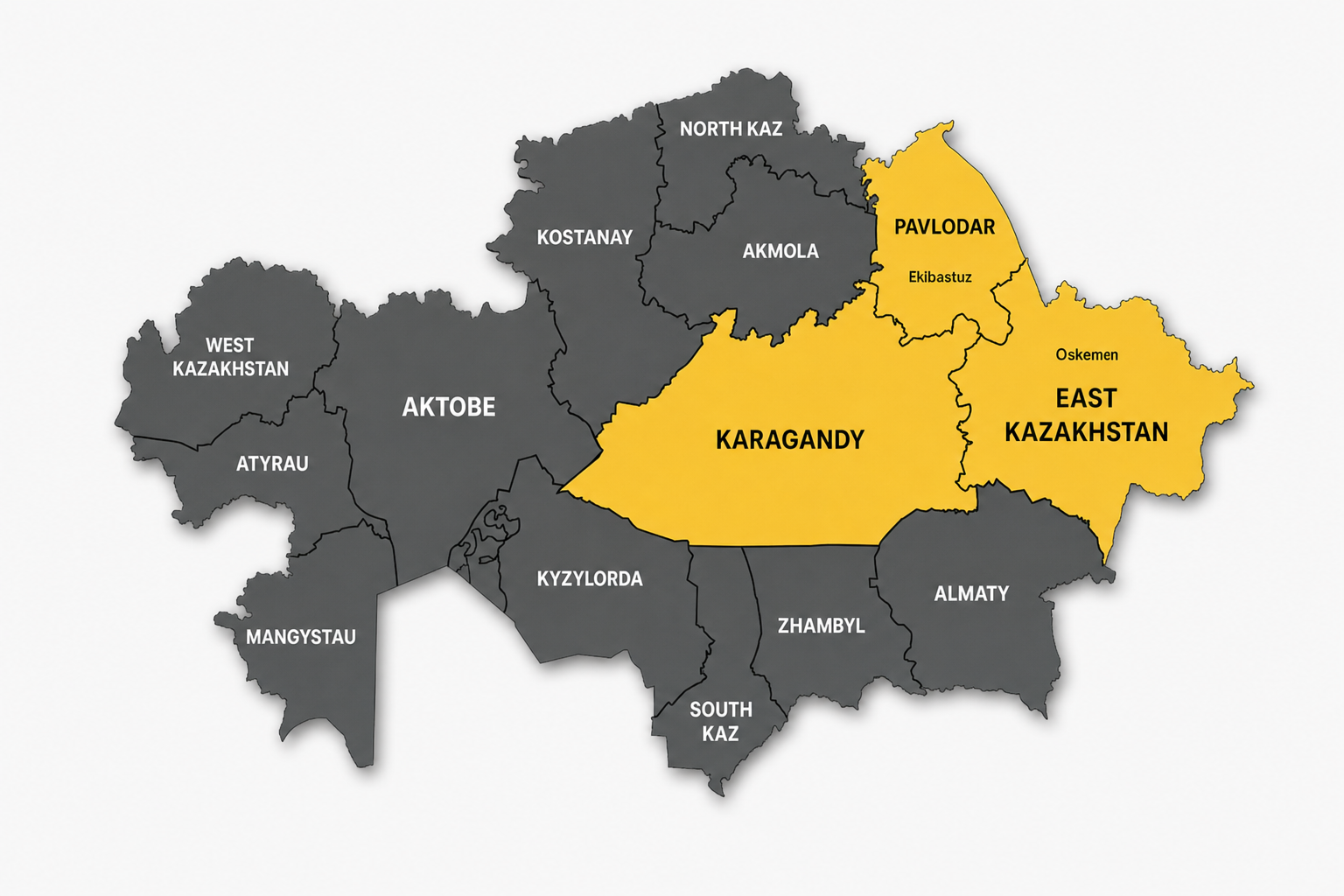
By that time, mining farms had already brought Kazakhstan 82 billion tenge, i.e., over $200 million. The country had 14 farms, located mainly in northern regions, Pavlodar and East Kazakhstan Regions, as well as in Uralsk.
At a Senate meeting, Askar Zhumagaliyev said the government had studied the experience of the USA, Sweden, and South Korea. He emphasized that mining and cryptocurrency technologies were becoming part of everyday economics.
In 2020, deputies discussed a bill that prohibited the issuance and circulation of unsecured crypto assets unless otherwise established by law. However, cryptocurrency mining was not prohibited and was not considered entrepreneurial activity in the previous sense.
The new norms effectively legalized mining and secured miners' ownership rights to mined digital assets. Authorities and parliament then agreed not to introduce separate taxation for miners but planned to levy a fee from token holders upon exchange for fiat money.
Conclusion: Kazakhstan Seeks Balance Between Energy, Taxes, and Digital Economy
The history of mining in Kazakhstan shows how quickly a promising industry can face infrastructure limitations. First, the country attracted miners with cheap electricity and soft rules, then experienced an energy crisis, introduced licenses, taxes, and restrictions, and later began building a more flexible model.
By 2026, the focus shifted from simple cryptocurrency mining to regulated infrastructure: strategic electricity quotas, use of associated gas, a national crypto reserve, and control over the circulation of digital assets. For market participants, this means more opportunities but also more requirements for transparency, documentation, energy consumption, and responsibility towards the state.