What Should You Do First with Claude Fable 5? Give Your Code Repository a Comprehensive Checkup

marsbitОпубліковано о 2026-06-10Востаннє оновлено о 2026-06-10

Анотація

Title: "What You Should Do First with Claude Fable 5: A Comprehensive Audit of Your Codebase" This article introduces a powerful use case for the newly released Claude Fable 5 AI model (June 2026), which is positioned for long-cycle software engineering tasks. It presents a detailed "Audit and Project Improvement" prompt template that transforms the AI from a mere code-writing assistant into a systematic "engineering audit and project improvement collaborator." The core recommendation is to apply this prompt to important code repositories. The prompt guides the AI, acting as a world-class principal engineer, through a rigorous four-stage audit process: 1. **Discovery & Mapping:** Systematically explore the repository to understand its structure, tech stack, purpose, and existing conventions before forming conclusions. 2. **Evidence-Based Audit:** Critically examine specific dimensions—architecture, code quality, security, testing, performance, dependencies, devops, and documentation—citing concrete file paths and line numbers for each finding, and rating their severity. 3. **Improvement Strategy:** Synthesize audit findings into 3-5 key thematic issues, propose target states with underlying principles, and define measurable completion criteria. 4. **Detailed Task Plan:** Break down the strategy into actionable tasks with titles, affected areas, acceptance criteria, effort estimates (S/M/L/XL), risk assessment, and dependencies. Tasks are organized into prioritized mile...

Editor's Note: Claude Fable 5 was released on June 9, 2026. Anthropic positions it as a Mythos-level model excelling at long-cycle software engineering tasks and possessing stronger security features.

After the new model launched, developers quickly began exploring its use in real engineering scenarios. The repository audit prompt shared by @meta_alchemist is a typical example. It enables Fable 5 to do more than just generate code; it acts like a seasoned technical lead, systematically examining a code repository in four phases: first mapping the project structure and tech stack, then checking architecture, security, testing, performance, dependencies, and documentation issues based on actual files and line numbers, followed by formulating improvement strategies, and finally breaking them down into prioritized task milestones with workload estimates. Some users have already used it to address technical debt, uncover security vulnerabilities and efficiency problems missed by older models, while others have encountered early-stage issues like unstable sandbox environments.

Overall, the release of Fable 5 is not just a model capability upgrade; it further pushes AI from being a "code-writing assistant" toward becoming a "collaborator in engineering audit and project improvement."

The following is the original text:

Have you started using Claude Fable 5 yet?

One of the first things you should do is use it to upgrade your core projects, significantly improving all the work you've been pushing forward.

Please run the following "Audit & Project Improvement Prompt" in every code repository important to you (copy and paste directly):

Code Repository Audit & Improvement Plan

You are a world-class, principal-engineer-level software engineer and technical audit expert. Your task is to perform an in-depth analysis of this code repository, provide an honest audit report, and offer a prioritized, actionable improvement plan. Please strictly follow the four phases below in order. Do not skip steps.

All judgments must be based on real file evidence: please cite file paths and line numbers. If something cannot be verified, state that explicitly; do not guess.

Phase 1 / Discovery & Mapping: Read First, Then Judge

Before forming any conclusions, systematically explore the entire code repository:

· Map the directory structure, identifying the project type, languages used, frameworks, and runtime targets.

· Identify entry points, core modules, and the primary data and control flows within the system.

· Read package manifests, lockfiles, build configurations, CI configurations, environment/config files, and all documentation, including README, CONTRIBUTING, ADRs, etc.

· Determine the project's purpose: its goals, intended users, and apparent current maturity level—whether it's a prototype, internal tool, production service, or library.

· Document conventions the project already uses, including naming, module boundaries, error handling patterns, testing style, etc., so subsequent suggestions align with the existing engineering culture rather than fighting against it.

Output for this phase: A concise "Repository Map," including purpose, tech stack, an architectural sketch, key directories with one-line descriptions, and anything that surprised you.

Phase 2 / Audit: Evidence-Based, with Severity

Perform an audit across the following dimensions.

For each finding, record:

a) What you found

b) Where you found it, formatted as: File:Line Number

c) Why it matters, i.e., the concrete consequences, not abstract principles

d) Severity: Critical / High / Medium / Low

Architecture & Design

Module boundaries, coupling/cohesion, circular dependencies, leaky abstractions, God objects/files, layer violations, scalability bottlenecks.

Code Quality

Code duplication, dead code, complexity hotspots (including longest functions, functions with most branches); inconsistent patterns; error handling gaps (e.g., swallowed exceptions, missing edge cases); type safety vulnerabilities.

Security

Hardcoded secrets or credentials, injection risks, unsafe deserialization, missing input validation, authentication/authorization weaknesses, outdated dependencies with known CVEs, overly permissive configurations.

Testing

Test coverage gaps, especially for core business logic; test quality (whether tests verify behavior or just that something runs); missing test types (unit, integration, e2e); flaky test patterns; code that is hard to test.

Performance

N+1 queries, unnecessary allocations or copies, blocking calls in async paths, missing caching or indexing, unbounded growth issues (e.g., memory, files, queues).

Dependencies

Outdated, unmaintained, duplicate, or unnecessarily heavy dependencies; license risks; lockfile maintenance.

Developer Experience & Operations

Build/startup costs, CI/CD gaps, missing linting/formatting enforcement, logging & observability quality, error reporting, deployment paths.

Documentation

README accuracy, onboarding paths, undocumented critical behaviors, outdated documentation contradicting the code.

Rules for This Phase

Prefer 15 high-confidence findings over 50 speculative ones.

Differentiate fact from judgment. For example:

· Fact: "This function has no error handling: src/api/client.ts:142"

· Judgment: "The responsibility boundaries of this module feel unclear"

Clearly label which is which.

Also list what the repository does well. Strengths are equally important, as they determine what should be preserved.

Output for this phase: An "Audit Report." Group by dimension, sort by severity, and include a Strengths section. Don't forget to highlight the ugliest, most urgent issues.

Phase 3 / Improvement Strategy

Synthesize audit findings into a strategic approach:

· Identify 3–5 themes that explain most of the issues, e.g., "No enforced boundaries between layers," "Error handling is too ad-hoc."

· For each theme, propose a target state and the underlying principles.

· Explicitly state trade-offs: which problems you recommend *not* fixing for now, and why (e.g., effort vs. reward mismatch, high risk, project maturity doesn't yet warrant it).

· Define what "done" means—provide measurable signals, e.g., "CI fails on lint errors," "Core module test coverage ≥ 80%," "Critical issues cleared."

Phase 4 / Detailed Task Plan

Translate strategy into an execution plan:

Break the work into discrete tasks. Each task must include:

· Title and a short description

· Affected files/areas

· Acceptance criteria (how to verify it's complete)

· Workload estimate: S = Less than 2 hours, M = Half a day, L = 1–2 days, XL = Needs further breakdown

· Risk of the change itself (i.e., potential to break existing functionality)

· Dependencies on other tasks

Organize tasks into milestones:

Milestone 0

Safety Net: Things that must be in place before safe refactoring, e.g., key path tests, CI gates, backups.

Milestone 1

Critical Fixes: Security issues and correctness problems.

Milestone 2

High-Leverage Improvements: Changes that make all subsequent work easier.

Milestone 3

Quality & Polish: Remaining medium/low-priority items worth addressing.

Call out quick wins separately: high-impact, S-effort tasks that can be done immediately.

For the top three priority tasks, include a brief implementation sketch covering approach, key steps, and potential pitfalls.

Final Delivery Format

Generate a single document containing the following sections:

Executive Summary: No more than 10 sentences. Provide an overall health grade (A–F) with justification; list the top 3 risks and top 3 opportunities.

Repo Map

Audit Report

Improvement Strategy

Task Plan: Including milestones, task table, and quick wins

Open Questions: List information requiring human decisions, e.g., product intent, modules that can be sunset, performance targets, etc.

Constraints

During this audit process, do **not** modify any code. Analyze only.

Do not pad the report. If a dimension is healthy, state that in one sentence and move on.

Calibrate recommendations based on project maturity. Don't recommend enterprise-grade infrastructure for a weekend prototype unless the project owner's goals truly require it.

Analyze the project's real needs and provide suggestions in the most effective way.

If the repository is large, prioritize in-depth analysis of the core 20% of code that handles 80% of the work, and state which areas received only a lighter review.


Пов'язані питання

QWhat is the main purpose of the 'Code Repository Audit and Improvement Plan' prompt for Claude Fable 5?

AThe main purpose is to use Claude Fable 5 as a senior engineering collaborator to systematically audit a code repository, generate a detailed report on its health, and create a prioritized, actionable improvement plan with milestones and task breakdowns, moving AI's role from a code writer to an engineering auditor.

QWhat are the four stages outlined in the audit prompt for analyzing a code repository?

AThe four stages are: 1) Discovery and Mapping: Systematically explore the repo structure, tech stack, and purpose. 2) Audit: Examine dimensions like architecture, code quality, security, and performance, citing specific file:line evidence and severity. 3) Improvement Strategy: Synthesize findings into 3-5 key themes and define target states and trade-offs. 4) Detailed Task Plan: Break down the strategy into prioritized tasks with estimates, risks, and milestones.

QAccording to the article, what is a key rule during the Audit (Stage 2) to ensure report quality?

AA key rule is to prioritize high-confidence findings over speculative ones. It's better to provide 15 high-confidence findings than 50 speculative ones. Findings must distinguish between facts (e.g., 'this function has no error handling: src/api/client.ts:142') and judgments (e.g., 'this module's responsibility boundaries feel unclear'), and clearly label which is which.

QWhat does the 'Task Plan' (Stage 4) require for each individual task?

AEach task must include: a title and description, affected files/areas, acceptance criteria, a workload estimate (S, M, L, XL), the risk of the change itself, and dependencies on other tasks. The tasks are then organized into milestones: Milestone 0 (safety net), Milestone 1 (critical fixes), Milestone 2 (high-leverage improvements), and Milestone 3 (quality and polish).

QWhat constraint does the prompt place on Claude Fable 5's action during the audit process?

AThe prompt constrains Claude Fable 5 to only perform analysis and not modify any code during the audit process. Its role is purely to examine, report, and plan, not to implement changes.

Пов'язані матеріали

Y Combinator Co-founder: How to Make a Billion Dollars?

The Y Combinator co-founder argues that becoming a billionaire by founding a successful startup is not only possible but demonstrably achievable without unfair or unethical practices. He disputes a politician's claim to the contrary, using the example of a founder whose company grew at 93% monthly solely through creating a product users loved and recommended. The core mechanism is exponential growth. A conservative 15% monthly growth rate compounds to a 4384x increase over five years, which can easily lead to billion-dollar valuations and founder wealth. The process depends on two key variables: the growth rate and the duration it can be sustained. A high growth rate stems from a great product that users naturally promote, while a long duration requires a large enough market. For aspiring founders, especially young ones, the simplest path is to build something they and their friends genuinely need. Young people's current needs often predict future mass-market trends. He advises against actively "searching" for ideas, as this tends to filter out unconventional but promising ones. Instead, inspiration should come from working on interesting projects with friends, as many iconic companies (e.g., Apple, Facebook) started this way. Ultimately, building a massively valuable startup is not about exploitation but empathy: deeply understanding a user group and building a product that significantly improves their lives. This, powered by exponential growth in a large market, is the legitimate path to immense wealth creation.

Foresight News5 хв тому

Y Combinator Co-founder: How to Make a Billion Dollars?

Foresight News5 хв тому

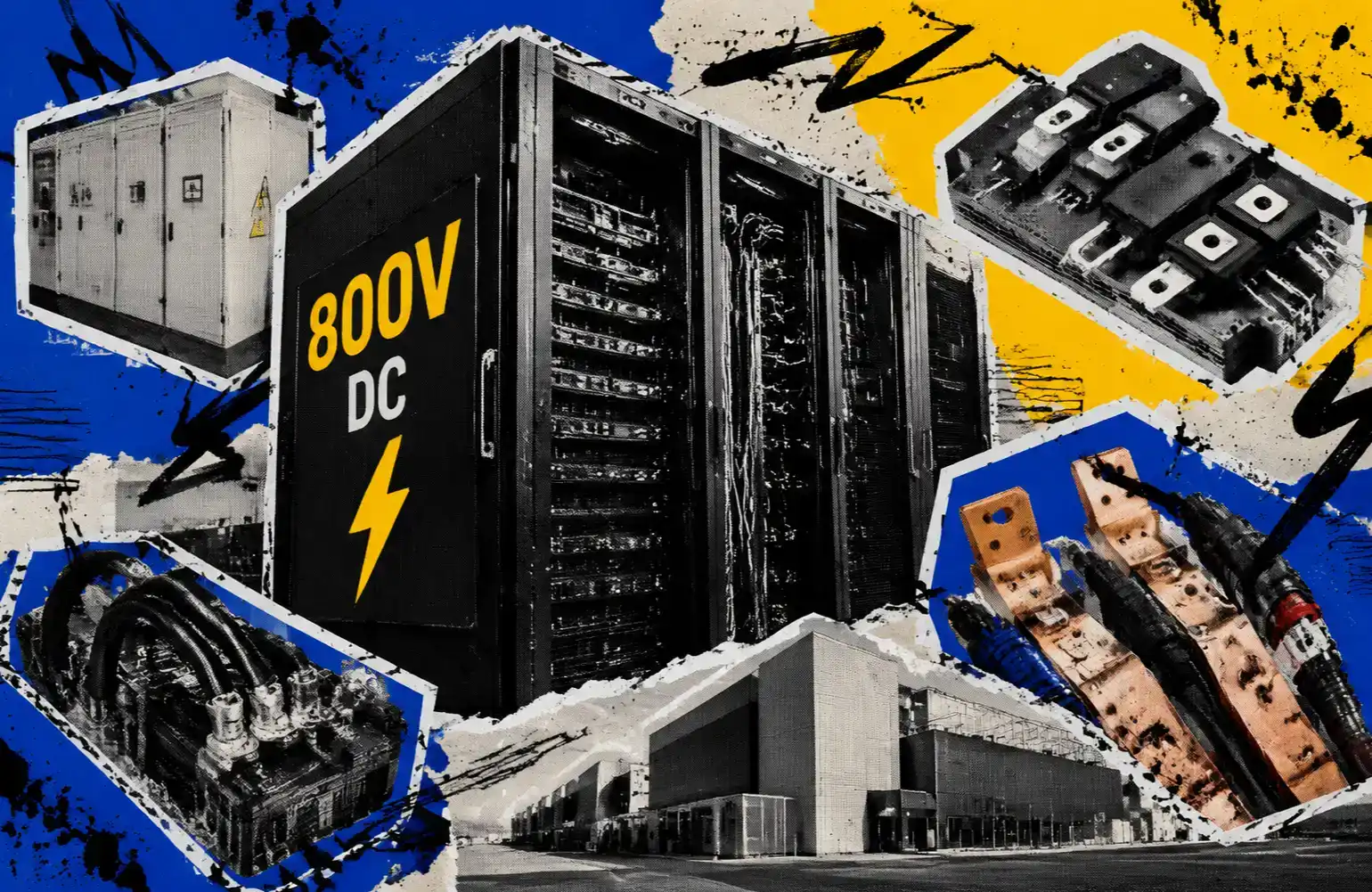
The 800V Voltage Standard Championed by Nvidia: Which Infrastructure Providers Stand to Benefit?

NVIDIA is actively promoting the 800VDC architecture as a key direction for its next-generation AI factories and high-power racks, particularly for the upcoming Rubin and Kyber platforms. The primary driver is the rapidly increasing power density of AI racks, with designs like GB200/GB300 NVL72 reaching 120-140kW and future systems potentially hitting 180-220kW. At such high power levels, traditional low-voltage power delivery becomes inefficient due to massive current, leading to significant copper use, cable bulk, heat, and power loss. The 800VDC standard aims to increase efficiency by transmitting power at higher voltage and lower current to the rack before stepping it down locally for GPUs. NVIDIA claims this can improve efficiency by up to 5%, reduce total cost of ownership (TCO) by up to 30%, and cut copper usage by approximately 45%. This shift redefines infrastructure roles, pushing power engineering to the forefront alongside GPU performance. Key beneficiaries and ecosystem partners highlighted include: 1. **Power Infrastructure Providers:** Companies like Vertiv, Schneider Electric, Delta Electronics (台达电), and Korean firms LS Electric and HD Hyundai Electric are involved in designing next-gen AI factory power distribution, rack power supplies, and backup systems. 2. **Power Semiconductors:** Suppliers of SiC/GaN devices, such as Infineon and STMicroelectronics, are better suited for high-voltage, high-efficiency conversion in this new architecture. 3. **Connectivity & Structure:** The focus shifts to high-reliability components like busbars, high-voltage connectors, and advanced PCBs that meet stricter insulation and safety requirements. 4. **Liquid Cooling & Rack ODM:** As power and heat density rise, liquid cooling becomes critical. Full-rack system integrators (e.g., Dell, Wiwynn, Wistron) must now demonstrate robust pre-delivery testing capabilities, including burn-in testing under full load, requiring significant power and cooling infrastructure in their factories. The transition is not immediate for all data centers but is targeted at high-density AI factories. NVIDIA’s 800VDC ecosystem is in a preparatory phase, with full-scale production expected to align with the 2027 launch of Kyber rack-scale systems. The investment thesis revolves around which companies can demonstrate proven product integration, customer validation, and reliable delivery of complete, high-power AI rack systems, making power, cooling, and testing capabilities new critical variables in the AI infrastructure value chain alongside GPUs.

marsbit25 хв тому

The 800V Voltage Standard Championed by Nvidia: Which Infrastructure Providers Stand to Benefit?

marsbit25 хв тому

Did 'Unlimited Minting' Actually Happen? Zcash Founder Responds to Four Major Market Concerns

The Orchard shielding pool in the privacy cryptocurrency Zcash was recently found to have contained a critical counterfeiting vulnerability that existed for four years. This discovery caused significant market panic and a sharp drop in the price of ZEC, though it has since recovered partially. Zcash founder Zooko Wilcox addressed four key questions raised by the vulnerability. First, while it's unknown if the bug was exploited, he believes it likely was not, citing advanced, targeted discovery methods, a rapid response to freeze the pool, and the typical "smash-and-grab" nature of past crypto exploits. Second, he states that if no exploitation occurred, all legitimate user funds in Orchard are recoverable. However, cautious users moving funds should be aware of privacy trade-offs and other risks involved in transferring to transparent or Sapling pools. Third, users currently cannot independently verify that the total ZEC supply hasn't been inflated due to this bug. However, the proposed "Ironwood" network upgrade will restore this ability by permanently sealing the Orchard pool. This will prevent any counterfeit funds from circulating and allow anyone running a node to cryptographically verify that the supply cap has not been breached. Finally, regarding other undiscovered vulnerabilities, Wilcox notes that intensive ongoing audits by multiple teams, including using advanced AI-assisted tools, have so far found no other counterfeiting bugs. This provides increased, though not absolute, confidence. In conclusion, while assessments suggest the bug was likely unused and funds are safe, the core issue was the loss of user-verifiable supply integrity. The Ironwood upgrade is presented as the solution, aiming to restore trust by allowing users to independently verify Zcash's supply security without relying on third-party assurances.

marsbit26 хв тому

Did 'Unlimited Minting' Actually Happen? Zcash Founder Responds to Four Major Market Concerns

marsbit26 хв тому

The First Prediction Market Stock Has Emerged!

"Prediction Market Unicorn Emerges!" While the World Cup drives record trading volumes in prediction markets, the industry leader Kalshi faces a new threat from a former key ally. In March 2025, Kalshi partnered with online broker Robinhood to offer prediction market services, allowing users to bet on events. This deal was mutually beneficial: Kalshi gained access to Robinhood's massive retail user base, with an estimated 25-35% of its volume coming through this channel, while Robinhood earned significant fees, reporting a 320% year-over-year increase in "other transaction revenue" to $147 million in Q1 2026, largely fueled by prediction markets. However, Robinhood's ambitions have grown. Recognizing that its user base and distribution power are the scarcest resources, it initiated a plan to bring operations in-house. In late 2025, Robinhood partnered with Susquehanna to acquire CFTC-regulated exchange MIAXdx, renaming it Rothera Exchange. By June 2026, Robinhood launched its own prediction market product on Rothera, strategically using the World Cup as a launchpad. Initial data shows Rothera processing tens of millions of contracts within days, directly siphoning volume away from Kalshi. This shift marks a pivotal moment: control is moving from the market infrastructure provider (Kalshi) to the entity controlling user distribution (Robinhood). The story illustrates a recurring internet era dynamic: "He who controls distribution controls everything." As more platforms with large user bases recognize the value of prediction markets, the industry's future competition may center less on which platform has the best market technology and more on which one owns the user gateway.

marsbit38 хв тому

The First Prediction Market Stock Has Emerged!

marsbit38 хв тому

More Popular Than SpaceX, Oversubscribed Over 6,586 Times, What's the Meme Power Behind Liuliu Mei (06658.HK)?

Liumeimei, a popular Chinese snack brand known as "Liuliumei" in China, listed on the Hong Kong Stock Exchange (stock code: 06658.HK). On its debut, the stock price surged dramatically, opening 116% above the issue price and peaking with gains over 190%. This surge is widely attributed not to its traditional consumer goods business, but to a "Meme stock" phenomenon. Its stock ticker abbreviation "LLM" coincidentally matches the acronym for "Large Language Model," the core technology of the ongoing AI boom. This association, coupled with a strong same-day performance by another AI-related stock, triggered a massive wave of speculative retail investment. The IPO itself saw extreme oversubscription in the public offering segment, exceeding 6,586 times, though retail investors were allocated only 10% of shares. Analysts and the article frame this event as part of a broader "stock Meme-ification" trend in global markets, where stocks can experience volatile price movements based on viral narratives, wordplay (like homophones or abbreviations), celebrity mentions, or fleeting social media attention—similar to dynamics seen in the cryptocurrency meme coin sector. Examples cited include the 2021 GameStop saga, stocks linked to political figures like Donald Trump, and other companies benefiting from AI hype or谐音梗 (homophone puns). While such trends can create significant short-term wealth for some, the article notes they also carry risks of market manipulation, "pump and dump" schemes, and investments detached from fundamental business value. The Liumeimei listing is presented as a prime example of how attention and internet culture are increasingly driving capital flows in modern financial markets.

marsbit40 хв тому

More Popular Than SpaceX, Oversubscribed Over 6,586 Times, What's the Meme Power Behind Liuliu Mei (06658.HK)?

marsbit40 хв тому

Торгівля

Спот
Ф'ючерси
活动图片