Don't outsource your brain.
The other day, Anthropic just announced the completion of its H round of financing at $650 billion, with a valuation of $9.65 trillion, surpassing OpenAI ($8.52 trillion) to become the world's most valuable AI startup.
The bar for entering this company is visibly rising. Last year, Peter Bailis, CTO of Workday, gave up his CTO title to become an ordinary engineer at Anthropic.
In February this year, an HR professional in London joined Anthropic. She posted an announcement on LinkedIn about her new job, and subsequently received over 1,000 connection requests and more than 200 private messages. She had to post again publicly, asking candidates to stop calling her mobile number.
In May, Anthropic announced another bombshell: OpenAI co-founder Andrej Karpathy joined Anthropic's pretraining team.
Everyone wants to get into Anthropic.
But the way in, is to turn the AI off first.

01 "Interviewing Like a Psychotherapy Session"
Anthropic's interviews have 5 rounds, and AI is prohibited in every single one.
The most critical round is called the "Culture Interview". It has nothing to do with technical skills, only assessing the candidate's values, worldview, and views on AI risk.
Kevin Landucci, a career trainer in California who has worked with many candidates, says people generally find the interview "invasive, completely unlike a job interview, different from any previous one."
A person who did recruitment for Anthropic last year would particularly remind candidates to take this round seriously, because company leadership views AI safety as a long-term strategic issue, not just a business consideration.
The scoring method is even more unique. The culture interview can be conducted by anyone from any department. A candidate for an engineering role might be scored by someone from the marketing department. And they have veto power; even if all technical interviews are passed, a low score in this round will get the candidate rejected.
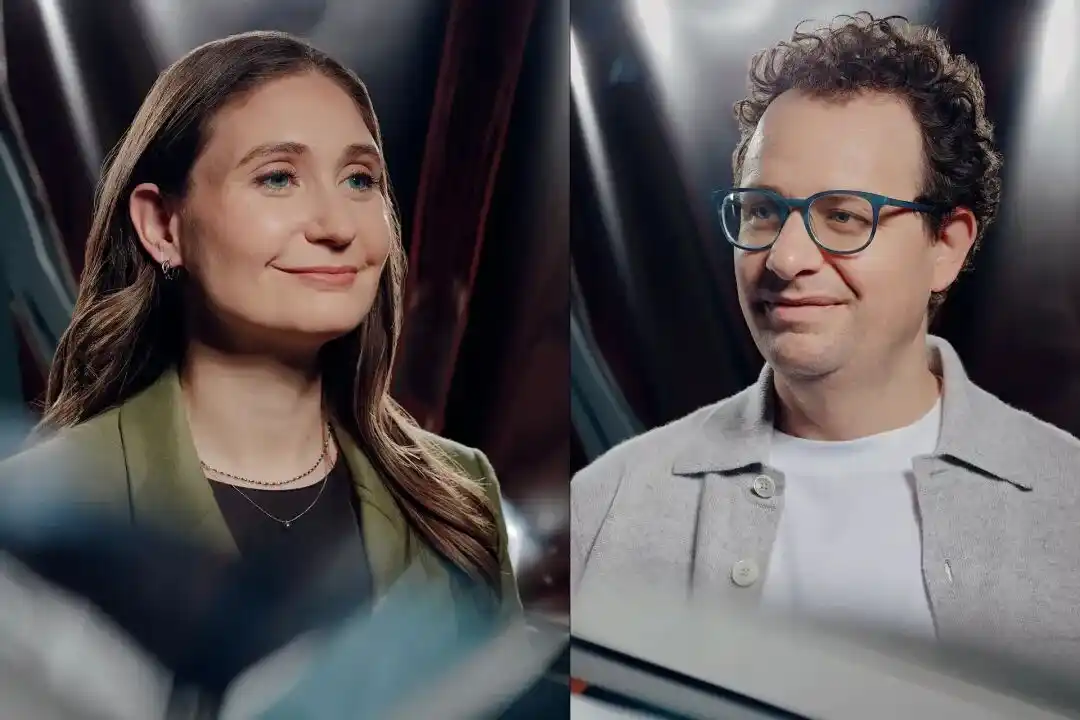
The questions get increasingly personal. Anthropic President Daniela Amodei described her classic question in a podcast:
What unusual beliefs do you hold? In what uncomfortable situation have you stood by one? She doesn't care *what* the candidate believes. She cares whether the person can maintain their stance when challenged and explain why.
Professional ethical dilemmas are a frequent topic in the culture interview. Landucci says interviewers will peel back the layers:
What were you thinking then, what did you do, how do you evaluate it looking back now? His advice is to show genuine discomfort, letting the interviewer see you really struggled with it. He recommends candidates discuss ethical dilemmas that are "significant enough to cause hesitation but not enough to shake the company's foundation," such as controversial decisions involving user data.
Most companies say they value candor and oppose flattery, but Anthropic has truly built this into its hiring system. Landucci reveals that the culture interview tests whether candidates dare to question the company itself, and the way it pursues its mission. Reasoned, evidence-based questioning scores very well.
A researcher who interviewed last year experienced a different flavor. He said the interviewer's questions came one after another, and he was interrupted whenever his answers stopped providing new information. This researcher talked about concrete, immediate risks, like the danger of people developing emotional dependence on chatbots.
The interviewer clearly felt these concerns were too superficial. He did not pass.
This detail is worth pondering. Emotional dependence is a real problem, and there has been plenty of public discussion about it. But in Anthropic's context, this might be seen as "superficial." It's a side effect of AI, not a fundamental AI risk.
Anthropic's founding team broke away from OpenAI, with the core motivation being their belief that AI could have overly profound impacts. A candidate who only focuses on product-level risks and doesn't demonstrate the ability to think about larger-scale issues will fall short in this evaluation system.
CEO Dario Amodei claims to spend 30% to 40% of his time managing company culture. For a company with over 3,000 employees, having added about 1,000 in the past six months, this is almost the most expensive investment a founder can make. He wants to ensure that everyone who comes in shares values aligned with Anthropic's.
Thus, in the fast-moving AI industry, Anthropic's two-year employee retention rate reaches 80%, the highest among peers. The probability of an engineer moving from OpenAI to Anthropic is 8 times the reverse, and from DeepMind it's 11 times. (Source: VC firm SignalFire)
02 When Execution Becomes Free, What Becomes Expensive Instead?
Even in Silicon Valley, Anthropic's approach is an outlier.
This year, Google announced an opposite reform to its interviews: candidates can use Gemini in technical interviews, and interviewers will directly assess their "AI fluency". Brian Ong, Google's VP of Hiring, said this is to make interviews more closely reflect real work scenarios.
Google CEO Sundar Pichai revealed in April this year that 75% of the company's new code is already AI-generated and reviewed by engineers.
Google's logic is: since daily work is human-AI collaboration, interviews should be too.
Faced with the same question of the AI era, two top AI companies give completely different answers. Anthropic believes the interview is precisely the time when AI needs to be taken away.
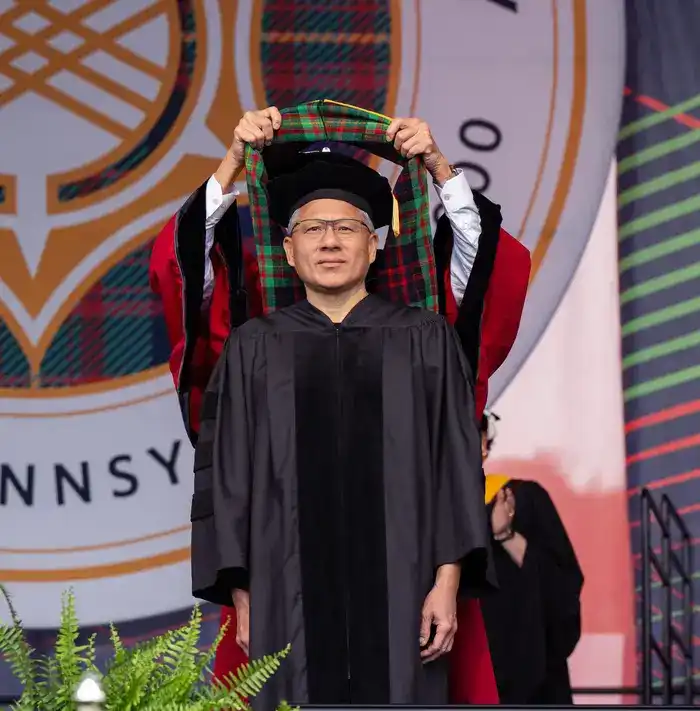
Jensen Huang's 2026 Carnegie Mellon University commencement speech contained a widely circulated line: "It's unlikely that AI will replace you, but a person who uses AI better than you might replace you". This phrase has been repeatedly quoted because it precisely taps into people's fear of AI while offering a way out: go learn AI.
The problem with this statement is that it anchors a person's value to their relationship with a tool, implying the logic that you must change as the tool changes, otherwise you'll be eliminated.
But a more worthwhile question is the reverse:
When execution becomes cheaper and cheaper, what becomes expensive instead?
03 What Anthropic is Selecting For
Anthropic's interviews offer one answer.
Daniela Amodei asking candidates "what unusual beliefs do you hold," interviewers encouraging you to question Anthropic itself—they are essentially assessing the same thing.
Today, the "production" of viewpoints is almost free. AI can generate arguments for any position; it can write well-reasoned articles supporting a direction, and can immediately write equally well-reasoned articles opposing it.
But precisely because of this, the gap between "holding" a position and "owning" a position is widening. Holding is a choice, while owning is who you fundamentally are.
Anthropic prohibiting AI use in interviews, and the culture interview's relentless probing for your genuine thoughts like a psychotherapy session, are both meant to confirm: the judgments and beliefs in your mind grew there on their own.
In other words, you haven't outsourced your thinking.
"A person who uses AI better than you might replace you" is correct at the execution level. But if taken as the whole answer, it leads people down an increasingly narrow path: constantly chasing what AI can do, then doing the part AI can't yet do, until that part is also learned by AI.
Anthropic's hiring logic points in another direction. It believes what is truly scarce in the AI era is not people who can harness AI, but people who still have something left after turning the AI off.