New Fire Group Chief Economist Fu Peng's Latest Speech: Crypto Assets Deeply Bound to Liquidity, Global Assets 'Shrink Circle' with Widening Divergence

链捕手Опубліковано о 2026-07-24Востаннє оновлено о 2026-07-24

Анотація

The chief economist of Sinovation Group delivered a speech at Wiki Finance EXPO Hong Kong 2026, analyzing the global market through the lens of liquidity. He argues that all major assets, including cryptocurrencies, are fundamentally tied to global liquidity, which is now shifting from an era of extreme post-2008 ease to sustained tightening under new Fed leadership. This marks the end of widespread "asset flooding" and ushers in a "shrinking circle" dynamic: capital is abandoning speculative, low-quality assets and concentrating in a few high-conviction, value-driven core holdings. The only dominant global investment theme is AI, viewed as a 20-25 year productivity cycle. However, a critical inflection point has been reached in Q2, where major tech firms' free cash flow has turned negative. The market narrative has pivoted from rewarding pure capital expenditure growth to demanding proof of future revenue generation and returns. While the AI super-cycle's long-term thesis remains intact, the initial hardware-driven phase (e.g., Nvidia, memory chips) is maturing. The speaker warns of significant volatility risk not from industry fundamentals, but from excessive financial leverage built up in these "certain" assets. He emphasizes that investment strategy must evolve from broad diversification to focused, cyclical allocation within the AI value chain (upstream hardware, midstream, downstream applications), avoiding blind long-term holds on single names. For crypto, this liqui...

Author: New Fire Technology

Mr. Fu Peng, Chief Economist of New Fire Group, was invited to participate in Wiki Finance EXPO Hong Kong 2026 and delivered a keynote speech. Starting from the global liquidity framework, Mr. Fu Peng shared his core views on the current global macro-assets and market trends, and provided a systematic judgment on the underlying logic of the crypto market.
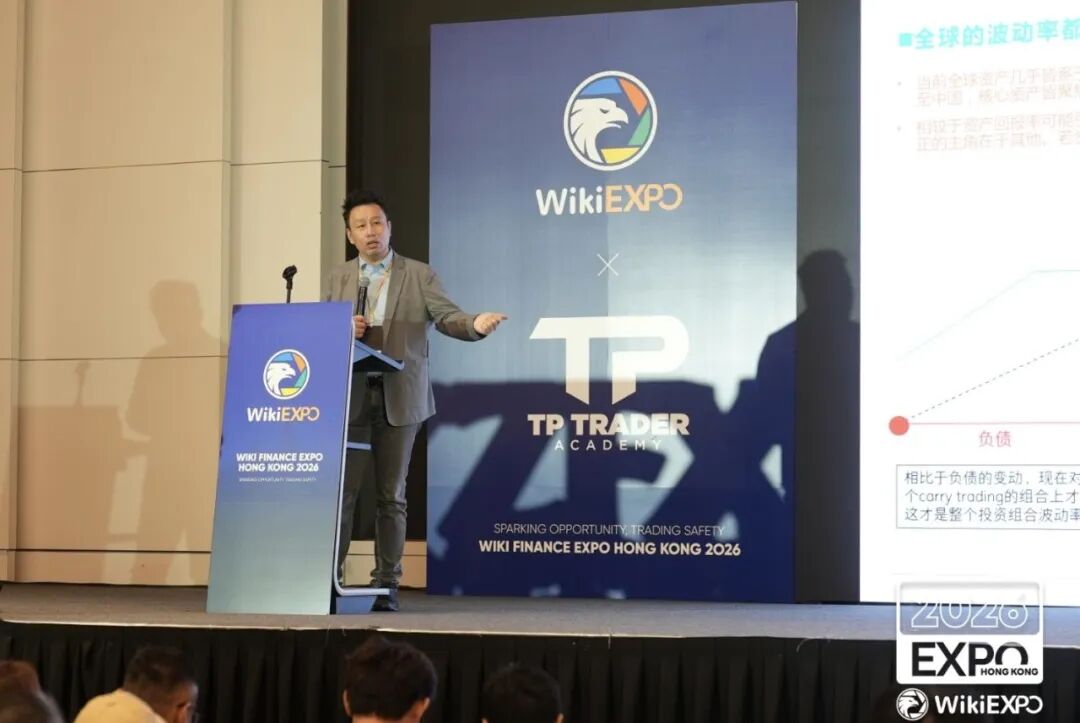
New Fire Group Chief Economist Fu Peng delivering a speech at Wiki Finance EXPO Hong Kong 2026
The following is the full text of the speech:

Today, I will share my views with you from several dimensions regarding the global markets. First, let's start with liquidity. Regardless of the asset class, up to today, including mainstream crypto assets, they are all essentially tied to core global liquidity.

After the 2008 financial crisis, global liquidity reached a temporary peak from 2008 to 2021. Liquidity should not be viewed solely through news about interest rate hikes or cuts; it comprises three dimensions, which you must remember.

Rate hikes and cuts only represent changes at the interest rate curve end and do not represent the complete liquidity environment. Observing liquidity can be broken down into three things: the volume of water in the pool, the water temperature, and the pressure distribution of funds within the pool. The underlying logic can be simply understood as P/Q×G. From a professional perspective, liquidity can be tracked from angles like the interest rate end, interest rate curve, Federal Reserve balance sheet, open market operations, etc. But there's an even simpler observation method: currently, in traditional trading, mainstream crypto assets like Bitcoin are widely regarded as leading indicators for liquidity strength.

01. From "Frenzied Speculation in Inferior Assets" to "Shrink Circle": The Two Faces of the Liquidity Cycle

After the 2020 pandemic, the world entered a window of extreme easing with low interest rates and central bank balance sheet expansion. During easing cycles, global financial assets exhibit typical characteristics: frenzied speculation in inferior assets.

For example, the retail short squeeze on GameStop in US stocks, and the surge of numerous worthless altcoins in the crypto market, are essentially results of excessive liquidity — when money is abundant, any asset can be pumped. However, when overall liquidity begins to contract, the market experiences a "shrink circle" scenario: capital actively distinguishes between good and bad assets, and inferior assets are abandoned. This process of squeezing out bubbles began in the second half of 2021.

From the second half of 2021 to 2022, typical cases include Bitcoin falling from over 70,000 to around 20,000 in the crypto market, and NVIDIA dropping about 64%-65% in 2022 in US stocks. This process is like squeezing water out of a sponge, continuously removing market bubbles.

This year, the real core inflection point occurred last November. 2021 was the peak of central bank balance sheet expansion, while the end of last year was a critical node of dual tightening involving both liquidity and quantitative tightening (QT). To explain simply: when the pool stops adding water, financial pressure doesn't materialize the instant QT begins; only when QT progresses to a certain extent does the market truly feel the funding pressure.

Last November/December, when Bitcoin was around 110,000, I made a bet with Li Lin: crypto assets were likely to halve within the next year. If this materializes, it would again confirm that the underlying logic of crypto assets is completely tied to global liquidity.

The core observation indicator last November: the Fed's Standing Repo Facility (SRF) open market operations. This indicator signifies that when QT reaches a critical point, structural funding pressure has already emerged in the market. It's important to understand that tightening credit and liquidity contraction doesn't mean everyone is short of funds; funding pressure is transmitted in layers: highly leveraged, weaker entities face funding stress first, while high-quality, leading entities still have ample funds. With this layered transmission of liquidity, capital markets experience the "shrink circle": funds first sell off peripheral, liquidity-sensitive weak assets, and continuously concentrate into the most core, highest-certainty assets.

Many retail crypto traders have a misconception: when there's no action in the crypto market, all funds flow into trading US stocks. This is a very retail-oriented mindset. Objectively speaking, during a liquidity tightening cycle, funds will first liquidate all high-volatility, highly speculative assets from their portfolios; cryptocurrencies, small-cap thematic stocks are among the first to be sold. When money is abundant and liquidity is loose, funds are willing to speculate on various junk assets; when money is scarce and liquidity tightens, funds will only focus on truly valuable core assets. This is the essence of the "shrink circle" scenario.

02. The Key Inflection Point for the AI Industry: Free Cash Flow Hits Zero, the Capex Narrative Becomes Ineffective

Since last November, global capital has continuously concentrated into the long-term productivity upgrade theme, namely the artificial intelligence (AI) sector. The logic of the AI sector can be analogized to large-scale fixed asset investment; it's easier to understand using the example of domestic infrastructure.

In 2001, the core market theme was large-scale domestic infrastructure construction, encapsulated by the old saying "to get rich, build roads first." At that time, Justin Yifu Lin and Andy Xie were discussing the driving effect of road and rail infrastructure on the economy. The 2002 Two Sessions set the direction for infrastructure development. In 2003, central and local fiscal funds were fully allocated, nationwide road and bridge projects commenced in batches, entering a long-term capital expenditure cycle. In 2004, the core holdings for institutional allocation were companies like Sany Heavy Industry and Conch Cement, upstream equipment and raw material suppliers in infrastructure.

This analogical logic fully applies to the current AI sector; the underlying industrial rules don't change just because it's named "AI." The first half of the AI wave was driven by the deployment of applications like ChatGPT, which ignited corporate willingness for capital expenditure. Starting in 2023, global tech companies concentrated on laying digital infrastructure, i.e., computing power and data center construction. Large-scale digital infrastructure drives the upstream hardware, storage, optical modules, HBM, and other industrial chain beneficiaries — Samsung Electronics, SK Hynix, TSMC correspond to the steel, cement, and construction machinery of the infrastructure era. However, Q2 of this year is a key inflection point for the entire industrial chain, coinciding with the dual variable of liquidity contraction.

After Google's earnings report yesterday, experienced investors could clearly sense that the market's dominant logic of the past two to three years has become ineffective. The market rules in 2023, 2024, and 2025 were simple: whenever internet giants increased AI infrastructure spending and expanded capital expenditures, the market gave high valuations. But after major companies' Q2 earnings reports this year, even with high capex growth, stock prices fell instead.

The core reason is that investors detected a key data point: free cash flow has dropped to zero for all leading companies heavily investing in AI infrastructure. The most critical indicator in Google's earnings report last night was free cash flow. Many investors still cling to the old logic, believing that as long as capex keeps expanding, stock prices will rise. That era is over.

The market pricing logic has completely shifted: previously, it was about the scale of capital investment; now, capital will interrogate whether infrastructure investments can generate sustained traffic and revenue to recoup costs. Free cash flow hitting zero is a landmark signal for the transition from Phase 1 to Phase 2 of the AI industry. If companies plan to continue increasing capital expenditures, they can only do so through external financing like equity issuance or bond issuance. External funds have costs, and investor scrutiny will become extremely stringent.

Here's a refined tracking metric: the ratio of Capital Expenditures (CapEx) to the growth rate of cloud business revenue. Currently, Google's ratio is about 1.9, meaning for every 1.9 units invested in infrastructure, only 1 unit of cloud revenue is generated. This is the core reason why the capital market is unwilling to continue giving high valuations.

With tightening overall funding conditions, global capital continuously contracts to a few high-certainty assets, coupled with the industrial cycle shift, the "shrink circle" scenario inevitably leads to severe risk volatility in the market.

Let me take NVIDIA as an example to outline the complete industrial cycle: 2022 was the starting point for confirming NVIDIA's industrial cycle, with its market cap falling from trillions to hundreds of billions that year. After the explosive deployment of ChatGPT, NVIDIA officially entered a value-growth phase. In 2023 and 2024, NVIDIA's logic was fully closed-loop: continuous earnings growth, global AI capex driving order expansion, market cap successively breaking through $1 trillion, $2 trillion, $3 trillion, with extremely low stock price volatility and almost no deep correction risks.

However, after returning from a research trip to Singapore in June 2024, I began warning major financial institutions about risks: NVIDIA's business operations, industry supply/demand, and industrial fundamentals were all sound; the risks all came from off-balance-sheet financial leverage.

There is a serious cognitive bias among new-generation post-00s investors: they believe stock price movements must perfectly match fundamentals. This view is completely wrong! Capital market pricing trades on market expectations, which significantly lead actual corporate fundamentals.

Here's an example: the current industry reality is that HBM capacity is tight and supply is insufficient — a correct fundamental fact. But this doesn't lead to the conclusion that stock prices will continue to rise indefinitely. This is a typical cognitive bias: earnings reports and capacity reflect current reality, while stock prices trade future expectations. Fundamental data severely lags behind market pricing. This is practical experience from over twenty years in the industry.

In July 2024, NVIDIA plunged 20% in just a few trading days, and Japanese stocks fell 10% on the same day. Many analysts at the time attributed the decline to the Bank of Japan's rate hike and the unwinding of yen carry trades — these were superficial explanations. The underlying truth was: global capital was concentrated into a few high-certainty assets, extreme certainty breeds extreme greed, directly manifesting as investors aggressively adding leverage.

Here's a simple trading analogy: we are playing cards, your card is a 6, mine is a 5, and you clearly know you have the better hand. An ordinary retail investor might go in with a heavy position, but a qualified trader would go all-in with maximum leverage. The core conclusion must be remembered: certainty breeds greed; everything has two sides; the corresponding action for greed is adding leverage. With a consensus that NVIDIA has ample long-term orders, traders will continuously add leverage to amplify returns — this is traders' instinct. When leverage accumulates to a critical point, it inevitably triggers violent volatility and rapid declines.

The current market is replicating the same pattern: some memory chip stocks experience frequent sharp plunges despite no industry headwinds, stable business operations, full order books, and steady earnings growth. Many young traders in South Korea made significant profits one day, only to suffer large losses the next. The root cause isn't Samsung, SK Hynix, or HBM industry supply/demand; the core issue is excessive accumulated leverage within the market.

The underlying logic is identical to NVIDIA's flash crash in July 2024: high-certainty assets breed leverage bubbles; when leverage hits a critical threshold, a crash is inevitable. There is no such thing as a perpetual leveraged rally. Here's a simple risk assessment standard: when recent graduates with no practical experience pour all their funds and leverage to go all-in on Samsung and SK Hynix, it signals approaching risk. When a previously niche, professional sector is flooded with speculative retail investors, a bubble burst is only a matter of time. The market has been in a capital contraction cycle for several years; everyone recognizes the few core, certain assets. But the risk isn't in the industry fundamentals; it lies hidden at the liquidity and leverage levels. This must be emphasized.

The market has now reached the core inflection point of AI's first phase. The narrative relying solely on capital expenditure expansion has run its course; the market will experience significant volatility and valuation correction for digestion. My overall assessment for US stocks this year: if the index can maintain a sideways consolidation, that's already an optimistic expectation. Some might argue: after the March decline, US stocks rebounded in May and June. But one must distinguish: the May-June rally was an extreme structural move, driven by only a handful of stocks lifting the index, while the vast majority of stocks continued to decline steadily. The structure of the A-share market over the past year is identical: 55% of stocks are trading below their levels when the Shanghai Composite was at 3000 points, with the index solely supported by a few AI sector leaders.

To summarize the current market environment: liquidity tightening, extreme market divergence, and the AI industrial cycle reaching a key inflection point. I reiterate: the long-term development logic of the AI industry hasn't changed; productivity upgrade is the definite theme. But one cannot blindly hold stocks long-term; one must adopt a complete industrial cycle perspective for phased allocation.

I have built a complete five-layer analytical framework: Industrial Layer, Economic Layer, Inflation Layer, Liquidity Layer, Market Layer. Currently, there's no need to expend great effort dissecting the Economic Layer. The Industrial, Liquidity, and Market Layers are the core of analysis; the weight of macroeconomic analysis has significantly decreased. Some might ask if deep analysis of the US economy is still needed. The answer is absolutely not. The reason: US companies are engaged in massive, continuous capital expenditure expansion, and the household sector completed deleveraging back in 2008. In other words, there's no need to scrutinize high-frequency economic data; the core characteristic of the US economy is just two words: resilience.

03. Global Market Structure: The Only Theme is AI

At the market level, the only global theme is artificial intelligence. Currently, global capital has only this core investment logic. Looking at globally allocable assets, the future core markets are only Japan, South Korea, Taiwan (China), Mainland China, and the United States. Other regions have extremely low allocation value. In Europe, only ASML warrants attention; other assets have no allocation significance.

Consider two questions: Is the current trend of the South Korean stock market related to its domestic real economy? Completely unrelated. Look at the Japanese stock market: is it linked to Japan's domestic economy? Also unrelated. Examining the core assets of the Japanese market reveals they are all upstream equipment manufacturers in the AI industrial chain. Market focus is mostly on Samsung and SK Hynix, but the core production equipment purchased by these two companies comes from Japanese firms. The entire industrial chain's upstream and downstream are fully connected. In Taiwan (China), the only core asset is TSMC; there are no other core industrial companies with allocation value.

The entire AI sector is essentially productivity-driven industrial investment, following fixed cyclical patterns. Let me state the core conclusion clearly: the moment major tech giants' free cash flow hit zero in Q2 is the major market turning point. Before and after this inflection point, the entire market's asset pricing logic completely reverses. This must be remembered.

The AI industrial chain is divided into upstream, midstream, and downstream, each with its own independent industrial lifecycle, featuring clear sector rotation and allocation windows. Do not treat AI as a belief for blind long-term holding; simply speculating on the AI concept will inevitably lead to pitfalls. Many ask me if I'm not bullish on AI; this question itself contains a logical flaw. Over the past decade, the market has reached a consensus: artificial intelligence is the core theme of the next generation of productivity — there is no controversy about this. Being bullish on the sector does not mean blindly holding any single asset at any time. NVIDIA, as an upstream hardware core asset, has completed its high-growth cycle; starting in 2025, it enters a mature blue-chip phase, hence its significant narrowing of gains from last year to this year. It won't be long before Samsung and SK Hynix also enter maturity; the overall growth rate of the upstream hardware sector will slow, and growth potential will gradually shift downstream.

Prediction of the complete AI industry cycle rhythm: 2022 dominated by upstream hardware; 2026 involves software layer valuation digestion and reshaping; around 2030, terminal application layer valuation adjustment and repricing. The complete AI industry super-cycle lasts about 20 to 25 years; 10 years have passed so far. The first decade's theme was upstream hardware infrastructure; the next decade's theme will be terminal applications.

However, there is currently a cyclical gap; the next 10 to 18 months is an industrial transition window. During this window period, do not go all-in. Strictly follow industrial cycle patterns for phased allocation to avoid significant volatility risks. Let's distinguish a key concept: from a programmer's perspective, AI coding tools, development aids, etc., belong to the industrial supporting tools layer, not the terminal application layer. Their valuation logic differs vastly.

04. Karen Walsh and the Liquidity Paradigm Shift: The Central Bank No Longer Backstops, Crypto Assets Enter Maturation

Finally, I return to the liquidity dimension, a core variable highly relevant to crypto assets. Why is the new Fed Chair, Karen Walsh, a key signal? His appointment declares the complete rewriting of the central bank's core policy framework established by Ben Bernanke after the 2008 financial crisis.

I wrote an analysis note in January: this personnel change signifies a return to the pre-2008 policy path. Briefly summarizing the policy background: the 2008 financial crisis exposed massive systemic financial risks. Policymakers learned from the 1929 Great Depression: completely放任自由市场 (letting the free market run its course) during a crisis means the market cannot stabilize itself. Therefore, post-2008, Keynesian stimulus policies were implemented on a massive global scale.

All Fed Chairs from Bernanke to Yellen followed the same core idea: when a financial crisis erupts, the central bank must intervene to support and rescue the market. But any policy has two sides, just like leverage in investing. Leverage can quickly放大收益 (amplify returns) but can also directly lead to账户爆仓归零 (account liquidation to zero). Central bank rescue can quickly calm market panic and avoid a repeat of the Great Depression, but long-term unconditional market backstopping by the central bank breeds market speculation and催生大规模资产泡沫 (gives rise to large-scale asset bubbles).

The market has a professional term called the "Fed Put": whenever the market falls, capital dares to buy indiscriminately, as all traders bet the central bank will intervene. When the market forms a unified expectation: profits belong to investors, losses are backstopped by the central bank, all financial assets become severely overvalued.

The core message of all Karen Walsh's public speeches can be summarized in one sentence: the central bank only performs its法定分内职责 (mandated duties). The central bank has two法定核心目标 (core statutory goals): stable employment and inflation control; it will not routinely prop up the stock market. With ongoing technological progress and steady productivity提升 (improvement), the central bank has the conditions to exit the long-term backstopping model.

This can be analogized to家庭教育 (family education): when a child enters high school and gains independent living ability, parents cannot handle everything, fostering dependency. After Karen took office, many market participants superficially interpreted it as expectations for rate cuts or QT; the core focus is actually the QT operation, with less correlation to short-term rate movements. The core issue is how to complete QT orderly, returning central bank functions to their standard pre-2008 positioning.

This signifies the definitive end of the largest global liquidity easing cycle in human history from 2008 until Karen's appointment. Therefore, do not entertain illusions: the next 5 to 10 years will not replicate the 2008-2026 scenario of universal大水漫灌 (flood-like easing) and broad-based asset appreciation. Capital will flow back to truly valuable core assets with long-term value. This is a key turning point at the liquidity level that will fundamentally rewrite everyone's investment strategy. Investment logic shifts from过去全面分散布局、各类资产同步上涨 (past broad diversification and synchronous asset class gains) to focusing on a few high-quality core assets.

Similar changes will occur in the crypto market. Many traders have already observed: Bitcoin and Ethereum market caps are stabilizing, volatility is declining, market liquidity is stabilizing, and participation is becoming institutionalized. These are typical characteristics of core assets that survive post-bubble cleansing. The narrative logic of speculating on worthless altcoins has彻底失效 (completely lost effectiveness).

Liquidity is the topmost core influencing factor for all financial assets; this year everyone must thoroughly understand this analytical framework. Analyzing industries, corporate fundamentals, and various assets becomes much clearer by following this liquidity framework first. Time is limited today, so I cannot dissect each of the five analytical layers in detail.

I prefer to discuss underlying logic and analytical methodology. Once the foundational thinking is sorted out, viewing short-term market micro-volatility won't lead to excessive confusion. My sharing ends here. I hope it provides you with insights. Thank you all.


Трендові криптовалюти

Пов'язані питання

QWhat are the two distinct phases of the liquidity cycle, and how does market behavior differ between them according to Fu Peng's speech?

AFu Peng describes two phases: the 'Crazy Speculation on Inferior Assets' phase during periods of ultra-loose liquidity (like post-2020), where abundant capital drives up prices of even low-quality assets. This is followed by the 'Shrinking Circle' phase when liquidity contracts. In this phase, capital actively differentiates asset quality, abandoning speculative and peripheral assets and concentrating only on core, high-quality assets with the highest certainty.

QWhat is the key turning point and critical signal for the AI industry's investment logic shift, as identified in the speech?

AThe key turning point occurred in Q2 2026 (referred to as 'this year' in the speech). The critical signal was major tech companies like Google reporting zero or negative free cash flow. This marks the end of the 'capital expenditure expansion' narrative. The market's valuation logic switched from rewarding spending to demanding proof that investments generate sustainable revenue and traffic, indicating a move from the infrastructure-building phase to the application/commercialization phase.

QWhat is the primary risk for high-certainty assets like Nvidia in the current 'shrinking circle' market, according to the economist's analysis?

AThe primary risk is not related to corporate fundamentals or industry supply/demand, but to off-balance-sheet financial leverage piled up by investors. Extreme certainty in these assets breeds greed, which manifests as investors adding excessive leverage to amplify returns. When this leverage reaches a critical point, it inevitably triggers sharp price corrections and volatility, as seen with Nvidia's 20% drop in July 2024.

QWhat major change in central bank policy framework does the appointment of the new Fed Chair, Karen Walsh, signify, and what is its implication for future markets?

AKaren Walsh's appointment signifies a fundamental shift away from the post-2008 crisis framework established by Ben Bernanke, where central banks actively intervened to backstop markets ('the Fed put'). Walsh's stance is that the central bank should only focus on its dual mandate of stable employment and inflation control, not routinely propping up asset prices. This implies the end of the era of unlimited liquidity support. Consequently, the future market will not see the broad-based, everything-rises bull market of 2008-2026, and investment strategy must focus on a narrower set of truly valuable core assets.

QHow does Fu Peng characterize the current relationship between crypto assets (like Bitcoin) and global liquidity, and what trend is he observing in the crypto market?

AHe states that mainstream crypto assets are fundamentally tied to global core liquidity. Their price action serves as a leading indicator for liquidity conditions. He observes that the crypto market is maturing: Bitcoin and Ethereum's market capitalization is stabilizing, volatility is decreasing, market liquidity is becoming more stable, and participation is becoming more institutionalized. The narrative of speculating on low-quality 'air' tokens has completely失效 (become invalid), mirroring the broader market's 'shrinking circle' phenomenon where focus shifts to core assets.

Пов'язані матеріали

The Verdict in Choi Tae-won's Divorce Case: Revealing the Inheritance Undercurrent Behind SK Hynix's Trillion-Won Empire

SK Group Chairman Chey Tae-won's high-profile divorce case, involving a record 1.38 trillion won settlement, has drawn attention to the succession plans for Korea's second-largest conglomerate, especially its crown jewel, SK hynix. Unlike traditional chaebol scripts centered on the eldest son, Chey's three children from his marriage to former President Roh Tae-woo's daughter, Roh Soh-yeong, are carving distinct, non-traditional paths. Eldest daughter Chey Yun-jung (b. 1989) is seen as the most evident successor. With a scientific and consulting background, she holds executive roles at SK bioscience and SK Inc.'s growth support department, focusing on future strategy and biopharma. Her marriage is to an AI infrastructure entrepreneur, not a traditional business alliance. Second daughter Chey Min-jung (b. 1991) took a unique route, voluntarily serving as a South Korean naval officer, including an anti-piracy deployment. She later worked on policy and strategy for SK hynix in Washington D.C. before co-founding an AI-driven healthcare startup. She married a former U.S. Marine Corps officer, connecting her to U.S. defense and policy circles—networks crucial for a global semiconductor giant. The only son, Chey In-geun (b. 1995), who studied physics like his father, worked briefly at SK E&S before joining McKinsey. Despite fitting the traditional "heir" profile as the eldest son, he remains silent and holds no public position or shares in SK, suggesting the old succession playbook is obsolete. As SK hynix's valuation soars, becoming a geopolitical asset in the AI era, the heirs' legitimacy is no longer automatic. They must prove themselves in fields like AI biotech, global policy, and strategic consulting. Their marriages also reflect new elite networks in tech and defense, not old political alliances. Their inheritance is the complex challenge of navigating a globalized, tech-driven world, not just a corporate throne.

marsbit10 год тому

The Verdict in Choi Tae-won's Divorce Case: Revealing the Inheritance Undercurrent Behind SK Hynix's Trillion-Won Empire

marsbit10 год тому

From OpenSea to OpenRouter: Is Alex Atallah Repeating His 'Exit at the Peak' Playbook?

From OpenSea to OpenRouter: Is Alex Atallah Repeating His "Exit at the Peak" Playbook? According to the Wall Street Journal, payments giant Stripe is in talks to acquire the AI model aggregation platform OpenRouter in a potential deal valuing the company near $100 billion. This would mark founder Alex Atallah's second creation of a company reaching a $100 billion valuation, following his co-founding of NFT marketplace OpenSea. OpenRouter, founded just over three years ago, has grown rapidly by acting as a unified gateway for developers to access over 400 AI models. It currently has about 10 million users and processes over 200 trillion tokens monthly. While the platform's annualized revenue is around $50 million, its valuation has skyrocketed from $1.3 billion in March 2026. The potential acquisition by Stripe, a company OpenRouter's founder once likened it to, represents a major expansion into AI infrastructure for the payments leader. This move echoes Atallah's previous timing with OpenSea, where he departed before the NFT market's significant downturn. For OpenRouter, selling now may be strategic. Despite its scale, its business model—charging a 5-5.5% fee on AI inference calls—faces pressure from competition, open-source models, and potential price wars among model providers, limiting its profitability narrative for an IPO. A key asset for potential acquirers like Stripe is OpenRouter's vast repository of real-world AI usage data, which offers unique insights into model performance and developer preferences that are difficult to replicate. Whether this potential deal signifies a new valuation benchmark for AI infrastructure or another market peak signal remains to be seen.

链捕手11 год тому

From OpenSea to OpenRouter: Is Alex Atallah Repeating His 'Exit at the Peak' Playbook?

链捕手11 год тому

Торгівля

Спот

Популярні статті

Що таке $S$

Розуміння SPERO: Комплексний огляд Вступ до SPERO Оскільки ландшафт інновацій продовжує еволюціонувати, виникнення технологій web3 та криптовалютних проектів відіграє ключову роль у формуванні цифрового майбутнього. Один з проектів, який привернув увагу в цій динамічній сфері, — це SPERO, позначений як SPERO,$$s$. Ця стаття має на меті зібрати та представити детальну інформацію про SPERO, щоб допомогти ентузіастам та інвесторам зрозуміти його основи, цілі та інновації в рамках web3 та крипто-сектору. Що таке SPERO,$$s$? SPERO,$$s$ — це унікальний проект у криптопросторі, який прагне використати принципи децентралізації та технології блокчейн для створення екосистеми, що сприяє залученню, корисності та фінансовій інклюзії. Проект розроблений для полегшення взаємодії між користувачами новими способами, надаючи їм інноваційні фінансові рішення та послуги. У своїй основі SPERO,$$s$ прагне надати можливості індивідам, забезпечуючи інструменти та платформи, які покращують користувацький досвід у криптовалютному просторі. Це включає в себе можливість більш гнучких методів транзакцій, сприяння ініціативам, що підтримуються спільнотою, та створення шляхів для фінансових можливостей через децентралізовані додатки (dApps). Основна концепція SPERO,$$s$ обертається навколо інклюзивності, прагнучи зменшити розриви в традиційній фінансовій системі, використовуючи переваги технології блокчейн. Хто є творцем SPERO,$$s$? Особистість творця SPERO,$$s$ залишається дещо невідомою, оскільки є обмежені публічно доступні ресурси, що надають детальну інформацію про його засновників. Ця відсутність прозорості може бути наслідком зобов'язання проекту до децентралізації — етики, яку багато проектів web3 поділяють, ставлячи колективні внески вище за індивідуальне визнання. Зосереджуючи обговорення навколо спільноти та її колективних цілей, SPERO,$$s$ втілює суть наділення без виділення конкретних осіб. Таким чином, розуміння етики та місії SPERO є більш важливим, ніж ідентифікація єдиного творця. Хто є інвесторами SPERO,$$s$? SPERO,$$s$ підтримується різноманітними інвесторами, починаючи від венчурних капіталістів до ангельських інвесторів, які прагнуть сприяти інноваціям у крипто-секторі. Зосередження цих інвесторів зазвичай узгоджується з місією SPERO — пріоритет надається проектам, які обіцяють технологічний прогрес у суспільстві, фінансову інклюзію та децентралізоване управління. Ці інвесторські фонди зазвичай зацікавлені в проектах, які не лише пропонують інноваційні продукти, але й позитивно впливають на спільноту блокчейн та її екосистеми. Підтримка з боку цих інвесторів підкріплює SPERO,$$s$ як значного конкурента в швидко змінюваній сфері крипто-проектів. Як працює SPERO,$$s$? SPERO,$$s$ використовує багатогранну структуру, яка відрізняє його від традиційних криптовалютних проектів. Ось деякі ключові особливості, які підкреслюють його унікальність та інноваційність: Децентралізоване управління: SPERO,$$s$ інтегрує моделі децентралізованого управління, надаючи користувачам можливість активно брати участь у процесах прийняття рішень щодо майбутнього проекту. Цей підхід сприяє відчуттю власності та відповідальності серед членів спільноти. Корисність токена: SPERO,$$s$ використовує свій власний криптовалютний токен, розроблений для виконання різних функцій в екосистемі. Ці токени дозволяють здійснювати транзакції, отримувати винагороди та полегшувати послуги, що пропонуються на платформі, підвищуючи загальну залученість та корисність. Шарова архітектура: Технічна архітектура SPERO,$$s$ підтримує модульність та масштабованість, що дозволяє безперешкодно інтегрувати додаткові функції та додатки в міру розвитку проекту. Ця адаптивність є надзвичайно важливою для збереження актуальності в постійно змінюваному крипто-ландшафті. Залучення спільноти: Проект підкреслює ініціативи, що підтримуються спільнотою, використовуючи механізми, які стимулюють співпрацю та зворотний зв'язок. Підтримуючи сильну спільноту, SPERO,$$s$ може краще задовольняти потреби користувачів та адаптуватися до ринкових тенденцій. Фокус на інклюзію: Пропонуючи низькі комісії за транзакції та зручні інтерфейси, SPERO,$$s$ прагне залучити різноманітну базу користувачів, включаючи осіб, які раніше не брали участі в крипто-просторі. Це зобов'язання до інклюзії узгоджується з його загальною місією наділення через доступність. Хронологія SPERO,$$s$ Розуміння історії проекту надає важливі уявлення про його розвиток та етапи. Нижче наведено пропоновану хронологію, що відображає значні події в еволюції SPERO,$$s$: Етап концептуалізації та ідеації: Початкові ідеї, що стали основою SPERO,$$s$, були сформовані, тісно пов'язані з принципами децентралізації та фокусом на спільноті в індустрії блокчейн. Запуск білого паперу проекту: Після концептуального етапу був випущений комплексний білий папір, що детально описує бачення, цілі та технологічну інфраструктуру SPERO,$$s$, щоб залучити інтерес та зворотний зв'язок від спільноти. Створення спільноти та ранні залучення: Активні зусилля були спрямовані на створення спільноти ранніх прихильників та потенційних інвесторів, що полегшило обговорення цілей проекту та отримання підтримки. Подія генерації токенів: SPERO,$$s$ провів подію генерації токенів (TGE) для розподілу своїх рідних токенів серед ранніх прихильників та встановлення початкової ліквідності в екосистемі. Запуск початкового dApp: Перший децентралізований додаток (dApp), пов'язаний з SPERO,$$s$, став доступним, дозволяючи користувачам взаємодіяти з основними функціями платформи. Постійний розвиток та партнерства: Безперервні оновлення та вдосконалення пропозицій проекту, включаючи стратегічні партнерства з іншими учасниками блокчейн-простору, сформували SPERO,$$s$ у конкурентоспроможного та еволюціонуючого гравця на крипто-ринку. Висновок SPERO,$$s$ є свідченням потенціалу web3 та криптовалют для революціонізації фінансових систем та наділення індивідів. Завдяки зобов'язанню до децентралізованого управління, залучення спільноти та інноваційно спроектованих функцій, він прокладає шлях до більш інклюзивного фінансового ландшафту. Як і з будь-якими інвестиціями в швидко змінюваному крипто-просторі, потенційним інвесторам та користувачам рекомендується ретельно досліджувати та обдумано взаємодіяти з поточними подіями в SPERO,$$s$. Проект демонструє інноваційний дух крипто-індустрії, запрошуючи до подальшого дослідження його численних можливостей. Хоча подорож SPERO,$$s$ ще триває, його основні принципи можуть справді вплинути на майбутнє того, як ми взаємодіємо з технологією, фінансами та один з одним у взаємопов'язаних цифрових екосистемах.

138 переглядів усьогоОпубліковано 2024.12.17Оновлено 2024.12.17

Що таке $S$

Що таке AGENT S

Агент S: Майбутнє автономної взаємодії в Web3 Вступ У постійно змінюваному ландшафті Web3 та криптовалюти інновації постійно переосмислюють, як люди взаємодіють з цифровими платформами. Один з таких новаторських проектів, Агент S, обіцяє революціонізувати взаємодію людини з комп'ютером через свою відкриту агентну структуру. Прокладаючи шлях для автономних взаємодій, Агент S прагне спростити складні завдання, пропонуючи трансформаційні застосування в штучному інтелекті (ШІ). Це детальне дослідження заглиблюється в складності проекту, його унікальні особливості та наслідки для сфери криптовалюти. Що таке Агент S? Агент S є революційною відкритою агентною структурою, спеціально розробленою для вирішення трьох основних викликів в автоматизації комп'ютерних завдань: Набуття специфічних знань у галузі: Структура інтелектуально навчається з різних зовнішніх джерел знань та внутрішнього досвіду. Цей подвійний підхід дозволяє їй створити багатий репозиторій специфічних знань у галузі, покращуючи її продуктивність у виконанні завдань. Планування на довгих горизонтах завдань: Агент S використовує планування з підкріпленням досвіду, стратегічний підхід, який полегшує ефективний розподіл та виконання складних завдань. Ця функція значно підвищує її здатність ефективно та результативно управляти кількома підзавданнями. Обробка динамічних, неоднорідних інтерфейсів: Проект представляє Інтерфейс Агент-Комп'ютер (ACI), інноваційне рішення, яке покращує взаємодію між агентами та користувачами. Використовуючи багатомодальні великі мовні моделі (MLLMs), Агент S може безперешкодно орієнтуватися та маніпулювати різноманітними графічними інтерфейсами користувача. Завдяки цим новаторським функціям Агент S надає надійну структуру, яка вирішує складнощі, пов'язані з автоматизацією людської взаємодії з машинами, прокладаючи шлях для численних застосувань у ШІ та за його межами. Хто є творцем Агент S? Хоча концепція Агент S є фундаментально новаторською, конкретна інформація про його творця залишається невідомою. Творець наразі невідомий, що підкреслює або початкову стадію проекту, або стратегічний вибір зберегти засновників у таємниці. Незважаючи на анонімність, акцент залишається на можливостях та потенціалі структури. Хто є інвесторами Агент S? Оскільки Агент S є відносно новим у криптографічній екосистемі, детальна інформація про його інвесторів та фінансових спонсорів не задокументована. Відсутність публічно доступних відомостей про інвестиційні фонди або організації, що підтримують проект, викликає питання щодо його фінансової структури та дорожньої карти розвитку. Розуміння підтримки є критично важливим для оцінки стійкості проекту та потенційного впливу на ринок. Як працює Агент S? В основі Агент S лежить передова технологія, яка дозволяє йому ефективно функціонувати в різних умовах. Його операційна модель побудована навколо кількох ключових функцій: Взаємодія з комп'ютером, подібна до людської: Структура пропонує розширене планування ШІ, прагнучи зробити взаємодії з комп'ютерами більш інтуїтивними. Імітуючи людську поведінку при виконанні завдань, вона обіцяє підвищити досвід користувачів. Наративна пам'ять: Використовується для використання високорівневого досвіду, Агент S використовує наративну пам'ять для відстеження історій завдань, тим самим покращуючи свої процеси прийняття рішень. Епізодична пам'ять: Ця функція надає користувачам покрокові інструкції, дозволяючи структурі пропонувати контекстуальну підтримку в міру виконання завдань. Підтримка OpenACI: Завдяки можливості працювати локально, Агент S дозволяє користувачам зберігати контроль над своїми взаємодіями та робочими процесами, узгоджуючи з децентралізованою етикою Web3. Легка інтеграція з зовнішніми API: Його універсальність і сумісність з різними платформами ШІ забезпечують те, що Агент S може безперешкодно вписатися в існуючі технологічні екосистеми, роблячи його привабливим вибором для розробників та організацій. Ці функціональні можливості колективно сприяють унікальному положенню Агент S у крипто-просторі, оскільки він автоматизує складні, багатоступеневі завдання з мінімальним втручанням людини. У міру розвитку проекту його потенційні застосування в Web3 можуть переосмислити, як відбуваються цифрові взаємодії. Хронологія Агент S Розробка та етапи Агент S можуть бути узагальнені в хронології, яка підкреслює його значні події: 27 вересня 2024 року: Концепція Агент S була представлена в комплексній науковій статті під назвою “Відкрита агентна структура, яка використовує комп'ютери як людина”, що демонструє основи проекту. 10 жовтня 2024 року: Наукова стаття була опублікована на arXiv, пропонуючи детальне дослідження структури та її оцінки продуктивності на основі бенчмарку OSWorld. 12 жовтня 2024 року: Було випущено відеопрезентацію, що надає візуальне уявлення про можливості та особливості Агент S, ще більше залучаючи потенційних користувачів та інвесторів. Ці маркери в хронології не лише ілюструють прогрес Агент S, але й вказують на його прихильність до прозорості та залучення громади. Ключові моменти про Агент S У міру розвитку структури Агент S кілька ключових характеристик виділяються, підкреслюючи її новаторський характер та потенціал: Інноваційна структура: Розроблена для забезпечення інтуїтивного використання комп'ютерів, подібного до людської взаємодії, Агент S пропонує новий підхід до автоматизації завдань. Автономна взаємодія: Здатність автономно взаємодіяти з комп'ютерами через GUI означає стрибок до більш інтелектуальних та ефективних обчислювальних рішень. Автоматизація складних завдань: Завдяки своїй надійній методології він може автоматизувати складні, багатоступеневі завдання, роблячи процеси швидшими та менш схильними до помилок. Безперервне вдосконалення: Механізми навчання дозволяють Агенту S покращуватися на основі минулого досвіду, постійно підвищуючи свою продуктивність та ефективність. Універсальність: Його адаптивність до різних операційних середовищ, таких як OSWorld та WindowsAgentArena, забезпечує його здатність служити широкому спектру застосувань. Оскільки Агент S займає своє місце в ландшафті Web3 та криптовалюти, його потенціал покращити можливості взаємодії та автоматизувати процеси означає значний прогрес у технологіях ШІ. Завдяки своїй інноваційній структурі Агент S є прикладом майбутнього цифрових взаємодій, обіцяючи більш безперешкодний та ефективний досвід для користувачів у різних галузях. Висновок Агент S представляє собою сміливий крок вперед у поєднанні ШІ та Web3, з можливістю переосмислити, як ми взаємодіємо з технологією. Хоча проект все ще на ранніх стадіях, можливості для його застосування є величезними та переконливими. Завдяки своїй комплексній структурі, що вирішує критичні виклики, Агент S прагне вивести автономні взаємодії на передній план цифрового досвіду. У міру того, як ми заглиблюємося в сфери криптовалюти та децентралізації, проекти, подібні до Агент S, безсумнівно, відіграватимуть ключову роль у формуванні майбутнього технологій та співпраці людини з комп'ютером.

757 переглядів усьогоОпубліковано 2025.01.14Оновлено 2025.01.14

Що таке AGENT S

Як купити S

Ласкаво просимо до HTX.com! Ми зробили покупку Sonic (S) простою та зручною. Дотримуйтесь нашої покрокової інструкції, щоб розпочати свою криптовалютну подорож.Крок 1: Створіть обліковий запис на HTXВикористовуйте свою електронну пошту або номер телефону, щоб зареєструвати обліковий запис на HTX безплатно. Пройдіть безпроблемну реєстрацію й отримайте доступ до всіх функцій.ЗареєструватисьКрок 2: Перейдіть до розділу Купити крипту і виберіть спосіб оплатиКредитна/дебетова картка: використовуйте вашу картку Visa або Mastercard, щоб миттєво купити Sonic (S).Баланс: використовуйте кошти з балансу вашого рахунку HTX для безперешкодної торгівлі.Треті особи: ми додали популярні способи оплати, такі як Google Pay та Apple Pay, щоб підвищити зручність.P2P: Торгуйте безпосередньо з іншими користувачами на HTX.Позабіржова торгівля (OTC): ми пропонуємо індивідуальні послуги та конкурентні обмінні курси для трейдерів.Крок 3: Зберігайте свої Sonic (S)Після придбання Sonic (S) збережіть його у своєму обліковому записі на HTX. Крім того, ви можете відправити його в інше місце за допомогою блокчейн-переказу або використовувати його для торгівлі іншими криптовалютами.Крок 4: Торгівля Sonic (S)Легко торгуйте Sonic (S) на спотовому ринку HTX. Просто увійдіть до свого облікового запису, виберіть торгову пару, укладайте угоди та спостерігайте за ними в режимі реального часу. Ми пропонуємо зручний досвід як для початківців, так і для досвідчених трейдерів.

1.7k переглядів усьогоОпубліковано 2025.01.15Оновлено 2026.06.02

Як купити S

Обговорення

Ласкаво просимо до спільноти HTX. Тут ви можете бути в курсі останніх подій розвитку платформи та отримати доступ до професійної ринкової інформації. Нижче представлені думки користувачів щодо ціни S (S).

活动图片