South Korean Stock Market Experiences 7 Circuit Breakers This Year: The Summer Ruined by Leverage for Young People

Odaily星球日报Опубліковано о 2026-07-27Востаннє оновлено о 2026-07-27

Анотація

The South Korean stock market experienced an extreme crash and a wave of forced liquidations after a historic rally. In the past month alone, the entire market halted trading four times due to circuit breakers, surpassing records set during the 2008 financial crisis. The KOSPI index plummeted 32% from its peak, triggering widespread deleveraging. Over 1.2 million leveraged retail accounts faced margin calls, with hundreds of thousands fully liquidated, erasing trillions of won in investor deposits. The article details the human cost through several stories. A celebrity lamented buying SK Hynix at a peak. A 24-year-old army veteran lost his entire 200 million won savings and 2.8 billion won in paper gains after a highly leveraged bet on a single stock. In a tragic incident, a disgruntled follower of a YouTube stock influencer stabbed the博主 after following his advice led to massive losses. Even a seasoned investor saw 1.5 billion won vanish in two months. Despite the carnage, new retail investors continue to enter the market, often driven by FOMO (fear of missing out) and the perception that cash is a "waste" during a bull run. This speculative frenzy is partly attributed to President Lee Myung-bak's administration, which promoted stock market reforms to shift reliance from real estate and vowed to boost the KOSPI. However, soaring property prices have also pushed young Koreans toward high-risk, leveraged stock investing as their only perceived path to wealth accumulation. T...

Original|Odaily Planet Daily (@OdailyChina)

Author|Wenser(@wenser 2010 )
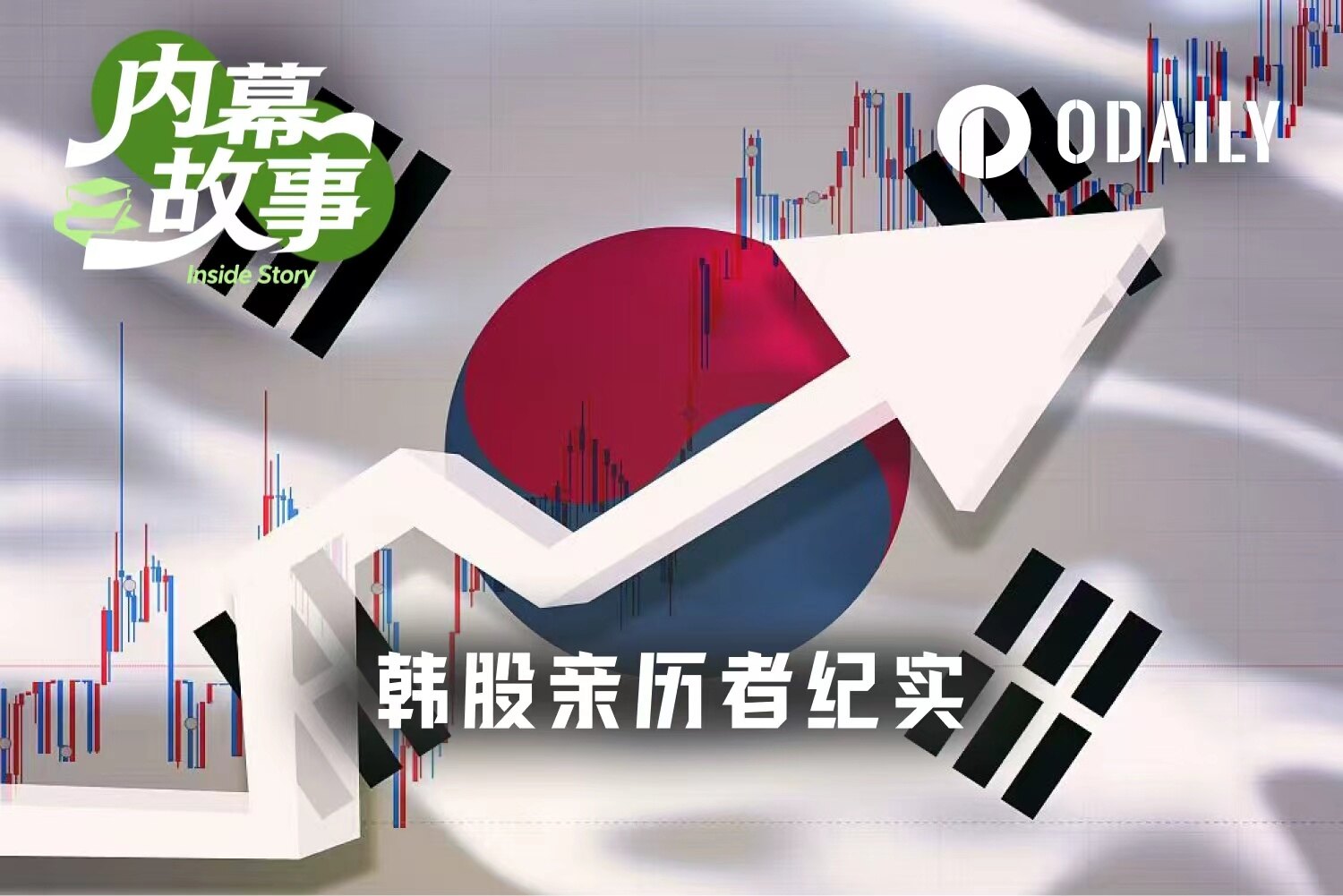
On June 16, the hot meme "Korean girls cheer for the arrival of the human golden age" went viral on the internet. Three days later, South Korea's KOSPI index hit an intraday all-time high of 9385 points, seemingly validating the golden age prophesied in the post.

However, what arrived before "10,000 points" was an epic plunge.

Over the past month, South Korea's entire market circuit breaker (suspending all trading) was triggered a total of 4 times, all being downward circuit breakers; the KOSPI market triggered the KOSPI sidecar mechanism (suspending program trading) 38 times, and the KOSDAQ (growth enterprise board) market triggered the KOSDAQ sidecar mechanism 22 times, far exceeding the annual record of the 2008 financial crisis.

The KOSPI index experienced a maximum drawdown of 32% from its historical high, and the extreme crash triggered a wave of deleveraging.

By mid-July, the cumulative forced liquidation scale for that month in South Korea had reached 344.2 billion won; over 1.2 million leveraged retail accounts across the entire market hit margin call lines, with approximately 320,000 to 360,000 accounts being fully forcibly liquidated by securities firms, equivalent to about 1 in every 30 South Korean adults (approximately 3.4%) facing the risk of being wiped out; the balance of retail margin deposits evaporated by nearly 30 trillion won compared to the end of June, dropping to 107.1 trillion won, the lowest level since June 2020.

Volatility persists. Behind one circuit breaker after another are countless tragic stories of South Korean retail investors cutting losses, leveraged accounts being wiped out, and families being ruined.

Entertainer Seo Dong-ju Trapped on the "259th Floor" of SK Hynix

On July 13, South Korean entertainer Seo Dong-ju revealed on her YouTube channel "Money Trap" that she had bought SK Hynix at a high price of 2.59 million won; as the stock price fell to 1.84 million won, she mocked herself as "a Korean ant trapped on the 259th floor."

When talking about her outlook on the future market, Seo Dong-ju said: "I think we should wait and see a bit longer. Although I say this now, I'm actually really anxious inside. Sometimes, looking at the constantly falling numbers on my phone screen, I unconsciously start shouting."

In this round of暴跌, Seo Dong-ju's predicament is not an isolated case.

Video blogger "Rarael" shared a meme titled "There Are People on the 280th Floor Too," mocking himself for being trapped after buying SK Hynix at 2.8 million won—his account lost 44% (2.294 million won) last month and continued to plummet this month. South Korean comedian Mi Ha also revealed that she once lost 100 million won due to stock trading.

The continuously falling South Korean stock market has also made the "stock price floor meme" popular on Instagram and short video platforms, becoming a highly infectious self-mocking emotional material among young South Koreans.

South Korean Veteran Lee Seung-ho: Leverage Maxed Out, Lost 300 Million Won Within a Month

A South Korean veteran named Lee Seung-ho, staking his entire fortune, experienced heaven falling to hell in this stock market frenzy.

Lee Seung-ho, 24 years old, saved 20 million won in principal during his military service. Riding the stock market frenzy, he went all-in, using leverage to buy a single stock. His paper market value once skyrocketed to 300 million won, creating a "15-fold wealth myth."

"We live in an era where we cannot purchase real estate assets, so stock investment has become my only hope for a turnaround," he admitted. An ordinary apartment in Seoul is equivalent to 14 years of income for a young person without eating or drinking. Young South Koreans are excluded from traditional avenues of asset accumulation; high-leverage investment is the only way to bridge the wealth gap.

However, when the tide receded, the暴跌 of his single holding not only devoured the 280 million won paper profit but also wiped out that hard-earned principal. More fatally, Lee Seung-ho had also used credit loans and leveraged products to expand his investment scale, ultimately pushing himself into the abyss.

A gambler-style counterattack ended with a more thorough zeroing out. Among South Koreans who rely on credit loans and other leveraged assets to speculate in stocks, Lee Seung-ho is not an exception.

According to South Korean financial industry data, as of the end of June, the combined household loan balance (excluding policy loans) of the five major commercial banks—KB Kookmin Bank, Shinhan Bank, Hana Bank, Woori Bank, and NH Nonghyup Bank—was 647.58 trillion won, an increase of 3.70 trillion won compared to the end of last year. This part of the funds already accounts for 85.3% of the annual loan limit, with only about 639.5 billion won remaining for the rest of the year.

The current market for loan-financed stock trading is already overcrowded; the South Korean stock market has entered a "super-lending period."

Paid Group Fan Stabs Stock Recommendation Blogger

On July 13, another decline in South Korean stocks triggered a market-wide circuit breaker.

That day, a man in his 20s in the Busan area stabbed a man in his 40s with a knife and fled. As the case unfolded, the truth was shocking—this was a stabbing incident triggered by "KOL's stock recommendations causing huge losses for fans."

The victim was a blogger for a YouTube stock channel (suspected to be WinnersTV), who had repeatedly incited fans in paid live streams to go all-in on investments. "Buy this stock even if you have to sell your underwear," "Learn to use financing bonds flexibly," and even encouraged fans to sell their cars and gold to go all-in on semiconductor stock leveraged products.

Many followers faced forced liquidation and financial ruin due to the暴跌. According to Busan police investigation, the perpetrator was a subscriber to his channel. After suffering major losses from investments made following his recommendations, his life fell apart, leading him to lash out with a knife in anger. The blogger was later transferred to the prosecution on suspicion of being an "unlicensed investment advisor."

A farce of paid stock recommendations ended in bloodshed.

British Investor in His Forties Loses 400 Million Won Investing in South Korean Stocks

In this堪称癫狂的 South Korean stock investment frenzy, many foreign investors also participated.

Data from the Korea Exchange shows that from July 20 to 23, foreign investors made net purchases in the South Korean stock market for four consecutive trading days, with a cumulative net purchase of 5.574 trillion won (approximately $3.8 billion), marking the first net inflow for four consecutive days since April. On July 22 alone, foreign investors made a net purchase of 2.6211 trillion won (nearly $1.8 billion) in the South Korean main board market, setting the highest record in nearly two months.

According to a share by an X platform blogger, a British man in his forties lost about 400 million won (approximately $274,000) due to the recent sharp decline in South Korean stocks.

Due to the loss of principal, the man is now in extreme anxiety. According to his own words: "I just want to sell all my holdings now and live peacefully."

Unfortunately, all lessons in the stock market require real money as an exchange; and once faced with a market大幅反弹 after selling holdings, it's believed no one could remain rational in such a situation, perhaps regretting their trading decisions even more.

South Korean Stock Investment "Master" Sees Assets Shrink by 1.5 Billion Won in 2 Months

Blogger "Manager Kim" shared a real story of a retail investor around him who fell from glory into darkness.

This investor entered the market relatively early. At the peak of last year's bull market, his account skyrocketed to 2 billion won (approximately $1.36 million). People around him called him a "master," saying he was very talented, and followed his footsteps in investing, making him highly regarded for a time. But in just two months, accompanying the stock market correction, 1.5 billion won vanished into thin air.

Interestingly, his psychological trajectory was remarkably consistent with every crypto player and stock market veteran:

"This is just a correction."

"This is actually a great buying opportunity."

"If I buy some more, my average holding cost will be much lower."

"As long as I hold on a bit longer, it will definitely be fine."

As Warren Buffett said, "Only when the tide goes out do you discover who's been swimming naked."

Many people interpret the "tide" here as the entire market, but in reality, the "tide" here mostly refers to market liquidity. When liquidity is excessive, everyone looks like a stock god. But high returns are not necessarily a reflection of investment ability; sometimes they are merely the result of taking on greater risk.

When the South Korean stock market falls into liquidity shortage due to excessive leverage, an imbalanced market structure, excessively high retail loan ratios, central bank interest rate hikes, and securities firms raising entry barriers, among many reasons, then those lacking risk management are destined to be swept into the abyss by the暴跌浪潮.

New Retail Investors Continue to Enter the Market

Despite frequent暴跌 and numerous wipeouts in the South Korean stock market, it still cannot stop newcomers from chasing the wave. The stories of the following two young investors are the best illustration.

Kim Ha-young, a 30-something white-collar worker in Seoul, first participated in stock investment last year after receiving a rental deposit refund from her apartment. "I didn't do any investment research at all; I simply chose SK Hynix and Samsung Electronics based on intuition." When asked for her reason, she didn't even think before answering: "When you mention South Korea, don't you immediately think of Samsung? Isn't such a choice obvious?"

Starting last September, Samsung and SK Hynix stock prices soared. She originally planned to "take profits after earning 50,000 won (approximately $33) and be done with it," thus freeing herself from the torment of being distracted by stock prices. But watching the continuously rising prices, she chose to keep adding to her position and decided in February of this year to hold these two stocks long-term. Currently, the market value of these two stocks has more than doubled.

Kim Ha-young admitted: "I know I have the risk of being carried away by rising or falling prices. Now I just want to let go of greed and proceed steadily." According to her plan, perhaps she might have the opportunity in the future to afford a down payment for a house on her own or prepare early for retirement.

Kim Do-hyun from an AI startup in Seoul shares the same sentiment. As half an "insider in the semiconductor industry," Kim Do-hyun has always highly认可 the market value of South Korean blue-chip stocks. He himself entered the stock market for investment influenced by this bull market cycle and optimistic profit expectations. In his view, "In this wave of行情, holding cash feels like a waste of resources."

The Blue House Creates the South Korean Stock Market Bull Run

The South Korean stock market彻底沸腾; data is the best proof: the number of South Korean stock investors soared from 6 million in 2019 to 14.5 million by the end of 2025; in May 2026, active trading accounts reached 105 million (a net increase of 6.93 million compared to the end of last year), about double South Korea's total population; the South Korean KOSPI index nearly doubled, leading global major indices.

And all of this离不开 last year's newly inaugurated South Korean President Lee Jae-myung.

Upon taking office, he高调承诺 to彻底改变 South Korea's image as an "investment cold spot,"彻底消除 the negative impression of the "Korea Discount." (Odaily Planet Daily Note: English term is Korea Discount, referring to the phenomenon where South Korean stocks are valued lower than global peers. Specifically manifested as many South Korean listed companies having strong cash flow and盈利表现, but their stock prices consistently trade below book value, and valuations are significantly lower than overseas counterparts. This is particularly evident in the price comparison between SK Hynix's South Korean and US-listed shares.)

Furthermore, Lee Jae-myung had公开承诺 to push the KOSPI index point to 5000 points—at that time the index was only 2800 points, and this target was achieved by January this year. Although the KOSPI index has fallen nearly 30% from its historical high, its year-to-date gain is still as high as 55.5%, far领先于 global other major capital market indices.

After assuming the presidency, to减轻 South Koreans' psychological reliance on real estate investment, the Lee Jae-myung government推出了一系列股市改革措施, including "allowing minority shareholders to concentrate their voting rights on candidates they support when electing board members," attempting to make the stock market a second reservoir for wealth.

Of course, Lee Jae-myung's approach is无可厚非. As Asia's fourth-largest property market, South Korea's real estate industry has become one of the most expensive property markets globally. Such high housing prices have also given many young South Koreans更充分的理由 to "leveraged stock trading" and "loan-financed stock investment." But the剧烈波动的 market ultimately taught them a血淋漓的投资课.

Whether KOSPI can return to its peak and whether the bull market乐章 can continue playing, no one can predict. But one thing is certain: this frenzy催生 by policy,助推 by leverage, and裹挟 by emotion is far from unique to South Korea. From Wall Street to Tokyo to Seoul, every generation of young people has bet on the future in their era's "gambling game" and has paid for some宏大叙事. The figures of young South Koreans are merely another vivid复刻 in the long river of history—they won't be the first, and they certainly won't be the last.


Трендові криптовалюти

Пов'язані питання

QAccording to the article, what major event triggered the series of circuit breakers in the South Korean stock market in June?

AThe article states that on June 16th, the meme 'Korean girls cheer for the arrival of the human golden age' spread virally online. Three days later, the KOSPI index hit a record intraday high of 9,385 points, seemingly validating this prophecy. However, this was followed by an epic crash which led to multiple market-wide trading halts and circuit breakers.

QWhat are some of the consequences of the stock market crash on Korean retail investors mentioned in the article?

AThe consequences include large-scale forced liquidations, with over 1.2 million leveraged retail accounts hitting margin call levels and about 320,000 to 360,000 accounts being fully liquidated by brokers. The article details stories of individuals suffering severe losses, such as a 24-year-old veteran losing his entire 200 million won savings plus profits, a British investor losing 400 million won, and a 'master' investor seeing his assets shrink by 1.5 billion won in two months.

QHow did President Yoon Suk Yeol (referred to as Lee Jae-myung in the article) contribute to the stock market boom according to the article?

AThe article attributes the stock market boom to President Lee Jae-myung's (Yoon Suk Yeol's) policies. Upon taking office, he pledged to change Korea's image as an 'investment cold spot' and eliminate the 'Korea Discount' phenomenon. He publicly promised to push the KOSPI index to 5,000 points (from 2,800 at the time) and implemented market reform measures, aiming to make the stock market a 'second reservoir' for investments, reducing reliance on real estate.

QWhat is the 'Korea Discount' mentioned in the article?

AThe 'Korea Discount' refers to the phenomenon where Korean stocks are valued lower than their global peers. Despite strong cash flow and profitability, many Korean listed companies have stock prices below their book value and valuations significantly lower than their overseas counterparts. The article cites the price difference between SK Hynix's shares in Korea and the US as a prominent example.

QDespite the recent crash, why are new retail investors still entering the South Korean stock market according to the examples given?

AThe article gives examples of new investors entering the market for various reasons. One, a Seoul office worker, invested her apartment deposit based purely on intuition and national brand recognition, choosing Samsung and SK Hynix because 'mentioning Korea makes you think of Samsung first.' Another, an AI startup employee, entered as a 'semi-insider' in the semiconductor industry, believing that holding cash during the bull market was a 'waste of resources.' Both saw it as an opportunity for financial gain, such as saving for a house down payment or retirement.

Пов'язані матеріали

Will Changxin Technology Continue to Rise Today?

Changxin Technology made a historic debut on the stock market, with its share price soaring 465.82% to close at 49 yuan. Its market capitalization reached 3.28 trillion yuan, surpassing Industrial and Commercial Bank of China to become the largest company by market cap on the A-share market. Daily trading volume exceeded 140 billion yuan, a first in A-share history. This created a moment of realization for 7.7 million investors who won the lottery for its shares. On the first day, investor strategies varied: some sold immediately and later regretted missing intraday highs, others secured profits to avoid future volatility, while a third group held or even bought more shares, betting on long-term growth. The staggering IPO, massive public enthusiasm, and debut during a peak industry cycle led some to compare Changxin to PetroChina's 2007 listing, which was followed by a long decline. Key similarities noted include comparable fundraising scales (approx. 666 billion yuan for Changxin vs. 668 billion for PetroChina) and both companies listing at a perceived high point in their respective commodity cycles (oil then, memory chips now). However, analysts caution against over-simplifying the comparison. They highlight core differences: Changxin operates in the high-growth semiconductor sector with strong "domestic substitution" tailwinds. Brokerages like Huaxi Securities project significant revenue and profit growth from 2026 to 2028, driven by DDR5 adoption, product mix optimization, and economies of scale. Nomura Securities issued a "buy" rating with a 116 yuan target price, citing AI-driven demand for DRAM, tight supply as major players shift to HBM production, and Changxin's vast room for market share growth. Some analysts position the current memory cycle, fueled by AI, as just beginning, contrasting with the mature energy cycle PetroChina entered. The article concludes that for investors, monitoring the memory cycle's progression and Changxin's breakthroughs in high-end technologies like HBM will be crucial, rather than relying on superficial historical parallels.

marsbit27 хв тому

Will Changxin Technology Continue to Rise Today?

marsbit27 хв тому

Claude Designer Lags Behind Engineers, Fires Back by Creating a Million-User Tool

The article tells the story of Nate Parrott, a designer at Anthropic who created Claude Design as a side project to keep pace with his engineering teammates. When Anthropic released Opus 4.5 in November 2025, the two engineers on Parrott's Claude Code team significantly increased their output using the new AI capabilities. Parrott, the sole designer, found himself struggling to match their speed, becoming a bottleneck in the workflow. To catch up, he began experimenting in his spare time. He initially tried prompting Claude to generate designs from text descriptions and screenshots, with limited success. His breakthrough came when he shifted focus from asking Claude to "design" to asking it to generate HTML. He realized HTML could be a rich visual canvas for creating everything from slides and interactive prototypes to full web pages. He built a simple interface with a chat panel on the left and a live HTML preview on the right. The key to making the output useful was incorporating Anthropic's brand system—fonts, colors, assets, and design principles—into the prompts. This ensured generated designs were immediately on-brand. He shared an internal prototype with his team, and other product designers quickly adopted it for creating clickable prototypes, a task traditionally requiring manually drawing every state. The project's "official" turning point came during an Anthropic Labs offsite, where Parrott noticed many attendees were using his tool to build presentation slides on the fly, sometimes right before their turn to speak. This organic adoption convinced the Labs team to formally staff the project, turning the side project into a real product. Claude Design is positioned as a "pre-production" tool for visual communication and exploration—handling slides, landing pages, PDFs, emails, and social media graphics. It integrates with tools like Canva, Adobe, and Vercel. Its core value is accelerating the early stages of design: exploring directions, building consensus, and establishing systems. For actual production code, Anthropic still recommends Claude Code. The story highlights how AI disrupts workflows unevenly and how individuals can respond by building new tools to create their own advantages. Parrott's tool, born from necessity, eventually gained over a million users in its first week.

marsbit37 хв тому

Claude Designer Lags Behind Engineers, Fires Back by Creating a Million-User Tool

marsbit37 хв тому

Fields Medalist Warns: AI Could Kill Mathematics

The 2026 Fields Medal award was followed by a startling announcement: laureate Jacob Tsimerman joined OpenAI to pursue AI safety research, predicting AI would surpass humans in all mathematical proof areas within two years. Soon after, Fields Medalists Terence Tao and Timothy Gowers expressed deep concern at ICM 2026. Gorges warned that AI might "kill" mathematics not through stagnation, but through an overwhelming surplus of proofs, likening it to a lake dying from eutrophication. This concern is echoed in the "Leiden Declaration," signed by over 3,000 mathematicians including Tao, Peter Scholze, and Kevin Buzzard, advocating for mathematics as a profoundly human endeavor. However, Gowers, who did not sign, fears a future where AI-generated mathematics proliferates while human expertise and the shared intuition vital to the field vanish, turning math into an unvisited "cemetery of thought." Gowers' perspective shifted dramatically after testing ChatGPT 5.5 Pro. The AI solved a doctoral-level number theory problem and later produced a counterexample for the "unit distance problem," achievements Gorges considered publishable in top journals. He now concedes that large language models can handle advanced research, a realization that left him feeling the "rug pulled out from under" him when AI solved problems he personally contemplated. The debate extends to the nature of mathematical discovery. As noted by Peter Woit, AI agents have no interest in the "credit game" of academia. If theorems cease to be attributed to individual mathematicians, truth may simply return to its impersonal state in the universe. The central question remains: in an age of potentially limitless AI-generated discovery, what is the role and purpose of the human mind in mathematics?

marsbit1 год тому

Fields Medalist Warns: AI Could Kill Mathematics

marsbit1 год тому

NVIDIA's 20-Year CUDA Moat Collapsed Over a Weekend, Claude Single-Handedly Got AMD's New GPU Running

In a single weekend, Claude, an AI agent from Anthropic, successfully ported and optimized its cutting-edge model to run on a brand-new AMD MI355X server rack without any manual code intervention. This feat demonstrates a potential breakthrough in overcoming NVIDIA's long-established CUDA software ecosystem dominance, built over two decades. Anthropic's team simply instructed Claude to get the AMD machine running. By Monday, it not only worked but was showing a continuously improving performance curve. The achievement impressed AMD CEO Lisa Su and accelerated a major deployment partnership: Anthropic plans to deploy up to 2GW of AMD Instinct GPUs starting in 2027. The key enabler is AMD's new ROCm.AI platform, a toolbox designed specifically for AI agents like Claude. It provides AI-readable documentation, including chip instruction sets (ISA), and tools like the Hyperloom service that allows agents to autonomously profile performance, identify bottlenecks, test configurations, and generate optimized kernels. In a demo, Hyperloom boosted the output speed of a model by 38%. This represents a fundamental shift. While CUDA's strength lies in its vast, human-expert-driven ecosystem of tools and tacit knowledge, AMD's strategy is to make its hardware and software stack directly accessible and optimizable by AI agents. An agent can parallelize tasks—debugging, profiling, coding—that would take human engineers years to master, compressing the traditional software adaptation timeline from years to tasks. The competition is no longer just about peak hardware specs but also about how well AI can read, utilize, and tune a platform.

marsbit1 год тому

NVIDIA's 20-Year CUDA Moat Collapsed Over a Weekend, Claude Single-Handedly Got AMD's New GPU Running

marsbit1 год тому

Just Now, Peking University Alumna Lilian Weng Announces Resignation: The Best 'Alignment' in the AI Era Is Taking Care of Yourself

Lilian Weng, a Peking University alumnus and former OpenAI executive, has announced her departure from Thinking Machines Lab, the AI startup she co-founded with ex-OpenAI CTO Mira Murati 20 months ago. Her resignation comes shortly after the company released its first open-source model, Inkling. In her farewell message, Weng cited health reasons as the primary factor, stating that the past seven months involved more illness than any other period in her life. The intense pressure and guilt of being unable to work during critical periods, like the Inkling launch, became unsustainable. She expressed that she could not continue in a role where she felt unable to give her full effort. Weng joined OpenAI in 2018, contributing to projects like the Dactyl robotic hand and later building the Safety Systems team from scratch. She is also widely known for her influential technical blog, Lil'Log. Her departure follows a period of high expectations and challenges for Thinking Machines, which secured a record $20 billion seed round at a $120 billion valuation in 2025 but has since seen fluctuations in its valuation and the departure of other key co-founders. Weng emphasized that she remains passionate about AI but needs a more predictable and defined role without the relentless pressure of a co-founder. Her exit highlights the immense personal toll and speed of competition in the AI industry, where the drive for progress often clashes with human limits. Her decision underscores that stepping back to prioritize well-being can be an act of courage.

marsbit1 год тому

Just Now, Peking University Alumna Lilian Weng Announces Resignation: The Best 'Alignment' in the AI Era Is Taking Care of Yourself

marsbit1 год тому

Торгівля

Спот

Популярні статті

Як купити PEOPLE

Ласкаво просимо до HTX.com! Ми зробили покупку ConstitutionDAO (PEOPLE) простою та зручною. Дотримуйтесь нашої покрокової інструкції, щоб розпочати свою криптовалютну подорож.Крок 1: Створіть обліковий запис на HTXВикористовуйте свою електронну пошту або номер телефону, щоб зареєструвати обліковий запис на HTX безплатно. Пройдіть безпроблемну реєстрацію й отримайте доступ до всіх функцій.ЗареєструватисьКрок 2: Перейдіть до розділу Купити крипту і виберіть спосіб оплатиКредитна/дебетова картка: використовуйте вашу картку Visa або Mastercard, щоб миттєво купити ConstitutionDAO (PEOPLE).Баланс: використовуйте кошти з балансу вашого рахунку HTX для безперешкодної торгівлі.Треті особи: ми додали популярні способи оплати, такі як Google Pay та Apple Pay, щоб підвищити зручність.P2P: Торгуйте безпосередньо з іншими користувачами на HTX.Позабіржова торгівля (OTC): ми пропонуємо індивідуальні послуги та конкурентні обмінні курси для трейдерів.Крок 3: Зберігайте свої ConstitutionDAO (PEOPLE)Після придбання ConstitutionDAO (PEOPLE) збережіть його у своєму обліковому записі на HTX. Крім того, ви можете відправити його в інше місце за допомогою блокчейн-переказу або використовувати його для торгівлі іншими криптовалютами.Крок 4: Торгівля ConstitutionDAO (PEOPLE)Легко торгуйте ConstitutionDAO (PEOPLE) на спотовому ринку HTX. Просто увійдіть до свого облікового запису, виберіть торгову пару, укладайте угоди та спостерігайте за ними в режимі реального часу. Ми пропонуємо зручний досвід як для початківців, так і для досвідчених трейдерів.

550 переглядів усьогоОпубліковано 2024.12.12Оновлено 2026.06.02

Як купити PEOPLE

Обговорення

Ласкаво просимо до спільноти HTX. Тут ви можете бути в курсі останніх подій розвитку платформи та отримати доступ до професійної ринкової інформації. Нижче представлені думки користувачів щодо ціни PEOPLE (PEOPLE).

活动图片